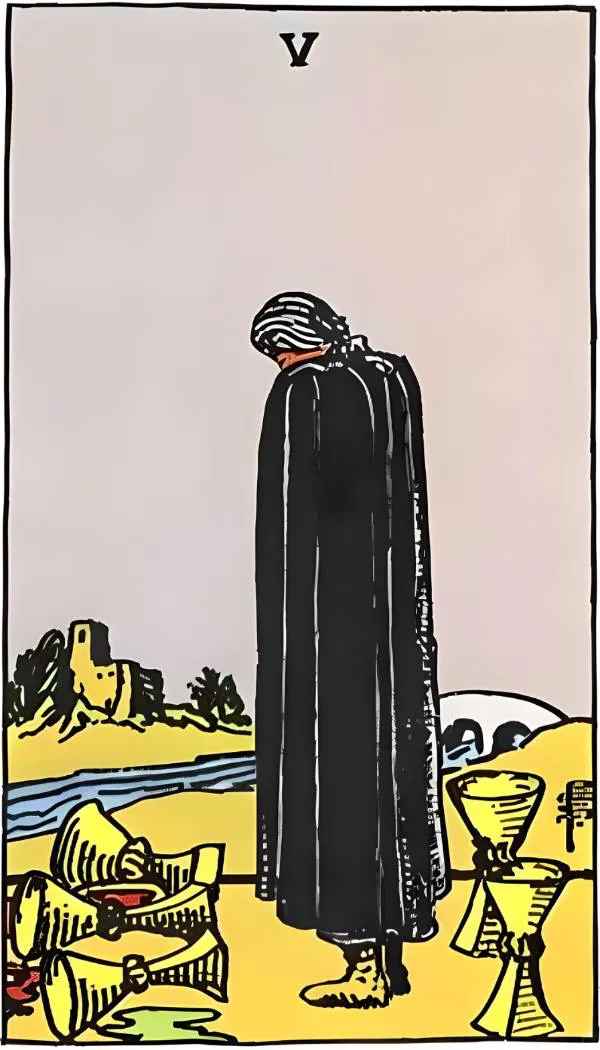
Sunk Cost Exit DilemmaThree cups have already spilled, and the figure remains facing them even though two cups stand behind them and a bridge leads onward. The image is not only about loss; it is about the pull of invested attention toward what has already been poured out. In friendship, this becomes the sunk cost exit dilemma. The history, shared memories, private jokes, and years of emotional effort can make leaving feel like wasting the whole bond, even when the current exchange keeps returning to depletion. The card gives you a way to separate past investment from present viability. You can honor what was real without letting the spilled cups decide whether the remaining connection deserves repair, distance, or a cleaner ending.
Bad Timing LoopThe figure's body is fixed toward the overturned cups, and the bridge sits outside the active line of movement. The scene contains a route, but the operating focus keeps returning to the same failed point in the foreground. That is the visual mechanics of a bad timing loop: each new attempt begins from the old spill rather than from the remaining supports or the actual crossing. The problem is not effort in isolation; it is effort launched from a timing map that has not been updated. For you, the card identifies the loop by showing where attention and action keep getting trapped. Agency returns when the closed window is named as closed, because only then can the bridge become part of the working plan.
Career Opportunity FOMOThree cups lie spilled in the foreground while two remain standing behind the cloaked figure, and a bridge still leads toward shelter. The composition mirrors a vanished listing or missed deadline that dominates attention even as other roles remain open and a practical route forward still exists. The lost window is real, but the image shows how platform scarcity can enlarge one loss until it appears to represent the entire career field. You may be assigning permanent meaning to a role whose actual pay, culture, or fit was never fully known; the standing cups keep the remaining market visible without denying the disappointment of the closed one.
Academic Rejection FalloutThree cups lie spilled in front of a cloaked figure while two remain upright behind them, and a bridge still leads toward the distant castle. The composition holds the specific study fallout of a rejected application: the visible loss occupies the foreground while viable academic routes remain materially present but easy to overlook. You have invested forms, fees, references, drafts, and months of waiting into a selection system whose final template does not identify the failed criterion. In the study system, that information gap becomes delayed enrollment, repeated applications, and a forced rewrite of the next semester rather than proof that the work had no value. With the two remaining cups and the bridge still in view, the scene separates a panel's scarce-place decision from the full academic path. You can audit which credits, supervisors, funding routes, and deadlines remain available while naming the administrative cost of starting another round.
Family Estrangement ThresholdThe river cuts across the card while the bridge sits outside the figure's immediate orientation. This is the visual logic of a family estrangement threshold: connection is not absent, but the route back has become hard to approach without losing the boundary that distance created. The cloaked body stands apart from both the remaining cups and the distant dwelling. In family terms, that distance can mark the point where ordinary contact no longer feels like contact; it feels like re-entry into a system that has not changed its terms. The threshold is not a command to leave or return. The card makes the boundary visible so You can distinguish a bridge that supports repair from a bridge that only leads back to the same spill site.
Apology Without RepairThree cups remain spilled at the cloaked figure's feet while two full cups, a bridge, and a distant home remain available behind them. In a partner relationship, the image separates visible regret from enacted repair: sorrow can be genuine, yet the spill stays where it fell until someone turns toward the remaining resources and crosses the bridge. You do not have to erase the damage merely because remorse has entered the room. The upright cups make a path toward repair imaginable, but they also clarify what has not happened when the apology is followed by the same access, expectations, and repeated behavior.
Routine Reset TrialThree cups lie spilled in front of the cloaked figure, but two cups remain upright behind them and the bridge to the distant dwelling is already built. The scene does not erase the loss; it shows a damaged system with enough surviving structure to begin a controlled reset. In lifestyle terms, this is the moment after the routine has slipped, the day has been lost, or the plan has failed, but not every resource is gone. The card frames the reset as a physical reorientation problem: what remains behind you, what route still exists, and what part of the system can be crossed next. You are not being asked to perform instant discipline. The structure is asking for a clear audit of the spill, the remaining cups, and the bridge between them, so the next routine can be rebuilt from what is actually still usable.
Breakup Closure LimboThe black-cloaked figure standing over three spilled cups creates a scene where the relationship event has already happened, but the body remains stationed at the point of impact. The bridge, the river, the house, and the two upright cups all show that life has not ended at the spill, yet the visible posture is still organized around the unfinished loss. That is the structure of Breakup Closure Limbo in love: the external relationship has changed, but the ending has not been metabolized into a clear boundary, a final conversation, or a usable narrative. You are not simply looking backward; you are standing in a relationship field where the old bond has collapsed faster than the available path forward has become emotionally and socially usable. Five of Cups holds this context with unusual precision because the card does not erase what remains. It shows the painful accounting stage where what was lost dominates the foreground, while the bridge to stability exists only as a route that must be consciously noticed before it can be crossed.
Family Reconciliation TrialThe bridge across the river is already present, and the distant dwelling is not erased from the landscape. The figure has not crossed it yet, which gives the card its family relevance: repair exists as a structure, but it requires more than pretending the spilled cups are gone. The two upright cups behind the figure suggest that some usable bond, agreement, or care may remain. In a family setting, this does not guarantee closeness; it points to a trial phase where contact has to be rebuilt through clearer terms, slower pacing, and visible respect for what happened. The river makes the boundary real. You are not being asked to collapse the distance just because a bridge exists; the card shows that reconciliation only becomes workable when the crossing protects both memory and movement.
Missed Opportunity WindowThree overturned cups hold the whole foreground, while two standing cups and a bridge sit outside the figure's active attention. The scene does not erase opportunity; it shows opportunity displaced behind the body and separated from the current line of sight. Missed Opportunity Window in social life often looks exactly like this: unanswered invites, postponed replies, skipped events, or networking openings that felt impossible while one disappointment was taking up all the space. The card gives the missed window a structure. You can see what spilled, what still stands, and what kind of crossing would be required before the remaining openings close.