Staying Because You Already Paid?

A grounded look at Sunk Cost Paralysis, related tarot cards, and tarot card reading insights from similar decision patterns.

Sunk Cost Paralysis

What does this feel like?

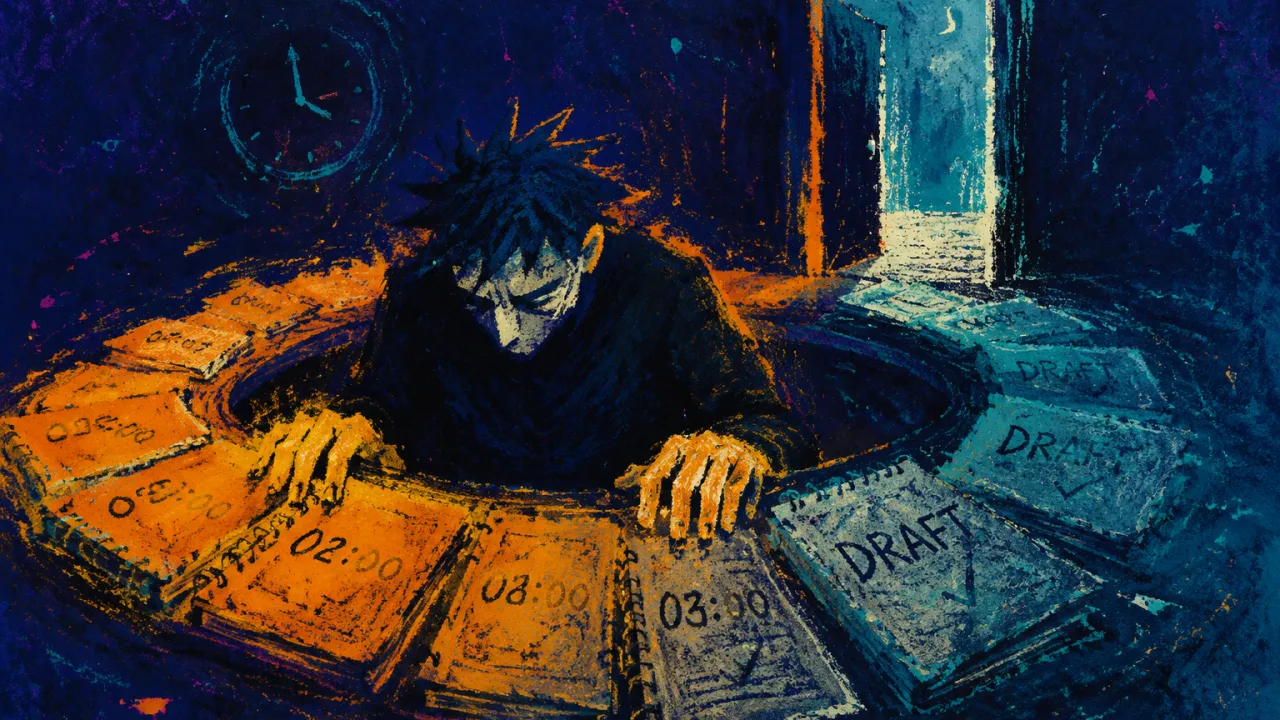
Sunk Cost Paralysis — you find yourself staring at a half-written email, a degree plan, a relationship thread, a business idea, a job listing, a half-finished creative project, and your body goes still before your mind can make a sentence. The decision is not blank; it is crowded. Every hour you spent, every explanation you gave, every version of yourself you built around this path seems to step into the room and ask to be counted before you move. You tell yourself you are just being careful, just being practical, just needing one more sign, one more conversation, one more attempt to make it make sense. But underneath that, your stomach is tight because leaving would not feel like simply choosing differently. It would feel like walking away from proof that you were trying, proof that you cared, proof that the old version of you had reasons. So you keep reviewing the same facts, reopening the same tabs, comparing the same pros and cons, not because there is nothing else available, but because every other option seems to require a private audit of everything already spent. The cruelest part is that the path may not even be useless; it may have taught you things, given you structure, carried you for a while, made you proud in moments, which makes the freeze harder to name. You are not only asking, 'What should I do now?' You are also asking, 'What happens to the meaning of everything I already gave?' And that is where the cost becomes heavier than the choice itself, much like The Magician’s snake-belt closed around the waist, with the table still full and the garden still alive, while the body remains inside the same ritual frame.

What's pulling at you?

You are caught between what is honest now and what would make the past feel justified. Part of you wants a clean present-day choice, while another part keeps asking the old investment to prove it was worth it before you are allowed to move.

How It Shows Up?

  • You open the project folder after work and your cursor just sits there, blinking over a document you have renamed five times and still cannot finish. Your shoulders rise toward your ears, your jaw locks, and a small heat gathers behind your eyes because closing the tab would feel like admitting the hours already poured into it did not become the version of you it was supposed to create. You can let the screen stay unopened for tonight without turning that pause into a verdict on the whole project.
  • A friend asks whether you still want to keep doing the thing you have been talking about for months, and you hear yourself give a polished answer before you have checked whether you believe it. Your throat tightens as you smile, because changing your mind now would mean other people might remember how certain you sounded before. It is allowed for an old answer to have been sincere then and incomplete now.
  • You are in a meeting, class, or studio session, and someone mentions the next stage of the path you have been on, the internship, degree, role, launch, move, or plan that everyone assumes you are still choosing. Your stomach drops, your fingers press into your palm under the table, and you nod while part of you feels like the figure in the Ten of Wands, already walking, already loaded, already too close to the destination to ask whether the bundle still belongs in your arms. You can notice the pressure of 'almost there' without letting it make the decision for you.
  • At 1 AM, you scroll through old receipts, drafts, messages, photos, calendars, or notes, building a quiet archive of proof that this path mattered. Your chest feels tight and your breathing gets shallow, as if every saved detail has become another cup stacked in the foreground, too orderly to leave and too incomplete to satisfy. You do not have to decide the whole future from the evidence pile on your phone.
  • Your body starts giving you the same signal whenever you think about quitting, pivoting, ending it, or changing the plan: a hard knot under your ribs, a dry mouth, a frozen feeling in your hands before you type the message or open the application. The discomfort is not dramatic; it is the small, repeating lock of a system trying to protect what has already been paid into it. You can treat that body signal as information without making it the final authority.

Sunk Cost Paralysis in Tarot Cards

Sunk Cost Paralysis lives in the moment when the path in front of you is being judged by the time, hope, money, effort, or identity already placed behind you. You might feel it as a tight chest, a clenched jaw, or the frozen hand hovering over the message that would change the plan. From an existential perspective, the structural framework of this struggle is about how past investment can start acting like present obligation. The Tarot Cards below mirror the visible shape of that bind.

The Magician Reversed
The Magician’s belt closes around the waist as a snake biting its own tail, placing a self-feeding loop at the body’s center. Around it, the garden remains fertile and the table remains full, but the figure is still held inside the same ritual frame. In a choice reading, this structure matches the point where an old path keeps claiming authority because so much has already been placed inside it. You may see other possibilities, yet leaving would force the decision to include the cost of what has already been spent. Sunk Cost Paralysis belongs to the reversed Magician because the loop is not empty repetition; it is invested repetition. The struggle is the closed circuit where time, effort, identity, and hope keep recirculating, making exit feel like a loss of meaning rather than a recovery of agency.
The High Priestess Reversed
The High Priestess is seated before a veil that has already required attention, patience, and interpretation, yet the passage remains closed. Reversed, the investment in decoding the hidden layer can become another weight pinning the body to the stone seat. In choice tarot, this is the point where time spent waiting, researching, hoping, or trying to make an option meaningful becomes part of the trap. You are not only weighing the future; you are carrying the cost of everything already poured into reaching this threshold.
The Empress Reversed
The Empress is placed inside visible accumulation: ripe wheat, flowing water, layered cushions, repeated Venus symbols, and a throne that confirms the value of what has already been built. The scene carries the weight of investment before any movement begins. When this structure binds a decision, the question stops being what is true now and becomes what all this prior growth is supposed to mean. You may keep treating the accumulated harvest as proof that you must continue, even when the current choice is asking for a fresh evaluation. The card shows how agency can remain present as a symbol while movement stays frozen. Sunk Cost Paralysis appears here as a beautiful form of captivity. The field is real, the effort was real, and the care mattered, but none of that automatically decides the next step. The struggle is the pressure to keep choosing the path that best justifies the past.
The Emperor Reversed
The crown, armor, robe, and stone seat stack into a visible weight of accumulated position. The Emperor is not merely sitting; the whole scene is organized around maintaining the height he has already reached. In a reversed decision field, that height becomes a cost trap. The established path keeps asking for more investment because leaving it would not feel like changing direction; it would feel like abandoning the entire structure that made the climb make sense. The card names the paralysis as a relationship to what has already been built. You are not stuck because the future is empty; you are stuck because the past has become a throne that keeps demanding proof that it was worth the climb.
The Hierophant Reversed
The acolytes remain kneeling before the Hierophant while the keys sit in front of them, close enough to be seen and far enough to remain unused. The posture suggests a body that has already given time, attention, and public commitment to the ritual. In the reversed state, that commitment hardens into a closed loop. You may know a path is no longer opening, but the investment already made starts acting like evidence that you must keep kneeling. Sunk Cost Paralysis appears when leaving feels less like changing direction and more like invalidating every step that brought you here. The card holds that bind at the threshold between visible access and actual movement.
The Chariot Reversed
The charioteer's lower body disappears behind the solid block of the chariot, while the city and water sit behind him as a completed structure he has already crossed. The vehicle that proves arrival also becomes the container that limits visible exit. In a decision reading, that image gives shape to the moment when past investment starts acting like a wall around the next move. You may be evaluating the option in front of you, but the card shows how the weight of what has already been built can quietly make leaving feel physically impossible.
Strength Reversed
The reversed card holds the lion at the mouth without showing a finished transformation. The effort already invested in containment is visible in the posture itself: the scene continues because the hands keep maintaining the same point of control. Sunk Cost Paralysis emerges when the history of holding something together becomes a reason to keep holding it. The decision no longer turns on whether the path is alive; it turns on whether all the effort spent managing it can be justified. For choice work, Strength reversed exposes the maintenance cost hiding inside commitment. You may be measuring the option by what it has already required from you, while the card points to the harder question of whether continued containment is still a path or only proof of past investment.
The Hermit Reversed
The Hermit has climbed high and stands with the staff planted, the lantern still burning in the dark. In the reversed structure, the summit can become something to protect: proof of effort, endurance, and distance already traveled. That is how sunk cost paralysis forms around a decision. Leaving the ridge would not only mean choosing a new route; it would seem to question the climb itself, so the body keeps guarding the position even as the lamp spends more fuel on the same patch of ground. The card gives this bind a physical shape. You are not trapped by the past as an abstract idea; you are held by the weight of already-invested effort, and the reading can separate the value of what brought you here from the cost of staying here too long.
Wheel of Fortune Reversed
The wheel contains repetition as a physical structure: letters return, figures cycle, and movement bends back toward the same rim. Nothing in the composition looks still, yet the path does not become an exit. In an old friendship, that is the exact pressure of accumulated history. The years, memories, shared crises, and mutual references can become so heavy that changing the bond feels like denying the whole rotation that came before. The reversed card shows the cost of mistaking motion for release. You may keep talking, checking in, forgiving, or waiting for the next turn, while the real paralysis comes from the belief that leaving the loop would make the past meaningless.
Justice Reversed
The scales can keep weighing forever if the sword never completes the cut. In the reversed texture of Justice, the instruments remain present but the system loops around measurement, evidence, and consequence without turning any of it into a clean relational decision. Friendship makes that loop especially hard to exit because history carries real weight. Shared secrets, old versions of yourself, mutual circles, crisis memories, and years of loyalty all become evidence placed back onto the scale each time you consider stepping away or changing the terms. The card names the paralysis that forms when the past is treated as a permanent argument against the present. You are not merely indecisive; the friendship has become a courtroom where every reason to leave must argue against every reason it once mattered.
The Hanged Man Reversed
When The Hanged Man is reversed, the rotated image can make the bound figure appear closer to upright, but the ankle is still the load-bearing point. The posture looks more normalized while the structure remains dependent on the same restraint. In a decision spread, that is the anatomy of staying because the past investment has become the anchor. The time, effort, emotion, or identity already spent starts to feel like proof that the current path must still mean something, even when the choice no longer produces movement. Sunk Cost Paralysis is carried by the card’s reversed mechanics: the sacrifice no longer opens perspective, but continues to justify the suspension. The decision stays tied to what has already been paid, and leaving feels like letting the whole suspended story drop.
Death Reversed
The crown and scepter lie on the ground while the horse continues forward, making old rank and previous control physically irrelevant. The figures remain in the rider's path even after the scene has already shown that the old order cannot protect them. That image maps the love dynamic where history, shared plans, and the amount already invested become the very objects that keep you still. You are not simply deciding whether to stay; you are confronting the paralysis that forms when leaving feels like admitting that the past cannot be repaid.
Temperance Reversed
The flawless pour preserves every drop, but the same perfection can become a trap when the movement only sends the contents back and forth. Nothing appears wasted, yet the path in the distance remains untouched while the ritual of preservation keeps going. A high-stakes decision can take on that shape when previous time, effort, status, or identity must be carried forward at any cost. The card positions your struggle at the point where protecting what has already been poured in starts to block the freedom to choose what actually needs to happen next.
The Tower Reversed
The tower is made of stone, height, and accumulated structure, so its collapse does not look small. The longer it has stood, the harder it becomes to separate what was invested from what is still viable. In a choice spread, this is the bind of staying because the path has already cost so much. The reversed pressure is not simple refusal; it is the internalization of investment as obligation, even when the visible structure shows that more effort may only feed the same damage.
The Star Reversed
The streams keep leaving the jugs, and neither receiving surface returns a clear measurement of what has been gained. The land disperses the water into branches, while the pool folds the other stream into itself until the added volume is hard to see. A decision can freeze when past investment becomes the only proof that a path still deserves more. The Star's flow names the trap as accumulated output without clean feedback, where leaving feels like negating everything already poured in.
The Moon Reversed
The crayfish is already out of the water enough to have crossed a boundary, yet not far enough for the path to prove survivable. Behind it is the pool, ahead are the guarded towers, and both directions now carry a cost. You are confronting the pressure that appears after effort has already been spent. The card places Sunk Cost Paralysis at the wet-dry edge where retreat feels like wasting the emergence, while advance feels like committing to a route that still has not earned your trust.
Judgement Reversed
The coffins are open, but they still function as the only platforms the figures occupy. Even under the trumpet's force, the bodies rise from the old structure without yet stepping beyond it. Sunk Cost Paralysis takes that visual fact into the decision field. You may recognize that an option has become too narrow, too deadening, or too costly, while still treating the investment already made as the ground that proves you must stay. The reversed Judgement tension turns resurrection into repeated activation inside the same box. The call to move is present, but the past keeps presenting itself as evidence, weight, and proof of obligation.
The World Reversed
The laurel wreath that should crown completion can also read as a closed circuit, especially when the dancing body has no ground outside it. The proof of arrival becomes the same border that keeps the figure orbiting inside what has already been built. For a high-stakes decision, that image matches the bind of past investment becoming present containment. You may be measuring the next step against the entire cost of the journey so far, and the card locates the paralysis at the point where evidence of progress starts functioning like a barrier to exit.
Three of Cups Reversed
The harvest at the women's feet becomes a heavy field when the circle tightens around what has already ripened. Grapes, cups, wreaths, and visible rewards can turn into proof objects that make leaving feel physically harder than staying. In a choice reading, this names the trap of measuring the next decision by the amount already poured into the last season. You are not simply attached to the past; the completed harvest has become part of the architecture holding the choice in place, making exit feel like wasting the evidence that it once worked.
Four of Cups Reversed
The three cups on the ground already occupy the figure's field, and the fourth cup would require him to reorient his body away from what has been sitting there. Nothing in the image shows the new cup as broken, yet the current posture keeps it untested. Sunk Cost Paralysis appears when the old cups become more than evidence; they become the reason the new offer cannot be fairly examined. You may feel that choosing differently would make the earlier investment meaningless, so the decision system protects the past by refusing to fully contact the next possibility. The Four of Cups gives that trap a visible boundary. It does not ask you to discard what came before; it shows where prior emotional investment has started controlling the evaluation of what is now being offered.
Five of Cups Upright
The black-cloaked figure stands over three overturned cups while the bridge, river, and distant shelter remain in the same visual field. The body is not trapped by walls; it is held in place by the direction of its attention, with the spilled cups acting like a gravitational center for the whole scene. That structure maps directly onto a decision where the old investment has become heavier than the remaining path. You may still have options, but the system keeps asking the lost option to justify itself before movement can resume, so every future choice is forced to pass through the spill site first. The Five of Cups makes Sunk Cost Paralysis visible because the bridge is not absent and the two cups are not destroyed. The struggle is the body's refusal to reassign weight after loss, leaving agency suspended between what cannot be recovered and what still requires a decision.
Reversed
The three fallen cups are no longer useful as containers, yet the body remains organized around them. Behind the figure, two cups still stand, and across the river a bridge still offers transition, but the scene's functional attention is invested in what cannot be restored to its previous state. Sunk Cost Paralysis appears in lifestyle systems when a failed plan keeps demanding loyalty because abandoning it would make the wasted effort visible. The unfinished routine, expensive setup, abandoned planner, or half-built reset becomes harder to leave than to keep reviewing, even when it no longer produces movement. The card does not frame this as weakness. It shows the exact mechanics of being held by spent investment: the unusable cups keep the body facing backward while the remaining structure waits outside the loop.
Eight of Cups Reversed
The eight cups are not scattered waste; they are stacked, worked for, and visibly capable of holding what they once promised. Their order is exactly what makes the missing space harder to dismiss. In personal growth, that structure appears when an old goal, training path, relationship to success, or self-improvement system keeps its grip because it cost you effort. You can sense that the next cup is elsewhere, but abandoning the stack feels like making your former investment meaningless. Sunk Cost Paralysis names the lock between evidence of effort and evidence of misalignment. The card shows why the body may hesitate at the riverbank: leaving is not just a choice about the future, it is a confrontation with the story you have been using to justify the past.
Nine of Cups Reversed
The nine cups form an archive behind the figure: visible proof that something has been gathered, earned, or completed. In the reversed texture, the crossed arms no longer read as simple satisfaction; they become a brace that keeps the body loyal to the display it has already built. At a crossroads, this is the pressure of a choice that is being made by the past before the present has a chance to speak. The more real the previous investment was, the harder it becomes to admit that its reward may no longer be the right container for the next life movement. Sunk Cost Paralysis names the lock between accumulated proof and current agency. The card places the struggle in the body stationed before its own trophies, unable to move without feeling as if movement would invalidate the cups behind it.
Page of Cups Reversed
The fish is close to the sea but remains inside the cup, held in a smaller world that the Page can manage. The visual problem is not ownership alone; it is the cost of continuing to preserve a container once the larger field is already visible. Sunk Cost Paralysis emerges when the choice you have carried starts to feel harder to release precisely because you have carried it for so long. You keep protecting the cup, explaining the cup, and calculating around the cup, while the real decision may be whether the living thing still belongs there. The sea behind him makes the hidden cost unavoidable. Releasing the fish would not erase the care already spent, but the card shows how maintenance can become its own trap when past investment is allowed to outrank present fit.
Two of Pentacles Reversed
The reversed loop turns effort into a binding structure. The longer the hands keep correcting the motion, the harder it becomes to stop without feeling the full weight of what has already been spent. Sunk Cost Paralysis is not simple attachment to the past; it is a decision system where previous investment becomes the reason the loop must continue. You keep the option airborne because dropping it would expose the cost of every earlier correction, compromise, delay, and hope. Two of Pentacles makes the trap visible without moralizing it. The struggle has a shape: a closed circuit where stopping feels like losing, even when continuing is the force that keeps draining the choice of life.
Three of Pentacles Reversed
The unfinished church already has value fixed into its arch, and the worker is positioned mid-process with tools in hand. The project has not reached completion, but enough material has been committed that stopping would leave the investment visibly stranded in stone. In a decision spread, that structure captures the lock of staying because the past has become part of the architecture. You are not merely hesitating; the choice is being weighed under the pressure of what has already been built, paid for, defended, or explained.
Four of Pentacles Upright
The man sits with one pentacle against his chest, one on his crown, and two pinned under his feet; every point of contact turns what he owns into a condition for remaining still. To stand up would not simply change position; it would disturb the arrangement that proves he has something secured. That is the exact pressure behind Sunk Cost Paralysis in a choice reading. You are not only comparing future paths; you are carrying the weight of what has already been paid, built, or endured, so the act of choosing feels like making a visible loss instead of reclaiming movement.
Five of Pentacles Reversed
The bandaged foot still has to move, and the crutch keeps the figure upright without removing the snow, the cold, or the wound. Motion continues because the support system is calibrated for survival on the same road, not for a clean reroute. In Sunk Cost Paralysis, You keep paying energy into a path partly because the previous cost has become a reason to continue. The card’s reversed strain lives in that step-crutch-step rhythm: every extra effort makes stopping feel like admitting the whole crossing hurt for nothing. The window matters because it is close enough to reveal that another condition exists, yet the bodies remain locked into the route they have already been paying to survive. The decision point is shaped by accumulated cost, not by present clarity.
Six of Pentacles Reversed
The falling coins offer just enough movement to keep the receiving posture active, while the kneeling bodies remain in the same place. The scene can repeat without requiring the platform, the scale, or the hierarchy to change. Sunk Cost Paralysis lives in that repeated partial return. You may not be staying because the path is right; the card shows how previous effort, small wins, and the need to justify what has already been given can make leaving feel like losing the whole ledger.
Seven of Pentacles Upright
The figure leans on the hoe beside a vine that still carries six pentacles, while one completed coin rests at the feet. The body is no longer in full labor and not yet in harvest; it is parked at the exact point where past effort has become visible enough to weigh on the next move. Sunk Cost Paralysis appears here because the grown fruit is not neutral evidence. It becomes gravity. You may be trying to choose between staying, leaving, harvesting, or reinvesting, but the card shows how the decision gets distorted when what has already been spent starts speaking louder than what the next choice actually costs. The struggle is not a lack of intelligence. It is the moment when proof of effort and fear of waste occupy the same ground, making every option feel like it must justify the whole history of the investment.
Reversed
The whole composition narrows around one cultivated vine, with the figure's weight, tool, and gaze already invested there. The fertile ground may extend beyond the frame, but the visible body keeps its reference line tied to the crop that has consumed effort. In personal growth, this turns past effort into a binding coordinate. You may keep feeding a method, identity, or goal because leaving would make the old labor feel unclaimed, and the card locates that stuckness in the body's refusal to step away from the field it has built.
Eight of Pentacles Reversed
The reversed scene holds finished and unfinished work in the same field, with no clean threshold where the craftsman can say the labor has become enough. The accumulated pentacles do not release the body from the bench; they make the next mark feel even more obligated. Long friendships can create the same geometry. Years of shared history, prior repairs, mutual circles, and private knowledge can become a stack of reasons that makes the present imbalance hard to judge. Sunk Cost Paralysis is the moment when past investment starts controlling present consent. The reversed Eight of Pentacles does not reduce the friendship to a mistake; it shows how accumulated effort can become a weight that keeps you working after the bond has stopped feeling mutual.
Nine of Pentacles Reversed
The pentacles grow like fruit on a cultivated vine, and the garden carries the visible proof of time already spent. The snail at the lower edge adds a slow measure of duration, making the scene feel less like a sudden gift and more like an accumulated result. In a decision spread, that accumulated result can become a veto. You may keep asking whether leaving would waste the garden you built, even when the real question is whether the next season still belongs to you. Sunk Cost Paralysis names the moment when past cultivation starts controlling present movement. The card places the struggle in the gap between honoring what has grown and letting old investment decide every future path.
Page of Pentacles Reversed
The right foot hovers back on the toe while the eyes stay fixed on the pentacle. The field offers space to move, but the body is organized around the value already being held. In friendship, shared history can work like that coin: real, weighty, and difficult to put down. You may see other paths, including distance, downgrade, or honest renegotiation, yet the investment already made keeps your body from completing the step. Sunk Cost Paralysis is not simply reluctance to leave. It is the structural freeze that forms when past care, years of loyalty, and the hope of eventual return become heavy enough to override present evidence.
Knight of Pentacles Reversed
The pentacle is held like a solid proof of value, and the heavy horse carries armor, tack, cloak, and rider without taking a step. The image makes accumulated investment visible as weight: everything already gathered remains present on the body. When a decision involves leaving, staying, or cutting losses, this structure shows how the past can become a physical anchor in the present. You may still have agency, but the card locates the struggle in the way prior effort demands to be honored before movement can be allowed.
Queen of Pentacles Reversed
The pentacle is not lying on a table; it is held with both hands close to the body. The throne, garden, and carved history around her make the object feel already integrated into the life she has built. The grip becomes a closed accounting loop when the decision is judged by what has already been poured into it. You may keep calling the current path practical, but the structure shows a deeper bind: the past investment is being protected more intensely than the future is being evaluated.
King of Pentacles Reversed
The castle in the distance, the carved throne, the vines, and the pentacle all point to a life built through accumulated effort. In reversal, that built structure stops serving as support and starts demanding continued allegiance because so much has already been poured into it. When you are choosing whether to stay, quit, or pivot, the card locates the paralysis in the weight of prior investment. You may be trying to make a present decision while the past keeps presenting itself as collateral, asking you to protect what has been built even if it no longer fits the next move.
Ace of Swords Reversed
The sword has already entered the crown, and the hand must keep holding the whole arrangement in the air. The image captures a pursuit after contact has been made: the symbolic prize is no longer separate from the force required to keep it suspended. Sunk Cost Paralysis forms when past effort becomes part of the grip. In a decision about staying, leaving, or changing course, the card shows how investment can start acting like evidence that the old target must still be carried.
Two of Swords Reversed
The arms cannot hold the swords forever, yet the posture can be maintained long enough for strain to start feeling normal. The stone slab supports the waiting body, and that support makes the unsustainable position easier to justify. Sunk Cost Paralysis appears when the pain of continuing becomes proof that continuing must matter. In a decision spread, you may keep gripping an option because releasing it would make the time, identity, effort, or hope already invested impossible to ignore. The card's reversed tension turns endurance into a false argument for staying. The tide behind the figure keeps changing even while the posture pretends the situation can be held still. The struggle is not simply whether to leave or stay; it is whether accumulated strain is being mistaken for evidence that the old choice still deserves your body.
Three of Swords Reversed
In reversal, the pierced heart appears held in place by the blades themselves. The wound is no longer only an injury; it becomes part of the structure keeping the image suspended. That is the physical logic of Sunk Cost Paralysis in a choice reading. You may know a path hurts, but the time, effort, identity, and emotional proof already embedded in it start functioning like anchors. The card does not reduce this to bad judgment. It shows why leaving can feel like tearing out the supports that have been holding the whole decision story together, even when those supports are also the source of the pain.
Five of Swords Reversed
In the reversed current of this card, the foreground grip becomes less like victory and more like a locked hold on the evidence of the fight. The swords have stopped being useful tools; they have become proof that the conflict, effort, and loss must have meant something. In a choice reading, that locked hold becomes Sunk Cost Paralysis. You may not be attached to the option itself as much as to the amount of yourself already spent on getting this far. The shore and the fallen swords show why exit feels physically difficult. Walking away would not simply end the decision; it would force the old battle to be seen as a cost, and that visibility can feel heavier than staying.
Six of Swords Reversed
The swords do not stay on the bank; they travel inside the boat, upright, orderly, and heavy. The image shows movement without unloading, a passage where the past has been packed into the same vessel that must carry the future. You are not only deciding whether to leave, stay, or pivot. Sunk Cost Paralysis names the bind where prior effort, history, loyalty, and time become ballast, making a necessary exit feel like a verdict on everything already invested.
Eight of Swords Reversed
The red body remains wrapped in pale bands while the distant castle sits outside the immediate field of use. The longer the figure stands inside the swords, the more the enclosure becomes the whole world rather than a temporary arrangement. Sunk Cost Paralysis appears when staying starts to feel justified by the weight of what has already been endured. In a choice reading, the question becomes harder because exit no longer feels like movement; it feels like admitting that the time, identity, effort, or hope invested in the enclosure had a cost. The blindfold and tied hands make that cost difficult to audit from inside the situation. The card gives the bind a boundary: the past investment is real, but it is not the same thing as a future path.
Nine of Swords Reversed
The figure has woken into pain, but the motion stops at sitting up. The lower body stays covered, the bed stays occupied, and the swords keep the cost concentrated where the decision would need to become speech, feeling, and movement. Reversed, that scene becomes a loop of recognition without exit. The body knows the position hurts, yet the bed remains the operating base because leaving would expose how long the pressure has already been endured. Sunk Cost Paralysis is the lock that forms when past investment becomes harder to face than future discomfort. In choice work, the card asks You to see the accumulated cost as visible weight, not as proof that the path must continue.
Ten of Swords Upright
The fallen figure is not merely delayed; the body is already fixed to the ground by every sword that has entered it. The calm river nearby makes the missed crossing painfully specific: an exit existed, but the body of the old path absorbed the available movement before that exit could be taken. That is the shape of Sunk Cost Paralysis in a decision reading. You are not confused because the option is still alive; you are trapped because the time, effort, hope, and identity already invested in it make leaving feel like admitting that the whole route has ended. The faint dawn matters because it does not revive the fallen body. It locates the first usable clarity after the collapse: the next choice begins only when the ruined investment is no longer treated as evidence that you must keep paying into it.
Two of Wands Reversed
The prosperous land below the wall and the wand fastened to stone make the figure's position feel already paid for. The globe suggests future reach, but the fixed architecture keeps pulling attention back to what has been built, claimed, and organized. For You, the card makes sunk cost visible as a physical anchor rather than a logical argument. The decision becomes painful because leaving is not only about the next option; it also feels like disturbing the proof that the current path once made sense.
Three of Wands Reversed
The wands behind the figure show a foundation already established, while the ships ahead carry the promise of return across a field he cannot directly command. In reversal, those two zones fuse into one pressure system: what has already been built starts to dictate what must happen next. Sunk Cost Paralysis takes shape when past investment becomes a weight-bearing structure for the present choice. The figure is not simply waiting for the future; he is standing inside the gravitational pull of what has already been placed in the ground. For decision work, this card exposes the hidden clause inside the question: whether the next move is being chosen for its truth now, or defended because leaving would make the previous effort feel unbearable to reinterpret.
Five of Wands Reversed
In reversal, the raised staffs become less like a fresh contest and more like a structure that must be kept alive. No wand lowers, no result registers, and the energy that could end the movement is spent maintaining the tangle. Sunk Cost Paralysis fits this reversed field because the hardest part of the choice is not comparing future options; it is admitting that previous effort did not produce clarity. You may keep the decision alive because stopping would make the spent time, care, money, or identity investment feel exposed. The card does not frame exit as failure. It shows the cost of refusing to lower the staff: the system consumes energy simply to preserve the fact that a fight once mattered.
Six of Wands Reversed
The laurel, decorated horse, and raised wand are evidence that effort has already been spent and recognized. In the reversed structure, those same tokens become weight: proof that must keep being justified because the whole scene has been built around the legitimacy of the win. A decision can freeze when leaving would not only mean choosing a different path, but also confronting the meaning of everything already invested in the current one. The crowd-lined route intensifies that freeze because the previous investment is not private; it has been seen, named, and celebrated. The card frames the paralysis as a cost-accounting bind with emotional gravity. You are not simply hesitant; the structure is asking whether the past victory is being allowed to audit the present choice before the present choice can speak for itself.
Seven of Wands Reversed
The figure has reached the higher ground, but reaching it has made him responsible for holding it. His clothing echoes the color and substance of the wand, making the defended position feel fused with the body that defends it. Sunk Cost Paralysis appears when leaving would not only change the plan; it would threaten the identity built around having fought this far. You may keep protecting a choice because abandoning it feels like wasting the climb, even when the stance itself is now consuming the energy the choice was supposed to free.
Eight of Wands Reversed
The wands are already launched, and nothing in the scene shows a hand reaching up to retrieve them. Their clean formation creates the impression that the earlier release has authority over everything that follows. In a decision shaped by prior investment, this becomes the pressure to keep honoring the launch simply because it happened. You may feel trapped by the time, effort, energy, or identity already put into a path, even when the ground ahead has not confirmed that it can receive the choice. The card locates the bind at the point where past momentum starts masquerading as obligation. Its reversed structure makes the cost of continuation visible without declaring that continuation is the only possible outcome.
Nine of Wands Upright
Eight wands have already been planted, and the ninth is held by the wounded figure as if the whole line still depends on one more act of maintenance. The barrier looks like proof of effort, but it also turns past effort into something that must be guarded. For a major choice, that visual pressure becomes Sunk Cost Paralysis. You can see the exit, but stepping away threatens to make the entire structure behind you feel wasted, so the decision becomes less about what is true now and more about protecting what has already cost you.
Ten of Wands Upright
The ten wands are already lifted off the ground, pressed into the man's arms as he leans toward a visible destination. Because the load is in motion rather than resting, the effort already spent becomes part of the object itself; the bundle feels harder to drop precisely because it has already demanded so much carriage. In a decision reading, this image gives Sunk Cost Paralysis a physical shape. You are not simply choosing between staying and leaving; you are facing the moment when the distance already walked starts arguing on behalf of the burden. The house or workplace ahead intensifies the bind, because completion appears close enough to justify one more push. The card's clarity lies in showing that 'almost there' can become a pressure system, not an objective reason to keep carrying everything.
Reversed
The figure keeps walking because the destination is visible, but the carried weight has already taken control of the route. In the reversed Ten of Wands, the body is so committed to keeping the bundle stable that the question of whether the journey is still worth the cost becomes harder to ask. Old friendships can create the same structure. Years of shared history, private jokes, past loyalty, and everything already survived together can become the reason to keep carrying a bond that no longer gives back in the present. The card makes the paralysis concrete: the load is not only heavy because of what it contains now, but because putting it down would force a reckoning with everything that has already been spent. The struggle is not indecision; it is the weight of history turning movement into proof that the past mattered.
Knight of Wands Reversed
The Knight's equipment, posture, horse, and destination all imply that energy has already been invested in the ride. The pyramids under the lifted hooves make the future look claimed before the crossing has actually been paid for. Sunk Cost Paralysis appears when earlier fire becomes evidence that the path must continue. In a choice reading, the hard part is not seeing an option; it is admitting that past effort, public identity, and previous certainty may be keeping the current route artificially alive. The card's reversed pressure turns momentum into an obligation to justify itself. You are not shown a lack of will, but a will that has become bound to its own prior charge, making exit feel like a collapse of meaning rather than a strategic move.

Sunk Cost Paralysis in Tarot Card Reading Insights

Sunk Cost Paralysis often shows up in readings when someone is trying to choose a next step while the old investment keeps asking to be repaid. These readings shift from the cards themselves into the ways people bring this stuck point into a spread. Tarot Reading Insights for this pattern are gathered below.

Psychological struggles related to Sunk Cost Paralysis