Surrounded by Help, Still Stuck?

Explore this academic support gap through a grounded situation description, related tarot cards, and tarot reading insights from study-focused sessions.

Academic Resource Blind Spot
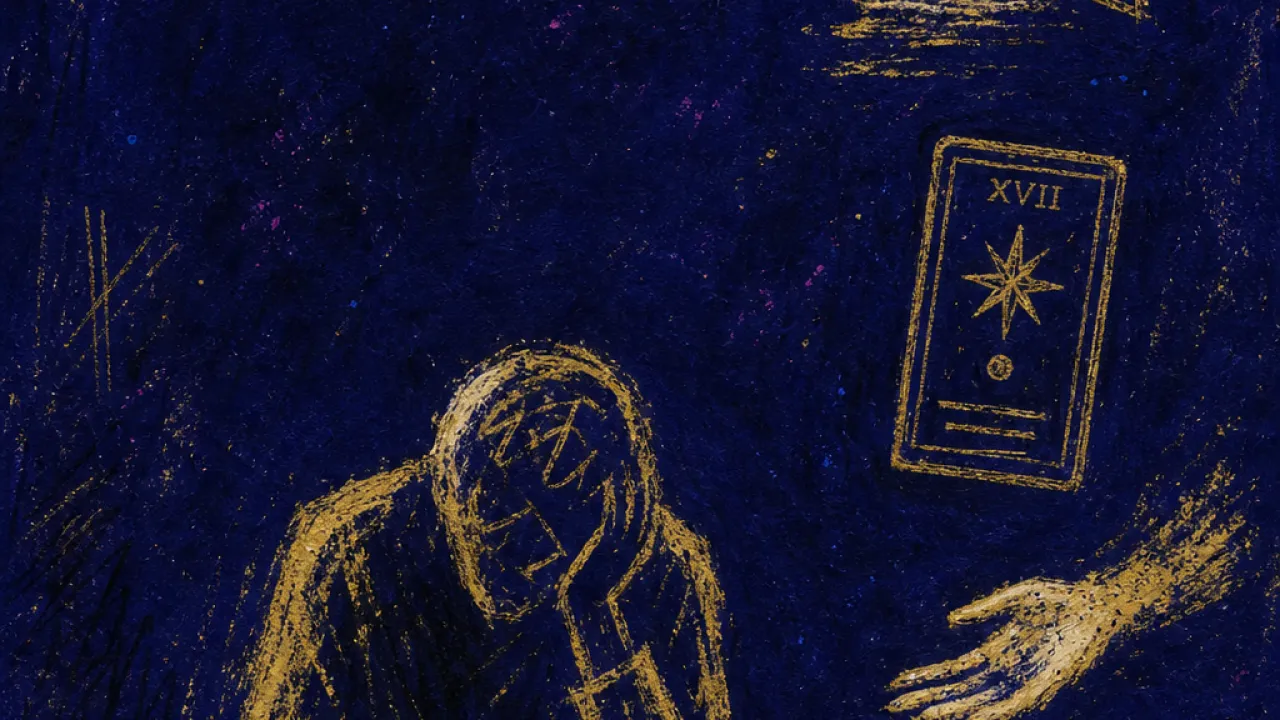
What is this situation?

Academic Resource Blind Spot - you enter the semester with the course site open, the syllabus downloaded, the library login saved, and a list of office hours somewhere in your inbox, but the way the class actually runs still leaves you circling the same few tools. A grade comes back lower than expected, a draft gets covered in comments, a problem set keeps stalling at the same step, and suddenly the visible object is the setback itself: the score, the red notes, the missed deadline, the unread chapter. Around it, the academic system keeps offering things that are technically close: a tutor who has drop-in hours, a rubric that spells out the mark scheme, a lecturer who answered this exact question in week two, a writing center appointment, a classmate who already found the database, a feedback note that names the pattern. But none of those supports enter your workflow at the moment they could help. You keep rereading the same notes, searching the same PDF, rewatching the same lecture clip, or trying to force one study method to carry the whole course. The institution may list resources everywhere, but the path from resource to action is broken, so support becomes background scenery instead of something you can use. By the time another deadline arrives, the problem no longer feels like one assignment; it feels like standing in a room full of doors with no handle you can confidently turn, much like the Four of Cups, where the offered cup is close enough to matter while the seated body remains unavailable to it.

Why it's not you?

This is not a sign that you are lazy, incapable, or simply not trying hard enough. The problem is the conversion gap between academic support that exists on paper and support that actually fits into your study process. When resources are scattered, poorly signposted, or disconnected from the task in front of you, they can stay invisible even while they are technically available.

Academic Resource Blind Spot in Tarot Cards

Academic Resource Blind Spot is not about having nothing around you; it is about support sitting close while the study routine keeps circling the same familiar tools. The tightness in your stomach after opening feedback or a grade can mark the point where the system stops converting available help into movement. This is an environmental, structural dynamic: office hours, rubrics, databases, peers, and feedback channels may exist, but the academic setup has not made them reachable in practice. The Tarot Cards below reflect the shape of that gap between available support and usable action.

Four of Cups Upright
The three cups are already on the ground, and the fourth cup is being offered close enough to matter. Nothing in the image suggests a total absence of resources; the sharper fact is that the exchange is available while the seated body remains unavailable to it. In academic terms, this is the moment when the useful thing is not missing but unintegrated. Feedback notes, tutor hours, reading lists, rubrics, library tools, or a different study method may already be within reach, while the current learning routine keeps looping around what is familiar. You are being asked to locate the resource that has become visually present but functionally invisible. The card turns the problem from “I have nothing to work with” into “which available support has not yet been allowed to change the system?”
Five of Cups Upright
The three spilled cups dominate the figure's field of vision, while two intact cups stand behind the body and the bridge remains visible beyond the river. The card's physical layout shows resources that have not disappeared, but have fallen outside the user's current line of academic attention. In study life, this maps cleanly onto the moment after a bad grade, rejected draft, failed quiz, or missed deadline when the visible loss takes over the whole learning environment. Feedback notes, professor office hours, peer study groups, library support, resubmission rules, and remaining assignments may still be structurally available, but they are not being treated as active tools. The card does not erase the academic setback. It reveals how the setback can become the only object in the room, turning available support into background scenery until the structure is named and brought back into view.
Seven of Cups Reversed
The cups are visibly present, but they hover beyond the figure's reach. Their contents are abundant, yet no bridge, tool, hand movement, or grounded route connects the viewer to what any one cup can actually provide. In academic life, that becomes a Resource Blind Spot. Libraries, rubrics, office hours, tutors, databases, classmates, and feedback channels may all exist, but the student still cannot tell which resource matches the actual bottleneck. The Seven of Cups reframes the problem as misrecognized support rather than empty support. You may not need more resources; you may need a clearer way to identify which cup is useful now, which one is decorative, and which one is pulling attention away from the task.
Nine of Cups Reversed
The cups are present, intact, and close, but they sit above and behind the figure rather than in his hands. The tablecloth creates a clean visual screen, making the resources look available while also separating them from active use. In academic life, that is the unused office hour, unread rubric, ignored feedback note, buried reading list, unasked advisor question, or peer who already understands the problem set. The difficulty is not always scarcity; sometimes the external support system is in the room, but the workflow never touches it. The card turns that blind spot into a spatial fact. It shows how a student can sit directly beneath useful academic resources and still experience blockage because the resources have not been converted into a reachable sequence of action.
Page of Cups Reversed
The Page looks intensely into one cup while a whole sea rises behind him. The visual pressure sits in the scale mismatch: one small vessel receives all the attention, while the larger field of available material remains present but unused. In academic life, that becomes the narrow-resource loop of relying on one study method, one comment, one PDF folder, one app, one professor, or one idea while ignoring the wider support system around the work. The issue is not a total lack of help; the issue is that the available help has not been mapped into the student's actual workflow. The reversed structure makes the blind spot concrete. You may be trying to make a small container carry the whole course, when the real leverage is noticing which resources are already in the environment but have not yet entered the study system.
Ace of Pentacles Reversed
The pentacle is large, bright, and close, yet the description makes clear that it can tilt, roll, or slip if the grip is careless. The garden is also visible from outside, while its working interior remains mostly hidden behind the fence. That combination fits an academic setting where support is technically available but not functionally seen: office hours, rubrics, databases, past papers, feedback notes, or peer structures sit nearby without entering the study routine. You are dealing with a resource problem that looks like access on paper and becomes friction in practice.
Four of Pentacles Reversed
The town sits clearly behind the figure, but his limbs are locked around the pentacles in front of him. The wider social world exists in the image, yet the body has no free hand, open foot, or visible path through which resources can move between the figure and that world. In academic terms, this is the student surrounded by potential support while still operating as if everything must be solved alone. Office hours, study groups, tutors, library systems, supervisor comments, peer explanations, and institutional scaffolding may all be present, but the closed posture keeps them outside the working system. The card’s value is in naming the blind spot without turning it into personal failure. It shows that the blockage is often architectural: when the study system is built around self-containment, available support can remain visually obvious and practically unused at the same time.
Five of Pentacles Upright
The five pentacles shine in the church window while the two figures look away and keep walking. The resource is not hidden from the viewer, but it is not integrated into the travelers' immediate route. For study, this becomes the moment when tutoring, office hours, library access, writing support, or advisor guidance technically exists but never becomes part of your workflow. The card makes the blind spot visible: the problem is not simply that help exists, but that your current academic path is not turning toward it.
Seven of Pentacles Upright
The garden is fertile, but the cultivator's attention is narrowed onto one vine. A coin already sits near his feet, six more remain in the plant, and the wider field is present mostly as unused ground around the central object. In an academic setting, this becomes a resource problem hidden inside apparent effort. You may have office hours, readings, worked examples, tutor feedback, practice banks, study groups, or library access nearby, while still circling the same notes, the same method, or the same assignment until the wider support system disappears from view. The card's value is in making the blind spot concrete. The issue is not that resources are absent; it is that the study structure has narrowed so much that available academic support is not being converted into movement.
Ten of Pentacles Reversed
The ten pentacles hang in a perfect ordered pattern, but they sit outside the family plot rather than being handled by anyone in the scene. In an academic setting, that visual split mirrors resources that are technically present yet not translated into working study systems: office hours, library databases, rubrics, peer notes, or feedback channels that remain decorative instead of operational. The arch, crest, and estate show a world full of assets, but the student's leverage depends on knowing how to bring those assets into the daily workflow. You are not looking at a simple lack of effort; you are looking at a broken conversion chain between available support and actual retention, writing, or revision output.
Page of Pentacles Reversed
The Page's gaze is locked to the coin even though the field, trees, and mountains surround him with additional context. One resource becomes so visually dominant that the rest of the environment falls out of practical use. In study, that is the moment office hours, library support, peer explanation, past papers, feedback banks, or alternative study formats are technically available but functionally unseen. You are dealing with a resource landscape that is larger than the single object currently carrying all the pressure.
Queen of Pentacles Reversed
The queen’s gaze is fixed on the pentacle, while the wider landscape of foothills and water remains present behind her. In reversal, the focus narrows so completely around the familiar object that other routes through the academic terrain become background noise. For study, this points to a student relying on the same notes, the same reading strategy, the same grading assumptions, or the same private method while more useful support sits nearby. Office hours, library databases, writing centers, peer explanations, past papers, or alternative frameworks may be available, but they do not enter the field of action. The card’s value is in naming the blind spot without turning it into a personal defect. The structure shows attention over-attached to what is already in hand, and the path forward begins with noticing which resources have been visible all along but not yet treated as usable.
King of Pentacles Reversed
The oversized pentacle is close, visible, and carefully held, yet it is not moving through the scene. Around it, the vines, throne, robe, and estate create abundance that can become static if everything is possessed rather than used. In study, this points to readings, notes, tutorials, office hours, feedback, or tools that exist but are not entering the learning process. You have to distinguish resource access from resource conversion, because the blockage sits where support should become retention, revision, and output.
Eight of Swords Reversed
The swords in the Eight of Swords are close enough to define the scene, but none of them are in the woman's hands. One foot is on firmer ground while the other touches pooled water, making the body split its contact between usable terrain and uncertain footing. That visual arrangement mirrors an academic setting where help exists but does not translate into action. Office hours, rubrics, databases, feedback notes, writing centers, and peer knowledge may all be nearby, yet none of them feel graspable when the student cannot see which one actually opens the next move. The card points to a resource visibility problem. You may be surrounded by potential support, but the structure has not made that support legible, sequenced, or usable in the moment when your work needs traction.
Two of Wands Reversed
The globe sits in the figure's hand, and the prosperous domain spreads below the wall, but no bridge or exchange is visible between the vantage point and the resources underneath it. The scene holds plenty of capacity, yet the body remains stationed above it, studying the map instead of activating the terrain. For academics, this points to a blind spot around usable support. The reading list, supervisor, feedback channel, library database, study group, writing center, or course structure may already exist, but the student's process treats these supports as background scenery rather than working tools. The reversed Two of Wands makes the cost of distance visible. You are not facing a simple lack of resources; the structure shows where access has not become contact, and where the next academic move may require using what is already present before seeking more.
Queen of Wands Reversed
The Queen holds living symbols, but the surrounding desert is sparse and the wand touches the throne steps rather than the ground. The image shows resources close to the body, yet not fully connected to the wider environment where sustained work has to happen. In academic life, this becomes the student who looks prepared from the outside but misses the support systems that would actually move the work forward. Office hours, rubrics, library tools, supervisor comments, writing centers, and peer review may be nearby, but they remain underused or misunderstood. The card points to a hidden gap between apparent capability and practical scaffolding. It helps you see where the problem is not raw potential, but the failure to plug into the academic resources already sitting around the task.

Academic Resource Blind Spot in Tarot Card Reading Insights

Academic Resource Blind Spot shows up when support exists on campus or inside the course, but it never quite enters the way the work gets done. Other students have brought this same resource gap into readings when grades, drafts, deadlines, or revision plans stopped moving. Tarot Reading Insights from these sessions are gathered below.
Psychological contexts related to Academic Resource Blind Spot