

Ten of Pentacles Tarot Card Meaning
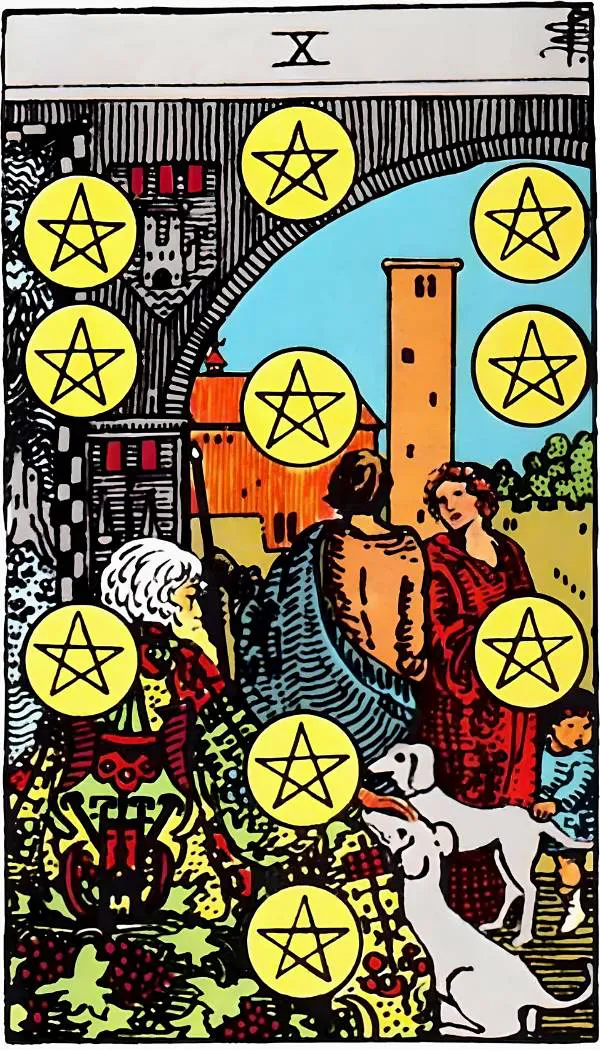
Ten coins are arranged in the shape of the Tree of Life, yet they form an independent structure outside the plot, unrelated to the actual coins in the story, merely serving as an expression of abundance.
The main subject of the image depicts a wealthy family, with three generations visible both inside and outside through the archway.
Under the archway, there is a man with his back to the scene and a woman facing him; they are a couple, gazing at each other while conversing. The man holds a staff in his left hand, dressed in brown clothes and a blue cloak. The woman wears a garland of flowers and is dressed in maroon and brown attire.
Their child is beside the woman, partially hidden behind the mother, revealing the left half of his body and face, curiously peeking at two white dogs, with his left hand touching the one closest to him. These dogs are a popular breed from ancient times, a type of hunting dog known as 'Lingti', and the two dogs are approaching the elder who is sitting in front of the archway, stroking the head of one of the dogs.
This elder sits on a chair adorned with grapes, dressed in colorful clothing filled with magical symbols. This dignified elder's attire is particularly luxurious, indicating he is a noble and the leading elder of this family. The characters in the scene are all connected, showing they are one family and all hold the status of masters in this household.
The noble family crest hangs on the wall next to the archway, with symbols of a castle and a balance on the crest. Marks are also on the archway pillars, and there are relief decorations on the wall, indicating that this family was a high-ranking noble at the time and extremely wealthy. On the left side of the archway, there is a black and white checkered pattern resembling a chessboard, symbolizing the trials of life.
Within the archway, the background includes a chimney and a house, signifying a thriving population and possession of property. In the distance, there is a barrier like a city wall, indicating that this territory is indeed the noble's fief and residence.
Lastly, it is worth mentioning the arrangement of the coins. The ten coins are hung in the composition of the Tree of Life, a design that has been imitated by many Tarot decks in the Waite period. The Earth Tarot is a clear example, with the tenth card arranged in the shape of the Tree of Life.
The Multi-generational Family
The presence of individuals from multiple generations signifies the importance of family, heritage, and legacy. It represents the culmination of long-term efforts and the joy of seeing benefits passed down through generations.
The Ten Pentacles
The Ten Pentacles arranged in the Tree of Life pattern symbolize completion and divine order. The cycle is complete; the material gains or accomplishments have reached their zenith, providing not only for the individual but for the family and community.
The Arch and Gateway
The arch and gateway often depicted in the background signify thresholds and rites of passage. This can be interpreted as reaching a significant life milestone, one that alters the state of familial or personal affairs permanently.
The Elder
The old man usually depicted in the scene embodies wisdom, experience, and tradition. His presence denotes the value of experience and the passing down of knowledge and assets through generations.
Dogs
Dogs are often seen in the card as symbols of loyalty and companionship. They suggest that emotional bonds and loyalty accompany material and familial successes.
Coat of Arms
The coat of arms or family crest typically displayed in the card symbolizes tradition, lineage, and the idea of a legacy that both precedes and continues beyond the individual.

Golden-Child Burnout at 11:40 p.m.: One Quiet Curiosity Gets Tested

Why Copying Family on Email Starts Fights: Choosing a Smaller Audience

Golden-Child Role at Family Gatherings: Pause Before the Next Yes

From Editing a Family Message Six Times to Holding a Steady Boundary

Family-Role Regression: Saying "I Want to Finish This Thought"
