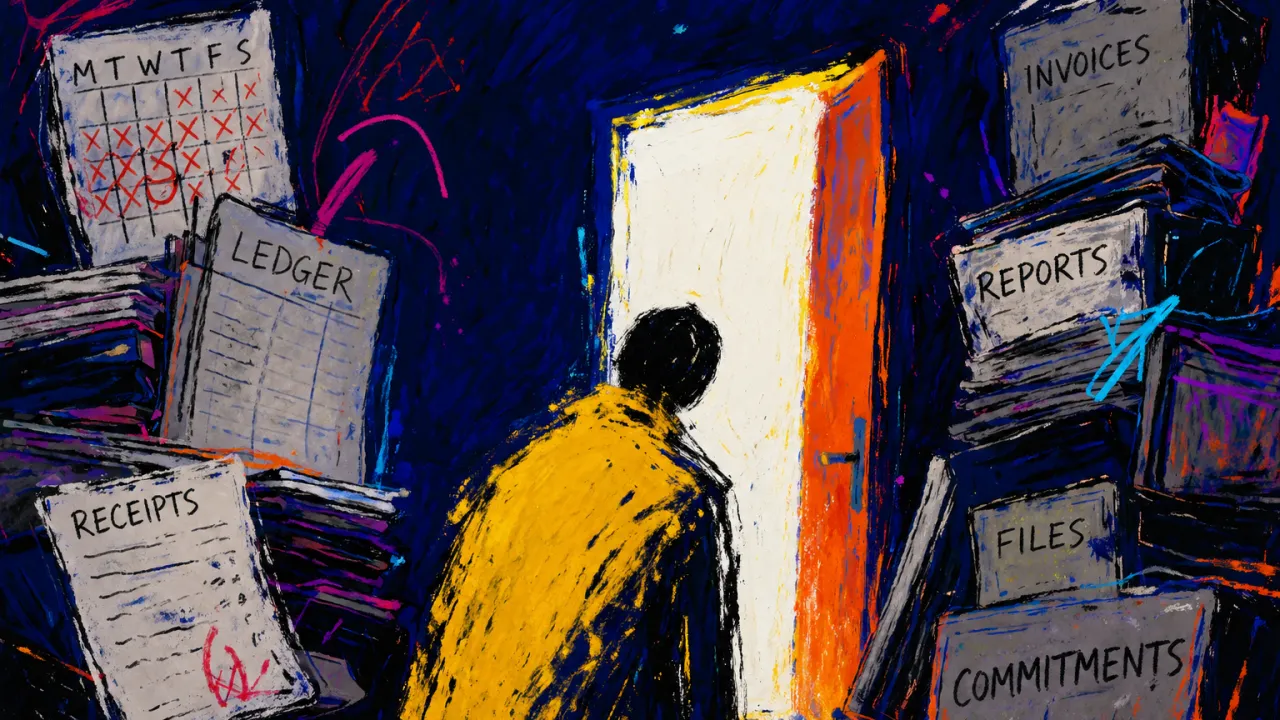
That small stomach drop before you send the message is part of the Sunk Cost Exit Dilemma, not a separate personal flaw. This is an environmental and structural dynamic: the receipts, timelines, titles, shared plans, and public explanations around the choice keep making continuation look cheaper than it is. The cards below do not decide the exit; they mirror the shape of the ledger around it. Here are the Tarot Cards that tend to map this kind of choice pressure.
The Fool UprightThe Fool carries a bundle, not a warehouse. The card shows a body leaving established ground with only a compact set of belongings, making the question of what is worth carrying more important than the full weight of what came before. In a choice spread, this mirrors a sunk cost exit dilemma where the past has value but cannot be allowed to define the next move by volume alone. You may be weighing years spent, money invested, effort given, or identity built around an option that no longer has a clear forward route. The edge forces the audit into the present. The useful question is not whether the past mattered; it is which parts of it remain usable, which parts are only weight, and what cost appears if you keep treating previous investment as a command.
The Magician UprightThe Magician stands behind a table already loaded with tools. The scene carries the weight of preparation: objects have been gathered, arranged, and given meaning before any visible outcome has arrived. That visual investment is what links the card to a sunk cost exit dilemma. A path can become harder to leave not because it still fits, but because so much time, identity, money, or effort has already been placed on its table. The setup starts to argue for continuation simply by existing. For choice work, The Magician makes the investment visible without letting it control the whole frame. The question becomes whether these tools still serve the next move, or whether they can be reclaimed and used somewhere else instead of keeping you attached to a path that has stopped converting effort into value.
The High Priestess ReversedThe High Priestess sits at the entrance without crossing it, holding the scroll close instead of opening it fully. The image carries the weight of accumulated knowledge, status, and investment, but all of that accumulation keeps the body still at the gate. That is how a Sunk Cost Exit Dilemma functions in a choice. You may have years, money, reputation, effort, or emotional history tied to a path, and that investment can start acting like a guard at the threshold. The card's stillness clarifies the structural trap: continuing and leaving both have costs, but past investment is being allowed to vote on a future decision. The task is to separate what has already been spent from what the next room will actually require.
The Empress ReversedThe field is already grown, the throne is already furnished, and the landscape has already been cultivated around the seated figure. This is not a bare starting point; it is a world with visible investment, maintenance, and accumulated proof of effort. Reversed, that accumulation can become the thing that blocks a clean decision. Leaving, changing direction, or choosing differently no longer feels like selecting a path from zero; it feels like walking away from a field that has already consumed time, attention, money, or care. The Empress exposes the hidden pressure inside the harvest. You are being asked to separate what has genuinely matured from what is only holding you because it has already cost so much.
The Emperor ReversedThe long-established ruler sits on a throne that is solid enough to support him and hard enough to restrict him. Crown, armor, and stone all show a structure built over time, but the body remains fixed inside what it has already made. For you, the decision may be attached to years of effort, status, money, or identity already invested. The card names the exit dilemma created when leaving would not just change a plan but unsettle the whole architecture that once made the plan feel legitimate.
The Hierophant ReversedThe followers are not standing outside the temple deciding whether to enter; they are already inside the ritual order. Their kneeling bodies, the layered symbols, and the stone architecture imply prior commitment to a system that took time to learn and status to inhabit. Reversed, this image becomes the exit problem. A decision may be distorted by the amount already invested: years, money, identity, reputation, training, public commitment, or the comfort of being recognized by the current structure. This context links the card to the moment when staying and leaving both carry a price. The Hierophant makes the sunk cost visible as architecture, so the choice can be examined through present value rather than past initiation alone.
The Lovers ReversedThe garden is abundant, ordered, and visibly resourced. In reversal, that abundance can become adhesive: the more the environment has provided comfort, history, identity, or status, the harder it becomes to recognize when staying is no longer aligned. This is the sunk cost exit dilemma held inside The Lovers. The choice is not difficult because the current structure is empty; it is difficult because it contains real investment. Time, intimacy, effort, reputation, money, or shared plans can make exit feel like wasting the life already spent there. The card clarifies the difference between honoring what was invested and letting past investment make the next decision for you. It brings the hidden cost of staying into the same field as the visible cost of leaving.
The Chariot ReversedThe charioteer is armored and elevated, yet the lower body disappears into the square body of the vehicle. The image gives status, protection, and recognition a physical cost: the same structure that displays command also limits visible movement. You may be deciding whether to leave a path that took real effort to build. The reversed Chariot makes the sunk cost external by showing a role, platform, or identity that has become heavy enough to hold you in place. The busy city behind the moat matters because it represents an established world with proof of prior investment. This context does not dismiss that investment; it clarifies when the price of preserving it has started to exceed the movement it once made possible.
Strength ReversedThe garland is beautiful, but in the reversed structure it can read as a loop that keeps the woman tied to the force she is managing. The scene still looks composed, yet the labor of containment has shifted onto one body. That is the texture of a sunk cost exit dilemma in a choice reading. The investment may be visible as time, care, reputation, money, or a story you have maintained about why this path had to work. You are not weighing a clean exit against a clean continuation. The card exposes the hidden cost of remaining the regulator: if the structure only holds because you keep your hands on the lion's mouth, the decision must account for the energy spent maintaining what the situation itself does not support.
The Hermit ReversedThe elder's body carries time visibly: the white beard, the staff, the long climb to the summit, and the narrow ground beneath him all show accumulated investment. The height matters because leaving a high point is never only about the next step; it also means confronting what it cost to get there. For a choice shaped by years, money, status, or identity, this card turns exit into a cost audit. You are not simply deciding whether to quit; you are separating the value of the path from the weight of having already climbed it.
Wheel of Fortune ReversedThe wheel in reversal becomes a closed circuit: movement continues, but it does not become a road. The figures attached to its sides suggest effort being carried around the mechanism instead of released into a new direction. That is the core of a Sunk Cost Exit Dilemma. You may have invested time, identity, money, loyalty, or public commitment into an option, and the weight of that investment now makes leaving feel like losing twice. The card's structure separates motion from progress. It asks whether the choice still has a living future, or whether the wheel is being kept in motion mainly to protect the meaning of what has already been spent.
Justice ReversedJustice sits in a stone chair, robed, crowned, and surrounded by heavy symbols of legitimacy. The whole scene carries the weight of what has already been built, recognized, invested in, and made official. In a reversed decision field, that weight can turn into a sunk cost exit dilemma. A job, relationship, degree, city, project, or identity may remain hard to leave because the structure around it looks too established to question, even when the scale is no longer balanced. The card does not reduce the dilemma to indecision. It shows how previous investment can become evidence that needs weighing, not a chain that gets to decide the verdict by itself.
The Hanged Man ReversedThe tree is alive, with leaves still growing from the frame that holds the figure. The structure is not empty or worthless, which makes the suspended position more complicated than simple escape. In a career context, that is the sunk cost exit dilemma. The role may still carry status, relationships, specialized knowledge, equity, tenure, or a narrative you have invested years building, even while the actual position keeps you from moving normally. The Hanged Man connects to this context because it shows ongoing attachment to something that still has life in it. The task is not to dismiss the investment, but to see whether continuing to hang from it is preserving value or converting past effort into future immobility.
Death UprightThe crown and scepter lie apart from the fallen ruler, still recognizable but no longer able to organize the scene. These objects carry the visual logic of sunk cost: the symbols of previous authority remain on the ground after their practical power has already been interrupted. Around them, the kneeling woman, the child, and the praying figure each face the rider from a different position, yet none of them can restore the old hierarchy. The card shows a structure where past investment, rank, effort, and belief are present, but presence alone does not make the arrangement viable. You may be weighing a choice that feels expensive because you have already paid into it with time, identity, status, or loyalty. The card draws a hard boundary between honoring what mattered and continuing to fund a structure that has stopped returning life, movement, or agency.
ReversedThe crown and scepter lying beside the fallen ruler show investment, status, and proof separated from usable power. The scene contains evidence that something once mattered, but those objects cannot stop the horse or reopen the foreground. Reversed, this becomes the pressure of staying attached to a path because too much has already been spent on it. In personal growth, you may keep defending an old course, identity, habit system, or self-improvement framework because leaving would make the visible investment feel exposed. The card marks the external weight of proof, time, and reputation as the thing blocking the exit.
Temperance ReversedThe unspilled liquid, the repeated transfer, and the distant road create a scene where care has already been invested in keeping the process intact. When that care becomes the whole system, the cups keep receiving the same material while the path remains unused. This maps onto an exit dilemma where past effort makes the current option feel too expensive to question. You are not measuring only future value; you are also carrying the weight of what has already been poured in, and that can make continuation look like responsibility even when the route has stopped opening.
The Devil ReversedThe collars are loose enough to suggest movement, yet both chains still return to the ring on the black cube. The visual trap is not a total absence of motion; it is the way every possible motion keeps referencing what has already been attached. The past investment sits in the center like a piece of hardware. When this appears around a major decision, the card mirrors the moment when years, money, reputation, effort, shared history, or a built identity become part of the cost calculation. You are not simply choosing whether to stay or leave; You are facing a structure that has converted previous investment into present pressure.
The Tower ReversedThe tower is made of heavy stone and placed high on a mountain, so collapse is not just an event; it is the loss of something that took time to build. The height makes exit feel costly because the structure has accumulated weight, history, and visible investment. In love, this maps to the dilemma of staying because of years together, shared logistics, mutual friends, a lease, family familiarity, or a future that has already been narrated. You are not only deciding about feelings; you are confronting the gravity of a built life. The card separates investment from support. Something can be large, old, and meaningful without still being able to hold the relationship safely.
The Star ReversedThe pitchers keep emptying, and no refill source is visible in the frame. What can read as renewal also contains a hard material fact: the body is maintaining output, the vessels are losing contents, and the scene does not show what comes back. That makes the card a precise mirror for a choice held hostage by previous investment. You may be measuring the decision through what has already been poured in, while the real leverage sits in whether the next pour has a return path, a replenishment source, or only the appearance of continued devotion.
The Moon ReversedThe crayfish is no longer fully in the water, but it has not yet secured itself on the road. Its body is exposed at the exact point where the old environment ends and the difficult path begins. That image carries the pressure of a sunk cost exit dilemma. You may have invested enough in one direction that turning back feels wasteful, while moving forward demands more cost without giving you a clean view of what that cost will buy. The card focuses the decision on the threshold, not the history. It asks the present route to justify its next demand, instead of letting prior investment keep authorizing a path that may no longer deserve additional energy, time, or identity.
Judgement ReversedThe bodies rise from coffins that are open but still physically around them. The old container has lost its seal, yet it continues to define where each person stands and how much movement is available. For a difficult choice, that visual structure mirrors the sunk cost problem: past effort is no longer the same as present fit. You can treat the years, money, loyalty, or identity already invested as evidence, but not as a command to keep living inside a container that no longer supports the next phase.
The World ReversedThe wreath and crown display accumulated achievement, while the closed oval shows a cycle that has already formed around the central figure. The two wands remain in her hands, suggesting active commitments that still occupy both sides of the body. When this structure turns into a decision problem, the weight comes from everything already invested. Time, identity, public recognition, money, training, and emotional labor can make an exit feel wasteful even when the original path has completed its useful function. The card does not erase the value of what has been built. It separates past investment from future permission, so the decision can be judged by what the structure can still carry rather than by how expensive it was to build.
Two of Cups ReversedThe wreaths and distant town give the exchange a social promise of stability. In a reversed reading, that promise can become heavy because the appearance of a valuable bond remains visible even when the structure supporting it is thin. For a choice spread, this is the pressure of past investment entering the room. You may be deciding whether to continue because time, effort, reputation, intimacy, or shared plans already exist, and the card makes the cost of staying as visible as the cost of leaving.
Three of Cups ReversedThe harvest is already visible, and the cups are already raised. In reversal, that completed-looking scene can become a lock: proof of effort, public congratulations, and shared history gather around the choice before the next path is actually clear. This context appears when leaving feels unreasonable because something has produced real results. You may be trying to decide whether a job, relationship, plan, or social arrangement still fits, while the evidence of past investment keeps arguing for continuity. The card does not erase the value of what was built. It separates earned fruit from future obligation, so the decision can be measured by what the next cycle requires rather than by what the previous one cost.
Four of Cups ReversedThe three cups are already placed on the ground, close to the seated figure, forming a small history of what has been accepted, tried, or invested in. The fourth cup arrives, but the body remains anchored beside the existing set rather than testing the new one. This is the visual grammar of a decision where prior investment has become part of the environment. The question is no longer only whether the new option is good; it is whether staying with the old arrangement is still a choice or simply the weight of what has already been spent. You may be facing an exit calculation that cannot be solved by optimism or guilt. The card exposes the cost of continuing as clearly as the cost of leaving, making the real decision field visible without forcing a premature conclusion.
Five of Cups ReversedThe fallen cups sit in front of the figure like visible proof of what has already been poured out. Behind the body, two cups and a bridge make a second ledger visible: not everything has been lost, but not everything deserves more investment either. A sunk cost exit dilemma forms when your growth plan, course, routine, or identity project has absorbed enough time that leaving it feels like wasting the spill. The card separates accounting from attachment, showing that the real crossing begins when you can name what was spent without forcing it to justify another round.
Six of Cups ReversedSix golden cups filled with flowers make the past feel like an inventory of value. Nothing in the scene looks wasted, so the emotional account book becomes heavy: memories, effort, loyalty, and earlier dreams all appear preserved in beautiful containers. In a choice that has stalled, this card maps the pressure to keep paying for what has already been meaningful. The reversed structure does not erase the value of the past; it shows how that value can become a reason to avoid calculating the present cost of staying.
Seven of Cups ReversedThe castle, jewels, and wreath do not only promise future gain; they also represent what has already been invested in a version of success. The small skull beneath the wreath makes the cost part of the achievement object, not an outside detail. Sunk Cost Exit Dilemma appears when leaving a path would expose the price already paid for it. The cups keep the figure engaged because each symbol carries identity, time, status, or effort that has become hard to separate from the actual choice. The card does not push an exit or a stay. It makes the attachment visible so the decision can be judged by future viability, not by how much past investment is demanding to be justified.
Eight of Cups UprightThe stacked cups sit in the foreground as proof of effort, order, and prior nourishment, but the visible gap interrupts the structure. The red-clad figure does not knock them down; he turns his back and walks with a staff, leaving something functional because it cannot become complete in its current form. In personal growth, that is the texture of a self-improvement path you have already paid for with time, identity, and discipline. You may still be able to name what the old system gave you, but the card exposes the cost of keeping a plan only because it took work to build.
Nine of Cups ReversedThe cups sit behind the man like receipts for everything already collected, earned, or proven. With his arms crossed in front of them, the body appears to be guarding the record of investment as much as enjoying the reward. Your decision can become trapped when accumulated evidence is treated like a contract. The years, money, effort, reputation, or emotional labor already spent may start speaking louder than the question of whether the option still functions. Sunk Cost Exit Dilemma appears here because the visual authority has shifted from the person to the inventory. The card restores the distinction between honoring what was built and letting past investment overrule the next viable move.
Ten of Cups ReversedTen full cups above an established household show how much has already been built. The river, house, family roles, and shared celebration all imply accumulated investment: time, emotional labor, reputation, routines, and plans that have become part of the landscape. When the decision is about whether to stay or exit, the visible fullness of the scene can make movement feel disproportionately expensive. You are not weighing a clean yes or no; you are weighing a whole arrangement that may withdraw support, identity, or continuity if one piece changes. The card helps locate the real bind. It brings the past investment into view without letting it automatically own the future, making it possible to ask what still has living value and what is only expensive because it took so long to build.
Page of Cups UprightThe small fish rising from the cup turns the Page's duty into a live decision. He is not holding an abstract symbol; he is holding something that has been contained, tended, and made personal while the sea behind him shows the larger environment it may belong to. That image mirrors a choice where past care starts to feel like evidence that you must continue. The cup becomes the invested option, the sea becomes the wider set of possibilities, and the platform becomes the uncomfortable edge where attachment has to be separated from future viability. In a decision context, this card exposes the exact pressure point of a Sunk Cost Exit Dilemma. You are not simply choosing between staying and leaving; you are auditing whether the energy already spent is still producing a real path, or whether it has become the reason the path cannot be questioned.
Queen of Cups ReversedThe chalice is not casual; it is ornate, covered, and held with both hands like something that has required care to preserve. Around it, the throne and island give the whole scene status, privacy, and a visible investment of place. This maps to a choice where leaving would not just change the plan; it would question the time, identity, and attention already poured into the option. The card makes the hidden contract visible: the past investment is asking to be protected, while the present decision needs room to measure what it still costs.
King of Cups ReversedThe crown, ring, throne, cup, and scepter all signal established investment: role, commitment, status, and cultivated control. Yet the throne floats far from land, with no visible exit point beneath the King’s carefully maintained position. Reversed, that structure describes a choice that is hard to leave because too much has already been built around it. The card names the external cost of staying seated in a role that once carried value but now requires more energy to maintain than it returns.
Ace of Pentacles ReversedThe hand grips the coin carefully because losing it would register as leakage, not neutral movement. The fenced garden below reinforces the same logic: once something is owned, protected, or cultivated, stepping away can feel like abandoning value. Reversed, this image maps the decision trap created by previous investment. Time, money, training, reputation, comfort, or emotional effort can become a reason to keep holding the coin even after the path has stopped fitting the person holding it. The grip tightens because loss is visible, while the cost of staying is harder to measure. This context does not demand an exit. It helps you distinguish between protecting a real asset and staying attached to a past investment that is now controlling the next decision.
Two of Pentacles ReversedThe pentacles are not loose objects; they are tied into a loop that keeps prior movement attached to the next movement. Once the rhythm is established, stopping is not neutral because the whole system has been trained around keeping both coins in circulation. That is the pressure inside a sunk cost exit dilemma: investment becomes a tether, and the decision to leave feels heavier than the decision to keep juggling. The card turns the question from how much has already been spent to whether the loop still deserves more of your future capacity.
Three of Pentacles ReversedThe pentacles are already set into the arch, but the structure is still under renovation and no one has crossed fully inside. Effort has become visible in the stone, yet the scene has not reached usable completion. For a choice, this captures the hard point where investment starts to argue for itself. You can distinguish the value already placed into the structure from the separate question of whether more time, money, loyalty, or identity should be added now.
Four of Pentacles ReversedThe figure cannot move without dropping something: the coin on the head, the coin at the chest, or the coins under the feet. The image turns accumulated investment into a posture that must keep defending itself. A Sunk Cost Exit Dilemma forms when years, money, reputation, training, or emotional effort become harder to release than the actual path is worth continuing. The card shows the exact mechanics of that bind: what has been gained becomes proof that the current position must be protected. The town in the background gives the exit question a social dimension. You are not only leaving a choice; you may be leaving an identity that other people recognize, which is why the body keeps holding even after the route has stopped moving.
Five of Pentacles ReversedThe injured figure keeps walking with a crutch while the storm continues around both bodies. The motion is not free and efficient; it is a continuation under strain, with effort already invested into a route that offers no visible shelter ahead. That is the exact texture of a sunk cost decision. You may have spent time, money, reputation, training, loyalty, or emotional labor on a path, and the weight of that investment makes exit feel like admitting waste even when the route keeps taking more. The card brings the hidden accounting into view. It asks what the current path is still costing, not only what it has already cost, so the decision can move from endurance logic into a clearer assessment of recoverable agency.
Seven of Pentacles ReversedThe entire composition narrows around one cultivated bush, one tool, and one worker who has already spent time tending this plot. Six pentacles remain inaccessible on the vine, while the one harvested coin is too small to settle the question of return. In personal growth, this captures the pressure of staying with a method, identity, or goal because the investment has become part of the structure around you. The card does not collapse the question into quit or continue; it makes the real audit visible, where remaining cost, actual yield, and future fertility must be seen separately.
Eight of Pentacles ReversedSeveral pentacles are already finished, and the current one is still under the tools. The scene makes investment physically visible: time, craft, repetition, and attention have accumulated around the bench. In a relationship, that accumulation can become hard to separate from present truth. You may be weighing the history, the repairs already attempted, the plans discussed, the years spent, or the version of the relationship you worked so hard to build. The path to town remains visible, but the foreground labor keeps pulling attention back to the unfinished piece. The card names the dilemma of deciding whether continued effort is still building something mutual or only protecting the meaning of what has already been spent.
Nine of Pentacles ReversedThe pentacles are not scattered coins; they grow inside a cultivated vine beside real grapes. The woman stands among results that took time, discipline, maintenance, and repeated choices to produce, with the manor and garden making that investment visible as a whole environment. In a decision field, that kind of accumulated structure can make exit feel less like choosing a new path and more like abandoning an entire season of labor. The pressure is material and symbolic at once: money, time, reputation, skill, identity, and routine have all been trained around the same cultivated plot. This context appears when the existing option has genuine value, but the value itself has become part of the lock. The card helps separate what is still usable from what is only being protected because it already cost you so much.
Ten of Pentacles ReversedThe ten pentacles show completion, and the house, wall, crest, and generational lineup show how much has already been built. Time and investment are not abstract; they occupy the whole scene. A decision becomes difficult when previous effort is mistaken for a command to continue. The card lets you separate respect for what has been accumulated from the question of whether the next commitment still deserves your consent.
Page of Pentacles ReversedThe pentacle is not handled casually; it is held like an assigned charge by a young attendant whose role is built around maintaining and presenting it. Both hands keep the object elevated, and the body organizes itself around the duty of not dropping it. In a choice, that posture mirrors the weight of an option that has already received time, money, reputation, explanation, or effort. You may technically have room around You, but the absence of a clear stopping rule makes release feel harder than continued holding. Sunk Cost Exit Dilemma appears here because the card shows investment becoming an obligation of posture. The question is not whether the coin once mattered; the pressure is whether past investment is now being mistaken for present fit.
Knight of Pentacles ReversedThe pentacle is already in the rider's hand, and the armor, horse, and saddle show that real preparation has already been spent. But the field has not yet returned the harvest, leaving the visible investment suspended between proof and payoff. This is the pressure point of a sunk cost exit dilemma. You may be deciding whether to keep going because the path is still right, or because leaving would make the time, money, effort, or identity already invested feel exposed and unredeemed.
Queen of Pentacles ReversedThe stone throne is not a temporary chair; it is carved, decorated, and embedded in a maintained garden. The Queen's position carries visible investment, from the worked stone to the cultivated abundance around her. In a choice reading, that accumulated structure becomes the weight of what has already been built. You may be trying to decide whether to leave something that cost time, money, effort, or identity, and the card exposes how past investment can start acting like a gatekeeper for the next move.
King of Pentacles ReversedThe castle, estate, throne, crown, and pentacle all show accumulated investment rather than a temporary setup. The King does not sit in a neutral chair; he is embedded in a whole domain that took time, labor, and identity to build. In a decision spread, this becomes the problem of leaving something that is objectively substantial. You are not simply choosing whether to quit; you are separating the value of what has been built from the pressure to keep building just because the structure already exists.
Ace of Swords ReversedThe crown is already pierced and lifted by the blade, held in place by the same grip that must decide what happens next. It looks like achievement, but it is suspended above barren ground rather than supported by a living system. That image matches a Sunk Cost Exit Dilemma when previous effort, public recognition, or promised payoff keeps an option attached after its practical support has weakened. The hand keeps holding because the crown still gives the old path a visible reason to matter. The reversed Ace of Swords brings the audit to the grip itself. You can separate the real value of what has been built from the pressure to keep holding it only because it has already been lifted so high.
Two of Swords ReversedThe posture can be maintained for a while, but the card makes its physical cost visible. The same swords that create balance also require continued strain, and the stone slab offers stability without offering forward motion. This is the structure of a sunk cost exit dilemma: staying preserves the meaning of what has already been invested, while leaving would expose the cost of holding on for so long. The difficult part is not only the next step; it is the accounting that happens when a previous commitment stops justifying its current price. The card helps separate loyalty to effort from loyalty to reality. You regain choice by seeing what the old investment is still protecting, and what it is now asking your future to pay.
Three of Swords ReversedThe blades are not hovering near the heart; they are already lodged inside it. Their convergence makes the bond look pinned in place, which mirrors a long friendship where history, loyalty, and accumulated injury have become part of the same structure. You may be weighing an exit that cannot feel simple because the friendship carries old versions of you, shared memories, and visible damage at once. The card clarifies the dilemma by showing that staying is not neutral and leaving is not clean; the first leverage point is naming what is still alive in the bond and what is only being preserved by history.
Four of Swords ReversedArmor remains on the figure even on the tomb-like platform, as if an old role is still strapped to the body after active use has stopped. The hidden sword beneath the platform suggests that the real cost is not fully visible from the official story of commitment. In a decision context, this mirrors the moment when staying feels justified because so much has already been invested. The card exposes the buried calculation: whether the old role still gives You usable leverage, or whether it has become a memorial to effort already spent.
Five of Swords ReversedThe central figure still holds three swords after the clash, while two others have already turned away from the field. Nothing in the scene suggests that the earlier fight can be undone; the visible question is what still needs to be carried and what has become dead weight. A Sunk Cost Exit Dilemma appears when past investment makes departure feel like losing twice. The card does not ask You to erase what the choice has cost; it shows the exact point where continuing may become another payment into a conflict that has already stopped producing value.
Six of Swords ReversedThe boat carries every sword with it, even as it leaves the shore behind. The crossing is underway, but the weight of what has already happened remains visible in the middle of the vessel. That is the structure of a long friendship where history makes exit feel complicated. Years of closeness, shared secrets, mutual survival, and old versions of loyalty can become cargo that keeps the relationship moving even when the current exchange is no longer reciprocal. The far shore is still indistinct, so the dilemma is not solved by a single dramatic decision. This card reveals the pressure point: whether the friendship is being carried because it still has a workable destination, or because the weight of the past has made stopping feel impossible.
Seven of Swords ReversedThe awkward bundle of swords shows extraction without completeness. The figure has already taken a lot, but the two remaining swords keep the cost of leaving visible in the same frame. That is the pressure of a sunk cost exit: the past investment becomes a physical load, and the remaining pieces make departure feel unfinished. You may be deciding whether to keep carrying a path because effort, time, status, or money has already been spent. The card separates what has been invested from what still deserves to be carried forward.
Eight of Swords ReversedWhite bands hold the red-robed figure in place while one foot rests in pooled water and the other on muddy ground. The body is not chained to a wall, but every visible step carries residue from what has already happened. That is why the image fits a sunk cost exit dilemma. You may technically have room to leave, yet the accumulated time, effort, identity, or promises around the option make exit feel like stepping through mud instead of simply walking away.
Nine of Swords ReversedThe lower body stays buried under the patterned quilt while the upper body takes the impact of the swords. The bed is not neutral furniture; its carved side panel holds a record of force and imbalance that remains visible beneath the scene. That is the anatomy of a sunk cost exit dilemma: the structure you have already built keeps acting as the container for the choice, even when it is also part of the pressure. You may be judging the future through the weight of what has already been spent, and the card makes that weight visible enough to audit.
Ten of Swords UprightThe blades are not scattered; they are counted, aligned, and fixed along the spine, making the body look like a ledger of accumulated costs. The red covering and face-down posture show an exhausted route that can no longer be defended through effort, loyalty, or public performance. For a long-range path question, that visual precision matters. You may have built a life, career, or identity around a route that once made sense, but the structure now exposes continuation as the more expensive choice. The card gives the dilemma a clean boundary: past investment is real, but it does not automatically make the next step viable.
ReversedThe fallen hand still forms a formal sign of commitment while the body is pinned by every blade. The visual conflict is stark: commitment remains visible even after the structure holding it has become destructive. In an old friendship, that becomes a sunk cost exit dilemma when shared history, mutual friends, rituals, and loyalty narratives keep you attached to a dynamic that repeatedly lands on the same vital points. You are not merely deciding whether someone matters; you are weighing an entire social archive against the cost of continuing. The Ten of Swords makes the cost legible. It does not erase the history, but it shows when history has become the thing that keeps an injuring structure protected from review.
Page of Swords ReversedThe Page stands above the lower landscape after a hard climb, with the rough path still visible behind him. His body looks back while the sword remains active, creating a visible split between the ground already covered and the position that must now be assessed. That is the anatomy of a sunk cost exit dilemma. Prior effort has created altitude, proof, and identity, but the current ridge may not be safe or sustainable just because it was difficult to reach. In a choice reading, this card helps separate the value of the climb from the obligation to remain there. It gives the past its evidence without allowing past effort to become the only argument for the next move.
Knight of Swords ReversedThe horse is caught mid-gallop, with the rider leaning so far forward that stopping would disturb the whole arrangement. The armor, reins, and sword are configured for continuation, not review, so the image carries the physical cost of trying to halt a path already in motion. That is the outer pressure of sunk cost in a choice: time, effort, money, identity, or public commitment can start functioning like reins. The card makes the difference visible between abandoning value and refusing to keep funding a direction only because it has already consumed so much.
Queen of Swords ReversedThe throne is heavy, carved, and established, while the sword remains lifted in a posture that cannot relax. Butterflies mark transformation on the seat itself, but the body is still fixed inside the old structure. That tension fits the sunk cost exit dilemma. The option may have history, status, money, identity, or social proof attached to it, making departure feel like a loss even when staying keeps demanding more of the same rigidity. The card does not reduce the decision to quitting or enduring. It shows the material weight of what has already been built, then places a blade in the scene so the cost of continuing can be measured as clearly as the cost of leaving.
King of Swords ReversedThe king is already installed on the throne, crowned and elevated, with the sword held in a posture that must be maintained. The barren mound beneath him gives the position weight, but it also shows how much of the scene is organized around staying seated inside the role. That is the external shape of a sunk cost exit dilemma. You may be evaluating whether to leave a path that has already consumed time, money, reputation, or identity, while the visible investment makes exit feel like a public verdict on everything that came before.
Ace of Wands ReversedThe hand closes around the wand with a grip that can read as possession as much as readiness. The object is alive, but it is also being held as if letting go would threaten the role or mission attached to it. In a decision context, that grip mirrors the way an option can become difficult to exit after time, money, identity, or public commitment has been poured into it. You may no longer be choosing only the path; you may be choosing whether to keep identifying with the fact that you once chose it. Sunk Cost Exit Dilemma fits the reversed pressure of the card because the wand's life-force is being clamped rather than freely directed. The real question is where commitment has become evidence of value, even if the current structure no longer supports movement.
Two of Wands ReversedThe prosperous land below the wall is not abstract; it is cultivated, owned, and already built into the figure's position. The secured wand turns that established investment into a visible anchor. For you, the difficulty of leaving may come from the reality that the current path contains real time, effort, status, and resources. The card exposes the dilemma without flattening it: what you built has value, and that value can still become the thing that keeps you from choosing cleanly.
Three of Wands ReversedThe planted wands create a visible record of investment: ground has been claimed, a structure has been built, and the figure’s authority is partly tied to what already stands behind him. His hand on the forward wand keeps balance at the cliff edge, where leaving the known platform would require accepting an exposed crossing. That is the external logic of a Sunk Cost Exit Dilemma. The current option is not held only because it is working; it is held because time, status, effort, or identity have become materially attached to it. In a choice reading, this card helps separate recoverable value from attachment to what has already been spent. You can respect the work behind you without letting that work decide whether the next route is still structurally worth taking.
Four of Wands ReversedThe castle, garlanded threshold, and completed posts show a scene where effort has already become visible infrastructure. There is a home-like promise in the background and a ceremonial marker in the foreground, so leaving the scene can feel like leaving more than a single option. In decision work, this points to the pressure created by what has already been built, paid for, announced, or emotionally rehearsed. You are facing a real accounting problem, not a weakness of will. The card asks the structure to separate recoverable value from the cost of continuing only because the evidence of investment is so public.
Seven of Wands ReversedThe figure has won elevation, yet the ground under him is jagged, narrow, and split. His stance has to keep defending the very place that gives him advantage. That is the physical logic of a choice where previous effort becomes a position you keep protecting. The card makes the hidden cost visible: not only what you spent to get here, but what it now takes to keep proving that staying here still makes sense.
Eight of Wands ReversedThe wands have already been launched, and the scene contains no visible hand that can easily call them back. Their motion gives the image a strong investment of force: effort has been spent, direction has been chosen, and reversal now requires more than a casual adjustment. That is the external shape of a sunk cost decision. You may be looking at years in a path, money already spent, a public commitment, a relationship timeline, a degree plan, a job track, or a version of yourself that other people now recognize. The card does not argue that forward motion must continue. It makes the investment visible so the decision can be separated from the pressure to justify what has already been put in motion.
Nine of Wands ReversedThe contracted neck and locked grip show a body that has become part of the support structure. Eight wands are already planted behind him, and the one in his hands carries the active load, making past effort visible as a wall that now has to be maintained. For a decision about leaving, the scene exposes the trap of defending what has already cost you. The card does not erase the investment; it separates the value of what was built from the question of whether your body still has to serve as the missing post.
Ten of Wands ReversedThe bowed figure has already lifted the entire bundle and is still aimed toward the distant building. The effort already spent becomes part of the physical scene, making the load harder to question precisely because it is already in motion. That is the structure of a sunk cost exit dilemma. You are not only weighing the future value of the choice; you are also carrying the proof of past effort, past spending, past promises, or past identity investment in your arms. The card makes the hidden accounting visible. It separates what has already been carried from what still has to be carried, so the decision can stop treating previous effort as automatic permission for more extraction.
Knight of Wands ReversedThe knight is already armored, mounted, and publicly marked by plume, tunic, and wand. Dismounting would not be a private adjustment; it would interrupt an identity performance already staged as departure. This gives the card its sunk cost texture in a choice spread. You may be weighing an exit from a path that has already consumed time, money, social explanation, or self-image, and the real trap is not the past investment itself but the pressure to keep riding so the earlier commitment looks coherent.
Queen of Wands ReversedThe wand does not root directly into the ground; it touches the throne steps, linking action back to the platform that grants status. In the reversed texture, movement keeps being routed through the structure already built. That is the anatomy of a sunk cost exit dilemma. The past investment may be real, the visible seat may be hard-won, and the identity attached to it may still carry social value, but those facts do not prove that staying remains the highest-agency option. The desert offers no obvious side door, which makes exit feel more expensive than the situation may actually warrant. The card's value is in separating what has already been paid from what you are still paying now, so the decision is not trapped inside the old investment ledger.
King of Wands ReversedThe heavy cloak spreads across the throne and down to the ground, making the seated role look materially embedded. Around it, the desert offers no easy exit route, so the established position becomes both identity and anchor. That is the structure of staying because too much has already been placed on the chair: time, reputation, money, loyalty, skill, or a public version of who you were becoming. You are being shown the difference between protecting a past investment and choosing a future path that still has movement in it.
No cards available for this filter.