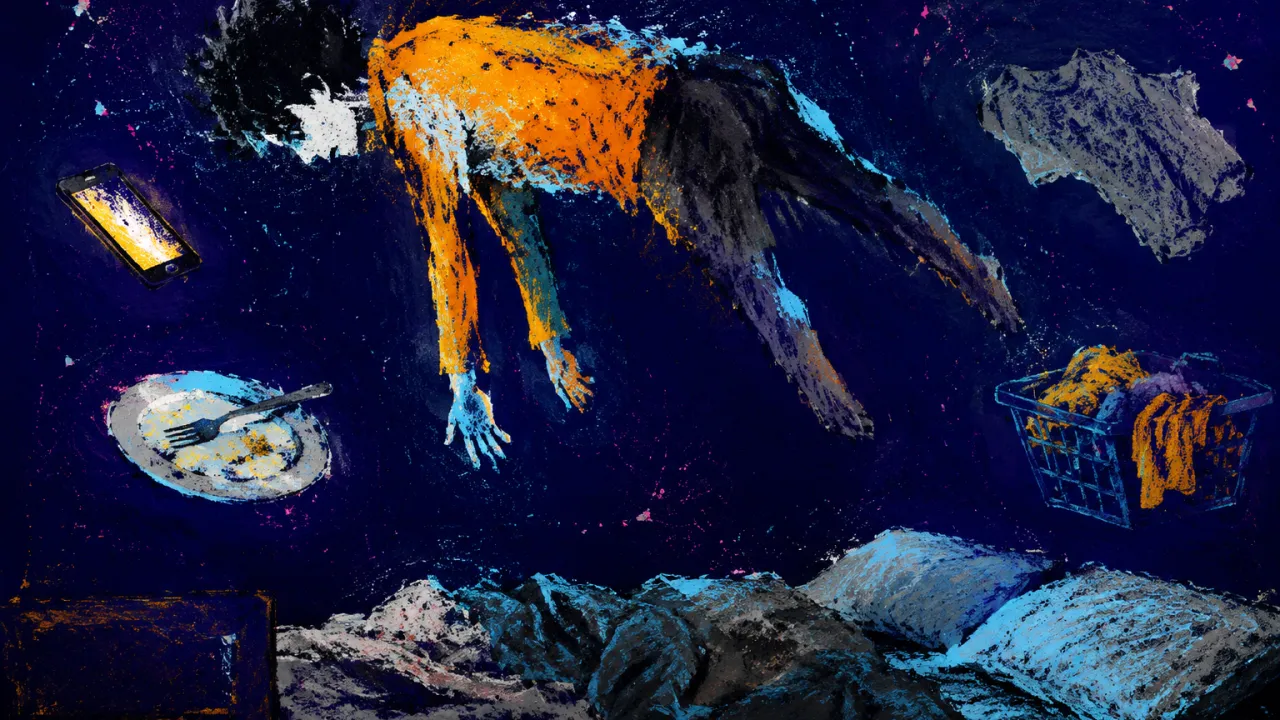
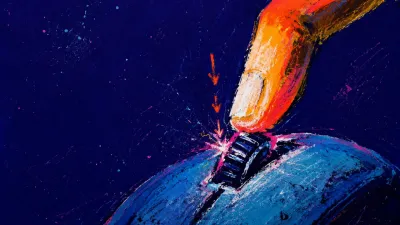
Routine Freefall is the moment when one missed anchor makes sleep, food, work, messages, and recovery start pulling each other downward. You can feel it in the stiff neck, shallow breathing, tight jaw, and the pressure behind your eyes before the day has even properly begun. From an existential perspective, the structural framework of this struggle is about what happens when movement keeps happening but the daily floor that should hold it has dropped away. The Tarot Cards below make that falling shape visible without turning it into a character judgment.
The Fool ReversedThe footline keeps moving along a ledge where the usable ground has already narrowed to almost nothing. The staff is still carried, the gaze is still lifted, and the body has not lowered into a stance that could absorb the next impact. When your growth process turns into repeated resets, the image does not show a lack of motion. It shows motion without a daily surface underneath it, where plans, inspiration, and identity upgrades keep advancing faster than the routines that would let them land.
The Magician ReversedThe table is perfectly staged, but the spell depends on a single held posture. When the raised wand, downward finger, and arranged tools become one tight control circuit, the wider garden no longer functions as living space; it becomes scenery around the workstation. Routine Freefall appears when daily life has only one stabilizing path. You may feel fine while the sequence holds, then lose the whole day when one habit, alarm, meal, commute, or reset point breaks. The card gives that collapse a shape: a lifestyle system with impressive setup but too little redundancy to absorb disruption.
The High Priestess ReversedThe card's surface is perfectly composed: the High Priestess is centered, the pillars stand upright, the veil hangs in place, and the scroll stays held. Beneath that stillness, the moon and hidden water continue to imply motion that the visible structure does not release. Routine Freefall appears here as a collapse of inner regulation rather than an obvious external mess. You may still look organized from the outside, but the hidden systems that keep sleep, food, cleaning, movement, admin, and recovery connected have stopped feeding one another. The reversed image makes stability feel over-stabilized, as if the whole daily architecture depends on keeping the deeper tide out of view. Once one anchor slips, the routine does not simply wobble; it loses the concealed gravity that was holding the system together.
The Emperor ReversedThe Emperor's authority depends on a rigid seat, a fixed crown, held symbols, and a mountain-high position with little visible room for ordinary movement. When that arrangement is overloaded, the structure has few soft joints. In daily life, that image fits the routine that works only while every rule is obeyed. You may hold the schedule together through command, but the card shows why one missed habit, one bad night of sleep, or one disrupted week can knock the whole system off its axis. The struggle is not a lack of willpower. It is a brittle architecture problem: the routine has been built like a throne, not like a living system, so the first crack feels like the loss of the whole kingdom.
The Hierophant ReversedEvery figure in the temple is held in an assigned place: the Hierophant seated, the acolytes kneeling, the keys crossed, the pillars fixed. The order works only while the whole arrangement stays intact. Reversed, that brittle arrangement becomes the shape of a routine that cannot absorb disruption. One missed habit, late morning, messy room, or broken sleep cycle does not stay local; it knocks out the whole reference frame and leaves you without a clear way back into the day.
The Chariot ReversedThe wheels are present but visually subdued, the sphinxes are stationed, and the vehicle designed for motion remains parked at a threshold. The card holds a strange mechanical contradiction: the whole system is built around movement, yet its moving parts are either hidden, still, or unsteered. When your routine starts dropping out from under you, this structure names the moment when days keep arriving but the steering rhythm is no longer connected. You are not looking at a single missed habit; the Chariot shows a daily architecture whose cycles continue while its directing center loses traction.
Wheel of Fortune ReversedTurned upside down, the wheel hangs in clouded space with no floor beneath it and no landing point outside the rim. The serpent, the jackal-headed figure, the sphinx, and the inscriptions still occupy the mechanism, but the whole structure now has to function while suspended. That is the reversed lifestyle signature of Routine Freefall. When one ordinary module slips, the day does not simply adjust; sleep, food, chores, messages, body care, and work can begin to roll together because there is no stable base separating them. The card does not frame this as laziness or weak discipline. It shows a daily system trying to operate without ground, where the first task that falls can pull the rest of the wheel with it.
Death UprightThe fallen ruler's crown and scepter lie apart from the body while the horse advances over the same ground that once held order. Authority symbols remain visible, but they no longer coordinate movement, protect the schedule, or keep the scene upright. That visual pressure mirrors a lifestyle system where one disruption pulls the whole day out from under you. You may still have plans, calendars, and intentions, but the organizing center has dropped out, so ordinary routines lose their sequence and start collapsing into each other.
The Tower UprightThe figures fall from a tower that moments earlier functioned as shelter, status, and vertical order. Their bodies are not stepping down or choosing a new path; they are being expelled from the very structure that used to hold their position. That image gives Routine Freefall its shape in lifestyle work. A daily system can look solid until one overloaded pillar takes a direct hit, and then sleep, meals, cleaning, work rhythm, recovery, and attention stop behaving like separate tasks. You are not looking at a small lapse in discipline here. The card shows a whole routine architecture losing its load-bearing logic at once, which is why the struggle feels less like forgetting a habit and more like trying to find ground while the old ground is still breaking apart.
The Moon ReversedThe shore, pool, animals, and towers compress into a night landscape where the route is there but no longer feels sequential. The path can be seen, yet its beginning is soaked, guarded, and easily swallowed back into the foreground water. You meet this when a small slip in sleep, chores, food, or planning stops feeling small and starts pulling the whole week out of order. The card names the freefall as a structural loss of sequence: once the first step blurs, the rest of the routine loses its felt shape.
Judgement ReversedThe coffins are open on a surface that looks like land and water at the same time, with mountains closing the basin around the scene. The figures are upright, but the ground underneath them does not offer a clear route, rhythm, or stable next step. Routine Freefall forms when the old container has opened but the new floor has not appeared. You may be out of the previous pattern, yet sleep, meals, work blocks, cleaning, and recovery drift without a shared baseline, so the day keeps losing shape just when change is supposed to begin.
Ace of Cups ReversedThe cup hangs in open air with no table, ground, room, or ordinary setting around it. The hand offers support, but the scene itself gives the vessel no visible place to rest. Reversed, that suspended openness becomes the architecture of a day without anchors. You may have freedom, options, and intentions, yet the lack of fixed points can make sleep, meals, cleaning, movement, and recovery fall through the hours without ever becoming a dependable pattern. Routine Freefall is not simple disorganization. The Ace of Cups shows a living flow that needs a basin, and in lifestyle terms the struggle begins when the basin of the day is too open to catch what matters.
Five of Cups UprightThe body in the card has stopped in the foreground, with its axis pointed down toward the fallen cups instead of outward toward the bridge. The route across the river is stable, the castle is visible, and the two upright cups still stand, but none of these elements are linked into movement. That is the structure of Routine Freefall: one break in the daily chain becomes the new reference point for the whole system. Once the morning is missed, the room is messy, or the first task goes wrong, the day no longer feels like a route with recoverable segments; it feels like a scene that has already decided its direction. The card gives this collapse a physical shape. You are not looking at laziness or a lack of discipline; you are looking at a reference system that has tipped toward the spill and stopped using the bridge as part of the day.
Six of Cups ReversedThe scene is stable because every object already has a place: cups lined with flowers, children fixed in a ritual of exchange, manor walls holding the field. Reversed, that stability becomes a display that cannot generate new movement; the cups preserve sweetness but do not build an adult scaffold. You may be able to restart a routine while the familiar cues are present, then watch the whole structure drop when stress interrupts the ritual. Routine Freefall names the gap between comfort-based order and a life system strong enough to survive ordinary friction.
Eight of Cups ReversedThe figure is mid-stride between the cups and the rough path, with water and darkness interrupting any clean route forward. In the reversed state, that crossing can stop being a temporary passage and become the body's default environment. This is how a lifestyle system enters freefall. The old anchors are loosened, but sleep, food, work blocks, home care, recovery, and attention have not been rebuilt into a dependable pattern, so each day must be negotiated from scratch. The card names the danger of mistaking motion for structure. You may be changing, simplifying, or pushing through, but the reversed image shows why the nervous system cannot settle when departure has become continuous and arrival never gets designed.
Knight of Cups ReversedThe inverted Knight hangs between the raised cup and the lowered horse's head, with motion still present but orientation weakened. The gentle gait no longer reads as careful approach; it becomes a suspended circuit along the edge of the river. In a lifestyle system, that image captures the moment when days continue but rhythm disappears. You still move through tasks, tabs, meals, errands, sleep debt, and recovery attempts, yet the structure that tells the routine where it is going has slipped out of alignment. This struggle is not simple inconsistency. The card shows a loss of reference points, where one tired day or one missed habit can make the whole week feel like it has slid off its bank.
Two of Pentacles ReversedThe reversed card turns the figure's unstable balancing act into the baseline environment. The lifted foot, the looping coins, and the rough sea no longer read as a temporary fluctuation; they become the ordinary physics of the day. Routine Freefall lives in that normalized instability. Your schedule still contains movement, but it no longer gives you a floor; every attempt to protect work, health, sleep, or space sends another part of the loop into motion. The card does not show emptiness or laziness. It shows a daily system with no stable reference point, where you keep stepping because stopping would reveal that the routine itself is no longer holding you.
Two of Swords ReversedThe shore looks still, but the sea behind the blindfolded figure is governed by tide. If the arms drop, the body does not immediately have a second structure ready; the balance was the structure. Reversed, this image maps a lifestyle system with no shock absorption. One missed habit, late night, messy room, skipped workout, or broken meal rhythm can feel like the whole ground has shifted because the system was built around holding position, not recovering from interruption.
Three of Swords ReversedThe heart floats without ground, furniture, path, or horizon, held only inside rain and blade geometry. In the reversed texture, that suspended field becomes the default environment rather than a single dramatic moment. Lifestyle routines depend on anchoring cues: morning sequence, room function, recovery rhythm, and a sense of where the day begins. This card shows what it feels like when those cues vanish, so one missed habit or one bad night can make the whole week lose its floor.
Five of Swords UprightThe Five of Swords leaves the body standing on a shoreline after the rupture, with tools scattered, people walking away, and water close enough to make every movement feel exposed. The scene is not active battle anymore; it is the unstable minute after structure has broken and before a new one has formed. In a lifestyle reading, that shoreline becomes the edge where a routine can fall apart after one hard day, one missed reset, or one conflict with your own limits. You may still be moving, but the ordinary safety margins of sleep, food, space, timing, and recovery have thinned out. Routine Freefall is the card's visible aftermath: the system has not disappeared, but its pieces are no longer arranged in a way that can carry you. The struggle is the exposed drop between having a life structure in theory and feeling that structure fail under real daily pressure.
Seven of Swords ReversedThe foreground looks open, but the figure does not have a normal path; he has a stealth corridor between tents, left-behind swords, and dusk light. Movement is possible only through improvisation, not through a stable route. When this appears around lifestyle, it marks the moment a routine stops acting like a structure and becomes a series of emergency maneuvers. You may still get through the week, but the card shows why it feels like every step has to be renegotiated from scratch.
Nine of Swords ReversedThe figure is neither asleep nor fully moving into the day. The body has left the horizontal logic of sleep but has not entered a standing, navigable posture, and the surrounding darkness gives no visible next step beyond the edge of the bed. Routine Freefall appears when one broken anchor makes the rest of the daily structure lose sequence. A late night can pull on breakfast, messages, laundry, exercise, focus, and bedtime again, until the system feels less like a schedule and more like a fall with no handhold. In the reversed texture of Nine of Swords, the issue is not only distress in the night; it is the failure of transition. The card witnesses the exact threshold where a lifestyle system cannot convert awareness into re-entry, leaving you awake, aware, and still unable to find the next stable rung.
Ten of Swords UprightThe figure lies beside a river that could have carried movement, transition, and continuity, yet the body has stopped before the crossing. The scene holds a painful mismatch between visible passage and unusable agency: there is a way forward in the landscape, but not in the body that must take it. That is the exact shape of Routine Freefall in a lifestyle reading. The person may still know the ideal sequence of the day, the meal plan, the sleep schedule, the reset ritual, or the clean room they want to return to, but the structure that turns intention into repetition has dropped out from underneath them. The light on the horizon does not make the routine functional again. It shows why the freefall hurts: the next version of life is imaginable, while the current daily rhythm has lost the physical continuity needed to reach it.
Page of Swords ReversedThe ridge has no flat domestic ground; it is all slope, wind, and watchfulness. The Page's body has learned to move there, but the scene offers no visible baseline where the system can register ordinary ground again. That is why the card can name Routine Freefall in everyday life. Once a work spike, bad sleep, travel day, or messy room knocks the system off balance, there is no remembered floor to return to; every reset feels like starting from exposed rock instead of stepping back onto a stable routine.
Three of Wands ReversedThe ledge is small, the horizon is wide, and the ships keep moving beyond the figure's control. When the distant waterline becomes the main reference point, the ground under the body no longer feels like enough structure. In a daily-life system, that creates the feeling that one late night, one missed workout, or one messy room can pull the whole architecture apart. The card does not reduce the collapse to laziness; it shows a routine with too little buffer, too few re-entry points, and too much weight placed on everything going exactly as planned.
Five of Wands UprightThe scene is caught before any wand lands, any stance settles, or any outcome appears. Feet brace on uneven ground while the staff lines create competing diagonals, so the picture has movement everywhere and reference nowhere. That is the shape of a routine that cannot hold its own sequence. You may start the day with a plan, but the first competing demand knocks the structure sideways, and the day becomes a series of emergency corrections instead of a rhythm you can inhabit.
Seven of Wands ReversedThe sky above the Seven of Wands is clear, but the figure's usable ground is narrow, sloped, and actively contested. The scene contains open air and blocked movement at the same time: there is space in theory, but the body is locked into defending the next inch. Routine Freefall in a lifestyle reading carries that same contradiction. A calendar may still exist, alarms may still ring, and plans may still be visible, yet the felt floor of the day has dropped away; sleep, meals, work, movement, and recovery no longer land in a sequence the body can trust. The reversed card gives this freefall a physical boundary. You are not floating in vague chaos; you are standing on a daily structure that has become too uneven to support ordinary rhythm without constant emergency correction.
No cards available for this filter.