Need one last answer?

A clear definition of the loop after endings, its matching tarot cards, and related reading insights.

Closure Chasing
What is this really?

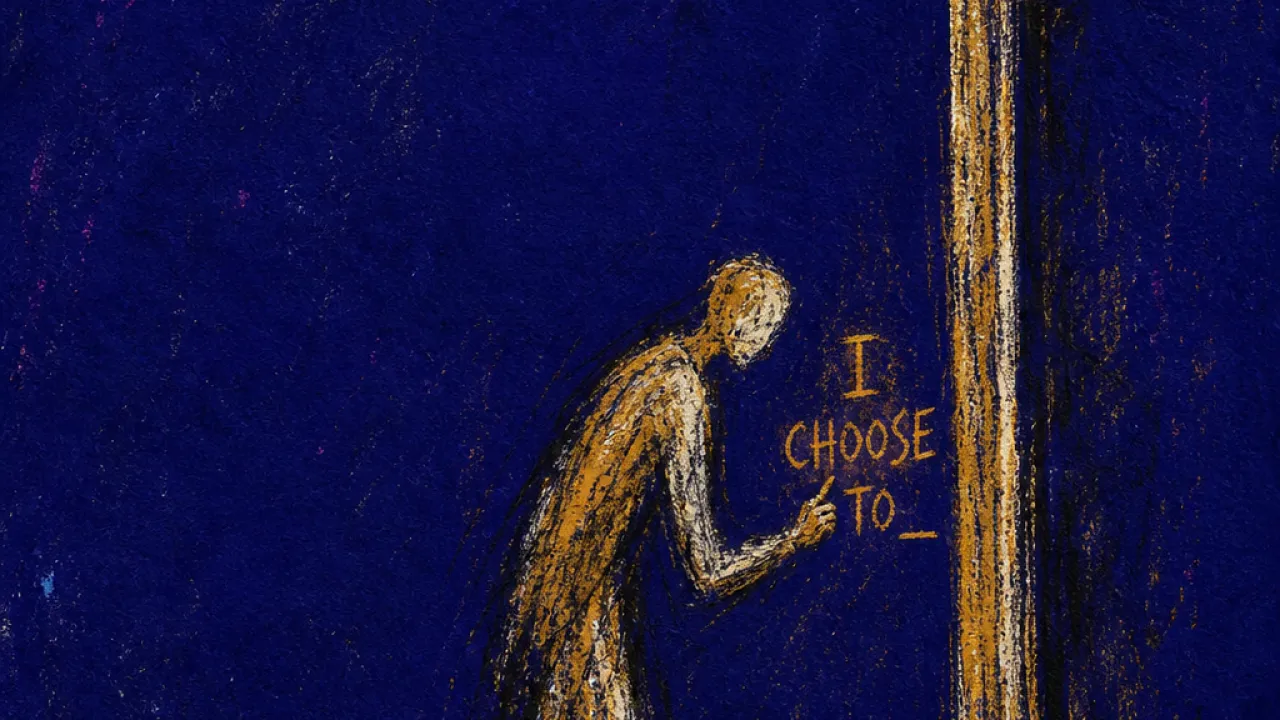
You keep reaching for one last text, one last talk, one last reread of the thread, or one final breakdown of what happened before you let an ending settle, as if cognitive closure is the only gate out. Underneath, you are trying to make the loss feel fair, legible, and safe enough for your body to stop waiting at the door. But the more you chase a perfectly sealed answer, the more your attention stays pinned to the threshold, as if separation can only happen after the old bond explains itself, much like the Death card, where the black flag tightens the whole scene around the moment of transition.

Why did it happen?

At some point, needing the full explanation may have helped you stay steady: if you could name exactly what happened, your chest could unclench and you could get through the day. Now that same inner pattern can send you back to the thread, the voice note, or the imagined conversation, as if your body needs permission from the ending before it can step away. The subconscious loop is tiring because each new detail brings a quick drop of relief, then opens the same unfinished door again.

How does it feel?

  • After an unresolved text, you open the chat, type 'Can we talk?', delete it, then type a softer version while your thumb hovers over send. In that moment, your throat may tighten and your breath may get shallow, as if your body is bracing for the reply before it exists. You can let the urge sit there for a minute without giving it a task.
  • When a friendship drifts, you tap their profile, scroll back to the last inside joke, and hold your mouth in a small half-smile that drops as soon as the screen goes dark. Afterward, your jaw may feel set, with a low pull in your stomach. It is allowed to leave the thread unopened for now.
  • After a tense meeting or a blunt note on a doc, you reopen the same Slack thread, move the cursor over the reply box, and adjust one sentence three times. While you do it, your shoulders may stay lifted and your neck may feel locked. Unfinished wording can exist without needing an instant fix.
  • Alone at night, you turn the lamp off, roll onto your side, then turn the screen back on to reread screenshots or notes you already know by heart. Your chest may feel hollow but wired, with your fingers tingling around the phone. Pausing does not have to mean you are ignoring what mattered.
  • When someone says, 'I don't know what else to say,' you nod, press your lips together, and ask the same question in a slightly different shape. Your face may heat up, and the sound in your ears may get louder than their answer. Not knowing can be present without becoming an emergency.

Closure Chasing in Tarot Cards

Closure Chasing is that pull toward one last text, one last talk, one last reread before an ending can settle. You may recognize it in the moment your throat tightens and your breath gets shallow while your thumb hovers over send. From a Jungian lens, archetypal theory gives this threshold a language without turning it into a verdict. The Tarot Cards below reflect the unconscious dynamics of staying pinned to the edge of an ending:

Death Reversed
The figures remain inside the rider’s path, close enough to the ending that separation has not yet become space. The black flag narrows the visual field around the transition itself, making the moment of finality feel like the only place where meaning can be found. Closure Chasing grows from that compression. In love, You may seek one more conversation, one more explanation, one more reread of the messages, or one final emotional autopsy because the ending feels impossible to leave unless it becomes perfectly understandable. The card shows the trap: the procession does not pause for every witness to feel fully ready. The pattern keeps You attached to the threshold, trying to extract certainty from a moment whose deeper task may be separation rather than explanation.
Judgement Reversed
The coffins in Judgement are open, but the bodies have not fully stepped out. They rise toward the trumpet while still standing inside the old container, suspended between ending and release. That suspended posture is the visual logic of closure chasing. A final message, final talk, final explanation, or final emotional verdict promises liberation, but the repeated reaching keeps the nervous system oriented toward the same unfinished bond. In love, the pattern often feels like a search for truth, yet it can function as a ritual that keeps the old relationship psychologically alive. The card shows why one more call can feel sacred and urgent while still leaving you inside the very structure you are trying to exit.
The World Reversed
The oval wreath has no visible beginning or end, and the red ribbons tighten the image into a completed loop. When the loop stops functioning as completion and starts functioning as a condition, nothing may be released until the ending feels perfect. That is why Closure Chasing belongs here. You may keep returning to old material for one final explanation, one final sign, or one final emotional click; the card shows a psyche confusing integration with an endless demand for a flawless finish.
Five of Cups Upright
The figure stands still before the fallen cups as if the scene has become a private ritual of meaning-making. The spilled liquid holds the eye, while the bridge and distant dwelling suggest that transition is possible without requiring the loss to disappear. Closure Chasing emerges when mourning turns into a condition for movement. The mind keeps waiting for the old path to feel complete, fair, or fully understood before it allows the body to cross into the next phase. In a direction reading, this can make the future feel blocked by unfinished emotional paperwork. The card's structure shows that clarity may not arrive as a final explanation of the past; it may arrive when the pattern is named as the thing keeping the bridge unused.
Reversed
The bridge in the Five of Cups is one of the card's most important quiet details. It offers movement toward a stable place, but the figure stays at the site of the spill. The two standing cups also remain intact, suggesting that not every emotional thread has been destroyed, even though the body keeps returning to what has already fallen. In the reversed pressure, that visual stasis can become Closure Chasing. The mind keeps trying to extract the final explanation, the perfect apology, or the missing sentence that would make a friendship rupture feel complete. Instead of crossing the bridge, the pattern keeps reopening the scene in hopes that the spilled cups will finally give a different answer. This is not a failure to care; it is care caught in an impossible demand for total resolution. Some friendships end or change with only partial clarity. The card shows that transition may depend less on receiving the final word and more on recognizing when the search for closure has become the thing keeping you at the loss site.
Eight of Cups Reversed
The gap in the cups behaves like a visual hook. The figure is not only leaving what exists; he is moving under the pull of what is absent. In the reversed psychological texture, that search can become repetitive, as if the missing cup must be found before any emotional permission to move on is granted. Closure Chasing works by tying freedom to a future response from the family system. One apology, one admission, one clean explanation, or one emotionally mature conversation becomes the imagined key. The chase feels like healing, but it can keep the old structure central. The moon over the path makes the pursuit ambiguous. You may be following a real need for truth, but the pattern starts to distort when the family has to provide closure before You can reclaim your own emotional direction. The card shows the cost of making departure dependent on the missing piece.
Three of Swords Upright
The swords in the Three of Swords remain embedded; the image does not show removal, repair, or release. The heart is held in the exact shape of the impact, which makes the wound feel unfinished even though the moment of injury has already happened. Closure Chasing grows from that suspended state. In a social context, the mind keeps returning to the person, the group, the message thread, or the last conversation because the wound seems to require an explanation from the same place that caused it. The search for clarity becomes a way of keeping the blades in position. This card connects strongly to the pattern because it shows how unresolved communication can keep emotional pain structurally active. The swords are not only hurt; they are questions, interpretations, and unfinished sentences lodged in the heart.
Reversed
The three swords converge so tightly at the heart's center that the wound appears to have one exact point. The image tempts the mind to believe that if the precise cause can be found, the pain can finally be removed cleanly. That is the loop of Closure Chasing after romantic rupture. The final text, the last conversation, the explanation from an ex, or the perfectly phrased question becomes another attempt to locate the point of entry. You may feel that one more answer would end the ache, but the card shows a closed circuit rather than an open door. The search for the final sentence keeps attention organized around the wound, delaying the quieter work of reclaiming your own boundary.
Ten of Swords Upright
The river behind the fallen figure is calm and crossable, yet the body is pinned on the bank before reaching it. A faint dawn line exists beyond the dark sky, but the swords keep the whole scene fixed at the point just before transition. In love, this is the structure of needing one more answer before separation can feel real. You may call it closure, but the pattern keeps placing the exit on the far side of another conversation, which means the person who hurt you still controls the bridge.

Closure Chasing in Tarot Card Reading Insights

For anyone who has hovered over one last text before letting an ending settle, this pattern also appears in readings. The shift from cards to readings shows how others have sat with the same pull toward the final explanation. Below are Tarot Reading Insights that speak to Closure Chasing.
Psychological patterns related to Closure Chasing