

Four of Swords Tarot Card Meaning
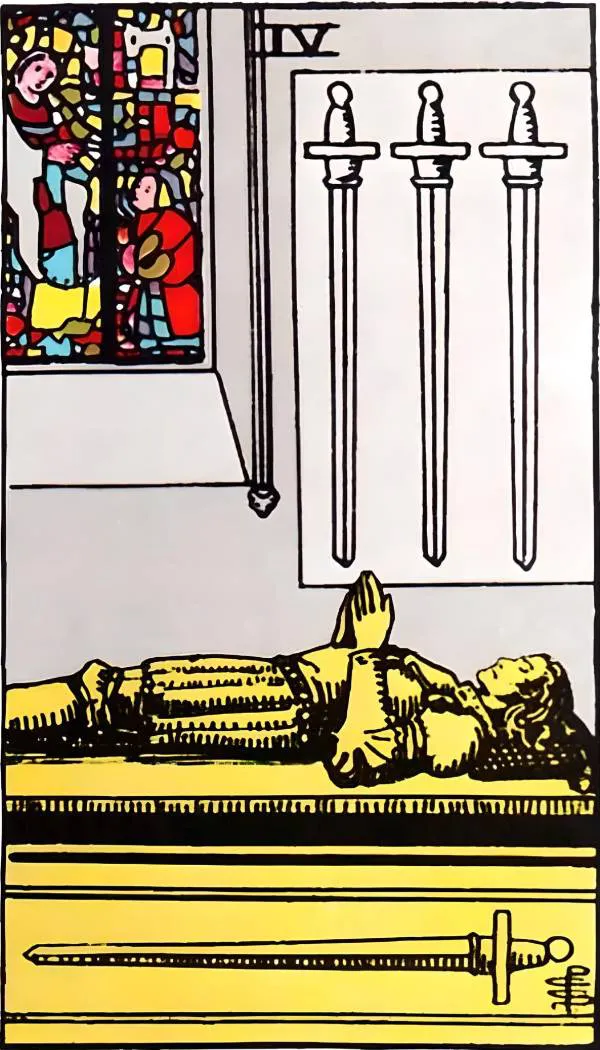
The central figure in the scene is lying flat, with a straight body and extended legs, suggesting a state of sleep, rest, or unconsciousness, indicating a cessation of consciousness and thought. It can also be interpreted as prayer, as the figure's hands are clasped together and raised to the chest.
The protruding stained-glass window in the upper left corner reveals that the setting is a church, and the figure is a knight, currently lying on top of a coffin, which originally symbolizes death (being in a church is an occasion of death).
Three swords are above the figure, and another horizontal sword is beneath. The wall above the figure's upper body divides a square space where the three swords seem to hang, with their points downward towards the figure's head, neck, and chest, indicating the presence of danger threatening the person. The sword under the bed also represents hidden worries and the root cause of the figure's downfall. The three swords also symbolize the subconscious state, temporarily sealed, escaping through sleep but still needing to face it upon waking. The sword under the bed (inside the coffin), lying parallel to the body, represents a state of pause and concealment.
The body is colorless and yellowish, and the color of the bed (coffin) is not much different. The walls and the hanging swords are in shades of gray.
However, the colorful window in the upper left corner stands out in stark contrast, becoming a very eye-catching comparison. This church window is an installation art, representing the window to the soul, a colorful world, and also indicating the figure's other dreams and hopes. The stained-glass window features two people, a woman on the left and a kneeling child on the right, which can be compared to the image of the Virgin Mary and the Christ Child.
Reclining Knight
The central figure of a knight in a horizontal position represents rest, solitude, and a period of respite. The armor suggests that this rest is not an abandonment of responsibilities, but rather a needed pause for rejuvenation.
Swords
There are four swords in the card. One sword under the reclining figure symbolizes the power of rational thought and mental clarity. The other three swords, usually depicted hanging on the wall or pointed downwards, signify the temporary pause of conflict and strife.
Stained Glass Window
The stained glass window typically found in this card illustrates spiritual aspects, indicating that the rest is not merely physical but also spiritual. It serves as a reminder that time apart can serve to deepen one’s spiritual understanding.
Tomb or Altar
The knight is often shown reclining on a tomb or an altar, indicating that this rest can be a deeply transformative experience, like a metaphorical death leading to rebirth.
Cushion or Pillow
The cushion or pillow under the knight’s head provides comfort and signifies the importance of mental ease during a period of respite. The presence of a cushion in a scene of solitude and retreat indicates that the time apart is not punitive but restorative.
Position of the Hands
The knight’s hands are often shown in a position that suggests prayer or meditation, underscoring the importance of mental and spiritual relaxation and focus. This pose is indicative of inner work and contemplation, which are necessary aspects of any meaningful rest or retreat. It suggests that one’s period of respite is as much about mental and spiritual rejuvenation as it is about physical rest.

Long-Distance Friendship Overextension Gives Way to One Focused Window

Moving PTO to Next Month, Then Writing the Three-Line Handoff

PTO Procrastination Under Deadline Pressure: Plan a Small Pause

Saving PTO Until It Is Nearly Gone: Making Rest Ordinary

Doing Only Your Job, Feeling Guilty: Choosing Deliberate Career Growth
