When Marks Become Mirrors

Explore how grades start carrying identity weight, the Tarot Cards that mirror it, and related reading insights.

Grade-identity Fusion
What does this feel like?

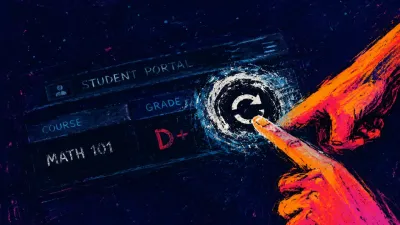
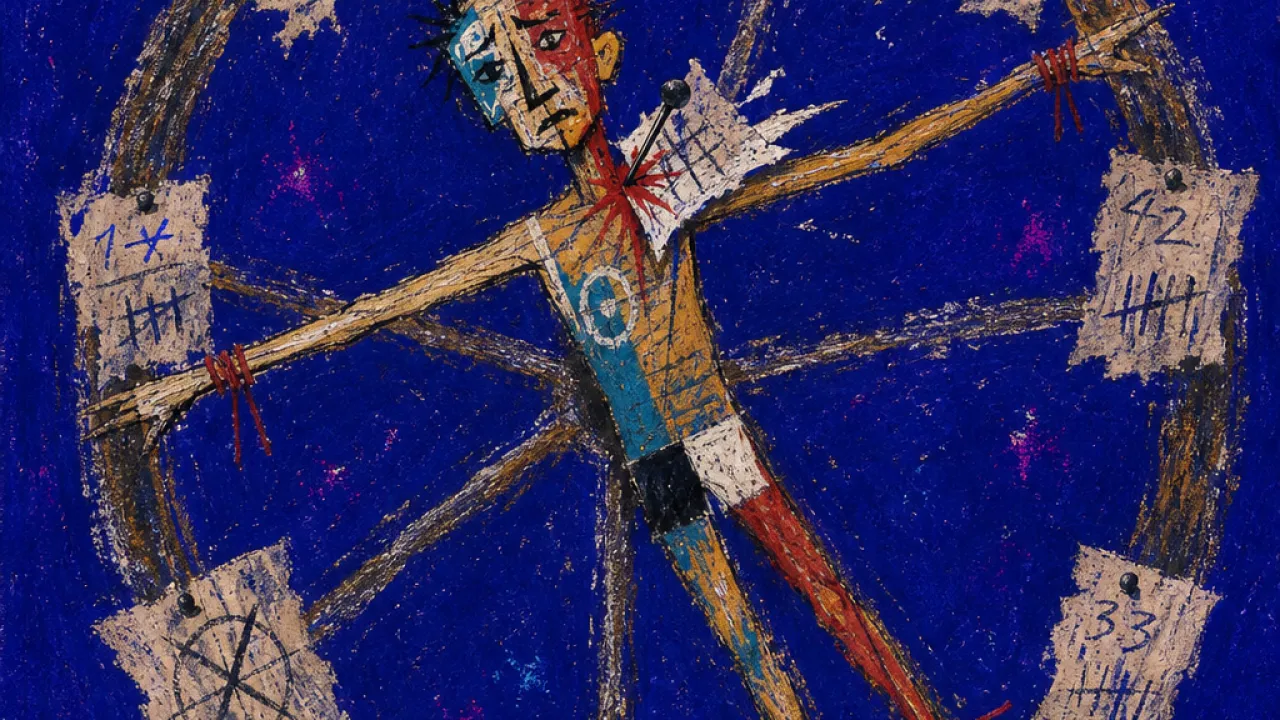
Grade-Identity Fusion - you open the grade portal at 12:07 AM because you told yourself you were only checking, but your thumb is already stiff before the page loads. The screen light hits your face, your stomach pulls inward, and your throat gets tight in that specific way that makes swallowing feel like a task. You know, on paper, that this is one essay, one exam, one supervisor comment, one line in a long semester. But the moment the mark appears, the work itself seems to vanish and something much larger steps into its place: am I still smart, still impressive, still allowed to picture myself here, still the person I thought I was when this path felt possible? If the number is high, relief arrives fast, almost dizzying, but it does not stay clean; it turns into a new height you now have to defend. If the number is lower than expected, your body reacts before you can talk it down - ears hot, jaw locked, chest heavy, the room suddenly too quiet - and you start rereading the feedback like there must be a sentence in it that explains who you are. You may keep functioning: submitting the next draft, joking with classmates, replying to emails, making a study plan. But underneath, learning has started to feel less like contact with ideas and more like standing under a public measuring device, waiting to be lifted or lowered. The cost is quiet and sharp: you begin to lose track of what you think, want, and enjoy when no one is scoring it, much like the Wheel of Fortune, where a sword-bearing figure sits at the highest point while other bodies are fastened to the turning rim, rising and falling with a motion they cannot fully control.

What's pulling at you?

You're not simply upset about a number; the number has started doing two jobs at once. It is supposed to tell you something limited about one piece of work, while your body treats it as evidence about whether you are capable, legitimate, and allowed to imagine a future in the field. That leaves you stuck between wanting to learn in a messy, uneven way and needing every result to protect the self you have built around being good at this.

How It Shows Up?

  • You refresh Canvas, Blackboard, or your uni portal late at night, even though you promised yourself you would check in the morning. The loading circle spins, and your thumb stops moving on the glass; your stomach tightens, your breath gets small, and the back of your neck feels hot before any number appears. The waiting itself feels like being attached to a turning rim, already rising or dropping before you know which direction it will go. You can let the page stay closed for one minute before deciding what the number gets to mean.
  • You open a marked essay in the library or a cafe between classes, trying to look casual while the PDF loads. A single comment in the margin catches your eye, and your shoulders creep upward as if the sentence has weight; your jaw sets, your eyes skip over the positive notes, and your chest locks around the one line that sounds sharp. Justice's scales seem to hang over the screen, but the scale is not just weighing the paragraph - it feels like it is weighing you. A margin note can stay a margin note while you take your next breath.
  • A friend, partner, or roommate asks how the exam went, and you hear yourself answer before you have checked what you feel. You say it was fine, or you make a joke about being cooked, while your fingers curl around your phone and your throat tightens because the result is not just news to you; it feels like a version of yourself you might have to reveal. You want comfort, but you also want to keep the image intact, so the conversation gets smaller than the pressure inside it. You can share the amount you have words for, without turning the whole result into a performance.
  • In a seminar, group chat, or study session, someone mentions their mark, offer, scholarship, or supervisor praise, and the room tilts a little even if you keep your face neutral. Your mouth smiles at the right time, but your ribs feel tight and your mind starts building a scoreboard from scraps: who is ahead, who looks effortless, where you must be standing now. The Six of Wands has that same public heat, the achievement held high while everyone can see the body carrying it. You can notice the comparison without letting it write the whole room for you.
  • Even on a day off, your body reacts when an email subject line says feedback available or a transcript tab sits open in your browser. The tightness starts at the throat, drops into the center of your chest, and turns your hands cold, as if a loose collar has appeared even though nothing is stopping you from standing up, stretching, or leaving the desk. The work may be over for the day, but the measuring field follows you into dinner, the train ride, the shower. That tightness can be treated as a pause signal, not a command to solve your whole self.

Grade-identity Fusion in Tarot Cards

Grade-Identity Fusion lives where a grade, comment, or ranking stops landing on the work and starts deciding how you read yourself. You feel it in the tight throat, the shallow breath, and the frozen thumb over the grade portal. From an existential angle, the structural framework is about a self fastened to a measurement system that keeps lifting and lowering it. The Tarot Cards below make that outline visible without turning it into a verdict.

Wheel of Fortune Reversed
The highest point of the wheel is occupied by a guarded figure with a sword, while other bodies are attached to positions of rising and falling. The image compresses status, exposure, and movement onto one turning rim. Grade-Identity Fusion forms when an academic result stops being feedback and becomes a mirror for the whole self. A grade, ranking, exam score, or supervisor comment begins to feel like the place where your worth is lifted, lowered, or judged. The card holds that fusion without making it final. It shows that the result is part of a rotating system, while also acknowledging how violently the system can feel when your identity has been fastened to its rim.
Justice Upright
The scales hang level in Justice's left hand while the sword stands upright in the right, placing measurement and consequence in the same frontal frame. In an academic context, that image captures the moment a grade stops being a limited assessment of work and starts operating like a verdict on the person who produced it. You are not simply reacting to feedback; you are carrying a structure where every exam, comment, or mark feels weighed against your identity. The card's seated judge gives that struggle a boundary: the pain forms where evaluation crosses from evidence into self-definition, and clarity begins by seeing that crossing as a structure rather than a truth about you.
The Hanged Man Reversed
The tree stands upright while the person is upside down, so the card holds two baselines at once. One structure defines the world as stable; the other makes the body live by an inverted standard. In academic life, grades can become that external baseline. Over time, evaluation stops feeling like a measurement of work and starts deciding whether the self is upright, capable, and real. The Hanged Man's calm expression makes the fusion harder to detect. The card shows how a student can appear composed inside the system while their inner reference point quietly migrates into marks, feedback, rankings, and institutional judgment.
Death Upright
The fallen ruler lies beneath the horse while the crown and scepter are separated from his body, turning achievement markers into objects that can no longer protect him. Death's rider makes rank visible as something temporary, not as a permanent shield against transformation. In an academic context, that image maps cleanly onto the moment a grade stops behaving like feedback and becomes welded to legitimacy. You are not only reading a score; you are watching a symbol of standing fall to the ground and trying to decide whether the self falls with it. Grade-Identity Fusion lives in that weld. The card gives shape to the way exams, professor comments, and admissions outcomes can feel like they are measuring the whole person when they are actually passing through one part of a changing system.
The Devil Upright
The loose collars around the man and woman do not bind the hands; they bind the throat and keep both bodies positioned before the black altar. The restraint is not placed on raw ability, but on the point where identity, voice, and visible standing are exposed. In academic life, that structure mirrors the moment when a grade stops being feedback and becomes the ring through which the whole self is measured. You may still have the capacity to read, write, revise, and think, but the body reacts as if every mark is deciding whether you are allowed to stand as a capable person. The Devil's altar gives this struggle a hard physical shape: the metric becomes central, elevated, and difficult to step away from even when the chain has slack. Grade-Identity Fusion names the bind where academic evidence turns into identity evidence, making each result feel less like information and more like captivity.
The Tower Upright
The crown is blown from the tower at the same time the figures are thrown from the structure that held them above the ground. Height, rank, and shelter collapse together, so the image does not separate status from bodily safety. In academic life, that visual logic mirrors the moment a grade, exam result, or supervisor response stops being information and becomes the place your selfhood is stored. You are not reacting to one mark alone; you are feeling what happens when the tower of achievement has been asked to carry your entire identity.
The Star Reversed
The nude figure has no armor between the open sky and the work of pouring. Under the bright central star, the body is visible as it performs, and the surrounding space gives that visibility nowhere to hide. In academic life, a grade, exam, critique, or supervisor response can begin to occupy the same place as identity. The reversed Star names the moment when performance feedback stops landing on the work and starts flooding the self-image that has been made to stand exposed beneath it.
The Sun Reversed
The Sun organizes the entire scene around brightness: the flowers face it, the wreath repeats it, and the child rides in its full exposure. In the reversed texture, that single reference point can become too total, making radiance the only acceptable measure of being on track. Academic life has its own version of that solar center. Grades, praise, rankings, scholarship outcomes, and visible ease can begin to function as the only proof that the self is coherent, valuable, and safe inside the learning environment. The card makes the fusion visible by showing a whole field aligned around one source of validation. You are not just trying to perform well; the academic signal has started carrying identity weight, so every mark or comment feels larger than the task itself.
Judgement Upright
The angel's trumpet descends from a height the rising figures cannot reach, and the open coffins turn response into full-body exposure. The people are not simply hearing a signal; their pale bodies stand up inside the containers that used to define their limits, with every raised arm making the call visible. In academic life, that image maps to the moment a grade, exam result, or supervisor comment stops feeling like information and starts feeling like a verdict on the whole self. You are not only measuring performance; you are carrying a structure where evaluation reaches identity before it reaches learning, so each assessment can feel like being summoned out of hiding with no partial version of yourself allowed.
The World Upright
The dancer is surrounded by an outer laurel wreath while wearing a smaller wreath on the head, so the symbol of completion appears both around the world and on the body. The same achievement marker frames the whole scene and crowns the individual at its center. In academic life, that double crown can make grades, admissions results, honors, and supervisor approval feel less like feedback and more like proof of who you are. You are not simply moving toward a milestone; the milestone starts acting as the mirror that tells you whether the self at the center is valid. The four corner figures intensify this by turning completion into something witnessed from every side. The card locates the struggle where external academic recognition becomes fused with personal identity, making every evaluation feel larger than the task itself.
Ace of Cups Reversed
The reversed Ace of Cups shows how a small concentrated input can trigger a much larger release. The dove's disc is tiny compared with the five streams that follow, and the open space around the cup gives the flow no clear boundary. In academic life, Grade-Identity Fusion works the same way. One grade, comment, rejection, or exam score enters the system as limited feedback, but it can release a flood of conclusions about intelligence, future, belonging, and worth. The card witnesses the disproportion. The academic signal is real, but the struggle begins when it is asked to carry identity-level meaning; the cup becomes too open, and a piece of feedback turns into a whole verdict about who You are becoming.
Two of Cups Reversed
Both figures wear wreaths while holding their cups at equal height, so recognition appears on the body as much as in the exchange. In reversal, the honors and the vessel start to collapse into one signal, as if the measured response to the cup defines the person carrying it. In school or university, this is where a grade, ranking, or exam result stops being feedback about work and starts feeling like a verdict on selfhood. The card locates the fusion point between academic recognition and identity, giving that pressure a boundary.
Five of Cups Upright
The fallen cups sit in front of the figure like visible proof of what went wrong, while the two standing cups and the bridge occupy the parts of the scene the body does not consult. The card holds two realities at once: a real loss in the foreground and a wider structure that refuses to reduce the whole field to that loss. When this pattern enters academic pressure, a grade can stop behaving like feedback on a specific performance. It becomes a totalizing symbol, turning a marked paper, failed test, or rejected application into evidence about intelligence, worth, and future belonging in the academic world. Grade-Identity Fusion is the point where evaluation and selfhood lose their boundary. The Five of Cups makes that fusion visible by showing a figure whose whole orientation is captured by what has fallen, even though the card itself still contains value that has not fallen with it.
Six of Cups Reversed
The foreground of the Six of Cups is child-scale, while the larger architecture and older background figure remind the eye that time has moved beyond the small protected exchange. The scene preserves an earlier version of safety so vividly that the present has to pass through a childhood-sized frame. In academic life, this becomes the fusion between grades and selfhood. A difficult module, weak mark, or blank draft does not feel like one piece of feedback; it threatens the old identity of being naturally smart, good, gifted, or easy to praise.
Seven of Cups Upright
The laurel wreath promises recognition while the skull beneath it places cost inside the same cup, and the separate face turns reputation into a visible object. Achievement and self-image sit as objects to be chosen, not as stable parts of the person watching them. You may experience grades, feedback, or ranking as if they decide whether your academic self is real. The card locates Grade-Identity Fusion where success symbols stop being outcomes and begin carrying the weight of identity.
Ten of Cups Reversed
Ten separate cups have been fused into one rainbow, and that arc becomes the reference line for the whole scene. The ground, house, river, and bodies are all visually organized beneath a single symbol of completion. That is the structure of Grade-Identity Fusion in academic life. A mark, supervisor comment, exam result, or ranking stops measuring one piece of work and starts organizing the entire self beneath it. The card's reversed pressure shows why feedback can feel disproportionate without making that reaction irrational. You are not only receiving information about performance; you are standing under a reference frame that has collapsed performance into identity.
Page of Cups Reversed
The Page does not look at the horizon; he looks into the cup, where the living fish seems to look back. The object in his hand becomes a mirror-like point of attention, tight enough that the wider sea and empty sky lose their reference power. When academic feedback lands inside that kind of closed circuit, a grade can stop feeling like information about a piece of work and start feeling like a verdict on the self that made it. The card gives this fusion a shape: a small measured container holding too much personal meaning.
Ace of Pentacles Reversed
The single gold disk dominates the scene so completely that value becomes concentrated in one visible object. The garden, path, and mountain still exist, but the eye returns to the coin as the cleanest proof that something has worth. In academic life, a grade, GPA, offer, or result can begin to function like that coin. It stops being one indicator inside a larger learning landscape and becomes the object that seems to certify whether you are capable, safe, or real. The card identifies the fusion point where a measurable token starts carrying more identity than it was built to hold.
Four of Pentacles Upright
The crowned figure balances one pentacle on his head, clamps another to his chest, and pins two under his feet, turning every point of contact into a security checkpoint. His posture does not simply show possession; it shows a body organized around keeping evaluation objects from slipping. In academic life, that arrangement maps onto the moment grades, rankings, scholarships, or supervisor praise stop being information and start feeling like proof of who you are. You can still study, but every task carries the extra load of defending identity, so one mark can feel physically too heavy for the system holding it.
Ten of Pentacles Reversed
The family crest, ordered pentacles, decorated walls, and dignified elder create a surface where identity is read through visible signs of standing. Several bodies appear in the frame, but the scene's strongest coordinates are not personal gestures; they are rank, lineage, property, and public proof. When that structure turns inward in academic life, grades and feedback become more than measurements of work. You start meeting yourself through the transcript, the mark, the program name, or the evaluator's tone, as if the visible academic result has become the only reliable mirror. Grade-Identity Fusion is the struggle carried by that visual arrangement. The card shows a self-position crowded by external emblems, naming the moment when academic evidence stops being information and starts functioning like identity.
Page of Pentacles Upright
The single pentacle sits where a wider horizon would normally open. The Page's whole visual field narrows around one bright marker of value, while the fertile land, trees, and distant mountains become secondary to the object held at face level. In academic pressure, a grade or result can take the same position. It stops being one piece of feedback and becomes the mirror through which you measure whether you are capable, legitimate, and still allowed to imagine a future in the field. The card gives this fusion a visible boundary. You are not being asked to care less; the structure shows how one academic marker has been allowed to carry too much of the self.
King of Pentacles Upright
The King's left hand pins the pentacle onto his raised knee while his crowned body settles into a throne built to display ownership. The object of value is not beside him; it is braced against him, stabilized by his posture and watched with concentrated attention. In an academic field, that arrangement mirrors the moment when grades, GPA, scholarships, or program status stop being information and start acting like structural supports for the self. You are not simply chasing a result; you are trying to keep the visible evidence of competence from slipping off the body of your identity. The castle and wall behind him add weight: achievement has become a domain to defend. This struggle becomes especially sharp when one exam, paper, or critique feels capable of shaking the whole seat you have built under yourself.
Ace of Swords Upright
The crown, olive, and palm all hang from one narrow sword point, so symbols of mastery, peace, victory, and clarity are forced onto a single load-bearing axis. The blade does not merely cut through confusion; it has to hold the whole meaning of success without bending. That visual pressure matches Grade-Identity Fusion in academic life. A mark, exam result, acceptance letter, supervisor comment, or dissertation milestone can become more than feedback; it starts carrying proof of intelligence, future worth, and whether the self is allowed to feel legitimate. The double edge of the sword matters because academic achievement can validate and wound through the same instrument. You are not just trying to perform well; you are trying to keep one outcome from deciding too much about who you are.
Three of Swords Reversed
The reversed Three of Swords keeps every blade oriented toward the same center, making the heart the fixed reference point for all impact. Nothing in the image distributes meaning outward; everything returns to the punctured core. In academic life, grades can take on that same gravitational role. A mark, rank, acceptance, rejection, or supervisor response stops being one piece of information and becomes the point around which identity organizes itself. Grade-Identity Fusion fits because the card shows measurement-like precision entering the emotional center. You are not only reacting to performance data; the data has been allowed to occupy the place where a wider sense of self should have room to exist.
Five of Swords Upright
The foreground figure holds three swords while the two others leave theirs on the ground, turning the whole scene into a visible win-loss ledger. In an academic field, that arrangement mirrors the moment a grade, exam result, or ranking stops being information and starts deciding who gets to stand upright and who has to retreat. The body is not simply carrying tools; it is clutching proof. You meet Grade-Identity Fusion when the mark on the page becomes fused with the question of whether you are intelligent enough, allowed to continue, or still worthy of being seen in the classroom.
Nine of Swords Upright
The lower swords cross the head, throat, and heart line, turning mental pressure into a direct strike through the body's centers of perception, expression, and value. Below them, the quilt's symbolic grid repeats signs without a stable order, as if the body is resting on a scrambled system of measures. A grade becomes dangerous when it stops being feedback and starts serving as a total identity verdict. This card links academic scoring to bodily exposure: You feel the mark not as data about one task, but as a blade passing through the question of who you are.
Page of Swords Reversed
The Page stands above the lower landscape with the sword raised and the weather pressing close, as if the whole scene has become a test of stance. When that height becomes the only reference point, measurement stops being external information and starts feeling like the ground the self must stand on. In academic life, grades and feedback can begin to carry more weight than they were built to hold. A mark, comment, class rank, or supervisor note becomes a verdict on identity, and the mind responds as if the self is being assessed rather than the work. Grade-Identity Fusion is anchored in that distorted altitude. The card shows how a learning environment can turn into a defensive platform where every academic signal feels personal, total, and hard to separate from who you are becoming.
King of Swords Upright
The crown, throne, robe, and sword compress identity into the image of intellectual authority. Nothing in the King's presentation is casual; the whole body is arranged as a sign that judgment, status, and mental control belong to the same seat. Academic systems can create a similar compression. A grade, rank, admission result, scholarship decision, or supervisor's praise can start to feel less like one piece of feedback and more like the official seal on who you are. The red warmth under the blue robes suggests that personal desire is still present, but it has to pass through the outer costume of achievement before it can be recognized. Grade-Identity Fusion names the academic struggle where measurement and selfhood become locked together. The King of Swords gives it form through a figure whose authority is powerful but dangerously totalizing when every sign of worth has to sit on the same throne.
Six of Wands Upright
The laurel sits on the rider's head while another laurel hangs from the wand in his hand, making the body and the achievement marker share the same crown. The crowd does not simply notice the victory; it turns the rider into the visible container for it. In academic life, this is the structure behind a grade, award, acceptance letter, or supervisor compliment becoming more than feedback. You are not just measuring a piece of work; you are carrying the result as evidence of who you are allowed to be. The struggle forms when learning loses permission to be uneven. Every essay, exam, or seminar answer starts to feel like a public identity test, so the mind protects the symbol of competence instead of staying available for actual study.
Seven of Wands Reversed
The reversed Seven of Wands compresses the figure and the wand into one defended shape. He is not only holding a position; his body is arranged as if the position must be held for the self to stay intact. In academic life, grades, rankings, supervisor reactions, and peer comparison can start to feel less like information and more like direct contact with identity. A mark on a paper or a challenge in class lands as if the ground under the self has been struck. The card names the fusion between academic standing and personal worth. It does not deny that grades matter, but it shows the cost of making them the terrain your whole self has to stand on.
Ten of Wands Reversed
The living wands remain green and upright while the carrier is bent, hidden, and visually absorbed into their geometry. The bundle has more visible structure than the person carrying it, and the body begins to look like the support system for the rods. When this pressure turns inward in academic life, grades and visible output can become the frame that decides whether the self feels solid. You do not merely want to do well; the performance structure starts supplying the vertical axis that the body has lost. The card holds that fusion without making it destiny. It shows the exact point where academic measurement stops being feedback and starts becoming the thing your identity is forced to carry in order to stand upright.

Grade-identity Fusion in Tarot Card Reading Insights

When Grade-Identity Fusion makes one comment feel larger than the assignment, other people bring the same question into readings: what is the mark measuring, and what has it started to carry? The shift here is from the cards themselves to the way grades, belonging, and identity pressure enter a session. Tarot Reading Insights from related readings.

Psychological struggles related to Grade-identity Fusion