

Five of Wands Tarot Card Meaning
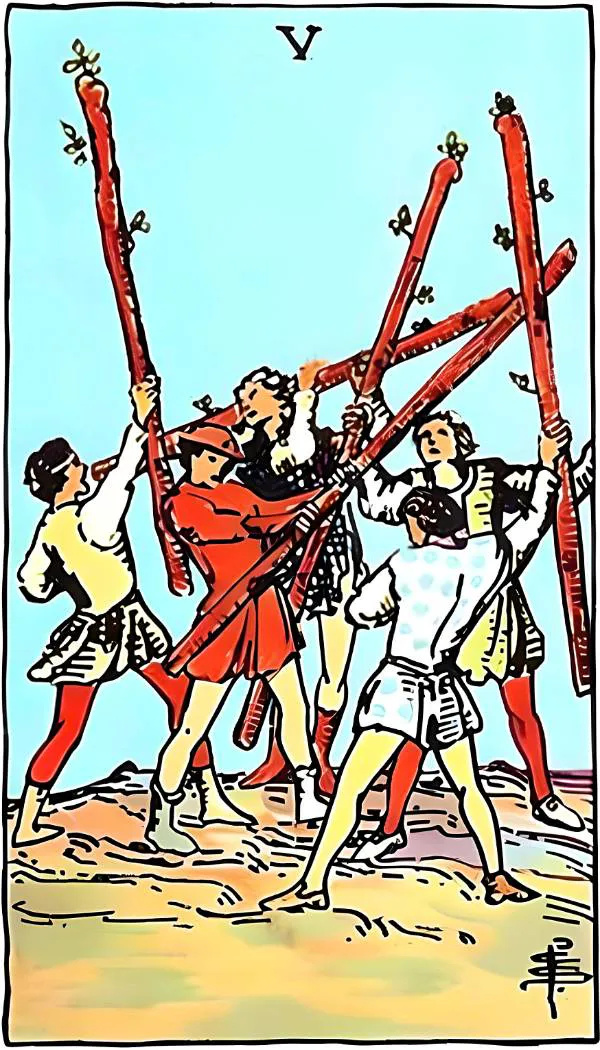
The Five of Wands features a chaotic arrangement of wands, all in different positions and directions, creating a sense of disorder. The card is highly dynamic, with more figures depicted than in any other card in the Waite Tarot deck.
All five wands are off the ground, being brandished by different individuals with various stances and movements, filling the entire scene. The positioning of the wands in this card is the most disorderly, with people wildly swinging them, indicating struggle, competition, and conflict. The five individuals are entangled and grappling with each other, seemingly engaged in a fight or a sporting competition, and could also be interpreted as a mock battle. In this state of melee, no winner has been determined yet, and the chaos continues. However, it appears to be a genuine struggle with conflicting interests, not just playful fighting.
The five young men extend their arms, holding the wands outward, with their feet spread in a V-shape. Each of them has a distinct posture and attire in different colors, representing their differing positions and personalities. The uneven ground they stand on suggests inequality in status or divergent viewpoints. The setting is a yellow-green lawn, yet the terrain is rugged with a gradient of colors and undulations.
The background sky is blue, indicating a clear and bright struggle, and also suggesting a forthcoming resolution. The clear demarcation between the sky and the earth highlights the contrast between a quiet environment and the noisy human voices.
Wands in Clashing Motions
The primary symbol, wands in clashing motions, signifies struggle, competition, or conflict. Each individual is armed with a wand, but rather than harmoniously combining their energies, the wands are in chaotic interaction. This serves to reflect the struggles we face when different interests or goals come into a clash.
Figures in the Card
The figures in the card appear to be young and full of energy, indicative of the youthful enthusiasm or impulsiveness that often leads to conflict. Each seems engaged in the struggle but from different angles and with varying degrees of intensity. This underscores the multifaceted nature of conflict, which can be internal as well as external.
Clothing of the Figures
The clothing of the figures is varied, indicating a diversity of backgrounds, perspectives, or methods involved in the conflict. They remind us that disagreements often arise from differing viewpoints, and that it’s crucial to acknowledge the individuality of each party involved.
Ground and Terrain
The ground upon which the figures stand is flat but not entirely even. The slight undulations suggest the ups and downs inherent in any conflict or competitive endeavor. It subtly hints at the necessity to adapt and maneuver through challenges rather than seeking a one-size-fits-all approach.
Background
The sky in the background is relatively clear, suggesting that the conflict is not insurmountable and perhaps even necessary for personal growth. There is a distinct absence of the elements of water, signifying a lack of emotional depth in the struggles depicted.

Intense Texting Isn't Lasting Security: Let Follow-Through Earn Trust

A Long-Distance Reply Gap Turns Into One Clear Request Before the Call

Why Copying Family on Email Starts Fights: Choosing a Smaller Audience

One Study-Group Question: Choosing Evidence over Self-Judgment

Caught in Adult-Child Triangulation: One Boundary for Both Parents
