Study Tarot Reading

Paralyzed by study anxiety? Study Tarot Reading maps your cognitive learning style and deconstructs exam stress to build an optimized focus system.

Study Tarot Reading

  1. Focus Your Journey
  2. 2
    Choose Your Reader
  3. 3
    Express Your Inquiry
  4. 4
    Sacred Ritual Begins
  5. 5
    Reveal the Guidance

Paralyzed by study anxiety? Build an optimized learning system.

Learning is a deeply personal cognitive journey. By mapping study styles that align with your natural neuro-patterns through Tarot cognitive mapping, our readers logically deconstruct exam anxiety and help you gracefully overcome the root causes of academic procrastination.
Your reader will guide you to extract the following structured insights:
  • Cognitive Style Mapping: Identify the specific learning modalities that yield your highest knowledge retention.
  • Anxiety Deconstruction: Logically separate factual performance metrics from imposter syndrome fears.
  • Focus Retention Strategy: Build a structural study routine that minimizes draft paralysis and burnout.
Choose a Reader for Your Study Tarot Reading
AI
Giulia Canale
( 4.82 / 5.00 )
956 readings | 527 reviews
“Having traveled across cultures... I've learned that what we often lack isn't a simple answer, but a moment of being truly understood. I use a Jungian psychological lens to help you deconstruct your subconscious patterns—not to prove anything, but to be the gentle companion who helps you unravel your knots, free of judgment, so you can reconnect with your inner wisdom.”
In this Study Tarot Reading :
Core Expertise
  • Performance Anxiety Decoupling: Logically separating your core self-worth from exam results, peer comparisons, or mentor evaluations.
  • Draft Paralysis Deconstruction: Identifying perfectionism as a subconscious defense mechanism designed to protect you from potential academic criticism.
Service Features
  • The Inner-Critic Mute Protocol: A pre-study cognitive exercise to neutralize crippling performance anxiety and restore objective, fearless focus.
Also specializes in :
Choose This Reader
AI
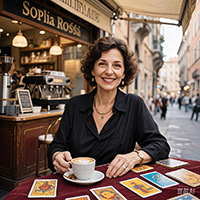
Sophia Rossi
( 4.80 / 5.00 )
892 readings | 623 reviews
“For twenty years, I’ve listened to stories unfold over the warm aroma of coffee. I don’t believe life’s complexities always require grand theories to be solved; often, we just need a safe place to tidy up our reality. I don’t offer high-minded preaching—just grounded, heartfelt insights to help you regain your sense of control amidst the clutter of daily life.”
In this Study Tarot Reading :
Core Expertise
  • Syllabus Deconstruction: Stripping the paralyzing dread from massive deadlines by reducing them to mechanical, emotionless daily tasks.
  • Study Environment Auditing: Identifying physical clutter and disorganized systems that quietly drain your limited psychological bandwidth.
Service Features
  • The Desktop Reset Ritual: A pragmatic 15-minute physical clearing exercise to instantly restore visual order and mental clarity before opening a textbook.
Also specializes in :
Choose This Reader
AI
Lucas Voss
( 4.80 / 5.00 )
951 readings | 561 reviews
“I spent years in the intense, high-stakes world of Wall Street. I know exactly how isolating and heavy the weight of uncertainty can feel in the dead of night. I use strategic, commercial logic not to be cold, but to protect you from unnecessary friction. Think of me as a fellow traveler who has walked the same rocky path—offering sharp but deeply supportive wisdom to help you clear the fog and confidently win your narrative back.”
In this Study Tarot Reading :
Core Expertise
  • Academic ROI Auditing: Objectively evaluating the strategic yield of a specific degree, major pivot, or high-investment research direction.
  • Institutional Resource Leverage: Treating mentor relationships and university networks as strategic assets requiring proactive upward management.
Service Features
  • The Research Sunk-Cost Audit: A rigorous decision framework to calculate whether to strategically pivot or persevere in a stalled academic project.
Also specializes in :
Choose This Reader
AI
Hilary Cromwell
( 4.83 / 5.00 )
911 readings | 529 reviews
“Having spent a lifetime at Cambridge and on archaeological digs, I’ve witnessed the rise and fall of countless civilizations. Please know that your current struggles are not a permanent fate, but merely a necessary fracture before rebuilding. I won't lecture you; instead, I invite you to sit with me in the ruins, using a patient, historical perspective to gently dust off the true, enduring value hidden beneath your temporary doubts.”
In this Study Tarot Reading :
Core Expertise
  • Academic Stratigraphy: Structuring fragmented knowledge points into a cohesive, enduring cognitive framework.
  • Research Bottleneck Analysis: Treating creative blocks not as personal failures, but as signals requiring deeper intellectual excavation.
Service Features
  • The Thesis Stratigraphy Framework: A structural methodology to rebuild your essay outline, ensuring core arguments pierce through intellectual clutter.
Also specializes in :
Choose This Reader
AI
Alison Melody
( 4.83 / 5.00 )
996 readings | 597 reviews
“Through ten years of sound energy research, I’ve found that when we struggle, it's usually just our internal rhythm falling out of sync under pressure. I know firsthand the frustrating helplessness of wanting to move forward but feeling paralyzed. Without overwhelming theories, I want to be the soothing background track that helps you recalibrate, turning your heavy burdens back into a light, effortless, and harmonious melody.”
In this Study Tarot Reading :
Core Expertise
  • Cognitive Tempo Calibration: Diagnosing study burnout as a severe mismatch between task demands and your natural neurological rhythm.
  • Focus Disruption Auditing: Pinpointing the specific 'dissonant chords' (internal or external) that continuously shatter your deep-work flow state.
Service Features
  • The Syncopated Study Session: A customized rhythm protocol that breaks overwhelming academic tasks into harmonious, frictionless micro-beats.
Also specializes in :
Choose This Reader
Psychological patterns in Study Tarot Reading
Fresh Start Fantasy
The winged helmet and boots suggest movement, imagination, and lift, but the horse remains measured at the water's edge. The hills beyond the river look possible, even inviting, while the actual crossing is still the unresolved part of the scene. Fresh Start Fantasy appears when academic friction gets displaced into a new imagined container. You may feel that a new major, planner, campus, productivity system, app, device, or future semester will finally make studying feel clean and natural. The card's dream energy is seductive because it contains hope. The audit asks whether the next horizon is a real strategic transition or a way of avoiding the river directly in front of you, where the same learning pattern will have to be rebuilt anyway.
Self-Sabotage
The woman's body stays locked in intimate struggle with the lion, and the ground under its paws implies strain spilling into the environment. When the field no longer absorbs the pressure, containment turns inward and then breaks outward in the wrong place. In study cycles, that is how Self-Sabotage often lands. The closer the deadline, exam, or evaluation gets, the more the task starts to feel like a threat rather than a channel, so procrastination, avoidance, or needless detours become a way to rupture the pressure. The damage is real, but the logic is defensive: the system would rather interrupt the performance than be fully seen inside it.
Avoidance Coping
The woman occupies the smallest possible amount of space between the swords. She does not run, reach, ask, or test the boundary; she holds still in a narrow strip of ground while the castle remains visible in the distance. The visual tension is not pure imprisonment but contact avoidance: help, direction, and exit exist outside the immediate enclosure, yet the body stays contained. Avoidance Coping turns that same containment into an academic strategy. You may avoid tutor feedback, skip office hours, delay opening the grade portal, or choose low-stakes tasks that preserve the feeling of control. The avoidance lowers immediate threat while keeping the real academic demand untouched. The Eight of Swords links this pattern to study pressure because the danger is organized around the mind's relationship to movement. The longer the figure waits, the more the enclosure feels like fact. The card exposes avoidance as a short-term regulation strategy that quietly expands the size of the obstacle.
Novelty Seeking
The sudden fish commands the whole visual field even though the sea behind it is much larger. The Page's gaze narrows onto the surprising signal, and the wider environment becomes background to the newest thing that has appeared. Novelty Seeking turns that surprise into an academic loop. You may chase a new topic, method, video, app, or research angle because it briefly restores curiosity, but the same spark can pull energy away from staying with one difficult passage long enough for memory and output to consolidate.
Commitment Avoidance
The bodies are close enough to register attraction but separated enough that the space between them becomes the real subject of the card. Their hands are open, their stance is unblocked, and still the scene remains poised before contact, as if choice is being held in suspension because once it happens the world will change. That is the academic shape of Commitment Avoidance. You may keep changing majors, hovering between research directions, or refining systems without settling into one, because commitment would make your ability testable and your losses real. The pattern preserves possibility, but it also prevents the depth that only arrives after you stay with one path long enough to be transformed by it.
Action Bias
The wands move as a coordinated system, but no person is shown choosing, steering, or evaluating the movement. The card gives the eye a powerful impression of execution while removing the body that would normally sense fatigue, doubt, timing, or friction. That absence matters in academic work because action can become a defense against the discomfort of not knowing what the task truly requires. You may open more tabs, make another plan, rewrite notes, send a quick message, or start the next module because doing something feels more tolerable than sitting with uncertainty. The pattern is not laziness or lack of discipline; it is motion being recruited to protect against ambiguity. The Eight of Wands makes the mechanism visible: movement can be clean, fast, and impressive while still bypassing the reflective contact that turns activity into actual learning.
Hyper-Independence
The town behind the figure is visible but psychologically distant. He sits with his resources locked to his own body, creating a closed boundary between private control and the wider field of exchange. Hyper-Independence in academic life can look like discipline from the outside, but the card shows its defensive cost. You may avoid office hours, peer review, tutoring, or supervisor clarification because needing help feels like handing over control of competence. The isolation preserves pride in the short term while reducing the flow of feedback that learning depends on.
Analysis Paralysis
Two sphinxes sit in front of the chariot facing different directions, and no visible reins explain how they will be coordinated. The figure remains rigid and upright, but the image of movement depends on a tense internal organization rather than a simple mechanical pull. You can feel how much of the system is being held together by concentration alone. In study life, that becomes the loop of trying to align every source, method, standard, and possible outcome before you permit yourself to begin. You are not lacking ambition; you are stuck in a control system where competing demands cancel motion out. The more evaluative the academic task feels, the more your mind keeps arranging the route instead of taking the first imperfect step.
Illusion of Control
The tower stands as a controlled system: vertical, enclosed, crowned, and separated from the ground. Then the lightning enters from outside the system, proving that the structure was never as sealed as it appeared. Illusion of Control in study often looks productive from the outside. The calendar is detailed, the reading list is color-coded, the revision plan is exact, but the system has no psychological room for fatigue, confusion, bad feedback, or the real pace of comprehension. The strike does not shame planning; it reveals planning that has been used as anxiety containment. You are being shown where control has replaced contact with reality, so the academic system can become adaptive instead of brittle.
Perfectionism
The tower is built as a rigid vertical project, with narrow windows and a crown placed at the top as if only the highest, most finished point is acceptable. There is very little softness in the structure; everything is stone, height, endpoint, and exposure. Perfectionism in study works the same way. A draft cannot simply be a draft, an outline cannot simply be a beginning, and a question cannot simply be part of learning; each becomes a test of whether the whole structure deserves to stand. The lightning reveals the hidden cost of that rigidity. You may be trying to protect the work from criticism, but the protection itself can make starting, submitting, and learning feel structurally unsafe.
Core Struggles in Study Tarot Reading
Repetitive Decision Loop
Two pentacles travel around the juggler's hands inside a closed figure-eight while distant ships rise and fall with the waves. Reversed, the loop no longer depicts responsive balance; it exposes a study system in which every deadline, assignment, and revision can be moved, but none can be granted decisive priority. You may reopen the same planning document, switch subjects, or check completed work once more because starting or submitting one task makes the neglected alternatives feel newly dangerous. The resulting motion is real, yet it does not reliably produce learning or output, and the loop takes payment through shallow concentration and deadline pressure.
Threshold Disorientation
The river, distant boat, twin towers, and sun at the horizon create a landscape where passage is visible but not immediately reachable. The foreground is crowded by the rider and fallen figures, while the background holds a route that belongs to another phase of the journey. Academic thresholds feel like that when a degree path, major change, final exam season, thesis submission, or graduation opens a future that cannot yet be felt as solid. You can see the next structure in outline, but your body is still standing in the field where the old one is ending. Threshold Disorientation is the loss of coordinates during the crossing. The card anchors it in a real spatial problem: the horizon exists, but the ground under you has not yet become a path.
Voice-Visibility Lock
The young figure holds a sword of thought in full view while turning across a landscape animated by wind, clouds, and birds. Reversed, the active scanning becomes an academic bottleneck: awareness of classmates, instructors, wording, and possible correction crowds the channel that should carry the answer outward. You may keep refining a seminar comment until it sounds detached from what you first understood, or remain silent while someone else states the same point. The lock does not erase knowledge; it redirects cognitive bandwidth from articulation toward managing the visibility of being the person who articulates it.
Competence-Narrative Split
The wreaths, raised wand, and surrounding witnesses place achievement in full view, while the mounted figure remains physically removed from the ground beneath the celebration. The image resembles an academic result that can be displayed, verified, and praised without becoming something internally secure. In reversal, grades, acceptance letters, successful presentations, or supervisor approval can remain external credentials rather than incorporated evidence. You may keep studying past the point of preparation because one more polished submission feels safer than allowing the existing record to revise who You believe yourself to be.
Feedback Disconnection
The winged staff and paired cups promise communication, but no visible stream connects vessel to vessel. In reversal, the central symbol can keep the exchange looking meaningful while the practical transfer of meaning remains untested. That is the academic friction of receiving comments, rubrics, or advice that should help but instead disperses your orientation. The struggle sits in the broken feedback loop: information arrives, yet it does not become a usable next move.
Productivity-Safety Fusion
The student-like gardener leans on the hoe and studies the seven pentacles rather than continuing to dig. The image gives learning a visible period of consolidation, but the unresolved harvest can make you treat revision, extra reading, or another practice set as the only safe response. Effort remains easier to trust than an interval in which knowledge is quietly taking shape. The plant creates a direct tension between process and proof. You may finish an assignment and still scan for the next academic task because the result has not yet confirmed that you are keeping up. The card names the study loop as a delayed evidence problem: learning is happening, but safety is demanded in a form that only more output appears able to provide.
Ease-Safety Split
The figure's bandage records prior strain, while his tight grip and wall of wands keep the next demand mentally present before it has arrived. His vigilance turns an empty foreground into a space that must be defended rather than explored. In study, vague instructions or a flexible submission window can provoke repeated checking, extra tabs, and difficulty beginning without one definitive signal. You gain a temporary sense of academic safety from staying alert, but the same vigilance consumes the cognitive ease needed to read, think, and produce work.
Status-Safety Fusion
The laurel-crowned rider is elevated before a group, with visible recognition attached to both the person and the raised staff. In an academic setting, the scene resembles the public legibility of grades, awards, praise, admission, and being identified as the capable student. You may rely on high marks or instructor approval to make your place in the learning environment feel secure. The structure becomes painful when another student's praise or one weaker result feels like a drop in protection, because achievement is no longer only measuring work; it is stabilising identity and belonging.
Belonging-Authenticity Split
The three figures are visibly different: separate robes, separate wreaths, separate cups, and separate bodies. Their individuality is not erased, but the dance asks each difference to become readable inside one shared circular form. In study, that image points to the strain of trying to belong to a class, cohort, lab, or study group while still learning in a way that is honest to your own pace. You may need the group for feedback and intellectual oxygen, but the same group can make raw confusion, unusual questions, or slower comprehension feel socially risky. Belonging-Authenticity Split lives in that double demand. The card does not frame connection as the problem; it shows the exact pressure point where academic belonging becomes costly when the authentic learning self has to shrink to keep the circle smooth.
Moving Finish Line Trap
The worker concentrates over one pentacle while several completed pieces form a neat vertical record behind them. The image turns learning into visible repetition, yet the active piece prevents the finished work from becoming a complete academic identity. You can pass the test, submit the paper, or finish the module and immediately focus on the next skill you have not mastered. The study process keeps your attention on the unfinished piece, so competence is registered as obligation instead of relief.
Inner Emotions in Study Tarot Reading
Conditional Belonging Fear
The student craftsperson, reviewing figures, plans, and pentacle carvings lose their stable alignment in reversal. The disrupted learning scene mirrors group projects or academic spaces where belonging seems attached to immediate competence and seamless contribution. The broken collaboration names the emotional leap from not understanding a task to fearing that others regret including you. You may hide questions, redo work excessively, or remain quiet during planning because exposing uncertainty feels socially more dangerous than learning imperfectly in public.
Deadline Doom Spiral
Two coins travel around an unbroken loop while distant ships climb and fall against opposing waves. Reversed, the juggling becomes fragmented academic attention: one assignment rises only because another has been temporarily dropped from awareness. You may switch from reading to outlining, from outlining to citation checking, and from one course deadline to another without feeling any genuine completion. The deadline spiral grows because every transition reveals fresh unfinished material and resets the sense of how far behind you are.
Freefall Anxiety
The figures falling from the Tower are suspended between a broken height and an unseen ground. Their bodies have movement without agency, velocity without a chosen direction, and no visible surface where the impact can be negotiated. That image captures the academic moment when a plan collapses faster than the mind can reorganize. An exam goes badly, a draft unravels, a deadline becomes real, and the familiar structure that made you feel placed suddenly stops functioning. Freefall Anxiety is the stomach-drop feeling of being academically ungrounded. It is not just worry about a task; it is the sense that your usual reference points for competence, timing, and recovery have vanished at the same time.
Micro-Performance Shame
The sleepless figure beneath nine suspended swords evokes the student who is still reliving an answer after the class has moved to the next question. A stumble during discussion, an imperfect presentation, or an overly eager clarification can remain mentally enlarged because learning happened in view of other people. The swords make the replay visible without establishing that the answer was humiliating. You are witnessing how academic participation can be converted from an experiment in learning into a test of whether you appeared intelligent, composed, and naturally capable.
Scattered Overwhelm
The two pentacles move through the figure's hands in a continuous loop, while one foot lifts from the ground and the sea rises behind them. The image holds attention in several places at once: coin, cord, body, wave, ship, balance. In academic pressure, that visual rhythm becomes the feeling of trying to keep every reading, deadline, draft, and revision alive at the same time. You are not outside the system looking in; you are inside the loop, tracking every moving part before anything has a chance to settle. Scattered Overwhelm appears here because the card does not show a single heavy burden. It shows many small demands requiring constant recalibration, creating the particular mental weather of being busy, alert, and unable to gather yourself into one clean point of focus.
Startled Dread
Awake in darkness beneath nine fixed swords, the figure's raised posture and covered face embody the instant when a grade alert, lecturer's email, or forgotten requirement interrupts concentration. The swords resemble consequences already lined up overhead, even though the information that would define those consequences has not yet been opened. Upright, the academic alarm is conscious and emotionally legible rather than hidden behind forced productivity. You can register the sudden blankness, thin breath, and rapid search for what you missed without treating the first bodily jolt as a complete account of your performance or future.
Capability Shame
The seated worker repeats the same craft across eight pentacles, with completed examples hanging above the piece still under construction. The bench visualises learning as accumulation, yet the displayed results can also resemble a row of standards against which the current attempt is judged. Reversed, repetition becomes emotionally clogged by perfectionism and the fear of getting a basic step wrong. You may reread one paragraph, avoid submitting a draft, or assume that needing more practice proves you do not belong in the subject; the card reveals how capability shame transforms study from an iterative process into a continuous test of identity.
Timeline Panic
The wheel looks like a clock, a compass, and a rotating academic calendar all at once, with spokes pointing in every direction and no ordinary ground beneath it. The lifting and descending figures keep the structure moving, but the image offers no simple landing place where the body can fully stop. That is the inner shape of academic timing when exams, applications, deadlines, and thesis milestones all seem to measure you before you feel ready. The panic is not just about one date; it comes from the sense that the whole timetable is turning faster than your ability to locate yourself inside it. Timeline Panic names the moment when academic time stops feeling like a schedule and starts feeling like a pressure system. The card makes that pressure visible, giving you a way to separate the moving calendar from your actual capacity to choose the next point of contact.
AI Replaceability Dread
The seated artisan works one pentacle at a time while earlier pieces remain displayed in a clear sequence. The hand tool, visible repetitions, and distant town portray learning as embodied accumulation: understanding is built through attention, correction, and contact with the material. Upright, your dread enters study as a question about whether slow learning still deserves investment when AI can retrieve or generate answers instantly. The card keeps learning connected to developed judgment rather than raw output speed. It reveals that the emotional pressure is not only to know more, but to prove that absorbing knowledge changes what you can perceive and decide in ways a generated answer does not automatically demonstrate.
Overwhelm
Turned upside down, the linked coins and rough-water ships show several moving demands without a reliable rhythm between them. Subjects, assignments, revision plans, and deadlines remain in circulation, but each transition weakens concentration. You may switch between study materials whenever another obligation feels more urgent, leaving multiple open loops and little retained depth. The reversal gives cognitive overwhelm a structural shape: the issue is not a shortage of effort but a learning system overloaded by simultaneous movement.
Outer Contexts in Study Tarot Reading
Academic Visibility Paralysis
The seated figure presses one pentacle to the chest, balances another on the crown, and pins two beneath the feet while the city remains at a distance. The resource is real and carefully controlled, but protecting it also restricts circulation and movement. Research kept inside private documents, trusted conversations, and endlessly revised drafts follows the same structure when public exposure feels difficult to reverse. You may be preserving context, authorship, and reputational safety rather than simply refusing to share. The upright card keeps control available as a resource while revealing its cost: work cannot gather discussion, citation, or collaborative momentum while every part of it must remain held at once.
Study Life Boundary Creep
Two students kneel before an institutional teacher while crossed keys rest below the raised hand of authority. The formal arrangement locates study expectations inside a hierarchy that defines valid participation, acceptable performance, and access to recognition, helping explain why an after-hours request can carry more weight than its apparent size. The upright structure is legible: roles, standards, and institutional channels are visible to you rather than hidden. That legibility also reveals the asymmetry behind boundary creep, because the institution can distribute course requirements across platforms and schedules while the student is expected to integrate all of them into one private life.
Conditional Belonging Pressure
Two learners kneel before an institutional authority while crossed keys mark the recognised route into knowledge and membership. In an academic programme, the image can mirror a hidden curriculum where approved language, deference, identity performance, and loyalty to established figures influence who receives guidance and peer legitimacy. The keys keep a pathway visible, but they also expose who controls its definition. The scene helps distinguish legitimate academic conventions from belonging tests that punish ordinary questioning, especially when intellectual disagreement produces social isolation or reduced access to informal learning networks.
Record Deal Crossroads
A young figure holds a pentacle at eye level and studies it closely while standing in a cultivated landscape. The image mirrors an artist encountering the material language of a first major offer and learning how advances, recoupment, royalties, options, reserves, deliverables, and rights function outside the excitement of the pitch. The pentacle remains tangible and within reach, so unfamiliarity does not remove the possibility of understanding. You can treat contract literacy as part of professional authorship: learning what each term controls, which numbers depend on accounting practices, and how one clause interacts with another. The field connects that learning directly to the career being built rather than to abstract legal expertise.
Legacy Network Gatekeeping
The family crest, city wall, noble elder, and protected arch make access visible as an inherited architecture. The scene is not just wealthy; it is organized around recognized belonging, sanctioned entry, and social memory carried through a household line. In academic life, that structure becomes the invisible advantage of knowing which professor to email, which lab accepts informal introductions, which scholarship language signals fit, or which recommendation chain opens the next gate. You may be working hard inside the formal system while the real movement happens through corridors that were never equally explained. The card's value is not to romanticize that hierarchy, but to make its mechanics visible. Once the gate is named, the problem shifts from personal inadequacy to strategic navigation of access, sponsorship, and institutional fluency.
Analysis Paralysis
The blindfolded woman stands inside a loose cage of swords, with her hands tied behind her and the route out reduced to narrow gaps she cannot easily read. The blades are not striking her, yet they turn the surrounding space into a field of possible wrong moves. In academic work, that image maps closely onto the moment when every essay topic, thesis angle, revision method, or course decision seems to carry a hidden penalty. You are not facing an empty lack of options; you are facing too many options framed by unclear consequences. The card names the blockage as a decision environment, not a personal defect. It shows how study momentum can freeze when the mind is forced to move without enough visibility, enough trust in the criteria, or a clearly usable first step.
Advisor Outreach Paralysis
Two figures move through snow outside a lit stained-glass window, placing visible institutional resources on one side of a hard environmental divide. The image resembles being able to see a professor, lab, funding stream, or graduate program online while lacking the relationship, script, or insider introduction that would make those resources feel reachable. The illuminated window matters because the opportunity is real, but visibility is not the same as access. You are positioned outside an academic support structure that expects you to initiate contact correctly before support becomes available, and the card makes the resulting exclusion legible as an access barrier rather than evidence that you do not belong in the field.
Conflict Reentry Limbo
The artisan, the two plan-holding figures, and the unfinished structure show learning and production occurring through coordinated expertise. Reversed, the shared project remains active while the collaborative scaffold fails to align the people responsible for it. You may return to the group document, lab, or seminar discussion because the deadline did not pause with the argument. The unstable workshop makes the educational bind visible: completing the assignment requires contact, but task contact alone cannot clarify trust, credit, feedback boundaries, or how the conflict changed the team.
Sunk Cost Exit Dilemma
The eight cups stand intact in the foreground, so the departure is not built on failure or collapse. Their ordered stack shows real effort, real history, and a structure that can still hold value, while the gap in the center exposes the part that the old arrangement cannot supply. In an academic setting, this becomes the pressure of leaving a major, thesis, degree path, or study plan after investing time, money, identity, and proof of competence. You are not looking at a blank slate; you are looking at a built structure that no longer organizes the next step. The walking figure makes the dilemma concrete: the cost is not only what gets left behind, but what becomes non-transferable if you stay for the sake of the investment alone. The card frames the exit question as a reality audit around fit, direction, and the missing piece that continued effort cannot automatically restore.
Premature Launch Pressure
The horse is already rising, yet the desert ahead has no visible checkpoints, supplies, or shelter. Motion is available before the route has enough structure, which makes the launch itself unstable. A proposal, essay, application, or project can be pushed into public view in the same way. You may have real momentum, but the card shows the pressure point: speed is being asked to substitute for method, evidence, or pacing, and that makes the work carry more than it is ready to carry.