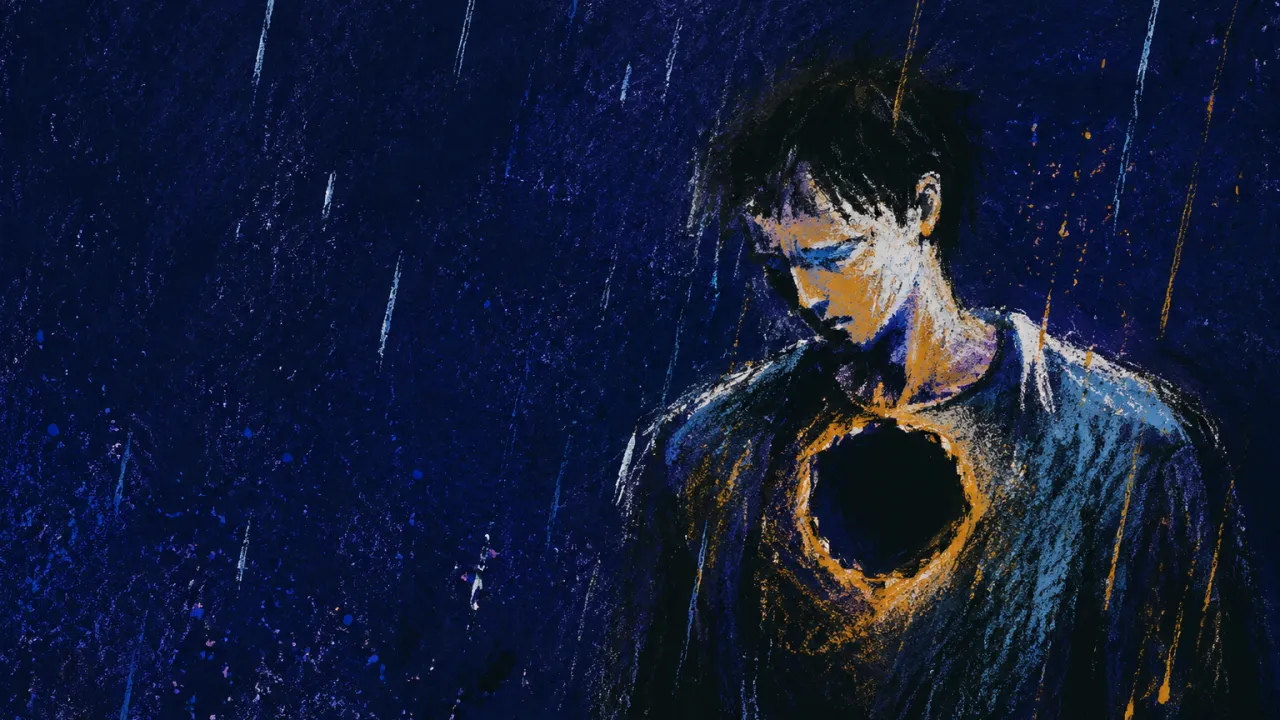
That tight, private ache in your chest, the one you keep moving around while the day expects you to function, is the shape Unspoken Grief often takes. It is a universal emotional experience: the quiet recognition that something mattered, shifted, or ended before language could catch up. Tarot can give that silent weather a visible outline without turning it into performance. Here are the Tarot Cards that tend to mirror Unspoken Grief.
The High Priestess ReversedThe crescent moon, the veiled water, and the hidden horizon all point to change that happens through phases rather than rupture. The High Priestess does not stage a dramatic ending; she holds a quiet threshold where something has already shifted beneath the surface. In friendship, Unspoken Grief appears when a bond fades without a clean goodbye. The card mirrors the sadness of losing access to an old version of closeness while everyone keeps behaving as though nothing official has changed.
The Empress ReversedThe waterfall moves behind The Empress rather than through her voice, while pearls at the throat turn expression into something polished and contained. The maternal image is surrounded by life, yet the deeper current runs partly out of direct view. For family questions, Unspoken Grief is the sadness around what was needed but never fully named: softness without intrusion, protection without control, recognition without comparison. The card holds that grief in the background current, allowing you to see it without forcing it into accusation or performance.
The Hermit ReversedThe bowed head, covered chest, and long white beard give The Hermit a body shaped around silence. The lantern is raised, but the mouth is not; what can be illuminated is not the same as what can be safely spoken. Unspoken Grief grows from that gap. In family life, there are losses that never receive a clean conversation: the parent who could not see You clearly, the childhood role that still clings to You, the apology that never arrives, the tenderness that had to be edited down to survive. The cold landscape makes this grief feel old rather than dramatic. It is the quiet accumulation of unsaid truth, and the card gives it a form that can finally be witnessed without forcing it into a confrontation before You are ready.
The Hanged Man UprightThe figure turns inward beneath the halo, suspended against a pale field with no path, crowd, or destination. The living tree remains, but the body is held in a transitional position that does not look like arrival. In friendship, this image fits the grief that has no clean event attached to it. A bond can remain alive in name while its old ease, frequency, or emotional safety quietly changes shape, leaving you with a loss that feels difficult to explain. Unspoken Grief names the sadness of a friendship that has shifted without a formal ending. The card gives that quiet loss a container, allowing you to recognize what has faded without forcing the bond into a dramatic story.
Death UprightAt the horse's feet, the ruler lies down, the woman turns away, and the child watches without a shared script. The card shows multiple bodies meeting the same ending without a single language for what has happened. In a friendship, this maps to the private mourning of a bond that faded without ceremony. You are not grieving a headline; you are grieving the missing conversation, the jokes that stopped landing, and the version of you that only existed inside that friendship.
ReversedThe kneeling woman turns her face away, the child looks directly toward the rider, and the other figures remain separated by posture even while sharing the same ground. The card shows an ending or transformation that is visible in the field, but not held in one shared response. Some parts of the scene can look; other parts cannot. In love, Unspoken Grief lives in the gap between what a relationship is becoming and what the people inside it are ready to say. You may feel the loss before the breakup, before the confession, before the final message, or while both people continue acting around a truth that has already entered the room. The Death card fits this emotion because its visual world is full of responses that do not align. The river keeps moving, the rider advances, the woman turns away, and the child watches. That split creates the exact atmosphere of grieving something that has not yet been fully named, where your heart already knows more than the conversation has admitted.
The Tower ReversedThe tower is still recognizable as it burns, which makes the loss more complicated than a clean ending. The figures have already been thrown out of the old structure, but the image does not yet show where they land. Unspoken Grief belongs to friendships that are changing before anyone admits they are changing. You can feel the distance, the lost rituals, and the vanished ease, yet the absence has not been given a name, so the mourning stays suspended in the air.
Five of Cups UprightThe black-cloaked figure bends toward three spilled cups while two upright cups stand behind their back. That posture creates an emotional frame where attention has collapsed around what leaked out, leaving the rest of the scene technically present but psychologically unreachable. For introspective work, this maps to grief that has not found clean language. You may sense an old hurt running under the surface, not as a dramatic breakdown, but as a private weather system that keeps pulling your gaze back to what cannot be restored. The river and distant dwelling matter because they show stability still in the field, even when your inner bandwidth is occupied by the spill. The card gives Unspoken Grief a precise shape: the feeling is real, contained, and visible, but it has not yet been integrated into the larger map of your life.
Six of Cups ReversedThe card shows tenderness before language: a child offers a cup, flowers stand in place of speech, and the adult world remains at a distance. The scene is bright, but its brightness also preserves what has not yet been said. Unspoken Grief lives in that gap between the gesture and the conversation. In love, it can feel like mourning a change, a disappointment, or a lost version of closeness while everyone keeps acting as if the old sweetness still explains everything. The reversed Six of Cups makes the grief visible without forcing it into drama. It points to the hurt that gathers when a relationship has changed shape, but the emotional language needed to honor that change has not been allowed into the courtyard.
Three of Swords UprightThe heart in the Three of Swords has no body around it, no mouth, and no gesture of protest. Rain falls across the grey field, but the central image remains suspended, as if release is happening in the atmosphere while the core object stays unable to speak. That is why this card carries Unspoken Grief so strongly in an introspective context. It captures the private backlog of feelings that were never given a room, a sentence, or a clean moment of recognition. You may not be looking for someone to explain the event anymore. The deeper need is to let the inner weather testify to what the public version of you had to keep silent, so the grief can become legible instead of endlessly stored.
Six of Swords UprightThe woman and child sit with their faces hidden, turned away from the viewer as the boat moves toward a color-drained shore. Nothing in the scene announces a breakdown, yet the covered bodies and silent backs make the passage feel full of material that has not been voiced. Unspoken Grief lives in that quiet transport. You may be carrying old hurt that never received a clear scene, a clean apology, or even a private sentence that made it fully real. The Six of Swords connects to this feeling because its movement is muted rather than celebratory. In introspection, it shows the psyche taking unexpressed pain across the water carefully, as if some part of you is finally allowed to move without forcing the grief to perform itself.
Nine of Swords UprightThe figure’s face is hidden at the exact moment the body can no longer stay horizontal. A carved scene remains exposed on the bed frame, like a private story left outside the quilt’s cover. In introspection, that image gives shape to grief that has never been fully spoken. You may not have a clean narrative for why the hurt is rising now, but the card shows an old imprint pressing into the present until it can finally be witnessed.
Ten of Swords UprightThe fallen figure’s hidden face makes the scene feel private, as if the most important part of the loss cannot be witnessed directly. The red cloth covers what would otherwise be too raw to show, and the distant mountains hold a quiet place that the body cannot reach yet. Unspoken Grief in friendship often lives exactly there: in the gap between what changed and what anyone has actually admitted. The bond may still have a name, a group chat, a history, or a routine, while the felt closeness has already gone somewhere else. The card gives that quiet loss a visual container. You are not required to turn the friendship into a villain story in order to recognize that something meaningful has ended inside it.
No cards available for this filter.