What Is This Really Costing You?

A grounded look at hidden-cost decisions, related tarot cards, and tarot reading insights from similar readings.

Unseen Cost Bind

What does this feel like?

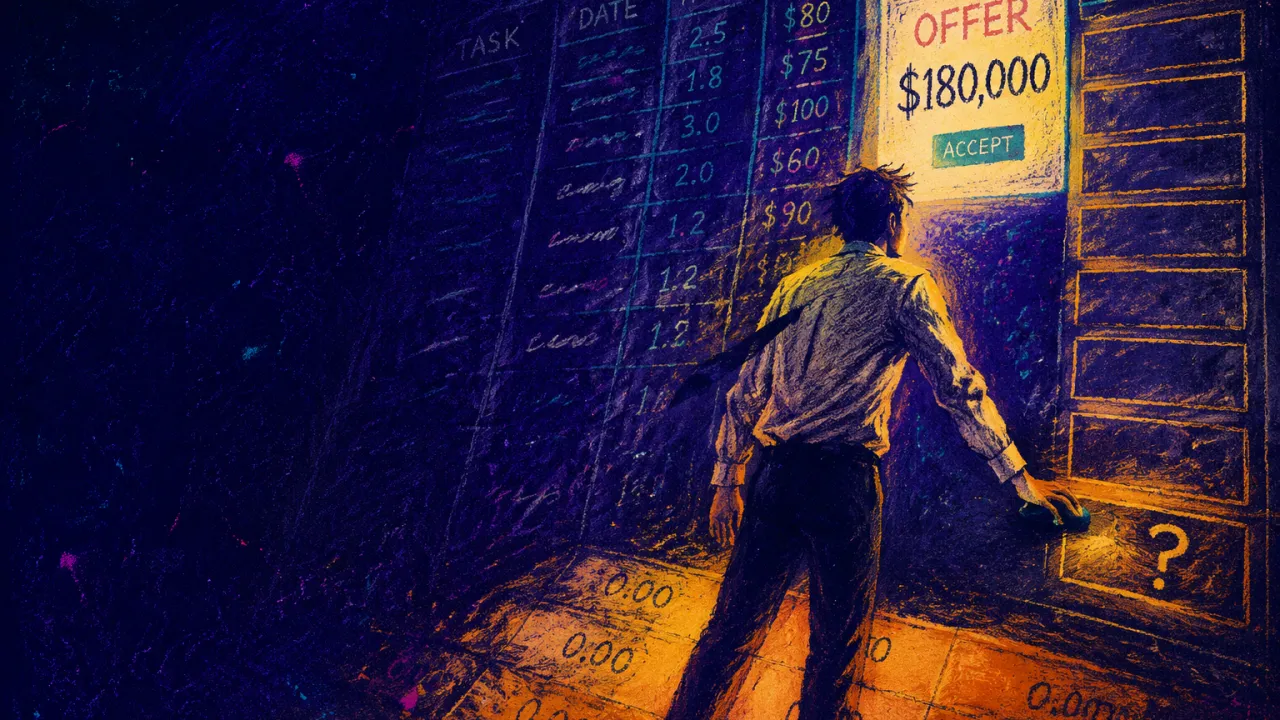
Unseen Cost Bind — you are sitting with a decision that should be simple by now, staring at the same tabs, texts, job post, lease details, college portal, or half-written reply, and something in you refuses to click. The visible facts are all there: the money, the timing, the name, the title, the person, the plan everyone can understand when you explain it out loud. You can hear the reasonable sentence forming in your head, the one that would make you sound mature, decisive, easy to support, but your body does not move with it. Your jaw tightens. Your eyes skim the same paragraph again. Your stomach drops in a small, private way, not dramatic enough to call a warning, not clear enough to call certainty. You start asking yourself whether you are overthinking, whether you are being difficult, whether everyone else would just choose and move on, and still the hesitation stays. It is not the fear of paying a price; you know every choice costs something. What traps you is the sense that the price has not been fully shown to you yet, that the headline benefit is bright while the invoice is folded somewhere underneath. One option promises stability but may ask for a version of you that stays armored all the time. Another promises freedom but may quietly spend your energy, privacy, belonging, or future range. Even the beautiful option has a maintenance cost: the garden has to be watered, the polished role has to be performed, the generous bond has to be held steady, the clean plan has to be lived in after everyone stops applauding the decision. So you stay at the edge, not because you lack courage, but because your body is trying to read a contract your mind can only partly see. The deeper cost is not always loud; sometimes it sits in the small pause before you reply, the tension in your shoulders after saying yes, the way your chest tightens when someone calls the choice obvious. Over time, the price of not knowing becomes its own kind of pressure: you are carrying both the possible life and the possible bill, trying to protect yourself from agreeing to something that will charge you later in time, self-trust, movement, or ease. The cost is not only what you might lose; it is the way your life narrows while you wait for the hidden part to surface, much like the High Priestess holding a partly covered scroll before a veil and dark water, where knowledge is present, close, and still not fully available to touch.

What's pulling at you?

You are not stuck because you cannot decide; you are stuck because the visible benefits are easier to count than the private cost each path may ask from you later. One part of you wants to move, choose, commit, and stop circling, while another part refuses to sign onto a bargain when the tradeoff still feels hidden. The bind comes from needing agency before you have full visibility.

How It Shows Up?

  • You open a new notes app page to compare two options, then stop after writing three neat bullet points because the part that matters will not fit into a list. Your thumb taps the screen, deletes a line, rewrites it, deletes it again, and your shoulders creep up while your stomach sits heavy under your ribs. The visible facts look tidy, but the hidden tradeoff stays behind the veil, and it is allowed to remain unnamed for a minute before you force language onto it.
  • A friend says, "It sounds like a no-brainer," and you smile because, from the outside, they are not wrong. Your face holds the right expression, but your throat tightens and your chest goes flat, like your body has already seen the fine print no one else can see. You can let their certainty belong to them without treating it as the final measure of what the choice will cost you.
  • At work or school, you keep choosing the responsible option because it is the easiest one to defend in a meeting, on a form, or in a quick text update. Your back goes stiff in the chair, your jaw locks, and you can feel the Emperor's hidden armor under the polished answer: stable, legitimate, and quietly expensive to keep wearing. It is reasonable to count the effort of staying composed as part of the task, even when nobody has put it in the task description.
  • You are out with people and someone asks what you are going to do next, and suddenly the room feels too bright. You hear yourself explain the clean version of the plan, but inside you are tracking everything the plan leaves out: sleep, privacy, money pressure, time with people you care about, the version of you that may have to shrink to make the option work. You can answer lightly in the moment and still take the deeper question back to yourself later.
  • Late at night, the same decision comes back without asking permission, and your body starts doing the math before your mind has words for it. Your eyes burn, your neck feels tight, and the space under your breastbone feels like a closed folder full of documents you have not been allowed to read. The Hermit's lantern only lights a small circle, and it is acceptable to admit that the dark around it is part of the room too.

Unseen Cost Bind in Tarot Cards

Unseen Cost Bind lives in the gap between what an option clearly gives you and what it may quietly ask from your time, body, freedom, or future self. You can feel it in the tight throat, locked jaw, and heavy chest that show up even when the visible facts look tidy. From an existential perspective, the structural framework here is about choosing while part of the price remains behind the veil. The Tarot Cards below make that hidden cost field easier to see without flattening it into a simple answer.

The High Priestess Upright
The partially covered scroll and veiled water place decisive information inside the image while denying full access to it. The High Priestess does not remove the veil; she holds the document at the exact point where knowledge exists but remains bounded. In a high-stakes choice, that arrangement mirrors the pressure of making a move while the true cost of each route is still partly submerged. You are not weak for hesitating at the hidden price; the struggle has a shape, and its edge sits where visible facts stop and concealed tradeoffs begin.
Reversed
The High Priestess's body is still while the moon, robe, and water imply currents that remain mostly hidden. In reversal, that quiet containment can become a place where movement, feeling, and cost are absorbed without leaving visible marks. In a career environment, Unseen Cost Bind appears when strategic patience, discretion, and emotional restraint become silently expensive. You keep the room stable, read what others miss, and hold back what would disturb the surface, while the system counts only visible output. The card places that cost behind the veil and beneath the robe. It shows why the price of staying composed can be hard to prove, even when it is shaping your energy, ambition, and sense of value at work.
The Empress Reversed
The Empress appears surrounded by effortless fertility: wheat at her feet, water behind her, cushions beneath her, ornaments across her body. The more seamless the abundance looks, the harder it becomes to see the labor implied by keeping that field alive. In a career reading, this structure names the hidden cost of being the person who makes things feel easy. Your reliability, taste, emotional steadiness, mentoring, and creative continuity may prevent visible breakdowns, but because the work arrives as smoothness, the organization may fail to count it as labor. The card points to a specific bind: when your contribution is measured only by visible output, the invisible maintenance that makes that output possible stays unpaid, unpromoted, or unnamed. Seeing the cost is the first act of recovering leverage from the role that has been quietly consuming it.
The Emperor Upright
The red robe presents authority first, while the armor underneath carries a hidden defensive load. Behind the throne, the stream is not absent, but it is mostly blocked by the very structure that makes the Emperor look stable. In a choice spread, this is the shape of an option whose visible logic is stronger than its visible cost. It may look mature, secure, or strategically correct, yet the card points to what has been buried under that legitimacy: the guarded body, the blocked current, and the price of staying armored. The struggle becomes clearer when the unseen cost is treated as evidence rather than noise. You are not overcomplicating the decision by sensing a weight beneath the obvious answer; the image itself shows that the official structure is hiding part of what the choice requires.
Reversed
The Emperor’s armor is mostly concealed, but it still shapes the whole posture. The body looks composed, the throne looks secure, and the symbols of responsibility are held without visible strain, while the stream behind the seat remains only partly accessible. Unseen Cost Bind appears when friendship stability depends on labor that no one names. You may be absorbing tension, preventing conflict, managing tone, or staying composed so the group can feel safe, yet the cost stays hidden because the role reads as strength. The reversed structure turns readiness into a closed circuit. The card gives form to the private bill of being the stable friend: every crisis avoided, every boundary softened, and every emotional shift monitored before it becomes visible to anyone else.
The Hierophant Reversed
The bright robes, raised hand, crown, and golden keys stand in front of a gray stone interior with a dark blank depth behind the throne. The foreground is rich with signals of legitimacy, but the space behind the ritual remains unavailable to inspection. In the reversed state, that polished surface becomes a cover for what the decision will actually cost. You may be looking at the option everyone can justify while sensing that time, freedom, identity, or future movement is being priced somewhere out of view. Unseen Cost Bind appears when the rationally correct path carries a hidden invoice. The card does not deny the option's value; it exposes the part of the bargain that has not yet been brought into the light.
The Lovers Upright
The serpent is not centered like the angel; it coils at the edge of the woman’s tree, close enough to influence the choice while remaining partly embedded in the background. The fruit looks abundant, the garden looks open, and the cost-bearing object is not marked by the same brightness as the blessing above. You are reading an option whose headline benefit is visible, while its consequence structure feels hidden in the leaves. Unseen Cost Bind names the moment when a decision cannot move because the body senses a price attached to the appealing path before the mind can fully itemize it.
The Chariot Reversed
Armor, canopy, emblems, and the squared chariot front create a surface of protection and success, while the wheels are understated and the reins are absent. The visible system announces readiness, but the real mechanics of movement and cost stay partly hidden. In a choice reading, that structure points to the option that looks clean from the outside but asks for a private payment in energy, autonomy, or future flexibility. The card does not treat the cost as a warning sign; it makes the hidden exchange visible so the decision can be weighed without the shine doing all the talking.
The Hermit Upright
The Hermit's lantern is bright, but it is small against the mountain night. From the summit he can see more than he could from the valley, yet the same height also separates him from the ground-level details that would reveal what each route actually costs. This is the hidden price problem inside a serious choice. You can list the obvious pros and cons, but the deeper costs sit outside the beam: the identity you would have to release, the life rhythm you would inherit, the emotional debt that would come due later. The card connects this struggle to the limits of illumination itself. You are not failing because you missed an easy answer; the decision is bound to what has not yet entered the light, and the reading becomes a way to map the unseen cost rather than pretend it is already visible.
Reversed
The lantern is visible first, but the darkness around it is much larger than the light it can throw. In reversal, the image tightens around that imbalance: the small illuminated zone keeps functioning, while the cold, unlit cost of maintaining it expands outside the frame of attention. That is how a lifestyle system can look refined, intentional, or under control while quietly taking payment from recovery, pleasure, social range, and physical ease. The visible routine is not false, but it is incomplete because the price of keeping it lit has been pushed into shadow. The Hermit's solitude makes this bind especially precise. You may be able to keep the system presentable, but the card points to the hidden ledger of what had to be cut, delayed, muted, or endured so the lantern could stay raised.
Wheel of Fortune Reversed
Books, letters, glyphs, and ordered spokes make the wheel look readable, almost audited. Yet the movement itself is still carried by a larger mechanism, with forces rising and falling around the rim beyond any single visible indicator. That is the structure of Unseen Cost Bind in a choice reading. You may be comparing the obvious pros and cons while the real price sits underneath the visible logic: the identity cost, opportunity cost, emotional tax, maintenance burden, or future constraint that does not show up in the clean version of the decision. The card does not ask You to distrust every option. It marks the place where a choice can look legible while its carrying cost remains hidden inside the moving system.
Justice Upright
The sword is present, but its pale metal nearly merges with the stone behind it, while the purple veil blocks whatever sits beyond the judgment seat. The card gives you instruments of truth and fairness, yet it also shows that the full machinery behind a verdict is not fully visible from the front. In a choice reading, that hidden backdrop becomes the pressure of costs you cannot fully itemize. One option may look rational, clean, or socially defensible, but the part that matters most may be behind the curtain: the energy drain, the quiet resentment, the future self that will have to live inside the choice. Justice places that uncertainty inside a disciplined structure rather than a vague fear. The struggle is the bind of needing to choose while knowing the visible evidence does not contain the whole price.
Reversed
The curtain behind Justice is not empty background; in the reversed structure, it becomes the place where unprocessed evidence gathers. The scales and sword still present an image of fairness, but the hidden chamber begins to carry more force than the visible scene. In friendship, this is the cost of keeping everything apparently fine. You may absorb tone changes, soften conflict, remember everyone else's sensitivities, translate mixed signals, and hold back reactions so the group or bond can stay intact. None of that labor looks dramatic from the outside, which is exactly why it becomes binding. Justice reveals the invisible expense as part of the structure, not as a private overreaction. The card shows that what remains unspoken does not disappear; it becomes the unseen weight deciding how much room you have left inside the friendship.
The Hanged Man Upright
The living tree in The Hanged Man is not just a background support; it is the structure that allows suspension to happen. The same point that holds the figure safely in place also makes ordinary movement impossible, and the whole body’s weight is transferred into one tied ankle. In decision tarot, that visual tension points to the hidden load inside a choice. An option may look meaningful, safe, or spiritually correct from the outside, while its real cost is being carried by a narrow part of your life: your time, identity, energy, autonomy, or future flexibility. Unseen Cost Bind is the struggle this card makes visible. The issue is not whether a choice has a price; the issue is that the true load-bearing price may be hidden at the attachment point that keeps the whole decision upright.
Reversed
The bright halo sits around the lowest point of the inverted body, while the face remains composed and the rope does the actual load-bearing. The image lets radiance and restriction occupy the same figure, making the cost visible only if you look below the peaceful surface. In friendship, this names the bind of being perceived as fine, wise, low-maintenance, or always available while the hidden strain keeps accumulating. The struggle is not whether you care; it is the way the visible image of being okay prevents the friendship from registering what the role is costing you.
The Devil Reversed
The Devil's torch hangs low near the tail, and the chain remains loose enough to look almost harmless. Nothing in the image has to snap shut for cost to accumulate; the drain happens through repeated contact with heat, metal, and the same small radius of motion. In lifestyle terms, the expensive part is often hidden inside choices that look minor in isolation. One late night, one messy room, one extra scroll, one skipped reset can appear weightless until the whole week starts moving inside the cost of those micro-decisions. This card gives that cost a shape. It shows a bind that does not announce itself as crisis, only as the gradual loss of bandwidth, rhythm, and trust in your own daily system.
The Tower Upright
The windows of the tower should make the inside visible, yet they release fire and smoke instead. The structure was readable from the outside only until pressure exposed what had been burning within it. For a choice reading, this is the hidden-cost problem: the option may look coherent, impressive, or rational, while its real expense lives in the parts not shown on the surface. The card turns vague suspicion into a visible structure, asking which cost is leaking through the cracks before the decision is finalized.
The Star Upright
One stream enters the pool and announces itself through ripples, while the other breaks into thin lines across the ground. The same act of pouring produces one visible effect and one dispersed effect, so the cost of each flow cannot be read in the same way. Your choice carries that uneven visibility. One option shows its emotional impact immediately, while another absorbs cost into time, energy, body, or future flexibility, leaving you unable to compare the real price without slowing the whole field down.
Reversed
The water keeps leaving the vessels, but the image does not show anything returning to the figure's hands. One stream is absorbed into the pool; the other breaks into channels across the land, making the giving visible while the repayment remains absent. In a career context, this is the structure of cost that gets hidden behind calm competence. You may be supplying emotional labor, strategic patience, extra polish, or stabilizing energy that the workplace benefits from without naming as value. The reversed Star turns the peaceful flow into a one-way system. The struggle is not whether your effort matters; it is that the system can use the effort while leaving its price unmeasured, unseen, and privately carried by you.
The Moon Upright
The path begins at the pool's edge, partly claimed by water before it winds toward the two towers under faint lunar light. What can be seen is only the surface of the route; the depth beside it and the distance ahead hold costs that are not yet measurable. You are dealing with a choice whose visible benefits are easier to name than its hidden toll. The card anchors Unseen Cost Bind in the gap between a path that appears open and a terrain that withholds what the decision will demand once you step onto it.
The Sun Reversed
The sun leaves almost no shadow in the card, and the surface reads as clean, bright, and celebratory. The same brightness flattens depth: the wall, missing reins, and exposed rider show how much of the cost is carried by what the scene no longer highlights. A choice can look obvious because only its vitality is lit. You may sense that something is unpriced, not because the option is wrong, but because the glow is hiding the boundary, fallback, or stabilizer that would be lost once the decision becomes real.
The World Upright
The wreath around the dancer is beautiful enough to read as protection, yet it is still a boundary with red ties holding its shape. The sky remains open beyond it, but the body can only move inside the oval that looks complete from the outside. That visual split matches a decision where the visible benefits are polished and convincing while the real constraints sit at the edge of the frame. You are trying to name the cost that does not announce itself as danger, and the card gives that cost a boundary rather than letting it stay as a vague feeling.
Ace of Cups Upright
The water lilies rest on a calm surface, but their growth belongs to the pool beneath. The cup's overflow looks luminous at the center of the card, while the consequences of that flow spread into a wider field below the visible bloom. Unseen Cost Bind appears when a choice is emotionally beautiful enough to hide what it will require later. You may be drawn to the purity of the beginning, the promise of relief, or the sense that the option finally opens the heart, while the submerged maintenance, dependency, timing, or emotional labor remains harder to measure. In decision work, this card does not dismiss the beauty of the option. It marks the boundary between initial resonance and downstream cost, helping the choice become visible as a whole ecosystem rather than a single shining offer.
Reversed
The chalice looks effortless because the hand is so light, but the image still depends on that hand to keep the vessel steady. In the reversed texture, the grace of the gesture hides the cost of maintaining the flow. Friendship often praises the person who is easy to talk to, always available, and naturally understanding. The card shows how that appearance can conceal a structural cost: the more seamless your support looks, the less visible your depletion becomes. The water reaches the pool, so the friendship benefits from what moves through you. Unseen Cost Bind names the hidden price of being the quiet source of emotional continuity while the relationship never has to count what it takes from your capacity.
Two of Cups Upright
The exchange looks clean: matching cups, matching wreaths, a clear sky, and a town in the distance. Yet the actual contents of the cups are unseen, and the vertical emblem between the figures carries more weight than the polite surface of the offer admits. Unseen Cost Bind belongs here because the card shows how a balanced agreement can still hide what it will require from you after the yes. In a choice reading, the pressure is not only whether the offer looks mutual, but what invisible obligation, identity shift, or energy transfer is being bundled into the attractive exchange.
Five of Cups Upright
The river cuts across the scene, the bridge sits off to the side, and the fallen cups occupy the figure's immediate foreground. The visible loss is easy to count; the cost of remaining on the same bank is harder to measure because it is distributed across distance, delay, and missed passage. Unseen Cost Bind emerges when a decision becomes organized around the damage that already has a shape. You may be trying to avoid another loss, but the card shows a second cost accumulating quietly: the bridge is unused, the castle remains distant, and the surviving cups cannot enter the equation. This makes the Five of Cups especially precise for choice work. It separates the cost that hurts from the cost that governs, showing how a decision can feel responsible while still being controlled by what has not been counted.
Six of Cups Upright
The cup being offered is beautiful, but it is already occupied by flowers before it reaches the receiver. Its surface reads as care, while its physical form also shows a vessel with no empty space left for ordinary use. In a decision, that image exposes the hidden cost inside the option that looks kind, nostalgic, or easy to accept. Unseen Cost Bind forms when the visible sweetness of an offer makes the trade-off harder to inspect, so your choice starts carrying a weight that was never named upfront.
Seven of Cups Upright
The laurel wreath carries the image of victory, but the skull beneath it changes the physics of the symbol. Achievement is not shown as a clean prize; it is shown as a vessel with a concealed underside. That hidden underside is the core of Unseen Cost Bind. In a choice reading, the card places reward and consequence inside the same cup, while the surrounding cups compete with equally seductive but differently priced futures. You are being shown a decision field where the visible upside is not enough evidence. The struggle lives in the bind between what an option promises on the surface and what it quietly asks you to trade away once chosen.
Eight of Cups Upright
The cup structure looks nearly complete, but the missing space in the middle changes the whole equation. The card does not place the cost in the cups that are present; it places it in the absence that keeps the visible structure from becoming enough. You may be comparing options by what they visibly offer, but the image points to the price that does not show up until movement begins. The river, the dark path, and the abandoned cups together frame a choice where the safest-looking option can still carry a hidden charge against your future range.
Nine of Cups Upright
The tablecloth makes the cups look cleanly supported, but it hides the structure that carries their weight. The visible part of the scene says the reward is arranged and stable; the hidden part withholds the maintenance cost, the load, and the real foundation beneath the display. You meet this card in a choice when the upside is easy to name but the tradeoff refuses to show itself clearly. The option may look complete from the front, yet the pressure lives underneath, in what must be paid, maintained, delayed, or given up once the choice becomes real. Unseen Cost Bind gives that hidden layer a boundary. The card does not ask for suspicion of every reward; it shows that a decision built only from visible cups cannot account for the table that has to hold them.
Ten of Cups Reversed
The ten cups appear full above the scene, yet no one is shown holding one, receiving from one, or refilling one. The card's abundance is real as an image, but the mechanics of individual replenishment are hidden from view. In a close friendship, that hidden mechanism can become the whole problem. You may be part of a bond that looks emotionally rich from the outside while your own capacity is quietly spent on listening, smoothing, remembering, and absorbing what the friendship never formally asks you to carry. The river, garden, and house suggest support, but the route from shared warmth back to your private needs is not clearly drawn. This card gives shape to the cost that disappears when everyone calls the bond mutual before checking who is actually being refilled.
Knight of Cups Upright
The cup receives the Knight's focused attention while the dry ground, river edge, and distant hills remain less examined. The scene is open and bright, but the actual crossing still has material conditions that the cup alone cannot reveal. That imbalance is the shape of a decision where the visible emotional value of an option becomes clearer than its hidden cost structure. You may know what feels meaningful, attractive, or promising, while the downstream tradeoffs sit in the terrain rather than in the object you are staring at. For choice work, the card asks the decision to be seen as a whole landscape, not only as a cherished vessel. The struggle is not desire itself; it is the bind created when desire becomes so legible that cost becomes peripheral.
Queen of Cups Upright
The chalice is the largest and most ornate cup in the deck, yet its contents are hidden behind a lid. Around it, the sea looks calm, and the distant wall blocks part of the wider shoreline from view. That arrangement turns the choice into a sealed cost structure. You can see the beauty, symbolic weight, and emotional charge of the option, but the price inside it is not fully available to inspection. Unseen Cost Bind appears when a decision cannot move because the visible option is not the whole option. The card does not amplify panic; it marks the concealed layer that needs to be named before choice can become agency.
King of Cups Reversed
The Cup is held as the object of emotional value, but its contents are not visible. Around it, the ocean stretches beyond the scale of anything the hand can measure, and the throne has no land-based reference point for stable comparison. In a decision reading, this creates the bind of hidden cost. The obvious pros and cons may be visible, but the emotional price of each path stays submerged beneath the surface of the choice. The struggle is not that you have failed to make a spreadsheet of consequences. The card shows a cost field that cannot be fully priced in advance, where the real fear is choosing before the water reveals what each option will ask you to carry.
Ace of Pentacles Reversed
The pentacle looks like a clean offering, but its flat weight has to be actively stabilized by the hand. If the grip loosens, the disc can tilt or fall, so possession depends on constant micro-corrections that are easy to miss from a distance. Unseen Cost Bind in friendship forms around that hidden maintenance. A favor, introduction, place to stay, emotional rescue, or long history of support may appear generous, while quietly attaching you to obligations that were never stated at the moment of receiving. The open gate deepens the pressure because access looks simple from the outside. The card shows why accepting help can feel like entering a beautiful garden whose ownership rules are only discovered after you are already inside.
Two of Pentacles Upright
The figure's eyes narrow toward one pentacle while the full loop still demands both hands. Behind the performance, there is no surface for either coin to rest on, so the cost of holding the system together remains hidden inside the motion itself. Unseen Cost Bind emerges when a choice looks like a comparison between visible options, but the real pressure lives in the costs that are not being named: the attention cost, the timing cost, the identity cost, the cost of keeping the rejected path warm. You can stare at one option for hours and still miss the price of the entire arrangement. Two of Pentacles makes that hidden price physical. The decision does not ask only which coin is heavier; it asks what the loop is taking from you while you keep both coins in the air.
Reversed
The performer-like figure makes the act look light, but the mechanics underneath require constant correction: a lifted foot, active hands, and a cord path that must be preserved. In the reversed state, the display of ease can become the mask that keeps the strain from being counted. In friendship, this reveals the hidden cost of staying funny, flexible, available, or low-maintenance so the bond does not feel threatened. You may look fine from the outside while your usable inner space is being consumed by small adjustments nobody else has to notice.
Three of Pentacles Upright
The pentacles are not loose coins in the scene; they are embedded into the arch, absorbed into the building's permanent structure. Value has become architecture, which means the cost of the work is no longer separate from the thing being built. Inside a decision, that image points to the hidden tradeoffs already set into an option before it looks complete or impressive. You may be comparing visible benefits, while the deeper tension sits in what each choice will quietly require you to carry once it hardens into real life.
Four of Pentacles Upright
The held pentacles are visible, countable, and close to the body, while the town behind the figure sits at a distance he cannot enter without loosening his grip. The gain is foregrounded; the cost appears as missing movement, unused space, and a background life left out of reach. Unseen Cost Bind is the decision pressure where the obvious benefit keeps winning because the quiet losses are harder to measure. You may be asking which option protects more, while the card exposes the part of the equation that asks what the protection is slowly preventing.
Five of Pentacles Upright
Five pentacles shine in the church window while the figures below carry the cold in their clothes, posture, and exposed movement. The scene separates visible value from bodily cost so sharply that the benefit and the burden occupy different worlds. Unseen Cost Bind appears when a decision looks correct from the outside but asks You to pay in forms the comparison does not measure: capacity, recovery time, self-trust, or the emotional weight of staying exposed. The card does not deny the value in the window; it shows that value failing to reach the body that has to live with the choice. The decision struggle comes from pricing only the illuminated part. The snow-covered path holds the hidden invoice, and clarity begins when the cost outside the window is treated as real data.
Six of Pentacles Upright
The coin stream is visible, but the exchange around it is not neutral: a scale hangs beside the giving hand, patched clothing exposes the body underneath, and one recipient waits while another receives. The benefit can be counted faster than the dependency it may create. Unseen Cost Bind lives in that delay between what is offered and what it will ask from you later. The card gives shape to the part of a decision where the obvious gain is bright and measurable, while the future concession, obligation, or loss of self-direction remains harder to price.
Reversed
The card hides a visual echo inside the clothing: red appears on the benefactor's outer robe and again through the torn layer of the kneeling figure. The scene shows a shared human substance underneath unequal roles, while the visible structure keeps control, need, and relief separated. Reversed, that hidden echo becomes the cost of maintaining a life that looks balanced from the outside. You may keep the platform running through small acts of rationing, delaying, overextending, and self-monitoring, but the price is absorbed inside the body and the private environment rather than displayed on the surface. This is the bind of invisible maintenance. The struggle is not simply having too much to do; it is carrying the hidden expense of making daily life appear workable while essential needs are still waiting below the scale.
Seven of Pentacles Upright
The lush vine dominates the foreground, while the open background stays plain and almost unused. The visible yield pulls the eye toward what has grown, and the wider field quietly disappears behind the one cultivated option. Unseen Cost Bind is carried by that uneven attention. A choice can look objectively promising and still occupy so much focus that its hidden costs, lost alternatives, and background tradeoffs become difficult to feel. The card places You at the edge of visible value and invisible expense. It names the strain of evaluating an option whose rewards are measurable while its opportunity cost is spread across the space You have stopped scanning.
Reversed
The vine is lush, detailed, and close, while the surrounding landscape stays open but visually secondary. The figure's attention does not roam the field, it is pulled into the maintenance radius of one cultivated thing. In friendship, that reversed structure reveals a cost that is easy to miss because the bond itself may look meaningful, long-standing, or worth protecting. One person's needs can become the crop that receives all the tending, while other relationships, rest, and self-direction quietly lose space. The struggle is not generosity by itself. The card points to the hidden binding effect of care when one friendship becomes so absorbing that the rest of your life turns into background.
Eight of Pentacles Upright
The finished pentacles hang in public view, but the body cost of making them is compressed into the craftsman’s bent back, fixed gaze, and repeated tool work. The visible result looks orderly; the strain that produced it is contained inside the posture. Friendship maintenance often has the same split. A quick reply, a late-night voice note, a careful check-in, or another patient repair can look small from outside the bond, yet each one takes attention from the same limited human system. Unseen Cost Bind names the structure where the friendship keeps benefiting from work that is never fully counted. The card does not accuse the bond of being false; it shows how repeated invisible labor can become expensive precisely because every single task appears reasonable on its own.
Nine of Pentacles Upright
The falcon is a creature of sight and flight, yet it sits hooded on a gloved hand. The image is elegant, but the elegance depends on a hidden restriction: the bird can be held safely only while its perception and movement are managed. That same structure often appears inside high-stakes choices. An option can look refined, protective, and strategically sensible while quietly requiring you to give up sightlines, flexibility, or the ability to move without permission from the system that contains you. Unseen Cost Bind gives shape to the suspicion that the polished option is not as free as it looks. The card does not dismiss the value of the choice; it marks the exact place where visible safety and hidden limitation occupy the same hand.
Reversed
The garden is rich, ordered, and beautiful, yet its containment makes the cost of that beauty difficult to measure. The falcon's hood, the glove, and the estate's enclosure all protect the surface of the scene from showing how much restriction and maintenance are built into it. In friendship, Unseen Cost Bind appears when the emotional price of keeping the bond intact cannot be easily named. You may lose time, energy, privacy, honesty, or self-trust, but the friendship still looks stable enough that questioning it feels excessive. The reversed Nine of Pentacles makes the hidden bill visible without turning the relationship into a villain. It shows a cultivated connection whose benefits are obvious and whose costs are absorbed quietly, which is why the bind can last long after your body has started keeping score.
Ten of Pentacles Upright
The visible wealth in the Ten of Pentacles is almost too clear: coins, crest, wall, robe, arch, property, and family continuity all announce value at once. Yet the coins are not being exchanged, carried, or spent inside the scene; they hover as a display of completion above the human situation. That separation matters in a decision. An option can look undeniably valuable while its real demands remain outside the obvious frame: maintenance, loss of flexibility, emotional debt, social expectation, or the quiet cost of becoming the person that option requires. Unseen Cost Bind is the struggle of reading only the visible abundance while the hidden price stays structurally offscreen. The card gives your choice a sharper boundary by asking where the impressive surface stops and the actual cost of living inside it begins.
Page of Pentacles Upright
The golden pentacle is held in the foreground while the mountain range and long terrain sit behind it, visible but not receiving the Page's eyes. The immediate symbol is clear; the distance where cost, effort, and consequence accumulate is present but out of focus. Unseen Cost Bind lives in that foreground-background split. You may be drawn to the clean promise of an option, while the card keeps the delayed tradeoffs in the landscape behind it, asking for the whole terrain to be included before the choice hardens.
Knight of Pentacles Upright
The armor, saddle, reins, cloak, and pentacle all look functional, but together they add weight to a horse that is not moving. The safe setup has a carrying cost, even before any path is taken. For a decision, this is the hidden cost of the option that looks responsible on paper. The card does not dismiss practicality; it shows where practicality has a price your current evaluation may not be counting. You regain agency by seeing the load as part of the choice, not as neutral background.
Queen of Pentacles Reversed
The roses, throne, cloak, and fertile ground make the scene look sustained, but the image does not show the labor required to keep it that way. The visible pentacle records possession; it does not record upkeep, opportunity cost, or what must be fed after the choice is made. That gap is where hidden cost enters the decision. You may be looking at an option that appears secure, generous, or sensible, while your body registers a weight the surface evidence has not yet named.
King of Pentacles Upright
The grape-covered robe and lush vines soften the scene, but armor sits underneath and walls stand behind the throne. The pleasant surface is supported by hidden defense, maintenance, and enclosure. For a crossroads, this visual structure points to the cost that does not appear in the headline version of the option. You may be comparing what looks stable with what feels risky, while the card marks the buried labor, vigilance, or self-restriction attached to the stable choice.
Ace of Swords Upright
The crown looks complete from a distance, softened by olive and palm, yet it is suspended by a sharp blade passing through its center. The peaceful emblems do not remove the cutting edge beneath them; they decorate the result while the mechanism of cost remains exposed to anyone who looks closely. For choice work, this is the hidden tradeoff made visible. You may be reading an option by its promise, but the card insists that every clean-looking outcome has an underside where something is cut, carried, or left unfed.
Four of Swords Upright
One sword lies beneath the knight, parallel to the body, while the three visible blades hang above like the obvious arguments everyone can name. The hidden sword is not dramatic, but its placement under the slab makes it the line the whole body rests on. For a choice reading, this is the shape of a decision where the visible pros and cons are not enough to explain the paralysis. Something underneath the option set is carrying the real weight: a cost, attachment, fear of loss, or private consequence that has not been brought into the open. Unseen Cost Bind belongs to Four of Swords because the card does not show a lack of thought; it shows thought arranged around something concealed. You regain agency when the hidden blade is treated as part of the decision field instead of as background pressure.
Five of Swords Upright
The smile in the foreground sits inside a divided field: the others have turned away, fallen swords cut through the middle ground, and the open shore offers space without connection. The image shows a result that can be counted as a win while the field around it becomes colder, emptier, and harder to re-enter. For timing questions, this card marks the hidden cost of forcing the moment because it appears available. You may get the result, the reply, the launch, the advantage, or the visible progress, but the structure asks whether the timing has damaged the conditions needed for the next move.
Six of Swords Upright
The six swords stand in perfect order inside a boat that is already carrying three people. They look protective, but the same metal weight makes the vessel sit lower and makes each stroke more laborious. That visual tension maps directly onto career progress that requires you to carry old proof of worth, credentials, crisis skills, and survival logic into every new opportunity. Unseen Cost Bind names the moment when the things that helped you stay employable also increase the drag of moving toward a better role.
Seven of Swords Upright
The carried swords show a gain, but the two upright blades behind him keep the scene from becoming clean completion. What has been taken also creates a trace, a gap, and a future point of return. In a timing question, this is the hidden cost inside a clever window. You may be able to move quickly now, but the card shows that timing is not only about catching the opening; it is also about seeing what the opening cannot carry forward without later friction.
Reversed
The figure leaves with five swords, but the two remaining swords keep the action from becoming a clean escape. The gain is visible, yet the leftovers preserve a trace, a limit, and a future consequence inside the same field. Reversed, this structure sharpens into the hidden bill behind tactical career survival. A workplace move may protect your position, secure a short-term advantage, or help you navigate power, while still leaving behind trust debt, unfinished ownership, or reputational ambiguity. Seven of Swords names the bind where the cost is not fully visible at the moment of the win. You may sense that the strategy worked, but the card shows why the system still feels unresolved: part of the price remains standing behind you.
Page of Swords Reversed
The Page carries a blade that is larger than the certainty available to him. The weapon is visible, the duty is visible, but the clouds and rough ridge conceal what each next step will actually demand. Unseen Cost Bind appears when the choice cannot be evaluated by surface benefits alone. You may be held in place by the sense that every option contains a hidden price, and that the real consequence will only become legible after you have already committed. The card's reversed tension turns inquiry into cost surveillance. It does not say the cost is unknowable forever; it shows that the fear of what has not yet been priced can become the structure that keeps agency from entering the decision.
Knight of Swords Upright
The armor, reins, horse, sword, and wind create a closed acceleration system: every visible object is built for impact, not cost accounting. The sword extends beyond the card's border, so the consequence of the cut sits outside the visible field. That is the shape of Unseen Cost Bind in a high-stakes decision. The option that looks cleanest can hide the price of speed, damage, timing, and lost alternatives, leaving you pulled toward an answer before its true cost has entered the frame.
Queen of Swords Upright
Clouds sit low around the Queen's seat, wrapping the lower terrain while the sword remains clean and upright. She can see from above, but the path under the decision is still partially covered. In a choice reading, that visual tension becomes the bind of the unseen cost. You may be able to name the official options, but the real hesitation gathers around what each option will quietly require after the visible decision is made.
King of Swords Upright
The stone throne sits on a barren mound while living trees remain small and distant beyond the king's fixed seat. The sword can make a clean cut, but the card also shows what is not inside the verdict: warmth, future growth, and the cost of staying mounted above ordinary life. In a choice reading, that arrangement names the hidden price underneath a tidy decision model. You may be able to defend the option on paper while still sensing that some delayed cost to freedom, energy, or aliveness has not been counted.
Two of Wands Upright
The view from the castle is broad enough to show land, sea, mountains, houses, and distance, yet the figure can only hold a small globe as a compressed model of that larger field. The model makes the world graspable while hiding the weight, friction, timing, and terrain that would appear only through movement. For You, this is the decision where every option looks clear from above but becomes unstable when its real costs are counted. The card gives form to the bind of choosing without full visibility, where the obvious benefits are in hand while the hidden payments remain somewhere beyond the wall.
Three of Wands Reversed
The figure's hand rests on the wand as though stability comes from staying posted at the edge. The ships can be watched, but not reached; the horizon can be monitored, but not brought closer by vigilance. Reversed, this image carries the cost of a friendship role that has become normalized through endurance. You may keep making yourself available, emotionally prepared, and strategically calm because the bond might still need you, might still return, might still become mutual later. The struggle sits in the invisible expense of that stance. The Three of Wands shows how waiting can become a resource drain when your care stays organized around distant signs instead of present, reciprocal contact.
Four of Wands Upright
The garlands hang heavy with fruit and flowers, drawing the eye to abundance at the threshold. The bridge to the house sits off to the side, quieter than the decoration, so the cost of reaching the stable place is less visible than the reward attached to entering it. Unseen Cost Bind emerges when the most attractive option is framed by visible benefits while its friction, obligations, and exit costs stay outside the first glance. You can feel that something in the choice is not fully priced, even when the surface looks generous. The card holds that suspicion without turning it into fear. It shows a beautiful entry point and a real crossing, both belonging to the same decision.
Five of Wands Upright
The uneven ground sits under the action while the eye is pulled upward to the clashing staffs. The visible conflict gets attention first, but the footing underneath determines how costly each movement will be. Unseen Cost Bind emerges when the decision looks legible on the surface while its real price is carried by the terrain. You can list the obvious pros and cons, yet the card points to the hidden load: the energy, friction, exposure, and positional instability that only become obvious after motion begins. The open sky intensifies the bind because the scene does not look trapped at first glance. That is why this struggle can feel so unnerving in choice work: the options may be objectively viable, but the body can still sense an unpriced cost under the surface.
Six of Wands Reversed
The wreaths, raised wands, red cloak, and decorated horse make the reward easy to see, while the practical mechanics of sustaining that reward remain visually secondary. The crowd is present, but the individual holders blur into the ceremony, making the support structure harder to inspect than the celebration itself. In a decision, this is the option that looks obvious because its benefits are already staged in bright symbols. What remains harder to measure is the maintenance cost: the obligations, visibility pressure, narrowed exits, or identity demands that come with keeping the win intact. The card does not deny the value of the visible reward. It draws a boundary around the unseen cost field so the choice can be examined as a whole structure, not only as the part that receives applause.
Seven of Wands Upright
The hill under the figure is green and elevated, but it is also uneven, split, and too narrow for comfort. The clear sky makes the stand look clean from a distance while the feet tell a different story: the advantage has a maintenance cost. Unseen Cost Bind appears when the best-looking option is not wrong, but its hidden price is structurally undercounted. You are not just comparing outcomes; you are measuring how long you can keep bracing on terrain that looks like a win before it starts draining the body that has to stand there.
Eight of Wands Upright
The wands dominate the air, while the land below carries slower details: a stream dividing the ground, layered terrain, green growth, and a small house set apart on the hill. The eye follows the fast diagonal first, so the receiving landscape becomes secondary even though it is where the movement must eventually arrive. In a decision, that visual hierarchy exposes the hidden-cost problem. The obvious option may look clean because its direction is visible, while the terrain it will cross, the emotional toll, the practical tradeoffs, and the delayed obligations sit below the main line of sight. The struggle is the bind between clarity and cost. The card does not blur the path; it shows a path moving so quickly that the real price of landing can be missed until the choice is already descending.
Nine of Wands Upright
The defense line looks almost complete, but its weakest place is being maintained by a living body. From a distance, the wall appears stable; up close, its stability depends on the figure spending himself as the missing post. For a choice question, that image exposes Unseen Cost Bind. The option that looks secure may carry a hidden price in constant vigilance, self-monitoring, or emotional maintenance, and the real decision cannot be clean until that cost is counted.
Ten of Wands Upright
The clustered wands are alive with leaves, but they cover the carrier's face and bend his body forward. The visible asset and the hidden cost occupy the same physical object, so the price of the journey is not separate from the thing being delivered. In choice work, this is the architecture of Unseen Cost Bind. You may be comparing options by their stated rewards while the real decision is being made through attention loss, restricted movement, and the narrowing of what you can still feel while carrying the option. The open path does not make the cost obvious, because the burden blocks the view from inside the act of choosing. The card gives a boundary to the unease: the unknown cost is not vague doom, but the weight that becomes visible only when the option is already in your arms.
Reversed
The reversed Ten of Wands lets the bundle remain visibly alive while the carrier's cost is absorbed into posture. The field is broad, but usable space shrinks around the load, making the loss hard to measure from the outside. Family systems often preserve themselves through costs that no one counts: the text you answer, the tone you monitor, the conflict you prevent, the visit you survive, the version of yourself you suspend. Because the family appears to keep functioning, the price of that functioning can disappear from view. The card restores visibility to the cost. It shows that what looks like ordinary family participation may actually be a repeated compression of your time, energy, and emotional autonomy.
Knight of Wands Upright
The Knight rides with bright gear, a raised wand, and a powerful horse, but the landscape gives almost nothing back. The road ahead looks open, yet the visible field contains heat, distance, and very little evidence of shelter or replenishment. Unseen Cost Bind sits in that mismatch between the visible charge and the invisible bill. In a choice reading, the appealing option may advertise movement, identity, and agency while hiding the stamina cost required to keep crossing the desert after the first surge fades. The card's fire is real, and so is the terrain. You are being shown a decision structure where the question is not whether the option is alive, but whether its hidden maintenance cost has been allowed into the room before the wand becomes a promise you must keep.
Queen of Wands Reversed
The black cat gathers the card's deepest dark mass at the base of the throne, directly below the Queen's bright solar display. Above it, sunflowers, lions, crown, and wand create a complete image of confidence, while the hidden weight stays low and close to the threshold. That placement turns the decision into a structure with an unmodeled cost. You can see the visible reasons, the persuasive upside, and the clean story of the obvious option, yet something under the surface keeps demanding to be counted. The card's witness is not suspicion for its own sake. It marks the boundary where a choice looks complete from the front, but its real price is stored underneath the posture that makes it look simple.

Unseen Cost Bind in Tarot Card Reading Insights

When Unseen Cost Bind is active, the choice often looks clean from the outside while the private price stays difficult to name. Other people bring this same hidden-cost pressure into readings when the visible options are not enough to settle the body. Tarot Reading Insights from related readings are gathered below.

Psychological struggles related to Unseen Cost Bind