Between Who You Were

Explore the in-between ache of changing selves through related tarot cards and tarot reading insights from sessions.

Liminal Grief
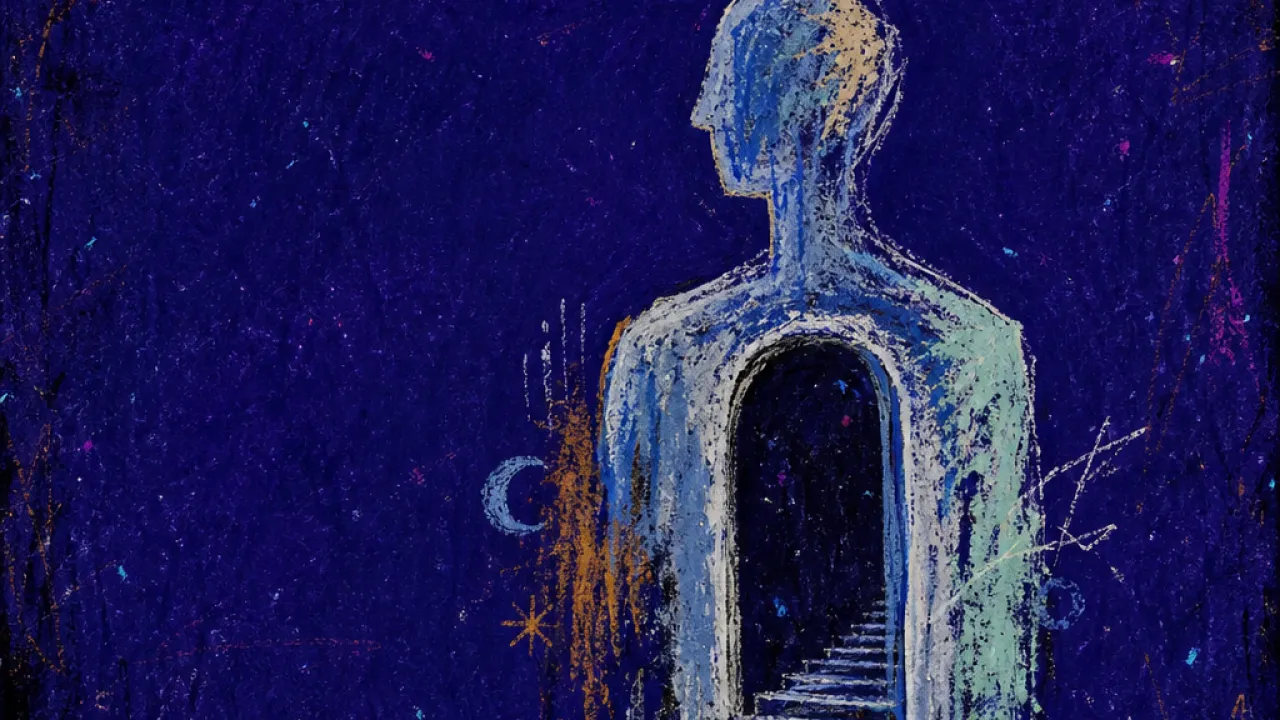
What does this feel like?

Liminal Grief — you feel it in the quiet pause after something has already changed, when your body knows the old shape is gone but the new one still feels like fog. It can sit in your chest as a hollow pressure, not sharp enough to point to one clean loss, but too present to ignore; you move through the day with a strange half-step feeling, answering messages, making coffee, walking familiar streets, while some part of you keeps checking for a self that no longer fits. You might not be crying all the time, and that can make it harder to explain, because this grief is less like a wave and more like standing in a doorway with cold air on both sides. The old version of you has stopped carrying authority, but the next version has not gathered enough weight to feel real, so your inner voice keeps asking, Where am I supposed to stand now? You may feel tender around routines that used to be automatic, detached from places that used to name you, oddly exposed in moments that should feel ordinary, as if your life has moved one step ahead of your skin. Liminal Grief is the ache of being between forms, grieving not just what left but the person you were when you still believed you belonged there, much like the figure on the Five of Cups, paused on one bank of the river with spilled cups in front of them and a bridge to a distant home not yet crossed.

Why you're feeling this?

Liminal Grief makes sense when part of you has released an old shape before the next one feels solid enough to hold. You are not wrong for feeling unsettled in the middle. Some losses are not single events; they are thresholds your body needs time to recognize.

Liminal Grief in Tarot Cards

The strange suspended ache of Liminal Grief has a body: the hollow chest, the paused breath, the feeling of standing on one shore while another waits across the water. This is a universal emotional experience, especially when what ended is not only a situation but a version of yourself that used to know where to stand. Tarot gives that threshold a visual language without forcing it into a clean timeline. Here are the Tarot Cards that tend to mirror Liminal Grief.

Death Upright
The sun sitting between the two towers refuses to declare whether it is rising or setting. In front of that horizon, the king is down, the woman turns away, the child looks openly, and the river keeps moving behind them. Liminal Grief belongs to the threshold where an old version of you has lost authority, but the next version has not become embodied yet. You are not mourning a single event; you are mourning the strange blank space between identities, where inner work has cleared something but has not yet given it a stable replacement.
The Moon Upright
The shoreline in The Moon is not a place of arrival; it is a threshold where water, land, and path overlap without becoming stable. The crayfish has emerged from the pool, but the road ahead leads through a guarded passage into terrain that remains dark. Liminal Grief comes from that in-between condition. You may be leaving an old internal identity, defense, or emotional script, but the new shape has not yet gathered enough daylight to feel real. This card gives that ache a precise map: the sadness is not only about what has ended, but about having to cross before the next version of self is fully visible. In introspection, The Moon helps you hold the transitional sorrow without rushing it into a clean narrative.
Judgement Upright
Judgement places the figures in the exact middle of emergence: they are no longer lying down, but they are still inside the coffins. The cold open field around them gives the moment space, yet that space feels transitional rather than settled. In love, Liminal Grief appears when the relationship has changed before your inner world has found its new coordinates. You may be separated, redefining the bond, or trying to become someone different within it, while part of you still stands in the old emotional container. This feeling belongs to Judgement because the card’s awakening is inseparable from what has ended. The grief is not a failure to move forward; it is the weather of crossing a relational threshold with memory still attached to your body.
Five of Cups Upright
The river, bridge, and distant dwelling give the Five of Cups a threshold structure. The figure stands on one side of an emotional crossing, with loss in the foreground and a stable place visible beyond the water. Liminal Grief appears when inner work has already loosened an old attachment, but the next internal order does not feel fully inhabitable yet. You are not only mourning what spilled; you are feeling the strange middle space before the bridge feels usable. This card is precise because it keeps the crossing visible without forcing movement. It allows grief to exist as a transitional atmosphere, where the old emotional container has cracked open and the new one is still being approached from a distance.
Six of Cups Reversed
The paused offering sits between two worlds: the protected childlike courtyard and the adult distance behind it. The flowers remain intact, which makes the old sweetness feel present even as the scene quietly points beyond itself. Liminal Grief is the mourning that happens before a relationship has a clean ending or a clean renewal. You may still be close, still talking, or still remembering the good parts, while your body already knows something cannot return in its original form. The reversed Six of Cups gives that in-between ache a precise container. It shows the emotional cost of keeping the old version preserved when the relationship is asking to be seen as it is now.
Eight of Cups Upright
The river, the dusk, and the mountain path place the figure in a threshold state rather than a clean ending. He has left the cups, but he has not yet arrived anywhere that can replace their emotional gravity. Family transitions often feel exactly like this: not fully belonging to the old role, not fully free from its pull, and not yet settled into the person you are becoming outside it. The grief is liminal because the relationship may still exist, the memories may still matter, and the future shape of contact may still be undefined. The Eight of Cups holds that in-between grief without rushing it into closure. You are allowed to mourn the family you wanted while still walking toward a version of yourself that can breathe beyond the old emotional arrangement.
Three of Swords Upright
The heart hangs in a grey field with rain falling around it, without ground, horizon, or a visible body to return to. The image is not only wounded; it is suspended, held between an old form and an undefined next space. Personal growth often creates this exact middle zone. You may know that an old belief, identity, or coping style no longer fits, yet the replacement has not become emotionally real enough to stand on. Liminal Grief fits the Three of Swords because the rain shows release while the missing horizon shows incompletion. The card gives shape to the sadness of transition: not failure to grow, but the cost of leaving one inner world before another has fully formed.
Six of Swords Upright
The boat is neither at the old shore nor at the new one. The passengers face away, the far bank is pale, and the water creates a suspended middle distance where arrival has not yet become real. Liminal Grief lives in that suspended social space. You may have outgrown a friend group, left a scene, or stopped forcing your way into a circle, but the replacement for that belonging has not arrived with equal clarity. The card gives that in-between ache a visible structure. It does not demand that you call the move a victory yet; it shows the honest tenderness of being between social identities while still moving forward.
Reversed
The passengers face away in silence while the boat carries its blades toward a shore that is visible but not yet vivid. The scene has left something behind, but it has not landed in a place that feels emotionally inhabited. Liminal Grief belongs to the reversed Six of Swords because the crossing can become a suspended mourning space. You may no longer fully belong to an old identity, defense, or inner story, but the next version of yourself has not become real enough to hold you. In introspection, this grief is not only about loss; it is about the strange emptiness between forms. The card shows a self in transit, carrying the weight of what shaped it while grieving the fact that transformation still has no solid shore under its feet.
Ten of Swords Upright
The fallen figure lies between the dark sky and the thin yellow horizon, beside a river that still marks a possible crossing. The old ground is no longer livable, yet the blue mountains across the water remain distant, quiet, and not yet embodied. Liminal Grief is the ache of knowing a social chapter has ended before a new sense of belonging has arrived. The card holds that suspended interval with precision: you are not only mourning people or plans, you are mourning the version of yourself that knew where to stand among them.

Liminal Grief in Tarot Card Reading Insights

Liminal Grief often enters a reading as that quiet in-between feeling: no longer fully inside the old life, not yet settled in the next one. Others have brought this suspended ache into readings when the cards became a place to name the crossing without rushing it. Tarot Reading Insights from sessions with Liminal Grief.
Psychological emtions related to Liminal Grief