Whose Choice Is This?
Explore a crowded decision field, the tarot cards that mirror it, and reading insights from similar pressure-filled choices.

Triangulated Decision Pressure
What is this situation?
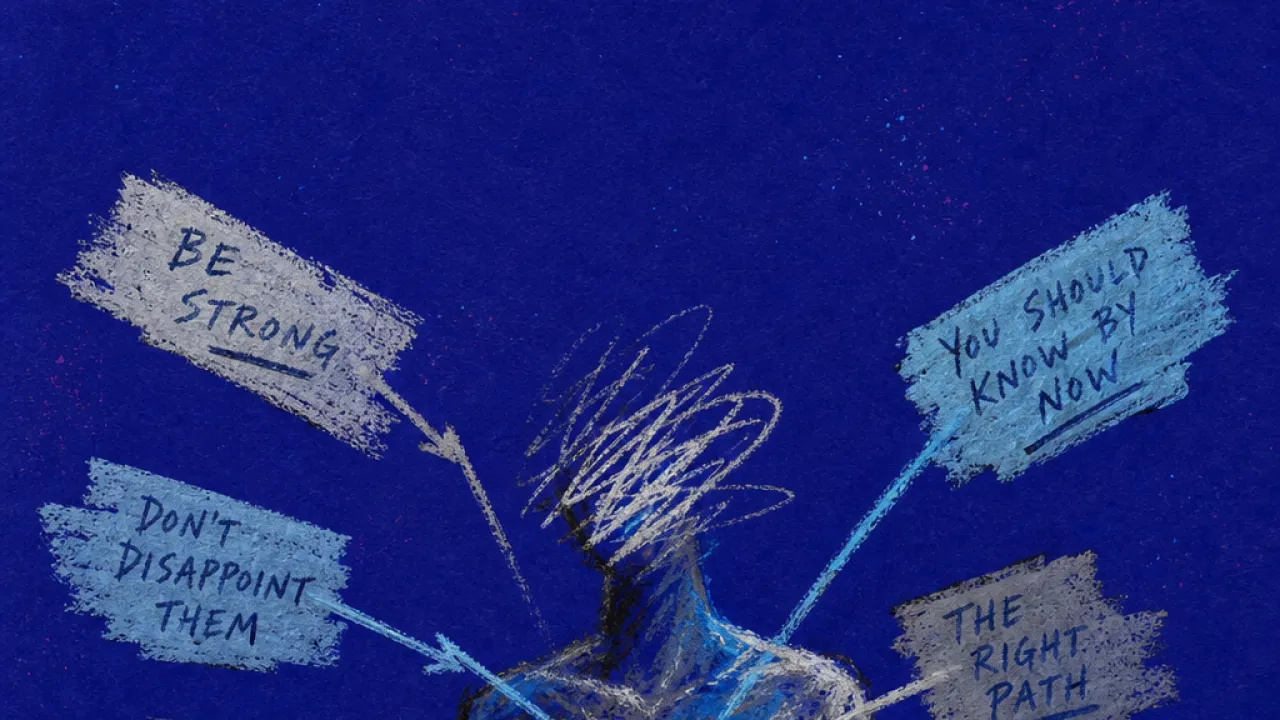
Triangulated Decision Pressure — you start with what looks like a normal choice, maybe whether to accept the offer, end the talking stage, move cities, set a boundary, pick a course, or say no to something that everyone else seems to have an opinion about. At first, the decision belongs to you: two options, a deadline, a few practical details. Then the room starts filling up. A parent sends a careful warning disguised as concern, a friend tells you what they would do, a partner hears your hesitation as rejection, a manager frames the choice as a loyalty test, and the group chat turns one private question into a live scoreboard. Nobody may be yelling, but every message adds another angle: who will be disappointed, who will feel chosen, who will say they called it, who will have to explain your choice to someone else. You open your notes app to make a clean pros-and-cons list, but the list keeps getting hijacked by other people's reactions; your jaw tightens, your shoulders brace, and even the option you wanted starts to feel contaminated by the work of managing everyone around it. The pressure does not come from one single person, so there is no one clean conversation that can fix it. It arrives through hints, deadlines, side comments, raised eyebrows, shared histories, and people acting as if their comfort should be part of your calculation. By the time you try to decide, you are no longer comparing the options themselves; you are trying to move through a crossfire of expectations without becoming the person who lets someone down, much like the Three of Swords, where separate blades enter from different directions and meet in the same vulnerable center.
Why it's not you?
The issue is not that you are too indecisive or unable to choose. The decision field has been crowded by other people's expectations, timelines, warnings, and approval needs until the choice carries more pressure than the options themselves. That crowding is an outside condition, not a personal flaw.
Triangulated Decision Pressure in Tarot Cards
Triangulated Decision Pressure is the moment a personal choice gets crowded by other people's timelines, warnings, approval needs, and implied stakes. The tight jaw and braced shoulders are not random; they mark how many separate lines of pressure have been pushed into one decision space. This is an environmental, structural dynamic, where the pressure is produced by the surrounding field as much as by the option itself. The Tarot Cards below mirror the shape of that crowded decision field without giving the surrounding voices automatic authority.
Triangulated Decision Pressure in Tarot Card Reading Insights
When Triangulated Decision Pressure turns a choice into a crowded room, other people have brought that same mix of advice, leverage, and social pressure into readings. These readings shift from the cards themselves toward what came up when the decision space was no longer private. Tarot Reading Insights from sessions involving crowded choices and competing outside stakes.

Permission-Seeking Choice Paralysis: Preference Before Polling
Topic:Personal Growth Tarot Reading
Struggle:Permission Paralysis
Context:Decision Cliff Edge

Twelve Advice Tabs, One Quiet Criterion, and a Reversible Test
Topic:Choice Tarot Reading
Struggle:Inner Compass Overload
Context:Choice Overload

The LinkedIn Career Spiral, Then One Test Without an Audience
Topic:Choice Tarot Reading
Struggle:Clarity-Exposure Split
Context:Values Alignment Crossroads
Six Career Tabs, Then One Three-Line Message: Owning the Choice
Topic:Choice Tarot Reading
Struggle:Analysis Paralysis
Context:Choice Overload

From Five Career Tabs to One Value-in-Role Test: A Toronto Story
Topic:Choice Tarot Reading
Struggle:Borrowed Purpose Lock
Context:Self-Help Content Spiral

Three Tabs Open in a Childhood Room—And the Shift to One Fair Choice
Topic:Family Tarot Reading
Struggle:Permission Paralysis
Context:Boomerang Kid Negotiation

Three Open Tabs, One Lead Lane: How the Gridlock Started to Move
Topic:Personal Growth Tarot Reading
Struggle:Transition Ambiguity Lock
Context:Triangulated Decision Pressure

While the Host Waited, 'I'm Easy' Gave Way to a Clear First Pick
Topic:Personal Growth Tarot Reading
Struggle:Low-Maintenance Worth Lock
Context:Unspoken Social Rules