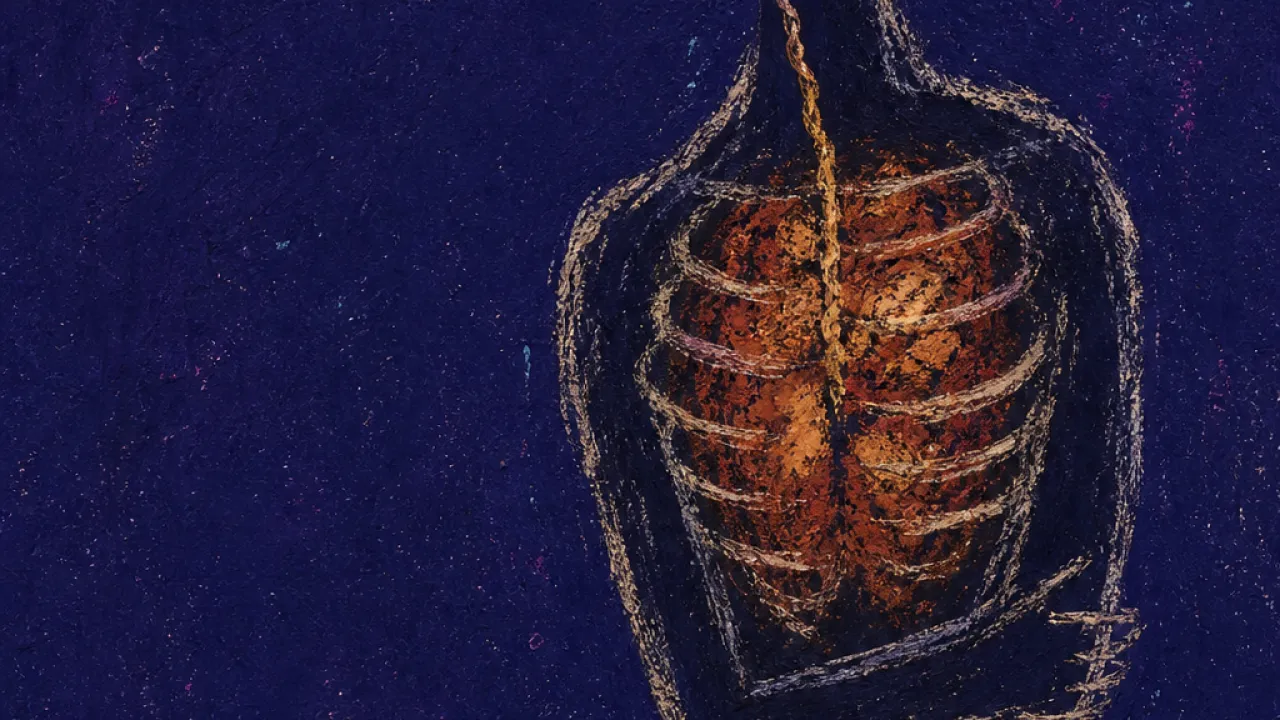
That quiet heat under your ribs, the one that tightens when closeness asks for more access than you meant to give, is the shape of Enmeshed Resentment. It is a universal emotional experience: care and irritation can share the same room when your inner space has been treated as open. The cards below do not judge that mixture or flatten it into simple anger. These Tarot Cards mirror the blurred edges, shared tethers, and closed loops that often appear around Enmeshed Resentment.
Temperance ReversedThe liquid keeps moving between two cups, and the angel’s body bridges land and water without fully leaving either side. Reversed, the exchange can stop feeling balanced and start feeling compulsory, as if the same emotional current must keep passing through you. Enmeshed Resentment fits this image when family closeness becomes a demand for constant access, care, attention, or emotional translation. The resentment may be quiet because the exchange is framed as love, but the body still knows when flow has become obligation. Temperance makes the mixed feeling exact. It shows that resentment can grow not because you lack care, but because the channel has lost proportion and your own container is being treated as shared property.
The Devil UprightThe man and woman stand as separate bodies, but both chains run to the same ring. The shared tether creates a physical picture of closeness without clean separation, while the downward torch concentrates heat near the body instead of letting it rise into open space. In family life, that structure becomes the resentment that forms when attachment has no breathable boundary. You may care deeply, remember everything, and still feel a quiet heat building around every demand, comparison, obligation, or unspoken debt. Enmeshed Resentment is not clean anger. It is anger fused to loyalty, tenderness, dependency, and history, which is why it can feel so hard to admit without feeling cruel.
ReversedThe two figures are linked through the same altar system, but they are not oriented toward each other in a clean, mutual way. The metal ring holds the bond from outside, making closeness look less like choice and more like entanglement. Enmeshed Resentment fits the reversed pressure of this image because the connection is loose enough to question but familiar enough to keep. In a social circle, that can become irritation toward people you still feel tied to, watched by, or responsible for. You may resent the group chat, the mutuals, the expectations, or the subtle pressure to stay available, while still feeling unable to fully step back. The card names the emotional knot where belonging has become sticky instead of nourishing.
The Tower ReversedThe tower cannot keep inside and outside separate; fire leaks through its windows while smoke thickens the air around every edge. What should be a boundary becomes an atmosphere that spreads everywhere. Enmeshed Resentment grows in family systems where closeness has no breathable distance. You may care about the people involved, but the constant access, expectation, and emotional spillover can turn connection into pressure against your skin. The abrasive mix of stone, flame, and smoke gives the resentment its texture. It is not simple anger at family; it is the feeling of being kept inside a shared emotional room where your private air keeps getting used up.
The Star ReversedWater leaves both vessels and enters the surrounding world, one stream into the pool and one branching across the land. The scene is beautiful, but the boundaries between source, receiver, and terrain become increasingly soft as everything participates in the same flow. Enmeshed Resentment takes shape when family closeness quietly becomes emotional extraction. The Star's reversed flow shows why irritation can rise under a calm surface: the self is still giving, but the system has blurred the difference between loving contact and unlimited access.
The Moon ReversedThe Moon's shoreline refuses to behave like a clean edge. Water presses into land, the path begins inside that unstable contact point, and the animals guard the route as if the movement toward distance has to pass through a field of reaction. That is the emotional shape of Enmeshed Resentment in a family system. The closeness may be called care, loyalty, or concern, but inside it can feel like there is no dry ground where your feelings, choices, and limits belong only to you. The resentment here is not shallow irritation. It is the heat that builds when separation is repeatedly blurred, when access is treated as love, and when you keep participating while an unnamed part of you is already pulling away.
The Sun ReversedThe child has crossed the wall, but the flowers remain behind it and still face the same sun; boundary and exposure share one frame. When every part of the friendship is expected to stay warm, the need for distance has nowhere discreet to live. That visual tension maps to the irritation that builds when closeness becomes assumed access. You may still care about the friend, but the bond starts to feel sticky because generosity is no longer clearly chosen.
Judgement ReversedThe family groups in Judgement mirror each other across the cold field, repeating the same basic formation as if the scene has duplicated itself. The coffins are open, yet each body remains inside its assigned place, making movement and containment happen at the same time. Enmeshed Resentment grows from that exact tension in family life. You may be asked to care, answer, include, explain, or participate, but the request feels less like connection and more like being pulled back into a formation where separateness is treated as disruption. The card supports this emotion because it visualizes a shared awakening that can become too fused when read through family pressure. The trumpet reaches everyone, but the repeated formations show why your inner response may carry irritation: the system keeps translating your individuality back into a role.
The World ReversedThe red ties cinch the wreath into a repeating loop, and the ribbon winds around the dancer's body without offering a clear exit from the circle. The image can become a closed circuit where movement continues, but release has nowhere obvious to go. Enmeshed Resentment forms when family closeness keeps pulling your energy back into the same loop. The card gives that quiet anger a visual container: You are still moving, still participating, still looking composed, but part of you knows the connection has become too wrapped around your body to feel freely chosen.
Ace of Cups ReversedCloud, hand, cup, water, and pool all feed into one another until the borders between giver, vessel, and shared basin become hard to locate. The offering looks beautiful, but the person behind it is visually absent, leaving only the demand of the gesture and the flow it expects. Inside a family system, that porousness can turn closeness into irritation. You may be offered care, tradition, concern, or advice, yet the emotional texture underneath says there is no clean place where their feeling ends and yours begins. Enmeshed Resentment belongs to the reversed Ace of Cups because the water does not simply connect; it absorbs distinction. The resentment is the inner alarm that appears when family warmth asks to enter every room of your life and still call itself love.
Two of Cups ReversedThe caduceus rises between the two cups like a shared axis, binding the scene with serpents, wings, and a lion head. The symbol promises harmony, but it also takes up the narrowest space between the two bodies, making the relationship feel organized around a force neither person can ignore. Enmeshed Resentment belongs here because the image can hold both mutual offering and symbolic overbinding. In family life, resentment often starts where love is used to keep everyone braided together, and the card shows why the pressure builds when your separate cup is treated as part of one family container.
Three of Cups ReversedThe circular dance has no obvious beginning or exit, and the figures' movement is organized around the shared toast. Fruit, cups, and bodies all gather into one field, making individual edges secondary to the group's combined display. Enmeshed Resentment forms when family togetherness turns into emotional overreach. The card shows a circle that can hold connection, but in its reversed pressure it also reveals the irritation that builds when your feelings are expected to merge with everyone else's mood.
Four of Cups ReversedThe offered cup reaches into the seated figure's space, but the body does not open, and the existing cups remain separate on the ground. The scene is full of possible exchange, yet none of the parts truly meet. Enmeshed Resentment forms when family care feels inseparable from obligation, access, or unspoken emotional debt. The cup may look generous, but the sealed posture shows that receiving it would not feel clean. You may resent the offer and then resent yourself for resenting it. The Four of Cups clarifies the hidden structure: the feeling is not about rejecting care itself, but about refusing a form of care that arrives with too many invisible strings.
Five of Cups ReversedThe fallen cups spill into the foreground while the river keeps moving beyond them, creating a scene where emotional material is everywhere but not cleanly contained. In family dynamics, that image matches the pressure of being pulled into other people's feelings and then expected to treat your own reaction as the problem. Enmeshed Resentment is not simple anger; it is the bitter charge that builds when care, obligation, and guilt become tangled. The bridge in the distance matters because it shows that a separate position exists, even when the old system keeps pulling your attention back to what spilled.
Six of Cups ReversedThe offered cup is beautiful, but it is still handed over inside a guarded family space. The gesture carries flowers, memory, and implied belonging all at once, making the exchange feel heavier than its size. In a family system, help can become emotionally expensive when it arrives with unspoken access rights. You may resent the gift, the favor, or the nostalgic gesture because it seems to ask for closeness, compliance, or disclosure that you did not freely choose. Enmeshed Resentment fits the reversed Six of Cups because the card turns giving into a relational container rather than a clean act. The emotion names the anger that appears when family care is warm on the surface but too entangled underneath.
Seven of Cups ReversedThe cups do not sit at a clean distance; they occupy the same misty field as the figure’s attention. Home, reputation, wealth, desire, and the covered self all press forward as competing claims, while the most private symbol remains hidden under cloth. In family entanglement, resentment often forms where personal desire has been repeatedly absorbed into collective expectation. It may not appear as open conflict; it can sit underneath politeness, compliance, careful replies, and the habit of managing everyone else’s reaction before naming your own. Enmeshed Resentment belongs to the reversed Seven of Cups because the self is surrounded by images that look like choices but feel like obligations. The card reveals the emotional charge that builds when belonging keeps requiring you to stay blurred.
Eight of Cups ReversedThe swampy water around the cups blurs the difference between ground and emotional residue. In its reversed texture, the scene can feel less like a clean departure and more like trying to pull your body out of a field where old feelings cling to everything. Family resentment often becomes enmeshed when love, obligation, gratitude, guilt, and control are stored in the same emotional container. You may resent the demand, then feel guilty for resenting it, then resent the guilt itself. The cups remain close together, and the water does not clearly release what it holds. The Eight of Cups gives this resentment a route out by showing the need for a boundary before the emotion can become legible. The feeling is not just anger at family; it is anger tangled with attachment, which is why it can feel so difficult to name without feeling disloyal.
Ten of Cups ReversedThe family group is visually bound to the house, the children, the river, and the cups above them, as if one emotional weather system covers everyone at once. The boundaries are beautiful, but they are also highly synchronized. Enmeshed Resentment grows when togetherness becomes a rule that absorbs individual signals. You may feel the irritation of being treated as part of the family mood instead of a separate person with your own limits, needs, and timing.
Page of Cups ReversedThe Page stands on an edge between the deck and the sea, holding a small living thing that seems connected to the water behind him. The scene never fully separates care from possession, or tenderness from containment. In family life, that ambiguity can become a specific kind of irritation. You may still care, still respond, still hold the cup, while another part of you resents how often your emotional availability is treated as a shared family resource. Enmeshed Resentment is not simple anger. It is the pressure of being close enough to feel responsible and separate enough to know the responsibility is not entirely yours, a feeling the card captures through the fish held between private cup and larger sea.
Queen of Cups ReversedWater surrounds the island while the carved cherubs and fish hold the throne in a language of care. The scene is tender, but it is also enclosed, with the Queen's attention locked on a cup that no one else can see inside. In family dynamics, closeness can become dense enough that irritation has nowhere clean to go. You may still love them, still respond, and still understand their needs, while a quiet edge forms around every request. The wall blocks the far view, and the water keeps circling the small shore. Enmeshed Resentment names the feeling that appears when connection remains real but separation has been treated as disloyal.
King of Cups ReversedThe King’s blue clothing blends with the surrounding sea, and his foot almost touches the water below the throne. The boundary is present, but it is visually permeable, as if the body and the emotional environment are too close to stay fully distinct. In a family system, that porous edge becomes the feeling of being constantly reachable. You may care about the people involved, but when closeness turns into automatic access to your time, mood, and attention, care begins to carry a hidden charge. Enmeshed Resentment belongs here because the resentment is not simple rejection. It grows from too much emotional overlap, too little clean separation, and the pressure to keep holding the cup even when the sea around it never stops moving.
Ace of Pentacles ReversedThe low fence and flowered archway make the garden accessible, while the hand above still has to grip the pentacle carefully. Access and ownership are both visible, but neither one fully settles the pressure around what can be taken from the field. In friendship, Enmeshed Resentment forms when closeness starts behaving like automatic permission. You may still value the bond, but the card names the heat that builds when your care keeps being treated as shared property.
Two of Pentacles ReversedThe cord between the pentacles does not simply connect; it keeps both objects moving through one shared loop. The figure's body must keep adjusting because the linked system will not hold itself. That is the emotional texture of resentment inside an enmeshed family pattern. The anger is rarely clean, because it is braided with care, practical support, history, guilt, and the fear of being seen as cold for wanting room. Enmeshed Resentment fits the reversed card because the juggling becomes a trap of maintenance. You may look like you are keeping the peace, but underneath the rhythm is the sharper truth that too much of the family's balance has been placed in your hands.
Three of Pentacles ReversedThe renovation scene presents cooperation, but the plan, the stone, and the watching bodies all converge on the worker's hands. What looks like shared labor can quietly place the cost of the structure onto one person. Enmeshed Resentment builds when family requests arrive dressed as teamwork while your time, emotional labor, or autonomy becomes the material being used. The feeling is not simple anger; it is the heat of noticing that helping keeps making you disappear.
Four of Pentacles ReversedEvery limb in the Four of Pentacles is occupied by holding, covering, or pinning down value. The figure is isolated from the town, yet he is not free; his separation is organized entirely around what he cannot release. In family systems, Enmeshed Resentment grows where attachment and obligation are tangled with resources, access, loyalty, or approval. You may resent the hold the family has on you while also feeling unable to step away cleanly, because what binds you is not only emotional but practical, historical, and deeply familiar. The card's reversed pressure makes that resentment feel sticky rather than explosive. It shows the pain of wanting distance from the system while still being shaped by the very things the system taught you to guard.
Five of Pentacles ReversedThe two figures share the same strip of snow, moving as a pair through a space with no open threshold. Their closeness offers company, but it does not create enough room, warmth, or separate access to support. Enmeshed Resentment forms when friendship becomes fused survival rather than chosen connection. The card shows how loyalty can start to feel like being trapped in the same weather, where You keep walking beside someone while quietly losing the edge of your own needs.
Six of Pentacles ReversedThe blue cloth with a tear exposing the same red as the benefactor's robe creates a subtle visual bleed between giver and receiver. Their positions are separate, but the colors imply that need and power have started to share the same skin. In friendship, that image matches the resentment that forms when someone's reliance on you begins to feel like part of your own identity. The feeling is not simple anger; it is the pressure of care crossing the line where connection stops feeling chosen.
Nine of Pentacles ReversedThe vine carries both grapes and pentacles, blending nourishment, money, beauty, and ownership into one dense growth. The woman, the bird, and the estate appear connected through care, control, and possession at the same time. Enmeshed Resentment rises when family ties treat your resources, time, success, or calm as shared property before consent is even considered. The card exposes the emotional charge beneath polite availability: what looks like generosity can sour when separateness is never granted.
Ten of Pentacles ReversedThe family crest, arch, and wall gather several bodies into one marked household identity. Even the movement in the scene is mostly carried by the dogs, while the humans remain arranged inside inherited stations. Enmeshed Resentment emerges when connection starts to feel like an atmosphere you cannot step out of. You may care deeply, but the card shows the irritation that builds when family closeness quietly assumes your availability, your agreement, and your emotional access.
Queen of Pentacles ReversedCloak, throne, vines, and garden blend into a continuous field around the Queen, while her gaze remains sealed on the pentacle in her hands. The image has no sharp rupture, but it does show a care environment where everything touches everything else. In family dynamics, that kind of contact can produce resentment precisely because the bond is real. Affection, duty, access, money, and emotional availability begin to share the same channel, leaving little space to know which yes is generous and which yes is survival. Enmeshed Resentment is the heat that builds when closeness has no clean edge. The card gives You a way to name irritation without denying attachment: the problem is not that You care, but that the family field has made care and self-loss feel too similar.
King of Pentacles ReversedThe vines climb over the throne and the robe's leaf pattern blends into the surrounding greenery until body, seat, and estate echo the same surface. The scepter and pentacle remain gripped, so attachment and control occupy the same visual field. In family dynamics, that produces a feeling where closeness is never just closeness; it arrives with claims, favors, access, and invisible dues. The resentment is hard to separate from love because the image itself gives no clean line between nourishment and possession.
Ace of Swords ReversedThe hand comes out of cloud instead of a visible body, and the branches hang from the crown without roots in the barren ground. Family closeness can take on that same floating quality when care, access, guilt, and identity blur into one atmosphere. Enmeshed Resentment forms when the boundary is not missing exactly, but constantly softened by emotional expectation. The card's unanchored hand shows why resentment can feel hard to admit: the demand may arrive dressed as care, yet your inner space still registers the loss of separateness.
Two of Swords ReversedThe shoreline is a boundary, but the tide does not treat it as fixed. Behind the woman's guarded body, the water keeps relating to the moon, moving according to a pull she cannot see. Enmeshed Resentment appears when family closeness behaves like that tide: always entering, asking, implying, needing, and expecting emotional availability. You may resent the pull while also feeling guilty for wanting distance, because the boundary is treated as a personal rejection instead of a basic edge. The card gives this resentment a clean outline. The crossed swords are not coldness; they are the visible sign of a self trying to stop being absorbed into everyone else's emotional weather.
Three of Swords ReversedThe heart is pinned at its center while rain and mist close in from every side. Nothing in the image creates a separate chamber where the heart can stop receiving impact; the atmosphere and the wound keep touching. In one-sided friendship, Enmeshed Resentment grows when every crisis, vent, and emotional emergency finds its way into you. The card shows a private center being used as the meeting point for too many sharp arrivals, which makes resentment less like cruelty and more like the body's protest against being continuously entered.
Five of Swords ReversedThe wind, clouds, water, and shoreline all pull across the scene while the figures face away from each other. Physical distance exists, but the atmosphere still binds everyone inside the same grey field. In family dynamics, that visual tension mirrors resentment that forms when other people’s expectations keep entering your emotional space. You may step back, but the mood of the system still follows, making your own feelings hard to separate from obligation, guilt, and inherited roles. Enmeshed Resentment is held by the reversed Five of Swords because the boundary is present but not clean. The fallen blades divide the people, while the weather keeps the conflict circulating around them.
Eight of Swords UprightOne foot touches water while the other remains on muddy ground, placing the bound woman between feeling and practicality. The swords create a boundary around her, but it is not a clean sanctuary; it is a tense perimeter that keeps her near the very conditions she wants to move beyond. That visual tension fits Enmeshed Resentment in family life. The bond still carries feeling, memory, and attachment, but the closeness can also feel like wet fabric around the ankles, making every step toward selfhood heavier than it should be. The resentment here is not cold rejection. It is the heat of the red robe pressed under white restraint, the emotional friction of loving people while feeling managed, claimed, or made responsible for keeping the whole family atmosphere stable.
ReversedThe muddy water gathers around the woman's feet while the swords stand close enough to define her space without touching her skin. The restriction is indirect, which makes it harder to point to, yet the body remains held in place. Enmeshed Resentment grows in that indirect pressure. In friendship, you may be deeply involved in someone's emotional life, familiar with their crises, and trained to anticipate their needs, while your own anger stays hard to admit because the bond still looks like care from the outside. The Eight of Swords holds this emotion through its mixture of contact and distance. The swords do not pierce, the bindings do not fully erase movement, and the water does not sweep anything away. The resentment stays pooled because the boundary exists as a feeling before it becomes a spoken line.
Page of Swords ReversedClouds press close around the Page while the wind moves through his hair and clothing, making the boundary between his body and the surrounding weather feel porous. He stands alone, yet the atmosphere is not separate from him; it keeps touching, surrounding, and pulling at his attention. That is the emotional logic of Enmeshed Resentment in friendship. You may still care deeply, but the other person’s needs, moods, and crises start entering your inner space before you have agreed to receive them. The sword gives the scene an edge because the feeling is not pure withdrawal. It is the quiet sharpness that forms when closeness has taken too much access, and the part of you that wants clean air has had to become more guarded to survive the bond.
Knight of Swords ReversedThe rider, horse, sword, clouds, and trees all submit to the same rushing direction, as if the whole scene has become one instrument of motion. There is little sign of private tempo; everything is recruited into the charge. Enmeshed Resentment belongs here because family urgency can absorb your time and attention before you have agreed to give them. You may resent the demand not because you lack care, but because the system keeps treating your energy as available weather rather than a boundary that belongs to you.
Queen of Swords ReversedThe low clouds wrap around the Queen's elevated seat, blurring the edge between her throne and the surrounding atmosphere. The water and trees remain present, but they are small and far away, while the sword arm stays rigid in the foreground. That field captures the resentment that grows when a friendship takes up too much private weather. A friend's needs, crises, or projections keep entering your space until care no longer feels freely given; it feels absorbed, expected, and difficult to separate from. Enmeshed Resentment belongs to the reversed Queen of Swords because the boundary tool is still visible, but the surrounding atmosphere has already crowded in. The emotion is not simple anger; it is the bitterness of realizing that closeness has been allowed to bypass consent too many times.
Ace of Wands ReversedThe river separates the banks, but it also runs through the same landscape that feeds the trees and the wand. Fallen leaves return downward, suggesting renewal that never fully leaves the original ground. Enmeshed Resentment forms in that half-separated, half-fed condition. In family systems, you may resent the pull of people who shaped you, supported you, claimed you, or needed you, while also feeling how deeply their emotional ground still runs through your own life. The card does not flatten this into simple anger. It shows a living branch held above a shared terrain, which is why the resentment feels tangled with loyalty, need, gratitude, and the desire to finally belong to yourself.
Two of Wands ReversedThe fixed wand, the pressed roses and lilies, and the high wall create a scene where living symbols are arranged into position and held there. Nothing looks chaotic, but the composition carries the strain of being secured too tightly. Enmeshed Resentment fits the friendship dynamic where care has become a role instead of a choice. You still recognize the bond, but the body of the card shows what happens when availability is treated as architecture: steady, useful, and quietly overused.
Four of Wands ReversedThe garland in the Four of Wands connects the pillars into one shared festive structure. In a healthy moment, that connection looks joyful; in a pressured family system, the same connection can feel like emotional wiring that makes everyone responsible for the same performance. The square of wands defines a collective space so clearly that private withdrawal becomes visually difficult. The scene asks for participation, and under family pressure, participation can start to feel less like warmth and more like proof of loyalty. Enmeshed Resentment is the irritation that grows when closeness leaves no clean place to stand apart. You may resent the family bond not because you lack care, but because the bond keeps asking your separate feelings to disappear into the group atmosphere.
Five of Wands ReversedThe staffs cross into one another's personal space until separateness is visible but constantly invaded. Each figure has a distinct color and stance, yet every attempt to move becomes tangled with someone else's line. Enmeshed Resentment forms in that overlap. In family dynamics, you may resent the closeness not because connection is unwanted, but because the connection keeps arriving without enough consent, timing, or room for your own boundary.
Seven of Wands ReversedThe stream runs between the figure's feet while the lower wands rise from unseen hands, making the boundary between his ground and the surrounding field feel porous. The pressure does not arrive as one named opponent; it comes through the whole environment. For family entanglement, Enmeshed Resentment is the bitter heat that builds when your choices are treated as communal property. The card reveals why care can curdle when every act of independence is pulled back into shared expectation, invisible accounting, or emotional debt.
Nine of Wands ReversedThe eight wands look orderly from a distance, but their uneven heights and open break reveal a system that only works when someone stands inside the gap. The figure is not merely protected by the fence; he is recruited into it. In family dynamics, Enmeshed Resentment carries that exact texture: closeness mixed with the acid feeling of being used as emotional infrastructure. The card makes the resentment legible without making it a moral flaw, showing where connection has been confused with absorption.
No cards available for this filter.