Ready, But Still Waiting

Explore a stalled timeline shaped by stakeholders, related tarot cards, and reading insights from similar approval-delay patterns.

Stakeholder Timing Drag
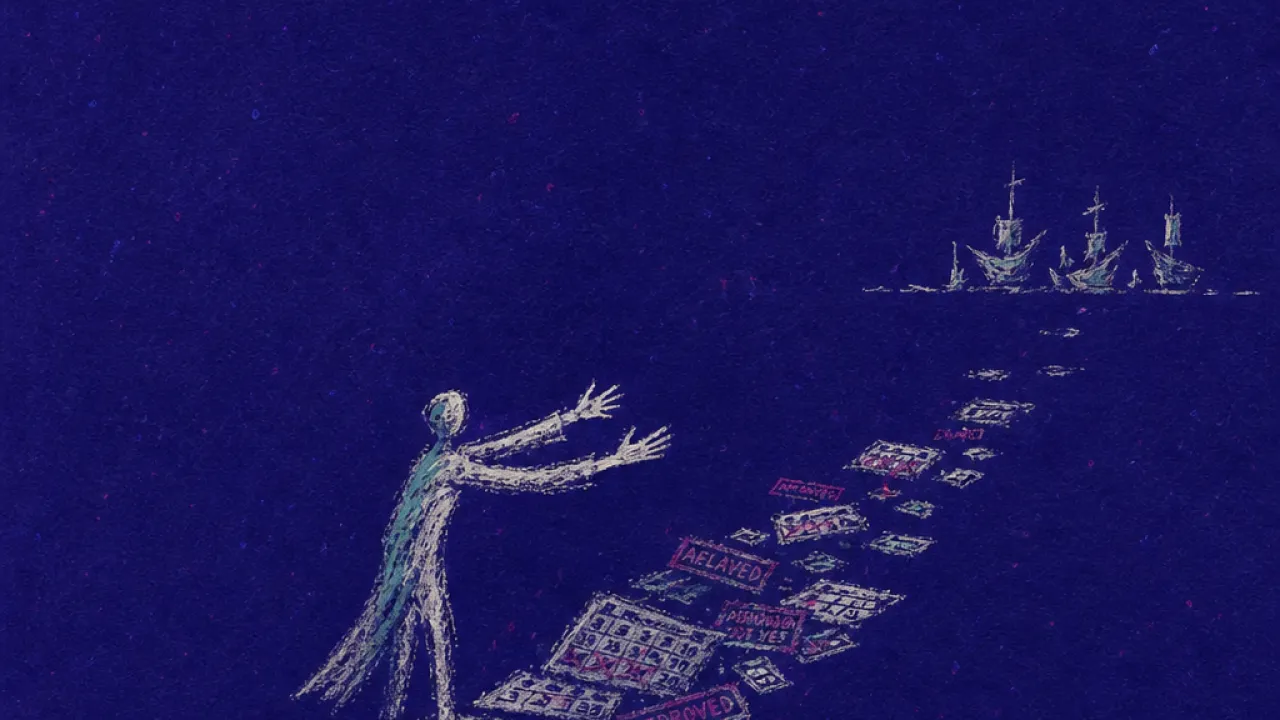
What is this situation?

Stakeholder Timing Drag — you enter the project, meeting, group chat, application process, or shared plan with a clear next step, and at first the delay looks ordinary: someone needs to check with their manager, a client has to review, a teammate is out until Monday, a budget line needs sign-off, a partner wants to think it over, or the room needs “alignment” before anything can move. Then the pattern starts repeating. You send the update, make the deck, book the call, write the follow-up, clarify the ask, and still the timeline keeps stretching because the power to release the next piece sits somewhere outside your hands. No one may be openly blocking you; the drag can sound polite, procedural, even reasonable. But each stakeholder has a different rhythm, a different risk level, a different inbox, a different reason to wait, and their separate clocks become the clock you are forced to live by. Your day fills with checking threads, refreshing calendars, rewriting the same timeline in softer language, holding space in your head for decisions that other people have not made yet. The exhausting part is not only waiting; it is having to keep your own momentum warm while the room, team, institution, client, funder, or family system decides when your readiness is allowed to count. You can see the route, the resources, and the next move, but the release point stays on the far side of someone else's approval, much like the Three of Wands, where the figure stands on the cliff watching ships move below, close enough to track but too distant to command.

Why it's not you?

The issue is not that you are moving too slowly, asking for too much, or failing to push hard enough. Stakeholder Timing Drag is a delay created by distributed approval, mismatched calendars, review layers, and people who control pieces of the pathway without carrying the whole responsibility. Your readiness and the system's release schedule are not the same thing.

Stakeholder Timing Drag in Tarot Cards

Stakeholder Timing Drag is the kind of delay where the next step is visible, but every handoff has to pass through someone else's calendar, review cycle, or permission point. The tension shows up in your body as the repeated pause before sending another follow-up, the tight shoulders after another meeting ends with no clean owner, and the drain of holding momentum while the room keeps recalculating pace. This is an environmental, structural dynamic: the drag comes from how authority, access, and timing are distributed across the field. The Tarot Cards below reflect the shape of that distributed delay without turning it into a personal failure.

Three of Pentacles Reversed
The scene divides authority across three bodies: one performs, one holds the plan, and one stands between the two. When that arrangement tightens, timing gets dragged through everyone who has a piece of approval but not the whole responsibility. This is the outer context where the delay is not caused by a lack of intention. You may be dealing with a room, group, team, or support system whose alignment process has become the clock, turning a clear next step into a drawn-out negotiation.
Six of Pentacles Reversed
One hand gives while the other hand weighs. The card's action is divided between movement and evaluation, which means the flow of resources is real but slowed by the person or system deciding how much can be released. This is the texture of timing drag: your intended action has to pass through another rhythm before it can land. A funder, manager, collaborator, family member, client, school, or partner may not be hostile, but their review cycle still becomes the pace-setting force. The card makes the delay visible as a structural lag rather than a vague sign to push harder. You regain clarity by separating your own readiness from the stakeholder's release schedule, then identifying where the exchange can be simplified, redirected, or timed more precisely.
Ten of Pentacles Reversed
The image is full of connected figures: the elder with the dog, the child reaching forward, the couple in conversation, and the household gathered under one arch. Stakeholder Timing Drag fits because movement has to pass through multiple relational checkpoints. You may be ready to act, but the card shows timing slowed by people whose needs, approvals, schedules, or symbolic roles have become part of the pathway.
King of Pentacles Reversed
The scepter, crown, throne, and walled estate place access in the hands of a seated authority. The resources are visible, but they are not freely circulating; they move through ownership, rank, and permission. Stakeholder Timing Drag captures the moment when a plan is not blocked by lack of desire, but by someone else's control over approval, budget, legitimacy, or access. You are dealing with a timing bottleneck created by hierarchy, where the pace of action depends on a gatekeeper who can afford to move slowly.
Ace of Swords Reversed
The sword holds the crown in place, and the branches hang from that suspended point rather than from an independent structure. Recognition is visible, but it depends on a single line of connection between the hand, the blade, and the elevated symbol. Stakeholder Timing Drag shows up when readiness is not enough because approval, legitimacy, or release power sits outside your direct grip. The card makes the delay structural: your move may be clear, but the timing is slowed by the channel through which permission or public confirmation has to pass.
Three of Swords Reversed
The hilts and tips form a rigid six-point pattern around the heart, and every blade participates in the lock. The heart is not dealing with one clean line of force; it is held by a structure made from several directions at once. That is the shape of a timing problem controlled by other people, platforms, approvals, or calendars. You may be ready to move, but the next node is pinned by actors whose timelines do not share the same urgency. The card's pressure is useful because it stops the delay from looking like personal indecision. It shows the drag as a system of converging controls, allowing you to identify which stakeholder or gate is actually holding the rhythm in place.
Five of Swords Reversed
The figures do not face one another, and the swords no longer function as shared instruments in a common field. Each person has become a separate timing system, with the foreground figure still holding leverage while the others withdraw from participation. For a timing question, this shows why progress may feel slower than your effort level suggests. The next step depends on people whose attention, trust, agreement, or availability has drifted out of sync. Stakeholder Timing Drag names the delay created when the social field is no longer moving as one. The card makes it clear that pressing harder on your own timeline cannot replace alignment from the people or systems that still control the opening.
Six of Swords Reversed
One person rows, but the boat carries several bodies and six swords. The crossing depends on the ferryman, passengers, oar, current, and protective structure moving as one system rather than as separate intentions. In a reversed timing pattern, that shared vessel becomes drag. You may be ready to move, but the timing is slowed by other people’s caution, approval cycles, dependencies, or unreadiness, turning a personal decision into a coordinated crossing. The card clarifies why forcing speed can backfire. When the boat contains multiple stakeholders, momentum comes from alignment across the vessel, not from one person pushing harder against the water.
King of Swords Reversed
The ruler stays fixed on the throne while birds and clouds move behind him. Motion exists in the atmosphere, but the central decision body remains seated, turning movement into delayed circulation. Stakeholder Timing Drag appears when a plan depends on people or systems that do not move at the same pace. The card's sparse landscape and fixed hierarchy show how momentum can be slowed by review layers, mismatched calendars, and decision-makers whose timing becomes the real terrain you have to navigate.
Three of Wands Reversed
The man stands still at the edge while the ships move far below and beyond him. The scene contains movement, but not movement he can directly command; the route exists, yet the water between him and the ships makes timing a structural constraint. In a career context, this becomes stakeholder timing drag. You may have done the work, built the case, or identified the next move, while the actual opening depends on leadership calendars, budget approvals, team reshuffles, market cycles, or people who are not moving at your speed. The card does not frame the delay as personal failure. It shows a system where your agency is real but partial, and where clarity comes from separating what is already planted from what is still waiting on external alignment.
Four of Wands Reversed
The four wands only work as a canopy because each pillar stays in relation to the others. The bridge to the house also suggests that the route forward is not a solo sprint; it is a passage that depends on timing, access, and coordination. Stakeholder Timing Drag appears when a move cannot advance simply because you are ready. Other people, approvals, shared calendars, room availability, team capacity, or relationship pacing become part of the architecture. The card makes that dependency visible without turning it into a personal flaw. In timing work, this context helps you locate the real bottleneck. The issue may not be motivation, but the fact that the structure needs multiple supports to align before the next stage can carry weight.
Five of Wands Upright
Five raised wands fill the scene before any shared direction has formed. Each figure has energy, leverage, and a claim on the moment, but the field turns crowded because every push enters the same narrow space at a different angle. That visual structure mirrors timing drag created by stakeholders, competing priorities, or life variables that cannot be advanced by effort alone. You may be ready to move, but the surrounding system is still negotiating pace, sequence, permission, and mutual visibility. The card does not frame the blockage as laziness or lack of ambition. It reveals a timing field where motion exists, but coordination has not yet become architecture, so the useful question becomes where alignment must be established before another push can land.
Reversed
The feet are planted, the arms remain raised, and no single motion resolves the field. Every move meets another wand before it can complete, keeping the whole scene suspended in active delay. Stakeholder Timing Drag fits when a decision cannot land because other people keep extending the contest. You are not simply waiting; you are inside a timing structure where objections, visibility, and competing schedules keep the choice open past the point where clarity should have arrived.
Seven of Wands Reversed
The people holding the six lower wands are outside the frame, but their pressure still reaches the central figure. That absence matters: the timing is being shaped by forces that are active, real, and not fully accountable in the visible scene. Stakeholder Timing Drag fits when your next move keeps depending on other people's clocks, approvals, bandwidth, or shifting priorities. The card turns that drag into a visible structure: you are holding a position on open ground while unseen sources keep changing the tempo from below.
Eight of Wands Reversed
The wands descend as one diagonal stream while the ground below is divided by water and distance. The upper field moves cleanly, but the receiving field is layered, separated, and slower to absorb what is coming. That split captures the career friction of work that is ready to move while stakeholders, approvers, clients, or adjacent teams operate on a different clock. The real blockage is not lack of effort; it is timing asymmetry between the part of the system generating momentum and the part authorized to receive or approve it.
Ten of Wands Reversed
The destination is visible, but the carrying happens alone in the foreground. The building receives the load, while the scene shows no shared handling, no intermediate checkpoint, and no reciprocal support along the way. Stakeholder Timing Drag appears when the timeline is organized around an endpoint controlled by someone else. You may be ready to move, but approvals, dependencies, clients, institutions, or other people's availability determine when the load can actually be deposited. The card gives this delay a physical form. The burden stays in your arms while the destination remains remote, making the timing problem less about motivation and more about who controls the point of release.
Page of Wands Reversed
The Page is a messenger, not the sovereign source of the decree, and the wand functions like a symbol carried on behalf of a larger court. His body can announce, but the authority behind the announcement sits outside the visible frame. That makes the card relevant when timing is controlled by stakeholders, approvals, audiences, or gatekeepers. You may be ready to speak, move, or present, but the external calendar is being shaped by people who control when the signal is allowed to count.
King of Wands Reversed
The wand is planted and the command posture is clear, yet the body remains fixed to the throne. Around the king, the desert has no visible receivers, roads, or responding figures, so the signal of action does not automatically become shared movement. You encounter this context when your timing depends on other people, approval layers, or institutional cycles that are not matching your pace. The card reveals drag as a coordination problem: the will to move is present, but the system that must move with it is delayed or unresponsive.

Stakeholder Timing Drag in Tarot Card Reading Insights

Stakeholder Timing Drag often shows up when people bring a stalled project, delayed approval, or mismatched group timeline into a reading. The focus shifts from the cards themselves to what appears when someone sits with a plan that is ready on their side but waiting on other people to move. Tarot Reading Insights from sessions involving this kind of timing drag are gathered below.


Psychological contexts related to Stakeholder Timing Drag