Why Does Conflict Need Witnesses?

Define the sideways conflict loop, then see tarot cards and reading insights that mirror its three-point pressure.

Triangulation
What is this really?

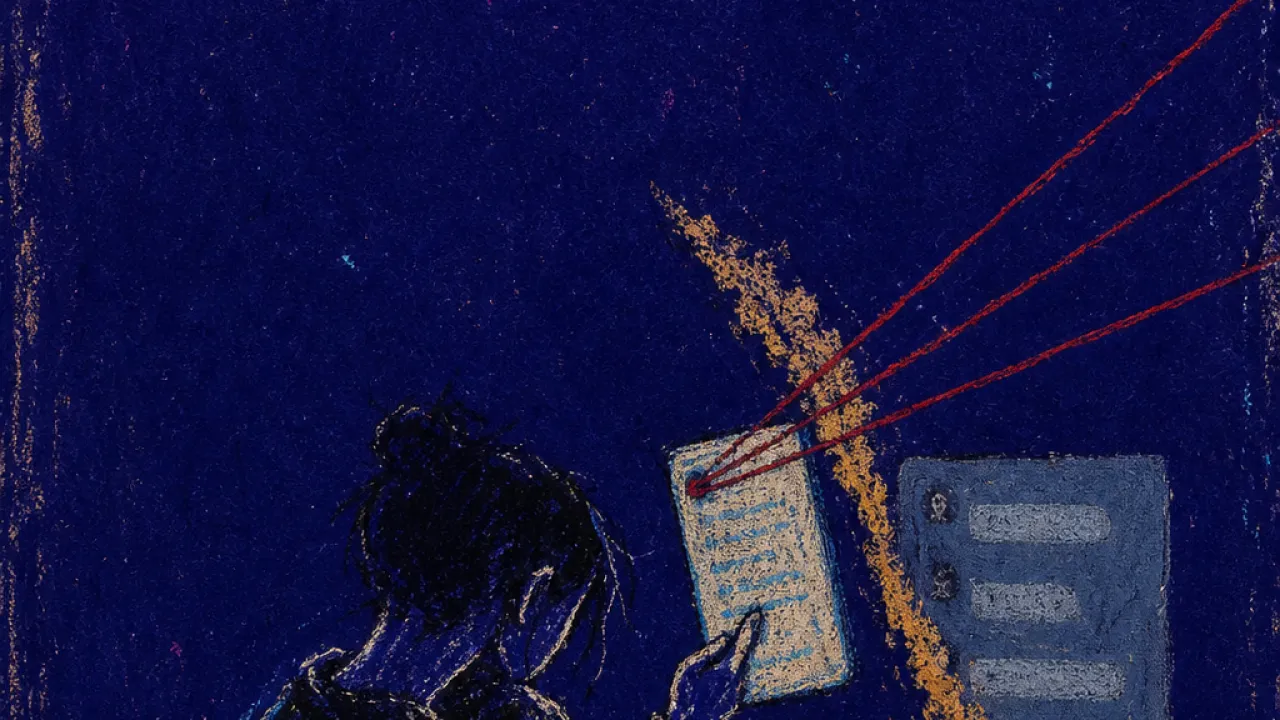
You pull a third point into a two-person tension: a friend, ex, screenshot, group chat, social post, or borrowed expert voice starts carrying what the direct conversation cannot hold. It often begins as a way to steady yourself when contact feels too exposed; another witness can validate your read, lower the pressure, and make the conflict feel less isolating. But that relief can become a validation loop at the cost of boundary clarity: the original bond loses its center, the issue turns into witnesses and loyalty tests, and you end up inside the reversed Three of Cups, where a circle has no single center and every cup seems to answer another cup across the room.

Why did it happen?

At some point, going straight to the person at the center may have felt too exposed or too easy to misread, so a witness, messenger, or side channel helped the room feel steadier. Over time, your inner pattern may have learned to move tension sideways first: a quick text to a friend, a screenshot check, a casual comparison, a group chat pulse. Now that subconscious loop can leave your chest tight and your attention split, because the issue keeps traveling through everyone around it instead of landing in the conversation where it began.

How does it feel?

  • You reread a tense message from someone you're close to, crop the screenshot just enough to hide the top of the chat, and send it to a friend with, "Am I being dramatic?" ... in that pause, your thumb may feel strangely heavy, your breath may sit high in your chest, and the first reply can feel like a small drop in pressure. You can let that pause exist without forcing an instant verdict.
  • Before replying to a coworker, you lean toward another tab, type, "Did that sound weird to you?", then watch the cursor blink while your shoulders climb toward your ears. As you wait, your jaw may lock and your eyes may keep scanning for tone in words that already passed. Uncertainty can be present without becoming a vote.
  • In a friend group, you lower your voice and say, "I'm not trying to put you in the middle, but...", then glance down as if the floor could make the sentence cleaner. Your throat may catch right before the name is said, and your stomach may prickle with a quick mix of relief and exposure. It is okay to notice the pull toward a side channel before acting on it.
  • After seeing a post, a like, or a comment that lands sideways, you open Close Friends, type a vague line, delete three words, then check who viewed it. The feeling may show up as a buzzing under your ribs and a restless heat in your wrists, even before anyone responds. The signal can stay unnamed for a moment while you come back to your own body.
  • When someone asks you to pass along what they will not say directly, you nod, press your tongue to your teeth, and rehearse the softer version before you even leave the room. Later, your shoulders may feel weighted and your mind may keep replaying both people's wording, as if one wrong syllable could tilt the whole room. You do not have to carry the entire exchange in the first breath; noticing the weight is enough.

Triangulation in Tarot Cards

That reflex to pull a third point into a two-person tension is the center of Triangulation. Your throat catching right before the name is said gives the pattern a body before anyone has named it. From a Jungian perspective, archetypal theory frames that third point as a visible shape for pressure that has not found a direct line. The Tarot Cards below reflect these unconscious dynamics through circles without a center, witnesses, crossed lines, and crowded fields.

Three of Cups Reversed
The circle gives the Three of Cups its warmth, but a circle also lets emotional information travel sideways. When tension cannot be spoken directly, the same closeness that supports celebration can become a relay system for glances, private messages, alliances, and unspoken tests of loyalty. That is why Triangulation fits the reversed friendship field. The card's shared focal point hides the fact that not all communication in a group moves cleanly from one person to another; some of it moves through a third party to reduce anxiety while preserving the appearance of harmony. In friendship, this pattern often feels confusing because the conflict is everywhere except the conversation where it belongs. You may be pulled into someone else's tension, asked to validate a side, or made responsible for translating feelings that were never directly addressed.
Three of Pentacles Reversed
The card is built around three bodies and an indirect channel of attention. The robed figures do not simply relate to each other; their focus converges through the worker, the plan, and the task being performed. In a family system, that triangular structure can become the route through which conflict travels. One person complains through another, siblings are compared through a parent's gaze, or a child becomes the messenger for emotions that adults will not address directly. Triangulation turns the third person into a pressure point. The Three of Pentacles is uniquely suited to this pattern because its strength is also its risk: three roles can coordinate a healthy project, or they can turn unresolved tension into a managed triangle where direct truth never has to stand alone.
Ten of Pentacles Reversed
The family scene is built from crossed lines of contact: the couple speaks, the child reaches through the mother's space, the dogs move toward the elder, and the crest watches over the household. No figure is completely isolated from the relational web. Triangulation turns that web into a communication trap. Instead of one person addressing another directly, emotion travels through a sibling, parent, child, partner, elder, family event, or resource issue until you are carrying a conflict that did not begin with you. The card shows why this pattern can feel so hard to name. The connection looks like family involvement on the surface, but the deeper mechanism is displaced tension looking for a third point to stabilize it.
Three of Swords Upright
The three swords do not strike randomly; they create a balanced structure around one heart. Each blade enters from a different direction, yet all of them converge into the same emotional center, making the wound feel organized, relational, and shared. That structure mirrors the family pattern where pain does not travel in a straight line. A parent speaks through a sibling, a relative carries someone else's resentment, or one person's disappointment becomes a group pressure campaign. The heart in the middle is not only hurt; it is made into the meeting point for multiple agendas. Triangulation forms when direct contact feels too risky, so the system routes emotion through a third point. The card's geometry shows how this can look orderly from the outside while still piercing the emotional center. You are not imagining the pressure; the pattern is built from crossed lines that keep everyone connected through the wound instead of through honest contact.
Reversed
Three blades create a relational geometry, not just a single injury. Each sword enters from a different angle, but all of them meet in the same heart, turning the wound into the organizing center of a three-point field. Triangulation appears in friendship when conflict is routed through a third person, a group chat, or a side conversation instead of moving directly between the people involved. The pain is no longer just emotional; it becomes social architecture. The Three of Swords makes this pattern unusually visible because the number three is the structure of the wound. In a friendship reading, it points to the moment when the issue is being managed through alliances rather than clean truth between the people who are actually hurt.
Five of Swords Upright
The three figures do not face one another, and the swords point in separate directions across the shore. The composition turns a conflict into divided sightlines, separate exits, and a field where no one is standing in the same relational frame. Triangulation forms when that divided field becomes a strategy. In friend groups, You may pull in another person to validate your version, manage the narrative in side chats, or create a coalition because direct repair with the original friend feels too exposed. The Five of Swords makes the mechanism visible through its social geometry. The more people are arranged into sides, witnesses, and defeated figures, the less the original wound can be addressed where it actually occurred.
Seven of Swords Reversed
The figure does not confront the camp directly; he moves information and power through an indirect route. The camp remains in the background, the swords become the medium, and the real exchange happens through what is taken, withheld, or carried elsewhere. That indirect geometry is the psychological structure of Triangulation. In family systems, pressure often moves through side channels: one parent speaking through another, a sibling carrying the message, a relative becoming the witness, judge, or messenger. The original conflict stays untouched while everyone becomes involved in managing it. The Seven of Swords shows why this can feel effective and corrosive at the same time. Indirect movement creates temporary leverage, but it also teaches the family system that truth travels better through strategy than through contact.
Five of Wands Upright
The figures in the Five of Wands do not meet in a clean pair or a stable circle. Each wand crosses another person’s line, so the eye cannot follow one relationship without being pulled into the next collision. That structure is the physical grammar of Triangulation. In a family system, direct contact becomes unsafe or ineffective, so pressure travels sideways through siblings, parents, partners, relatives, or whoever can be recruited into the field. The card’s disorder matters because no single figure controls the whole scene. You may enter wanting one honest conversation, but the system turns it into positioning, witness-gathering, and indirect pressure, making clarity feel impossible until the triangle itself is named.
Reversed
The Five of Wands is not a two-person confrontation; it is a multi-body field where every angle affects every other angle. In the reversed texture, conflict can stop moving directly between the people involved and start traveling sideways through the group. Triangulation appears when a friendship issue needs a third point of contact to feel manageable. A private frustration becomes a side conversation, an ally check, a screenshot exchange, or a subtle test of who agrees with whom. The card's crowded composition makes the mechanism unusually clear. You may be seeking validation before direct contact, but the pattern turns the friendship network into the battlefield, so the original bond becomes harder to repair without everyone else's energy attached to it.
Six of Wands Reversed
The crowd surrounds the rider with raised wands, yet the individual hands holding those wands are hard to distinguish. The public field is supportive, but it also blurs who is actually speaking, witnessing, judging, or carrying the emotional charge. Triangulation appears when a two-person romantic tension gets moved into a larger audience. You may pull in friends, social media, exes, or outside opinions because being validated by witnesses feels safer than staying in direct contact with the partner who triggered the pain. The Six of Wands shows how quickly a parade can become a court of appeal. Once the crowd becomes the stabilizer, the relationship loses its clean boundary and repair starts depending on who can gather more symbolic support.

Triangulation in Tarot Card Reading Insights

For anyone who recognizes the pull to move tension through a witness, a screenshot, or a group chat, others have brought the same three-point pressure into readings. Here, the view shifts from the cards to how that pattern appeared when someone sat with similar questions. Below are Tarot Reading Insights that speak to this pattern.
Psychological patterns related to Triangulation