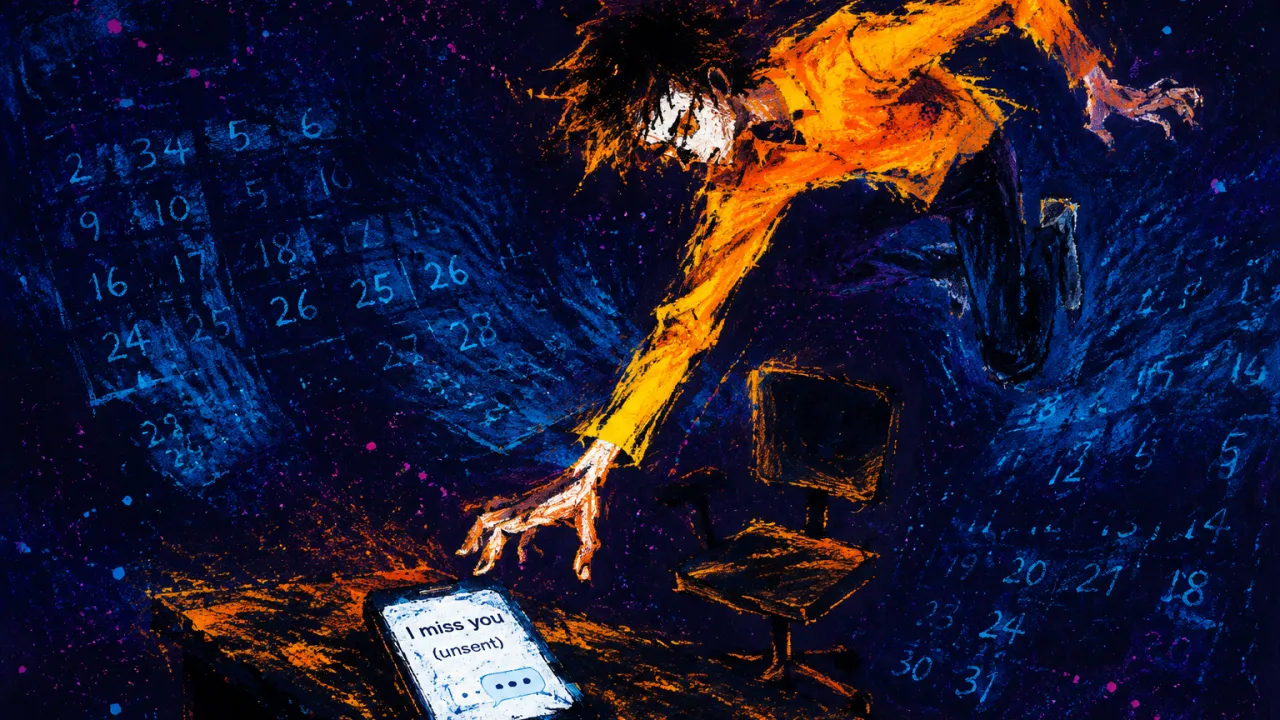
Always Early, Always Late?

Explore this timing mismatch through grounded struggle language, related tarot cards, and Tarot Reading Insights from sessions.

Cycle-action Desynchronization

What does this feel like?

Cycle-Action Desynchronization — you notice it in the moment when everything seems to be moving, but none of it moves together: your calendar says now, your body says not yet, your bank account says maybe later, your friends say just do it, and some quieter part of you is still waiting for the ground to feel walkable. You sit at your desk with a plan open in front of you, cursor blinking, coffee cooling, one foot tucked under the chair like you are preparing to launch and hide at the same time. The thought loop is not dramatic; it is practical, almost boring, which makes it harder to explain. If you wait, you worry the window will close. If you move, you can already feel the friction gathering around the move. Your chest leans forward before your breath does. Your hand reaches for the email, the application, the text, the booking link, the blank document, then pulls back because the timing feels just slightly wrong in a way you cannot prove to anyone. You are not frozen, and that is the confusing part. You are doing things. You are checking, preparing, adjusting, restarting, reading the room, watching for signs, trying to catch the moment where wanting, energy, money, attention, and outside response finally line up. Some days the signal arrives when you are exhausted. Some days your motivation arrives after the opportunity has gone quiet. Some days your body is ready, but the people around you are not; other days the door opens and you are still catching up to the fact that it opened at all. The cost is not just delay. It is the slow loss of trust in your own sense of when to act, the way every choice starts to feel early and late at the same time, until even momentum feels suspicious and rest feels unfinished. You start living beside your life instead of inside its rhythm, trying to force one clean clock onto a field that keeps answering in seasons, tides, deadlines, moods, and half-open doors, much like The Empress sitting among the crown of twelve stars, ripe wheat, evergreen forest, and flowing water, centered in rhythms that are all alive but not all keeping the same time.

What's pulling at you?

You are not stuck because nothing is happening; you are stuck because too many parts of your life are moving on different clocks. Your body may be ready before the resources are there, the window may open before your energy catches up, and your desire may arrive before the people or conditions around it can meet you. That is why every choice can feel early, late, or costly, even when the choice itself makes sense.

How It Shows Up?

  • You wake up on a free Saturday with no immediate deadline, and somehow that makes the day feel harder to enter. Your body is still heavy, your mouth feels dry, and your hand reaches for your phone before your feet touch the floor, as if a message, calendar alert, or weather check might tell you what phase you are in. You can feel the day opening, but your energy has not opened with it, like standing beside a river that has already started moving while you are still tying your shoes. You can let the first few minutes be data, not a verdict on the whole day.
  • A friend asks, "So, are you doing it or not?" and you hear yourself give a careful half-answer because the decision is clear in one part of you and completely unready in another. Your throat tightens, your shoulders lift, and your smile becomes a little too still while you try to sound decisive without lying. The room keeps moving around you, but inside, every clock seems to disagree: wanting, timing, money, mood, other people's availability. It is allowed to answer from the part you can name today, without pretending the whole system has clicked into place.
  • You sit down to work or study with the tabs open, the notes ready, the timer set, and the weirdest part is that you are technically doing everything right. Your eyes scan the same paragraph twice, your jaw locks, and your chest feels like it is leaning forward before your attention has arrived. It has the feel of the Two of Pentacles: hands moving, waves behind you rising, the whole day requiring constant correction just to keep from dropping something. You can pause long enough to notice which rhythm is missing before adding another task to the pile.
  • At a party, dinner, or group hang, everyone seems to know when to leave, when to text back, when to laugh, when to make the next plan. You are present, but slightly out of beat, laughing a second late or speaking just as the topic changes, and heat gathers behind your face while your stomach drops in small, private pulses. You keep checking the room for timing cues the way The Moon's path appears only in phases, visible enough to follow but never bright enough to trust fully. You do not have to force yourself into the group's tempo just to prove you belong there.
  • Your body starts sending the same signal at the same time each day: a tight neck before emails, a heavy forehead around mid-afternoon, restless legs the minute you finally sit down. You tell yourself you should push through or switch off, but neither lands cleanly, because the urge to act and the need to reset keep missing each other. The pressure feels like the Chariot before the road becomes usable: power present, wheels ready, but no clean transfer between command and traction. You can treat the body signal as timing information, not as an interruption.

Cycle-action Desynchronization in Tarot Cards

Cycle-Action Desynchronization lives in the strange place where your life is moving, but your body, schedule, desire, and outside conditions are not arriving together. You can feel it in the clenched jaw before work, the late laugh in a group, or the heavy Saturday morning where the day opens before your energy does. From an existential perspective, the structural framework of this struggle is about motion without shared timing. The Tarot Cards below make that out-of-phase pattern visible without forcing it into one simple answer.

The Empress Upright
The crown of twelve stars, the ripe wheat, the evergreen forest, and the flowing water all mark time in different ways. The Empress sits at the center of these rhythms without collapsing them into one simple clock. Cycle-Action Desynchronization appears when your life is not actually frozen, but its timing systems are moving at different speeds. One part of the field may be ready, another may still be gathering moisture, and another may be responding to a larger seasonal pattern you cannot speed up by will alone. In a timing question, the card gives shape to the feeling that every signal is real but none of them fully agree. You are not looking for permission from one clock; you are trying to locate the point where emotional readiness, material support, social timing, and bodily energy can finally move as one system.
The Emperor Upright
The red robe suggests heat and forward drive, yet the body is locked against a cold stone throne while a narrow stream appears only at the sides. Motion, structure, and flow do not share the same channel. For timing, the struggle is the mismatch between an action system that is already activated and an environment that is still moving through a slower cycle. You are not simply lacking effort; the card locates the pain in the place where effort keeps hitting a season that has not synchronized with it.
The Hierophant Reversed
The scene is full of transmission but almost no movement: a teaching hand raised, a staff held upright, keys crossed on the step, acolytes fixed in place. The structure can circulate doctrine for a long time without converting it into an opened door. That is the timing friction of pushing from a prescribed schedule instead of the living cycle in front of you. You may act harder when the field is closed and wait obediently when the actual window has opened, because the ritual tempo has replaced momentum as the reference point. Cycle-Action Desynchronization gives this mismatch a clear outline. The problem is not simply effort or delay; it is effort and delay losing contact with the cycle they are supposed to serve.
The Lovers Upright
The two trees stand behind the figures like two different clocks: one marked by recurring fruits and ordered cycles, the other charged with knowledge, desire, and immediate consequence. Between them, the human pair stands exposed in a moment that has not yet become action, while the angel and sun hold a larger frame above the scene. This is the shape of timing friction when one part of life moves by season and another moves by urgency. You may be trying to force a decision from the pressure of the present while a deeper cycle is still arranging the conditions that would let the choice actually land. The card does not flatten the problem into waiting or acting. It shows a system where desire, readiness, and the available season are not synchronized yet, making every push feel slightly premature and every pause feel costly.
The Chariot Upright
The chariot stands ready, crowned with stars and flanked by wheels, yet the sphinxes at its front are seated and split in their orientation. The card does not show a lack of power; it shows power that has not found a synchronized transfer point between command, traction, and route. When timing is the question, that visual friction becomes the lived sense of pushing before the cycle can carry you. You may have ambition, preparation, and pressure all present at once, but the card locates the blockage in rhythm: the moment has not yet become a road.
Strength Reversed
The lion's body still carries motion in its paws, tail, and mouth, but the interaction is locked at one point of regulation. The broader symbols of cycle and ascent remain above and behind the figures, while the living action keeps returning to the same unstable aperture. Cycle-Action Desynchronization is the strain of being out of phase with the moment you are trying to read. You may push when the cycle is still resisting or hold when movement has already begun, because the feedback loop has narrowed around control instead of rhythm.
The Hermit Upright
The Hermit stands with one hand lifting a lantern and the other driving a staff into the frozen summit. His body holds two different time signatures at once: the light reaches forward, while the staff insists on anchoring the present ground before any step is taken. That split is the shape of Cycle-Action Desynchronization in timing work. You may have a real signal, a real desire to move, and a real sense that something is calling, but the terrain around the signal is still winter terrain: narrow, cold, and low in margin for error. The card does not frame the pause as failure. It shows the specific friction between an inner lamp that is already lit and an external field that has not yet become walkable, naming the place where action feels urgent but the cycle has not opened enough to carry it.
Wheel of Fortune Upright
The wheel's spokes radiate like a clock and compass, but the figures around it occupy different phases of the turn at the same time. The card holds action inside timing, so movement is not just a matter of pushing harder; it has to meet the rhythm of the larger cycle. For self-development, the struggle appears when daily habits, resets, and big visions keep missing one another. You may be moving, learning, or planning, but the wheel shows why progress feels stalled when action fires at the wrong point in the cycle.
Reversed
The wheel keeps rotating while the figures around it appear held in fixed functions: the Sphinx balances, the readers read, the rising figure rises, and the descending figure descends. In a reversed state, the image becomes less like movement through change and more like a system whose parts keep acting at the wrong distance from the actual turn. Cycle-Action Desynchronization appears in love when recognition and response no longer arrive together. You may see the pattern after the message has already been sent, feel ready to speak only after the window has closed, or regain clarity just as the relationship pulls you back into another turn. The struggle is not ignorance. It is a timing fracture between what your body knows, what your heart wants, and when your actions become possible inside the relationship's cycle.
Justice Upright
The seated figure holds a vertical sword in one hand and a balanced scale in the other, so the image suspends two different tempos in the same body. The sword is ready for a clean cut, but the scale can only remain truthful while the hand stays still enough to register tiny shifts. You meet this as a timing struggle when the impulse to move arrives before the surrounding cycle has settled. The card names the friction of acting from a charged blade while the field is still being weighed, where pushing harder can disturb the balance that would have made the move effective.
The Hanged Man Upright
The Hanged Man is held upside down from a living wooden frame, with one ankle carrying the whole body while the rest of him hangs in a state that is visibly alive but not actionable. The halo around his head keeps awareness active, yet the body has no ground contact, no leverage, and no usable path for ordinary forward motion. That structure gives Cycle-Action Desynchronization its exact shape. You may still have momentum, desire, and a clear sense that something needs to move, but the timing field is not offering the frictionless point of entry that direct effort requires. The card does not frame the pause as emptiness. It shows a body caught between life force and suspension, where the real timing question becomes whether the current delay is protecting the next phase or whether the old rhythm of action is no longer matched to the cycle you are in.
Death Upright
The white horse moves through the card with a momentum no foreground figure can redirect. The fallen ruler, the kneeling woman, the praying bishop, and the child all meet the same advancing line, which makes the scene feel less like a single event and more like a cycle arriving on its own schedule. Cycle-Action Desynchronization forms when your effort is still calibrated to a phase that has already changed. You may be pushing harder, timing messages, launches, decisions, or commitments with increasing precision, yet the resistance keeps growing because the action belongs to yesterday's season. The card does not frame this as personal failure. It marks the exact friction point: the rider's motion is real, your urgency is real, but the rhythm they answer to is no longer the same rhythm.
Temperance Upright
The liquid is in motion, yet the card captures it in a suspended middle state. Behind the angel, the path moves gradually toward the mountains, so the image holds two tempos at once: immediate regulation and long-range development. Cycle-Action Desynchronization lives in that timing gap. You may know the life you are trying to build, but your sleep, focus, meals, work demands, recovery windows, and emotional bandwidth do not arrive on the same schedule. Temperance does not reduce this to poor consistency. It shows a system where rhythm is the real obstacle: the stream, the body, and the path all need sequencing, and the struggle begins when daily action keeps missing the body's actual cycle.
Reversed
The same stream that can refine a mixture can also become a closed circuit when it never reaches a new stage. The cups keep exchanging liquid, the body remains at the shore, and the road to the distant light stays outside the active line of movement. Cycle-Action Desynchronization is the struggle of moving with effort but not with the actual cycle. You may be pushing during the wrong season, waiting after the signal has passed, or repeating the same adjustment while the usable window shifts elsewhere. In its reversed pressure, Temperance shows how motion can stop being progress when timing falls out of phase. The card gives the loop a boundary: the problem is not that nothing is happening, but that what is happening is not synchronized with the moment that would let it land.
The Devil Upright
The torch is active, the tails are raised, and the flame almost touches the man's tail, yet the two human figures remain standing still before the cube. Heat is moving faster than the bodies that are supposed to carry it. For timing, that mismatch locates the point where urgency and actual readiness are no longer arriving together. You may have enough desire to start, push, or launch, while the surrounding cycle still keeps your action system suspended in friction.
The Tower Reversed
The lightning strike meets a tower that has no adaptive outlet for the force moving through it. Fire comes through the windows, bodies tumble through open air, and movement becomes intense without becoming useful. Cycle-Action Desynchronization is the timing pattern held in that mismatch. You may be pushing, launching, texting, applying, posting, or deciding with real energy, but the field is not receiving the action in a way that creates traction, so effort turns into more heat instead of movement.
The Star Upright
The woman in The Star kneels with one knee on land and one foot touching water, pouring from two vessels into surfaces that receive at different speeds. The card does not show a sprint, a launch, or a single decisive strike; it shows sustained release across two environments that cannot absorb effort in the same rhythm. That physical split gives timing questions their real pressure. You may feel a clean signal to move, yet the ground beneath the action and the emotional current around it are not synchronized. The struggle is not whether you have enough faith or enough drive; it is that your action cycle is arriving before, after, or beside the cycle that can actually receive it. The Star holds this desynchronization without panic. Its image locates the friction in the mismatch between inner flow and outer season, helping you see where effort is moving ahead of the container instead of assuming that harder pushing will create the right moment.
The Moon Upright
The Moon hangs over a road that begins in water, while the crayfish, the dog, the wolf, and the falling dew all move in different ways under the same dim field of light. The scene is full of motion, but none of that motion has become clean forward travel; every body is responding to a cycle before the road is fully visible. You are not dealing with a simple lack of effort here. The card frames timing as a mismatch between inner activation, external conditions, and available visibility, which is why pushing harder can increase friction when the season itself has not caught up to the action.
The Sun Upright
The child rides forward without reins while the horse carries the actual momentum, and the wall sits behind them as a threshold that has already been crossed. The card’s brightness makes the movement look effortless, but the body still has to land in the right phase of motion rather than simply expand into the light. This is where Cycle-Action Desynchronization takes shape in timing work. You may have enough vitality, clarity, and desire to move, yet the action becomes strained when it does not match the cycle underneath it. The Sun does not show a blocked path; it shows the cost of confusing forward energy with phase alignment. The open arms, red flag, and radiant sky all amplify motion, while the horse’s unbridled movement reminds you that timing is not fully controlled by announcement or effort. The struggle is not whether you want the next step badly enough, but whether your action is landing with the rhythm that can actually carry it.
Reversed
The horse appears in a landing moment, while the child’s body opens as if the jump, arrival, and celebration are happening at once. In reversal, that timing compresses: action, recovery, display, and transition lose their separate phases. Lifestyle systems break down when the body is asked to start, perform, celebrate, recover, and reset on the same rhythm. You may still be moving, but the motion feels mistimed because your energy cycle and your action cycle are no longer speaking to each other. Cycle-Action Desynchronization names the struggle of living out of phase with your own timing. The card’s brightness makes the mismatch visible: everything looks active, but the deeper rhythm that tells you when to push, pause, land, or begin again has slipped out of alignment.
Judgement Upright
The trumpet releases a visible call from the clouds while the figures below are only beginning to rise from their open coffins. The signal is unmistakable, but the bodies are still low, pale, and boxed into the old frame, so the card shows a moment when activation arrives before full mobility is available. That visual tension mirrors the timing problem of pushing at the wrong point in a cycle. You may hear an opening, deadline, urge, or life signal clearly, yet the material route for action has not fully formed, which makes extra effort feel like it creates more resistance instead of more movement. Cycle-Action Desynchronization names the gap between the call and the workable step. Judgement does not flatten that gap into failure; it locates the friction in a mismatch between the rhythm of awakening and the mechanics of emergence.
The World Upright
The dancer moves inside an oval wreath that looks like an open cosmic field, yet every line of motion is drawn back into the same completed circuit. The crossed leg, extended wands, flowing scarf, and tied wreath all repeat a rhythm that is active but contained, like motion whose timing depends on the whole cycle rather than on force alone. This is the precise shape of Cycle-Action Desynchronization in timing work. You may be pushing hard, making the call, sending the pitch, starting the move, or trying to force momentum, but the surrounding rhythm is not yet carrying the action in the same direction. The card does not frame the problem as laziness or lack of will. It shows action trapped in a larger cadence: the body can dance, the tools can be held, and the desire to move can be real, while the window itself has not opened enough to reduce friction.
Reversed
The dancer appears in motion, but the motion has no floor, horizon, or destination. The wreath completes the cycle around the body, while the floating space removes the usual markers that would tell the figure where arrival ends and the next step begins. Reversed, that completion becomes a timing problem. The body keeps carrying the image of transition, but the environment offers no grounded sequence: no before, no after, no landing point, only continued circulation inside a finished shape. For personal growth, this names the disconnection between inner completion and practical initiation. You can know a chapter is done, feel the lesson has been integrated, and still find that your action cycle has not synchronized with that ending.
Ace of Cups Upright
The chalice does not simply hold water; it receives from above, overflows at the rim, and feeds the pool below through a visible sequence of movement. The dove, the cup, the streams, and the lotus-covered water each occupy a different phase of the same cycle, so the card frames timing as a question of phase alignment rather than force. You may feel the impulse to move because something has clearly begun to flow, but the image shows that flow is not the same as readiness for action. The cup must receive before it can overflow, and the overflow must find a pool that can take it in; without that sequence, action becomes a leak in the system rather than a clean release. Cycle-Action Desynchronization names the strain of pushing at the wrong point in the cycle while mistaking motion for permission. In timing work, this card locates the real pressure point in the gap between inner activation and external receptivity, giving shape to the moment where effort starts creating more resistance than movement.
Two of Cups Reversed
The man's forward step and the woman's still posture create a shared exchange that is already out of phase: one body is moving while the other is holding the axis. The cups stay level, but that levelness is maintained by restraint rather than by matched momentum. For timing questions, that structure names the friction of pushing during a cycle that is not moving with you. You are not simply lacking effort; the card shows effort meeting a different rhythm, so each push can feel like it lands against an invisible countercurrent.
Three of Cups Upright
The dancers are clearly in motion, but their movement is circular rather than directional. Their cups rise together toward a shared high point, while their bodies keep answering the rhythm of the group rather than moving toward a separate path. Cycle-Action Desynchronization appears when activity is real but the timing of action has not found its proper phase. You may be doing things, gathering signals, responding to momentum, and still feel that each push lands slightly off-beat because the surrounding cycle has not opened in the direction your effort needs. The Three of Cups is a harvest card, so its timing logic depends on seasonality rather than force. The card frames the struggle as a mismatch between motion and moment: there is energy in the system, but the action only becomes effective when it joins the right rhythm instead of simply moving harder.
Four of Cups Upright
The seated figure is surrounded by available cups, but the body is folded into a compact brake under the tree. The fourth cup enters the scene at exactly the wrong interface: visible enough to matter, close enough to be relevant, yet unable to pass through the crossed arms and closed sensory gate. In a timing reading, that physical arrangement names the moment when life is offering a possible opening while your action system is still organized around pause. You are not simply late, blocked, or unmotivated; the card shows a cycle where arrival and readiness are operating on different clocks. This is why Cycle-Action Desynchronization fits the Four of Cups so tightly. The struggle is the friction between a real timing node and a body that has not converted stillness into movement, leaving you unsure whether waiting is wisdom or the first shape of a missed window.
Reversed
A hand extends the fourth cup at the exact edge of the seated figure's awareness, while the body remains arranged in a closed and inward pose. The timing of the scene is split: one part of the image is offering movement, and another part is holding a stillness that cannot meet it. Cycle-Action Desynchronization in a lifestyle reading lives inside that split timing. You may feel ready to change when your energy is gone, motivated when the window has passed, or deeply aware of what needs repair only after the day has already hardened around old defaults. The card gives the loop a physical shape. The problem is not simply delay; it is a system where reflection, readiness, energy, and action arrive in different time zones, so renewal keeps hovering beside you without becoming part of the day.
Five of Cups Upright
The river keeps moving while the figure remains fixed on the bank, and the spilled liquid has already left the cups. The bridge marks a transition point, but the body has not synchronized with the direction of the moving environment. For timing work, this creates the feeling of being out of phase with your own life cycle: the season changes, the opening shifts, and your system is still calibrated to the last loss. You are not being asked to force movement; the card names the mismatch between inner processing speed and the external rhythm now carrying events forward.
Six of Cups Upright
The boy's hand is mid-offer, the girl receives in stillness, and the cups around them are already flowering before anyone moves them forward. Behind that frozen exchange, the older figure and guarded estate show that time is continuing outside the small ritual. Cycle-Action Desynchronization appears when the action system is still waiting for the tenderness of the old scene while the external cycle has already shifted. You are not simply moving too slowly or too quickly; the card locates the friction between an inner season that repeats and an outer window that will not hold still.
Seven of Cups Upright
The cups are upright, but they are not resting on a table, floor, or hand; they are held by cloud. A castle, jewels, a wreath, a snake, a dragon, a face, and a covered figure all appear at once, with no visible order of first, later, near, or far. That unsupported arrangement is the visual grammar of Cycle-Action Desynchronization. The image can feel ready before the conditions are ready, and effort can surge toward a vision that the surrounding cycle cannot yet carry. For timing work, this card marks the friction between inner acceleration and external season. You may be pushing because the image is vivid, while the actual path still has no ground under it.
Eight of Cups Upright
The red-cloaked figure is already walking, but the card freezes that movement under a sky where the moon covers the sun and the landscape has not become fully readable. The staff, riverbank, mountain slope, and dusk light all set different measures for when motion should happen, so the body advances inside a field that has not given one clean timing signal. That is the exact shape of Cycle-Action Desynchronization in a timing reading. You are not simply failing to act or acting too soon; the visible body has entered one cycle while the surrounding field still belongs to another. The struggle is the friction of moving with real inner momentum while the outer season remains partially closed.
Ten of Cups Upright
The parents stand beneath the completed arc of cups with their arms lifted, while the river still moves through the landscape and the house remains set back in the distance. The scene contains a powerful signal of arrival, but the ground-level world has not stopped moving just because the sky has formed a beautiful pattern. That visual split gives Cycle-Action Desynchronization its shape. You may be reading one timing signal as permission to push, while another part of the cycle is still flowing at a different speed, creating the feeling that effort increases friction instead of momentum. The card does not flatten the problem into impatience. It shows a mismatch between symbolic confirmation and embodied timing: the moment looks meaningful, but the path, resources, and rhythm have not fully synchronized yet.
Knight of Cups Upright
The winged helmet and winged boots imply velocity, yet the white horse is walking with its head lowered toward a stream. The rider carries motion symbols on a body that is deliberately slowed, so the field is not static; it is movement under a different tempo than the one its symbols advertise. That mismatch maps cleanly onto Cycle-Action Desynchronization. You may be trying to push from an inner sense of readiness while the actual cycle is asking for a measured crossing, or you may be waiting for a signal while the window is already opening in a quieter form. The struggle is not laziness or impatience; it is the friction of acting from one rhythm while the terrain is operating on another.
Queen of Cups Upright
The Queen sits on a small strip of shore while water moves around her in soft ripples. Her throne holds a fixed axis, but the field around it belongs to tide, flow, and changing edges. That visual mismatch gives Cycle-Action Desynchronization its shape. You may be able to feel that the season is changing, yet your body remains in the old position, watching the moment rather than entering it. The struggle is not simple delay. It is the friction between a moving cycle and a seated action system, where pushing too early feels forced and waiting too long starts to feel like losing contact with the tide itself.
King of Cups Upright
The King sits upright on a shell throne while the ocean moves around him, with a ship and dolphin already responding to the water's rhythm. His body is composed, but the field is not still; the image holds a person in stable posture inside a cycle that keeps changing. For a timing question, that physical split gives form to the strain of acting from an inner rhythm that no longer matches the surrounding current. You may be applying pressure, discipline, or patience at the wrong beat, and the card locates the blockage in synchronization rather than personal inadequacy.
Ace of Pentacles Reversed
The Ace of Pentacles places the offer above the ground while the path waits below. The hand is already in contact with the symbol of possibility, but the feet, gate, and road that would turn it into lived movement are absent from the same plane. This separation gives Cycle-Action Desynchronization its exact shape. You may be acting as if the season has opened because the signal appeared, or staying still after the route has become available because your inner tempo has not caught up. The card does not frame timing as a single dramatic yes or no. It shows a sequence that has to align: receiving the signal, reaching the threshold, entering the garden, and beginning the climb. The struggle lives where those phases stop arriving in the same rhythm.
Two of Pentacles Upright
The Two of Pentacles is built from rhythm: the hands move the coins, the cord traces a loop, the foot keeps time, and the waves behind the figure rise and fall on a separate beat. The card's tension comes from the fact that these rhythms are coordinated only while constant correction continues. Cycle-Action Desynchronization appears when academic effort has motion but not landing. You may be revising, planning, attending, reading, and responding, yet the rhythm of those actions does not sync with deadlines, memory retention, feedback cycles, or the moment when work must become finished output. The image gives that struggle a boundary. The problem is not that nothing is happening; the problem is that too many cycles are happening at once, and your academic action cannot find the beat that would turn movement into progress.
Reversed
The infinity cord draws a smooth rhythm between the coins, while the sea behind moves in a larger, rougher rhythm. The figure has to keep time with both, and the body shows how easily one cycle can consume the timing needed for another. Cycle-Action Desynchronization appears when your actions are real, disciplined, and repeated, but they no longer land in the life phase you are actually entering. The card does not erase effort; it locates the friction between the rhythm you are maintaining and the direction trying to form beyond it.
Four of Pentacles Reversed
The same rigid arrangement becomes more sealed when the body treats stillness as the only safe navigation system. The town, horizon, and possible routes remain visible, but the posture keeps solving the problem of preventing loss rather than reading the movement of the cycle. You may keep arriving after the opening has already shifted because your timing system is calibrated to maintenance, not response. Four of Pentacles names Cycle-Action Desynchronization as a mismatch between external windows and an internal body trained to hold position past the point of usefulness.
Five of Pentacles Upright
The two figures move through falling snow while the lit pentacle window stays fixed behind glass. Their bodies are in motion, but the environment is in a different rhythm: wind, cold, injury, and distance all move against the pace their bodies can actually sustain. This is the shape of Cycle-Action Desynchronization. You may be trying to create movement at a moment when the surrounding cycle is still in winter, so every extra push creates more exposure instead of more progress. The card does not frame delay as personal weakness. It shows a timing field where the action system and the season are out of phase, making the real question less about trying harder and more about locating the point of least resistance.
Six of Pentacles Upright
Coins are already falling from the merchant's hand while the scales remain suspended in the other, and the six pentacles hover in an uneven arrangement above the scene. The image puts motion and measurement in the same frame: distribution has begun, but balance has not settled. For timing questions, this creates a body-level picture of action entering a cycle before all conditions have synchronized. You may feel the pressure to move because one signal has appeared, while another part of the field is still calculating weight, access, and landing capacity. Cycle-Action Desynchronization names the friction that appears when effort arrives before the opening is structurally wide enough. The card gives your agency a clearer boundary by showing that the blockage sits in the mismatch between movement and cycle rhythm, not simply in how hard you are trying.
Eight of Pentacles Reversed
The hammer can keep rising and falling even when the moment for shaping has passed or has not yet arrived. From the outside, the motion still looks like work, but the contact between tool, material, and timing may no longer be synchronized. Cycle-Action Desynchronization appears when your actions are not meaningless, but they are landing in the wrong phase. In timing questions, this is the exhausting condition of doing what looks correct while the external cycle, inner readiness, or available opening is not aligned enough to receive it. The path to town remains in the background, yet the worker’s world has narrowed to the bench. The card shows how easy it is to mistake repetitive action for forward movement when the deeper timing system is asking for a change in rhythm rather than another identical strike.
Nine of Pentacles Upright
The woman stands in a mature vineyard where grapes, pentacles, a hooded falcon, and a snail all carry different speeds of time. The crop looks ready, the bird is prevented from flight, and the slow creature at her feet keeps the ground rhythm separate from the visible abundance. You are held inside a timing field where effort alone cannot tell you whether to advance, wait, harvest, or preserve. Cycle-Action Desynchronization names the friction that appears when your action impulse is real, but the surrounding season is not moving at the same speed.
Ten of Pentacles Upright
The Ten of Pentacles is not one rhythm; it is several rhythms placed into the same frame. The elder sits, the couple converses, the child reaches, the dogs approach, and the pentacles hover in a finished structure that does not move at the speed of any single body. That layered scene mirrors a timing problem where action is judged by the wrong cycle. Your body may be ready while resources lag, resources may be present while desire is still forming, or the external window may open while the inner reference point is still catching up. Cycle-Action Desynchronization names the friction of pushing from one timetable while another timetable controls the outcome. The card holds this struggle as a misalignment of clocks, not a failure of effort; the force is real, but it keeps landing against the wrong phase of the structure.
Page of Pentacles Upright
The pentacle is held above a fertile field instead of being placed into it. The Page studies the resource vertically, close to the face, while the field and mountains organize the real journey horizontally across time and distance. Cycle-Action Desynchronization emerges when the signal being watched and the season being entered no longer speak the same language. You may be trying to decide timing from one bright object, while the wider terrain is carrying a different rhythm through conditions, friction, and distance. The card does not erase your agency; it shows where agency has fallen out of phase with the cycle around it. The struggle is the mismatch between a resource that feels ready in your hands and a field that demands a different tempo before that resource can actually take root.
Knight of Pentacles Upright
The Knight of Pentacles does not rush across the field; he holds the coin still and lets the terrain, the season, and the visible distance matter. His horse has the strength to move, but the card freezes the action at the exact place where inner readiness and outer timing must meet. Cycle-Action Desynchronization appears when one part of your life is prepared while another part has not reached the same season. You may have discipline, tools, or a clear plan, but the field around the plan is not moving at the same tempo. This card gives that mismatch a concrete body: a rider ready to proceed, a resource held carefully, and a landscape that refuses instant proof. The struggle is the disorienting task of telling the difference between real delay, necessary ripening, and the moment when continued waiting becomes its own resistance.
Queen of Pentacles Upright
The Queen sits motionless under a rose arch while the garden, stream, distant hills, and entering hare carry the scene's movement. Her hands hold the pentacle in a closed circuit, so the body becomes a fixed point inside an environment that is already cycling. Cycle-Action Desynchronization appears when timing is not absent but misregistered. You may feel the window opening around you while your action system remains seated around one proof of readiness, making every delay feel loaded and every movement feel slightly late.
King of Pentacles Upright
The King of Pentacles sits inside a fruiting estate, armored under a grape-covered robe, with the pentacle held close and the scepter resting in a hand that is not moving. The image has two clocks inside it: the slow organic clock of vines and harvest, and the fixed human clock of command, ownership, and readiness. When this structure meets a timing question, the friction is not whether you are trying hard enough. You may be pushing from the throne of personal control while the cycle around you is asking for a different release point, so the struggle becomes a desynchronization between inner readiness and external season.
Ace of Swords Upright
The sword rises as a single, decisive line, but the hills beneath it move in a different geometry. The blade looks ready to cut, while the world around it is uneven, cold, and not organized around the same rhythm. Cycle-Action Desynchronization lives in that mismatch between a clean thrust and an irregular field. You may feel a surge to move, launch, confront, apply, ask, or decide, while the surrounding cycle keeps answering in resistance, delay, or poor traction. The card does not erase the action impulse. It gives it a boundary: the issue is not whether the blade is sharp, but whether the swing is meeting the season at the point where the least force can do the most work.
Two of Swords Upright
The woman sits motionless at the edge of water, holding a pose that the body can only sustain for a limited time. Behind her, the moon and tide imply a cycle that continues whether or not her arms lower, whether or not her decision arrives on schedule. Cycle-Action Desynchronization appears in the gap between the still body and the moving environment. You may be exerting real discipline, but the card shows discipline applied at a rhythm that no longer matches the field around it. The swords preserve the pause while the water keeps changing the conditions of that pause. For timing questions, this is the shape of pushing, waiting, or bracing at the wrong part of the cycle. The struggle is not a lack of willpower; it is the friction created when your action system and the moment’s actual current are out of phase.
Three of Swords Upright
The rain keeps moving while the heart remains fixed around the blades. Weather has rhythm, direction, and duration, but the central organ cannot travel with that rhythm because every possible motion is interrupted by metal crossing the core. In timing work, this image marks the friction of trying to act while the surrounding cycle is still moving through pressure, repair, or resistance. You may be pushing, planning, or forcing momentum, yet the field itself is showing a mismatch between the speed of the season and the speed your center can safely carry.
Four of Swords Reversed
The body runs horizontally, the three swords drop vertically, and the stained-glass window sits away from both axes. Movement, pressure, and signal occupy different directions, so the room itself refuses to line up into one clean path. That geometry mirrors the timing struggle of effort arriving out of phase with the cycle that could carry it. You may be pushing while the field is built for stillness, or waiting because stillness has become familiar after the window has started to change. The card does not frame delay as laziness or action as virtue; it shows a system where force becomes expensive when it enters at the wrong point in the cycle. Seeing the desynchronization gives your agency a boundary: the question is not whether to do more, but where the cycle can actually receive motion.
Five of Swords Upright
Five swords organize the scene into conflicting tempos: some blades stand upright, some lie abandoned, the wind moves across the sky, the figure looks backward, and the others are already leaving. The image does not hold one clean direction of action; it holds several phases of the same conflict at once. For timing questions, this is the shape of being out of sync with the cycle. You may still be pushing, arguing, launching, proving, or forcing a result while the actual field has shifted into consequence, cooldown, or withdrawal, and the card gives that mismatch a visible structure.
Six of Swords Upright
The small boat does not cut across empty space; it moves through the ferryman's long oar, the river's current, and the load of six swords planted in the hull. His split stance gives the image a precise timing tension: effort is present, but progress still has to negotiate water, weight, and the moment of departure. For you, this is the shape of acting out of sync with the cycle. The harder you press, the more the system answers through friction, because the passage is not only about desire or discipline; it is about whether the current, the vessel, and the load can move in the same rhythm. Cycle-Action Desynchronization names the point where action is real but mistimed. The card does not remove your agency; it locates the exact boundary where force stops helping and alignment with the next opening becomes the missing condition.
Seven of Swords Upright
Dusk holds the scene between day and night while the figure is caught between a lifted foot and a rear foot stretched back on tiptoe. The landscape offers an opening, but it is not a broad road; it is a narrow phase boundary where motion has to be timed against exposure. That is why this card fits Cycle-Action Desynchronization in timing work. You can be moving, trying, and even acting cleverly, while the surrounding cycle has not fully opened around the move, making effort feel strangely loud, risky, or inefficient.
Eight of Swords Upright
One foot rests in mud while the other touches pooled water, placing the body across two different states of ground. Around that paused step, the swords stay fixed while the water keeps moving from higher terrain into the low place where the figure stands. This is the timing problem of a moving cycle meeting a locked action system. You may be pushing, waiting, or bracing with real effort, but the friction comes from rhythm mismatch: the conditions are flowing in one tempo while your movement remains caught in another.
Nine of Swords Reversed
The quilt beneath the figure is covered with repeated and incomplete zodiac and planetary signs, while the body sits upright in a bed meant for sleep. The room offers no stable day-night cue, only black space, blade lines, and a flat bed surface interrupted by sudden wakefulness. In timing questions, this image maps a system whose inner clock and outer cycle no longer meet. You may sense that a window is opening, closing, or shifting, but the body remains caught in the wrong phase: awake when rest is needed, frozen when movement is possible, calculating when rhythm would matter more. Cycle-Action Desynchronization is not laziness or bad planning in this card; it is the collapse of a usable baseline. The symbols promise a calendar, the bed promises recovery, and the swords keep the whole field running on alarm.
Ten of Swords Upright
The fallen figure reaches the riverbank too late to cross, with ten swords already fixing the body to the ground. The path is visible, the water is calm, and the horizon still holds light, but the body can no longer convert that opening into movement. This is the exact shape of Cycle-Action Desynchronization: effort has not disappeared, but it has arrived out of rhythm with the available window. You may be pushing with everything you have, yet the field around you is no longer structured to receive that push as progress. The card does not frame delay as personal weakness. It shows a timing mismatch so severe that force becomes impact, and the first act of clarity is recognizing where the cycle has already closed before deciding where the next one can open.
Page of Swords Upright
The Page's sword, gaze, feet, and wind all pull across different directional lines. The blade is ready to act, the eyes are still checking another field, and the ground refuses to offer a clean forward track. That physical split gives timing its specific friction. You are not simply delaying or rushing; the card shows an action system and a signal-reading system firing out of sequence, so each move feels slightly early, late, or misregistered. Cycle-Action Desynchronization names the moment when effort increases but rhythm does not lock in. In timing work, the card locates the problem at the junction between motion and signal, where the body is already moving before the cycle has become readable.
Knight of Swords Upright
The white horse charges into a wind strong enough to bend clouds and trees backward, while the knight's body leans into the same resistance instead of riding with it. The scene holds real motion and real obstruction at once: the harder the horse runs, the more visible the opposing current becomes. For timing questions, that structure names the pain of acting with intensity while the surrounding cycle is not receiving the action. You are not shown as passive; the card places your effort inside a weather system where speed alone cannot create the right window.
Queen of Swords Upright
Clouds drift below the throne and a lone bird crosses the wide sky, but the Queen's body remains fixed to her stone seat. The moving field and the seated decision-maker occupy different rhythms. You may be applying force from a place that is structurally still while the cycle around you is already shifting. The card frames the pain of pushing, waiting, or launching at the wrong tempo as a rhythm mismatch rather than a failure of effort.
King of Swords Upright
The sword is already lifted, yet the King's lower body stays seated into stone. Motion appears in the background rather than in the figure, with clouds and birds carrying the only visible flow. That split gives timing anxiety a body. You may feel ready to act while the field is still shifting, or feel the field moving while your own system remains braced in place, creating the exhausting sense of being early, late, and suspended at once.
Ace of Wands Upright
The hand emerges from the cloud already gripping a living wand, while the river, banks, hills, and distant castle sit below as a separate timing field. The spark is real, but it has not yet entered the terrain that decides how far it can travel. You meet Cycle-Action Desynchronization when the part of you that can initiate moves faster than the cycle that can receive it. The card locates the friction between ignition and environment, so effort feels intense while progress remains suspended.
Two of Wands Reversed
The globe can be turned again and again in the hand while the coastline remains at the same distance. The figure's height gives perspective, but perspective alone does not synchronize the body with the tide, the road, or the wider field below. Cycle-Action Desynchronization is the strain of acting from the wrong layer of time. You may push when the environment is not ready, pause when the opening is live, or keep reading the map while the actual cycle moves elsewhere. The reversed Two of Wands makes this desynchronization visible through distance. The card shows timing as a relationship between inner drive and outer season, not as a demand to force movement or delay forever.
Three of Wands Upright
The wands are fixed in earth while the ships move on water, and the man stands between those two pacing systems without a bridge. The card places stable personal intention beside currents that obey a different rhythm. This is Cycle-Action Desynchronization. You may be applying force from a solid plan while the external cycle is still moving offshore. The struggle is not laziness or lack of commitment; it is the friction of acting from one cadence while the available opening belongs to another.
Four of Wands Reversed
The flowers and fruit hang at peak ripeness, the bodies wave at the top of a celebratory motion, and the four wands keep the entire moment fixed in place. A seasonal high point is being held as if it can remain permanently available. This struggle appears when action is forced to follow the wrong phase of the cycle. You may be pushing, launching, or celebrating because the frame says it is time, while the actual movement system keeps showing resistance, delay, or repeated motion without displacement.
Five of Wands Upright
Five raised wands fill the scene before any one motion can complete. Every body is activated, every tool is in the air, and the field has no shared beat that would let force become forward movement. That visual structure holds the shape of Cycle-Action Desynchronization: action is real, but it is entering the wrong rhythm. You may be trying to move at full intensity while the surrounding cycle, resources, or timing window cannot yet organize that movement into progress. The struggle is not a lack of effort. It is the friction that appears when your system is already swinging, but the moment itself is not ready to receive the strike cleanly.
Six of Wands Reversed
Raised standards crowd the rider's reference points until the visible phase of the procession becomes the main clock in the scene. The horse can keep moving, the laurels can keep showing, and the route can keep advancing even when the rider's own cycle is no longer the source of motion. This is the reversed timing pressure of action happening out of phase. You may keep pushing because the external markers say the moment has arrived, while your energy, resources, or environment are still in a different season. The card does not frame the delay as weakness. It gives shape to a desynchronization: public motion is active, but the deeper cycle that should authorize clean movement has not aligned.
Eight of Wands Reversed
The wands are all action, but the card captures them before arrival. They are neither launching nor landing; they occupy a suspended interval where movement is undeniable and completion is still withheld. In career terms, that reversed suspension names the desynchronization between doing and integrating. You may complete one fast cycle after another, but the workplace moves on before the work becomes feedback, bargaining power, skill consolidation, or a visible case for advancement. The struggle is not a lack of effort. It is the timing gap between action cycles and career cycles, where the next demand arrives before the previous impact has had a chance to become part of your trajectory.
Nine of Wands Reversed
The row of upright wands keeps the same rigid interval even while the hills behind it roll in a different rhythm. The figure remains fastened to the defensive line, so the body keeps obeying the fence instead of reading the wider terrain. For timing, this points to action running on an old cycle. You may be pushing, waiting, or guarding with intensity, but the card locates the real friction in a mismatch between the rhythm you are using and the season you are actually in.
Ten of Wands Reversed
The figure's path is open, but his usable space is already occupied by the wands. When the carrying posture becomes normalized, the body can keep moving while losing the ability to tell whether the season itself still supports the action. In timing terms, this is not simple delay or impatience. The card shows action detached from cycle: the bundle demands output now, the body supplies it now, and the environment offers no corrective signal strong enough to break the rhythm. You may feel active and stuck at the same time because the movement is real but mistimed. The struggle has a specific shape here: effort continues after the phase that could metabolize it has closed, so motion becomes proof of strain rather than proof of alignment.
Page of Wands Upright
A young figure raises a fire-coded wand in a landscape that does not visibly answer it. The sky is clear and the horizon is open, but the ground gives no marked road, no growth, and no immediate sign that the signal has somewhere to land. That is the body of cycle-action desynchronization. You may be pushing at full intensity, but the cycle around you may still be in orientation, preparation, or dormancy. The card gives shape to the specific exhaustion of acting as if the season is ready while the field is still asking to be read.
Knight of Wands Upright
The red horse rises at the exact instant before forward motion, while the knight keeps one hand on the reins and the other on the wand. The card does not show clean travel yet; it shows ignition, restraint, and direction all trying to occupy the same second. That is the structure of Cycle-Action Desynchronization in timing work. You may feel the internal surge to move before the surrounding cycle has actually become passable, so every attempt to launch creates more friction than clarity. The desert widens the problem because it gives the eye a route without giving the body much margin. The card locates the struggle in the gap between inner acceleration and external timing, where drive is real but the opening has not fully formed.
Queen of Wands Upright
The Queen of Wands sits in full heat rather than lunging forward. The wand is alive in one hand, the sunflower tracks the sun in the other, and the desert around the throne offers light without an immediate path of growth. That visual structure carries a timing problem: power is present, but motion still depends on the right alignment between body, cue, and field. You are not simply hesitating; the card shows a mismatch between the cycle that says wait, the fire that says move, and the open space that has not yet become a usable route. Cycle-Action Desynchronization appears when effort keeps arriving one beat too early or too late. The card gives that struggle a shape: a strong inner engine seated inside a moment that has not fully opened.
King of Wands Upright
The King of Wands leans forward from a throne that still holds him in place, with a living wand planted into dry ground like a signal of command waiting for the field to answer. The body is already angled toward action, but the desert around him does not show the density of support that would make movement easy or self-sustaining. This is the shape of Cycle-Action Desynchronization: your inner ignition is real, but the external season may not yet be carrying the same rhythm. In timing questions, the friction does not come from a lack of drive; it comes from trying to move at the speed of vision while the field still moves at the speed of preparation. The card gives the struggle a clear boundary. It shows the difference between being ready to lead and being inside a cycle that is ready to receive leadership, so the next move can be measured by traction rather than panic, peer pressure, or the need to prove momentum.

Cycle-action Desynchronization in Tarot Card Reading Insights

When Cycle-Action Desynchronization shows up, people often bring readings the same question in different words: why does action feel possible in one moment and unusable in the next? These Tarot Reading Insights trace how that out-of-phase feeling appears when others pull cards around timing, readiness, and the next workable move.

Psychological struggles related to Cycle-action Desynchronization