Included, But Not Fully There?

Explore this split through grounded struggle language, related tarot cards, and tarot reading insights from emotionally precise sessions.

Belonging-authenticity Split

What does this feel like?

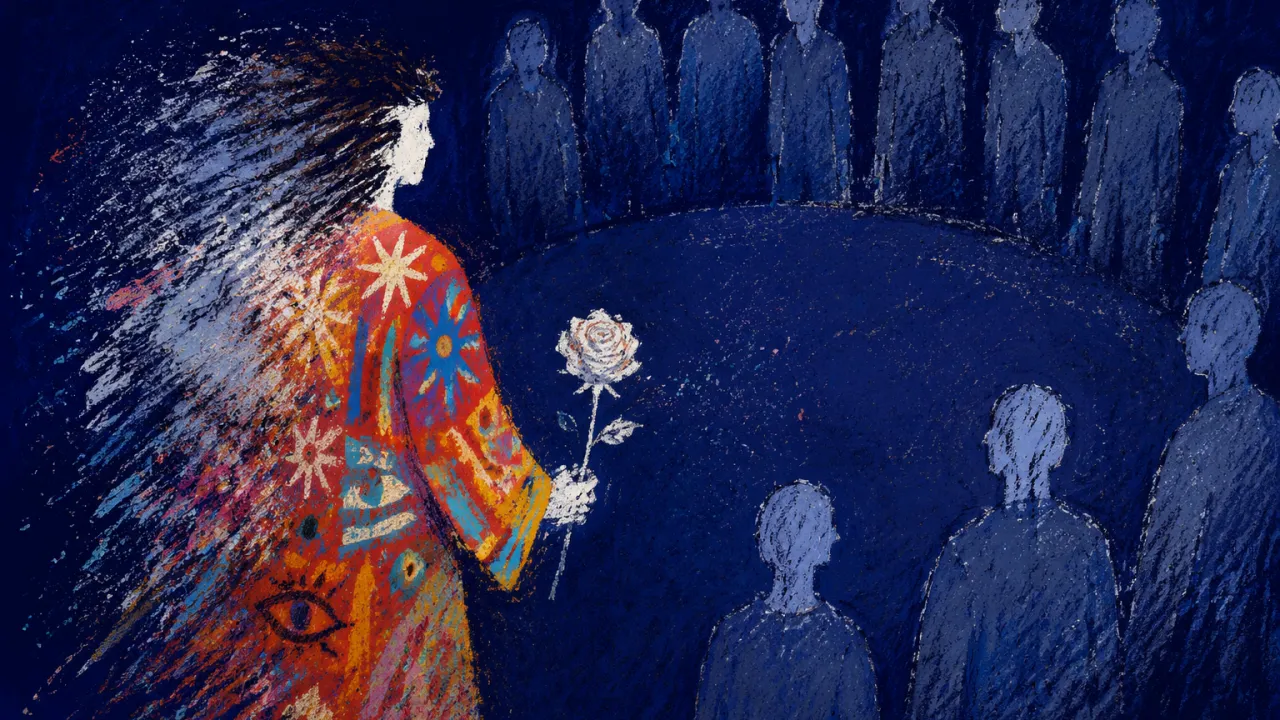
Belonging-Authenticity Split is the feeling of entering a room already negotiating how much of yourself is allowed to arrive. You might be standing outside a bar, a classroom, a family dinner, a friend group's apartment, or the doorway to a work event, checking your reflection in the dark glass of your phone and making tiny calculations before anyone has even seen you. Your outfit is fine, your face is fine, your texts were normal, your tone is ready, but your body knows the math before your mind admits it: be open, but not too open; be interesting, but not hard to place; be honest, but not in a way that changes the air. You know how to become readable. You know which parts of your humor get laughs, which opinions make people lean in or go quiet, which stories make you seem fun, grounded, easy, familiar. And because you can do it well, people may think you are comfortable. They see the version that fits the circle, the version that keeps the conversation smooth, the version that does not interrupt the shared mood with a need, a boundary, a different pace, a stranger edge. Meanwhile, somewhere under your ribs, there is a small tightening every time you leave a sentence unfinished, every time you nod before you check whether you agree, every time you laugh half a second too late and hope no one notices. The ache is not simply about fitting in or standing out. It is the slow cost of being welcomed for a shape that keeps asking your real self to wait outside. You can feel socially held and privately absent at the same time, included in the photo but missing from your own body, known by people who would be surprised to learn how edited the known version is. After a while, belonging starts to feel less like arrival and more like a performance with no obvious exit, because losing the role might mean losing the room, and keeping the role might mean losing contact with yourself. The deepest cost is that connection, the thing you wanted, begins to feel conditional on self-abandonment, much like The Fool holding a white rose at the edge of unknown ground, bright and unguarded, with almost no social margin beneath the foot that is about to step forward.

What's pulling at you?

You're caught between the need to be recognized by other people and the need to remain recognizable to yourself. The bind is that belonging can feel available only when you translate yourself into a version the room already knows how to receive, while authenticity keeps asking for parts of you that may change the room's response. So you stay present, but not fully arrived.

How It Shows Up?

  • You walk into a party, class, studio, office hangout, or packed group dinner and immediately start scanning the room for the version of you that will land best. Your smile comes in fast, your voice lifts half a note, and your shoulders pull back like you're trying to make yourself easy to read before anyone has decided what to do with you. Under the brightness, your stomach tightens, because the part of you that arrived with the white rose in hand can feel the ledge beneath every joke, pause, and opinion. You can let yourself notice the calculation without forcing yourself to drop the whole mask at once.
  • You're alone after getting home, still wearing the outfit that made sense in public, and suddenly the room goes quiet enough for the edits to catch up with you. You replay the moment you laughed at something you didn't find funny, softened an opinion you actually cared about, or said "same" when your body wanted to say "not really." Your jaw feels tired, your throat feels slightly scraped, and your face has that flat, post-performance heaviness, like The Magician's composed front stayed standing longer than the rest of you could. It is allowed to take time for your private self to come back into focus.
  • A friend texts the group chat with plans, and before you reply, you can feel two answers forming in your chest. One is easy, warm, and familiar; the other is quieter and more accurate, saying you don't want that plan, that joke, that dynamic, or that old role tonight. Your thumb hovers over the keyboard, your breathing gets shallow, and the Three of Cups feeling turns tense, because the circle is still warm but the rhythm no longer fits without effort. You can answer at the speed your body can manage, not only at the speed the chat expects.
  • At work, school, or in a creative space, you become fluent in the expected version of yourself. You know when to sound confident, when to be chill, when to be interesting without being inconvenient, and when to keep the sharper thought in your notes instead of saying it out loud. By the end of the day your shoulders feel locked, your eyes feel dry, and there is a thin pressure behind your ribs, as if every Five of Wands moment required one more tiny adjustment just to stay in the room. You can respect the skill it took to navigate the space while still admitting it cost you something.
  • In bed at night, the split shows up as a quiet review of who got to be seen that day and who stayed hidden. You remember the laugh, the outfit, the reply, the edited opinion, the version that kept things smooth, and then you feel a small ache in your chest for the version that never arrived. Your hands rest on your stomach, your neck feels stiff against the pillow, and the room has the stillness of The High Priestess at a threshold, present but holding something behind the veil. You do not have to decide tonight whether to reveal more or retreat more; noticing the threshold is already contact with yourself.

Belonging-authenticity Split in Tarot Cards

Belonging-Authenticity Split lives in the moment when being included starts asking you to become more legible than alive. You may feel it as a tight throat in the group chat, locked shoulders after a smooth public performance, or the quiet ache of realizing which version of you stayed hidden. From an existential perspective, the structural framework of this struggle is about trying to keep connection without letting the self get edited down to a safer outline. The Tarot Cards below make that outline visible without turning it into a simple answer.

The Fool Upright
The figure's face turns toward the open sky while the body keeps moving toward the edge, and the white dog presses close at the heel. One part of the scene pulls attention toward self-directed possibility; another part stays attached to the immediate relational field. Family belonging often works through that same double pull. You can feel the need to follow your own line of sight while still hearing the close-range signal that says connection depends on staying readable, reachable, and familiar. The Fool's openness does not erase the edge beneath the foot. It shows the cost of trying to be authentic in a system where belonging has been tied to remaining the version of yourself the family already recognizes.
Reversed
The Fool's bright face and open posture float above the body's ground-level problem. The upper body performs ease while the feet occupy the most consequential part of the image. In a friend group, this structure can become the split between the version of you who keeps things light and the version of you who has outgrown the role. You may preserve belonging by staying agreeable, funny, available, or unbothered while your actual limits remain unspoken. The card's reversed weight gathers around that separation between social brightness and bodily footing. The struggle is not simply pretending; it is the cost of keeping a place in the circle by leaving your authentic edge out of the room.
The Magician Upright
The Magician faces forward with a composed gaze while the hands split the body into two directions: one reaching upward, one pointing down. The red and white clothing, the roses and lilies, and the divided gesture make the image feel carefully integrated, but every integration has to be held in public view. For inner work, that visual pressure becomes the split between the self that can appear articulate and aligned, and the self still carrying raw, unedited material. You may feel forced to translate every private reaction into a version that looks mature before you have had the chance to meet it honestly. The card does not flatten that split into hypocrisy. It shows how much muscular control is required to keep authenticity and presentation in the same frame, especially when the inner world is asking for contact rather than performance.
The High Priestess Upright
The High Priestess sits between black and white pillars with her body held steady at the entrance. The two poles create a visible social geometry: one side demands clarity and legibility, while the other protects what is not ready to be exposed. Her seated stillness does not remove her from the threshold; it makes her the threshold. In social life, this mirrors the moment when You can be present in a group, readable enough to be accepted, and still feel that the part of You that would make belonging meaningful is being held behind the veil. The struggle is not simple introversion or social hesitation. It is the split between entering the circle and staying intact inside it, where acceptance starts to feel costly if it requires the quiet abandonment of private truth.
The Empress Upright
The Empress faces outward with crown, pearls, robe, scepter, and Venus symbols arranged into a highly coherent social image, while much of the body is covered and immobilized by fabric and throne. The visible self is polished, warm, and acceptable; the moving self is mostly kept under the surface. In a group setting, that composition becomes the friction between being liked for the version of you that is easy to receive and belonging as a fuller, less curated person. You may be socially included and still feel unseen because the social field is responding to the emblem, not the whole body. The card holds the split without turning it into a personal flaw. It shows how approval can become a beautiful enclosure when the role that wins connection also limits how much of you can actually arrive.
The Hierophant Upright
Two acolytes kneel before the same central teacher, their different robes and symbols held in parallel under one ritual order. The scene does not erase difference, but it requires difference to take a posture that can be recognized by the institution in front of it. In inner work, that arrangement becomes the pressure to stay intelligible to a group, a belief system, or a version of yourself that once kept you safe. The struggle is the split between belonging to a shared language and allowing a private truth to stand without first being made acceptable.
The Lovers Upright
The figures are uncovered, but their gaze does not form a closed circuit. One line of attention moves across the human relationship, another rises toward the angel, and the exposed bodies remain suspended between being fully seen and being fully received. Inside family dynamics, this becomes the split between the self that belongs and the self that is true. You may know what feels real in your body, but the family field can still pull your gaze upward toward approval, turning authenticity into something that must be negotiated before it can be lived.
Reversed
The exposed bodies stand in full view, but the scene gives them little private space to adjust, hesitate, or define themselves away from the larger field. Openness becomes a held posture rather than a living exchange. In friendship, this structure appears when belonging depends on remaining easy to read, easy to access, and easy to include. You may keep the version of yourself that fits the group visible while the version with sharper values, changed limits, or different needs has nowhere to stand. The angel, serpent, trees, and mountain crowd the relational field with meaning before the figures can make their own contact. The split is not between having friends and being alone; it is between staying recognizable to the group and staying honest to the self that is changing inside it.
The Chariot Upright
The black and white sphinxes sit before the chariot as two incompatible social directions held inside one vehicle. They are close enough to pull the same structure, but their colors, gazes, and symbolic charge refuse to collapse into a single easy path. You meet that tension in social spaces when belonging asks for visible alignment while authenticity keeps pulling toward a more private truth. The armored figure can hold the center, but the cost is constant steering: every room becomes a negotiation between being accepted and staying intact. The chariot gives this split a clear shape. It is not simple indecision or social awkwardness; it is the pressure of trying to move through a group while two valid versions of the self demand different routes.
Strength Reversed
The garland visually joins the woman and lion, but the connection also makes it hard to see where one force ends and the other begins. The calm white figure becomes the visible surface, while the red animal body is folded underneath her composed management. When this structure turns inward, belonging can start to feel like a posture your body has learned to hold. You may still be surrounded by people, but the version of you that fits the circle is doing the visible work while the rougher, louder, stranger parts of you stay compressed beneath it. The split is not about being fake in a simple way. It is the deeper social bind of having your acceptable self receive the belonging that your fuller self is not sure it could survive.
The Hermit Upright
A warm light is visible in the Hermit's hand, but the figure remains wrapped, elevated, and physically unreachable. The card does not show total disappearance; it shows a controlled signal of selfhood held at a distance from the wider field. That visual tension maps cleanly onto the social split between being real and being included. You can sense that your truest signal survives when it is protected, yet the circles you want access to may seem to demand easier warmth, faster disclosure, or a more performative version of you. The struggle is the pressure to choose between belonging and keeping your actual outline intact.
Wheel of Fortune Reversed
The four corner figures are visibly different, yet the card gives them the same pale register, the same book posture, and the same fixed relationship to the wheel. Difference is present, but it is arranged into a repeated role around one central mechanism. In reversal, that visual order becomes the social pressure behind Belonging-Authenticity Split. You may sense that access to the group depends on becoming readable in the approved way, softening your edges, matching the tone, and turning distinctiveness into something less disruptive. The card gives this split a precise boundary. It shows a social field where belonging is available, but only through a posture that can flatten the very qualities that would make connection feel real.
Justice Reversed
Justice sits exactly between the pillars, held in a position of formal balance. Reversed, that centeredness becomes a social role that can keep you acceptable while making spontaneous movement harder. The sword and scale create a constant test of what can be shown, what must be weighed, and what might be cut away. In a group setting, this becomes the split between being included and being true enough to feel present in your own body. The narrow step at the front matters because the visible path is small. The card mirrors the experience of having a place in the group, yet feeling that only a carefully edited version of you is allowed to stand there.
The Hanged Man Upright
The Hanged Man's body is aligned with the tree but turned against the ordinary orientation of the world. His illuminated head faces the blank lower field, while the living trunk remains upright behind him. In old friendships, this captures the point where your inner perspective has changed faster than the shared social frame around it. You are still attached to the group, but the angle from which you see yourself, your values, and the friendship no longer fits the old standing position.
Death Upright
The card places several human responses in the same path: one figure turns away, one prays, one stands exposed, and one lies flat beneath the horse. Around them, the black flag with the white rose makes contradiction visible rather than hidden, holding the image of ending and renewal in a single social field. That visual structure maps closely to Belonging-Authenticity Split in group life. You may still know how to stay liked, invited, and included, but the part of you that wants cleaner alignment can feel trapped under the social version that keeps the group comfortable. The struggle is not simply whether you should stay or leave. It is the pressure of being asked to remain recognizable to the group while your honest self is moving toward a different horizon of connection.
Temperance Upright
The angel stands with one foot on land and one in water, balanced between a solid shore and a reflective pool. Neither surface is abandoned; the body remains split across two modes of contact, grounded enough to be seen and immersed enough to feel. In group life, that stance becomes the conflict between belonging to a room and staying recognizable to yourself inside it. You can read the social water, mirror the mood, and adjust to the circle, while another part of you needs a firm place to stand. The card names the struggle as a divided threshold, not a flaw in your personality. You are trying to belong without dissolving, and the pressure gathers exactly where adaptation starts to blur into self-erasure.
The Devil Upright
The chained figures are naked, but they are not simply exposed; horns and tails show that the environment has begun changing their visible form. Their gazes do not meet, and the social bond between them runs through the altar rather than through mutual recognition. You may be accepted in a circle while feeling that the accepted version of you is slightly altered, exaggerated, or edited. The Devil gives that strain a shape: belonging is present, but authenticity is being rerouted through the group's appetite, humor, status signals, or unspoken rules.
The Star Upright
The Star places an unclothed figure at the edge of water and land, one knee grounded and one foot testing the pool while both hands release water into separate terrains. Nothing in the scene is armored; the body is visible, low, and exposed beneath a sky that offers orientation but not enclosure. That arrangement carries the social split between showing up truthfully and staying acceptable to the circle. You may feel that your unedited self belongs only when it is poured into the right shape, so every group setting asks you to balance real presence against the version of yourself that feels safer to display.
The Moon Upright
The dog and the wolf stand on the same ground and answer the same moon, but they carry different bodies: one domesticated, one wild. Their shared howl makes the social field feel like a place where both the acceptable self and the unedited self are activated at once. You can want the group and still feel your body resisting the version of yourself that gets approved there. The card holds that split as a structural conflict between belonging and self-recognition, not as a failure to be easier to like.
The Sun Upright
The child opens his body freely, yet the field around him is highly coordinated: sunflowers face the same light, the red flag declares one visible current of vitality, and the wall defines the garden's edge. The image holds both spontaneous self-expression and a shared orientation that everything in the scene appears to answer to. You may feel this as the social bind of wanting to be unmistakably yourself while also needing the group to recognize you as one of its own. The struggle is not simple shyness or rebellion; it is the structural split between authentic brightness and the subtle editing required to stay socially legible.
Judgement Upright
The rising figures answer the trumpet with exposed arms, but their bodies are still held by the open coffins beneath them. The card does not show private awakening in a sealed room; it shows emergence under a collective signal, where becoming visible happens at the same time as being drawn into a shared field. In a social context, that image gives Belonging-Authenticity Split a precise shape. You may want the relief of being part of a circle, group chat, creative scene, or professional network, while also feeling how quickly that belonging can ask you to present a version of yourself that fits the call. The open coffin matters because it is both exit and frame. It shows the tension of entering community before your whole self has fully arrived, where connection is possible but the terms of visibility still feel too narrow to hold your actual shape.
The World Reversed
The wreath gives The World its beauty and its limit. Inside it, the dancer appears whole, recognized, and held; outside it, the blue sky is visible but not an obvious place to stand. In family life, that visual split becomes the conflict between being accepted by the system and being real within yourself. The family may offer belonging as long as you remain understandable inside its finished picture, while your authentic self requires space the picture was not built to include. Belonging-Authenticity Split names the pressure of choosing between emotional recognition and inner truth. The card does not flatten the choice into staying or leaving; it shows the deeper wound of needing both connection and selfhood when the family frame treats them as rivals.
Two of Cups Upright
Two separate people hold two separate cups, but the caduceus rises between them like a shared spine. The image protects individuality and union at the same time, making the central question physical: how close can two bodies stand before the shared axis begins to define them both? Family bonds often place that question under pressure. You may want to belong without being absorbed, to be loved without becoming the family’s version of you, and to stay present without surrendering the parts of yourself that developed outside the old system. This card holds the split at the exact point where the individual cup meets the inherited bond. The struggle is not whether family matters; it is whether belonging can survive without requiring authenticity to be edited down into a more acceptable shape.
Three of Cups Upright
The three women stand close enough for their raised cups to meet, but the image keeps their robes, wreaths, hair, and positions distinctly separate. The circle is not a blur; it is a coordinated formation where belonging depends on rhythm, spacing, and mutual visibility. That visual tension mirrors the family struggle of wanting contact without being edited back into an older version of yourself. You may want the warmth of the circle, but the cost appears when the family only makes room for the self that can move in its established rhythm. Belonging-Authenticity Split names the pressure point where family connection and self-definition occupy the same space without fully merging. The card's harmony does not erase the strain; it shows how much coordination is required for individuality to remain visible inside closeness.
Six of Cups Reversed
The flower-filled cup is held like a perfect social token: sweet, safe, and easy to accept. Around it, the children remain small against the adult architecture, as if the whole courtyard can only host a softened version of personhood. In groups, that visual structure becomes Belonging-Authenticity Split when acceptance depends on staying agreeable, harmless, or familiar. The social bond has warmth, but it narrows the allowed shape of You until belonging is purchased through self-reduction. The card's tension sits in the gap between the polished offering and the fuller life outside the manor. It names the moment when a circle loves the curated cup but has not made room for the person holding it.
Seven of Cups Upright
A public head appears in one cup while a shrouded figure stands hidden in another. Around them sit symbols of recognition, status, desire, safety, and danger, all held at the same height as if every possible social self has equal claim. Belonging-Authenticity Split emerges from that exact arrangement. You are not simply choosing who to hang out with; you are measuring which version of yourself can survive being seen by the group. The card gives form to the pressure of fitting in without disappearing. Its social question is not whether you can be accepted, but whether the accepted self would still be connected to the covered self that needs to belong.
Eight of Cups Upright
The red-cloaked figure has already turned the body away from the eight cups, even though the cups remain upright, ordered, and capable of holding what they once held. The visual tension is not between connection and loneliness; it is between a social structure that still functions on the outside and an inner orientation that can no longer stay inside it without losing direction. In a social field, this maps to the moment when belonging is available but authenticity has gone missing. You may still be invited, recognized, and included, yet the gap in the cup arrangement keeps exposing the part of you that has no container there, making participation feel like a split rather than a home.
Ten of Cups Upright
The family stands under one rainbow of cups, but the bodies inside that harmony do not merge into a single shape. The adults lift their arms toward the shared arc while the children move in their own ground-level rhythm, creating a scene where belonging is real but still distributed across separate bodies. That visual structure names the social friction of wanting to be held by a circle without being flattened by it. You may feel pulled toward the warmth of group inclusion while also tracking the cost of matching its emotional tempo, its rituals, and its version of what happiness should look like. In social life, this struggle becomes sharp when a group seems loving on the surface but still asks you to edit parts of yourself to stay inside the canopy. The card does not reduce the tension to being antisocial or needy; it locates the split between the need for shared emotional shelter and the need to remain recognizably yourself within it.
Page of Cups Upright
The Page of Cups holds a living fish in a cup while the sea, the fish's larger element, moves behind him. The image places a small, tender, animated thing inside a social-sized vessel rather than in the field where it could move at its own scale. In social networks, that visual friction becomes Belonging-Authenticity Split. You may be liked for the manageable version of yourself while the part that feels most alive stays miniaturized, watched, and carefully contained, leaving belonging dependent on how little of your real signal reaches the room.
Knight of Cups Upright
The knight rides toward the river with his eyes drawn to the cup in his hand, so the card's social motion is never only outward. The horse carries him toward a shared field, but the cup keeps the private signal intact, visible, and slightly apart from the route ahead. That split mirrors the pressure of entering a group while protecting the version of yourself that still feels real. You may want the ease of belonging, but the social current can feel like it asks for edits, translations, and small abandonments before it lets you in. The river does not erase the cup; it shows the distance between private meaning and public participation. This struggle is not about failing to fit in, but about feeling the cost of fitting in when the part of you seeking connection is also the part you are afraid of diluting.
Queen of Cups Upright
The Queen is close to the water, close to the other shore, and still visibly protected by throne, island, wall, and closed cup. The card does not place her outside the social field; it places her at its edge, where contact is possible but every movement toward it requires leaving a carefully maintained emotional shape. That edge is the structure of Belonging-Authenticity Split in group life. You may know how to be pleasant, emotionally intelligent, and easy to include, while sensing that the version of you being included is more curated, softer, or more contained than the self that actually needs belonging. The struggle is not choosing solitude over people. It is the pressure of wanting the group without letting the group flatten your inner truth, and wanting authenticity without losing the fragile access point that lets you stay connected at all.
Eight of Pentacles Upright
The craftsman is split between the row of completed pentacles and the single unfinished coin under his tools. One part of the image presents a clean public record of skill; another shows the private compression of body, attention, and effort required to keep making something acceptable. That divide mirrors the social strain of being known through what you can produce for a group while the less polished self remains bent over the bench. You may feel pulled toward belonging, but the available route seems to demand a version of you that is legible, useful, and consistently well-made. The struggle is not a lack of social skill. It is the structural split between wanting real connection and feeling that entry into the circle depends on a crafted surface that cannot fully hold who you are while you are still becoming.
Ten of Pentacles Upright
The dogs move between generations, carrying contact across the scene, while the humans remain divided by position, age, and attention. The arch is a passage, but the route through it is crowded with symbols of loyalty, status, family continuity, and belonging. Belonging-Authenticity Split appears when the inner self wants connection without surrendering its own signal. In introspection, this card marks the place where loyalty to the familiar inner system competes with the need to tell the truth about what you actually feel. The Ten of Pentacles does not show exile; it shows inclusion with conditions built into the architecture. That is why the struggle can feel so hard to name: you are not outside the household of the self, but the available forms of belonging may not leave enough room for the unedited voice.
Two of Swords Upright
The figure is socially present in the image, yet the heart is sealed behind crossed steel. The white robe, moon, and water keep softer signals in view, but the arms make sure those signals do not move freely through the body. In a social circle, this becomes the split between being included and being real. You can sit inside the group, answer the messages, and keep the surface peaceful, while the part of you that would reveal taste, discomfort, desire, or refusal stays protected behind the social armor. The card locates the pain where belonging begins to require self-concealment.
Seven of Swords Upright
The figure moves away from the camp while still looking back at it, carrying five swords in an awkward grip and leaving two planted behind. The body is not simply escaping; it is divided between movement, surveillance, and the visible remains of a group he cannot fully detach from. That split gives the social struggle its shape. You may know how to read the room, protect your energy, and avoid direct exposure, but the same strategy can make belonging feel conditional on editing yourself. The card locates the strain in the gap between the part of you that wants access to the group and the part that knows the performance is costing too much. In a social circle, this is not just fear of judgment or a lack of confidence. It is the structural pressure of trying to stay included while carrying away a version of yourself that the group never fully sees, with every leftover sword marking what still feels unresolved, visible, or unsafe to name.
Eight of Swords Upright
The red robe is bright and bodily, yet it is crossed by quiet white bindings that interrupt the body's expressive surface. The woman remains visible in the scene, but her eyes and hands are unavailable, so presence does not become reciprocal contact. That is the social texture of Belonging-Authenticity Split. You can stay in the room, answer the messages, attend the event, and keep the connection technically alive, while the part of you that would make the belonging real remains wrapped and withheld. The surrounding swords make this split sharper because the group field seems to punish unfiltered movement before it even happens. The card names the cost of belonging that requires self-reduction: the problem is not choosing between people and solitude, but being asked to divide visibility from truth in order to remain included.
Page of Swords Upright
The Page's youthful body wears light colors under a protective coat while the sword draws a hard line through the open air. His face and weapon do not fully share a direction, so softness, curiosity, and defense occupy the same small body. In social circles, Belonging-Authenticity Split appears when fitting in requires one version of you while your actual perceptions point somewhere else. The card names the cost of staying socially acceptable while keeping your sharper truth, humor, taste, or boundaries turned slightly away from the group.
Ace of Wands Upright
The clouded hand holds a living wand upright above a landscape that could receive it, while the river, trees, and distant castle remain separate from the branch in the hand. You are not looking at a dead object; the wand is already sprouting. In a social field, that makes the pressure sharper: the part of you that is alive and specific has to be held in a form the group can recognize. Belonging-Authenticity Split appears when inclusion seems to require translation. The card gives shape to the moment when your real spark is present, but every circle seems to ask whether it can be edited into something acceptable before it is allowed to land.
Three of Wands Upright
Two wands stand behind the figure like an old gate, while the wand in his hand anchors him at a newer edge. His body still belongs to the marked ground, but his gaze has already crossed into a wider field. In friendship, this becomes the exact pressure point where belonging and authenticity stop feeling automatically aligned. You can feel the value of the old bond, the shared language, and the social safety it provides, while also sensing that full honesty would move you beyond the version of yourself that the friendship expects. The Three of Wands does not frame this as disloyalty. It shows a person standing between a known social threshold and a larger horizon, carrying the strain of wanting connection without shrinking back into an outdated role.
Four of Wands Upright
The celebrants face forward with garlands raised while the solid home structure remains behind them, separated from the public display. The scene lets warmth, color, and stability coexist, but it also places the most visible version of connection at the front of the card. That arrangement mirrors the strain of joining a group without knowing how much of your real pace, quietness, doubt, or difference can come with you. The struggle is not a lack of desire for people; it is the split between being welcomed by the ritual and feeling fully recognizable within it.
Five of Wands Upright
Five raised wands cross in the same narrow space, but none of them becomes the center. Each figure keeps a distinct stance, outfit, and angle of force, so the image holds individuality and group pressure in the same congested field. That structure mirrors the social moment where joining the circle requires constant micro-adjustment. You can enter the group, speak, reply, attend, and perform presence, but every move brushes against someone else's rhythm, taste, or unspoken rule. The struggle is not simple shyness or conflict avoidance. It is the split between wanting real belonging and sensing that belonging may require sanding down the exact parts of you that would make connection feel honest.
Queen of Wands Reversed
The black cat sits at the Queen's feet, directly beneath the bright sunflower and lion imagery, while the grey cloak and stone edge pull a cooler mass into the fiery scene. The card holds public warmth and private shadow in the same frame without fully blending them. In social circles, this reversed structure marks the split between the self that is easy to welcome and the parts that feel harder to place. You can keep showing the radiant version that fits the room while the quieter, stranger, less performable self remains parked at the threshold.

Belonging-authenticity Split in Tarot Card Reading Insights

When Belonging-Authenticity Split shows up in readings, it often arrives as the question of whether the accepted self and the unedited self can occupy the same room. Others have brought this tension to the cards when friendship, family, love, work, or social identity started asking for a version of them that felt too narrow. Here are Tarot Reading Insights from sessions shaped by this split.

Psychological struggles related to Belonging-authenticity Split