Does Good Work Move Up?

Understand the career split between merit and access, then explore related tarot cards and tarot reading insights.

Merit-politics Split
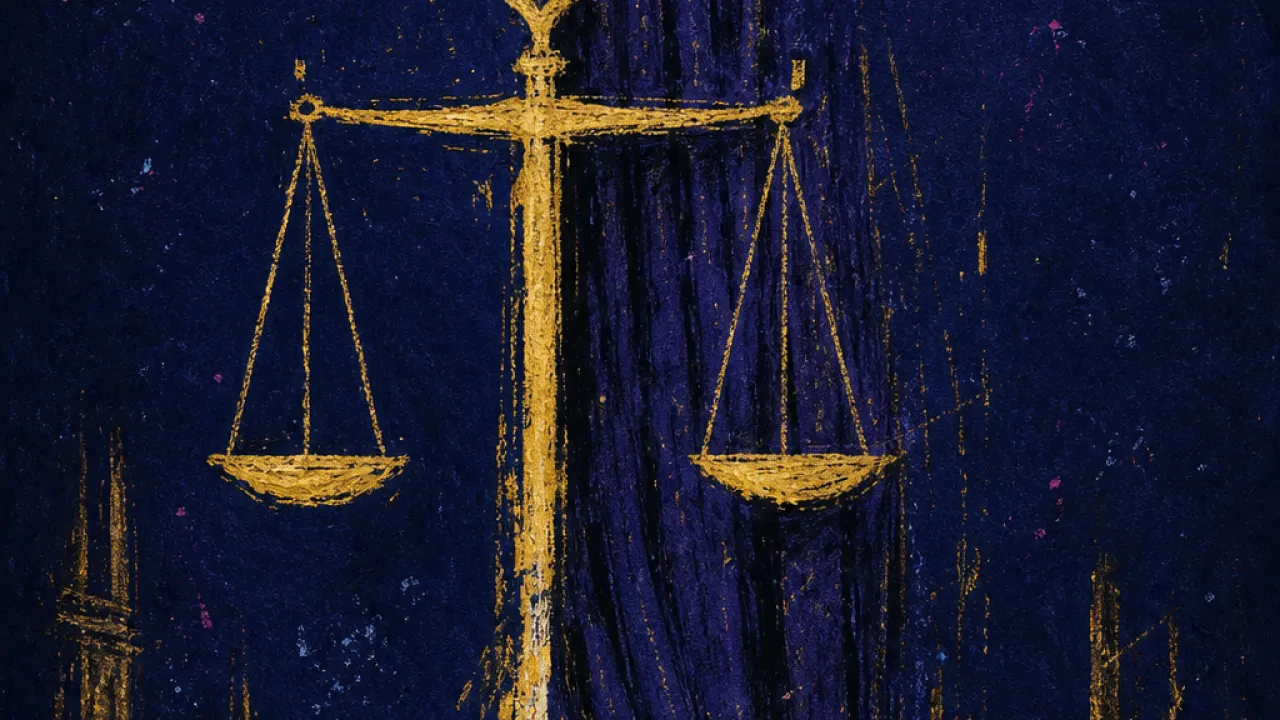
What does this feel like?

Merit-Politics Split — you feel it the second the promotion email lands, or the org chart updates, or someone with a lighter track record gets invited into a room you didn't even know existed. Your face stays controlled because you're still at work, still in the meeting, still expected to be reasonable, but inside something goes quiet and sharp. You start doing math in your head: the projects you carried, the metrics you hit, the late nights, the feedback that said you were dependable, strategic, high-impact. Then another column appears, one nobody put in the promotion rubric: who had sponsorship, who got framed as ready, who was visible to the right people at the right time, who could turn work into a narrative before the work was even finished. You don't want to become cynical, because the work matters to you; you also don't want to stay naive, because pretending the system is only measuring output makes you feel like you're walking into the same wall with a better spreadsheet each time. So you keep polishing the evidence, but your body starts bracing before every review cycle. Your jaw locks when someone says 'just keep doing what you're doing.' Your stomach dips when a vague word like presence, fit, or readiness enters the conversation. You wonder whether advocating for yourself means betraying the part of you that still believes substance should count. The cost is not only career frustration; it is the slow fracture in your trust that effort has a clean path to recognition, much like Justice, where the scales sit in plain sight while the curtain and pillars behind them remind you that what gets weighed is not the same as who decides the room.

What's pulling at you?

You're caught between two things that both make sense: wanting your work to stand on evidence, and realizing that evidence still has to travel through people, timing, status, and rooms you may not be in. The stuck feeling comes from trying to play by declared rules while also sensing another layer of rules operating beside them. It is not that merit means nothing; it is that merit is not moving through an empty field.

How It Shows Up?

  • You open the promotion announcement while your coffee is still warm, and your name isn't there. Your face stays neutral because Slack is open, your calendar is full, and you still have work to do, but your stomach drops in a clean, quiet way. You reread the names, then reread your own last review in another tab, trying to make the evidence line up with the outcome, like scales that should balance but keep slipping. You can let the mismatch exist for a minute before turning it into a conclusion about yourself.
  • You're in a one-on-one, and your manager says you're doing excellent work, then adds that the next step is about visibility, stakeholder confidence, and finding the right moment. You nod, take notes, and feel your throat tighten around questions you don't know how to ask without sounding difficult. Your shoulders rise slightly when you hear the word visibility, because you realize the work may be finished, but the room where it becomes promotion is somewhere else. It is fair to notice that difference without pretending you are above it.
  • You stay late polishing a deck, tightening metrics, fixing edge cases, making the evidence impossible to miss. The office or library gets quieter, your neck starts to ache, and the glow of the screen makes the rest of the room feel distant, like the Eight of Pentacles' bench where the craft is clear but the town that values it sits farther back. You keep refining the coin because that part is honest, measurable, and yours. You do not have to shame yourself for caring about clean work.
  • At drinks, lunch, or a team offsite, someone casually mentions who had coffee with a senior leader, who got pulled into a planning room, who is being 'socialized' for the next level. You laugh at the right points, but your chest feels tight and your attention keeps snagging on the invisible map being drawn in front of you. Everyone seems relaxed, yet the air feels like a hallway with doors you can see but haven't been handed keys for. It is okay to learn the room slowly instead of performing instant ease.
  • You feel it in one fixed place: the jaw that tightens when feedback sounds positive but vague, the temples that pinch when a decision is called objective, the hand pressing your sternum after another 'not yet' conversation. Your body reacts before your thoughts catch up, as if it already knows the difference between a fair metric and a hidden gate. The tension is specific, not dramatic: a small compression where proof meets access and cannot pass through cleanly. You can name the pressure without letting it define your whole day.

Merit-politics Split in Tarot Cards

Merit-Politics Split lives in the moment when strong work, clean metrics, and visible effort still do not fully explain who gets moved forward. You can feel it in the tight throat during a one-on-one, or in the small compression at your chest after another vague 'not yet.' From an existential view, the structural framework here is the split between proof you can produce and access you cannot fully control. The Tarot Cards below make that split visible without pretending it is simple.

Justice Reversed
The balanced scales sit in the foreground, but a closed curtain and towering pillars frame the space behind the judge. Fairness is staged as visible, while the system that decides what counts remains partly concealed. That is the exact career fracture inside Merit-Politics Split. You keep trying to let the work speak through evidence, output, and consistency, yet the promotion channel also moves through sponsorship, timing, perception, and rooms you may not be allowed to enter. Justice does not flatten that conflict into cynicism. It shows the boundary of the struggle: merit still matters, but it is being weighed inside a political architecture, so the pain comes from trying to survive by rules that are both declared and hidden.
The Hanged Man Upright
The halo is visible, but the body is still tied to the wooden structure. Light appears around the head, while actual mobility is governed by the rope, the frame, and the inverted position rather than by the figure's inner clarity. In a career spread, that separation gives Merit-Politics Split its shape. You may have competence, insight, or strong performance signals, yet advancement depends on a power structure that does not move simply because value is visible; the card locates the wound where being objectively good is not the same as being institutionally released upward.
The Devil Upright
The Devil's hand copies the form of authority while the inverted pentagram and downward torch change the direction of that authority. The scene looks ordered, but its order is not built around fairness, clarity, or shared ascent; it is built around who controls the ring. In career terms, this is the visual anatomy of a workplace where excellent output is only one layer of the game. The figures below the cube are not positioned as peers in a merit system; they are attached to a hierarchy that decides how value becomes recognition. Merit-Politics Split appears when strong work no longer explains career movement. The card gives that confusion a structure: performance may be real, but access is being filtered through power, optics, desire, and institutional positioning.
The Moon Upright
The road appears to offer a route through the landscape, but it must pass between animal guards and into the narrow space between two towers. Advancement is visible as a path, yet access is mediated by forces that are not identical to the path itself. This is the career friction of doing the work, hitting the metrics, and still sensing that promotion depends on unread rules, alliances, timing, and power. The Moon's dim light makes the official route present while keeping the conditions of passage partially hidden. Merit-Politics Split names the structural fracture between competence and access. You are not imagining the mismatch; the card shows a road where performance matters, but it is not the only gate.
The Sun Upright
The sunlight makes the scene look fully legible, but the stone wall still divides the space. Brightness reaches the wall without removing it, and the child's forward movement does not erase the fact that a boundary has structured the passage. That visual friction maps cleanly onto Merit-Politics Split at work. You can have strong results, visible effort, and clear evidence of value, while the advancement route still depends on sponsorship, timing, stakeholder comfort, and informal permission structures. The card's career message sits in the difference between illumination and access. Clear performance may show what is true, but it does not automatically move the wall that controls who gets promoted, protected, or invited into the next level of power.
Three of Cups Upright
The harvest is visible on the ground, but the raised cups pull the eye upward into the social act of being witnessed. The card places the reward beside a ritual of recognition, showing that output alone is not the whole mechanism by which value becomes legible. For career questions, this is the body of Merit-Politics Split. You may have real results, but advancement depends on who is in the circle, who lifts the cup with you, and whether your work can travel through the informal social channels that translate effort into influence.
Nine of Cups Upright
The cups are perfectly arranged, yet none of them are in motion: no hand reaches for them, no vessel is offered, and the table creates a clean boundary between possession and exchange. The image separates proof from circulation, turning abundance into something that can be looked at without being mobilized. For career power dynamics, that is the anatomy of merit that cannot move by itself. You may have results lined up behind you, but promotion often requires relational routes, sponsorship, timing, and informal leverage; the card gives shape to the painful split between doing excellent work and having that work travel through the system.
Ace of Pentacles Upright
The pentacle is measurable and bright, but the manor below is organized by boundaries, ownership, and a selective gate. The garden can be seen from the outside, yet entry depends on more than the existence of value. That separation reflects the workplace split between doing valuable work and gaining access to the spaces where advancement is decided. You may have proof of contribution, but sponsorship, timing, political trust, and decision rights belong to a different layer of the field. Merit-Politics Split names the career wound created when value and access do not move together. The card holds both realities at once: the coin is real, and so is the gate.
Four of Pentacles Upright
The town sits behind the figure, visible but not entered, while the pentacles that could circulate through a wider field are held as shields and weights. The card places measurable value in the foreground and the social system of exchange in the distance. That is the career friction inside Merit-Politics Split. You can be doing the work, holding the results, and still remain outside the network where sponsorship, timing, and informal influence convert value into movement. The card does not reduce advancement to manipulation; it shows the gap between possession and circulation. Your results may be real, but the structure asks whether they are trapped against your chest while the city that recognizes value operates behind you.
Five of Pentacles Upright
The pentacles are displayed high in the church window, bright, ordered, and unmistakably visible, while the figures remain below on the exposed street. Value is present in the image, but it is mounted in a place that does not function as an entrance. That visual separation maps cleanly onto career systems where competence, output, and visible contribution do not automatically open the gate to influence. You may be doing work that proves value, while the actual promotion path depends on sponsorship, timing, social access, or power dynamics that sit behind the glass. The struggle is Merit-Politics Split because the card refuses the fantasy that displayed value and practical access are the same thing. It shows the professional wound of being close to recognition while still outside the structure that converts recognition into movement.
Six of Pentacles Upright
The scales hang in one hand while the coins leave the other, so the card shows fairness and distribution operating through separate physical channels. The image does not deny evaluation; it shows that evaluation and reward are not automatically the same event. In a career reading, that structure maps cleanly onto the moment when strong work, clean metrics, and visible contribution still do not translate into promotion or sponsorship. You are not only dealing with whether you are competent; you are dealing with a workplace system where merit must pass through politics before it becomes access. The Six of Pentacles holds this struggle without flattening it into cynicism. The point is not that every gatekeeper is unfair, but that your career movement depends on seeing where formal fairness ends and discretionary power begins.
Eight of Pentacles Upright
The foreground is all craft: tools, bench, coins, bent posture, and a controlled repetition of effort. Farther back, the town and castle-like structure mark the social and commercial field where value is translated into rank, access, and movement. Merit-Politics Split lives in that distance. You may keep refining the coin because the work is real, but career advancement also depends on a field of recognition, sponsorship, timing, and leverage that the hammer cannot reach by itself.
Ten of Pentacles Upright
The balance on the crest and the chessboard pattern sit beside a household where position is already arranged by age, ownership, and proximity to the elder. Fairness is symbolized, but power is spatially distributed before anyone makes a move. In career terms, that split captures the ache of doing excellent work inside a system that says it rewards merit while quietly moving through alliances, seniority, and access. The card gives shape to the moment when performance reviews, promotion criteria, and workplace politics stop fitting into one honest picture, leaving you unsure which game you are actually being asked to play.
Page of Pentacles Reversed
The pentacle is the brightest and most legible object in the scene, while the Page's clothing nearly blends into the earth around him. His attention gives the measurable thing total priority, even though the actual landscape of movement, distance, and challenge is much larger than the coin. In a career reading, that visual hierarchy becomes Merit-Politics Split. You may keep refining the part of work that is fair, visible, and controllable, while the promotion terrain is also shaped by sponsorship, timing, alliances, narrative control, and who gets seen as ready before the evidence is perfect. The reversed texture of this struggle is not laziness or lack of talent. It is the internalization of a workplace map where merit is treated as the whole terrain, so every blocked outcome feels confusing because the invisible power field was never included in the navigation system.
Queen of Pentacles Upright
The pentacle is tangible in the Queen's hands, but the throne, crown, ram heads, and carved reliefs create a separate language of rank around it. The object of real value is close and measurable, while the symbols that authorize power sit in the surrounding structure. In career terms, this image holds the split between doing valuable work and being positioned as someone who can rise. You may be carrying the substance of competence, but the card shows how promotion often depends on whether that competence is translated into status, sponsorship, and political readability.
King of Pentacles Upright
The king holds the pentacle in one hand and the sceptre in the other, while his gaze drops toward the coin rather than the instrument of rule. Value and command are present in the same body, but they do not fully share the same line of attention. At work, that split names the moment when excellent output and advancement power stop being the same currency. You may be producing the visible value, yet the route to promotion runs through sponsorship, influence, and decision rooms that are not automatically opened by performance. The struggle is not a lack of talent; it is the pressure of having to translate merit into political legibility without letting politics swallow the value of the work itself.
Two of Swords Upright
The scene carries the shape of judgment: blindfold, balanced blades, still body, and a dim field of incomplete evidence. The swords look equal, but the figure cannot see the full shore, the tide, or the conditions surrounding the decision. In a career field, one blade can hold measurable merit while the other holds politics, timing, sponsorship, and hidden influence. You may keep producing evidence of competence while sensing that another evaluation system is deciding the outcome offstage. The card gives form to the split between doing excellent work and being judged by rules that are not fully visible.
Three of Swords Upright
Three blades arrive from separate directions, but the heart experiences them as one converging impact. Their symmetry makes the injury look orderly, yet each sword carries a different line of force into the same vital point. Career advancement can take the same shape when performance, politics, and managerial preference are presented as one clean judgment. You may be told the process is objective while your body registers multiple hidden vectors pressing into the same promotion decision. The card gives that confusion a visible structure: the wound is not caused by one blade alone. Merit may be real, but it is not the only force in the room, and the deepest strain comes from trying to make a political geometry behave like a fair measuring tool.
Five of Swords Upright
The foreground figure holds three swords while the two others leave theirs on the ground and turn away. The tools of clear thought and fair contest are no longer distributed across the field; they have become concentrated in one person's hands, with the ground itself marked by abandoned weapons. In a career reading, that arrangement gives Merit-Politics Split a precise shape: your skill may be real, but the path upward is being filtered through leverage, optics, and positional games. You are not simply asking whether you are good enough; you are confronting the harsher question of whether good work can move without entering the same power logic that made the field feel distorted.
Seven of Swords Upright
The figure does not confront the camp directly; he extracts leverage from it while moving through its blind spots. Five swords are carried away by the blades, and two remain planted behind him, so the scene turns intelligence, tools, and advantage into objects that must be handled through risk rather than clean entitlement. That structure maps closely onto career environments where formal merit is not enough to move upward. You may be doing the work, reading the room, managing power, and protecting your position at the same time, yet the official story still asks you to believe that competence alone should be sufficient. Seven of Swords holds the split between visible professionalism and invisible strategy. It does not reduce the struggle to dishonesty; it shows the strain of trying to advance inside a system where the rules that matter are not always the rules being named.
Nine of Swords Upright
The exposed carving on the bed frame shows an unequal-force scene beneath the surface of the resting place, while the woman sits above it under a row of blades. The place that should hold her is marked by a power story the quilt does not fully cover. In career readings, that structure mirrors the shock of realizing that clean effort and visible performance do not always control advancement. You may be doing the work correctly, yet the card locates the pain in a split between merit as a personal standard and politics as the field that decides access, backing, and movement.
Ten of Swords Upright
The clean horizon and calm water sit behind a body taken down by forces that do not belong to the open path. One part of the scene suggests rational movement; another part shows a hidden mechanism that has already decided the outcome. At work, that visual split becomes the gap between merit and politics. You can do the measurable work, hit the visible targets, and still feel the result arrive from a different rulebook, because the card places competence and unseen power in the same frame without letting them resolve into one fair system.
Page of Swords Upright
The straight sword rises into wind and layered clouds, a clear instrument set inside an atmosphere that will not hold a clean line. The Page stands high enough to see more than most, but the ground beneath him is irregular and the pressure around him is not fully visible. In career terms, the image turns competence into only one part of the field. You can bring sharp work, clean reasoning, and real evidence, while promotion still depends on currents that move through timing, sponsorship, perception, and informal power.
Knight of Swords Upright
The sword is clean, bright, and lifted as a symbol of clear thought, but the surrounding field is not clean at all. Trees and clouds are bent by the wind, making the environment itself a force that can redirect, distort, or resist the knight’s straight line. In a career field, that contrast maps onto the split between being good at the work and being able to navigate the conditions that decide whether the work matters. You may keep sharpening the blade of competence while the actual promotion terrain is shaped by timing, sponsorship, stakeholder perception, and informal power. Merit-Politics Split is the wound of realizing that skill is necessary but not sovereign. The card gives that realization a physical shape: a clear blade moving through weather that refuses to behave like a clean target.
King of Swords Upright
The King sits above the landscape with a clean sword raised like a rule everyone is supposed to recognize. The blade is straight, the throne is hard, and the living trees sit low in the distance, so the image separates formal judgment from the systems of life and movement underneath it. In a career reading, that separation mirrors the place where excellent work stops being self-explanatory. You can bring accuracy, output, and logic to the table, but the throne shows that recognition still passes through power, timing, sponsorship, and political interpretation.
Three of Wands Upright
The ships are visible, but they are not attached to the planted wands by any physical line. The figure has status, strategy, and a high vantage point, yet the commercial movement on the water follows routes he can watch but not directly command. That visual separation is the career logic of Merit-Politics Split. Solid output, senior presentation, and long-term effort may establish value, but recognition and advancement still move through timing, sponsorship, visibility, budgets, and power channels beyond pure performance. The card does not diminish the merit. It shows the hidden interface problem: the work is real, but the return depends on a system whose routes must be read, negotiated, and not mistaken for a simple mirror of effort.
Five of Wands Upright
Five raised wands meet in the same small field, but none of them forms a shared line of movement. The young figures hold similar tools from uneven footing, so effort becomes a public contest before it becomes a measurable result. That is the career logic inside Merit-Politics Split. You may be producing real value, yet the advancement channel runs through positioning, peer rivalry, and informal leverage, making good work fight for oxygen before it can be recognized.
Seven of Wands Upright
The six wands below are made of the same material as the one above, but they are arranged as opposition rather than support. The figure's higher position suggests earned advantage, yet the challenge does not disappear because the ground is higher; it intensifies around the claim he is making. At work, that visual structure fits the split between doing the work well and surviving the power field around that work. You may have evidence, results, or skill, while the room responds through territory, comparison, and challenge; the struggle is the discovery that merit and politics are not operating on the same axis.

Merit-politics Split in Tarot Card Reading Insights

Merit-Politics Split often follows people into readings when promotion, visibility, and informal access stop fitting into one clean picture. The shift from cards to readings shows how others have brought the same mismatch between evidence and movement into the spread. Tarot Reading Insights for this career fracture are gathered below.

Psychological struggles related to Merit-politics Split