Why can't I slow down?

A clear audit of forced movement, with tarot cards that mirror it and reading insights around the same pressure.

Forced Progress
What is this really?

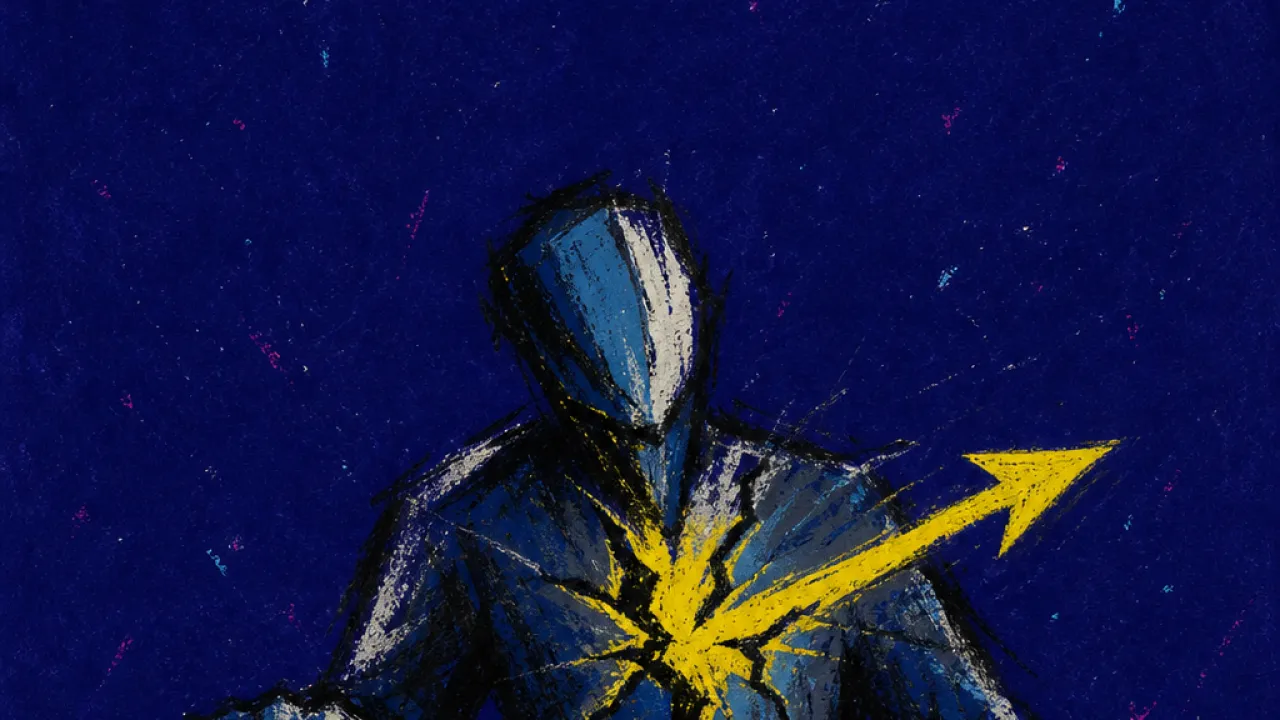
You keep the plan moving the moment friction appears: you send the follow-up, book the move, launch the reset, change the goal, or announce the next chapter before your body has had time to catch up. Motion becomes a self-protective defense mechanism against cognitive dissonance: if there is always another step, you can feel agency without sitting in the gap between the old identity and the next one. But the harder you push, the more progress starts to feel like pressure; your chest tightens, the next step becomes a command instead of a choice, and you are carried by momentum rather than guided by yourself, much like the Death card reversed, where the armored rider keeps advancing while figures below are pushed into the path of movement.

Why did it happen?

At some earlier point, moving fast may have helped you get through a messy ending, a stalled plan, or the sting of feeling behind; action gave your body something solid to hold. Over time, that becomes a subconscious loop: the moment quiet shows up, your mind reaches for the next task, the next announcement, the next proof of movement. What once created a sense of traction can now leave you tense, mentally spent, and unable to hear whether the path beneath you is open enough to carry you.

How does it feel?

  • In a project doc, you move the launch date forward, delete the question mark, and tap the desk twice before anyone has replied ... that moment, your chest may tighten under your sternum and your breath may stay high in your ribs. It is allowed to remain unfinished for a minute.
  • When a message thread goes quiet, you type three versions of the answer, erase the longest one, and press send while your thumb is barely settled ... afterward, your stomach may drop like the floor shifted half an inch. The pause can exist without being solved on contact.
  • At night, you keep six tabs open for jobs, rentals, or courses, squinting at deadlines while your jaw shifts side to side ... your neck may go rigid and your eyes may feel hot from staying locked on the next option. Not knowing can be allowed to take up space.
  • You lace your running shoes after a long day, glance at the habit tracker, and tick the box before your shoulders have dropped from the day ... inside, there may be a flat heaviness behind your eyes and a buzzing in your hands. A skipped beat can be information, not a verdict.
  • In a quiet room, you open your calendar and drag tasks into every blank square, then sit back with one hand still on the trackpad ... your ribs may feel strapped in, as if space itself needs a plan before it can be tolerated. A blank square is allowed to stay blank for now.

Forced Progress in Tarot Cards

The reflex to turn a pause into another launch date lives in the same place as the moment your chest tightens under your sternum. Jungian archetypal theory gives that motion-versus-stillness split a symbolic frame. The Tarot Cards below mirror the unconscious dynamics beneath this forced advance:

Death Reversed
The horse keeps moving through a scene where the figures below have not all met the transition in the same way. The flag concentrates the eye on the fact of ending, while the river and horizon suggest that passage exists beyond the immediate force of the moment. In the reversed texture, movement becomes pressure rather than integration. The psyche tries to outrun the emotional work by declaring itself transformed too soon, compressing grief, shame, and confusion into a forced narrative of progress. What looks like momentum can become another control strategy. In introspective work, this pattern appears when healing is turned into a deadline. You may push yourself to be over it, evolved, reborn, or clear before the inner system has actually digested what happened.
Temperance Reversed
The road behind the angel climbs toward a bright distant opening, while the body remains at the water's edge, divided between immersion and ground. The card holds a visible destination and a visible threshold in the same frame, which makes the tension between readiness and forward pull impossible to ignore. Forced Progress emerges when that distant light becomes more important than the actual state of the field. The psyche responds to timing anxiety by pushing harder, trying to make the season match the goal instead of asking whether the conditions can carry the move. The cup-to-cup stream then becomes pressure rather than proportion. You may experience this as panic when progress slows, or as the compulsion to launch, decide, confess, move, or commit before the structure underneath is ready. Temperance shows that the problem is not desire or ambition. The problem is force being applied before integration has finished, which creates friction that looks like failure but is often misread timing.
The Devil Upright
The inverted pentagram points energy downward while the torch and chains keep the entire scene locked into a narrow field of appetite, pressure, and consequence. Nothing in the image feels spacious; the vitality is real, but it is trapped in a compressed channel. Forced Progress takes that compressed energy and calls it momentum. The psyche interprets resistance as a challenge to push through, not as information about timing, support, or seasonality. Effort becomes compulsive because stopping would mean feeling the uncertainty underneath the pressure. In timing work, this card names the moment when pushing harder has stopped being strategic. You may be trying to make a project, relationship step, move, career shift, or personal reinvention happen in a cycle that is still frozen, under-resourced, or structurally blocked. The Devil shows that force can create heat without creating readiness.
The Tower Upright
The tower rises from a high cliff as if height itself could guarantee safety, but the lightning enters from outside the system and breaks the structure at its crown. The image compresses ambition, elevation, and impact into one moment where upward force meets a timing reality that cannot be negotiated by effort alone. That is the core mechanism of Forced Progress: the body and mind keep pushing vertically when the field is already pushing back. In timing questions, this pattern turns delay into a threat to identity, so You respond by adding more pressure, more urgency, and more action instead of reading the resistance as information. The falling figures show the cost of mistaking escalation for alignment. The collapse is not a moral punishment; it is a visual audit of what happens when a structure built on constant upward drive loses contact with the conditions that actually support movement.
The Star Reversed
The two vessels keep pouring, one stream into the pool and one onto the land. In the reversed psychological texture, the same graceful motion becomes a loop of expenditure, where water keeps leaving the body-held containers before the environment has shown it can receive more. This is the mechanism behind Forced Progress. The action itself looks purposeful, but the nervous system has started using movement to manage timing anxiety, as if more output could force the season to change. In a timing reading, this card can reveal the exact point where effort stops being leverage and becomes friction. You may still be doing the correct kind of work, but the pattern shows that the field has not caught up to the amount of force being spent.
The Moon Reversed
The crayfish has just emerged from the water, touching the beginning of the path before it has fully adapted to land. Ahead of it, the road is long, dim, and guarded by animal alarm. Forced Progress fits the reversed Moon because emergence is being mistaken for readiness. You may push forward the moment something becomes visible, even when the body, resources, or environment have not caught up to the transition. In timing questions, this pattern makes effort feel virtuous while the friction keeps increasing. The card shows that the first sign of movement is not always the signal to sprint; sometimes it is the signal to stabilize before crossing the next threshold.
The Sun Reversed
The red flag is raised high while the horse moves forward under a sun that fills almost the entire sky. When this image is strained, the same vitality can harden into a command to advance because everything looks bright enough from the outside. Forced Progress turns light into pressure. You may keep pushing a plan because motion feels emotionally safer than waiting, even when the field is not giving back momentum. The card links the pattern to timing anxiety by showing how energy, visibility, and declaration can become a loop of effort that ignores resistance.
Judgement Reversed
The bodies in Judgement rise with intensity, but the scene does not yet show them walking on stable ground. They are vertical, exposed, and awakened, while the coffins and cold water-like field still hold the base of the image. That tension is the exact visual engine of Forced Progress. A call has arrived, but the surrounding container has not fully converted into usable support. In timing questions, this pattern appears when urgency turns partial readiness into a command to launch, decide, commit, or break through before the conditions can actually carry the move. The cost is friction disguised as ambition. You may be using effort to compensate for a missing season, missing resources, or missing integration, and the more you push, the more the field pushes back.
The World Reversed
The dance circles inside the oval wreath, and the red knots make the frame feel like a loop rather than an exit. Movement is everywhere in the image, but the motion keeps circulating within the same completed container. Forced Progress emerges when movement becomes a defense against stillness. You may keep planning, optimizing, relocating, rebranding, or pushing toward the next version of life, while the pattern reveals that the real direction signal is hidden in the pause you keep outrunning.
Two of Cups Reversed
The raised cups imply exchange, but a repeated offering can become effort without response when the field is not actually opening. The more the body tries to keep the gesture alive, the more the symmetry hardens into a loop rather than a passage. Forced Progress is the defense that treats friction as proof that more pressure is required. Instead of reading resistance as timing information, the system doubles down, pushing energy into a closed cycle because stopping would feel like failure. In timing work, the reversed Two of Cups shows where ambition has lost contact with reciprocity. You may be trying to create movement through sheer force, when the card is asking whether the season, partner, market, body, or life structure is currently capable of meeting the cup you keep extending.
Three of Cups Reversed
The raised cups pull attention upward while the fruits remain low on the ground. In a distorted timing state, the toast becomes less like completion and more like a command to keep escalating before the next season has formed. Forced Progress appears when movement is used as a defense against waiting. The body keeps circling, celebrating, committing, and pushing because stillness would expose the gap between emotional pressure and actual readiness. When you push harder even as resistance increases, the pattern is not proving discipline; it is turning friction into something to conquer. The card makes that loop visible by separating the emotional high of the moment from the grounded work of integrating what has actually ripened.
Seven of Cups Reversed
The figure stands at the edge of the visions, drawn toward them but not yet grounded inside any one path. The pressure of possibility gathers in front of the body until stillness itself begins to feel unbearable. Forced Progress happens when movement is used to discharge timing anxiety rather than respond to a real opening. The person acts because suspension feels intolerable, not because the season, resources, and direction have cohered. You may push forward simply to end the discomfort of waiting. The card makes the pressure visible: possibility can become so loud that any action feels better than staying with the uncertainty of the threshold.
Eight of Cups Reversed
The figure's red clothing and planted staff carry strong forward energy, but the terrain is wet, dark, and uphill. In the reversed dynamic, the same action signal can harden into a locked posture, as if movement itself must prove that the timing is right. Forced Progress appears when resistance is treated as a personal weakness instead of information from the system. You push harder through a season that is asking for recalibration, and the friction increases because effort has become disconnected from rhythm.
Ten of Cups Reversed
The couple's lifted arms and the children's dance can become, in the strained timing layer, a performance of arrival before arrival has actually been earned. The bodies keep enacting celebration while the psychological question is whether the ground-level cycle has caught up. Forced Progress appears when longing gets converted into pressure. For you, the friction around a launch, commitment, move, or decision may not be a sign to push harder; it may be the timing system showing that the body is performing readiness while the environment is still assembling it.
Knight of Cups Reversed
The winged helmet and winged boots suggest lightness and speed, yet the horse is still walking toward water. The body is dressed for a quest, but the terrain has not opened into a clear passage, so momentum and environment are not moving at the same speed. Forced Progress appears when the image of moving forward starts overriding the actual cycle. You may push because the calendar, peers, or self-image says the window is now, but the card's physical scene keeps showing a slower truth: the river must be read before it is crossed.
King of Cups Reversed
The same ocean that carries the throne also refuses to become solid ground. If the king's composure hardens, the cup and scepter can become a closed circuit: one hand tries to receive the tide while the other tries to command it. Forced Progress emerges when that closed circuit turns pressure into proof that more effort is required. The pattern makes You push against a moving cycle as if resistance were a personal challenge, even when the field is showing that timing, not intensity, is the real constraint.
Two of Pentacles Reversed
The figure's lifted foot and tilted body make the balancing act look playful, but the posture is also precarious. The coins keep moving, the loop keeps tightening the task into one system, and the tired focus on the nearest coin shows how easily rhythm can become pressure. Forced Progress grows from that exact reversal of motion into compulsion. The pattern appears when action stops being a response to timing and becomes a way to escape the discomfort of waiting, uncertainty, or external resistance. In a timing reading, the Two of Pentacles warns that pushing harder can become another form of being controlled by the cycle. You may still be moving, but the movement is no longer strategic; it is a defense against the fear that pausing means falling behind.
Three of Pentacles Reversed
The tool is already raised against a building that is still under construction, with the plan and evaluators present before the work is complete. The scene contains momentum, but it also shows how much structure must hold that momentum for the strike to matter. Forced Progress forms when movement becomes a defense against timing anxiety. You push to prove that something is happening, even when the supporting structure has not caught up with the demand being placed on it. The Three of Pentacles makes the cost of this visible through the unfinished architecture. A premature strike does not just use energy; it can misread the material, distort the plan, and increase friction inside the very project You are trying to advance.
Four of Pentacles Reversed
The figure's body is full of effort, but none of that effort creates travel. Hands, feet, head, and seat are all committed to maintaining the arrangement, so the stored pressure has nowhere clean to go. When this structure is read in its strained state, the danger is not only staying still; it is the snap into movement after stillness becomes unbearable. A system that has over-contained itself can confuse relief from pressure with genuine readiness. In timing questions, Forced Progress appears when You push a launch, decision, or transition because the waiting has become intolerable, not because the field is open. The pattern converts trapped energy into action, but the action still carries the rigidity of the posture it is trying to escape.
Five of Pentacles Upright
The figures do not collapse in the snow; they keep moving. Their motion is the striking detail: injured, underdressed, and passing a lit window, they still continue along the exposed path as if forward movement has become the only available script. Forced Progress forms when action becomes a defense against the shame of being in a winter season. The body keeps advancing because stopping would make the lack of resources impossible to deny. In timing questions, this is the moment when effort is real, but the season is misread. The card's harshness comes from the mismatch between pace and conditions. You may be trying to prove readiness by moving through friction, when the more accurate audit is whether the current environment can actually support the next push.
Seven of Pentacles Reversed
The same hoe that once cultivated the vine can become a lever for pressure when the harvest is visible but not fully ready. One pentacle is down, six remain attached, and the figure's attention can harden into the urge to make the whole field deliver at once. Forced Progress forms when waiting feels like losing ground, so action is used to discharge timing anxiety. You may push, announce, launch, confront, or extract before the conditions can support the result. The reversed psychology exposes the friction created when effort is applied against the grain of the cycle instead of at the point of natural release.
Eight of Pentacles Reversed
The same bent posture that supports mastery can also become a locked loop around the bench. The hammer keeps moving, the gaze stays fixed, and the visible row of pentacles can turn the open worksite into a pressure stage where stopping feels unsafe. That is the internal mechanics of Forced Progress. The body confuses continuous motion with correct timing, so effort becomes a defense against the discomfort of waiting, reassessing, or admitting that the season has changed. The card's unfinished coin becomes the place where discipline starts turning into friction. In timing questions, this pattern shows up when you keep pushing because pausing feels like losing the window. The visual warning is precise: more strikes do not automatically mean the coin is ready, and more effort does not automatically mean the cycle is open.
Nine of Pentacles Reversed
The grapes, pentacles, and snail all point to a cultivated cycle, not an instant event. The garden has produced because growth was given time, yet the visible abundance can also create pressure to turn every sign of progress into immediate movement. Forced Progress appears when stillness feels like failure and potential must be converted into action before the season is ready. You may push the launch, the commitment, the pivot, or the next milestone because waiting feels intolerable, not because the conditions are aligned. The card exposes the friction that appears when action is used to outrun timing anxiety.
Ten of Pentacles Reversed
The gateway suggests passage, yet the bodies remain distributed around it: the elder seated, the couple paused in conversation, the child half-hidden, the dogs moving toward the old figure. The field is not refusing movement; it is showing several conditions that must be registered before movement becomes clean. Forced Progress appears when the pressure to advance overrides those conditions. You may push a launch, conversation, move, or commitment because waiting feels like losing momentum, but the card's spatial tension reveals the cost of forcing a season before the container is ready. Friction becomes louder when timing is treated as a willpower problem.
Page of Pentacles Reversed
The Page's raised pentacle can look like a declaration, while the right foot remains only lightly placed and the mountains still sit far ahead. The image holds a subtle mismatch between announcement and embodiment: the symbol is lifted before the journey has actually been walked. Forced Progress grows from that mismatch. The body tries to resolve timing anxiety by making a move visible, even if the deeper resources have not settled. Psychologically, action becomes a way to discharge the discomfort of waiting rather than a response to a truly open window. For you, this pattern appears when a launch, commitment, message, application, move, or pivot is pushed mainly because pausing feels unbearable. The Page links the friction to rhythm: the more the system tries to outrun the season, the more effort is spent proving momentum instead of creating it.
Queen of Pentacles Reversed
The Queen sits inside a garden that grows by season, not by force, while the pentacle rests in hands that contain rather than yank. The scene shows cultivated life emerging through conditions, patience, and stable ground. In reversal, Forced Progress appears when resistance is treated as a personal failure instead of information about timing. You may try to make the next phase bloom on command, but the card makes visible the friction that appears when effort outruns the conditions that can sustain it.
King of Pentacles Reversed
The iron shoe presses into the subdued animal while armor sits hidden beneath the robe. The king looks composed, but the body contains a controlled aggression that wants the field to obey the will. That visual tension shows effort trying to dominate the season instead of read it. You may be pushing harder because resistance feels like a challenge, while the pattern is actually revealing a timing mismatch that force keeps making louder.
Ace of Swords Reversed
The sword is raised with extraordinary decisiveness, but below it the land is barren and cold. The image holds a sharp mismatch: the hand is ready to cut, the blade is charged with force, yet the ground beneath the action does not look fertile or receptive. That mismatch is the visual engine of Forced Progress. The gripping hand can become a defense against uncertainty, converting timing anxiety into extra pressure, extra effort, and extra proof that You are doing something. When the terrain is not ready, more force does not create readiness; it only increases friction. For You, this pattern reveals the moment when action stops being strategic and starts functioning as emotional regulation. The sword still carries clarity, but reversed through this timing question, its clarity gets used to overpower the season instead of reading it.
Two of Swords Reversed
The crossed swords look controlled only because the body is absorbing the strain. The arms cannot stay raised forever, the shoulders cannot remain locked without cost, and the sea behind the figure will keep moving whether the posture can keep up or not. Forced Progress appears when the system confuses strain with momentum. You may keep pushing because stopping feels like failure, but the card shows a body using enormous effort to maintain a position that is not actually advancing. The timing issue is not whether you are trying hard enough; it is whether effort is being spent against a closed cycle.
Three of Swords Reversed
The blades have already crossed the threshold of the heart, and every line drives inward rather than outward. The rain keeps falling around the impact, so the scene carries movement, pressure, and impact without any visible repair. In timing questions, this is the structure of Forced Progress. If waiting hurts, the system tries to push harder just to escape the feeling of being stuck. You may read resistance as a command to exert more force, while the card shows how force applied at the wrong moment can deepen the wound instead of opening the path.
Four of Swords Reversed
The knight is supposed to be resting, yet the swords still hover over the head and chest while another blade lies hidden beneath the body. In the reversed field, that pressure turns the sanctuary into a place where stillness feels dangerous, as if any pause might become a burial. Forced Progress shows up when you try to outrun that sensation by moving too soon. You may read resistance as a challenge to defeat, but the card's structure reveals a different audit: the more the field compresses, the more premature action can become a way of avoiding the truth that the cycle is not ready to carry you yet.
Five of Swords Reversed
The foreground figure grips three swords after the clash has already ended, standing wide on the shore while the wind, clouds, and waves keep moving across the scene. His body still behaves as if pressure can settle the field, even though the battlefield has gone quiet and the emotional weather remains unsettled. That posture turns timing into a contest of force. The more the environment signals friction, aftermath, and unresolved cost, the more the body tightens around possession and proof. The card shows a mind trying to convert resistance into evidence that it should push harder. Forced Progress forms when action becomes a defense against the humiliation of delay. You may be reading pause, seasonal constraint, or missing resources as personal defeat, then spending extra energy to overpower a cycle that is not ready to open. The psychological audit here is not whether you can win the next move, but whether the win is being purchased by ignoring the field itself.
Six of Swords Reversed
The ferryman's body is braced at the edge of departure, one foot forward and one foot back, while the long oar disturbs the water beside the boat. The image contains effort, but it is effort at the threshold, where too much force can create turbulence without meaningfully shortening the distance. Forced Progress emerges when the need to move becomes stronger than the ability to read the current. The boat is already angled with the flow, yet the mind can still interpret slow movement as failure and start adding pressure where leverage is needed. The result is not clean acceleration; it is more friction inside the same crossing. In timing questions, this pattern names the impulse to push a launch, decision, conversation, relationship phase, or career move before the conditions can hold it. You are not being asked to do nothing; the card is exposing where urgency has started to imitate strategy. The crossing becomes easier when force is reserved for the moment it can actually move the boat.
Eight of Swords Reversed
The red-robed figure carries visible heat inside a field built for restraint. One foot is in water, the ground is muddy, and the castle sits at a distance, making the desired destination visible while the immediate terrain remains unstable. In the reversed texture, urgency begins to fight the field instead of reading it. The body wants to surge toward the endpoint, but the landscape still requires balance, loosened bindings, and a clearer sense of footing. Timing becomes distorted when desire is treated as evidence that the cycle is ready. Forced Progress appears when You push for acceleration because waiting feels like failure. The card does not deny the destination; it shows the friction created when momentum is demanded before the ground can carry it.
Ten of Swords Upright
The ten swords do not scatter randomly across the scene; they descend in a nearly uniform line and hold the body flat against the ground. The image turns effort into overextension, as if a mental campaign has continued past the point where the body can carry it. The calm river nearby makes the timing more painful: the crossing existed, but the attempt arrived inside a field that no longer supported movement. This is the anatomy of Forced Progress. You keep applying force to a cycle that has already closed because stopping would make the loss feel official. The defense is not laziness or weakness; it is the mind trying to preserve agency by treating resistance as a challenge to overpower. In timing work, the card exposes the cost of confusing intensity with readiness. When every signal in the field says the window has collapsed, more pressure does not create momentum; it deepens the wound and delays the moment when a lower-resistance opening can be seen.
Page of Swords Reversed
The Page stands on a ridge where the ground is rugged and the wind keeps pressing through the scene. The sword is raised, but the footing is not smooth; the image holds a tense mismatch between readiness in the upper body and instability under the feet. Forced Progress appears when the mind treats resistance as something to overpower rather than information to read. You may push harder because slowing down feels like falling behind, even when the terrain is showing that resources, timing, or support are not yet aligned. In the reversed current of this card, movement can become a compensation strategy. The blade of intellect tries to cut through the season itself, but the deeper pattern is a refusal to let timing be a relationship with conditions rather than a test of willpower.
Knight of Swords Upright
The horse strains forward against the wind while the knight keeps the sword lifted and the body pitched into speed. Even the clouds and trees appear dragged into the same direction, so the field itself seems to reward acceleration. That pressure maps onto Forced Progress in study. The pattern treats pace as proof that learning is happening, pushing through readings, notes, or revision while comprehension is already falling behind. You can cover more ground and still retain less, because the system has mistaken forward motion for integration.
Reversed
The horse charges into visible resistance: wind hard enough to bend trees, clouds dragging backward, the rider pitched beyond his own center. The scene is full of effort, but the effort is not the same as right timing. Forced Progress appears when friction is interpreted as a challenge to overpower rather than information to read. You may push harder, launch sooner, follow up faster, or spend more energy because slowing down would make the mismatch impossible to ignore. The sword leaving the frame shows momentum outrunning feedback. The pattern is not ambition itself; it is the moment ambition starts using force to deny that the cycle, the support, or the season has not opened yet.
Ace of Wands Reversed
The raised thumb presses forward along the wand, and the whole vertical branch dominates the field before it is planted in the earth. The image carries momentum, but the lack of grounding makes the push feel stronger than the container beneath it. In friendship, Forced Progress is the pattern of trying to make the bond define itself, resolve itself, or transform itself faster than the emotional ground can support. The card's reversed charge shows how urgency can disguise itself as clarity, making You push for the conversation, label, or boundary shift before the relationship has caught up.
Two of Wands Reversed
The figure stands above a prosperous domain with a globe in hand, surrounded by symbols of power already achieved. Under pressure, that height can turn into a demand to keep expanding simply because standing still feels like losing status. The card then shows a compensatory timing pattern: movement is used to defend against uncertainty, humiliation, or the fear of being behind. The stable castle no longer functions as a base for assessment; it becomes a pressure chamber that says the next stage must happen now. Forced Progress appears when You push against the season because waiting feels like defeat. The card exposes the friction created when ambition tries to override the actual maturity of resources, conditions, and internal capacity.
Three of Wands Reversed
The hand on the wand can look less like support and more like pressure, as if the figure is trying to convert a grounded staff into a lever against the whole horizon. The ships move in the distance, and the open sea creates a strong pull toward expansion before the crossing has been tested. This is the reversed distortion of momentum. The mind sees movement somewhere in the field and turns it into an instruction to push now, overriding the slower signals of preparation, capacity, and seasonal fit. The body stays upright, but the nervous system treats stillness as evidence of failure. Forced Progress appears when You try to make the next phase arrive by exertion alone. In timing work, the card exposes the cost of pushing against a cycle that has not opened yet: friction increases because the action is not wrong in essence, but mistimed in structure.
Four of Wands Reversed
The four wands create a complete-looking square, and the garland makes the scene look ready for public arrival. In the reversed psychological field, that visual completeness can become pressure: the structure looks finished, so the system feels it must perform progress before the deeper conditions are ready. Forced Progress forms when appearance outruns readiness. The psyche treats friction as something to overpower rather than information to read, and timing anxiety turns the threshold into a demand. In timing questions, this pattern shows up as pushing through a season that is asking for pacing, repair, or resource gathering. You may be trying to make the next stage happen because the outside frame looks prepared, even while the inner and external timing signals are not yet aligned.
Five of Wands Upright
The wands do not simply rise; they collide. Their angles interrupt one another so completely that energy becomes friction before it becomes progress. The bodies are active, the sky is clear, and the field is open, yet the scene still cannot generate a clean forward line. Forced Progress forms when resistance is interpreted as a challenge to overpower rather than as timing information to read. The psyche starts adding more force to a blocked field, hoping intensity will compensate for missing alignment. The more the environment pushes back, the more the pattern insists that effort must increase. In timing work, this card exposes the cost of advancing in the wrong season. You may be strong, motivated, and visibly engaged, but the card asks whether your current pressure is opening the path or simply turning every wand in the field against every other wand.
Six of Wands Reversed
The horse moves forward slowly, but the raised wands, red cloak, and laurel crown keep the scene in a state of visible triumph. The body is carried onward by ceremony even though the image is really a pause after effort, not the beginning of another charge. In the reversed texture, the parade can become pressure to keep advancing because stopping would break the image. You may push a project, relationship, or transition before it has enough support because visible momentum feels impossible to interrupt. Forced Progress fits the card when movement becomes performance maintenance rather than aligned timing.
Seven of Wands Reversed
The young man braces his wand against six upward rods while one foot stays close to the edge and the slope offers no comfortable base. The scene is full of motion pressure, but the body itself is trapped in a repeated block. That is the mechanism of Forced Progress: friction gets misread as a demand for more force. You keep adding effort because stopping feels like losing ground, even when the terrain is showing that the timing structure is not ready to support the move. In timing work, the card exposes the cost of trying to make a season obey intensity. The harder the push becomes, the more important it is to audit whether you are moving with a real opening or fighting the same closed gate from a slightly different angle.
Eight of Wands Upright
The wands are already in flight, and the small house on the hill sits below like a destination the motion has been organized around. There is a clear endpoint in the landscape, but no visible figure is present to ask whether the direction, pace, or goal still belongs to the one moving toward it. In academic life, this image captures the pressure to keep advancing because the path is already underway. You may continue a degree track, research plan, exam timeline, or application process because pausing would bring up questions about fit, desire, capacity, or timing. Forced Progress forms when forward motion becomes a defense against self-inquiry. The card's suspended flight shows the exact tension: the system is moving toward achievement, but it has not yet touched the ground of embodied consent, comprehension, or sustainable pacing.
Reversed
The cluster descends in a strong diagonal, and the small landscape below looks almost passive under the force of arrival. The movement has direction, but its intensity leaves little space for the ground to answer back. Forced Progress emerges when growth is driven by pressure rather than readiness. In personal growth, You may push a breakthrough, reset, or discipline system before the psyche has integrated the current material, turning evolution into another form of self-command.
Nine of Wands Reversed
The figure is held in a rigid corridor between the wand in his hands and the wall behind him. His grip suggests readiness, but nothing in the scene is actually moving forward; the force is contained, repeated, and braced. In the reversed state, this becomes Forced Progress because the body keeps spending energy after the timing window has stopped opening. The pattern treats resistance as something to overpower, even when the visual field is asking for reassessment, recovery, or a different rhythm. You may experience this as determination, but the card shows the cost of pushing from a defended position. The timing issue is not only whether to act; it is whether the action is being driven by alignment or by the fear that stopping would mean losing everything already endured.
Ten of Wands Upright
The figure is still moving, but the movement is constrained by the way the wands are held. The path itself is open, yet the carried bundle creates a narrow personal corridor that allows continuation more easily than reassessment. This is the psychology of progress used as defense. When stopping would bring up doubt, grief, or the question of whether the destination still matters, the system keeps the body moving so the deeper uncertainty never has to fully surface. In a direction reading, Forced Progress shows where You may be advancing because momentum has become the coping mechanism. The card does not erase the value of effort; it audits whether the effort is still connected to a chosen horizon or only to the fear of stopping.
Reversed
The man is still moving, but his movement has been reorganized around the load. His face is hidden, his spine is bowed, and the wands create a wall in front of him, so forward motion continues without full orientation. This is the psychology of effort after feedback has gone offline. The body keeps proving that it can continue, but continuation is no longer the same as agency. Progress becomes a defensive rhythm: keep going so the system does not have to admit that the strategy has become too heavy. For personal growth, the reversed pressure appears when an old upgrade plan keeps demanding loyalty after it has stopped producing real transformation. You may still be disciplined, but the card exposes where discipline has become blind momentum rather than conscious evolution.
Page of Wands Reversed
The wand is held upright in a place that has not yet become fertile. In reversal, the same lifted spark can turn into a body locked around effort, spending energy to keep the signal alive while the ground remains dry. Forced Progress appears when movement is used to overpower timing friction. You may push harder precisely because the season is not responding, turning every delay into a test of will instead of a cue to reassess the field. The Page of Wands makes this pattern visible through the mismatch between fire and terrain. The inner command says move, but the outer landscape shows why raw effort alone may only increase resistance.
Knight of Wands Reversed
The Knight and horse are caught at the threshold of departure, all muscle and intention compressed into a single forward line. The wand points upward, the horse rises, and the desert opens ahead as if the only valid response to inner heat is to move. Reversed, that same charge can become pressure rather than vitality. The psyche tries to turn discomfort into progress before the discomfort has been understood, converting shame, restlessness, or fatigue into a demand for a breakthrough. The motion looks purposeful, but it may be powered by intolerance for the unfinished state. You may feel pushed to prove that you are healing, evolving, or getting over something faster than your inner system can actually process. This pattern shows where progress has stopped being organic and started functioning as a defense against contact. The card asks what part of you is being dragged forward before it has had time to catch up.
Queen of Wands Reversed
The wand and sunflower can become more than tools of vitality; under pressure, they can turn into proof objects that must keep demonstrating readiness. Against the dry desert, the small green signs of life look real but limited, while the throne still demands a radiant posture. Forced Progress appears when willpower tries to overpower the season. You may keep pushing because stopping feels like losing momentum, but the image shows a different audit: the friction is not laziness or failure, it is the cost of asking a sparse field to perform like peak season.
King of Wands Reversed
The wand is long, vertical, and grounded like an order being issued to the earth itself. The King's body leans forward, and the desert offers no soft container around that command, only heat, distance, and pressure. When this structure turns inward, ambition becomes a force applied against the self rather than a direction held by the self. Growth starts to feel like something you must extract through pressure, urgency, and self-command. You meet Forced Progress when the inner leader becomes an inner taskmaster, and evolution loses its relationship to integration.

Forced Progress in Tarot Card Reading Insights

For anyone who turns a pause into another task because waiting feels like losing ground, others have brought the same pressure into readings. Here is what it looked like when the cards held that urge to keep moving before the ground could answer. Tarot Reading Insights that speak to this pattern:

Psychological patterns related to Forced Progress