Which Cost Can You Carry?

A grounded look at finite-capacity choices, related tarot cards, and tarot reading insights from sessions on competing paths.

Opportunity Cost Tradeoff
What is this situation?

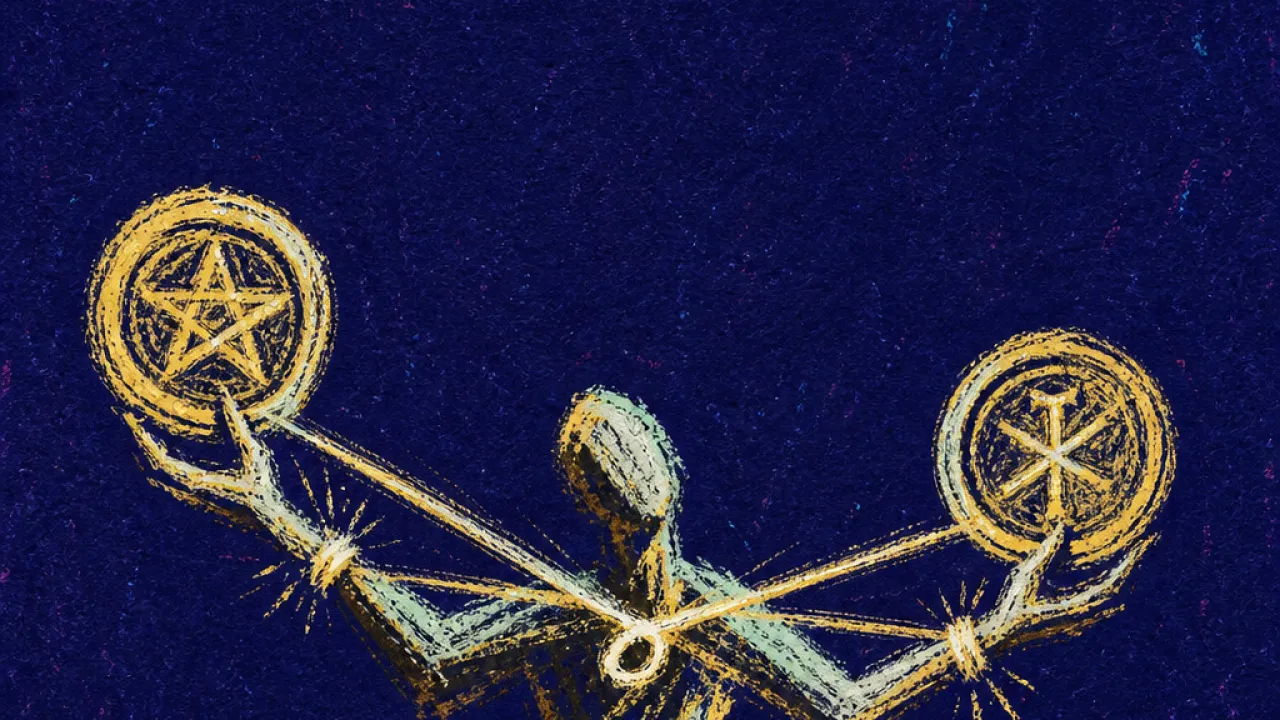
Opportunity Cost Tradeoff — you hit this situation when the outside world puts two or more reasonable options on the same narrow lane and makes them compete for the same money, time, attention, or social bandwidth. It can start in a tab-heavy evening after work: a job listing open beside your current rota, a course deadline beside your rent payment, a message from someone asking for more consistency beside a calendar already filled with shifts, commute time, errands, and the one night you were going to sleep properly. None of the options looks absurd on its own, which is what makes the pressure sharper; the promotion could build stability but take your evenings, the move could open a new scene but drain savings, the relationship could deepen but reduce the independence you have been carefully protecting, the side project could grow but take the hours that keep your body functional. People around you may simplify it into “just choose,” but they are not the ones balancing the fee, the lease, the lost weekend, the delayed plan, the reputation risk, or the quiet cost of becoming less available somewhere else. The tradeoff follows you into ordinary moments: checking your bank app before replying yes, calculating travel time while someone waits for an answer, opening a spreadsheet at midnight, rereading the same pros and cons while every box points to another box. The exhausting part is not indecision for its own sake; it is being asked to treat capacity as if it can stretch forever while every option quietly takes up the same pair of hands, much like the Two of Pentacles, where each coin can move only because the other coin is tied into the same loop.

Why it's not you?

The problem is not that you are bad at choosing; the setup itself is asking one limited life to fund several competing paths at once. When money, time, energy, and access cannot be spent twice, every option creates a cost somewhere else. That cost belongs to the structure of the decision, not to a personal failure in you.

Opportunity Cost Tradeoff in Tarot Cards

In an Opportunity Cost Tradeoff, the pressure comes from the way one calendar slot, budget line, or commitment immediately changes what remains available elsewhere. The body feels it in the locked jaw, the spreadsheet left open, and the shoulders held still while every option keeps asking for the same limited resource. This is an environmental, structural dynamic: the tradeoff is built into the setup, not into your ability to choose perfectly. The Tarot Cards below reflect the shape of that linked system, where one lifted coin changes the weight on the other side.

Two of Pentacles Upright
Each hand holds a pentacle at the opposite end of the same loop. The image makes tradeoff physical: moving one coin is never isolated, because the cord carries that movement back into the other side of the system. In personal growth, this becomes the reality of choosing between competing versions of improvement. A course, habit, side project, identity experiment, or discipline plan may all look valuable, but the card shows that every chosen object occupies the same hands, the same attention, and the same limited balance point. The pressure here is not that one option is right and the other is wrong. The card gives the tradeoff a visible shape so you can stop treating capacity as infinite and start identifying which commitment actually deserves to stay in circulation now.
Four of Pentacles Upright
Every pentacle has a place on the body, and every limb has a job. The figure’s security is complete enough to be visible, but that completeness leaves no free hand, free foot, or open posture for another path. Timing questions often become sharp when two good things cannot be held in the same season. You may be weighing stability against expansion, savings against exposure, privacy against visibility, or a protected base against a wider opportunity. The distant town keeps the tradeoff concrete. The card shows that choosing the timing of one path also means accepting the cost of not entering another field right now.
Six of Pentacles Upright
The scales in the merchant's left hand and the uneven pentacles above him make the scene less like simple generosity and more like a live allocation problem. Coins are moving, but they are not moving evenly; one hand dispenses while the other measures. That is the structure of a decision where every option has a visible gain and a quieter drain. You are not choosing between abstract possibilities; you are deciding where limited money, time, loyalty, or future leverage will be placed, and what becomes underfunded when one side receives the coin.
Seven of Pentacles Upright
One pentacle lies between the figure's boots and the hoe while the rest remain on the vine, placing immediate value and future yield in the same physical frame. The body stands at the junction between taking what has already arrived and continuing to feed what could still grow. Opportunity Cost Tradeoff fits because You are not choosing between success and failure; You are choosing how to allocate a real but limited return. The card makes the timing issue concrete by showing that every next move uses the same scarce materials: attention, effort, patience, and the first proof that the field can pay back.
Eight of Pentacles Upright
One coin receives the hammer and chisel while the other pentacles sit finished, waiting, or out of reach on the ground. The card's entire composition is an economy of attention: whatever is being shaped now is also deciding what cannot be shaped at the same time. Opportunity Cost Tradeoff fits the Eight of Pentacles because mastery requires exclusion. In a decision reading, the card makes the hidden price of focus visible, especially when both options are reasonable and the real question is which investment deserves the next limited unit of time, money, and energy. This structure helps move the choice away from abstract pros and cons. It asks what each option would require you to stop practicing, stop funding, stop proving, or stop becoming while you build the selected path.
Nine of Pentacles Upright
The vineyard concentrates value in one cultivated field, while the falcon carries power that is real but specifically trained and contained. The scene is rich, yet it is not wide open; its abundance is organized around a particular way of living and managing resources. That makes the card especially precise for decisions where every option has a cost. One path may offer visible gains, status, comfort, or control, while another preserves mobility, experimentation, time, or a less measurable form of independence. The card brings the hidden exchange rate to the surface. It asks what the attractive option pays you in obvious rewards, and what it quietly takes in range, spontaneity, or future optionality.
Ten of Pentacles Upright
The balance on the crest, the checkered wall, and the threshold under the arch turn the family scene into a board of visible and hidden moves. Every stable object in the image has a location, and every location excludes another one. Your choice is therefore less about finding a flawless option and more about pricing the tradeoff honestly. The card holds the gains, losses, status signals, and long-term attachments in one field so the real cost of each option can be named.
Page of Pentacles Upright
A single coin is lifted with both hands while the broad plain remains available around the Page. The object is valuable precisely because it concentrates attention, but that concentration also makes the surrounding possibilities easier to undercount. Opportunity Cost Tradeoff lives in that physical arrangement. Every serious choice gives one path enough weight to be held, protected, and announced, while other routes become quieter because they are not in the hand. The card does not flatten the decision into a simple pros and cons list. It shows You the structural cost of focus: what becomes possible by committing attention, and what becomes less available because the coin has taken center stage.
Knight of Pentacles Upright
The Knight's attention gathers around one pentacle while the open land stretches beyond him. The scene does not show frantic choice; it shows concentrated commitment inside a field where other routes could still exist. That structure fits a timing decision where choosing one slow, grounded path also means letting other possibilities pass. The cost is not abstract: time, attention, and material energy can only be carried in one direction at a time. This context brings the tradeoff into focus without reducing it to a simple yes or no. The card asks whether the path being preserved is worth the openings being declined, and whether the current timing still supports that concentration.
Queen of Pentacles Upright
The pentacle fills the Queen's hands while hills, water, and fertile ground remain visible beyond the throne. The picture places one held resource in the foreground and a wider landscape in the background, making the decision's scale larger than the object being protected. In a choice spread, this describes a tradeoff where keeping one form of security may delay another form of movement. You are not only comparing options; you are measuring what each option requires you to stop carrying, postpone, or leave outside the garden.
King of Pentacles Upright
The King’s hands divide attention between the scepter and the pentacle, while the estate behind him shows that every visible gain belongs to a wider system of property, status, and responsibility. Nothing in the scene is abstract; each advantage has a structure attached to it. This is the decision where both choices can be correct and still cost something real. You are weighing not just outcomes, but the exchange rate between security, control, time, credibility, and freedom.
Ace of Swords Upright
The double-edged sword carries the crown between olive and palm, making gain and cost visible in the same object. The image gives you one blade, two edges, and symbolic rewards that cannot all be held in the same way once action begins. That is the reality texture of an Opportunity Cost Tradeoff. A choice can be rational, promising, and still expensive because every route spends a different form of time, energy, identity, or access. The Ace of Swords is useful here because it does not soften the cost of clarity. You get a cleaner line of sight, but the blade also shows that choosing one edge means accepting what the other edge will cut away.
Two of Swords Upright
The two swords can be held in balance, but they cannot both become the next movement. The figure sits between solid shore and moving water, surrounded by possible directions that remain open only while no single direction is claimed. A choice like this is not blocked because one option is obviously wrong. It is difficult because every viable path asks for a sacrifice: time, identity, money, freedom, certainty, access, or an imagined future that has to be released. The card makes the hidden cost visible. You are not only choosing what to pursue; you are choosing which version of the unchosen life you are willing to let become background.
Three of Swords Upright
The equal spacing of the swords creates a clean but painful geometry. Each blade keeps its own direction, yet all of them arrive at the same heart, turning separate options into different routes toward a real cost. For decision work, this image strips away the fantasy of a cost-free answer. You are being asked to locate which value, relationship, timeline, or version of yourself each option would pierce, so the choice can be made with the hidden price in view.
Five of Swords Upright
Three swords are carried and two are left on the ground, making the cost of possession visible in the simplest possible way. The card does not show unlimited options; it shows selection under tension, where holding more in one direction means leaving something else exposed. An Opportunity Cost Tradeoff appears when the real decision is not whether an option is good, but what it displaces. The Five of Swords sharpens that tradeoff by showing that the abandoned option may still have value, but recovering it may require giving up the posture of control.
Six of Swords Upright
Six swords stand in the boat like organized cargo, cleanly placed but impossible to ignore. The vessel can still move, yet the crossing is shaped by what it must carry. That is the anatomy of a real tradeoff. You are not choosing between a pure gain and a pure loss; the card makes the hidden weight of each option countable, so the decision can be judged by total load rather than by surface appeal.
Seven of Swords Upright
Five swords are carried away while two remain planted on the path, making the cost of selection visible in the image itself. The figure cannot take the whole field with him, so the gain and the remainder appear at the same time. This is the logic of an opportunity cost decision: every chosen option creates a visible leftover. You are not failing because one path costs something; the card makes the tradeoff concrete so the hidden price can be named before it quietly controls the choice.
Nine of Swords Upright
The swords are counted and aligned, and the figure's exposed head, throat, and heart create distinct zones of impact. The image does not show one vague threat; it shows separate lines of cost laid across different parts of life. Opportunity cost tradeoffs require that kind of separation. The card frames the choice as a distribution problem: what takes time, what takes voice, what takes security, and what takes emotional bandwidth, so the hidden price of each option can be compared without pretending any path is cost-free.
Ace of Wands Upright
Leaves fall from the living wand even as it continues to sprout. The image holds growth and release in the same gesture, showing that movement into one form naturally lets another possibility drop away. That is the pressure inside an opportunity cost decision. You may be trying to keep every future intact, but the card's material logic shows energy converting, not multiplying without limit. Opportunity Cost Tradeoff fits because the Ace does not offer endless branches at equal strength. It shows one wand being held, one field being activated, and some leaves leaving the source so the chosen direction can become real.
Two of Wands Upright
The castle wall, the held globe, and the open coastline create a scene where every direction has a price. Remaining on the battlement preserves position, while the visible world beyond the wall asks for energy, exposure, and a narrowed focus. For personal growth, the card maps the cost of choosing one version of expansion over another. You are not facing a blank field of freedom; the structure shows tradeoffs between comfort already secured and the growth path that would require giving up some optionality.
Three of Wands Upright
The ships on the water are not trophies sitting at the man’s feet; they are moving vessels at a distance, tied to routes, delays, weather, and exchange. The three wands on land show that one foundation is already established, while the open sea keeps several possible returns beyond immediate control. This is the reality texture of an opportunity cost tradeoff: every route carries something toward you and takes something out of reach. The card’s power comes from the gap between the secure ground under your feet and the moving opportunities you can only access by accepting distance, uncertainty, and delayed return. In a decision context, the image asks for a sharper accounting of what each option consumes, not just what each option promises. You are not choosing between pure gain and pure loss; you are choosing which future cost structure you are willing to inhabit.
Five of Wands Upright
Every raised wand is intact and usable, but each one occupies the same crowded air. The card does not show a lack of options; it shows multiple live claims competing for the same field of motion. That is the outer shape of an Opportunity Cost Tradeoff. You are not deciding between one good path and one empty path; you are deciding which form of value gets room to move and which form of value has to be left without your full force.
Eight of Wands Upright
All eight wands travel together instead of scattering across the sky. Their force is powerful because it is concentrated, but that concentration also shows that momentum spent in one direction cannot be spent elsewhere at the same moment. The stream below makes the tradeoff visible in the landscape. It divides the ground into banks, giving the choice a material edge: one path may be fertile and real, but stepping into it still separates you from another possible terrain. For decision work, this card brings the hidden cost into view. You are not being asked to find a cost-free option; you are being asked to identify which cost belongs to the life you are actually willing to build.
Nine of Wands Upright
The held wand supports the figure and also ties him into the defensive line. That single object carries two functions at once, turning support into obligation and position into restricted movement. For a choice spread, the image makes opportunity cost concrete. You can see that one option may protect a boundary, identity, or investment while reducing access to another path, so the decision has to name what is being defended and what is being left outside the fence.
Ten of Wands Upright
The lifted bundle occupies both arms, both hands, and the full forward line of the body. Nothing is technically blocking the path, but the way the wands are carried makes every movement cost something before the destination is reached. That is the physical logic behind an opportunity cost tradeoff. You may be choosing between options that are all reasonable on paper, yet the real issue is that each one claims a different part of your capacity and quietly removes another path from reach. The Ten of Wands turns the choice into a resource audit. The question is not which option looks best in isolation, but which load you can carry without losing the mobility that made the choice meaningful in the first place.
Page of Wands Upright
The Page holds one wand in a barren landscape, and the scene offers no pile of backup tools. A single line of action receives both hands, while the rest of the desert remains unclaimed. That visual austerity mirrors an Opportunity Cost Tradeoff. You may have more than one acceptable option, but early energy is finite, and the act of choosing one route quietly withholds attention from another. The card gives the tradeoff a body and a stage. It asks the decision to be evaluated through visible costs such as time, exposure, momentum, and the opportunity you stop feeding when one wand becomes the priority.
Knight of Wands Upright
The knight travels with a strange asymmetry: his body is heavily armored, while the horse carries only the simplest working equipment. The image makes speed possible, but it also shows that not every resource can be carried when the route demands movement. That is the shape of an opportunity cost tradeoff. You may have a compelling option in front of You, but the card forces the hidden exchange into view: choosing one line of motion means leaving other forms of safety, time, status, comfort, or identity behind.
Queen of Wands Upright
The wand and sunflower are both alive with meaning, but the Queen cannot merge them into one object. Each hand preserves a different value, which makes gain and loss visible in the same seated body. That is the texture of an opportunity cost tradeoff: every option protects one future and leaves another less resourced. You are not dealing with a simple upgrade or downgrade; you are weighing what each path will ask you to stop feeding. The desert around the throne sharpens the issue because abundance is not spread evenly across the landscape. The card gives the choice a concrete structure: the hidden cost is not a footnote after the decision, but one of the main objects already in your hands.

Opportunity Cost Tradeoff in Tarot Card Reading Insights

When an Opportunity Cost Tradeoff follows people into a reading, the question often moves from “Which option is best?” to “What does each option make unavailable?” The readings below show how others have brought this kind of finite-capacity choice to the table. Tarot Reading Insights from sessions on this tradeoff.
Psychological contexts related to Opportunity Cost Tradeoff