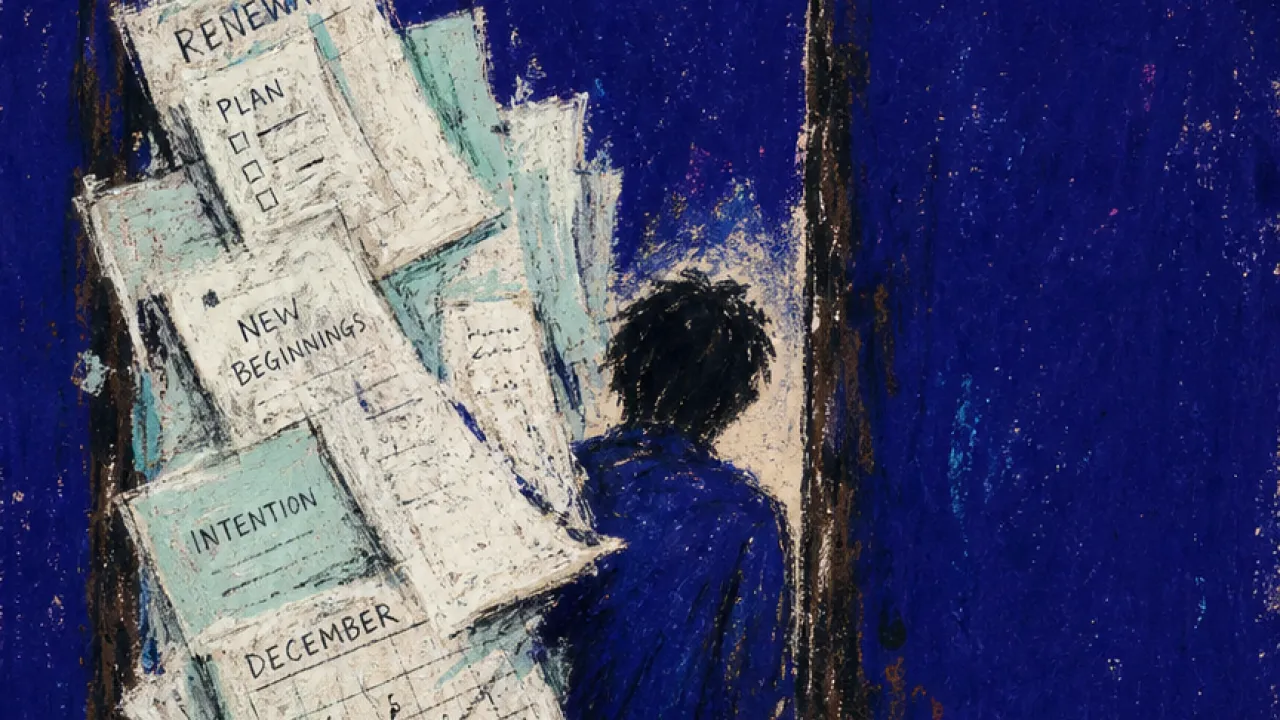
In a Strategic Exit Window, the pressure comes from a current setup that still works while deadlines, renewals, and handoffs keep asking for another round. The tightness in your shoulders when another form or planning meeting lands is the body meeting that shrinking door. This is an environmental and structural dynamic: the outside system is narrowing, even while it still looks usable. The Tarot Cards below mirror the narrow opening, the protected crossing, and the clean cut that can still be made.
Eight of Cups UprightThe river crossing at dusk turns departure into a timed movement across a real threshold. The cups remain standing behind the figure, while the staff and red shoes show that energy has been redirected toward terrain that will demand coordination rather than nostalgia. In personal growth, this points to a window where the old routine has not collapsed, yet its stagnant edge is already visible. You are not being pushed by disaster; the structure is showing that waiting too long would make the crossing heavier than it needs to be.
Eight of Pentacles UprightThe path to town is visible behind the worker, but the bench still holds unfinished material. The card creates a precise exit geometry: enough completed work to count as leverage, enough remaining work to make timing matter. Strategic Exit Window fits this scene because the decision is not driven by impulse. It is a question of whether the craft, evidence, money, support, or timing has reached the point where movement can be planned without abandoning useful gains. The Eight of Pentacles keeps the choice practical. It shows that an exit can be a designed transition when the workbench has produced something portable and the path ahead is more than a vague escape route.
Ace of Swords UprightFirmly grasped by a cloud-borne hand, the sword is already angled with motion. It is not resting, waiting, or displayed as decoration; it is a tool caught at the moment when a precise cut can still be made. That visual timing matters for a Strategic Exit Window. The external situation has not fully closed, but the structure is asking for clean separation before the old track turns into a heavier lock-in. The Ace of Swords connects to this context because its clarity is active rather than theoretical. You are being shown the difference between understanding that a cut is needed and recognizing the window in which the cut can still protect your agency.
Five of Swords UprightBeyond the shoreline, a distant bank remains visible, while the background figures have already turned away from the conflict site. The scene contains more than defeat; it contains the first evidence of distance from a depleted field. In career terms, this is an exit window that becomes strategic because the current terrain has stopped producing clean gains. Leaving is not framed as disappearance, but as a movement toward a different structure before the conflict consumes more reputation, energy, or opportunity. The card asks you to read the timing of departure with precision. When the swords are still on the ground and the social field is unstable, the strongest move may be choosing the route that preserves future leverage rather than winning one more round.
ReversedThe distant figures walking toward the shoreline create movement away from the fight while the foreground figure remains inside the weapon field. The opposite bank is faint, but it is visible enough to make exit a practical question rather than a fantasy of disappearing. A Strategic Exit Window opens when staying would keep You inside the old contest but leaving too bluntly would create a new one. The card frames the decision around timing, leverage, and recoverable losses, showing where a controlled departure can restore agency without pretending the field is neutral.
Six of Swords UprightThe small boat has already turned away from the shore, with the ferryman's oar cutting into the water and six swords arranged as a guarded front line. Movement is not impulsive; it is narrow, planned, and protected by the very information being carried. In a career reading, that structure maps to the moment when leaving becomes a strategy rather than a reaction. You may still be carrying old responsibilities, references, and unfinished handoffs, but the scene shows a controlled passage out of a role where timing, documentation, and cover matter as much as desire. The distant shore is visible but not close, which keeps the focus on the exit window itself. The value is not instant escape; it is seeing the current opening clearly enough to move before the workplace structure pulls you back into the same pattern.
Seven of Swords UprightThe lifted front foot, extended back foot, and dusk-lit ground create a body already in transition. The figure is not settled in the camp and not fully outside it; every part of the posture is organized around timing, discretion, and getting enough leverage out before the window closes. For career questions, this points to the quiet phase before an exit becomes public. You may be weighing a job search, internal transfer, or role change where the real task is not announcing the move, but understanding what can be carried forward, what must be left behind, and when visibility becomes costly.
Eight of Swords UprightThe blades are planted in the ground rather than moving toward the woman, and the bindings are cloth rather than iron. The danger is organized around her, but the image still contains a narrow, time-sensitive route through the arrangement. In decision terms, that creates the logic of a strategic exit window. You may be looking at a moment when staying still preserves the enclosure, while a carefully timed move can use the existing gap before the situation hardens into a more expensive lock-in.
Ten of Swords UprightThe river behind the fallen figure is calm, and the pale light at the horizon remains cleanly separated from the foreground damage. The scene does not show rescue arriving; it shows a narrow route that becomes readable only after the collapse in front has been named without denial. A Strategic Exit Window is the moment when saving the old option stops being the most rational use of attention. You can use the card's visual split to locate the difference between staying to negotiate with a closed structure and moving toward the part of the field where timing, resources, and dignity are still available.
Knight of Swords UprightThe horse is already moving, the wind has a fixed direction, and the rider's gaze does not scatter across the landscape. The card creates a narrow corridor of motion where hesitation would cost more energy than a clean decision. In a relationship, that visual corridor can describe the moment when an exit, reset, or direct redefinition becomes more available than another cycle of ambiguity. This is not a dramatic escape fantasy; it is the practical recognition that momentum has opened a brief window for a cleaner move. The sword's alignment with the reins matters because action and clarity are linked. You are being shown the difference between an impulsive exit and a strategic one: the latter does not need to punish the other person, but it does need a route, a reason, and enough precision to prevent the same conflict from pulling you back in.
Queen of Swords UprightThe blade is upright, the Queen sits slightly turned away, and the elevated view gives her distance from the lower cloud bank. Nothing in the posture is impulsive; separation appears as a clean line drawn from a stable seat. That visual logic fits a growth moment where exit is not collapse but discernment. Certain routines, advice loops, identities, or communities may have completed their usefulness, and the structure points to the practical intelligence of leaving with timing rather than staying attached to a version of growth that has become too small.
King of Swords UprightThe sword, hand, and gaze form one clean line, while the throne keeps the body steady instead of rushed. Behind the figure, the open air and distant landscape give the scene enough distance for timing, leverage, and consequence to be seen together. That is the texture of an exit window rather than an emergency escape. You may have enough structure to leave a path deliberately, but the key pressure is timing: waiting too long can turn clarity into lock-in, while cutting too early can waste leverage that is still available.
Two of Wands UprightStanding on the castle wall with the globe in hand, the figure has already reached a platform that gives him visibility over land, sea, and possible routes. The held wand and the fixed wand create a working tension between the role that is secure and the move that has not yet been made. In a career setting, that image maps onto the moment before an exit, transfer, or upward move becomes visible to everyone else. You are not being pushed into random change; the structure is showing that timing, leverage, and a clear read of the terrain matter more than impulse.
Nine of Wands UprightThe figure leans on the wand, but he is still standing on clear ground with his gaze turned toward what may be coming next. Behind the defensive row, the landscape opens into green hills, showing that the current post is not the entire world. In career terms, this is the narrow window after repeated pressure but before impulsive escape. The wand is both support and evidence: the skills, receipts, and survival knowledge that can be carried into a next move if the timing is handled with precision. You are not shown as trapped inside the barrier; you are shown assessing the edge of it. The card links this context to the moment when leaving becomes strategic rather than reactive, because the next step has to preserve leverage instead of only relieving pressure.
Ten of Wands UprightThe distant building gives the scene a defined endpoint, and the figure is still moving toward it rather than collapsing on the road. The load is heavy, but the image contains a measurable finish line instead of an endless field. That makes the card a strong signal for a strategic exit window in decision work. You may be close enough to completion that leaving too early would waste leverage, while staying too long would convert a final stretch into a repeating obligation. The useful clarity is timing. The structure asks where the clean handoff, closure point, or negotiated finish actually sits, so the next choice can be made from completion rather than from raw fatigue.
No cards available for this filter.