Feeling Late on Paper?

Explore the pressure of outside timelines, related tarot cards, and Tarot Reading Insights around milestones, comparison, and life-stage expectations.

Social Clock Pressure

What is this situation?

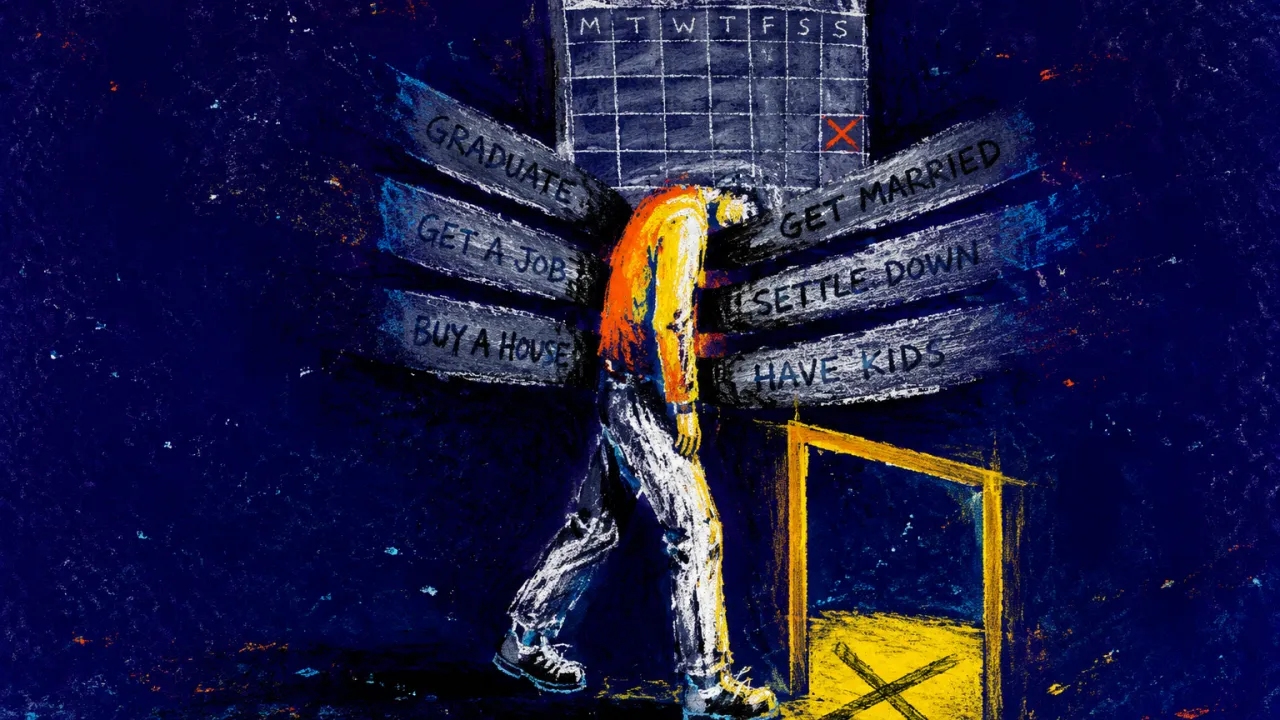
Social Clock Pressure — you start noticing it in the small public moments that were supposed to be harmless: a friend posts an engagement photo, a coworker updates their job title, someone from school buys a place, a group chat turns into another round of weddings, grad programs, promotions, babies, relocations, launches, and "so what are you doing next?" questions. At first it feels like background noise, but then the timeline begins to follow you into ordinary places: on the train while scrolling, at brunch when everyone compares rent and salaries, at family holidays when age becomes a quiet measuring stick, in dating apps where profiles read like life-stage checklists, and at work where younger people seem ahead while older people ask about your five-year plan. The pressure does not come from one person alone; it comes from the repeated public grammar of being on schedule, where adulthood is treated as a sequence of visible proofs: the right relationship, the right role, the right neighborhood, the right body, the right money, the right answer when someone asks where your life is going. You may still be making careful choices, but the room keeps rewarding speed, clarity, and display, so hesitation starts to look like failure and a private season of building starts to look like being behind. Your phone becomes a scoreboard, your birthday becomes a deadline, your friends' milestones become comparison points, and even good news from people you care about can land with a tightness in your chest because the outside world has turned timing into something watched. What wears you down is not simply wanting a future; it is being made to perform readiness before your conditions are ready, much like The Fool at the cliff's edge, dressed for departure while the dog and the drop in front of him reveal the cost of moving just because movement is expected.

Why it's not you?

The problem is not that you are too slow, too sensitive, or failing to keep up. Social Clock Pressure is an external timetable built from repeated comparisons, public milestones, and age-based expectations that can make almost anyone feel late. The pressure belongs to the measuring system, not to a flaw in your pace.

Social Clock Pressure in Tarot Cards

Social Clock Pressure is the outside timetable that turns birthdays, job titles, relationships, housing, and public milestones into a measure of whether your life looks on track. The tightness in your chest when another announcement lands is part of how this environmental and structural dynamic reaches the body, not evidence that you are misreading the room. The Tarot Cards below reflect the shape of that pressure: the exposed threshold, the public scoreboard, the role you are expected to perform, and the difference between borrowed urgency and grounded timing.

The Fool Reversed
The youthful figure wears the laurel and steps toward a threshold with a public-looking confidence, while the dog and the cliff mark the cost of moving just because movement is expected. The image compresses social momentum into one exposed edge: a body performing readiness before the ground has been checked. In timing work, this speaks to social clock pressure, the outside timeline that turns life stages into a race. The card helps separate your actual readiness cues from borrowed urgency, so the next step can be chosen from contact with the ground rather than comparison.
The Magician Reversed
The Magician stands in a formal posture with every tool visible on the table, creating a scene of public capability. In a reversed timing context, that display can become a demand to look ready before the inner and external sequence is actually ready. Social clock pressure works the same way: milestones become a stage, and the visible proof of progress starts to matter more than the real season you are in. The body is expected to perform command while the timing conditions may still be partial, immature, or mismatched. This context helps you separate genuine readiness from the pressure to appear on schedule. The card exposes how external comparison can hijack timing, making action feel urgent because it is visible rather than because it is structurally supported.
The High Priestess Reversed
The moon crown and crescent at the feet place the figure inside visible cycles, while the black and white pillars make the scene look sharply classified. In reversal, that cyclic symbolism can harden into an external calendar of what counts as early, late, successful, or behind. Social Clock Pressure is the moment when timing stops being personal rhythm and becomes a public scoreboard. The card shows how milestones can turn into checkpoints, especially when the outside world demands proof before your own conditions have matured.
The Empress Reversed
The twelve stars, pomegranates, wheat, and mature garden tie the figure to cycles, ripeness, and visible life-stage symbolism. The image is saturated with signs that say growth should arrive in a recognizable season. Social Clock Pressure enters when those symbols become an external measuring system for your private timeline. You are not simply comparing yourself; You are standing inside a culture that turns age, partnership, career, body, and identity milestones into a public harvest schedule.
The Emperor Reversed
The white beard, closed crown, and elevated throne turn age, rank, and recognition into visible architecture. The Emperor's body is almost swallowed by the official shell of adulthood, authority, and achievement. Reversed, that architecture becomes a calendar imposed from outside. You are not simply asking when to act; you are measuring your timing against inherited milestones, peer comparison, and the pressure to appear established before your actual conditions are ready.
The Hierophant Upright
The kneeling followers, formal vestments, repeated symbols, and temple boundary create a public grammar of belonging. Everyone in the scene knows where to stand, when to listen, and what posture counts as acceptable. That is the social clock made visible. You are not only choosing a moment to act; you are moving inside a culture that attaches approval to certain ages, stages, and sequences. For timing work, this context reveals where urgency may be borrowed from the room rather than generated by the actual conditions of your life. The card asks the timeline itself to be audited: which deadlines are structurally real, and which ones are inherited scripts wearing the mask of common sense?
Reversed
The repeated threes, tiered crown, stepped platform, and ceremonial arrangement make relationship to authority look staged and sequential. The image has a built-in order of progression, as if legitimacy must pass through approved levels at the correct time. Reversed, that order becomes social clock pressure in love. Age, peer milestones, family timelines, engagement seasons, wedding expectations, and comparison with other couples can turn relationship decisions into a race for sanctioned status. The card separates timing from readiness. It shows where the relationship may be responding to an outside schedule, and where the couple needs to recover a pace that belongs to the bond itself.
The Lovers Reversed
The same bright garden can become a stage of exposure: two uncovered bodies under a high sun, an elevated watcher above them, and marked fruit that turns time into something counted. The scene gives timing a public surface, as if the choice is being measured before it has been privately integrated. For a timing question, this maps onto social calendars that make life feel late, early, or visibly off schedule. You may be tracking relationships, work, money, housing, or milestones through other people's pace, while the actual readiness signal is quieter and less public. The reversed Lovers structure shows how external timing pressure can disguise itself as clarity. It names the difference between a real window and a stage where you are being pushed to perform readiness.
The Chariot Reversed
The charioteer is positioned between the established city behind him and the open field ahead, fully visible in armor and symbols of command. The scene carries the pressure of being seen at a threshold, where stillness can be mistaken for delay and movement can be demanded before the path is truly ready. Social Clock Pressure emerges when external milestones start acting like a schedule imposed from outside. The public posture of the figure shows how timing can become performative: progress has to look decisive, adult, successful, or on track even when the actual conditions are still being negotiated. For timing questions, this card exposes the difference between your real window and the crowd’s timetable. The useful clarity comes from separating the moment that is structurally ready from the moment that merely looks acceptable to others.
Strength Reversed
The small human figure bending over a vivid red lion creates a scale problem: a private body is made responsible for managing a much larger force. Behind them, the mountain stands as a visible milestone, but the immediate ground under the lion is still uneven. That is how social timing can feel when public milestones start acting like pressure rather than orientation. You may be reading age, peers, career markers, commitment markers, or status markers as proof that you must move now. The card exposes the external clock as a force that can narrow your agency when it ignores the actual ground under your feet.
The Hermit Reversed
The old face, white beard, and high ridge place time directly into the body of the image. From that height, the world below becomes something that can be measured from a distance, turning life stages into visible positions on a social map. Social clock pressure enters when that map starts acting like a deadline. You may be comparing your career, relationship, home, or reinvention timeline against a public standard, while the card's cold landscape asks whether the milestone is actually supported by your conditions or merely amplified by comparison.
Wheel of Fortune Reversed
The wheel reads like a public clock suspended among four book-holding figures, with each corner fixed in place and each book open to a script. The image creates a field of measured time, repeated rules, and watched positions. Social Clock Pressure fits when milestones start operating like external criteria rather than personal choices. The card reflects the squeeze of age-based expectations, peer comparison, and status markers, while also making those scripts visible as structures that can be examined rather than followed automatically.
Justice Reversed
The sword's straight line, the balanced scale, and the gray pillars can harden into a public measuring frame. In this state, the hall no longer reads as neutral assessment; it becomes a place where timing is judged against standards that may not belong to your actual life conditions. Social Clock Pressure fits because the card's symbols externalize comparison as structure. Career milestones, relationship timelines, housing expectations, and status markers can all appear as if they are objective measures, even when they are social yardsticks. The figure's fixed seat matters here. You are facing a timing script that does not move with your circumstances, so the work is to distinguish real-world timing constraints from inherited milestone pressure.
The Hanged Man Reversed
The suspended figure is exposed against a blank background, with no crowd painted into the scene and yet no privacy either. His body is fixed in a position that can be seen from every angle, while the hands remain hidden and the timing of release remains outside the visible body. That exposure gives the card a clear link to social clock pressure. The problem is not only the pause itself; it is the way delay becomes legible against an external measuring system of milestones, age brackets, deadlines, and comparison points. For timing questions, this image separates your actual cycle from the clock being projected onto it. The card asks you to notice which parts of the pressure come from real timing conditions and which parts come from being visibly suspended while other people appear to be moving.
Death Reversed
The figures in the foreground are not given private rooms or separate timelines. Each body is exposed to the same rider, the same standard, and the same hard forward pressure, even though their positions and capacities are visibly different. That is how Social Clock Pressure works in timing questions. The outer world presents one timeline as if it should apply to everyone: partnership by a certain age, career stability by a certain year, visible progress before the next peer comparison. The card shows how a public marker can become physically heavy when there is no protected space to assess readiness. The reversed charge of this image asks you to distinguish a real opening from a social deadline. Your agency returns when the timing question moves away from who appears ahead and toward whether the field around you can actually support the next commitment.
Temperance Reversed
The distant golden light sits at the end of the road like a public image of arrival. When the card is reversed, that light can stop functioning as orientation and start functioning as pressure, turning the gradual path into a timeline you feel measured against. Social Clock Pressure enters when external milestones become louder than the actual conditions under your feet. The figure’s split stance matters here: one foot is still in the present terrain while another touches a deeper, less visible process that cannot be rushed for appearances. Temperance gives this pressure a reality check. The path has stages, and the current stage cannot be judged only by how close it looks to someone else’s visible finish line.
The Devil Upright
The man and woman stand as a paired unit beneath a much larger figure, with their bodies arranged like a public script rather than a private choice. The chain does not only restrain each person individually; it links them into a staged structure where timing, desire, and approval are organized by something larger than the relationship itself. In timing questions, that visual hierarchy maps cleanly onto social milestones. You may be dealing with an external clock that says when commitment, career stability, property, marriage, or visible adulthood should happen, even when your real resources and readiness do not match that schedule. The card connects to Social Clock Pressure because the scene turns timing into a rule of belonging. The work is to see which part of the pressure belongs to your actual next step, and which part belongs to a social script that has been given too much authority over your pace.
Reversed
The paired figures stand exposed beneath the horned figure, their collars attached to the same system of control. In the reversed field, the image becomes less like a visible script and more like a compressed stage where timing has to perform for an audience, even when the real conditions are not ready. This is Social Clock Pressure at its most distorting. The external schedule of adulthood, commitment, success, ownership, or status can turn into a rule that measures your life from the outside and treats readiness as secondary. The card points to the place where a timeline has become coercive. You regain clarity by separating a genuine opening from a public milestone demand that has been mistaken for the right time.
The Tower Reversed
The crown falls before anything else has landed. The image turns social height into a loose object, showing how ranking systems can lose authority the moment the structure beneath them fails. Social clock pressure works through that same vertical logic: be higher by this age, arrive by this milestone, prove the climb was on schedule. Reversed, the Tower reveals the cost of obeying a timeline that measures elevation while ignoring whether the structure is livable. For your long-term direction, the card makes comparison visible as architecture. It does not ask you to reject every marker; it asks which markers still organize a real future and which ones only keep you climbing a burning tower.
The Star Reversed
The stars above the figure form an ordered field of points, with one bright center and smaller lights arranged around it. In reversal, that same sky can stop feeling like orientation and start functioning like a public benchmark, turning time into something measured from above. This connects directly to the pressure of external timelines. You may be moving through a private season of preparation, but the surrounding culture compares your pace against visible milestones: career progress, partnership status, housing, money, public achievement, and the age by which each one is supposed to happen. The exposed oasis sharpens that pressure because there is no shelter around the recovery process. The Star shows how a personal cycle can become distorted when the sky of comparison makes every pause look like lateness.
The Moon Upright
The Moon hangs above the whole scene as a visible cycle, and both animals respond to it from the ground. Their howling makes the overhead rhythm public, turning the sky’s phase into something the entire landscape has to answer. That structure mirrors the pressure of shared timelines: milestones, peer pacing, age markers, and social expectations that make timing feel observed. You may be evaluating a move through the noise of what everyone else seems to be doing, rather than through the actual readiness of your own route. The card supports this context because its cycle is not private. The landscape reacts to a single luminous clock, and the timing question becomes a matter of distinguishing useful rhythm from social surveillance.
Reversed
The moon's phased face, repeated rays, and falling drops turn the sky into a timing system that every figure below reacts to. The animals do not look down the road; their bodies answer the clocklike signal overhead. That structure mirrors social clock pressure in direction work. The problem is not simply that time is passing; it is that external milestones start acting like instructions, measuring your route before you have confirmed whether it fits. The card exposes the difference between a real season of movement and a schedule that has been imposed from above.
The Sun Reversed
The Sun dominates the upper field with a strict pattern of radiating lines while the small child moves beneath it in public view. The image can become a giant external calendar: bright, visible, and difficult to ignore. In timing questions, that scale difference points to milestone pressure rather than personal readiness. You are measuring your movement against a public rhythm that rewards visible progress, and the card's structure helps separate a real opening from a timeline imposed by comparison.
Judgement Reversed
The mirrored family groups rise at the same trumpet call, with adults and children arranged in repeated formation across the field. The mountains enclose the scene, turning a personal response into something collective, visible, and hard to separate from everyone else's timing. For timing anxiety, this image can describe the pressure of being measured against a shared social schedule. Career milestones, partnership timelines, housing markers, and public signs of adulthood can start to feel like a trumpet that everyone else has heard correctly. Social Clock Pressure becomes visible here as a field-level force. The card does not ask you to obey the crowd signal; it helps you distinguish an authentic opening from a benchmark that only feels urgent because it is happening in public.
The World Reversed
The wreath resembles a socially legible completion badge, and the dancer is placed where every side of the frame can see her. The four corner figures turn the central movement into something witnessed, measured, and difficult to keep private. In timing questions, that creates the pressure of public milestones: being seen as on time, complete, impressive, partnered, established, or ready. You are dealing with a timing grid imposed by comparison, where the real work is separating your cycle from the display standard surrounding it.
Ace of Cups Reversed
The ritual cup, descending dove, and marked disc create a staged threshold where recognition appears to arrive from outside the vessel. The cup is centered and visible, while the hand holding it has no grounded body or private setting around it. That visual pressure mirrors the social clock: milestones become public thresholds rather than personal rhythms. You may be measuring your timing against visible markers around relationships, career, home, or adulthood, and the card exposes how external recognition can narrow the sense of when a move is truly yours.
Two of Cups Reversed
The crowned pair stand in front of a distant town, making the bond visible to a wider social horizon. The wreaths, the matching cups, and the public posture turn timing into something that can be measured by other people's milestones. This is the pressure of a life schedule that arrives from outside the actual exchange. You may be dealing with partnership, launch, stability, or recognition, but the surrounding field starts treating the visible symbol as proof that the next step should already be happening. The card's structure separates public timing from real readiness. It shows how a social timetable can make a moment feel late even when the exchange itself has not fully formed.
Three of Cups Reversed
Harvest fruit, flower wreaths, and raised cups turn completion into a public season. The scene is not only about private satisfaction; it shows achievement made visible among peers at the same level of the frame. That visibility is what gives Social Clock Pressure its force. When the people around you are celebrating engagements, degrees, promotions, moves, launches, or stable identities, their milestones can start to look like a timetable you are failing to meet. The circular dance intensifies the pressure because it centers the completed season instead of opening a forward road. You are not simply comparing outcomes; you are trying to locate a genuine direction while surrounded by evidence that other people’s seasons appear to have arrived.
Four of Cups Reversed
The fourth cup enters the scene from outside the figure's self-contained space. It is presented clearly, but the body stays folded under the tree, maintaining a private boundary against a timeline arriving from beyond the immediate ground. That visual structure fits Social Clock Pressure when timing is being pushed by outside milestones rather than internal readiness. The cup may look legitimate from the outside, yet the seated posture shows a body that has not consented to that schedule. The scene captures the friction between an imposed opening and a protected inner rhythm. This context helps You separate a real opportunity from the pressure to accept it because it appears on a socially approved timeline. The card does not reject the cup outright; it asks whether the timing belongs to Your actual cycle or to the audience around it.
Five of Cups Upright
The distant castle sits across the river as a clean image of stability, while the cloaked figure remains outside it on the unsettled bank. The bridge is present, but the body's attention is still pulled toward the cups that fell short. That spatial split mirrors the pressure of watching other people appear to reach settled milestones while your own route is interrupted. The card makes the social clock visible as an external comparison field: the endpoint is in view, but the crossing has its own conditions. You are not asked to deny the pressure of the castle in the distance. The useful audit is to separate borrowed timing from the route actually available under your feet, because crossing at the wrong pace can turn comparison into another spill.
Reversed
The fallen cups form a visible count in the foreground, almost like milestones being audited one by one. Across the river, the castle stays small and distant, while the bridge waits outside the figure's current line of action. In a direction question, this is the pressure of measuring a life path by the markers that appear missed. You are not behind a universal schedule; the card exposes a comparison structure that has taken over the map, so the remaining cups and the bridge can be evaluated on their own terms.
Six of Cups Reversed
The children appear inside an idealized estate where sweetness, safety, and proper exchange are arranged like a clean life script. The scene carries the visual pressure of an approved timeline: innocence first, care next, belonging contained within recognizable walls. Reversed, that polished script can become a clock imposed from outside. The timing question starts to bend around what a life is supposed to look like by now, rather than around the resources, readiness, and real phase you are actually occupying. The card exposes peer milestones and inherited benchmarks as external timing systems. You regain clarity by separating the social clock from the living rhythm of your own situation.
Seven of Cups Reversed
The cups display a complete lifestyle menu above the figure: home, money, recognition, identity, desire, and hidden selfhood all hover like public checkpoints. Their height gives these images more visual authority than the person's present ground. In timing work, that becomes Social Clock Pressure when external milestones start dictating the pace of your choices. The card does not ask you to reject ambition; it shows how peer timelines and public symbols can make a personal cycle feel late before the actual conditions have been examined.
Nine of Cups Upright
The row of nine cups sits above the figure like a visible count of what has been gathered, completed, or proven. The arrangement is orderly enough to look almost like a scoreboard, while the man beneath it performs composure in front of the display. In timing questions, that visual count becomes social pressure. Milestones can start to behave like external clocks: enough achievements, enough stability, enough signs of being ready, and suddenly the world implies that the next stage should already be happening. You are being shown how timing anxiety can be manufactured by visible benchmarks. The card helps separate your actual cycle from the staged appearance of completion, so the next move can be read through readiness rather than comparison.
Ten of Cups Reversed
The rainbow of cups hangs over the family like a complete public image: couple, children, house, land, and emotional closure all placed in one frame. The scene is beautiful, but in a timing question its completeness can become a measuring device. Social Clock Pressure emerges when the visible symbols of adulthood start acting like deadlines. The card shows how partnership, home, family, and stability can be mistaken for a single required sequence, even when your actual resources and season of life are moving differently. This context does not make the ideal wrong. It reveals the external timeline pressing on your choices, so you can separate genuine readiness from the pressure to look on schedule.
Page of Cups Reversed
The page is young, carefully dressed, and visibly assigned to present the cup as if the role must be performed before full maturity has settled. His body is composed, but the narrow platform and rising water leave little room for a messy or off-script pace. Social Clock Pressure enters when a small life signal becomes inflated into a public measurement of being early, late, behind, or on track. The fish in the cup becomes more than a private cue; it starts to feel like evidence being held up against an external timeline. For timing questions, this card highlights how milestone pressure can distort the reading of a real signal. You may need to separate the small thing that has actually appeared from the larger social clock trying to turn it into a verdict on your whole timeline.
Knight of Cups Reversed
The Knight carries himself like someone who is expected to look composed, capable, and ready. The winged ornaments suggest speed, but the horse's careful pace and the unconfirmed route beyond the river tell a slower story. That visual contradiction fits the pressure of being measured against an outside timeline. You may be surrounded by milestones that make slowness look like failure, even when the actual terrain demands caution and sequencing. The card links this context to timing because the scene separates appearance from viable movement. The social clock asks for proof of progress; the riverbank asks whether the next step has a real path on the other side.
Queen of Cups Reversed
The Queen sits inside symbols of rank: crown, throne, formal cup, carved figures, and a boundary wall beyond the island. These details give the scene social codes, not just beauty; the body is framed by a role that can be measured from the outside. In timing questions, those codes can become pressure points. Milestones, peer comparisons, age markers, and public expectations can make a private cycle look late or early even when the actual conditions are simply moving at a different rhythm. Social Clock Pressure fits the reversed expression of this card because the protected throne becomes a comparison frame. You are being asked to separate the timing of the living process from the timeline being imposed by status, visibility, and other people’s markers of arrival.
King of Cups Reversed
The crown, throne, formal cloak, and ringed hand load the figure with visible adult status markers, while the sea underneath refuses to become solid ground. The card places social legitimacy inside a moving emotional and life-cycle field. For timing questions, this becomes the pressure to match public milestones before the underlying cycle is ready. You may be measuring movement through peers, age, relationship stages, career markers, or visible achievements, while the actual conditions beneath Your life are shifting on a different rhythm. The card exposes the mismatch between status visibility and real timing. It helps separate the external script of being on track from the practical question of what phase You are actually in.
Ace of Pentacles Reversed
The manor, garden, fence, and golden coin create a visible grammar of material arrival. The scene displays ownership, access, and stability as something recognizable from the outside, which is why the image can press on questions of whether life is unfolding on schedule. Social Clock Pressure appears when that visible grammar becomes an external timeline. The garden is not hidden; it is placed behind a boundary that lets you see the life stage while reminding you that entry depends on resources, timing, and social markers. In a timing reading, the card helps separate your actual season from the schedule being projected onto you. The pentacle shows concrete foundations, but it also asks whether the pressure to arrive is coming from real readiness or from the public symbols of having arrived.
Two of Pentacles Reversed
The bright costume and high balancing act make the figure look publicly readable, as if timing has become something that can be watched and judged from the outside. The coins are still material and practical, but the performance layer adds pressure to keep up appearances while the real cycle remains fragile. Social clock pressure works the same way: marriage, housing, career, relocation, and visible milestones can turn into a public-facing rhythm that may not match your actual resources. The card does not collapse those timelines into one rule; it shows the gap between the displayed schedule and the private structure required to sustain it.
Four of Pentacles Reversed
The figure sits alone in the foreground while an entire town stands behind him as a visible social backdrop. His pentacles are not moving through that town; they are fixed to his body, making security look like something that must be displayed and defended. For timing questions, this image captures the pressure of being measured against a wider social timeline. You may be reading the moment through other people’s milestones, comparing your pace to housing, career, money, partnership, or status markers that appear already settled in the background. The card does not treat that pressure as an inner flaw. It shows an external comparison field narrowing your sense of timing, so the real work is separating your actual readiness from the social schedule being projected onto you.
Five of Pentacles Reversed
The bright window sits above the street like a picture of stability, order, and admission, while the figures below keep moving through cold exposure. The card creates a vertical social comparison: inside looks settled, outside looks late. Social Clock Pressure enters when timing stops being personal and starts being measured against a visible standard. You may be reading other people’s milestones as proof that your own season is wrong, even while the conditions around you are clearly different. The Five of Pentacles does not flatten that comparison into envy or failure. It shows how social timing becomes harsher when the approved life track is displayed as warmth, safety, and belonging while your current route still runs through winter.
Six of Pentacles Reversed
The six pentacles hang openly above a public exchange, making material position visible. Beneath them, the kneeling figures are not hidden; their need is staged in front of a standing figure whose status is displayed through clothing, posture, and control of the coins. That public staging turns timing into comparison. In a social clock pressure pattern, progress is measured through visible markers: who has money, stability, a home, a partner, a title, a launch, or a life stage that appears to prove they are on schedule. The card exposes how easily external milestones become a scale held outside your own hands. You can use the image to separate genuine readiness from the pressure to look caught up, especially when the next move is being rushed by comparison rather than supported by real conditions.
Nine of Pentacles Reversed
The estate, vineyard, fine robe, and visible pentacles form a socially legible picture of having arrived. The card presents stability in symbols that the outside world easily recognizes: property, refinement, independence, and cultivated results. In the reversed timing field, those symbols can become a clock imposed from the outside. The image of arrival turns into a comparison point, making a personal cycle feel late simply because another version of adulthood looks more complete. For timing work, this context exposes the difference between social proof and personal ripeness. You are being shown where comparison may be setting the pace, while your actual resources and life cycle may require a different rhythm.
Ten of Pentacles Upright
The child, couple, and elder form a visible sequence of life stages under the same archway. The family crest and balance symbol turn that sequence into something socially measured, as if adulthood has recognizable checkpoints and acceptable proof. Social Clock Pressure fits this card because the scene makes timing external. You may be comparing your direction against marriage, property, career stability, parenthood, or family approval markers that appear settled around you before they are actually right for you. The archway matters because it is a threshold, not a stopwatch. The card gives language to the difference between a meaningful transition and a socially approved schedule that pressures you to declare a future before your own route is clear.
Reversed
The couple, child, elder, property, and crest compress several socially visible milestones into one public family scene. In a timing question, this creates the architecture of Social Clock Pressure. You are measuring your pace against an external grid of settling down, owning, partnering, and proving continuity, while the card exposes that grid as a social structure rather than a personal timetable.
Page of Pentacles Reversed
The young figure holds a material symbol up at eye level, as if proof has to be visible before the path is allowed to count. In reversal, that proof can become a public standard pressed against a person still at the beginning of the climb. This is the timing pressure of the social clock: milestones, money markers, career signals, relationship timelines, and visible adulthood proof start acting like a schedule imposed from outside. The pentacle becomes less a resource and more a scoreboard. You are being asked to distinguish your actual season from the timeline being projected onto you. The card does not erase the real pressure of comparison, but it makes the external clock visible enough to stop treating it as the only measure of progress.
Knight of Pentacles Reversed
The Knight appears fully equipped, publicly composed, and visibly assigned to a role of responsible progress. Yet the horse is not moving, and the open field offers exposure rather than privacy, leaving the figure measured against an implied standard of forward movement. That visual tension fits the pressure of external milestones. The armor resembles the social costume of being ready for career, partnership, money, housing, or adulthood on schedule, even when the actual terrain does not match that public timetable. This context helps separate your own cycle from the clock imposed around you. The card does not erase external benchmarks, but it makes their pressure visible so timing can be assessed by real readiness rather than by comparison alone.
Queen of Pentacles Reversed
The crown, throne, fertile garden, rose arch, and mature estate all display the visual language of established adulthood. The Queen occupies a recognized seat, surrounded by signs that society often reads as having arrived: stability, care, resources, and continuity. In the reversed timing context, those symbols can become a public clock. The issue is not the milestones themselves, but the pressure to match a visible template before your actual cycle has reached that shape. For you, this card makes the comparison field visible. It separates real readiness from the demand to look settled, partnered, resourced, or fully formed on someone else’s schedule.
King of Pentacles Reversed
The crown, castle, cultivated manor, and central throne display a complete set of socially recognized success markers. The image turns adulthood into visible property, authority, stability, and a role that can be inspected from the outside. Social Clock Pressure enters when your timing is measured against public milestones instead of real readiness. The card makes that pressure concrete: the issue is not simply comparison, but a social stage where legitimacy is coded through visible markers that may not match your actual season.
Ace of Swords Reversed
The crown above the sword turns progress into something elevated, jeweled, and visibly measured, while the barren ground below gives little evidence of an organic season unfolding. Achievement is displayed at the top of the image rather than grown through the terrain. Social Clock Pressure appears when external milestones become a blade held over your life stage. You are being shown how comparison can convert timing into a status test, making the question less about your actual readiness and more about whether you can display the right symbol at the expected moment.
Two of Swords Reversed
The seated figure resembles a private judge, but the pressure around her is not only internal. The crossed swords create a formal standard across the body, while the moon overhead marks a larger cycle that continues beyond personal control. Social Clock Pressure appears when timing is no longer measured by readiness, but by comparison: the age when something should have happened, the milestone everyone else seems to be reaching, the invisible deadline attached to being a functional adult. The card's stillness becomes costly because composure must be performed while the outside calendar keeps pressing forward. In timing work, this context asks whose clock is actually running the decision. The image helps separate a real opening from a socially imposed countdown, giving you room to identify whether action is supported by conditions or merely demanded by comparison.
Three of Swords Upright
Three swords make a precise public geometry around the red heart, with no body or shelter separating the center from the blades. The pressure is not scattered; it is measured, symmetrical, and aimed at what the image treats as the vital point. That geometry mirrors the way external timelines can turn intimate timing into a public scorecard. Milestones around relationships, career status, money, or visibility can start acting like blades that do not ask whether the inner conditions are ready. You can read the exposed heart as the part of life that has become over-available to other people's schedules. The timing work is to see which benchmark has been allowed to enter the center, and which timeline is only powerful because it has gone unnamed.
Reversed
The evenly spaced swords give the wound a strangely scheduled quality. Each blade has its place, each angle looks fixed, and the heart is organized around a pressure pattern that feels imposed rather than organic. That visual structure fits the way social timelines can turn age into a measuring device. Thirty, forty, partnership, home, career title, visible stability: these markers can appear as separate milestones, yet they often converge into one question about whether your life is arriving on time. The card exposes the cost of mistaking an external timetable for a true direction. You are not shown a clock face, but the geometry acts like one: a set of sharp markers pressing into the center until the future starts to feel like a deadline instead of a route.
Four of Swords Reversed
The knight lies in a church-like chamber beside a stained-glass scene of care, devotion, and generational imagery, while the body below remains colorless and motionless. Public symbols of a meaningful life sit above a figure whose actual timing is in suspension. For a timing reading, that contrast captures the pressure of external milestones pressing against private readiness. You may be measuring yourself against engagement timelines, career markers, housing expectations, or visible peer progress while your own system is in a necessary holding pattern. Social Clock Pressure fits because the card separates social symbolism from embodied capacity. The structure asks for a clearer distinction between the schedule others can see and the rhythm your real conditions can support.
Five of Swords Reversed
The foreground figure stands in the center with visible proof of having come out ahead, while the others recede into the background. The scene turns timing into comparison, measuring progress through who appears to be winning and who has been left behind. In this topic, that visual hierarchy becomes pressure from the social clock. The question is no longer only whether the moment is right; it becomes contaminated by who seems to be ahead, who has already crossed a milestone, and who appears to have lost ground. Social Clock Pressure fits because the card exposes the cost of using other people's timelines as the scoreboard. You regain clarity by separating a genuine timing window from a comparison-triggered urge to prove that you are not falling behind.
Six of Swords Reversed
The swords stand in regular rows around the passengers, turning the boat into a narrow corridor marked by rigid intervals. The figures are covered and lowered, moving toward a distant shore that looks more like an expected destination than a place they can actually inhabit yet. That visual pressure fits a timing environment built around external milestones. You may be comparing your crossing to visible markers around you, while the real passage still depends on distance, load, and the current beneath the boat. The card makes the social clock feel less like truth and more like architecture. Its markers can provide structure, but when they close in too tightly they turn timing into containment and make readiness harder to hear.
Nine of Swords Upright
The quilt is covered in repeated, incomplete timing symbols while the swords sit above the body like a row of hard measurements. Nothing in the room opens, yet the surface under the body is crowded with codes that resemble calendars, milestones, and inherited checklists. That visual grammar matches a life phase where peer timelines become a measuring device. You are not only asking when to move; you are dealing with an outside schedule that treats age, partnership, work, housing, and achievement as evidence of whether you are on track. The buried face matters because the pressure is private even when its source is social. The structure names the difference between genuine readiness and being forced to answer a timetable that was built before your actual conditions were visible.
Queen of Swords Reversed
The mature Queen sits alone on a high throne in an exposed landscape, crowned and visible but not surrounded by a shared social scene. Her status is unmistakable, yet the space around her is sparse, cool, and measured by distance rather than belonging. That image can hold Social Clock Pressure when timing becomes public comparison. You may be facing an external timeline that treats age, career, partnership, housing, or visible stability as proof of being on track, while the card shows a colder truth: real readiness cannot be extracted from someone else's calendar.
King of Swords Reversed
The frontal throne, crown, and raised sword create the atmosphere of a public standard. The figure does not sit in a private room; he faces outward, holding a measuring edge in full view. Social Clock Pressure forms when external milestones start behaving like verdicts: graduate by this age, commit by this age, buy by this age, become established by this age. The card gives that pressure a visible architecture, showing how borrowed timelines can turn personal timing into a public performance of being on track.
Ace of Wands Reversed
The fortress on the hill sits above the living wand as a far-off marker of arrival. It is visible enough to organize the landscape, but distant enough to make the hand's immediate grip look measured against a larger public benchmark.\n\nSocial clock pressure works through that kind of elevated landmark. The timeline is not always spoken directly; it becomes a background architecture of what should already be built, reached, bought, launched, or proven by now.\n\nYou can separate your actual season from the benchmark being projected onto it. The card reveals how a visible symbol of achievement can hijack timing, turning a living spark into a race against someone else's map.
Two of Wands Reversed
The lord stands above a prosperous domain with the globe in hand, visually placed in a role that looks as if it should already know what comes next. The high platform and public posture turn timing into something measured against status, stage, and visible achievement. This context exposes the pressure of comparing your life rhythm to external milestones. The card does not shame the delay; it makes the measuring system visible, so you can tell the difference between a real opening and a schedule borrowed from other people's timelines.
Three of Wands Reversed
The clothed figure stands high and exposed, dressed with status markers while facing a horizon that measures progress in distance. The scene has the feel of being seen at a life checkpoint, even though the real movement is happening far away. In timing questions, that structure mirrors the pressure of public milestones. You are comparing your private readiness to visible social markers, and the card separates external timelines from the actual conditions needed for your next move.
Four of Wands Reversed
The four-wand structure is highly visible, symmetrical, and recognizable as a celebration of settlement. In a reversed timing context, that same visibility can become a public measuring frame, where the milestone matters less as a lived reality and more as proof that life is moving on schedule. This is the pressure of the social clock. The canopy turns into a template for what readiness is supposed to look like: the home, the partner, the announcement, the stable next chapter. The scene still carries support, but the support is filtered through comparison and public legibility. For timing work, this context helps you separate your actual cycle from the calendar being projected onto you. The card names the external script so it can be examined as a structure, not mistaken for your own clearest signal.
Five of Wands Upright
The Five of Wands places five young figures in one public field, each visibly armed with the same kind of tool. Their different clothing and uneven footing make comparison unavoidable, because everyone appears to be participating in the same contest from slightly different positions. That is how social timing can become pressure. Engagements, launches, promotions, moves, and visible milestones can start to look like a shared race, even when each person's ground, resources, and readiness are not actually equal. The card exposes the public arena behind that pressure. You are not simply reacting to other people's progress; you are standing inside a comparison field that turns timing into ranking, and clarity starts by separating your real cycle from the crowd's visible motion.
Six of Wands Reversed
The wreaths, raised wands, and watching crowd turn progress into something public, countable, and easy to compare. The rider is not moving through an empty road; he is displayed inside a social calendar made of faces and symbols. For timing, this points to pressure imported from other people's milestones. The card helps separate the noise of public comparison from the actual cycle your life is moving through.
Seven of Wands Reversed
Six wands rise from below like a set of external benchmarks aimed at one body. The figure is elevated, but that visibility also makes him easier to measure, compare, and challenge from outside his own rhythm. Social Clock Pressure fits because the timing conflict is not only about practical readiness; it is about being pushed by milestones that arrive as public pressure. You may be trying to read your own season while marriage timelines, career markers, housing expectations, or peer progress press upward like separate rods in the same field.
Nine of Wands Reversed
The eight wands behind the figure stand in a straight, evenly spaced line, like a visible standard that has already been set. In front of that row, the figure braces at the one discontinuity, using his own body to complete what the line demands. This is the social clock as a timing pressure field. You may be measuring your pace against public milestones, peer timelines, or standardized life markers, and the card shows how that external row can turn a personal timing question into a defensive performance.
Ten of Wands Reversed
The man is almost hidden behind a countable stack of wands, moving toward a house or workplace that reads as a socially recognized endpoint. His individual features disappear while the visible markers of duty, productivity, and arrival take over the scene. Social Clock Pressure is the external timeline that turns life stages into loads to be delivered on schedule. You may be measuring your pace against career status, partnership milestones, housing markers, or adult identity scripts that look orderly from the outside but compress your real season. The card does not treat the distant building as simple success. It shows how a socially legible destination can become an obligation marker when the body carrying the timeline is no longer visible inside it.
Page of Wands Reversed
The young herald wears ceremonial brightness in front of ancient pyramids, a small beginner body framed against monuments that look older, larger, and already established. The courtly posture turns age, role, and public announcement into visible social comparison. That is why this card can mirror social clock pressure in timing work. You are not only tracking your own readiness; you are facing external milestone scripts that make unfinished growth look like lateness.
Queen of Wands Reversed
The crown, throne, lions, and upright pose make social position highly visible. The Queen is not simply present; she is displayed inside a system of rank, vitality, attractiveness, and public recognition. Social Clock Pressure enters when the timing of a life move becomes measured by visible status markers rather than actual readiness. You may be dealing with outside comparisons around career, relationships, money, confidence, or maturity that make your own season feel late or exposed. The throne fixes the body in one impressive place, which is exactly why the pressure can become heavy. The card gives shape to the difference between occupying a role because the timing is real and performing a role because the timeline around you has become too loud.
King of Wands Reversed
The crown, lions, red robe, and exposed throne make status visible before any action begins. The king is not hidden in a private room; he sits in an open desert where role, rank, and visible achievement are part of the scene. You meet this context when timing stops feeling like a private cycle and starts feeling like a public benchmark. The card shows how milestones can become an exposed throne: the pressure comes from being seen, compared, and measured before your own season has fully declared itself.

Social Clock Pressure in Tarot Card Reading Insights

Social Clock Pressure often enters readings when someone is carrying age markers, peer milestones, or public expectations into the room with them. These readings shift from the cards themselves into the ways people bring that outside timetable into questions about love, work, home, and direction. Tarot Reading Insights for this timing pressure are collected below.

Psychological contexts related to Social Clock Pressure