Included, But Not Placed?

Explore Belonging Drift through grounded descriptions, related tarot cards, and Tarot Reading Insights from connected readings.

Belonging Drift

What does this feel like?

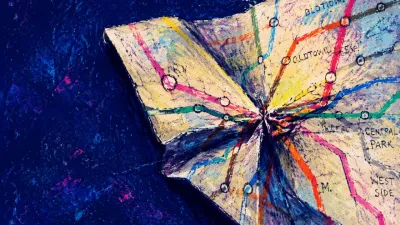
Belonging Drift — you notice it when you leave a room full of people who were kind, funny, and technically welcoming, and still feel the strange emptiness of walking home as if you were never fully there. Your phone has messages, your calendar has plans, your name exists in group chats, and yet none of it settles into the quiet bodily sense of, these are my people. You can laugh at the right moment, remember everyone's coffee order, show up to birthdays, comment on posts, join the new server, take the invite, sit on the couch while the movie starts, and still feel like you are hovering just above the floor of the room. It is not the absence of contact; it is the absence of landing. You keep collecting almost-belongings: the friend group where you are liked but not looked for, the workplace circle where you are useful but not known, the online community that matches your interests but not your pace, the old friends who still love the version of you they met years ago. Each place catches a piece of you and leaves another piece outside, so you keep adjusting your tone, your references, your availability, your volume, trying to find the exact shape that will make the door stay open. Your body starts to know the pattern before your mind names it: the small tightness in your throat before you speak, the quick scan of who is already paired off, the way your shoulders drop only after you get home, when no one is watching you try to belong. The cost is quiet but deep — you can begin to mistake movement for connection, invitations for anchoring, being included for being held, until your social life looks active from the outside while your inner map has no home pin. And somewhere inside that drift, you may feel like the traveler on The Fool, carrying a small bundle under a wide sky, with no visible home behind you and no certain road ahead, standing at the edge of possibility without yet finding ground where your body can stay.

What's pulling at you?

You're not drifting because you have no people at all — you're drifting because contact and belonging are not landing in the same place. You're caught between the need to stay open to new circles and the need for a social ground that feels steady enough to stop performing, scanning, or adapting. The hard part is that every place gives you a little recognition, but not enough to let your whole self arrive.

How It Shows Up?

  • You come home after a night that looked good from the outside — drinks, photos, inside jokes you mostly understood — and you sit on the edge of your bed without taking your shoes off. Your face still holds the shape of smiling, but your chest feels oddly flat, like the room has gone quiet faster than your body can follow. You replay the small moments where you almost felt included, then the half-second gaps where the conversation moved without you, and the whole night starts to feel like standing near a warm window rather than being inside the room. You can let the evening be mixed without forcing it into proof that you belong or proof that you don't.
  • You open the group chat and see thirty messages from people making plans, sending memes, using a tone that sounds effortless to everyone else. Your thumb hovers over the keyboard, your shoulders lift toward your ears, and your throat tightens around the thought of adding something that lands slightly wrong. You type a reply, delete it, react with an emoji instead, and feel the small ache of being present without feeling placed, like the figure in The Four of Cups sitting under the tree while everything available stays just outside reach. It's okay for participation to be small when your body is still checking whether the room can hold you.
  • At work, class, or a shared studio table, you know everyone's names and everyone knows yours, but the connection stays practical — schedules, tasks, quick jokes, weekend updates. You nod at the right time, answer Slack or Teams messages quickly, and keep your tone easy, while a tight band forms across your ribs because none of it tells you where you stand. When someone says, 'We should all hang out sometime,' you smile before you can tell whether they mean it, and the sentence floats there without becoming a place. You don't have to convert every friendly signal into certainty before it has weight.
  • You scroll through feeds, Discord servers, local event pages, mutuals' posts, and niche communities that should make sense for you on paper. Your eyes feel dry, your neck gets stiff, and your stomach drops a little each time a scene looks like it has its own language, its own rhythm, its own proof that people already know how to be there. The screen becomes a wide horizon full of possible places, but your body stays at the edge, watching like the figure in the Two of Wands with the world visible and no obvious crossing point. You can notice the distance without treating it as a final answer.
  • Your body starts giving you the same signal in different rooms: a shallow breath before you enter, a clenched jaw during small talk, a tired heaviness after you leave. Even when nothing bad happens, your nervous system seems to keep asking where the floor is, whether you are a guest, a regular, an extra, or someone people would miss if you stopped showing up. The feeling can follow you from a birthday dinner to a coworking space to a friend's couch, not loud enough to explain, but steady enough to shape how much of yourself you bring. It's enough to register the pattern gently before deciding what it means.

Belonging Drift in Tarot Cards

Belonging Drift lives in the gap between having social access and feeling socially located, where you can move through circles without finding a place that receives your full weight. You may feel it as a tight throat over an unsent message, a shallow breath before entering a room, or the flat quiet after a night that looked fine from the outside. From an existential perspective, the structural framework here is about contact without anchoring: visibility, movement, and proximity without a stable social floor. The Tarot Cards below give that outline a visible form.

The Fool Upright
The Fool appears as a traveler with a small bundle, no visible home behind, and no certain road ahead. The mountains, sun, sky, and cliff create a world full of possible directions without offering a place where the body can settle. Across friend groups, communities, and loose networks, that picture becomes the experience of moving through many circles without finding one that returns enough recognition to feel inhabitable. You can keep meeting people, showing up, and staying open while still lacking a social ground that holds you. Belonging Drift names the difference between social movement and social anchoring. The card gives the drift a shape: the issue is not absence of contact, but the absence of a place where contact becomes a stable sense of being with your people.
The Hermit Reversed
The Hermit stands above the shared terrain on a snow peak, using a private lantern as the point of orientation. The surrounding landscape is open but empty, and the height that gives perspective also removes the figure from ordinary warmth. In friendship, that geometry names the drift that can happen after You change, grow, or see a group dynamic from a new altitude. The old bond may not be false, but the shared coordinates no longer line up, leaving You suspended between loyalty to the friendship and fidelity to the person You are becoming.
Wheel of Fortune Upright
The card is spacious but strangely uninhabitable: clouds, corners, a suspended wheel, and figures positioned around the mechanism without any ground to stand on. The scene offers movement and visibility, but not a landing place. Belonging Drift appears in that exact geometry. You may pass through friend groups, work-adjacent networks, interest communities, and online circles, yet none of them becomes a stable social floor where your presence is held consistently. The wheel gives this struggle a shape rather than reducing it to loneliness. It shows the difference between being in circulation and being located, between having access to social space and feeling that the space can actually receive you.
The Hanged Man Reversed
The white, horizonless background gives the suspended body no social weather, no floor, and no clear direction. The figure is attached, but attachment is not the same as landing. In your wider social ecology, this becomes the experience of moving between circles without finding coordinates that hold. The card does not frame the drift as a personal failure to fit in; it shows a body connected to something, yet still unable to locate a shared ground.
The Star Reversed
The large star and seven smaller stars form a navigational sky, while the pool below holds a softer, unstable reflection of that light. The figure is placed between the overhead map and the waterline, close to guidance but not inside a visible community. In social life, that creates the feeling of moving through circles that look meaningful from a distance but fail to become a place to land. You may keep sensing possible belonging in different groups, scenes, or communities, yet the internal compass never settles into a clear social home.
The World Reversed
The dancer floats without ground, and the wreath becomes the main coordinate system for the entire image. When that structure turns inward, the frame itself starts replacing the world, so orientation depends on whatever circle happens to surround the body. In social life, this is the drift of moving from one group to another without finding a place that becomes stable enough to stand on. Each circle may offer temporary language, plans, identity, or attention, but none gives the deeper sense of being socially located. You are not simply between plans or between friends. The card names a groundless belonging pattern, where the self keeps adapting to available frames while quietly losing the feeling of having its own social ground.
Four of Cups Upright
The youth sits under a rooted tree, while the cups are arranged just outside the closed circuit of his body and the fourth cup arrives from a cloud. The image splits belonging across several locations: ground, shade, body, and air, with no single place becoming a lived point of contact. In your social ecosystem, that split can feel like moving through groups that are technically available but never quite become a place. You may have people around, messages to answer, and rooms you can enter, yet the card shows how proximity can fail to become placement when the inner map has lost its anchor. Belonging Drift names the slow slide between circles, scenes, and networks without a felt sense of landing. The tree suggests stability, but the figure's closed posture and divided cups show that stability is not the same as belonging.
Five of Cups Reversed
The castle and bridge hold a stable geometry in the distance, but the foreground stance compresses the usable world to the near bank, the black cloak, and the fallen cups. The broader landscape is present without becoming a place the body can inhabit. In social networks, that reversed structure feels like moving through meetups, chats, and friend groups without finding an anchoring point. The card locates the drift in a collapsed social reference frame: there are places to cross toward, but none of them yet feel like a believable home for your attention.
Eight of Cups Upright
The figure walks between the cup structure and the dark mountain path, with water, dusk, and the eclipsed moon removing any clean visual guarantee of arrival. The old social architecture is behind the body, while the next belonging is still only terrain. For social belonging, this creates a suspended zone after exit but before replacement. You are not failing to belong; the card names the in-between geography where leaving the wrong circle has happened faster than finding a circle that can actually hold you.
King of Cups Upright
The sea is full of signs of life: a dolphin breaks the surface, a boat moves through the waves, and the king carries emblems of feeling on his body and in his hands. Yet he remains seated in the center, connected to the whole scene without clearly traveling toward any one part of it. That arrangement gives Belonging Drift its shape. In social life, you can be near people, responsive to them, even valued by them, while still lacking a grounded sense of where you actually belong. The card does not show isolation in an empty space; it shows connection dispersed across too many distances. You may be surrounded by circles, signals, chats, and invitations, but the inner experience stays unanchored when none of those currents become a shore.
Ace of Pentacles Reversed
The card holds two planes at once: the bright pentacle in the sky and the cultivated estate on the ground. When reversed, those planes stop cooperating and become separate coordinates for value, access, and direction. This is the social drift of moving near promising circles without finding a place that becomes internally steady. The garden can look alive, the route can look available, and the offer can look real, yet after each interaction the sense of where you belong slips back out of focus. The Ace of Pentacles gives that drift a physical boundary. It shows belonging as something that must land, not just appear, and it marks the cost of social scenes that remain visually fertile while never becoming a grounded home base.
Five of Pentacles Upright
The two figures travel together through the snow, yet the card does not show them resting, embracing, or entering shelter. Companionship is present, but containment is missing; the shared path reduces total isolation without changing the condition of exposure. In social life, this is the difference between having people around and having a place that can actually hold you. You may be in circles, attend plans, exchange messages, and share the same struggle with others, while still leaving every interaction without warmth that stays. Belonging Drift names that unstable movement around community without a felt landing point. The Five of Pentacles gives the drift a physical shape: bodies in motion beside shelter, connected by hardship, but not yet received by a social structure that restores them.
Knight of Pentacles Reversed
The knight can see the open field and distant horizon, but no road, gate, or shared gathering point appears in front of the horse. The landscape is available to the eye before it becomes available to the body. In social life, that geometry names the drift of being near many possible circles without feeling located inside any of them. You can observe communities, understand their codes, and imagine entering, yet no place becomes stable enough to receive your weight. The stationary horse gives the struggle its boundary. The issue is not that connection does not exist; it is that the field of possible belonging lacks a coordinate where your next step feels real, mutual, and inhabited.
Four of Swords Upright
The stained-glass window carries color, figures, and devotional contact, while the knight below remains almost the same color as the slab. The card places a living image of connection in the same room as a body that cannot physically participate in it. That distance gives Belonging Drift its shape. You may see the group chat, the event, the circle, or the network as something warm and meaningful, but your body stays outside the exchange, watching belonging as an image rather than inhabiting it as a place. The struggle is not simple loneliness; it is the slow displacement that happens when social connection remains visible but does not become reachable. The card names the gap between witnessing community and feeling structurally included in it.
Six of Swords Upright
A small boat carries the cloaked passengers away from one bank while the far shore remains pale and unfinished in the distance. Their backs are turned, their faces are hidden, and the six swords travel with them, so the scene holds movement without a completed social landing. In a social ecology, that image becomes the feel of drifting between circles: You may have already outgrown one group, but the next form of belonging has not become embodied enough to trust. The card does not frame this as simple loneliness; it shows a passage where belonging is in transit, and the self has not yet found a stable shoreline.
Eight of Swords Upright
One foot stands in mud while the other touches pooled water, so the body is split between ground that cannot fully stabilize and water that cannot fully hold weight. Behind her, the castle sits at a distance on higher terrain, offering a reference point that is visible but not immediately reachable. Belonging Drift in social life has this same half-placed quality. You may be partly inside several circles, partly outside all of them, and unable to tell whether the next honest move is deeper participation, quieter distance, or a different network altogether. The card's terrain matters because the uncertainty is not only emotional; it is positional. You are not simply looking for more people. You are trying to recover a reliable social ground where your energy, identity, and sense of place can meet without splitting your weight between incompatible surfaces.
Nine of Swords Upright
The quilt beneath the figure is filled with repeated signs, partial symbols, and no complete organizing map. It should be a pattern that holds the body, but visually it behaves like a broken social code: many signs of identity are present, yet none of them resolve into a stable place to belong. Belonging Drift emerges when the social world offers fragments of recognition without a coherent home. You may move between friend groups, online communities, hobby circles, work-adjacent networks, or identity-coded spaces and still feel that each one only catches part of you. The card's dark background matters because there is no larger horizon behind the pattern. When no stable social coordinate appears, belonging becomes a search through repeating symbols rather than a lived sense of landing.
Three of Wands Reversed
The horizon remains active while the figure's body stays fixed at the edge. In the reversed texture, the wide sea no longer feels like usable openness; it becomes a surface to watch, compare against, and measure distance from. Belonging Drift appears when the social world is visible but never quite inhabitable. You may keep scanning for your people, moving between circles or feeds, while every possible harbor stays just far enough away to make belonging feel temporary, deferred, or unreal.

Belonging Drift in Tarot Card Reading Insights

When Belonging Drift shows up, it often sounds like having people around while still feeling unplaced, half-in and half-out of every circle. Others have brought that same unsettled social ground into readings, moving from the cards into the question of where they can feel received. Tarot Reading Insights from related sessions.

Psychological struggles related to Belonging Drift