The 11:34 p.m. Group Chat Spiral
If you’re a late-20s London office person who can survive client chaos all day but feels your chest drop the second the group chat says “summer is booked,” this is probably your version of timeline panic.
Taylor sat across from me with the kind of tired posture I see a lot in people who look functional from the outside and quietly overclocked within. She told me about the Tuesday night that tipped her over: 11:34 p.m. in her small Zone 2 flat, her laptop still throwing off that dull blue agency-work glow, a half-folded pile of laundry caving over a chair, the radiator clicking, her phone warm in her hand as WhatsApp filled with flight screenshots and hotel links.
“I know a trip is just a trip,” she said, looking down at the table, “so why does it feel like evidence?”
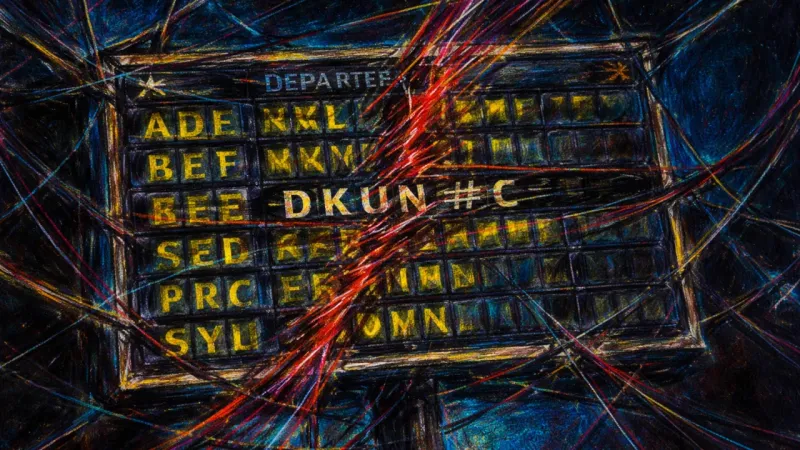
I could hear the whole mechanism in that one sentence. She didn’t answer the chat. She went from WhatsApp to Monzo to LinkedIn to old Notes app screenshots, trying to calculate money, annual leave, career progress, and whether she had somehow mishandled her twenties. The feeling in her body, as she described it, was not vague nerves. It was a tight chest, a dropped stomach, and that electrically restless late-night energy that feels like trying to fall asleep while your mind keeps opening fresh tabs by itself. Anxiety, in moments like this, is less like a mood and more like standing under an airport departures board while every gate number starts flashing as if you’ve personally missed them all.
What she wanted was simple and human: to trust her own timeline. What she feared was crueler and more public-feeling: that her friends booking summer trips meant she was visibly behind in money, freedom, adulthood, maybe even worth.
I leaned in a little and said, as gently and plainly as I could, “A booking confirmation is not a verdict.” Her eyes lifted. “You’re not broken for getting triggered by this. You’re reacting to pressure, comparison, and a story your nervous system has learned to tell very fast. Let’s not shame the spiral. Let’s map it. Our job today is to turn this fog into something you can actually see — and once you can see it, you get your power back.”
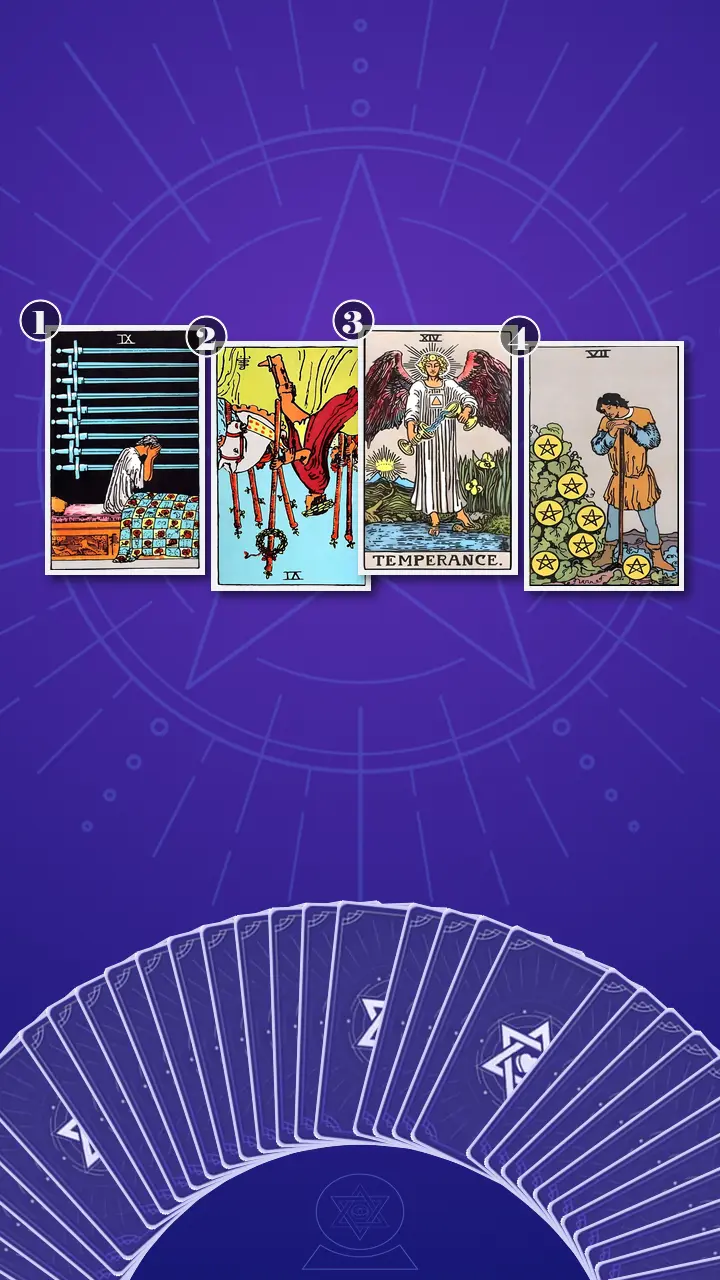
Choosing the Compass: A Spread for Feeling Behind When Friends Travel
I asked Taylor to place both feet on the floor and take one slow breath with an exhale longer than the inhale. Then I shuffled slowly and had her hold the question in its real form, not the polished one: Why do I spiral when friends book summer trips?
For this reading, I chose a Situation-Challenge-Advice-Outcome spread. When people ask me how tarot works for timeline panic and comparison anxiety, this is one of the cleanest answers I know: the cards do not invent meaning out of thin air. They give a chaotic inner experience structure. This issue didn’t need a dramatic ten-card maze. It needed four honest layers: the visible trigger, the hidden wound beneath it, the healing principle, and the grounded direction of growth.
I told her exactly what I’d be looking for. The first position would show the surface symptom — what happens in the first minute after the trigger lands. The second would reveal the underlying mechanism — the worth wound that turns other people’s plans into a referendum on timing. The third, and most important in this case, would point to the inner recalibration that replaces urgency with self-trusting pace. The fourth would show what integration looks like in real life: not a perfect new identity, but a saner way to measure progress.
She nodded once. The room had gone quieter by then; even the city noise outside the window felt farther away. That is often the moment I know the reading is ready to begin — not because anything mystical has taken over, but because someone has stopped fighting their own question long enough to hear it clearly.
The Tabs Above Her Head
Position 1: The Midnight Tribunal
I turned over the first card and said, “Now we’re looking at the position that presents the surface symptom from the diagnosis: the specific comparison spiral that starts when friends book summer trips.”
Nine of Swords, upright.
I told her this was exactly the card I would expect when a normal social update mutates into a midnight emergency. In modern life, it looks like 11:37 p.m., the laptop still warm from agency work, three flight screenshots landing in WhatsApp, and before you’ve answered, you’re already in Monzo, annual leave settings, LinkedIn jobs, and old Notes screenshots trying to find the one number that proves your twenties are not going off the rails. The suspended swords in the card become the stack of tabs, what-if scripts, and self-accusations hanging over any chance of rest.
This is excess Air. Too much thought, too fast, with no grounding signal coming back from the body. It was just a message, but your mind promotes it into evidence. The first minute matters here, because the script usually arrives before logic does: Everyone else is moving. Why am I not there yet? Why does this look so easy for them? Why am I opening nineteen tabs at 11:40 p.m. like one reply requires a forensic investigation of my life?
Taylor let out a short laugh, the kind that has a bruise under it. “That’s so accurate it’s actually a bit rude.” Her fingers, which had been picking at the sleeve of her jumper, went still.
I smiled. “Good. Not because I want to expose you, but because once a spiral has a shape, it stops being some all-powerful fog. We can work with a shape.”
Position 2: The Leaderboard You Never Agreed to Join
I turned over the second card. “This position reveals the underlying mechanism: the self-worth wound and need for visible validation that turn other people’s plans into a referendum on timing.”
Six of Wands, reversed.
“This,” I said, “is where the pain gets more honest.” A friend says the summer trip is booked, and suddenly the chat becomes a ranking system: who has more savings, more spontaneity, more romance, more momentum, more adult-looking ease. The rider elevated above the crowd in this card mirrors the way visible milestones get promoted to proof status in your mind, while quieter progress gets pushed out of frame. It’s like LinkedIn energy leaking into your friendships. A rooftop photo, an airport check-in, a holiday poll — all of it starts reading like live leaderboard data instead of random snapshots.
The energy here is blocked Fire. Not a lack of desire, but a lack of secure self-generated validation. The part of you that should know your worth from the inside is outsourcing the verdict to what looks publicly legible. And once that happens, leaderboard logic makes private growth look fake.
Her jaw tightened visibly. She looked away from the cards and toward the rain-blurred window. “So if I were really doing okay,” she said quietly, “this wouldn’t hit me like that.”
“No,” I said. “It means the hit is exposing the wound, not defining the truth. There’s a difference.”
At that point I used a lens from my own practice that I call Systemic Friction Auditing. I told her I wanted to separate what was hers from what the environment had been feeding her. London rent pressure, social media, visible travel culture, career timelines, those TikTok collisions of soft life fantasy and actual bank balance — all of that creates real friction. Hustle culture loves the fantasy that if you compare hard enough, optimize hard enough, or push hard enough, you can override every low tide and every structural pause. But some resistance is not a personal failure. Some of it is simply the strain of trying to make a human life look legible on demand.
Taylor took one slow inhale, then another. I watched the meaning reach her in layers: first the freeze, then the distant look as if replaying half a dozen old group chats, then the tiny exhale of recognition. “That feels horrible,” she said, “but also… true.”
When Temperance Poured Between Two Cups
Position 3: The Pace Her Nervous System Could Actually Keep
When I reached for the third card, the room changed. The radiator had stopped clicking. The rain against the window had softened to almost nothing. Those little shifts matter to me; sometimes the environment seems to conspire with the card, as if the world itself wants less noise around the truth.
I turned the card over and said, “This position identifies the key transformation: the inner recalibration that replaces urgency and comparison with self-trusting pacing.”
Temperance, upright.
I felt my whole attention sharpen. Whenever I see Temperance in a reading about self-worth and timing, I do not think first of mysticism. I think of orbital mechanics. Planets do not apologize for needing time to complete their arc, and low tide does not mean the sea has failed. This is where I naturally use what I call Macro-Cycle Phase Identification: I look for the season someone is actually in, rather than the season they think they should be performing. Taylor was not in a failure phase. She was in a recalibration phase — mentally stretched, financially aware, quietly building capacity, and then punishing herself because her life did not currently resemble someone else’s highlight-summer orbit.
Temperance in modern life looks like this: instead of panic-booking or panic-researching, Taylor pauses long enough to send one honest message — “I need to check dates properly, but I’d love to if it works.” Then she opens one note with two headings: what I want this summer, and what can wait. The shift is not less desire. It is less self-betrayal.
The energy here is balance. Not numbness. Not passivity. Balance. Water and fire mixed correctly, facts and feelings held at the same table. One foot on land, one in water. This card does not ask her to stop wanting things. It asks her to stop turning every visible milestone into an emergency.
I let her sit inside the setup for a second. “Picture it,” I said. “It’s 11:34 p.m., the laundry is still on the chair, three flight screenshots just landed in the chat, and you are already in your banking app, LinkedIn, and old notes like one reply somehow requires a full audit of your twenties.”
You do not need to race someone else’s summer; pour your energy between the two cups of what matters now and what can wait, and let your own rhythm become the path.
I left a beat of silence after that. Then I added, more softly, “Your panic is not proof that you’re behind. It’s what happens when someone else’s visible timing gets mistaken for the measure of your worth. And your nervous system cannot build a life while it’s busy scoring one.”
Her reaction came exactly the way real insight often does — not as instant serenity, but as a chain. First, a physical freeze: her breathing paused, and her thumb hovered against the edge of her phone as if she had been caught mid-scroll in memory. Then cognitive penetration: her eyes lost focus, not empty, but replaying something. “Last Tuesday,” she said. “I literally could have just said I’d check tomorrow.” Then came the emotional release, messy and layered. She swallowed hard, her shoulders dropped a full inch, and there was a flash of anger in her face before the softness arrived. “But does that mean I’ve been doing this wrong the whole time?”
I answered her immediately. “No. It means you’ve been using the ruler that was nearest to hand. Public timing. Visible proof. External legibility. We’re not condemning the old strategy; we’re retiring it because it doesn’t tell the truth.”
Her eyes shone then, but she smiled too — not because it was easy, but because it finally made sense. I invited her one step further. “Now, with this new perspective, think back to last week. Was there a moment this would have changed how you felt?”
She nodded. “If I’d had this,” she said, “I wouldn’t have turned one message into a whole court case.”
That was the crossing point. Not from confusion to perfection, but from leaderboard-driven worth auditing to grounded self-trust and garden-logic progress. It is a quieter kind of breakthrough, and in my experience, much more durable.
Position 4: What Quietly Compounds
I turned over the fourth card. “This position translates the transformation into integration: a grounded way to measure progress through steady cultivation rather than social comparison.”
Seven of Pentacles, upright.
I smiled when I saw it, because the reading had landed exactly where it needed to. After the ceiling-pressure of Nine of Swords and the public stage of the reversed Six of Wands, this card brings the eye down to soil. In modern terms, it looks like Sunday morning instead of midnight panic: Taylor looking at what has actually compounded this year — a small savings buffer, stronger client handling, one boundary finally kept, the fact that she recovers from hard weeks faster than she used to — instead of measuring herself against beach photos and airport Stories.
This is balanced Earth. No drama, no spectacle, just evidence. The pentacles growing on the vine are the non-photogenic gains that only register when you stop asking what looks impressive and start asking what is genuinely taking root. This is the movement from Six to Seven that I love so much in readings like this: from public recognition to private cultivation, from scoreboard logic to garden logic.
“Not everything real in your life is photogenic,” I told her.
She leaned back for the first time since we’d begun. The tension in her mouth softened. “That one hurts less,” she said, “but maybe because I know it’s true.”
“Exactly,” I said. “This outcome doesn’t promise that you’ll never get triggered again. It shows something better: a healthier metric. Progress measured by what is growing, not by who posted first.”
From Leaderboard Logic to Garden Logic
When I pulled the whole spread together for her, the story was clear. A simple social trigger hits the Nine of Swords and turns into a late-night life audit. Underneath that, the reversed Six of Wands shows the real wound: visible milestones have been standing in for worth, so other people’s plans start feeling like proof against her. Temperance interrupts the spiral by bringing regulation before analysis, asking her to separate what matters now from what can wait and to trust the phase she is actually in. Then the Seven of Pentacles grounds everything in a saner measure of progress: what is quietly, steadily growing in her real life.
I named the blind spot directly. “You’ve been mistaking visibility for value,” I said. “And you’ve been mistaking urgency for usefulness. That’s why more tabs feel productive even when they leave you less clear.”
Then I named the transformation direction just as clearly. “Your next step is not to become the kind of person who never gets triggered. It’s to stop auditing your worth against other people’s visible milestones and choose one personal measure of progress you can tend this week. You do not need a better panic. You need a gentler metric.”
Because cycles are a big part of how I work, I gave her a practical version of my Orbital Sync Protocol — a 72-hour reset designed to stop forced action and bring her expectations back into sync with her actual reality.
- Reply-Before-Audit Rule For the next 72 hours, whenever a trip screenshot lands in WhatsApp, put both feet on the floor, take one slow breath with a longer exhale, and send a simple holding reply within two minutes: “Looks fun — let me check dates properly tomorrow.” Do this before opening Monzo, LinkedIn, Notes, Hinge, or your calendar. If three breaths feels ridiculous or impossible, do one breath and put the phone face down for 60 seconds. This is not avoidance; it is regulation before analysis.
- One-Metric Week Choose one personal measure of progress for the next seven days — sleep before midnight, move £50 into savings, finish one portfolio slide, keep one low-cost plan with a friend, or send one honest message you’ve been avoiding. Pin that single measure in Notes, Notion, or on your lock screen and ask, when triggered, “Does this affect my one measure this week?” Pick one measure only. The moment you choose five, you rebuild the same pressure in prettier packaging.
- Quiet Growth Review On Sunday morning, make a note called “Quiet Growth.” List three things that have genuinely strengthened in the last year across money, work, boundaries, rest, friendship, or self-respect. Star one item that would never show up in an Instagram caption, then choose one 10-minute tending action linked to it. Treat this like data collection, not forced positivity. You are not trying to impress yourself. You are correcting the metric.

A Week Later, the Gate Was Still There — She Just Wasn’t Running
A week later, Taylor sent me a message from a café after work. She had used the holding reply, skipped the midnight Monzo-LinkedIn-Notes loop, and moved £50 into savings instead of into a panic purchase. She told me she’d slept properly — though the first thought on waking was still, “What if I’m behind?” This time, she laughed, made tea, and left the banking app closed.
That, to me, is what a real Journey to Clarity looks like. Not instant certainty. Not a magically fixed life. Just ownership returning to the person it belongs to. The cards did not decide her pace for her; they helped her see that her pace was never meant to be decided by the loudest boarding call in the room.
Sometimes the hardest part is not the trip at all — it’s that chest-tightening second when everyone else’s booking starts to feel like public proof that your life is still waiting at the gate.
If that moment lives in you too, and you stopped reading someone else’s boarding call as a verdict on your pace, what one quiet thing in your own life would you want to tend this week?
This story is adapted from psychological research, written so that those in a similar struggle can see their own pattern in it — and find their next step clearly.These insights are not a substitute for professional psychological, medical, legal, or financial advice.
Learn more about our Journey to Clarity.
How did this insight land for you?
🫂 This Resonates Deeply
🌀 Living This Story
✨ Now I See Clearly
🌱 Seeing New Possibilities
🧰 Useful Framework
🔮 The Confirmation I Needed
💪 Feeling Empowered
🚀 Ready for My Next Step
Author Profile
 AI
AI“After a decade of guiding people through the stars, I’ve come to see life much like the orbits of planets: everything has its inevitable cycles. When you feel lost, please don't blame yourself; you might just be in a natural low tide. I’m here to sit under the night sky with you, offering a gentle cosmic perspective to distinguish temporary pain from the beautiful breakthroughs just around the corner.”
In this Timing Tarot Reading :
Core Expertise
- Macro-Cycle Phase Identification: Objectively locating your current position within inevitable long-term cycles to explain current resistance.
- Systemic Friction Auditing: Stripping away the illusion that 'hustle' can override a cyclical low tide or structural pause.
Service Features
- The Orbital Sync Protocol: A 72-hour exercise to intentionally pause forced actions, aligning your psychological expectations with your actual cyclical reality.
Also specializes in :
Explore Related Patterns:
Comparison TrapTaylor sees a friend say summer is booked, and the chat starts reading like a ranking system: who has savings, spontaneity, romance, momentum, and adult-looking ease. The trip is no longer just a plan; it becomes a public comparison surface where someone else's visible freedom seems to measure her own pace. Comparison Trap fits because the mind is using peer snapshots as if they were clean data. Airport check-ins, rooftop photos, and holiday polls become leaderboard signals, while non-photogenic progress drops out of frame. You get caught not because you actually chose that scoreboard, but because the social field keeps presenting it as if it were objective proof.
Anxiety SpiralTaylor's 11:34 p.m. WhatsApp moment starts with travel screenshots, but the next move is not a simple reply; you watch the phone trigger a full circuit through Monzo, LinkedIn, annual leave, and old Notes screenshots. That chain matters because the body reacts as if a social update has become an emergency, while the mind tries to outrun the sensation by opening more evidence tabs. Anxiety Spiral fits here because the trigger does not stay in one lane. Money, career progress, adulthood, rest, and self-worth all get pulled into the same threat scan, so analysis becomes acceleration instead of clarity. You are not just thinking about a trip; you are watching a nervous system convert uncertainty into a fast, looping audit that feels useful while it keeps raising the alarm.
Certainty SeekingTaylor does not answer the chat; she starts looking for a number or data point that can make the feeling stop. Monzo, LinkedIn, annual leave, and old Notes become a makeshift evidence room, as if the right calculation could prove her twenties are not going off the rails. Certainty Seeking fits because the mind is trying to solve an emotional threat with informational control. The more tabs open, the more the system promises relief just one check away, but the checks keep expanding the question instead of closing it. You are watching a defensive search for certainty that temporarily feels rational while quietly feeding the loop.
Conditional Self-WorthTaylor's question about why a trip feels like evidence is the hinge: a booking confirmation starts to feel like a verdict on money, freedom, adulthood, and worth. The painful part is not the trip itself; it is the way visible timing gets treated as proof of whether she is doing life correctly. Conditional Self-Worth fits because the internal measure of value is being outsourced to what looks publicly legible. When friends appear mobile, relaxed, and booked, the mind reads that as evidence against the self, even though the actual facts are only screenshots and plans. You are seeing a worth system that has become contingent on visible milestones rather than grounded in private growth.
Social Clock ComplianceTaylor's late-night calculation is explicitly age-coded: money, annual leave, career progress, and whether she has mishandled her twenties all collapse into one question of being behind. A summer trip becomes a timing test, as if friends booking travel proves they are on schedule and she is not. Social Clock Compliance fits because the pressure comes from an imagined public timetable, not from the practical decision about one holiday. London rent, career timelines, travel culture, and soft-life imagery create a background script about what late twenties should look like. You spiral when that script starts sounding louder than your actual season.
Timing DiscernmentTaylor's turning point is the line between what matters now and what can wait. Instead of racing someone else's summer, she practices checking dates tomorrow, naming what she actually wants this summer, and recognizing the phase she is in rather than the phase she feels pressured to perform. Timing Discernment fits because the healthier move is not withdrawal from life; it is pacing with reality. Friends can have their bookings, and you can have your own sequence of capacity, money, rest, and desire. The pattern restores a boundary between public timing and personal timing, which is exactly where the spiral had been leaking power.
Urgency BiasThe trigger lands at 11:34 p.m., a time when nothing needs to be solved, yet the body and mind treat the group chat like a deadline. Taylor moves as if one message requires an immediate audit of money, career, leave, identity, and future options. Urgency Bias fits because the feeling of pressure is being mistaken for evidence that action must happen now. The reading's shift toward a holding reply matters for exactly that reason: it separates urgency from usefulness. You do not need to deny the trigger; you need enough pause to see that a fast reaction is not automatically a true one.
Values-Based Decision MakingTaylor's one-metric week changes the unit of measurement: instead of asking whether her life looks impressive compared with beach photos, she chooses one personal measure she can tend. Sleep, savings, a portfolio slide, a low-cost plan, or an honest message become more useful than another round of scoreboard scanning. Values-Based Decision Making fits because the new metric is chosen from inside the life she is actually living. The Sunday Quiet Growth review also shifts attention toward what has strengthened without needing to be photogenic. You are not replacing one performance standard with another; you are choosing a smaller, truer criterion for action.
Emotional RegulationTaylor's reset begins with the smallest physical intervention: feet on the floor, a slow breath, and a holding reply before opening Monzo, LinkedIn, Notes, Hinge, or the calendar. The order is important because the body gets a regulating signal before the mind is asked to interpret the trigger. Emotional Regulation fits because the change is not about suppressing desire or pretending the trip does not matter. It is about creating enough nervous-system space for choice to return. You can still care about money, friends, and summer plans, but you stop letting the first surge of alarm decide the whole sequence.
Explore Related Struggles:
Comparison EntrapmentThe flight screenshots and hotel links do not stay as plans. They turn the group chat into a scoreboard, and your mind starts sorting everybody by savings, spontaneity, and momentum. Once the chat becomes a ranking system, your own pace stops feeling neutral. You are not just seeing what friends are doing. You are comparing the visible parts of their summer to the invisible parts of your own life, and that comparison keeps the spiral alive.
Social Clock EntrapmentWhen a friend group says the summer is booked, the message stops being about travel and starts acting like a date stamp on your life. The trip itself is small; the timeline verdict is what hits. That is why you end up checking money, leave, and career progress in the same breath. The spiral is not about wanting one holiday. It is about the pressure of measuring your twenties against a schedule that feels public and hard to outrun.
Inner Tribunal LockOne message sends you from WhatsApp to Monzo to LinkedIn to old Notes screenshots, as if the right tab could deliver the verdict on your twenties. The body stays tight, but the mind keeps filing evidence. That is what makes the spiral feel so sticky. The question is no longer just whether you can join the trip. It becomes a private trial over money, leave, career, and worth, and trials like that do not end on their own.
Recognition-Progress SplitThe story keeps showing the same split: rooftop photos and airport check-ins on one side, and the quieter gains in your real life on the other. One is easy to post. The other is what actually compounds. That split matters because visible milestones keep being treated as proof while private growth gets ignored. The more you let public markers stand in for progress, the harder it becomes to recognize the work that is already taking root.
Explore Related Emotions:
Evidence AnxietyTaylor says, "I know a trip is just a trip, so why does it feel like evidence?" and then her hands start searching for proof across Monzo, LinkedIn, and old Notes screenshots. The story shows a mind trying to turn scattered life data into a defense case. You are not dealing with a single worry about travel. You are dealing with the fear that ordinary details are secretly test results, that savings, leave, jobs, photos, and replies can confirm whether your life is acceptable. Evidence Anxiety fits because the spiral depends on proof hunger. The more Taylor looks for a number that can acquit her, the more the original message feels like evidence against her, even though it was only a booking confirmation.
Status AnxietyThe group chat starts reading like a ranking system: who has more savings, more spontaneity, more romance, more momentum, more adult-looking ease. Taylor is not only reacting to flights and hotels; she is reacting to the social meaning those details seem to carry. You can feel how public visibility takes over private value. Rooftop photos, airport check-ins, holiday polls, and LinkedIn-style comparison turn friendship into a place where life appears to be scored. Status Anxiety fits because the wound is tied to standing, legibility, and visible proof. Taylor's private growth loses weight the moment a more photogenic version of adulthood appears in front of her.
Timeline PanicTaylor's chest drops when the group chat says "summer is booked," and the reaction spreads quickly from her phone into money, annual leave, career progress, and the fear that she mishandled her twenties. A trip stops being a trip when the body reads it as a deadline she has already missed. You are watching a neutral social update become a timeline alarm. The inner structure is not simply wanting a holiday; it is the sudden belief that other people's visible movement has exposed your own pace as late, inadequate, or publicly behind. Timeline Panic fits because the story is organized around that compressed second when friends' plans become a measure of adulthood. The panic is not random; it is a fast collision between comparison, public proof, and the wish to trust your own timing without needing the group chat to validate it.
Timeline ShameTaylor tries to calculate whether she has somehow mishandled her twenties, and the fear is not only that she lacks money or leave. It is that the gap between her life and her friends' plans might be visible. You are seeing shame attach itself to timing. The painful thought is not simply "I cannot go yet"; it is "If I were really doing okay, this would not hit me like this," which turns a logistical question into a judgment of the self. Timeline Shame fits because the story keeps returning to worth through the language of pace. The shame lives in feeling late to an adulthood everyone else seems to have made look effortless.
Verdict DreadThe line "A booking confirmation is not a verdict" lands because Taylor has been treating it like one. Her friends have booked a summer trip, but inside the spiral it reads as if a ruling has already been issued on her money, adulthood, freedom, and worth. You can hear the courtroom feeling in the way she asks whether she has mishandled her twenties. The mind is not just comparing; it is preparing to be found behind, exposed, and somehow guilty for not matching the visible pace around her. Verdict Dread fits because the fear has a finalizing quality. One message feels too powerful, as if it can decide what her whole timeline means, and the work of the story is to return that authority back to her own clearer measure.
Self-Audit AnxietyBefore Taylor answers the chat, she is already in Monzo, LinkedIn, and old Notes screenshots, looking for the one number or memory that can prove her twenties are not going off the rails. The phone becomes less like a communication tool and more like an inspection panel for her life. You are seeing analysis turn into self-surveillance. The practical questions, Can I afford this? Do I have leave? Do I want to go?, get swallowed by a harsher audit of whether she is progressing correctly enough to count. Self-Audit Anxiety fits because the distress does not stay with the trip. It becomes a forensic scan of the self, where every app promises clarity but mostly adds another tab to the case against her.
Grounded Self-TrustTaylor's shift begins with very small moves: both feet on the floor, one slower breath, one holding reply, one note with two headings. She does not need to solve her whole timeline before responding to the chat. You can see self-trust becoming physical before it becomes conceptual. Instead of letting public timing decide her pace, she creates a pause wide enough to ask what matters now and what can wait. Grounded Self-Trust fits because the story's healing direction is not grand certainty. It is the steadier ability to stay with her own measure of progress while other people's plans are still visible.
Group Chat AnxietyFlight screenshots and hotel links arrive in WhatsApp while Taylor sits in her small Zone 2 flat with the laptop still glowing and laundry half-folded over a chair. She does not answer, but she also does not step away; the chat stays open as the room gets smaller around it. You are seeing a social space become physically invasive. The group chat is technically casual, but in her body it behaves like an audience, a schedule, and a scoreboard arriving all at once, before she has had time to locate her own response. Group Chat Anxiety fits because the trigger is relational and immediate. The pressure is not just "summer trips" in the abstract; it is watching other people coordinate in real time while your private self starts scrambling to keep up.
Quiet Self-RespectTaylor is invited to look at what has actually compounded this year: a small savings buffer, stronger client handling, one boundary kept, and recovering from hard weeks faster than she used to. None of these gains need a beach photo to be real. You are seeing value move out of the public feed and back into lived evidence. The life that counts is not only the one that can be captioned; it is also the one being tended quietly, week by week. Quiet Self-Respect fits because the story ends by changing the metric. Taylor is not asked to perform progress more convincingly; she is asked to recognize the progress that has been growing without spectacle.
Clarity ReliefTaylor's fingers go still when the spiral is given a shape, and later her shoulders drop as she realizes she could have simply said she would check tomorrow. The relief is not because the situation has disappeared; it is because the mechanism is finally visible. You are watching fog turn into a map. Public timing, visible proof, and external legibility stop feeling like the whole truth once they can be named as a ruler she picked up under pressure. Clarity Relief fits because the story treats insight as a return of agency. When Taylor can see how the spiral works, she does not have to obey every thought that arrives with it.
Cognitive OverwhelmAt 11:34 p.m., Taylor's mind starts opening fresh tabs by itself: money, leave, career progress, old notes, possible proof, possible failure. The night becomes crowded before she has even typed a reply. You are seeing thought move faster than the body can metabolize. Each new tab looks like it might solve the feeling, but the pile-up creates more pressure, more self-accusation, and less rest. Cognitive Overwhelm fits because the spiral is not vague. It has a specific mental texture: too many categories activated at once, all demanding an answer from a tired person in a small room after work.
Explore Related Contexts:
External Scorecard PressureTaylor calls the trip 'evidence,' then starts searching for numbers and platforms that can tell her whether her life is on track. Monzo, LinkedIn, annual leave, old Notes, airport check-ins, and holiday polls all get pulled into one external measurement system. External Scorecard Pressure names the moment when visible proof replaces lived evidence. You have private growth, limits, money reality, work capacity, and timing that may be real but not instantly displayable. The pressure intensifies when only what can be posted, booked, or ranked appears to count, so the path back to clarity begins with changing the metric before you change the whole life.
Social Clock PressureTaylor goes from WhatsApp to Monzo, LinkedIn, annual leave settings, and old Notes because one group travel update has started acting like a timing audit. The question is not only whether she can go on a holiday; it is whether her late twenties are measuring up when other people seem to have money, freedom, and adult ease on display. That is the structure of Social Clock Pressure: peer milestones become a public clock, and the self is pushed into proving it is not late. You are not dealing with a simple trip decision here. You are dealing with a social timeline that turns ordinary plans into evidence, so reclaiming agency starts with separating your actual season from the schedule implied by the group chat.
Group Chat TribunalWhatsApp fills with flight screenshots and hotel links while Taylor stays silent, not because the message itself is complicated, but because the thread has become a public-feeling room. Every update seems to carry an implied comparison: who can afford it, who is free enough, who has the kind of life that can say yes without a full audit. Group Chat Tribunal captures the way a casual thread becomes a stage of evaluation. You are not only reading logistics; you are reading social position, belonging, and whether your life looks acceptable beside everyone else's plans. The work is to notice when the chat has turned from coordination into a courtroom, then give yourself permission to answer the actual invitation rather than the imagined verdict.
Cost-of-Living PressureLondon rent pressure, a small Zone 2 flat, an actual bank balance, and a group trip all sit in the same frame. Taylor is not comparing from an abstract place; she is comparing from inside a city where money, space, leave, and social life are constantly negotiating with each other. Cost-of-Living Pressure matters because it turns the trip into a material question before it becomes a symbolic one. You may be reading your hesitation as a personal timeline failure when part of the friction is economic reality. Naming that does not remove your choices, but it stops a structural squeeze from disguising itself as a character flaw.