Whose Life Are You Living?

Unpack inherited expectations, see related tarot cards, and browse reading insights around family roles, milestones, and choice.

Family Script Pressure

What is this situation?

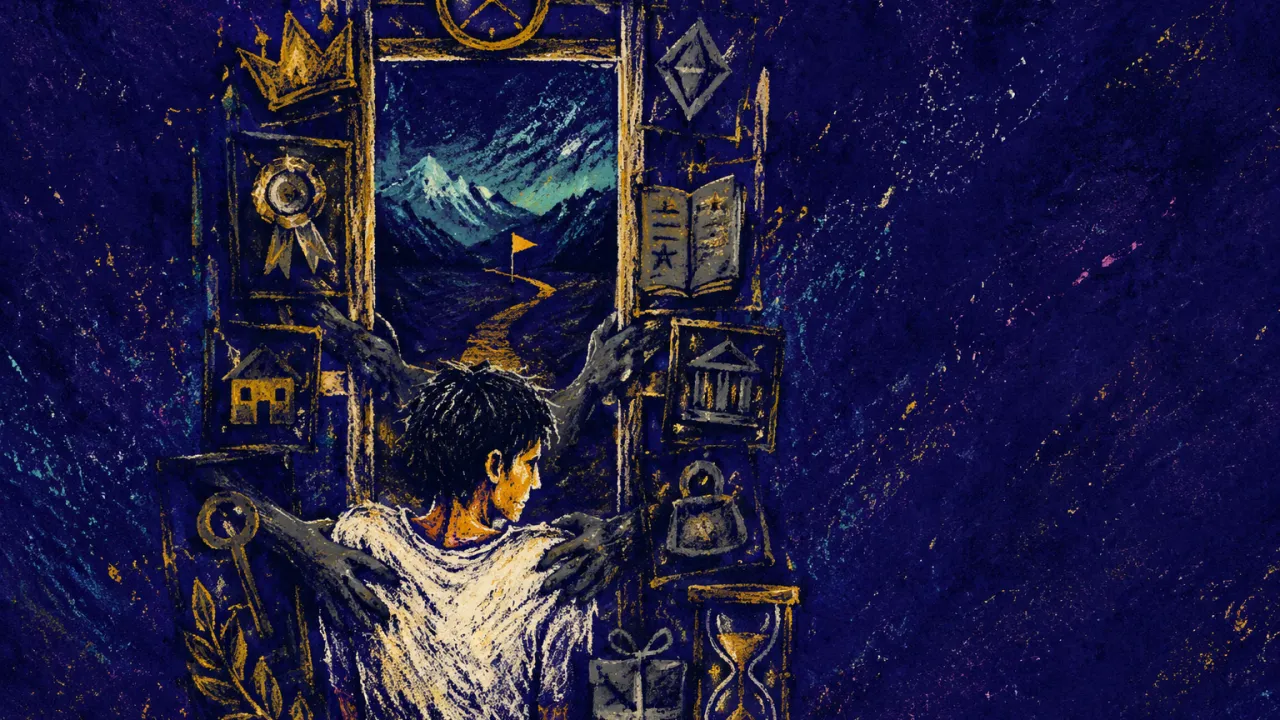
Family Script Pressure - it starts long before the argument, in the family group chat, at the dinner table, or on a call where a normal update about your life gets checked against the plan everyone assumes you should follow. You mention a job change, a partner, a city, a degree, a break, or a timeline that does not match the version of adulthood your relatives understand, and the room begins sorting it: Is it stable enough, serious enough, respectable enough, close enough, impressive enough? Someone compares you to a sibling or cousin, someone frames concern as practicality, someone turns tradition into a deadline, and suddenly your choice is no longer just yours. The power sits in who gets praised, who gets questioned, whose choices are repeated at holidays as examples, and whose life becomes a private topic after they leave the room. You learn to edit updates before sending them, to soften plans so they sound less disruptive, to brace your shoulders when a family notification lights up, to feel your jaw tighten before a call because even small news can become a vote on whether you are still playing the assigned part. The pressure may look loving from the outside: advice, worry, family values, common sense. But in practice it can make every move pass through an inherited review board before it is allowed to feel like yours, much like the figure on The Fool, stepping toward an open edge in a patterned tunic and cap feather, carrying signs from one map into a landscape those signs cannot fully explain.

Why it's not you?

The issue is not that you are ungrateful, difficult, or unable to decide; the issue is that the family script keeps treating its preferred route as the default measure of your adulthood. Comments, comparisons, approval, and quiet consequences are not neutral when they push you back into a preassigned role. That pressure has a shape outside you: a household pattern that rewards recognizable choices and treats difference as disruption.

Family Script Pressure in Tarot Cards

When Family Script Pressure turns dinners, calls, and milestones into checkpoints, the jaw-tightening before a family notification is part of the scene. This is an environmental and structural dynamic: approval, comparison, and consequence are built into how the household responds. The cards below do not tell you what to choose; they mirror the outer shape of inherited symbols, assigned roles, and approved routes. Here are the Tarot Cards that map this kind of family script pressure.

The Fool Reversed
The Fool's clothing is covered in inherited symbols, while the body moves toward an opening those symbols cannot fully explain. The crown, feather, and patterned tunic show a person carrying a coded story into a landscape that may not obey it. Family scripts work the same way when they define which career is respectable, which partner is acceptable, which age is correct, and which version of adulthood counts. The pressure comes from being dressed in an inherited map while standing at a life edge that requires your own coordinates.
The Magician Reversed
The infinity sign above the Magician's head and the closed-loop belt at the waist frame the body between repeated patterns and controlled presentation. The figure stands as if one role must organize the whole symbolic system around him. In family life, script pressure appears when relatives treat your role as already assigned: the achiever, the compliant child, the fixer, the one who stays close, the one who proves the family did well. The pressure is external because it arrives through expectations, comparisons, comments, and consequences that keep pulling you back into the same part. The Magician reversed connects this context to performance under inherited rules. You are not only choosing a behavior; you are being asked to keep a family story coherent, even when your adult life has moved beyond the role that story requires.
The High Priestess Reversed
The black and white pillars create a strict architecture around the High Priestess, and the curtain controls what may pass into the inner chamber. Her seated posture is formal and sanctioned, as if the role itself has rules before any movement begins. Family Script Pressure takes shape when the future is filtered through inherited definitions of what counts as stable, respectable, or allowed. You may be trying to choose a direction while an external script keeps sorting your options into acceptable and unacceptable before you can assess them for yourself. The High Priestess does not ask you to reject every structure around you. It shows the difference between a boundary that protects deeper truth and a gatekeeping system that prevents your own trajectory from being read on its own terms.
The Empress Reversed
The crown of twelve stars and the repeated Venus markings wrap the body in a complete symbolic system. Her robe, shield, throne, and garden all speak the same language of beauty, care, maturity, and acceptable social presentation. That visual density mirrors a family script that arrives before personal preference has room to speak. You may be assigned the good daughter, responsible son, future caretaker, respectable partner, or emotionally available one before you have chosen that role. Family Script Pressure fits because the reversed Empress shows nurture turning into a prewritten identity that the family expects you to wear convincingly.
The Emperor Upright
The repeated ram heads, square stone throne, vertical scepter, and mountain backdrop build a world where legitimacy comes from fixed order. The ruler is not improvising; he is embedded in a system that treats continuity as proof of authority. Inside a family, that becomes pressure to live inside an inherited script. You may be expected to choose the respectable career, acceptable partner, approved timeline, or familiar version of adulthood because the family system treats deviation as a threat to its own structure.
Reversed
The crown, inherited throne, and carved rams place the Emperor inside a lineage of authority before any personal preference appears. His body is not lounging; it is installed into a role that comes with rules, symbols, and expectations already attached. In a direction reading, this describes an external script that tries to define what a serious, acceptable life should look like. You are not just dealing with opinions; you are navigating a social structure that rewards compliance with recognition and treats deviation as a challenge to its control.
The Hierophant Upright
The repeated crosses, triple crown, ritual hand, and staff turn the scene into a curriculum. The followers are not just listening to one opinion; they are being inducted into a system of approved meanings. Inside a family, that becomes a script about what a good child, partner, student, worker, or relative is supposed to become. The pressure often arrives as tradition, common sense, sacrifice, or respectability, which makes the script harder to challenge because it is presented as the natural order. The card gives shape to the invisible syllabus. You can begin to see which parts of the family script are inherited guidance and which parts are keeping you from authoring a life that still belongs to you.
Reversed
The gray pillars, temple enclosure, and ceremonial hierarchy place the two lower figures inside a structure older and larger than themselves. The relationship-like pair in the foreground is not standing in open space; it is positioned under a system that already has rules, language, and approved pathways. Reversed, the Hierophant shows inherited expectations pressing into the couple's private decision-making. Marriage timelines, partner choice, cultural respectability, family reputation, and ideas about what love should prove can become louder than the actual evidence inside the relationship. The card does not ask you to reject every family value. It asks you to see which parts of the script are chosen, which parts are negotiated, and which parts are being treated as unquestionable even when they are shaping the relationship from the outside.
The Lovers Reversed
The winged figure hovers above the naked pair, and the trees behind them carry rules before either person acts. The body is exposed on a stage where approval, desire, and inherited instruction all press into the same decision. You may be trying to locate your own long-range direction while family or inherited expectations keep naming the acceptable version of your future. The Lovers separates alignment from obedience: the task is to see which voices are shaping the path before the choice is made.
The Chariot Reversed
The armor, belt signs, emblems, pillars, and city wall create a dense system of inherited symbols around the driver. His public posture is impressive, but it is also heavily coded by the order that produced him. In a family script, career, marriage, gender presentation, caregiving, or loyalty can be prewritten as if adulthood has only one acceptable shape. The Chariot exposes the script as a social mechanism, so the question becomes which symbols still protect you and which ones only keep you legible to the family.
Wheel of Fortune Upright
The central wheel is wrapped in letters, symbols, and open books, as if movement must pass through a prewritten code before it becomes legitimate. The four corner figures keep reading from their fixed stations, turning the image into a system where records and rules outlast any single moment. In a family setting, that visual structure becomes the pressure of inherited scripts: the approved career, the acceptable relationship, the expected level of contact, the version of adulthood that everyone keeps reciting. You are not just dealing with one opinion; you are dealing with a rotating set of expectations that returns whenever you try to move differently. The card links this context to the need for pattern recognition. Once the script is visible as a family mechanism, the question shifts from whether you are failing the role to which parts of the role were assigned before you had a real vote.
Justice Reversed
The crown, pillars, and stone throne make the seated role look older than the person who occupies it. Reversed, the hall turns procedure into pressure: the script has authority before the individual has a voice. In family life, this is the weight of inherited expectations around career, partnership, gender roles, religion, respectability, or loyalty. Justice shows the difference between a value you choose and a rule you perform because the family court has already written the answer.
The Hanged Man Reversed
The crossed leg forms a precise shape, and the whole body is arranged into a symbolic geometry against the central trunk. The figure is not just suspended; he is composed into a recognizable form, as though the frame has decided what shape he should hold. Family script pressure works the same way. The system may assign you a stable-looking role such as the good child, the responsible one, the successor, the caretaker, or the proof that everything was done right. The card exposes the cost of that shape: it can look orderly from the outside while turning your adult development into a performance of a role you did not choose.
Death Reversed
The fallen crown, discarded scepter, praying hands, and black standard keep authority visible even as the old order breaks apart. The scene is crowded with roles: ruler, religious figure, adult woman, child, mounted enforcer, each carrying a position inside a larger social script. In a family system, script pressure works the same way. Even when the authority behind a tradition has weakened, the symbols remain active enough to tell you who you are supposed to be, what you are supposed to want, and which life choices count as acceptable. The card makes that inherited script observable instead of invisible. You can begin to distinguish a living value from a role assignment, and that distinction is where adult autonomy starts to regain structure.
Temperance Reversed
The triangle and square on the robe create a visible code of order, while the road behind the figure points toward a distant approved endpoint. Temperance holds structure and movement in the same frame, showing how a path can be meaningful without being the only route available. In a family system, that code can become pressure when one version of education, work, partnership, success, or respectability is treated as the legitimate life path. You are then measured less by your actual life and more by how closely you match the inherited map. The card makes the script visible as a social object. It lets you separate the family’s idea of a correct path from the real task of building a life that can hold your own timing, values, and capacity.
The Devil Upright
The two lower figures stand in mirrored positions beneath the raised figure, marked by small horns, tails, and exposed bodies. Their individuality is visually reduced into roles within a prewritten scene. That is how family scripts operate when they stop being background culture and become pressure. You are not only dealing with opinions; you are being placed back into an inherited part, such as the compliant child, the successful one, the caretaker, or the rebel, before your present-day choices can be seen.
Reversed
The raised hand hovers over the pair like a rule that has already been installed, while the matching horns and tails reduce difference into a shared category. The figures do not simply stand in a space; they stand inside a script. That script becomes the inherited life plan that decides what counts as respectable, safe, successful, or acceptable before you have named your own direction. It can come through parents, relatives, community expectations, or the quiet pressure to make your path legible to the people who raised you. The card turns that pressure into a visible structure. Once the script is seen as a structure, it can be audited rather than obeyed automatically.
The Tower Reversed
The tower's walls are thick, its windows narrow, and its top organized around a single crown. The structure resembles a closed map: protective in appearance, restrictive when pressure arrives. Family script pressure can operate through that same enclosure. A route may be handed down as safety, respectability, or common sense, but the reversed Tower shows what happens when the inherited structure cannot adapt to the person living inside it. The card gives the script an external outline. It helps you see which expectations are genuine support, which ones obscure your view, and where direction has to be measured from outside the family's old architecture.
The Star Reversed
The sky is not random; the large star and seven smaller stars create an ordered pattern overhead. When this structure tightens, the guiding light becomes a grid of expectation, and the person below is placed inside a visible script rather than an open field. In family life, that can show up as inherited roles, comparison, reputation management, or an unspoken map of what a good child is supposed to become. The pressure is not always shouted; it can arrive through repeated comments, traditions, financial assumptions, or the quiet ranking of acceptable choices. The Star links this pressure to orientation. You may still have a visible path, but the card asks whether the direction belongs to your adult life or to a family story that has been projected above you for so long it started to look like the only sky.
The Moon Reversed
The road is already drawn before the crayfish fully leaves the water, and it leads toward two fixed towers under a patterned sky. The moon's repeated rays and droplets create a rhythm that feels older than the creature now arriving at the path. That is how family scripts often work: the route exists before the individual has language for choice. The household may carry assumptions about education, career, marriage, gender roles, money, caregiving, or respectability, and your adult life is measured against that inherited template. The Moon links this context to pressure that operates through atmosphere rather than explicit instruction alone. You may not be directly ordered at every step, but the map has been drawn around you, and the work is to identify which parts of the route are yours to keep and which parts were installed before consent.
Judgement Reversed
Two family groups mirror each other across the grave field, each arranged around the same adult-child formation and placed under the same trumpet signal. In reversed form, that repetition can feel less like shared renewal and more like a copied template that every body is expected to answer. Family script pressure in introspection is not simply about relatives having opinions. It is the external weight of inherited roles, moral narratives, and repeated expectations that keep returning whenever you try to review who you are outside the family pattern. The card makes the script visible by showing its geometry. Once the repeated formation can be named, you gain a clearer distinction between what belongs to your present choices and what has been handed down as a role you were trained to occupy.
The World Reversed
The red ribbons and matching wands make the scene feel choreographed before the dancer moves. In the reversed state, the choreography can harden into a family script where completion is measured by whether you hit the approved milestones in the approved order. The pressure is not simply that relatives have opinions. The card points to a whole frame of recognition, timing, comparison, and role expectation that makes off-script adulthood feel like a threat to the family system's idea of order.
Four of Cups Reversed
The tree roots the scene before anything moves, and the three cups sit in front of the figure like accumulated emotional history. The fourth cup arrives, but the body remains organized around what has already been placed there. Family scripts work the same way: the role comes first, then every new conversation is interpreted through it. You are being shown how old categories, the responsible one, the difficult one, the disappointing one, can turn a present-day offer into another repetition of a part you did not freely choose.
Six of Cups Reversed
The children stand inside architecture they did not build, surrounded by repeated cups that make early care look orderly and complete. The scene carries a ready-made template: how to be sweet, grateful, harmless, well-behaved, and easy to love. For introspection, that template becomes pressure when old family meanings keep organizing your self-review. You may be trying to understand your current reactions, but the inherited script keeps translating them into whether you are being good enough, grateful enough, calm enough, or loyal enough to the old story. Six of Cups exposes the script at its most attractive point, where it looks like care. Seeing the pattern clearly gives you leverage: the past can be honored as context without being allowed to define the full grammar of your present needs.
Seven of Cups Upright
Seven cups hang in the mist like a family mood board of approved lives: home, status, achievement, desire, reputation, and a hidden self all presented at once. None of these images sits on the ground, so the pressure does not arrive as one practical instruction. It arrives as a cloud of possible identities, each carrying a different version of what the family thinks a successful life should look like. That visual structure mirrors the way family scripts operate. They rarely appear as a single explicit rule; they show up as stories, comparisons, warnings, rewards, and inherited timelines. You are not simply choosing between options. You are standing in front of a system that has already assigned symbolic meaning to each choice. The card makes the pressure legible by showing how many futures can be placed in front of you before any real path is built. The point of clarity is not to reject every family script on sight, but to separate the options that actually support your adult life from the projections that only preserve the family image.
Ten of Cups Reversed
The Ten of Cups arranges adulthood, partnership, children, home, landscape, and emotional completion into one perfectly legible picture. When that arrangement hardens, the image becomes a script for what a good life is supposed to look like and which milestones are supposed to prove it. Family Script Pressure is an external context because it reaches You through expectations, comments, timelines, ceremonies, and inherited definitions of success. In introspective work, this pressure can make private self-knowledge feel disloyal to the approved story, especially when the visible symbols of stability are treated as proof that no deeper question should exist. The ordered cups above the family are the key visual anchor. They show a complete emotional ideal suspended over the scene, beautiful but also prescriptive when reversed. This card links to the pressure of a family script by revealing how an inherited picture of fulfillment can crowd the inner world, making clarity depend on separating genuine belonging from compliance with a role.
Knight of Cups Reversed
The knight’s robe, armor, winged helmet, and calm white horse make him look composed before he does anything. The image is not only movement; it is presentation, with the body dressed as a recognizable figure carrying the proper emotional symbol through a clean public scene. In a family script pressure context, You are being held inside a role the family already understands. The agreeable child, the successful sibling, the graceful mediator, the grateful recipient, or the romantic ideal can become a costume that keeps the system comfortable while narrowing what is allowed to be real. The reversed texture exposes the pressure behind the polish. The cup is still there, but the family may be responding more to the role being performed than to the person carrying it.
Two of Pentacles Reversed
The figure's costume and high-stepping movement give the card a public-performance quality, while the pentacles and loop define what the performance must keep in motion. Reversed, that choreography becomes a script that repeats because the system recognizes it. Family script pressure appears when career choices, relationship timelines, caregiving duties, location, respectability, or success are measured against the family's preferred storyline. You may be changing, but the family system keeps handing you the same role and expecting the same rhythm. The ships on the rough sea show that life outside the family script is already moving. The card points to the tension between navigating real adult conditions and being asked to perform a version of yourself that keeps the household narrative stable.
Four of Pentacles Reversed
The pentacle on the crown places material security and public status directly on top of identity. The hands and feet repeat the same grip below, making the whole body serve one fixed arrangement. In a family script, the approved path often comes packaged as stability: the right job, partner, timeline, image, or role. You can see the wider town behind the figure, but the structure asks you to stay aligned with the version of success the family already knows how to count.
Seven of Pentacles Reversed
The bare background funnels attention toward one cultivated plant, as if the whole landscape has been narrowed into a single acceptable project. The mountains are distant, the sky is clear, but the figure's visible task remains fixed beside the same money-bearing vine. Family Script Pressure works the same way when relatives turn one life path into the only respectable proof of maturity. The card shows how a long-prepared opportunity can become a narrow script when education, career, marriage, money, or caregiving milestones are treated as harvest checkpoints rather than choices you get to evaluate.
Eight of Pentacles Upright
The craftsman bends over one pentacle while five finished pieces hang in a straight public line, making progress visible as a sequence of acceptable outputs. The image is not just about effort; it shows labor being organized into a standard that can be inspected, repeated, and recognized by the wider town behind him. Inside a family system, that visual order maps onto the pressure to keep becoming the version of adulthood your family can understand. Your milestones, choices, manners, career progress, or emotional restraint may be treated like coins on the pole: proof that the family script is still being followed. The card gives this pressure a practical shape rather than turning it into a personal flaw. It shows where discipline becomes entangled with inherited expectations, and where reclaiming agency begins with separating real growth from the need to keep producing evidence for the family audience.
Ten of Pentacles Upright
The seated elder, the couple under the archway, the child beside the mother, and the ordered pentacles above them create a household where every person already has a visible place. The card’s abundance is not loose or private; it is arranged through lineage, role, property, and a socially legible picture of continuity. That structure maps directly onto the pressure of living inside a family script. You may be doing inner work not because life is visibly falling apart, but because the outer world has already supplied a template for who you are supposed to become, what stability should look like, and which milestones count as respectable. In an introspective reading, this card frames the hidden blockage as a collision between inherited order and private self-definition. The point of clarity is not to reject every structure around you, but to identify which parts of the script actually support your agency and which parts keep performing adulthood on your behalf.
Reversed
The family crest, elder, couple, child, and enclosed property present a complete social template before any individual choice enters the frame. The scene is abundant, but it is also already named, ranked, and witnessed. Family Script Pressure fits because personal growth here is not happening on a blank page. You are moving inside an inherited storyline where success has a recognizable shape, and any off-script move has to pass through the arch of family expectation.
Page of Pentacles Reversed
The Page's eyes do not roam the wide grassland or the distant mountains. His whole posture gathers around the pentacle, as if one material emblem has become the approved version of progress. In a family system, that focus can become a life script: stable career, respectable education, proper timing, visible savings, acceptable partner, acceptable future. You may sense that the route is already drawn even when no one has said the full plan out loud. The reversed pressure appears when the pentacle becomes the only sanctioned definition of adulthood. The card shows how a practical goal can turn into a family template that crowds out the parts of your life that do not fit the approved shape.
Knight of Pentacles Reversed
The rider looks across a wide field, yet the body, horse, and coin are aligned around one controlled direction. The openness of the landscape is filtered through armor, reins, and a careful forward gaze. That is how a family script can operate: the world may contain many possible routes, but only one path is treated as sensible, respectable, or acceptable. Career, marriage, money, location, caregiving, and timing become measures of whether you are moving correctly. The card reveals pressure that comes through practicality rather than open drama. It helps separate your actual next step from the inherited route your family has been training you to treat as the only responsible option.
Ace of Wands Reversed
The wand is more than a tool; it is held like a mission, with fresh leaves proving that life force is being directed into one sanctioned line. The castle on the high ground gives that line a visible image of legacy and completion. In family territory, this points to a role or life path handed to you as if it were the obvious continuation of the household story. You may be pushed toward a career, relationship style, duty, or public image that keeps the family narrative intact while narrowing your own range of movement.
Two of Wands Reversed
The figure is not standing casually; he is posed above a domain, framed by two wands like a role has been built around him. One wand is held, but the other is fixed to the wall, turning personal direction into something already shaped by the structure behind him. Family script pressure works the same way. You may be expected to become the successful one, the loyal one, the future caretaker, the respectable one, or the proof that the family’s sacrifices produced the right outcome. The reversed Two of Wands shows how a future can become preassigned before it is chosen. Its value is in making the script visible enough to separate inherited expectation from actual consent.
Three of Wands Reversed
The three wands create order around the figure, and his clothing marks him as someone expected to carry status with composure. He is not shown as a private person relaxing; he is staged as a representative body facing a future that must be managed. That visual arrangement fits family script pressure because the role comes before the person. The household may expect you to become the successful child, the loyal child, the future caretaker, the stable example, or the one who makes the family story look coherent from the outside. The open horizon complicates the script rather than erasing it. You can see a wider life, but the planted markers around you reveal which inherited expectations still define what counts as acceptable movement.
Four of Wands Reversed
The figures stand in ceremonial dress with arms raised, while the four pillars create a formal frame for the scene. Reversed, the body language can read less like free celebration and more like assigned participation in a family rite. That is the pressure of a family script: the gathering becomes a checkpoint for the correct relationship status, career path, housing choice, gender role, or adulthood timeline. You are not only attending an event; you are being measured against a story the family already wrote before you arrived.
Six of Wands Reversed
The rider's laurel and cloak mark achievement, but the route itself is already arranged. He moves forward as a newly recognized figure inside a ceremonial script of title, rank, and public expectation. That is the family script made visible. A family can celebrate your progress while quietly using the celebration to define what should come next: the acceptable career, the respectable partner, the approved living arrangement, the correct emotional posture. The reversed Six of Wands shows how recognition can harden into a role. You are allowed to advance, but only along the lane the family can understand; the card helps identify where approval is being used to narrow the map.
Page of Wands Reversed
The salamander-embroidered uniform, the court messenger role, and the distant pyramids form a chain of inherited signs around the Page. The body is colorful and visible, but it is also dressed to carry a message that began somewhere else. That is how family script pressure works: the instruction can arrive as tradition, success language, comparison, pride, or concern, but it still tries to decide the shape of your adulthood before you have fully spoken. The reversed structure shows the wand becoming less like creative potential and more like a script you are expected to hold upright for the family system.
Knight of Wands Reversed
The salamander-marked tunic and polished armor cover the knight before he enters the desert, making origin and role visible before the journey itself unfolds. The raised wand carries purpose, but in a reversed family reading that purpose can harden into a script that must be performed. Family Script Pressure appears when a household treats its preferred life path as the only respectable route. Career, marriage, location, identity, caregiving, money, and reputation can all be pulled into one inherited storyline, leaving little room for a self-authored version of adulthood. The card's reversed force shows movement trapped inside display. You may be trying to move forward, but the family system keeps reading every step through an older code of loyalty, achievement, sacrifice, or obedience.

Family Script Pressure in Tarot Card Reading Insights

Others have sat with Family Script Pressure in readings too, especially when comments, timelines, and approval keep following their choices. The pieces below move from the card list into readings where inherited expectations are part of the spread. Tarot Reading Insights for this pressure.

Psychological contexts related to Family Script Pressure