When the Plan Outgrows You

Explore Capacity Misalignment through lived tension, related tarot cards, and tarot reading insights on overloaded daily systems.

Capacity Misalignment

What does this feel like?

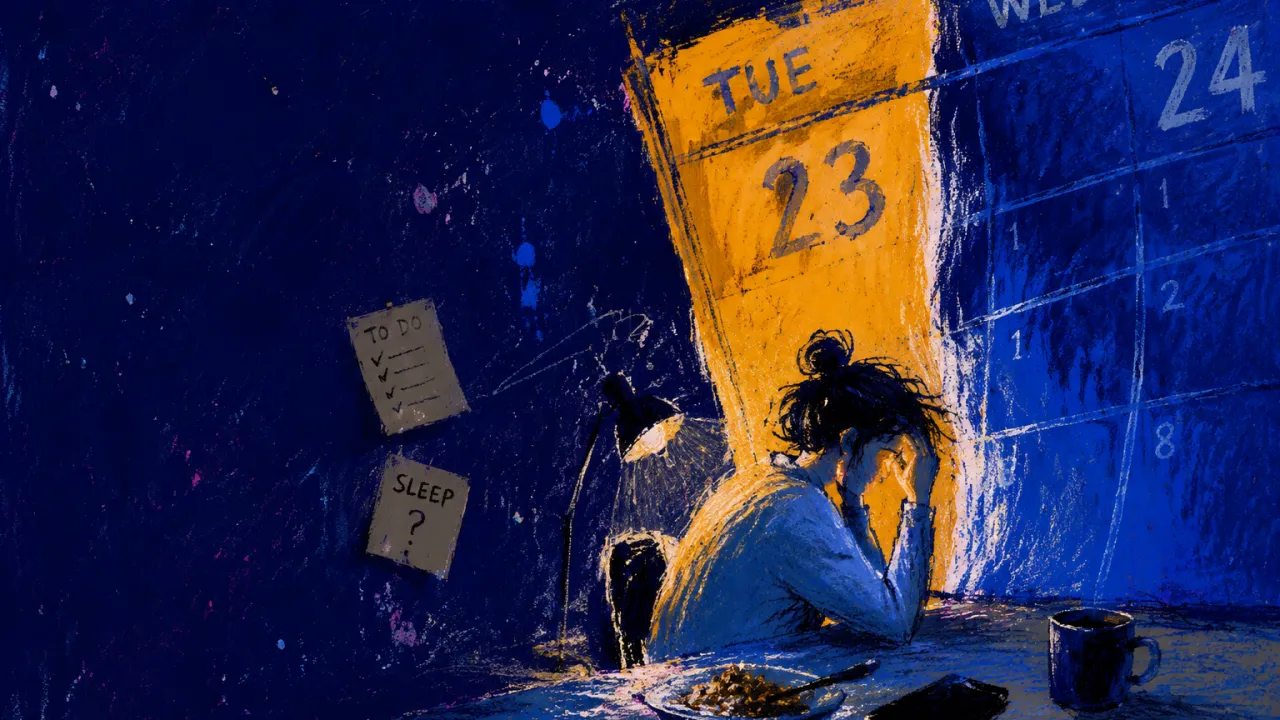
Capacity Misalignment — you notice it in the moment a simple plan starts to feel strangely oversized, like you opened your calendar to move one thing and suddenly saw the whole machinery underneath it: meals, laundry, money, sleep, messages, commute time, dishes, workouts, deadlines, repairs, recovery, and the tiny invisible transitions no one counts. You might be standing in the kitchen with the fridge door open, telling yourself you only need to make one decent choice, but your body is already doing the math your mind tried to skip. Your shoulders creep up. Your jaw gets tight. Your eyes move from the dirty pan to the unopened email to the grocery bag still on the floor, and none of it is dramatic enough to explain why your chest feels packed with pressure. The confusing part is that your life may not look chaotic from the outside. You may have the apps, the routine, the intentions, the notes, the color-coded plan, the genuine wish to live lightly and keep things simple. But the day keeps asking one body to be the scheduler, driver, cook, worker, friend, cleaner, budget keeper, repair crew, and recovery system, and some quiet part of you knows the numbers do not add up. So you start blaming the wrong thing. You tell yourself you need more discipline, a better morning routine, a cleaner room, a stricter budget, a stronger version of yourself. Then another 'small' thing arrives, and it lands like weight because it has to enter a system that is already holding too much through too few support points. The cost is not just tiredness; it is the slow feeling that your life was designed for someone with a larger battery, a wider room, steadier money, cleaner time, and fewer hidden steps between intention and action. You are not empty of desire, and you are not careless with what matters. You are trying to travel with a pack that was sized for inspiration while the terrain asks for food, shelter, timing, tools, and rest, much like The Fool standing before the cliff and mountains with only a small bundle over his shoulder, the staff present but not yet planted firmly enough to carry the road ahead.

What's pulling at you?

Your day is not heavy only because there is a lot to do; it is heavy because the plan is being measured by what sounds reasonable, while your body and environment are paying the full cost of making it happen. You are caught between wanting a lighter, cleaner life and needing more support, margin, and maintenance than that clean version seems to allow.

How It Shows Up?

  • You wake up on a Sunday with a clean plan in your notes app: laundry, groceries, meal prep, a workout, a reset of your room, a few overdue messages, maybe an early night if everything goes well. Before your feet touch the floor, your chest already feels tight, and your shoulders pull upward as if the whole list has weight. Nothing on it looks unreasonable, which somehow makes it harder to name why your body is resisting it; the day feels like the Two of Pentacles trying to keep the loop moving while the sea behind it keeps rising. It is allowed to count the friction, not just the tasks.
  • A friend sends a voice note that starts with 'I need your take on something,' and you already know you care, but your stomach drops before you press play. You pause with your thumb on the screen, jaw set, because you can picture the reply they deserve and the reply you have enough room to give. The bond is still there; the receiving space is just smaller than the incoming volume, like a cup held in front of a much wider sea. It is okay for care and capacity to arrive in different sizes.
  • At work or school, you keep switching tabs between a deadline, a calendar, a half-finished message, and a document you opened twenty minutes ago but still haven't read. Your eyes move fast while your breathing gets shallow, and your hand tightens around your mouse or pen as if more grip could create more hours. The system looks functional from the outside, but inside you feel like The Magician's table: every tool is present, and still one body has to run all of them in one moment. You can acknowledge the crowding before deciding what gets your next ten minutes.
  • You say yes to a group plan because it sounds simple: one drink, one dinner, one quick catch-up. By the time you're getting ready, the small plan has expanded into transit, outfit decisions, social energy, money math, the ride home, and the messages you will need to answer afterward. Your throat tightens while you stand in front of the mirror, phone in one hand, keys in the other, feeling the difference between the invitation as written and the whole route it actually requires. You are allowed to measure the hidden load of a plan, even when everyone else calls it casual.
  • There is a familiar place in your body where the mismatch shows up first: the band across your forehead, the knot under one shoulder blade, the low buzz in your stomach when you look at the week ahead. You may have slept, eaten, and done the basics, yet the body still acts like a small boat carrying too many upright swords, moving carefully because every extra item changes the balance. You keep asking yourself why normal life feels so heavy, and the answer may be that the container is doing more load-bearing than it was built to do. You do not have to argue with the signal before you listen to it.

Capacity Misalignment in Tarot Cards

Capacity Misalignment lives in the gap between a life plan that looks reasonable and the body, room, schedule, and support system that have to carry it. You can feel it in the tight chest, raised shoulders, and shallow breathing that appear before the day has even started. From an existential perspective, the structural framework of this struggle is about what happens when the size of the journey does not match the usable container. The Tarot Cards below make that mismatch visible through vessels, tools, loads, routes, and bodies asked to hold more than their design can carry.

The Fool Upright
A small bundle hangs from the staff while mountains and a cliff fill the path ahead. The image compresses huge terrain into a journey carried with almost no visible supply, turning lightness into a question of scale. Capacity Misalignment names the moment when the action is real but the available resources have not caught up to its size. In timing terms, you may be at a valid beginning, but the season, support, or internal bandwidth has not yet matched the leap being asked of you.
The Magician Upright
The raised wand, the downward-pointing hand, and the full table of tools create a body that looks fully equipped while carrying two directions of demand through one frame. The Magician can conduct energy, but the image also shows that every available instrument still has to pass through a single human center before anything becomes real. In friendship, this is the shape of being seen as capable enough to hold every role: listener, fixer, mediator, planner, and emotional translator. You may have real skill and care, but the card exposes the hidden mismatch between what the friendship assumes you can provide and what your actual capacity can sustain. The open garden around the table matters because possibility is not the same as bandwidth. The struggle becomes visible when having the tools makes it harder to admit that the relational container is asking too much from one person.
The High Priestess Upright
The crescent moon sits at the High Priestess's feet while water waits behind the veil, and her blue robe falls like a controlled tide around a motionless body. The card's flow is present, but it is cyclical, hidden, and not immediately available as ordinary movement. That visual structure maps closely to Capacity Misalignment in lifestyle work. You may be trying to run a stable daily system on energy that arrives in waves, while your calendar, chores, workouts, sleep goals, and work blocks expect a flatter supply. The High Priestess does not show a broken system; she shows a system that must respect timing, depth, and hidden reserves. The struggle begins when the outer architecture demands constant output while the inner tide can only release capacity through cycles.
The Emperor Upright
The orb and ankh occupy both of the Emperor's hands while armor sits beneath the robe and the river is pushed behind the throne. The image loads world-management, life-force, defense, and authority onto one seated body. That load maps cleanly onto a lifestyle system where work, sleep, health, home, habits, and self-maintenance are all being routed through the same limited bandwidth. You may look organized from the outside, but the card locates the strain in the mismatch between the size of the system you are trying to govern and the capacity of the body expected to hold it. The blocked water matters because recovery is present but not central. The struggle is the hidden arithmetic of a life plan that asks one person to be the ruler, guard, scheduler, repair crew, and fuel source at the same time.
The Hierophant Reversed
The triple crown, layered vestments, staff, and stone throne stack authority onto a body that is almost completely still. The figure carries an elaborate system, but the available range of movement remains narrow. Reversed, this becomes a lifestyle blueprint scaled to an ideal rather than to capacity. You may be asking your body to carry a routine designed for a more resourced version of yourself, and the card gives that mismatch a visible form: too much structure loaded onto too little usable bandwidth.
The Lovers Reversed
The sun, angel, serpent, fruit, and mountain all press signals into a pair of uncovered bodies with no container between them. In the reversed texture, the garden stops feeling like available space and starts functioning like an overloaded field. Your routine can look ordinary and still exceed the system that has to receive it. Duties, wellness goals, sensory clutter, digital inputs, and self-improvement ideals may all seem individually reasonable, but together they ask the body to metabolize more than the day can hold. The card locates the drain in the mismatch between signal volume and receiving capacity. It shows the difference between a life that appears abundant and a life whose bandwidth has been structurally overfilled.
The Chariot Reversed
The raised wand, the armored chest, and the two sphinxes create the image of a command center whose power source is not physically coupled to its engine. The charioteer can signal direction, but the animals, wheels, and ground conditions do not visibly answer through any rein or contact point. Inside a daily life system, that mismatch shows up when the plan asks for more usable capacity than the body, room, schedule, or recovery cycle can convert. The card gives the strain a boundary: the failure is not a lack of wanting, but a broken conversion channel between intention and sustainable motion.
Strength Upright
The lion's paws press into uneven ground while the woman's hands regulate the mouth from one narrow hinge. The card makes the scale problem visible: a large body of force is being handled through a precise but small containment point. Capacity Misalignment fits because the image does not show a lack of power. It shows power that exceeds the current channel, forcing the whole scene to depend on delicate regulation while the ground itself records the pressure. In personal growth, this is the moment when your goals, talent, or appetite for change are real, but the structures holding them are too small. The struggle is not whether you have potential; it is whether your habits, pacing, and self-trust can carry the voltage without turning expansion into strain.
Reversed
The lion carries more force than the contact point can fully express. Its body, claws, jaw, and red heat suggest available power, yet the active channel is a narrow human interface where that power must be filtered before it can move. In career life, this becomes the experience of having capacity that the role cannot properly receive. Your skills may be real, your drive may be obvious, and your output may be strong, but the promotion path, team structure, manager perception, or job design may be too narrow to convert that force into visible progress. Strength frames the issue as a mismatch between power and channel. The question is not whether the lion has force; the card makes that visible. The struggle is whether the workplace structure can carry what is actually there without reducing it to containment work.
The Hermit Upright
A single lantern burns against a moonless landscape that is much larger than its reach. The Hermit is not empty-handed; the problem is scale, because the available light and the surrounding field do not match. Academic overload often has this exact geometry. A student can have real focus, real interest, and real effort, yet the syllabus, reading list, exam scope, or research field may exceed the amount of attention the system can hold at once. The card gives the struggle a boundary: the failure is not inside the light itself. It is in the mismatch between a concentrated learning capacity and an academic terrain that asks one small lantern to behave like a whole sky.
Justice Upright
The scales in Justice’s hand are balanced, but the balance depends on a precise match between what is placed on either side. Beside them, the sword stands ready to separate what cannot coexist, while the purple curtain hides the machinery behind the visible judgment. In daily life, this becomes the struggle of trying to fit a load into a system that was not built to hold it. Work blocks, recovery time, errands, health routines, social obligations, and basic maintenance may all look reasonable in isolation, yet the total structure exceeds the real capacity of your body and environment. The card gives this mismatch a hard edge. It asks where your lifestyle is pretending to be fair because everything has a place on the scale, while the scale itself is being asked to measure more than it can carry.
The Hanged Man Upright
The rope fixes one ankle to the living T-shaped wood while the rest of the body hangs below it, with the hands removed from the field of action and the head placed closer to the ground than the feet. The support system is real, but it carries the body through a single narrow point, so the whole posture depends on a capacity channel that was never designed to distribute every load. In lifestyle terms, that image mirrors a daily architecture where work, sleep, health, errands, and self-maintenance are being routed through the same depleted bandwidth. You are not simply failing to keep up; the card locates a mismatch between the amount your life system is asking you to hold and the number of support points actually available.
Temperance Upright
The stream fits only because both cups meet at the right angle, with the receiving vessel positioned to match the flow. The card's calm depends on capacity, timing, and fit, not on endless availability. In friendship, this becomes the pressure of being asked to hold more than Your current life can contain. The struggle is not a lack of care; it is the mismatch between the size of another person's need and the sustainable shape of Your support.
Reversed
The cups are small, defined vessels, and the stream between them only works because the amount, speed, and angle are compatible. Even a calm image depends on capacity limits; the liquid cannot be received well if the vessel, hand, or stance is carrying more than it can stabilize. Academic exhaustion often begins at that same mismatch point. The card does not reduce the problem to motivation; it shows a learning system being asked to receive more material, pressure, or complexity than its current container can transform into retained knowledge.
The Tower Upright
The lightning does not strike an empty field; it hits a rigid tower whose height, crown, and stone walls all imply confidence in its own capacity. The impact exposes a mismatch between what the structure was built to represent and what it can actually absorb. Capacity Misalignment appears in lifestyle systems when the blueprint of the day assumes more energy, attention, recovery, cleanliness, social availability, or work output than the body and environment can hold. The burning windows matter because the overload is not abstract; pressure has to escape somewhere. You may be trying to live inside a schedule or home rhythm designed for a version of you with more bandwidth than the present system has. The card gives that mismatch a visible boundary: the load has exceeded the container.
The Star Upright
The Star shows the same water leaving two vessels, but the receiving surfaces are not the same. One stream enters the pool and is immediately held by water; the other hits land and breaks into smaller branches across the ground. Capacity Misalignment appears here as a mismatch between output and container. In lifestyle terms, the same hour of effort, the same burst of motivation, or the same Sunday reset will not restore sleep, work, fitness, meals, space, and emotional bandwidth in equal ways. You may be pouring sincerely, but the life system is not built to receive every input through one method. The card makes that mismatch visible without blaming the person holding the vessels: it shows a body trying to serve two different environments with one finite source.
Judgement Upright
The trumpet sends one clear signal across the whole scene, but the bodies receiving it are not identical. Some arms are straight, some are bent, some figures face away, and each person rises from a separate container with a different distance from the source. That uneven reception is the visual core of Capacity Misalignment. In social circles, one group rhythm can treat everyone as if they have the same bandwidth for replies, events, emotional availability, networking, and public enthusiasm, while your actual capacity may arrive in a different posture. The card does not frame this as failure to care. It shows a mismatch between the scale of the broadcast and the body's ability to receive, integrate, and respond without losing its own recovery space.
Ace of Cups Upright
The cup in Ace of Cups is not a deep storage vessel; it is a sacred receiver held at the center of a much larger flow. Water pours through it in five streams, and the living pool below can absorb what the cup itself cannot contain. That image gives Capacity Misalignment its shape. The problem is not a lack of inspiration or emotional depth, but a mismatch between what arrives and what can be integrated without flooding the system. For personal growth, this shows up when your inner life expands faster than your habits, boundaries, and daily structure can hold. You may be ready for more meaning, more feeling, and more potential, while the actual container of your life is still too narrow to stabilize what is coming through.
Two of Cups Reversed
The cups still appear level, but the bodies underneath them are not carrying the same mechanical demand. One stance is active and extended, the other is rooted and still, so the visual measure of equality hides different load paths. Reversed, that symmetry can become a false standard for daily life. A schedule may look balanced on paper because work, meals, sleep, exercise, and cleaning each have a slot, while the actual body underneath has uneven capacity from day to day. Capacity Misalignment is the point where the blueprint starts judging the person it was supposed to support. You are not confronting a simple discipline gap; you are living inside a structure that measures balance by appearance while ignoring weight, recovery, and friction.
Four of Cups Upright
The offered cup hovers at the exact distance where a simple reach would matter, but the figure's hands are folded away and his eyes are closed. The scene contains supply, proximity, and timing, yet the receiving mechanism is unavailable. In social life, this is the moment when a good plan, a kind invite, or a promising circle lands in front of you while your inner capacity is already offline. The problem is not that the cup is worthless or that you should force yourself to want it; the card shows a mismatch between what the social field is offering and what your system can actually take in. Capacity Misalignment gives shape to that strange emptiness around objectively decent connections. The cups are real, but nourishment cannot happen until the offer and the receiver are operating on the same plane.
Reversed
The figure's arms and legs are folded into a compact lock while cups remain close enough to matter. The scene carries a receiving problem in the body itself: the offer is visible, the resources are upright, but the structure that would take them in has tightened into stillness. Capacity Misalignment appears here as a lifestyle architecture that keeps accepting inputs on paper while the actual body has no room to metabolize them. A new habit, a cleaner routine, a better app, or a healthier plan can still become dead weight when it lands on a system already locked at its joints. You are shown the difference between available capacity and imagined capacity. The card does not frame the struggle as laziness; it shows an intake channel that has been overfilled past the point where another cup can become nourishment.
Page of Cups Upright
A living fish appears inside a small ceremonial cup, with the whole sea behind the Page as the scale it actually belongs to. The vessel is beautiful and upright, but its size and function do not match the living complexity it is being asked to hold. Coursework, readings, theories, and deadlines can create the same mismatch when your current study container is expected to hold more than it was built to carry. The card witnesses the pressure point where the problem is not laziness, but a container-content mismatch that makes even sincere effort feel structurally too small.
Queen of Cups Upright
The Queen's small body sits inside a throne that is larger than her available ground, while both hands are occupied by an ornate, covered cup. The shoreline gives her only a narrow base, and the water around it makes the container feel more important than movement. That physical arrangement mirrors the strain of a life system asked to hold more than its current architecture can support. You may be trying to keep work, rest, health, and home routines inside one polished container, while the actual base beneath them remains too small for the load.
King of Cups Upright
A single golden cup is held in front of a sea that stretches far beyond what any vessel could contain. The image does not show emotional absence; it shows a small, precious container positioned inside an environment of overwhelming relational volume. That mismatch mirrors the social pressure of trying to respond well to more connection than your actual capacity can metabolize. You may be able to give one thoughtful reply, hold one difficult conversation, or show up well in one room, but the wider network keeps arriving like ocean water around a cup. Capacity Misalignment is the point where emotional skill gets mistaken for unlimited availability. The card locates the strain in the scale problem: your social world may be asking an intimate vessel to manage an oceanic field.
Reversed
The same water element appears as sea, cup, fish pendant, leaping dolphin, and moving route for the distant ship. In the reversed state, the repetition stops feeling like rich emotional intelligence and becomes overconcentration: one reservoir is asked to serve as environment, tool, symbol, movement, and command system. That is the shape of capacity misalignment in a lifestyle reading. You may be building a daily structure that assumes one body can regulate productivity, rest, health, home, relationships, and self-improvement without recalibrating the load to the actual reservoir available. The floating throne makes the misalignment harder to see because instability has become the baseline. The card gives form to the point where adaptation is mistaken for capacity, and where functioning inside pressure is confused with having enough to sustain the system.
Ace of Pentacles Upright
A single hand reaches out of the cloud to hold a pentacle almost as visually dominant as the hand itself. The object is bright, valuable, and complete, but its thin circular shape demands precise pressure; if the grip relaxes, it can tilt, slip, or roll away. That physical mismatch gives shape to a growth problem where the scale of what you want exceeds the structure currently available to hold it. The card does not frame the tension as weak desire; it shows a receiving system trying to stabilize more possibility than its present capacity can comfortably contain. For personal evolution, this is the moment when a bigger goal, new identity, or real opportunity arrives before your daily habits and internal container have caught up. You are not failing because the potential is false; the pressure comes from trying to hold a larger life with a smaller operating system.
Reversed
The hand is slender, but the pentacle is broad, flat, and difficult to stabilize. Its size demands careful pressure from a small contact point, and the whole arrangement depends on a grip that looks precise but vulnerable to tilt, slippage, or fatigue. Academically, this is the strain of carrying a workload or opportunity that exceeds the system currently available to hold it. The issue is not whether the goal is valuable; the issue is whether your attention, recovery, schedule, and working memory have enough surface area to support that weight without locking up. The card makes the mismatch visible before it turns into self-blame.
Two of Pentacles Upright
The figure handles a loop that resembles controlled mastery, but his stance remains narrow, lifted, and exposed. Behind him, ships ride a larger unstable sea, showing a scale of movement greater than the private rhythm he is trying to maintain. Capacity Misalignment lives in that difference of scale. You may be aiming at a future self that is real enough to feel, but the current structure carrying it may still be too small, too improvised, or too dependent on constant correction. In personal growth, this card points to the painful gap between vision and load-bearing capacity. It does not reduce the vision; it shows why the system shakes when ambition arrives before the body, schedule, and support structure can hold it.
Three of Pentacles Reversed
The sculptor works from a raised bench-like surface, reaching upward while trying to land a precise strike on fixed stone. The body is asked to provide balance, focus, force, and control at the same time, with very little visible margin around the task. Reversed, this image becomes a lifestyle structure that has normalized overreach. The day may still function on the surface, but it does so by asking one body to become scaffold, worker, planner, and stabilizer all at once. Capacity Misalignment appears when the problem is not ambition, discipline, or desire, but load. You are trying to run a daily architecture whose requirements exceed the support structure currently underneath it.
Five of Pentacles Upright
The bandaged foot, the crutch, and the snow path make progress visibly more expensive than the body can afford. The figure is still moving, but the instrument of support is also proof that the journey is being demanded from a system already under strain. Inside a self-growth process, Capacity Misalignment appears when your vision for becoming more asks for a level of energy, stability, or recovery your current life cannot supply. You are not facing a lack of potential; you are facing a mismatch between the weight of the ascent and the structure currently carrying it.
Six of Pentacles Upright
The falling coins have a small landing zone: open hands, bent bodies, and a measured stream directed downward. The scale can weigh what is given, but it cannot show whether the receiver has enough stability, timing, or space to hold what arrives. In timing questions, that mismatch becomes especially sharp when an opening appears before your system is built to absorb it. You may face a real chance, a real offer, or a real push forward, while your capacity is still arranged for waiting, recovery, preparation, or containment. Capacity Misalignment names the disorienting moment when opportunity and readiness do not match in size or speed. The card shows that the right amount is not only measured by what becomes available, but by whether the structure below it can actually receive without collapsing into strain.
Queen of Pentacles Upright
The pentacle is not decorative in the Queen's hands; it has enough weight that both hands are used to stabilize it. Around her, the garden is large, fertile, and open, but the actual carrying system is the small circuit of hands, lap, and seated body. Capacity Misalignment shows up when the moment asks for expansion before the support structure can transmit it. You may see a real window and still feel friction, because the timing problem is not desire but the mismatch between what the season is asking and what the current container can hold.
Reversed
The hand-sized pentacle receives the Queen's full bodily attention while the estate around her keeps expanding through vines, roses, water, and distant terrain. Reversed, the scale mismatch becomes the central pressure: a finite body is asked to hold an ecosystem as if it were one manageable object. In coursework, that pressure appears when the semester's demands exceed the container that is supposed to manage them. You may be doing real work, but the card shows a mismatch between the size of the academic field and the bandwidth available to hold it without losing coherence.
Five of Swords Upright
The foreground figure in the Five of Swords holds more blades than his body can use at once: two pressed into the chest, one planted into the ground, and two more left behind. The scene shows capacity gathered into a single frame after the conflict is already over, turning tools of decision into a visible load-management problem. In a lifestyle reading, that visual pressure maps onto the way daily systems can force too many functions into one overloaded person. You may be trying to carry the planner, the cleanup, the recovery routine, the health reset, the work spillover, and the emotional residue of the day with the same limited bandwidth. The struggle is not that you lack discipline. The card locates the friction in the mismatch between how much the system asks one body to hold and how much that body can realistically coordinate without losing clarity, rest, or flow.
Six of Swords Upright
The small boat carries two passengers, a ferryman, and six upright swords, making the vessel's capacity visible before any interpretation begins. What looks like order and protection also adds weight, lowers the margin for movement, and makes every stroke work harder. In a lifestyle system, you may recognize the same shape when routines, work, health intentions, home upkeep, and recovery needs are all loaded into one daily container. The strain is not that any single module is wrong; it is that the vessel has been asked to hold more than its current architecture can distribute.
Seven of Swords Upright
Five swords fit into the figure's arms only awkwardly, and two remain standing in the ground. The scene makes capacity visible as a physical limit: the strategy can move forward, but the whole load cannot be carried at once. Career pressure often works through the same mismatch. You may be expected to manage execution, politics, visibility, skill growth, and emotional composure without receiving matching authority, time, or support. The card frames the struggle as a load-design problem rather than a personal weakness. The partial haul shows why progress can still feel compromised when the workplace asks you to hold more leverage than your role can structurally contain.
Ten of Swords Upright
Ten swords do not strike one small area; they distribute total pressure across the whole body, from head to lower spine, until no part of the figure can compensate for the rest. The red cloak still marks life force, but that force is spread under a load the body was never built to absorb all at once. Capacity Misalignment appears here as a brutal mismatch between demand and operating margin. In timing questions, this is the season where ambition, pressure, deadlines, and social comparison are stacked onto a system that does not currently have the fuel, recovery, or structural support to carry them. The card's clarity is severe but useful: the issue is not that you failed to want the outcome enough. The issue is that the field was asking for full execution in a phase where the wiser timing move would have been protection, reduction, and rebuilding usable capacity.
Two of Wands Upright
The globe is small enough to hold, but the territory it represents spreads far beyond the hand that contains it. The figure’s body has one point of contact with the wand and one point of attention on the world, while the actual land, water, and road remain outside his immediate reach. You may be trying to run a whole-life system on a body with finite energy, limited transitions, and a narrow daily support surface. The card locates the strain where the scale of the plan exceeds the carrying capacity of the current routine.
Three of Wands Upright
Three wands stand firmly in the earth, but the moving ships belong to a larger system of water, distance, timing, and transport. The local structure is real, yet it is being asked to relate to a scale it cannot fully contain. That is the lifestyle pressure of a day that looks organized on paper but is carrying more than its actual capacity allows. You may have a plan, a routine, or a clean visual structure, while the containers underneath it are too small for the energy, recovery, space, and attention the plan requires.
Eight of Wands Upright
The eight wands share one clear aerial channel, but the card never shows the capacity of the place they are about to enter. Their movement is clean and powerful, while the receiving field remains distant, separated by water and terrain. That structure fits friendships where the channel is technically open, so everything comes through it at once: favors, reassurance, late-night spirals, plans, updates, and unspoken expectations. The openness of the bond can hide the more important question of whether the receiver has room to hold what is being sent. Capacity Misalignment is the struggle of caring without having enough internal bandwidth for the volume arriving. This card gives that strain a shape: the problem is not the existence of connection, but the mismatch between incoming relational force and the actual container available to meet it.
Ten of Wands Upright
The bundle in the man's arms is not resting on the ground; all ten wands have been lifted into one body's carrying system. The load is not evil or useless, but its volume exceeds what the carrier can distribute without bending his entire posture around it. In a relationship, this is the point where the emotional requests, repair cycles, future decisions, and unspoken expectations exceed the capacity of the person trying to hold them. Love may still be present, but the carrying architecture is mismatched to the actual weight. The card names the strain of trying to prove commitment through capacity you do not have. You are not failing because the bond matters; the structure is failing because one body is being used as the container for more relational weight than it can realistically hold.
Knight of Wands Reversed
The knight's presentation is elaborate, but the travel system underneath him is lean. The horse can rise, the wand can declare purpose, and the desert can invite movement, yet the visible carrying capacity remains thin. Capacity Misalignment in timing work is the strain of wanting a move that the current container cannot yet hold. You may sense a real opening, but the resources, pacing, or recovery margin are not sized for the action your momentum wants to take. The card makes this mismatch physical: ignition is high, endurance is uncertain, and the route is bigger than the equipment shown. The struggle is not whether you care enough; it is whether the cycle can bear the scale of the move.

Capacity Misalignment in Tarot Card Reading Insights

When Capacity Misalignment shows up, people often bring the same question into readings: why does a normal-looking plan feel too large for the life underneath it? The shift from cards to readings shows how this struggle appears when someone asks about timing, work, friendship, daily routines, or personal growth. Tarot Reading Insights from sessions on this theme.

Psychological struggles related to Capacity Misalignment