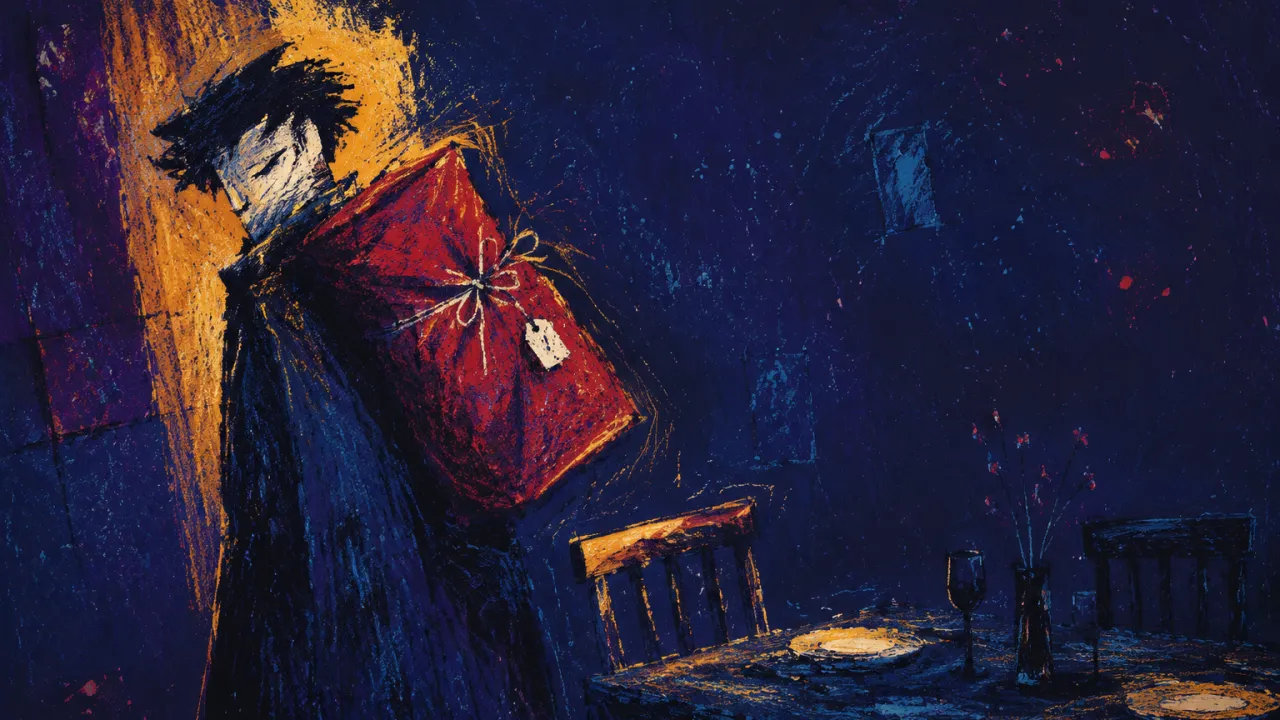
Inherited Role Lock lives in the gap between the adult self you are building and the family position that still seems to find your body first. You can feel it in the jaw tightening, the shallow breath, and the reflex to become useful before you have chosen to respond. From an existential perspective, the structural framework of this struggle is about a role passing as identity because it has been repeated for so long. The Tarot Cards below make that outline visible without reducing it to a single explanation.
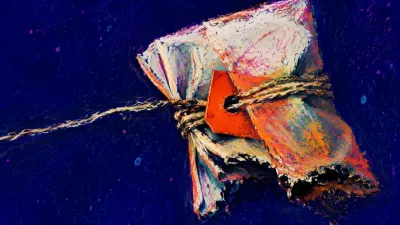
The Fool ReversedThe bundle is small, hidden, and carried over the shoulder, yet it travels with the figure into the unknown. Its weight is visually modest, but its contents are inaccessible, so the body moves forward with an unseen inheritance attached to its posture. Family roles often work like that bundle. You may appear independent on the outside while still carrying the job of mediator, achiever, fixer, emotional translator, or proof that the family story worked. The reversed Fool makes the carried role visible as a structural lock. The path may be new, but the hidden contents on the shoulder can keep turning adult freedom into a replay of the family script.
The Magician ReversedThe ouroboros belt closes around the Magician's waist, while the lemniscate above his head repeats the visual logic of a loop. Between those cycles, the body holds a ritual position that can look intentional even when it has become automatic. Family roles work the same way when they are inherited before they are chosen. You may arrive as an adult with tools, language, and distance, but one phone call or visit can place you back behind the same table, performing the old function the family knows how to use. Inherited Role Lock is not about lacking agency. It is the specific friction of having agency pulled into a pre-existing family position, where fixer, peacekeeper, responsible one, difficult one, or silent one becomes the operating station your body recognizes before your current self can intervene.
The High Priestess ReversedThe stone seat fixes the High Priestess into a role as much as a posture. She is not merely holding knowledge; she is placed in the position that controls how knowledge, passage, and legitimacy are handled. Inside a family system, that fixed seat becomes the old role that keeps finding you. You may arrive with a different life, different values, and a more adult sense of self, yet the family arrangement still reads you through the position it assigned long ago. The reversed pressure lies in how natural the role can start to feel after years of repetition. The card marks the moment when being the responsible one, the difficult one, the mediator, or the good child stops being a description and becomes a locked place in the room.
The Emperor UprightThe crown, throne, ankh, and orb are larger than the private body that must carry them. The Emperor's hands are already occupied, his seat is already assigned, and the back of the throne rises above him like a role that arrived before personal preference. In a family system, that visual weight becomes the pressure of being cast as the responsible child, the stable one, the successor, the fixer, or the person who is not allowed to be complicated. You are not only asked to participate in the family; You are asked to become the function the family recognizes. The lock forms when the role starts passing as identity. The card gives shape to the moment when carrying the family position becomes so familiar that stepping outside it feels less like choice and more like losing the only sanctioned version of yourself.
The Hierophant UprightThe two acolytes are dressed differently, yet their bodies repeat the same kneeling arrangement before the Hierophant. Their individual symbols remain visible, but the ritual position determines how those differences are allowed to appear. That is the family mechanism inside Inherited Role Lock. You may have a distinct temperament, career path, identity, or emotional truth, but the family system keeps translating it back into an older role it already understands: the reliable one, the difficult one, the peacekeeper, the successor, the one who must keep everyone comfortable. The card's vertical order gives this struggle its shape. Difference is not erased outright; it is absorbed into a sanctioned position, which is why breaking the role can feel less like making a choice and more like disturbing the family's entire map of who everyone is supposed to be.
ReversedThe Hierophant’s body, crown, staff, robe, feet, and keys all stack into one rigid axis of sanctioned meaning. In reversal, that vertical order does not simply disappear; it hardens into an internal rulebook that keeps the body upright while the living exchange underneath becomes harder to feel. Romantic love can then become a role performed with precision. You may know how to be the serious partner, the loyal one, the future spouse, the emotionally mature person, or the one who keeps the bond respectable, while your actual desires have less room to move. Inherited Role Lock is the pressure point where commitment scripts become a substitute for contact. The card names the strain of living inside a relationship shape that may have been handed to you before you ever had a chance to ask whether it fits the way you love.
The Lovers ReversedThe man and woman are each backed by a different tree, and their bodies stand in front of those assigned structures before any mutual touch occurs. The scene makes identity appear pre-positioned: each figure is open, but each is also framed by a symbolic inheritance already standing behind them. In a family system, that arrangement becomes the old role that keeps receiving you before your adult self can arrive. You may be grown, changed, and self-aware, yet the family map still places you in the same inherited position, making every visit feel like stepping back into a script your body remembers too quickly.
The Chariot ReversedThe armored figure appears in command, but the body is not freely walking; it is installed inside the chariot's square mass. The canopy, armor, emblems, and wand create a public image of mastery while the actual lower body is visually merged with the vehicle that carries him. That is the reversed pressure of Inherited Role Lock. In a family system, you may look capable, reasonable, successful, or emotionally controlled, while the role underneath is older than your current choices. The chariot keeps moving as a family assignment even when it looks like personal ambition. This card gives the role a visible outline. It shows where competence stops being freedom and becomes a container, and where the adult self has to ask whether it is steering the family role or being carried by it.
Wheel of Fortune ReversedEach figure in the image occupies an assigned position. The readers stay in the corners, the sphinx holds the top, the descending and rising figures remain bound to the sides, and the wheel gathers every role into a single rotating order. Reversed, that order becomes the feeling of being placed before you speak. In a family system, the old role can arrive faster than your current identity: the responsible one, the peacekeeper, the difficult one, the one who absorbs the tension. The card gives that role lock a visible architecture. It shows how a family can keep recognizing the position you used to occupy while failing to register the adult self standing outside that inherited assignment.
Death ReversedThe figures below the rider are not random bodies; each one is fixed into a recognizable posture. The fallen ruler, the praying cleric, the turned-away woman, and the watching child form a set of positions arranged around a force none of them can redirect. In a family system, those positions can become more powerful than choice. You may arrive as an adult, but the room still assigns a familiar posture before you have time to decide whether you are the child, the mediator, the responsible one, the rebel, or the person who must absorb what others cannot carry. Inherited Role Lock is the reversed weight of this image: the old roles keep functioning even when their authority has already failed. The struggle is not a lack of insight; it is the body's return to a family position that was installed before your current self had language for it.
The Devil ReversedThe chained figures do not only stand near the Devil; they have started to resemble him. Their horns and tails show a role absorbed into the body, while the loose collars reveal how familiar the restraint has become. Inherited Role Lock in a family system is not just being assigned a part. It is the deeper struggle of realizing that the responsible one, the fixer, the rebel, the mediator, or the invisible child can activate automatically whenever the family field appears. The card's reversed pressure makes the role feel normal because the body has practiced it for so long. Seeing the role as a chain rather than an identity is the first clean boundary between what you inherited and what you can still choose.
The Tower ReversedIn the reversed image, the bodies can appear trapped in midair, neither housed by the tower nor returned to the ground. Their limbs keep the shape of emergency, while the tower behind them remains the dominant reference point even in ruin. Inherited Role Lock forms when a family still organizes you through an old position: the fixer, the difficult one, the mediator, the child, the proof of success. You may have outgrown that position, but the system keeps using it as the coordinate that tells everyone where to stand. The card frames the lock as suspension: no longer inside the role cleanly, not yet fully grounded outside it.
The Moon ReversedThe road is visible, but the entrance is flanked by animal bodies and distant towers, making passage feel watched before it even begins. The creature at the shore is small against the whole field, caught between a deep pool behind it and a narrow corridor ahead. Around parents or older relatives, that scene maps the pull of an inherited role. You can arrive as an adult and still be met by a family structure that recognizes the child, the fixer, the rebel, or the quiet one first, locking identity to an older position before the present self can speak.
The Sun ReversedThe child, sunflowers, wall, and sun all repeat one visual grammar of growth, brightness, and approval. In reversal, that repetition can become a closed circuit: the moving child is still read through the garden's old coordinates, and the fixed sun remains the reference point for what counts as healthy, bright, or acceptable. Family systems often preserve a younger version of you because that version kept the structure legible. You may be treated as the responsible one, the cheerful one, the difficult one, the gifted one, or the one who should understand, even after your adult self has outgrown the role. The reversed Sun gives this lock a precise visual body. The issue is not that the family cannot see you; it is that the light keeps falling on the role they recognize, while the person moving forward underneath it has changed.
Judgement ReversedThe raised figures look awake, but their bodies still occupy the exact rectangular spaces that held them before the trumpet sounded. Their arms answer the call while their lower bodies remain organized by the coffin’s frame, making emergence look active without becoming fully free. In a family system, that is the shape of an inherited role becoming mistaken for identity. You may seem capable, independent, and responsive on the surface, yet one family message can put you back into the responsible one, the difficult one, the peacekeeper, the proof of success, or the person who must absorb everyone else’s feelings. The reversed structure intensifies the problem by making the container feel normal. The card locates the struggle at the point where awakening has happened, but the body still knows where it was assigned to stand.
The World ReversedThe World places the body inside a flawless wreath, with each arm extended into a symmetrical holding pattern. When that structure hardens, the dance stops reading as free movement and starts reading as a posture that must be maintained so the whole image stays intact. In a family system, inherited roles often work this way. You may look functional, balanced, and adult from the outside, while contact with parents or relatives quietly returns your body to the old assignment: the calm one, the successful one, the mediator, the problem child, the one who does not make the system uncomfortable. Inherited Role Lock is the moment the wreath becomes the only room your nervous system remembers how to move in. The card witnesses the pressure of performing a completed self while an older family script keeps deciding which version of you is acceptable.
Three of Cups ReversedEach woman has distinct colors and features, yet the dance fixes each body into one necessary position. The formation works because everyone occupies the place the circle expects; movement is allowed, but only inside the established pattern. Inherited Role Lock appears in families when your current self is forced back into an old function. You may arrive as an adult, but the system still reaches for the mediator, the achiever, the problem child, the caretaker, or the one who absorbs tension. The card's reversed geometry shows why outgrowing the role can feel harder than simply explaining yourself. The role is not just an opinion someone has about you; it is a position the whole family formation keeps using to stay balanced.
Six of Cups UprightThe offered cup is not just held; it is performed, stabilized, and presented in a way that makes the child part of the ritual. Around the children, the manor and ordered cups make the exchange look inherited rather than improvised. Inherited Role Lock appears when You are expected to keep carrying the cup assigned to you: the good child, the calming one, the responsible one, the one who remembers how things are supposed to feel. The card's sweetness matters because the role is not enforced only through pressure; it is also kept alive through nostalgia, praise, and the fear of breaking a cherished family image.
ReversedThe two children do not simply exchange a cup; they occupy fixed positions inside an early emotional scene. One reaches, one receives, and the protected manor around them gives the roles a sense of old architecture rather than present choice. Inherited Role Lock forms when an early position in the emotional system keeps organizing the adult inner world. You may still move through introspection as the sweet one, the grateful one, the protected one, the small one, or the giver, even when those roles no longer fit the full scale of who you are. The Six of Cups makes this lock visible without turning it into blame. Its child figures show how a role can begin as safety or belonging, while its enclosed setting shows how that role can become the map your inner life keeps using long after the original scene has passed.
Seven of Cups ReversedThe head, castle, jewels, wreath, dragon, snake, and covered figure sit like preloaded scripts in identical cups. They look equally available, yet their contents cannot be lived at the same time without distortion. Inherited family roles create that same display of ready-made identities. You may be asked to be the responsible one, the successful one, the agreeable one, or the one who carries what no one names; the struggle is not simple indecision, but the pressure of having your identity offered to you as a set of containers you did not design.
Three of Pentacles ReversedThe three figures occupy sharply defined positions: the worker on the bench, the monk beside the work, and the bishop holding the plan. Their roles are not casual; the architecture itself frames them as parts of a larger system with fixed places, fixed tools, and fixed lines of attention. When this structure hardens inside a family, a role stops being something You do and starts becoming the only version of You the system recognizes. The card gives shape to the moment when being the fixer, the good kid, the mediator, or the competent one becomes less like contribution and more like being built into the family wall.
Four of Pentacles ReversedThe figure's hands, feet, and head are all occupied before any choice can begin. The body is not simply holding wealth; it is performing a fixed assignment where opening, walking, or turning would break the role the posture is built to maintain. In a family system, that visual lock translates into being kept in the position that makes the whole arrangement feel manageable. The responsible child, the stable one, the quiet one, or the emotional buffer can become a posture you keep performing long after it stops matching your adult life. Inherited Role Lock is the struggle of being valued for staying in place. The card makes the bind visible by showing a body whose usefulness to the system depends on not becoming available for its own direction.
Ten of Pentacles UprightThe child in the Ten of Pentacles is visible only in part, tucked behind the mother while reaching toward the dogs and the elder's sphere of attention. Curiosity exists, but it moves from behind an adult body and within a scene already organized by generation, property, and rank. That half-exposed posture gives form to an inherited role before it becomes language. You may be treated as the peacekeeper, the successor, the responsible one, or the one who should not disturb the family's balance, even when those roles no longer fit the person you are becoming. The card's abundance makes the lock harder to name because the family scene can look complete from the outside. The struggle is the hidden cost of being assigned a place in a system that offers belonging while limiting the range of selves allowed to emerge.
ReversedThe elder occupies the foreground while the younger couple stands behind the threshold, with the child and household symbols already visible in the same frame. The composition makes each person look placed inside a sequence rather than freely moving through an open scene. Inherited Role Lock forms when love starts assigning positions before desire has been fully heard. You may find yourself becoming the reliable partner, acceptable future spouse, caretaker, or family-compatible choice, with the relationship held together by roles that narrow your agency.
Page of Pentacles UprightThe young figure holds the pentacle at eye level, treating the object as both message and task while his feet stay arranged for a journey he has not started. The body is young, the object is solid, and the whole scene makes a private assignment visible: value is being carried before movement can begin. In a family system, that image maps onto the role that gets placed in your hands before you have language for wanting something else. You are not only asked to participate; you are asked to keep holding the family’s version of responsibility high enough that everyone can recognize it, even when your own direction is waiting at the edge of the field.
Knight of Pentacles UprightThe armored rider sits on a horse built for endurance, yet the whole figure remains fixed in place, holding the pentacle as if the route must answer to one inherited charge. The repeated green tassels on rider and horse make the body and its carrier look marked by the same growth system, not fully separate from each other. That structure mirrors the family role that keeps following you into adulthood: the stable one, the sensible one, the one who can be counted on to carry weight. You may have more space than you once had, but the old role still sits on the body like equipment, turning movement into a negotiation with what the family expects you to remain.
Seven of Swords ReversedThe figure is already outside the camp, but his orientation still depends on it. The tents, flags, dusk line, and remaining swords keep the old field active as a reference point even while the body moves away. Inherited Role Lock appears when a family role follows you past the original setting. You may no longer be the child in the room, the fixer, the quiet one, or the person who absorbs everyone’s tension, yet your reactions still organize around that assigned position. The reversed Seven of Swords makes the trap visible through direction itself. The path forward is real, but the inner compass is still calibrated by what the family system trained you to monitor, carry, hide, or leave behind.
Nine of Swords UprightThe quilt is supposed to cover and regulate the sleeping body, yet its symbols repeat, fragment, and fail to form a complete order. Beneath it, the bed frame carries a carved conflict scene that remains exposed, as if the support structure itself is built around an older pattern. Inherited Role Lock emerges from that layered construction. In family life, you may not be responding only to what was said this week; you may be waking inside a role that was assigned through repeated scripts, comparisons, silences, and expectations long before you had language for them. The Nine of Swords makes the role feel physical because the swords, quilt, and bed all participate in the same pressure system. You are not simply overthinking the family dynamic; you are trying to rest on a structure that keeps reactivating the part you were trained to play.
Ace of Wands UprightThe cloud-born hand does not merely touch the wand; it clamps a living staff into a vertical position, while leaves break loose from the pressure of that hold. The wand is alive, but it is also being presented like a marker of office, a position already occupied before anyone on the ground can choose how to use it. In a family reading, that image locates the moment when your own life force gets mistaken for an inherited assignment. You may feel most trapped not because you lack energy, but because every burst of capability is immediately read by the family system as proof that you should carry the same role again.
Two of Wands ReversedOne wand is not merely standing; it is fastened to the battlement by a clasp, made part of the architecture before the figure even acts. The hand on the other wand repeats that vertical role, turning posture into a maintained position rather than a free movement. Inside a family system, this is how an inherited role can look functional while quietly immobilizing you. The reliable child, fixer, achiever, or calm one becomes a structural support point, and the cost is that your adult self has to keep standing where the old frame placed you.
Three of Wands ReversedThe wand is useful on land, but it cannot become a ship. When the same support is treated as the tool for every terrain, the figure remains dignified and composed while the actual crossing stays out of reach. Inherited Role Lock appears when the family role that once helped You belong is still being used to navigate a life that now requires different equipment. You may keep trying to become independent through the very identity that the family assigned to keep You predictable, useful, or emotionally available. The reversed card places the trap in the tool itself. The old role can look responsible, mature, and stable from the outside, while quietly keeping You at the same cliff edge each time You try to move beyond the family script.
Ten of Wands ReversedThe reversed Ten of Wands turns carrying into a learned route: the body keeps moving although the bundle blocks sight and absorbs both arms. The method is inefficient, but it has been practiced enough to pass as normal. In family life, that is the inherited role that keeps reactivating: fixer, peacekeeper, successful one, responsible sibling, emotional translator. The role can feel like personality because the family system has rehearsed it through you for so long. This card separates the person from the assignment. It shows that the route may be familiar because it is inherited, not because it is the only valid way to belong.
Page of Wands ReversedThe young figure holds the wand upright with both hands, lifting it like a charge that must not be dropped. In the reversed structure, that vertical staff stops reading as pure inspiration and becomes an object that keeps the body organized around maintenance rather than movement. Family pressure often works through exactly that kind of upright object: a role, a message, a legacy, a job of staying available. You may look capable because you are still holding the family symbol steady, but the card locates the strain in the gap between carrying the assigned role and having room to choose your own direction. The desert matters because nothing nearby replenishes the effort. The struggle is not laziness or lack of love; it is the slow lock that forms when your energy keeps serving an inherited position before it ever gets to become self-directed life.
No cards available for this filter.