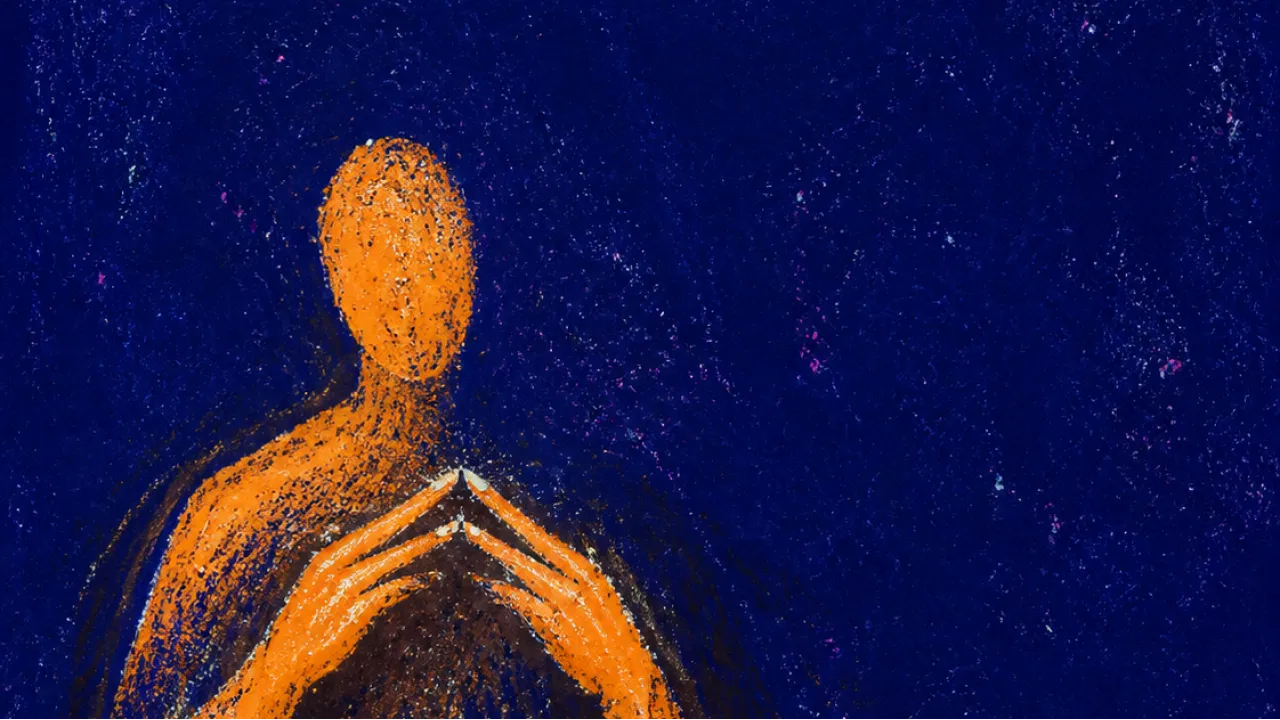
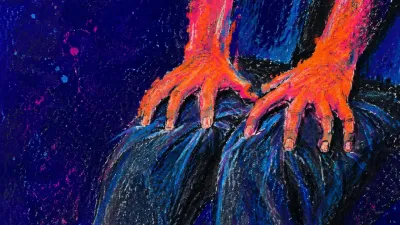
That locked feeling in your chest and hands, right before the first mark lands, is the core shape of Performance Freeze. It can feel like a held breath, a raised hammer, or a cursor blinking while your body waits for the work to become less exposed. This is a universal emotional experience: the gap between knowing movement is needed and feeling that movement turn into a visible test. The Tarot Cards below mirror the posture, pressure, and stalled threshold of Performance Freeze.
Death ReversedThe foreground of the card is cramped by impact: lowered hands, a turned face, a fallen body, praying hands, and the horse pressing forward through the same narrow field. The scene gives the body several responses at once, but none of them look like fluid action. In study, this becomes the freeze that happens before writing, submitting, checking results, emailing a supervisor, or returning to a difficult text. The task is visible, the stakes are clear, and yet the body stalls because movement would make the evaluation feel immediate. Performance Freeze fits reversed Death because the energy of transition has jammed inside the moment before action. The card does not reduce that freeze to laziness; it shows a system caught between academic pressure and self-protection, where the first thing to reclaim is contact with the task without letting it become a total verdict.
Temperance ReversedThe scene pauses at the exact instant of transfer: one cup raised, one lowered, the stream suspended between them. The angel’s face is fixed on the operation, and the body holds a precise balance that leaves almost no room for messy movement. Academic output often freezes at that same suspended point. The essay, thesis paragraph, problem set, or presentation exists in fragments, but the first visible act of pouring it onto the page feels too exposed. Performance Freeze belongs with Temperance because the card makes the threshold between preparation and expression visible. The emotion is the locked stillness that forms when you know something internally but cannot yet let it move into public work.
The Devil UprightAt the foot of the horned figure, the man and woman stand with chains around their necks that are visibly loose, while the black altar and downward torch make the whole scene feel locked in place. Nothing in the image shows a physical struggle; the pressure comes from a system that has trained the body to stay still even when the exit is technically open. In academic life, that visual logic maps onto the moment before an essay, exam plan, or research draft where you know the task is possible but your body refuses to cross the threshold. Performance Freeze is the felt shutdown of having enough information to begin and still feeling pinned under the imagined gaze of grading, feedback, and proof.
ReversedThe two figures stand exposed in front of the altar with collars loose enough to remove, yet their bodies remain arranged under the Devil's raised hand. The next movement is physically possible, but the scene holds it in suspension. For personal growth, this captures the moment when a real upgrade becomes visible and the body stops cooperating. You may know the next step, understand the pattern, and still feel frozen because action would make your potential measurable. Performance Freeze belongs to this card because the bondage is not shown as pure force; it is displayed as a stoppage around available agency. The emotional pressure comes from seeing the door and feeling your own system pause at the threshold.
The Tower ReversedThe bodies outside the Tower are not shown making a clean escape. They are rigid, inverted, and caught in a violent transition, as if the body has registered danger faster than intention can form. In academic work, that posture becomes the blank page, the unopened portal, the cursor blinking while the deadline closes in. The mind knows there is movement required, yet the inner system treats visibility itself as the threat: the draft will show what you do not know, the exam will expose what did not stick, the advisor will see the gap. Performance Freeze belongs to the reversed Tower because the collapse is held inside before it becomes action. You are not refusing the work; your system is bracing against the imagined impact of being measured.
The Moon ReversedThe animals in The Moon do not move down the path; they react to it. Their howling posture, paired with the crayfish paused at the edge of the water, turns the scene into a suspended moment before exposure. In personal growth, that suspension can happen right before visible action. You may have done the thinking, named the pattern, and understood the next step, but the body freezes when growth asks to become public, repeatable, or measurable. Performance Freeze fits the reversed Moon because the instinct system takes over the threshold. The path is there, but the nervous energy gathers at the entrance, holding you in place while the future watches from a distance.
The Sun ReversedThe horse is mid-motion beyond the wall, while the child has no reins and the body is held open in full light. The scene contains movement, yet the figure is also fixed in a highly visible posture. That tension fits the academic moment when the assignment, exam, or presentation has technically begun but the inner system locks. The pressure is not simple laziness; it is the body freezing at the threshold where effort becomes observable. Performance Freeze is the feeling of being carried toward the task while unable to inhabit your own momentum. The reversed Sun makes the freeze brighter, because everything is ready to be seen before you feel ready to move.
Judgement ReversedThe figures in Judgement have clearly heard the trumpet, yet their feet remain inside the coffins. Their arms answer the call before their bodies can leave the old frame, creating a strange stillness inside an image of awakening. That is the academic texture of Performance Freeze. The essay prompt is open, the deadline is real, the feedback is waiting, and some part of you knows exactly that movement is required, but the body stays locked at the threshold of action. Judgement connects to this emotion because the card shows response without full release. You are not empty of awareness; you are caught in the charged gap between hearing what must be done and feeling physically able to begin.
Ace of Cups ReversedThe delicate hand holds a heavy, ornate vessel in exact balance while water and symbolic motion gather around it. The image contains a strange precision: one small gesture has to keep the whole center upright, even though the scene around it is already in motion. For academic output, that precision can become the locked feeling before an essay, exam answer, presentation, or thesis section. You know the vessel matters, so the hand tightens around getting it right, and the work cannot begin because the first movement feels like it might spill everything.
Two of Cups ReversedThe cups are raised but not yet exchanged, leaving the whole scene suspended at the moment before contact. The caduceus stands upright between the figures like a formal checkpoint, and the narrow central space can make the gesture feel intensely monitored. In academic pressure, that suspended posture becomes Performance Freeze: the essay, presentation, or feedback conversation sits right in front of you, yet your system locks at the threshold. The card's imagery names the freeze as a relational pressure point, where being observed matters as much as the task itself.
Four of Cups ReversedThe crossed arms and legs lock the seated body into a closed circuit while the cups remain within view. Even the offered cup does not create a reach, so the scene holds possibility and immobility in the same frame. Performance Freeze in study feels like sitting in front of the essay, paper, exam plan, or thesis file while the first move becomes physically unreachable. The task is not absent; the channel between intention and action is sealed. The Four of Cups links this freeze to blocked receptivity. Before output can happen, the academic material has to be allowed back into contact with the body, and the card makes that locked threshold visible.
Five of Cups ReversedThe cloak hides the figure's arms, and the bowed posture has no visible reach toward the bridge, the castle, or the two cups still standing behind. Reversed, the scene becomes a body stuck in the evidence of the last spill, with movement available in the wider landscape but inaccessible from inside the narrowed focus. Performance Freeze in academics often feels exactly like that: the essay tab is open, the reading list is visible, the exam date is known, and still the body cannot cross into action. The card's structure shows that the freeze is not laziness; it is attention trapped beside a prior academic wound until the system can separate the next task from the old impact.
Nine of Cups ReversedThe folded arms make a locked line across the chest while the cups stand higher behind the figure like a shelf of prior proof. With no road, door, or second person in the image, the composition holds achievement in place rather than moving it forward. For academic work, that scene can turn previous success into pressure. A good grade, a strong application, or a finished project becomes something to protect, and the next blank page feels like it could damage the display. Performance Freeze names the inner lockup that happens when evidence of competence stops helping you start. The card exposes the freeze as a relationship to visible achievement, which gives you a cleaner place to look than simply calling it weak discipline.
Page of Cups ReversedThe Page's hand on his hip and the raised chalice create the posture of someone presenting something delicate under an open sky. The body is composed, but the image concentrates all attention on the object that must be held correctly. In academic work, that visual pressure becomes the blank essay, the submission portal, the exam page, or the professor's gaze. You may know more than you can show, because the moment of visibility turns thought into a staged object and the body locks around the need to get it right. Performance Freeze fits the reversed Page of Cups because the learning signal has not disappeared; it is trapped in a display posture. The card names the suspended state where private understanding cannot cross into visible output.
Knight of Cups ReversedThe cup is carried so carefully that forward motion can start to look inhibited. The horse still moves, but the entire scene gathers around protecting the object rather than crossing the river. In academic work, Performance Freeze often appears when the idea has become too precious to touch. The essay, thesis, portfolio, or application exists beautifully in your head, while the act of drafting feels like it could ruin the clean version you are trying to preserve. The reversed Knight of Cups does not point to laziness. It shows a system where care has tightened into immobility, and the work cannot move because it has been loaded with too much symbolic weight.
Queen of Cups ReversedThe crossed feet barely touch the shore while the body stays enthroned, composed, and still. The chalice is held with care, but its closed lid keeps the inner material from moving outward. At the point of academic output, this becomes the freeze that arrives before the essay, presentation, application, or submission. The work matters too much to handle roughly, so the system locks around it, preserving the possibility of excellence while blocking the first visible move.
King of Cups ReversedThe King's gaze fixes on the cup while both hands stay occupied by symbols of control. The scene has motion in the waves, the boat, and the dolphin, but the central body remains seated and held in place. In academic work, Performance Freeze gathers around the blank document, the unread article, or the feedback you keep opening and closing. You can see the task, you may even understand its importance, but the body organizes around holding position instead of moving into expression.
Ace of Pentacles ReversedThe hand's careful hold can tighten around the pentacle until the whole image seems organized around not dropping it. The round coin has to be stabilized from tilt, slip, and fall, turning possibility into a precision task. Performance Freeze appears when personal growth becomes too loaded with proof. You can sense the opportunity in your hand, but every movement feels like it might expose a lack of readiness, discipline, or worth. The reversed Ace of Pentacles gives that paralysis a concrete shape. It shows a nervous system treating potential as fragile evidence, where action stops because the first imperfect attempt feels too visible.
Two of Pentacles ReversedThe figure is mid-performance with both hands occupied, one foot lifted, and attention narrowed to the coin that must not fall. The pose depends on movement, yet the body also looks trapped inside the exact position required to keep the act going. That tension maps cleanly onto the inner freeze that can happen during self-observation. When every feeling becomes something to manage correctly, the mind loses its natural range of motion and starts holding itself still under the pressure of being watched from within. Performance Freeze belongs to the reversed Two of Pentacles because the card's active rhythm can harden into a locked display. You may still look functional, but inside, one wrong movement seems capable of exposing the whole balancing act.
Three of Pentacles ReversedThe hammer is lifted but not yet striking, and the sculptor's elevated body is caught in the exposed second before action. The arch narrows the scene around the unfinished pillar, concentrating attention on the gap between readiness and impact. Performance Freeze takes shape inside that suspended moment. In personal growth, you may know the next habit, conversation, application, or creative move, but the instant it has to become visible, the body locks. The pressure is not a lack of desire; it is the weight of turning potential into observable evidence. Three of Pentacles gives this freeze a precise visual anatomy. The card shows skill before completion, watched by others, held inside a standard-bearing structure. That image helps reveal why the stuckness feels so intense: the action is small, but emotionally it carries the burden of proving that your growth is real.
Four of Pentacles ReversedThe coin balanced above the crown and the coins pinned under both feet make the body look like it can only stay intact by not moving. For academic work, that image captures the moment before starting an essay, opening a dissertation draft, or answering in seminar, when the first move feels like the thing that could knock the whole self-image out of place. Performance Freeze is not laziness in this card; it is motion trapped inside a fragile display of control. You are held between wanting to produce and needing the result to protect your competence, so the body chooses stillness because stillness feels less dangerous than being seen mid-process.
Five of Pentacles ReversedThe man's wrapped foot and crutch make forward motion possible only through a compromised rhythm. Snow presses into the path while the warm window stays off to the side, turning movement into a strained negotiation with the ground. For you, the essay, exam prep, or application may not feel impossible because you do not care; it feels impossible because output has become linked with impact. Performance Freeze is the body pausing at the threshold of evaluation, trying to protect itself while the deadline keeps moving.
Six of Pentacles ReversedThe kneeling bodies stay low and still, hands extended beneath the visible scales. The sky is clear enough that the posture has nowhere to disappear; the whole scene holds the body in a suspended request for evaluation. In academic life, this becomes the freeze before submitting, drafting, emailing a supervisor, attending office hours, or showing unfinished work. The task may be technically possible, yet the measuring atmosphere around it makes movement feel exposed. Performance Freeze names the moment when academic output gets trapped beneath anticipated judgment. The card makes that trap visible through posture: your capacity has not vanished, but the body waits as if permission must arrive before action can resume.
Eight of Pentacles ReversedThe hammer and chisel hover in a zone where precision matters, and the craftsman's narrowed gaze makes the next mark feel unusually charged. The coin is small, but the attention around it is intense enough to make one movement carry the weight of the whole design. Performance Freeze forms when introspection becomes too high-stakes to continue naturally. Instead of letting an insight land, the mind pauses over it, afraid that naming the wrong thing will distort the entire inner picture. This card reflects the inner stillness that comes from over-significance. You may be close to a useful truth, but the pressure to get it exactly right makes the psyche hold its breath.
Nine of Pentacles ReversedThe falcon is trained, hooded, and held on a glove, while the woman’s body remains ceremonially composed. The image carries a precise tension between competence and immobility: everything looks controlled, but the creature made for action cannot act. In academic work, that tension becomes the moment before writing, submitting, presenting, or asking for feedback when the polished self-image feels too delicate to risk. You may have prepared enough to move, yet the body behaves as if one visible attempt could disturb the whole display. The card gives this freeze a structure rather than treating it as laziness. It shows performance pressure locking the system at the point where proof is about to become public.
Ten of Pentacles ReversedThe crowded upper field of pentacles presses down over a scene where each figure seems held in a formal position. Conversation, lineage, property, and symbolic wealth are present, but the movement between them is contained in small loops rather than released into open action. Performance Freeze appears when an essay, thesis, exam, or presentation becomes that crowded architecture inside your body. The task is visible, the stakes feel witnessed, and the mind cannot turn available knowledge into motion because the whole scene feels too loaded to disturb.
Page of Pentacles ReversedThe Page holds the pentacle high, as if the symbol has to be clearly shown before the next movement can happen. His lifted foot and suspended posture create a body caught between presentation and step. In personal growth, that held display can become the emotional freeze that appears when progress has to look legitimate before it is allowed to be messy. The open field stops feeling like room to practice and starts feeling like visibility, where every early attempt might be silently judged against the object you are trying to become. Performance Freeze belongs to the reversed current of this card because the Page’s careful attention has tightened into immobility. You can see the potential, but the pressure to perform growth correctly keeps the body from entering the field where growth would actually become real.
Knight of Pentacles ReversedThe knight is dressed for action, holding the pentacle with precision, yet the horse remains still beneath him. The image concentrates readiness so tightly that movement seems trapped inside the posture. Performance Freeze belongs to the reversed card because the problem is not lack of preparation. You may have rehearsed the growth step, named the goal, and gathered the tools, but the moment of visible initiation makes the whole system lock around the possibility of getting it wrong. The card makes that frozen threshold visible. It shows how self-development can become most difficult exactly when the next step is clear enough to reveal who you are becoming.
King of Pentacles ReversedThe black marble throne, hidden armor, and pinned pentacle make stillness look heavily fortified. The body appears equipped, but the equipment also thickens the space between intention and movement. That visual tension maps cleanly onto academic performance freeze: you may have the reading, the notes, and the capability, yet the moment the work must become visible, the system locks. The card does not frame the freeze as laziness; it shows preparedness trapped inside the weight of proving itself.
Ace of Swords ReversedThe same raised sword can also read as a held thrust suspended in open air: a hand without a visible body, a blade slightly tilted, and a crown fixed on the point. All the force is gathered, but the scene gives no path across the barren hills below. In academic pressure, that creates the inner weather of Performance Freeze. You can see the standard, the argument, and the possible outcome, yet the first sentence or first answer refuses to move because every motion feels like it has to be exact.
Two of Swords ReversedThe crossed swords do not attack; they stop movement. Held over the chest by locked arms, they make the body into a pause button, keeping action suspended even while effort is clearly being spent. In academic pressure, Performance Freeze feels like being unable to start the essay, send the email, submit the draft, or choose the question because the action has become loaded with judgment. The work is not absent from awareness; it is too present, too charged, and too closely tied to what the result might say about you. The blindfold intensifies the freeze by removing the reassurance of clear feedback. You are left with the sensation of having to move before you can see enough, and the body responds by holding still until the pressure becomes its own locked room.
Three of Swords ReversedThe three swords do not merely touch the heart; they pin it. Their angles create a fixed structure around the center, while the rain keeps falling around a heart that cannot move, speak, or close around the wound. Performance Freeze in study carries that same locked quality. The essay, thesis chapter, exam revision, or application is present, but the inner system clamps down at the point of possible judgment, turning action into stillness even when you understand what needs to be done. This card makes the freeze legible as a response to impact, not a lack of care. The mind may be trying to prevent another cut by stopping movement altogether, and seeing that structure clearly is the first return of agency.
Four of Swords ReversedThe knight’s body is perfectly arranged, armored, and unmoving while three swords hang over the head, throat, and chest. The scene has the stillness of a person who is no longer fighting outwardly, yet cannot soften enough to re-enter motion. In personal growth, that posture becomes the freeze that appears when becoming better starts to feel like a performance with sharp consequences. You know the next step matters, but the pressure to do growth correctly locks the system into silence. Performance Freeze fits because the card shows composure without movement. The outer form is disciplined, even dignified, while the inner experience is the stuckness of being watched by your own standards and unable to begin.
Six of Swords ReversedThe ferryman has one foot forward and the oar already engaged, but the passengers remain hidden, still, and turned away. The scene contains motion without visible participation from the figures being carried. That split is central to academic performance freeze. You may have the document open, the deadline known, the sources gathered, and the external structure in place, while the part of you that has to begin stays silent and covered. Performance Freeze emerges here because the card shows a crossing that has become too loaded for effortless initiation. The mind wants movement, but the body treats the first sentence, first revision, or first submission as if it carries the whole history of evaluation.
Seven of Swords ReversedThe raised foot is mid-motion, but the cluster of swords crowds the body and narrows the path. The figure looks agile, yet the image also shows how much precision is required just to keep moving without cutting himself. In academic pressure, that becomes the freeze before writing, revising, answering, or submitting. The task is not physically impossible; it becomes emotionally loaded because every movement feels as if it could expose a mistake, waste effort, or invite judgment. Performance Freeze belongs to this reversed Seven of Swords because the card's intelligence has become over-calibrated. You can see too many risks at once, and the mind turns tactical awareness into a stop signal instead of a route forward.
Eight of Swords UprightThe woman is upright rather than collapsed, and the swords do not physically touch her, but her hands are tied behind her back and her feet are caught between mud, water, and ground. The image holds a tense contradiction: movement exists in the scene, yet the body has not received permission to use it. That is why Performance Freeze fits the academic field so precisely. The blank document, exam page, seminar response, or thesis chapter may be available, but the inner system behaves as if producing anything would expose the whole self to danger. The card does not reduce the freeze to laziness or poor discipline. It shows a performance system locked by perceived consequence, where the first useful step has become harder than the entire task itself.
ReversedThe woman is upright, dressed in vivid red, and fully visible, but her arms are tied behind her back and her eyes are covered. The body is present for the moment, yet it cannot complete the basic sequence of seeing, reaching, and stepping. Personal growth often reaches this exact threshold when insight has arrived before embodied readiness. You may know the pattern, understand the limiting belief, and still find the body locking up when the next move asks to be seen by others or made irreversible. Performance Freeze belongs to this card because the restraint is not passive emptiness; it is charged stillness under pressure. The Eight of Swords gives that stuckness a clean outline, showing a system that has prepared to evolve but has not yet given itself permission to act in open air.
Nine of Swords UprightThe body is upright, but the lower half remains held under the quilt. This suspended posture creates a precise visual contradiction: the figure has left sleep but has not entered motion, and the hands over the face close the only channel that could orient toward the room. In academic pressure, that half-movement mirrors opening the laptop, seeing the prompt, and losing access to output. Performance Freeze forms when alertness is present but expression locks, making the essay, exam, or presentation feel less like a task and more like a blade-lined threshold.
ReversedThe body has risen, but the lower half stays pinned beneath the quilt, and the face is sealed behind both hands. The picture contains the start of a movement without the completion of one, while the swords hold the upper body inside a rigid overhead grid. Performance Freeze appears here as a blocked conversion between insight and action. In personal growth, you may understand the pattern, name the habit, and see the next move, yet the body stays at the edge of execution because acting would make the self-audit real.
Ten of Swords UprightThe fallen body has no visible next movement. The clear river is close, the far bank is visible, and yet the figure remains fixed to the ground with the face turned away from any point of contact. Performance Freeze appears when the academic task is technically reachable but the body cannot enter it. You may know where the essay, reading, or proposal needs to go, but the card shows the frozen interval where starting feels like placing your whole inner structure under evaluation.
ReversedThe body lies at the riverbank with an arm bent downward, not braced for recovery. The crossing is close enough to see, but the posture cancels every practical route toward it. In personal growth, that image captures the freeze that appears right when execution matters. The vision is not missing, and the next stage may even be obvious, yet the internal system locks under the pressure of having to become the person who can move. Performance Freeze belongs here because the Ten of Swords shows action interrupted at the threshold. You are not looking at laziness or lack of desire; you are looking at a body-mind state where the demand to rise has become part of the pressure holding you down.
Page of Swords ReversedThe Page is built for movement, yet the raised sword, twisted torso, and uneven ridge can harden into a body that cannot fully settle. The scene holds a strange combination of readiness and restraint, as if the next step requires too much precision. Academic performance can reproduce that exact brace before an exam prompt, essay opening, seminar comment, or thesis meeting. You may be prepared in pieces, but the moment of visible output makes the body pause as though one wrong movement could send the whole stance off balance. Performance Freeze is the stopped motion inside the card's active posture. The Page does not lack a tool; the sword is already in hand. The emotional block lives in the exposed moment when thought has to become answer, paragraph, voice, or grade.
Queen of Swords ReversedThe fixed sword hand, the rigid seated axis, and the low clouds gathering around the hill create a body that appears held in place by its own standard. The gesture is decisive, but the rest of the figure has little visible room to move. That is the academic feeling of being evaluated before you have even begun. The blank document, exam page, or presentation slide becomes the throne room of an inner judge, and the mind tightens around the need to be exact. Performance Freeze fits because the card's reversed pressure is not simple laziness or lack of knowledge. It is the moment when precision turns into immobilization, and the need to produce something worthy blocks the first sentence, first answer, or first attempt.
King of Swords ReversedThe throne, high back, and raised sword form a rigid vertical channel around the seated body. The hand holds the blade up, yet the figure does not move forward; everything is suspended under a stern line of judgment. In academic pressure, that image becomes the blank page, the exam prompt, or the draft that will not open. You are caught in the moment before action, where the mind is already being evaluated and the body chooses stillness because every possible move feels overexposed.
Ace of Wands ReversedThe hand holds the wand in midair, strong and visible, but the image shows no body stepping forward with it. The gesture is charged, yet suspended, creating a visual field where force gathers without completing itself as motion. In personal growth, Performance Freeze appears when the first move starts to feel like a public test of your entire potential. The wand is alive, but the grip tightens around the need to use it correctly, and the open space around it can make the moment feel too exposed. The card mirrors the kind of paralysis that forms around meaningful change. You are not empty of desire; you are holding too much meaning inside the first step, and the body freezes because action has become a stage rather than a channel.
Two of Wands ReversedOne wand is held, another is buckled to the wall, and the globe is contained in the figure's hand. The image gathers tools, plans, and perspective, yet the body remains fixed at the battlement, creating a closed circuit between preparation and immobilized action. Performance Freeze is the academic weather of knowing what the task is while the first movement refuses to happen. You can see the essay, the application, or the revision plan clearly enough to feel its weight, but the system locks around being evaluated before the work has even entered the page.
Three of Wands ReversedThe hand on the wand can look authoritative, but in the reversed emotional field it also looks like something the body needs in order to stay upright. The figure stands exposed on high ground, facing the open distance while the actual act of departure has not begun. Academic performance often creates this exact bodily split. A draft is waiting, an exam is near, a presentation is scheduled, or an advisor email is open, and the mind understands the task while the body locks at the threshold. Performance Freeze is the moment readiness becomes immobility under the pressure of being measured. The card gives the freeze a location: not failure, but the edge where visible potential meets the fear of having that potential evaluated.
Five of Wands ReversedThe Five of Wands holds every figure in a raised, exposed posture, with bodies braced and wands suspended in a crowded field. Even though the whole scene is active, no single movement completes itself cleanly; the motion keeps meeting another motion before it can land. Reversed into personal growth, that becomes the freeze that arrives when improvement feels observed, ranked, or internally contested. You may have enough energy to begin, but every possible move seems to trigger another standard, another imagined critique, another reason the action is not ready. Performance Freeze names that stalled charge: not absence of desire, but movement trapped under evaluation. The card makes the freeze visible as a crowded pressure field, so the stuckness can be understood as overload rather than a missing will.
Six of Wands ReversedThe parade has forward motion, but the rider's body is held in a fixed ceremonial pose. The staff, wreath, cloak, and horse regalia require him to be readable before they allow him to be spontaneous. In personal growth, this maps to the frozen feeling that appears when your next step becomes visible to other people. You may have momentum, yet the pressure to embody the upgraded self perfectly can tighten action into presentation.
Seven of Wands ReversedThe diagonal wand, locked two-handed grip, and split footing create a body caught between action and bracing. The scene is full of force, yet the figure must hold himself in place before any clean movement can happen. Performance Freeze fits this card when personal growth turns into a public test of readiness. You may know the next move intellectually, but the pressure to prove progress makes the body tighten around the moment, turning potential action into a held breath.
Eight of Wands ReversedThe wands are moving, but no body is shown initiating them and no ground receives them yet. The card suspends action in midair, creating a strange gap between visible momentum and embodied contact. That gap mirrors the academic freeze before an essay, exam answer, dissertation chapter, or submission portal. Everything around the task may be active: tabs open, notes prepared, deadlines approaching, messages sent, but the first grounded move does not arrive. Performance Freeze fits because the card's motion is externalized. You can see the work rushing toward you, yet the part of the self that must touch the page or enter the exam room feels held just above the ground.
Nine of Wands ReversedThe figure’s eyes move toward what may be coming, but the body stays fixed to the flat ground. The wand is held close to the chest, making the posture look less like forward motion and more like a pause that has hardened into position. Performance Freeze appears when the next stage of personal growth feels too significant to approach casually. You can see the direction, sense the pressure, and recognize the stakes, yet the body treats the threshold as a place to lock down rather than move through.
Ten of Wands ReversedThe man's body is already committed to the task, but his face is blocked and his upper body is trapped behind the bundle. Movement continues in the legs while perception and expression disappear behind the load. That split captures the academic state where pressure is fully activated but output will not begin. You can sit at the desk, open the document, know the deadline, and still feel the first sentence locked behind a wall of assessment pressure. Performance Freeze is the body bracing for evaluation before the work has even taken form. The card shows why the freeze can feel so confusing: part of you is already carrying the task, while another part cannot see enough space to start.
Page of Wands ReversedThe Page holds the wand like a herald, with the head lifted as if something is about to be announced. In reversal, that ceremonial posture hardens into a role, and the wand becomes a visible prop for clarity before the inner message has actually arrived. For introspection, this maps onto the moment when self-understanding turns into a performance of self-understanding. You may feel forced to sound coherent, healed, inspired, or certain while the more private layer is still unfinished and unorganized. Performance Freeze fits because the card's visual language is all about early declaration. When the declaration comes too soon, the body locks around the image of readiness, and the real inner process loses the freedom to be awkward, partial, and alive.
Knight of Wands ReversedThe horse is not resting; it is held at the threshold of motion, front legs lifted while the rider's armored body stays rigidly upright. The desert around them leaves the figure exposed, with little shelter from the act of being seen. Performance Freeze enters academic life when the pressure to begin becomes so visible that the first movement locks up. The blank page, first slide, opening sentence, or first email carries more charge than the action itself, and the body holds energy without releasing it into work. The card reveals freeze as compressed motion rather than laziness. There is force in the system, but it is caught between display, evaluation, and the risk of actually starting.
Queen of Wands ReversedThe Queen holds immense fire inside a seated structure, with her wand ready but not moving and her gaze fixed past the immediate scene. The open desert gives her room, yet the central figure remains arranged, formal, and visually locked in place. For academic work, this captures the blank-page paralysis that happens when pressure is present but motion cannot begin. The mind can see the assignment, the reading list, or the exam horizon clearly, but the body stays seated inside the image of readiness without crossing into action. Performance Freeze is not laziness. It is a high-charge state where the need to produce becomes so visible that movement feels risky, and the first sentence, first revision, or first email starts to feel heavier than the whole task.
King of Wands ReversedThe forward lean stops on the throne rather than becoming motion, while the wand touches the ground like a fixed stake. The body appears ready to command, yet the heavy cloak and seated position hold the energy inside a rigid frame. Performance Freeze translates this blocked heat into academic experience: the essay is open, the exam is approaching, the thesis draft is waiting, and your system can see the task without crossing into action. You are not empty of intention; the intention is trapped at the threshold where output should begin.
No cards available for this filter.