Can You Time It Perfectly?

Explore Timing Control Strain through lived patterns, related tarot cards, and tarot reading insights focused on timing, readiness, and control.

Timing Control Strain

What does this feel like?

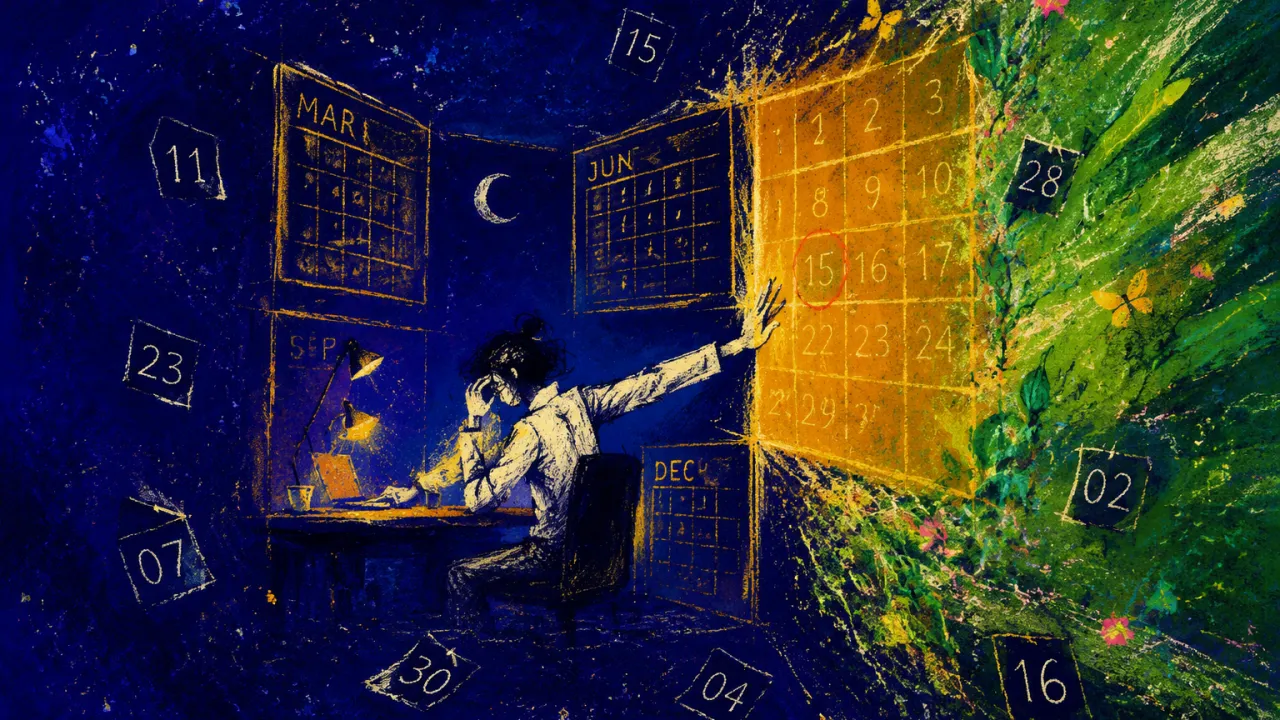
Timing Control Strain is what it feels like when your day starts revolving around the exact second something is supposed to open, land, reply, launch, or finally make sense. You keep checking the calendar, the message thread, the tracking page, the job portal, the group chat, the weather, your own mood, as if one more scan will reveal the right window and let your body unclench. Your shoulders rise before you notice them, your jaw holds a line of pressure, and even small delays start to feel personal because they take the moment out of your hands. You tell yourself you are just being organized, just being responsible, just trying not to mess it up, but underneath that is a quieter bargain: if you can control the timing, maybe you can control the risk. So you hold plans in a half-ready state, revise the wording before sending, wait for the vibe to feel right, push when waiting feels unbearable, pull back when movement feels too exposed, and somehow both choices feel like they could ruin the timing. The hardest part is that there may be nothing obviously wrong; the field may be growing, the relationship may be moving, the project may be forming, the opportunity may still be there. But because it has not given you the clean signal you want, you become the one trying to hold the whole cycle together with attention. Your life starts to narrow around thresholds: not yet, maybe now, wait, check again, act before it closes, don't force it, watch for signs. The cost is not just stress; it is the slow loss of contact with the present, because every moment becomes a platform for the next one instead of a place you can actually stand. And at the center of it, you may be carrying a scepter you never asked for, trying to command wheat, water, weather, and ripening itself, much like The Empress holding authority in a landscape that still grows by season rather than force.

What's pulling at you?

You're caught between wanting to protect your agency and wanting the moment to prove it is safe enough to act. One part of you keeps reaching for a clear signal, while another part can feel that timing is partly made of conditions you cannot fully command. The strain comes from making your own body responsible for holding that gap open until everything feels perfectly aligned.

How It Shows Up?

  • You open your calendar for the fifth time before lunch, not because anything has changed, but because checking makes the uncertainty feel briefly held. Your eyes move between dates, messages, reminders, and half-formed plans, and your shoulders creep up as if your body could pin the week into place. The moment you close the app, your chest tightens again, like the window might shift the second you stop watching it. You can let the calendar be information for a moment, not a surface you have to press your whole nervous system against.
  • Someone takes longer than usual to reply, and your thumb keeps waking the screen before you have decided to check it. Your stomach drops in small pulses, your throat feels dry, and you start measuring the silence as if it contains a hidden countdown. Part of you wants to send one more message just to regain contact with the moment, while another part knows that pressure will not make the rhythm clearer. It is allowed to leave a gap open without turning the gap into proof of what comes next.
  • You are in a meeting, class, or project thread where everyone is waiting on a launch date, a decision, or a green light, and you hear yourself asking for timelines in a voice tighter than you meant it to be. Your jaw locks when someone says 'soon' or 'we'll see,' because those words give you nothing solid to grip. You start organizing backup plans inside your head while people are still talking, like the Knight of Pentacles holding steady before motion, ready but unable to release the plan until the ground feels exact. It is reasonable to want clarity, and it is also reasonable to pause before making your body carry the whole timeline.
  • You are out with friends, but your attention keeps leaving the room to monitor when to speak, when to leave, when to bring something up, when to text later, when the vibe is 'right.' Your smile stays in place, but your breathing gets shallow, and your face starts to feel slightly fixed, as if you are managing the timing of your own presence from behind glass. The night becomes less about being there and more about not missing the right beat. You can notice the room without having to operate every second of it.
  • Late at night, your body finally gets still, and that is when the timing math gets loud. You lie on your side with one hand under your cheek, replaying the exact point where you should have acted sooner, waited longer, said less, moved faster, or asked again. The thoughts run like the Wheel of Fortune pretending to be a clock, turning and turning without landing on the one mark you can trust. You do not have to solve the timing of your whole life before you are allowed to sleep tonight.

Timing Control Strain in Tarot Cards

Timing Control Strain lives where you keep trying to make a living window give you a clear date, a clean signal, or a perfectly safe moment to move. You may feel it as a tight jaw, shallow breathing, or the small chest-drop that comes when a reply, deadline, or opening will not settle. From an existential perspective, the structural framework is about agency meeting cycles that can be read but not fully commanded. The Tarot Cards below mirror the places where timing, control, readiness, and release start pulling against each other.

The Empress Upright
The Empress holds a scepter of sovereignty while sitting inside a landscape that grows by moisture, warmth, soil, and season. Her hand can signal command, but the wheat in front of her and the water behind her do not answer to force in the same way a tool or schedule would. That friction is the heart of Timing Control Strain. You may be trying to make an organic process deliver a clear date, a green light, or a clean launch window before its conditions have actually synchronized. The card does not frame the delay as weakness; it shows a field where authority exists, but authority must negotiate with ripening rather than override it. In a timing reading, this struggle appears when effort starts to feel like pressure applied to living material. The scepter shows your agency, while the garden shows the limit of pure control: the right move becomes visible only when force, support, appetite, and season begin to point in the same direction.
The Emperor Upright
The Emperor sits inside a square stone frame, holding an upright scepter and orb as if every moving thing could be brought under command. The body is armored and ready, but the throne fixes the base, so force gathers vertically while the ground of timing remains immovable. In timing questions, that image gives shape to the pressure to master a moment before the moment has opened. You may be carrying the need to act as proof that you still have agency, while the card shows that excessive command can turn waiting into a threat and movement into friction.
The Lovers Upright
The man's gaze moves toward the woman, the woman's gaze lifts toward the angel, and the serpent coils beside the fruiting tree. No single line of sight owns the moment; attraction, higher guidance, and awakened desire all pull on the same field before any physical contact occurs. That visual split gives Timing Control Strain its exact shape. You are not simply hesitating; you are trying to make the timing feel authorized by every layer at once, as if desire, sign, safety, and consequence all have to agree before movement is allowed. The card holds the pressure of wanting a clean signal from a scene built out of competing signals. It shows why the attempt to control the perfect moment can become heavier than the decision itself.
The Chariot Reversed
The command wand rises in the charioteer's hand, but no reins run from that hand to the sphinxes. Control is visible as posture, armor, and symbol, while the actual steering interface is missing from the scene. That gap is the shape of Timing Control Strain: You try to stabilize an uncertain window by tightening command over every detail. The card shows why this becomes exhausting; the more timing is treated like something to dominate, the less the system can reveal when it is ready to move.
Strength Upright
The woman's hands rest directly on the lion's mouth, not as weapons but as a living gate around the point where force would normally break out. Her body leans into the exact place where release and restraint meet, while the open field around them does not remove the need for precise contact. Timing Control Strain emerges when your sense of the right moment becomes fused with the need to keep that gate under manual control. You are not simply waiting or acting; you are monitoring the hinge where action might become too early, too late, or too much, and the strain comes from making your own nervous system do the work of a larger cycle.
The Hermit Reversed
The lantern is held high, the staff is planted, and the figure's whole frame becomes a brace against the frozen height. In the reversed texture, the posture no longer reads as a temporary pause; it becomes a strained attempt to keep one exact point of visibility alive inside a vast night. Timing Control Strain is the pressure to manage the cycle by force of attention. You track signals, hold back, push forward, interpret silence, and try to make the window stay open through vigilance alone. The Hermit shows why that effort becomes costly. A lantern can illuminate the next few feet, but it cannot change the season around the mountain; when timing awareness turns into control, the body becomes the thing holding the whole sky in place.
Wheel of Fortune Upright
A straight sword sits above a turning wheel, clean, narrow, and decisive against a mechanism built from rotation, recurrence, and changing position. Around it, fixed readers and moving figures share the same field, so the card holds a visible tension between precise control and cyclical timing. That tension becomes Timing Control Strain when social life is treated like a mechanism that should be timed correctly. You start reading every delayed reply, invitation gap, group plan, and networking opening as if the right move at the right second could secure your place. The wheel shows why that strain becomes so consuming. Social rhythm has patterns, but it is not a clock you can fully operate; the struggle lives in the gap between noticing cycles and trying to command them.
Reversed
The sphinx sits above the wheel with a sword, but the blade rests off the mechanism rather than locking it in place. In reversed tension, that poised command becomes a suspended attempt to make the cycle stop at a preferred moment while the rim keeps carrying figures through rise and fall. Personal growth can turn into strain when every next step has to feel perfectly timed before it is allowed to begin. The card gives shape to the exhaustion of trying to control readiness, momentum, and external timing as if the wheel could be negotiated into certainty.
Justice Reversed
Stone pillars, a straight sword, a front-facing throne, and a balanced scale form a strict grid around the figure. When this geometry turns rigid, the hand that should keep balance responsive starts holding the whole system still, as if one unmeasured shift could break the arrangement. You meet this as a strain around timing when uncertainty is managed by tightening every variable until the moment has no room to breathe. The card gives shape to the pressure of needing the perfect signal, the perfect opening, and the perfect justification before movement can feel allowed.
The Hanged Man Reversed
The inverted figure can be studied so intensely that the abnormal position starts to become the only reference point. In reverse, the body’s balance system adapts to suspension, while the single ankle hold quietly carries more pressure than any living rhythm can sustain forever. Timing Control Strain appears when You try to solve uncertainty by tracking every signal, delay, and possible window until the field becomes harder to feel. The card shows a mind trying to master the timing structure while the body remains locked inside the very inversion it is measuring. This is not a failure of discipline. It is the cost of making control carry the work that rhythm, readiness, and external conditions are supposed to share.
Temperance Upright
The angel holds two cups at different heights, letting a thin stream cross the gap without spilling. One foot stays on stone while the other rests in water, so the whole body becomes a timing instrument suspended between stability and flow. That image carries the exact shape of Timing Control Strain: the moment cannot be forced, but it also cannot be ignored. You are not simply hesitating; you are trying to make inner readiness, external conditions, and the opening ahead line up with no wasted motion. In timing questions, this card locates the pressure inside the act of calibration itself. The struggle is the fear that one wrong angle, one rushed move, or one delayed response will break the rhythm before the path can be taken.
The Devil Upright
The Devil's raised hand freezes the scene while the torch points downward and the chain lines run from the figures' necks into a fixed iron ring. The image does not show a locked gate; it shows a control system that has taught the body to measure movement by the radius of a chain. In a timing question, that geometry names the strain of trying to command a cycle from inside the cycle's own pressure. You may be watching every deadline, signal, and opening so tightly that timing stops being a field to read and becomes a force you feel trapped under.
The Tower Reversed
The stone tower still presents a hard vertical outline while fire exits through narrow windows and the crown has been split from its seat. The image carries a structure that is trying to remain legible as a tower even after its internal timing has been overtaken by heat, smoke, and impact. Timing Control Strain lives in that forced verticality. You keep trying to make the date, delay, launch window, or life phase behave like something that can be held steady, while the pressure inside the structure is already telling a different story about readiness and release.
The Star Reversed
The Star reversed can turn a graceful ritual into a precision burden. The sky offers orientation, the hands keep measuring the pour, and the ground still receives according to its own conditions rather than the body's wish for certainty. Timing Control Strain appears when every signal becomes something to manage. You may keep checking signs, calendars, readiness, momentum, and resistance, hoping that enough calibration will remove the risk of acting too soon or too late. The card shows why that becomes exhausting: the stars and the ground do not operate on the same scale. This reversed structure does not shame the need for clarity. It identifies the point where clarity-seeking becomes a control system, and where the timing question stops being about the moment itself and starts becoming a demand for total certainty before movement.
The Moon Reversed
The Moon's face appears calm and fixed, yet the light it gives is borrowed and soft around the edges. The path continues past the towers, but the card withholds the kind of hard visibility that would turn the road into a calendar. You are pressing for exact timing because uncertainty has become physically hard to stand inside. The card shows control tightening around a low-contrast situation: the more the system is forced to produce a clean date, the more its real signals blur.
The Sun Reversed
In the inverted image, the child’s open body no longer reads as a clean landing; it becomes a suspended form without reins, with the source of order displaced beneath the moving figure. The horse still carries motion, but the body has fewer visible ways to correct, brake, or receive feedback from the path. Timing Control Strain appears when the right moment feels like something you must manually force into place. You may keep checking signals, pushing windows, or tightening your grip on the decision, but the card’s structure shows a feedback system that becomes less readable the harder it is controlled. The Sun’s cycle markers are still present, yet their orientation has lost ordinary grounding. This struggle is not a lack of effort; it is the exhaustion of trying to replace rhythm with constant correction.
The World Reversed
The World floats without a ground line, so its harmony has to be read through relation rather than through a fixed clock or measurable floor. In reversal, that floating field can become a reference problem: the signs look complete, but nothing in the image gives a stable external marker for when to begin. Timing Control Strain forms when you try to turn a living cycle into a controllable instrument. You may track signals, moods, metrics, replies, social cues, and internal sensations, hoping the perfect moment will become certain enough to remove risk. The card's reversed geometry refuses that kind of possession. It shows that the timing field can be witnessed and entered, but not fully secured before action; control itself becomes the pressure that distorts the reading of the moment.
Ace of Cups Reversed
The hand holds the chalice with a delicate grip from the side, keeping the vessel perfectly presented while water moves through it with more force than the hand itself visibly controls. In reversal, that poised presentation becomes a strain pattern: the cup stays upright, but only through continuous internal bracing. You may be trying to manage timing as if the whole cycle depends on your vigilance. Every delay, sign, opening, or pause becomes something to monitor, and receptivity turns into a form of control because letting the cycle move on its own feels too risky. Timing Control Strain names the pressure of holding a living process too tightly while calling it readiness. The card shows that the vessel is meant to receive and transmit; when the hand tries to stabilize every phase, the flow remains visible, but your relationship to timing becomes rigid and exhausting.
Seven of Cups Reversed
The cloud bank can start to resemble a control panel: seven symbols, seven apparent signals, and no grounded mechanism for operating any of them. The figure's lifted arms stay suspended as if the body is waiting for the right symbol to resolve into instructions. Timing Control Strain appears when uncertainty is handled by more scanning, more decoding, and more pressure to identify the exact right moment. The cups remain visually rich but physically unusable, so control effort has nowhere to land. For timing work, this reversed structure shows a person trapped in signal management. You are not failing to find certainty; the field itself is built from images that can be interpreted endlessly without becoming a reliable clock.
Eight of Cups Reversed
The moon covering the sun makes the card's timing marker unstable: it is neither clean day nor full night, neither obvious pause nor obvious launch. In the reversed texture, the figure's staff can become less like support and more like a control point, concentrating the body's balance into one rigid contact with uncertain ground. Timing Control Strain forms when the field refuses a clean signal and the body tries to manufacture one through force, scanning, or constant adjustment. You are not wrong for wanting a clearer window, but the card shows the cost of turning ambiguity into something that must be solved immediately. The struggle is the exhaustion of trying to overpower a cycle that can only be read, not commanded.
Nine of Cups Reversed
The man's stillness, the crossed arms, and the raised cups behind him form a closed timing apparatus. The body maintains the current arrangement so completely that any change in rhythm would require unlocking the posture first. This is the strain of trying to hold timing still. You may attempt to preserve the exact conditions under which satisfaction was achieved, but seasons, opportunities, and resistance levels keep moving outside the frame. The card gives the struggle a boundary: the problem is not that you lack discipline. It is that control has become the body's substitute for timing intelligence, turning every shift in the cycle into a threat to the display.
Knight of Cups Reversed
The reversed Knight turns the careful cup, the reins, and the lowered horse into a tightened control system. Every sign of movement is still present, but the motion gets filtered through stabilization, checking, and pace management until the crossing becomes secondary to controlling the moment. That is where Timing Control Strain forms. You are not wrong to care about timing, but the card shows how the search for the exact window can start consuming the energy meant for the action itself. The struggle is the pressure to make time behave before you allow yourself to move inside it.
Queen of Cups Reversed
The chalice is held carefully with both hands even though the sea around the throne is already full of water. The object is sealed, angular, and protected, while the larger environment remains fluid and impossible to hold still. Timing Control Strain emerges from that mismatch. You may try to make the right moment measurable, sealed, and emotionally guaranteed, but the field you are trying to time behaves more like water than an object in your hands. The card shows control turning into strain when the container receives more attention than the tide. The struggle is not the wish for clarity; it is the attempt to make a living cycle behave like a closed cup.
King of Cups Reversed
The cup and scepter fill both hands while the throne stays unnaturally upright on moving water. Nothing in the scene gives the King a solid floor, yet the whole posture insists on composure, command, and containment. When this structure tightens, timing becomes something the hands try to hold still instead of something the body can read. You may feel the need to manage every window, sign, delay, and opening, but the card shows the cost of turning a living current into an object of control.
Ace of Pentacles Reversed
The cloud-born hand holds a flat, weighty pentacle in a position that demands exact pressure. The coin looks like a clean opening, but its shape also requires constant stabilization; one loose angle could make it tilt, slide, or fall before it ever touches the ground. That grip becomes the physical map of timing pressure. You may be trying to keep a window from closing by holding every variable still, but the card shows an opportunity that cannot become real while it remains suspended above the path. In timing work, this struggle names the point where control starts replacing rhythm. The issue is not lack of potential; it is the strain of trying to force the right moment into permanence before the body, route, and conditions have started moving together.
Two of Pentacles Reversed
The two coins are tied together by a loop that makes each correction travel across the whole system, and the figure's attention narrows to the coin in one hand. The moving trick tightens into a manual stabilization job: one hand adjusts, the other side responds, and the body has to keep absorbing the consequences. You are not simply failing to pick the right moment; the image shows a timing system that has been pulled into your hands too tightly. The more each variable is monitored, the less room there is for an actual opening to reveal itself.
Three of Pentacles Upright
The craftsperson stands on a temporary bench at the church entrance, hammer lifted toward stone while the plan stays in another person's hands. The image holds the body at the exact point where force must become contact, but only after balance, placement, and shared reference have been checked. That is the physical shape of Timing Control Strain: the move is possible, yet the window for a clean strike is narrow. You are not simply hesitating; the card shows action becoming expensive when the timing of effort, footing, and outside conditions all have to line up at once. For timing questions, this card locates the pressure in the gap between readiness and impact. The struggle is the need to act without pretending that effort alone can override sequence, friction, or the unfinished architecture around the decision.
Four of Pentacles Upright
The figure sits squarely on stone, hands locked around one pentacle while both feet pin two more and a fourth balances above the crown. The body can keep this arrangement intact only by reducing movement to almost nothing, so security is preserved through muscular stillness rather than responsive timing. For you, the struggle is not simply impatience; it is the pressure to make the right moment stay still long enough to feel controllable. Four of Pentacles locates Timing Control Strain in the exact place where protection becomes a timing cage: every variable is held, but the cycle outside the body keeps moving.
Six of Pentacles Upright
The merchant holds the scales in one hand while coins leave the other, so measurement and release are not sequential; they are happening at the same time. The body has to stabilize the symbol of balance while also committing to a visible transfer. In timing work, that split becomes the strain of trying to make the moment exact before allowing movement to happen. You may keep searching for the perfect measure because acting too early, too late, or with incomplete information feels like it could distort the whole outcome. Timing Control Strain sits inside that split-arm posture. The card shows the point where control stops being clarity and becomes a load-bearing position, forcing you to hold the scale longer than the situation can actually remain still.
Seven of Pentacles Upright
The hoe is a tool of effort, but the pentacles are fruit. The figure can cultivate, clear, and return to the soil, yet the final moment of ripening still belongs to a living process that does not obey the hand holding the tool. In introspection, this becomes the strain of trying to make insight, release, or self-integration happen on schedule. You may bring discipline and honesty to the work, but the inner system still moves through layers that cannot be forced open simply because the conscious mind is ready. Timing Control Strain is the pressure created when effort meets organic pacing. The card gives that pressure a precise image: a person standing beside evidence of growth, unable to convert attention into instant harvest.
Reversed
The pentacles on the vine make growth measurable, and the figure's posture makes monitoring almost physical. He leans into the hoe and watches the crop as if closer attention could regulate the pace of ripening. In timing questions, that visual pressure becomes a control strain. You can track progress, compare signals, count evidence, and still be dealing with a living cycle that does not speed up because it is being watched. The more the bush becomes the whole field, the more timing collapses into surveillance. Timing Control Strain names the exhaustion of trying to command a season through vigilance. The card marks the boundary between useful observation and the kind of monitoring that turns uncertainty into a private workload.
Nine of Pentacles Reversed
The falcon is made manageable by glove and hood, while the garden around it depends on slower organic cycles that cannot be commanded in the same way. The card places trained force beside seasonal growth, creating a clear contrast between what can be controlled and what can only be timed. You are not simply trying to be careful; you are trying to stabilize a moving window by holding every variable still. Timing Control Strain appears when the need to choose the right moment becomes so tight that the moment itself loses air, movement, and usable feedback.
Page of Pentacles Reversed
The coin at eye level becomes the Page's private measuring instrument, narrowing the field of vision into a single bright surface. Around it, the arms hold steady, the stance stays delicate, and the wider horizon loses authority as a reference point. Timing Control Strain appears when the need to know the exact moment begins to replace contact with the actual cycle. You may keep checking signs, dates, readiness levels, or tiny changes because the moving field feels too unstable to trust without a fixed object. The card locates the strain in the body of the image: the more tightly the pentacle is used as a timing gauge, the less feedback arrives from the ground, the route, and the season. Control becomes costly because it reduces the very field you need to read.
Knight of Pentacles Upright
The black horse stands fully equipped for travel, its weight grounded in the field while the Knight holds the pentacle like a fixed point of calculation. The route is visible, the capacity is present, and yet the whole card is organized around the charged second before motion begins. That suspended posture gives Timing Control Strain its exact shape. You are not simply waiting; you are trying to control the threshold between preparation and exposure, between a responsible pause and a missed opening. In timing work, this card names the pressure of needing the moment to be precise before your body will let the plan move. The struggle is not laziness or lack of ambition, but the physical strain of keeping power, caution, and opportunity locked in the same frame until the right opening can be recognized.
Queen of Pentacles Reversed
The Queen's symmetrical grip can become a private timing instrument: the pentacle is held close, watched carefully, and used as the point from which the wider landscape is judged. The stone throne adds steadiness, but it also makes the timing field rigid when every cue has to pass through one fixed reference point. Timing Control Strain appears when the need to get the window exactly right becomes a muscular holding pattern. You are not simply waiting; you are carrying the timing in your hands, and that compression can make a living cycle feel like something that must be solved before it can be entered.
King of Pentacles Reversed
The scepter, pentacle, walls, throne, and crown all gather around a single seated center, while the living vines continue to grow by a rhythm no hand can command. The card's structure shows authority trying to make organic timing behave like managed property. When timing becomes the question, this creates strain because control can secure assets but cannot force a season open. You can see the exact edge of the struggle here: the more tightly the moment is managed, the harder it becomes to sense the natural window that would have required less force.
Ace of Swords Reversed
The reversed sword turns the clean vertical axis into something harder to trust. The hand still grips firmly, the light still gathers around the hilt, but the reference line that once looked decisive now has to be constantly stabilized. Timing Control Strain forms when the need to find the exact moment becomes a control system of its own. You may keep checking signs, measuring readiness, and trying to hold the window still, while the act of control increases the friction around the choice. The card does not show a lack of intelligence. It shows intelligence over-recruited into timing management, with the grip doing more work to preserve certainty than to release movement.
Three of Swords Reversed
The swords are arranged with a strange precision: hilts and tips form an ordered geometry around a heart that has been torn open. The pattern is clean, but the clean pattern depends on keeping the blades exactly where the tissue is injured. In timing questions, this image identifies the strain of trying to calculate the perfect moment so precisely that the calculation becomes another blade. You may be looking for the exact signal, sequence, or certainty point, while the card shows a system where over-ordering the timing map preserves the wound instead of releasing movement.
Five of Swords Upright
The foreground figure holds more swords than one body can use: two hilts compressed against his chest, another blade planted upright into the ground, his head turned back toward the people leaving the field. The posture turns timing into possession, as if the moment can be pinned down by holding every instrument of decision at once. For timing questions, this structure names the pressure to force a window open through willpower after the field has already shifted. You may be trying to stabilize the next move by gripping harder, but the card shows a rhythm where control itself becomes the friction point.
Six of Swords Reversed
The long oar reaches out to the side of a small, weighted boat, demanding leverage from a body already split between a forward and rear foot. When that structure hardens, rowing becomes less like passage and more like constant correction. In timing questions, this is the pressure to control every delay, sign, and opening until the act of control becomes the heaviest thing in the boat. The horizon stops being the reference point; the body starts organizing around torque, resistance, and the fear of mistiming the next stroke. Timing Control Strain names the moment where vigilance tries to replace rhythm. The card does not ask you to abandon agency; it shows where agency becomes cramped when it is forced to perform as total command over a cycle that still has its own current.
Seven of Swords Reversed
The reversed texture concentrates on the locked mechanics of the pose: hands clamped around blades, neck turned back, feet still negotiating an exposed route. Every part of the body is trying to monitor, carry, and move at the same time. For timing work, this becomes Timing Control Strain: the attempt to track every signal and consequence until the moment itself becomes over-managed. You are not facing a simple question of acting sooner or later; the card shows the pressure of trying to make timing perfectly controllable while the field keeps moving.
Eight of Swords Reversed
The swords stand like fixed measuring stakes around a body that cannot safely use them as instruments. The blindfold, bound hands, and muddy ground turn the scene into a timing grid that looks readable from outside but feels unverifiable from within. This is the strain of trying to make timing fully controllable before you move. You are not lacking intelligence; the card shows a structure where more measurement can tighten the field when the real threshold has to be sensed through embodied contact with the moment.
Nine of Swords Upright
The nine swords stretch in a tight horizontal rack above the bed, with the lowest lines cutting through the head, throat, and heart zones. The woman has already sat up, but her hands seal her face instead of reaching toward the room; the scene captures a body awake enough to act and braced enough to stop itself. For timing work, that arrangement makes the action window feel like a blade grid rather than an opening. You are not simply waiting for a better moment; the card locates the strain of trying to calculate safety so precisely that every possible move becomes pre-loaded with imagined impact. The chaotic cycle symbols on the quilt intensify the bind because the map of timing is present but unusable. Timing Control Strain emerges where the need for the right moment starts governing the body more than the moment itself.
Page of Swords Upright
The Page stands high in the wind with both hands locked around the sword. The sky is open enough to watch, yet the footing is narrow enough that every adjustment costs balance. Timing Control Strain forms in that exposed posture. The card shows a nervous precision where the whole field must be monitored before the next step can feel legitimate, turning timing into continuous surveillance of wind, terrain, threat, and signal. For a timing question, this struggle is not about lacking discipline. It is the load of trying to personally regulate a moment that is partly made of external currents, where over-monitoring starts to drain the very agility needed to act well.
Knight of Swords Upright
The knight braces in armor, drives the horse at speed, and holds the sword as if pressure can force the road to yield. Reins, saddle, blade, and body all become control surfaces trying to keep a fast-moving system pointed at one outcome. The tension shows timing as something being gripped under stress rather than read through changing conditions. You may be confronting a moment where the desire to secure the window is producing more strain than the window itself can absorb.
Queen of Swords Reversed
The raised sword becomes a rigid measuring line when the card is turned inward: one vertical standard trying to organize clouds, distance, and moving signals. The throne holds the body in place while the surrounding field refuses to become a timetable. You may be trying to remove uncertainty by tightening the clock inside your head. The struggle sits where discernment hardens into control, and timing becomes something to dominate rather than something to read.
King of Swords Reversed
The raised sword, crown, and stone throne compress the scene into a rigid command axis. Around that axis, the sky stays unsettled, the birds keep their own route, and the low trees remain far outside the King's direct reach. When timing slips, the structure can harden into an attempt to rule the moment by force of mind. You are not looking at simple indecision here, but at the strain of trying to make a living cycle obey a fixed verdict.
Three of Wands Upright
From the high cliff, the figure can survey the ships, the sea, and the far hills, but his hand can only control the wand planted beside him. The viewpoint is wide; the actual point of leverage is narrow. Timing Control Strain appears when You try to make the whole horizon answer to the part of the structure You can grip. The card shows a mind monitoring for the correct window while the field itself remains larger than any single act of control, turning anticipation into sustained pressure.
Four of Wands Reversed
The four posts create a rigid square, and the raised garlands demand that the event be held in exact position. The figures' arms can keep the display alive for a while, but the body must lock into the frame to maintain that perfect timing signal. This is the strain of trying to make timing behave like architecture. You look for a window so exact that any shift feels like structural failure, and the card shows how a useful frame can harden into a control grid when the living rhythm underneath it is not allowed to move.
Five of Wands Upright
The figures grip their wands as if the next second can be forced into order by pressure. Their feet brace against uneven ground while their arms push into crossing angles, turning timing into a physical contest for control. Timing Control Strain appears when the right moment feels like something that must be seized, secured, or overpowered. You may keep tightening around the decision point because uncertainty makes stillness feel dangerous and movement feel overdue. The card does not present a clean signal hidden inside the chaos. It shows the cost of gripping the moment so hard that the act of control becomes another source of interference.
Eight of Wands Reversed
The wands fly without a visible archer, messenger, rider, or hand, so the scene contains momentum but no steering lever. Their order is real, yet the force belongs to the field rather than to a person gripping the rods. Timing Control Strain is carried by that missing handle. You may be reading the window, tracking the signs, and trying to locate the exact moment to act, but the card shows the pressure of wanting direct control over a timing system that is already moving through larger conditions.
Nine of Wands Upright
The figure stands in front of the gap in the wand wall, gripping the ninth wand as if his own body has to complete the perimeter. His gaze is not on the wand he holds; it is fixed to the side, scanning for a signal that may or may not arrive. In a timing question, that posture turns the future into something you try to guard manually. You are not simply waiting for the right moment; the structure shows the strain of trying to hold readiness, prevent another breach, and control the arrival of the next opening at the same time.
Page of Wands Reversed
The wand becomes a vertical demand in the Page's hands, a line that has to be kept upright even when the desert offers no anchoring point. The body is organized around maintaining the signal, not around reading the ground. In timing work, this is the strain of trying to make the right moment hold still. You may keep tightening plans, watching signs, or forcing certainty because the moving nature of timing feels intolerable. The card locates the pressure at the grip itself, where control starts replacing attunement.
Knight of Wands Reversed
The reins gather the horse's fire into one tight point while the rider keeps his armored body upright. In the reversed texture, control becomes less like guidance and more like a clamp around the moment. Timing Control Strain forms when uncertainty is answered by gripping the window harder. You may try to force certainty out of the cycle by staying constantly ready, constantly alert, and constantly pressurized to act. The desert path gives little feedback, which makes the grip tighten further. The card shows that timing cannot become clearer while every signal is being compressed into an emergency launch command.
Queen of Wands Reversed
The same poised Queen can become a locked display when every symbol of readiness has to stay perfectly arranged. The wand, sunflower, crown, throne, and distant pyramids all become markers to manage, while the body remains seated inside the pressure of getting the moment exactly right. This is Timing Control Strain: the attempt to master every sign before moving. You are not lacking signs; the card shows too many fixed references competing for authority over the present, until the body can no longer feel which cue actually matters. The struggle is not solved by finding one more confirmation. It becomes visible when control itself is seen as the friction point between inner fire and the living timing of the field.
King of Wands Reversed
The wand touches the ground like an order delivered into the landscape, while the king's body stays upright, contained, and visibly in charge. In the reversed field, that command posture hardens into a timing problem: the hand keeps pressure on the signal even when the environment has not yet responded. Timing Control Strain forms when the need to choose the exact moment becomes heavier than the moment itself. You may be trying to press the cycle into obedience, reading delay as a threat to agency rather than as information about resistance, readiness, or sequence. The card does not remove your agency; it separates command from control. It shows that your power is not only in forcing a window open, but in noticing when the window is still a wall, and when pressure is starting to distort the signal you are trying to read.

Timing Control Strain in Tarot Card Reading Insights

When Timing Control Strain turns every delay, reply gap, or launch window into something you have to monitor, people often bring that exact pressure into readings. The shift from cards to readings shows how this struggle appears when someone asks about timing without being able to stop trying to secure it first. Tarot Reading Insights for this pattern are gathered below.

Psychological struggles related to Timing Control Strain