Still Cast as the Old You?

Explore the pressure of being kept in an old friendship role, with related tarot cards and reading insights.

Old Friend Role Lock-in
What is this situation?

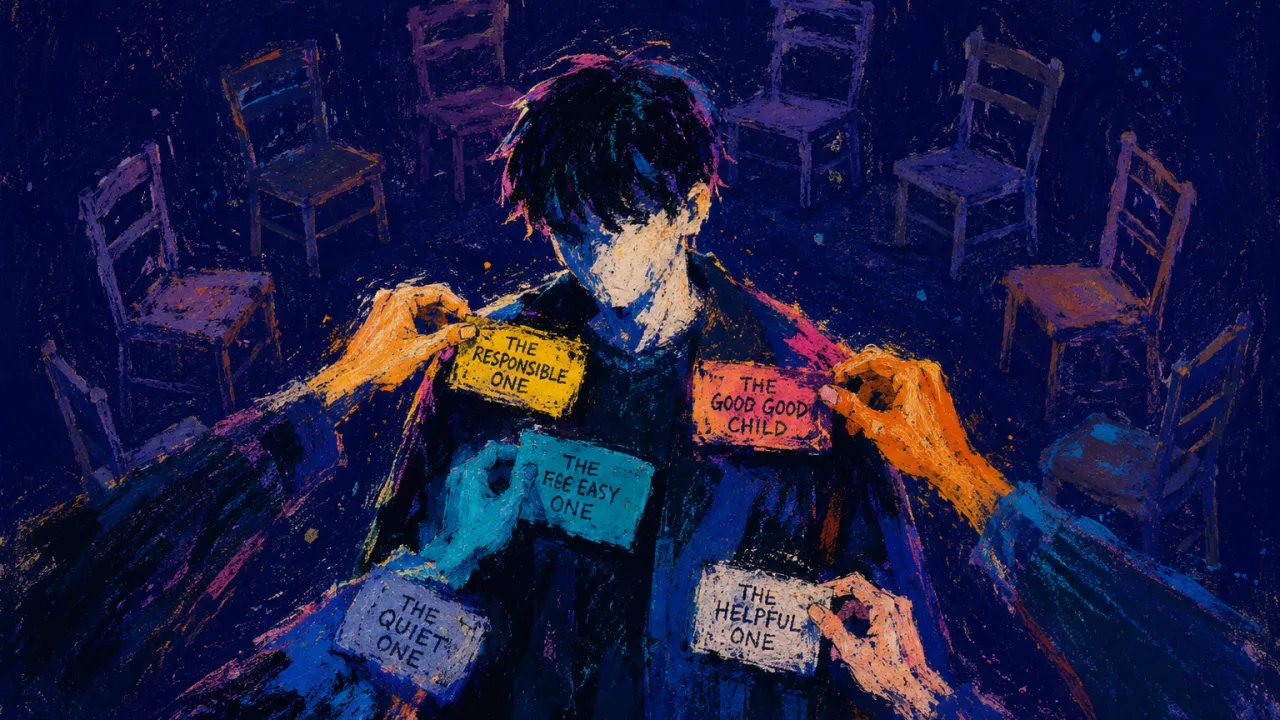
Old Friend Role Lock-In is what happens when you walk into a group chat, a birthday dinner, a weekend visit, or a reunion with people who have known you for years, and the room immediately starts treating you like the version of yourself they filed away a long time ago. Before you have even said much, someone brings back the old nickname, the old joke, the old job you always did for the group: planner, therapist friend, chaotic one, quiet one, responsible one, comic relief, backup option, easy yes. At first it can feel familiar, even affectionate, because these people do know parts of your history, but then the pattern starts to close around you: they interrupt your updates with memories, treat new boundaries like a phase, expect the same availability, or respond to your changed life as if you are making the friendship harder on purpose. You notice how the conversation has a track already laid down for you, and stepping off it makes the whole room shift; someone gets awkward, someone jokes you back into place, someone acts confused because the old role made the group easier to manage. Over time, the cost is not one dramatic conflict but a steady narrowing, where you keep leaving interactions with the strange sense that you were present but not fully recognized. You may still care about them, and there may still be history worth naming, but the friendship keeps asking you to be readable through an older script, much like the figure in The Hanged Man, tied at the ankle to a living tree, visible in the scene but held in a posture the frame refuses to update.

Why it's not you?

The problem is not that you have become difficult to know; the problem is that the friendship may be using an outdated map of you. Old jokes, fixed group jobs, automatic expectations, and resistance to new boundaries are not proof that you are asking for too much. They are the shape of a bond that has kept its old seating chart after the people inside it have changed.

Old Friend Role Lock-in in Tarot Cards

Old Friend Role Lock-In shows up when a familiar circle keeps handing you the old part before the current conversation even starts. The tightness is concrete: you can feel yourself shrinking back into the joke, the job, or the reliable posture your shoulders already know. This is an environmental, structural dynamic inside the friendship, where history becomes the seating chart and everyone is expected to stay legible. The Tarot Cards below reflect the outline of that lock-in without telling you what the bond has to become.

The Hierophant Reversed
The matching kneeling backs, ceremonial garments, and fixed temple positions make identity look assigned before anyone speaks. The acolytes are not presented as changing individuals; they are slotted into a ritual function. Old friend groups can recreate that same lock-in. You may have grown past the old joke, the old responsibility, or the old version of yourself, but the group keeps reading you through a role that once made the system feel stable.
The Chariot Reversed
The Charioteer's lower body disappears into the square body of the vehicle, while his upper body remains fixed in a polished command role. The image shows public competence attached to a base that does not visibly move. In an old friendship, this becomes the pressure of being kept inside a role that once made sense. You may be treated as the fixer, planner, entertainer, achiever, or reliable one, while the friendship fails to update around the person you have become.
Strength Reversed
The scene is frozen at the exact moment of containment: the hands remain at the lion's mouth, the garland still binds the figures, and the background mountain echoes a force that has not disappeared. Nothing in the image suggests a casual interaction; it is a role held long enough to become recognizable. That is how old friend role lock-in operates. A friendship remembers who you used to be and keeps placing you back into the same function, even after your needs, identity, or tolerance for access have changed. The tableau shows why this can be hard to name. The bond may still carry history and affection, but the old arrangement keeps pulling you into a posture that no longer fits the person standing there now.
The Hermit Reversed
The old figure's fixed posture, long beard, and planted staff make him readable as the one who has always known how to stand there. The image carries authority, but it also shows a body held in a narrow role by the very tools that support it. Old Friend Role Lock-In happens when long-term friends keep relating to the version of you that was useful, familiar, or easy for them to place. You may be treated as the quiet one, the fixer, the wise listener, the chaotic one, or the dependable organizer long after that role stopped matching your actual life. The elevated slab turns the old role into a platform you are expected to keep occupying. The card links the discomfort to a social structure where history has become a script, and the friendship has not updated its map of you.
Wheel of Fortune Reversed
The letters around the wheel repeat in circular order, while the four corner creatures keep their books open in fixed stations. The scene has movement, but it also has a script: each figure is placed into a recognizable role before any conversation begins. That visual logic fits an old friendship that keeps assigning you an earlier version of yourself. The image points to the external pressure of being treated as the reliable listener, the reckless one, the backup friend, or the old inside joke long after your actual life has moved on.
The Hanged Man Reversed
Tied at the ankle to a fixed bar, the Hanged Man cannot change stance through ordinary movement. His whole body is held in a recognizable position, almost like a role the scene keeps assigning to him. Old friendships can preserve a person in the version that was useful, funny, compliant, chaotic, or endlessly available years ago. The bond may still be meaningful, but the social structure around it keeps pulling You back into an outdated part, leaving little room for the person You have become. The blank space around the figure matters because there is no visible next room, doorway, or shared path. The card maps the quiet pressure of being seen through an old script and asks where the friendship would need to loosen its frame before a newer version of You could actually participate.
Death Reversed
The fallen crown and scepter lying beside the ruler show a role that has lost its living authority but still occupies the ground. The scene is crowded with old positions, and the bodies below the horse have very little room to move differently. In friendship, that becomes the old role that others keep assigning to you: the funny one, the fixer, the available one, the younger version of yourself they still prefer. The bond may carry history, but history becomes a constraint when it refuses to update. The card makes the lock-in visible as a social script, not a personal defect. Once the outdated role is named, the question shifts from proving growth to testing whether the friendship can recognize who you are now.
The Devil Reversed
The human figures have begun to mirror the horned environment around them, wearing small horns and tails while standing in the same old positions below the block. The visual pressure is not only restraint; it is identity assignment inside a fixed social scene. In an old friendship, that becomes the role you are still expected to play because the group remembers who you used to be. You may have outgrown the helper, sidekick, party friend, or peacekeeper position, but the relationship keeps fastening you to the earlier version because it keeps the old hierarchy stable.
The Tower Reversed
The figures hang between tower and ground, no longer inside the old structure but not yet landed somewhere stable. The image carries the physical strain of being forced out of one position without being given a usable path into the next. Old friendships can reproduce that suspension when they keep assigning You the role that made sense years ago. The pressure is not nostalgia by itself; it is the social container refusing to update while Your actual life, boundaries, and self-definition have already moved.
The Sun Reversed
The child has crossed the garden wall, but the image still frames them through childhood. Forward movement is present, yet the old protected enclosure remains visible behind the body, keeping the past inside the current scene. That is the pressure of an old friendship that keeps recognizing an earlier version of you more than the person standing there now. Growth, new values, and new boundaries can be treated as if they are breaking the friendship, when the real issue is that the role has not been updated. The card gives you a clean way to see the outdated script rather than shrinking back into it.
Judgement Reversed
The coffins are open, yet the figures still stand inside them. In reverse, the threshold does not become movement; it becomes a visible box that keeps naming the person by an older position. In friendship, this is the old role that keeps being assigned to you: the reliable one, the chaotic one, the comic relief, the fixer, the person who is never allowed to change. The card exposes the structural problem as recognition lag, where the friendship responds to your past shape instead of your current life.
The World Reversed
Inside the wreath, the central figure is fully visible within a finished frame, held in a pose that can be admired from every side. The same symbols that show completion can also become a display case when the surrounding circle only recognizes one version of the person in the center. In old friendships, this maps onto a role that keeps being assigned because it once made the group feel stable. You may be treated as the funny one, the reliable one, the chaotic one, or the always-available one, even when your actual boundaries have changed.
Four of Cups Reversed
The three cups in front of the seated youth sit like a preserved record of what has already happened, while the fourth cup enters from another layer of the scene. The body stays rooted under the tree, held in place by a posture that makes movement socially expensive. In an old friendship, those grounded cups can mirror the roles, jokes, expectations, and emotional contracts that were formed years ago. You may have changed, but the friendship keeps placing the same cup in front of you and calling it closeness. The suspended cup shows that another version of connection is technically present, but it cannot integrate while the old inventory controls the foreground. The card links Old Friend Role Lock-In to the moment when history becomes a social container that no longer fits your current life.
Five of Cups Reversed
The figure's black cloak creates a fixed social silhouette, almost like a role worn in public. The body remains oriented toward the old spill, while the distant house and bridge indicate that a different relational position exists but has not been entered. Old friendships can preserve people in outdated roles long after the original situation has passed. Someone remains the apologizer, the caretaker, the unreliable one, the intense one, or the person who is expected to absorb the group's disappointment, even when the current reality is more complex than that role allows. The Five of Cups makes the lock-in visible through posture. You may be facing a friendship that remembers one version of you so strongly that it cannot easily meet who you are now.
Six of Cups Reversed
The giver and receiver positions are clear, close, and socially legible, as though both children already know the roles available to them. The scene is tender, but it is also compact; the social radius is small, and the old household behind it gives the roles a long memory. In personal growth, this maps onto friend groups or long-running circles that keep calling the same version of you back into the room. You may have changed your values, ambition, discipline, or boundaries, while the group still knows how to interact only with the earlier self. The card connects to this context through the persistence of social scripts. It shows that the past is not only a memory inside you; it can also be a relational environment that keeps staging the same part for you to play.
Eight of Cups Reversed
The same cups that mark a history of connection can also become a fixed display of where the figure is expected to stand. In the reversed texture, the walking motion stalls near the old arrangement, and the swampy foreground keeps the scene enclosed. In friendship, this points to being held inside an outdated role: the reliable listener, the chaotic one, the sidekick, the peacekeeper, the backup plan, or the version of you that made the group feel stable. The problem is not that the old friends know your past; it is that the relationship keeps using that past as a seating chart. The moonlit terrain makes the exit harder to locate because the role feels familiar even when it has become too small. This card shows the lock-in as social architecture, giving you a clearer view of the expectations that keep pulling you back into an old self.
Page of Cups Reversed
The figure is a Page, not a fully established adult court card, and his role is visibly attached to a small vessel of emotional service. The image can hold the pressure of being kept in a younger, softer, more manageable position because the relationship recognizes the old role before it recognizes the current person. In friendship, old role lock-in happens when history becomes a social script. You are still treated as the listener, the harmless one, the messy one, the available one, or the person who never asks for much, even when your life and boundaries have moved on. The Page of Cups makes the lock-in subtle rather than dramatic. The friendship may still be affectionate, but the structure needs a reality update: a bond cannot stay reciprocal if it only knows how to relate to a past version of you.
Four of Pentacles Reversed
The square seat, fixed feet, and balanced crown coin make movement expensive. The figure can keep the whole arrangement intact only by staying exactly where he is, even as the town behind him suggests a wider life continuing beyond the pose. In an old friendship, that stillness maps a bond organized around who you used to be. You may be asked to keep performing an older version of yourself because the friendship's stability depends on frozen roles rather than present-day recognition.
Eight of Pentacles Reversed
A small path leads toward the town, but the craftsperson remains fixed at the bench, repeating the same task in the foreground. The scene contains a route outward, yet the body stays organized around the familiar work station. In an old friendship, that creates the pressure of being known through an outdated role. You may have changed your boundaries, politics, lifestyle or emotional capacity, while the friend still approaches you as the version who used to perform a specific function. The repeated coins show how history can become a production template. The card does not erase the value of the old bond; it reveals the social machinery that keeps asking you to become legible through a role you may no longer inhabit.
Nine of Pentacles Reversed
The falcon is a powerful bird, but in this scene it is hooded, gloved, and stationed on another figure's hand. The contact is elegant and controlled, yet the bird's movement is contained by the very system that makes the arrangement look refined. In a friendship, that image can describe an old role that keeps working socially while restricting who you are allowed to become. You may be kept as the dependable listener, the funny one, the fixer, the backup plan, or the past version of yourself that made everyone else comfortable. The reversed Nine of Pentacles turns the private garden into a beautiful enclosure. It reveals a friendship structure where stability is maintained by keeping your growth domesticated, and the first point of clarity is seeing which role the bond keeps asking you to perform.
Ten of Pentacles Reversed
The seated elder, the adults fixed at the gateway, and the half-hidden child create a social map where position is assigned by history and proximity. The crest and property markers intensify that arrangement, making belonging feel administered by what has already been established. Inside an old friendship, that becomes the pressure of being treated as the version of you the group first learned. You may be present, loyal, and familiar, yet the structure keeps directing you back into an outdated role because the group's stability depends on everyone staying recognizable.
Knight of Pentacles Reversed
The Knight's armor and mounted posture make him look prepared, competent, and already assigned to a function. When the horse remains still, that competence can harden into a role that keeps being recognized even when the person inside it needs to move. Old friendships often preserve an outdated version of you because it keeps the social system easy to read. The card shows the cost of being approached through your old usefulness: dependable one, low-maintenance one, planner, listener, fixer. You are not outside the friendship, but the route forward is blocked until the role can be renegotiated.
Six of Swords Reversed
The figures all face the same direction, and the swords stand in a rigid formation that leaves little flexible space inside the boat. The scene moves forward, but the interior arrangement remains fixed. In an old friendship, that image fits the pressure of being kept in a role you have already outgrown. The friend may still relate to the version of you who was always available, always chaotic, always the helper, or always the one who would not object. The boat's narrow path shows why this becomes more than nostalgia. When the friendship can only move if you keep occupying the old seat, the bond turns transition into a role lock, and your current self has to negotiate space inside a structure built around who you used to be.
Eight of Swords Reversed
The red robe is vivid, but it is held down by pale bands that decide how much of that vitality can move. The image presents a living identity under an older restraint system, standing upright but unable to act from its full current shape. Old friend role lock-in happens when a long-standing bond keeps recognizing the version of You that was useful, familiar, or easier to place. The card shows why changed values, new boundaries, or reduced availability may feel strangely illegible inside old friendships: the social costume still fits the past role more tightly than the present person.
Nine of Swords Reversed
The lower body is held under the patterned quilt while the upper body is fixed in the same night-time posture. Beneath the present figure, the bed frame carries an older carved scene, as if a prior relational script is built into the furniture of the current moment. Old Friend Role Lock-In appears when a friendship keeps assigning you the same position long after your life has changed. You may still be treated as the fixer, sidekick, reliable backup, crisis listener, or old version of yourself because that role keeps the friendship familiar for someone else. The card exposes the weight of a script that has become part of the setting. It does not demand that the history be discarded; it shows where history has hardened into a role that no longer allows you to move.
Two of Wands Reversed
The lord on the wall has status, territory, and a clear position, but his body is still arranged inside a role. One wand is literally secured to the battlement, turning support into a fixed marker rather than a flexible tool. In an old friendship, that visual pressure becomes the role you keep getting assigned because people remember who you used to be. You may be treated as the dependable listener, the chaotic one, the mediator, the organiser, or the version of yourself that made sense to the group years ago. Reversed, the Two of Wands shows the cost of being known too narrowly. The friendship’s history becomes a wall that preserves connection while limiting movement, and the real audit is whether the bond can meet your current self instead of repeatedly summoning the old one.
Three of Wands Reversed
The figure stands past the rear wands, but those wands still frame the scene from behind. His clothes signal status and experience, yet the old markers remain close enough to define how he is seen. Old Friend Role Lock-In appears when friendship history becomes a fixed costume. You may have changed your values, boundaries, or pace, but the old circle keeps interacting with the earlier version of you because that role kept the group arrangement simple.
Ten of Wands Upright
The road is open, the task is familiar, and the bundle is arranged in a way that looks practiced. The figure's face disappears behind what he is carrying, so the role becomes more visible than the person inside it. Old friendships can work this way when a group keeps assigning you the same function long after it stopped fitting. You may still be treated as the reliable one, the fixer, the listener, the comic relief, or the person who never needs much back. The card shows a social path that is known but narrowing, where history keeps turning into expectation.
Reversed
The man moves along a familiar stretch of ground toward a recognizable house, carrying the same kind of load his posture has already adapted around. In an old friendship, that visual pathway mirrors the role You may keep being placed back into because the relationship remembers who You used to be. The problem is not history itself; it is history becoming a fixed job description. The listener, the responsible one, the chaotic one, the rescuer, the agreeable one, or the emotional backup can all become roles that keep the friendship legible while making growth hard to register. This card links to Old Friend Role Lock-In because the body is still moving, but its shape is organized by an old burden. The structure asks whether the friendship can meet You as You are now, or only receive You when You carry the part it already knows how to use.

Old Friend Role Lock-in in Tarot Card Reading Insights

When Old Friend Role Lock-In is in the room, other people have brought the same pressure into readings: being remembered warmly, but met through an outdated role. The shift here is from the cards themselves to how this situation appears when someone sits down with a spread. Tarot Reading Insights from sessions around this kind of friendship pattern.
Psychological contexts related to Old Friend Role Lock-in