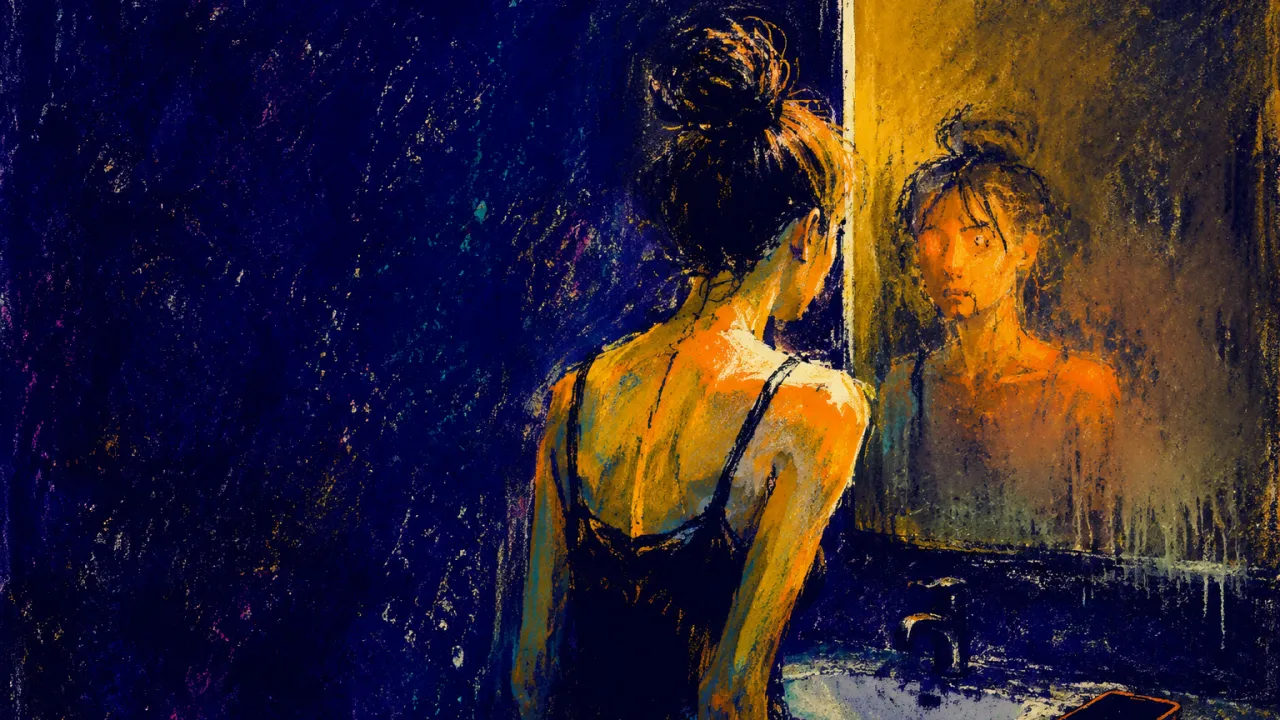
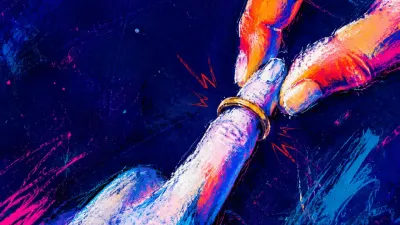
Masked Self-Division lives in the gap between the version of you that can sound composed and the private layer that keeps moving behind it. You may feel it as a tight throat, held breath, or that dark-window moment where your face looks familiar but not fully reachable. From an existential perspective, the structural framework here is about how a person can stay legible on the outside while the inner field is kept behind a veil. The Tarot Cards below make that divided outline visible without flattening it into a simple mask.
The High Priestess UprightThe High Priestess presents a composed front while the scroll, the veil, and the water concentrate dense material behind the surface. Her visible body is calm and symmetrical, but the image keeps the most charged content partially covered and set back from view. In introspection, this structure names the split between the self that can appear steady and the private self that carries the unprocessed layer. You are not being reduced to a mask; the card marks the exact divide where the visible identity has become too polished to stay connected with what is still moving behind it.
The Empress ReversedThe Empress faces outward with a composed surface while the robe, cushions, and throne conceal most of the body’s movement. Behind her, water and forest carry a different kind of motion, one that is present in the picture but kept behind the public-facing figure. In introspection, that split gives form to the distance between the self that can be shown and the current that keeps moving underneath. You may be functioning through a polished face while the private emotional system runs on another track, and the card locates the strain where those tracks stop sharing the same map.
The Emperor UprightThe red robe presents command while the armor underneath tells a different story. The Emperor's hands display authority symbols, yet the protected body beneath the surface remains prepared for impact. Masked Self-Division takes shape in that double layer. You can appear composed, capable, and internally ordered while another part of the self is still bracing under the costume, creating a split between the self that performs control and the self that carries the pressure of being unseen.
The Hierophant UprightThe Hierophant's vivid vestments stand out against a grey temple, while the dark recess behind the throne remains visible but untouched. The picture is highly composed on the surface, yet its deepest space sits behind the public role, outside the ritual's active exchange. That split is the physical shape of a self that can perform order while storing unprocessed material out of view. In introspection, You may keep presenting a calm, articulate, spiritually literate version of yourself while another layer remains hidden behind the throne, waiting to be named without being turned into another performance.
The Chariot UprightThe armored figure faces forward as a public emblem of mastery, while the lower body disappears into the square body of the chariot. Above, the canopy opens into stars; below, the living body is hidden inside a controlled, ceremonial shell. Masked Self-Division lives in that split between presentation and containment. You may look composed, capable, even victorious from the outside, while the inner material that would make you feel real is held out of sight to preserve the image of command.
ReversedThe charioteer is highly visible beneath the starry canopy, covered in armor, signs, and emblems that make the public self legible. At the same time, the body is partially absorbed by the square vehicle, turning visibility into a guarded display rather than full access. You may recognize this in social circles where you know how to appear composed, capable, interesting, or impressive, but the version being seen is not the one that needs contact. The social surface keeps working while the private self remains structurally out of reach. The reversed chariot names the split between social presentation and inner participation. It shows a self that is not absent from the group, but divided inside the role that the group can recognize.
Strength ReversedThe calm face, floral belt, and bright field can make the scene look fully resolved, even though the woman's hands are still stationed at the lion's mouth. In the reversed structure, the image of control becomes easier to see than the force still being controlled. Masked Self-Division grows where composure becomes an identity. You may appear self-aware, peaceful, healed, or emotionally mature while a less acceptable part of the self remains held out of view. The card's pressure comes from the split between surface evidence and inner contact. The lion has not disappeared; it has been incorporated into a controlled image that can make your own rawness feel harder to recognize as yours.
The Hermit ReversedThe visible Hermit is a narrow figure inside a much larger field of darkness and snow. The cloak, the lantern, and the ridge all reduce the self into a controlled silhouette while the unlit space expands around it. In reversed introspection, the managed self can become the only part allowed into view. You may keep a coherent surface, a careful identity, or a private persona of being fine, while the unprocessed material grows larger in the background. Masked Self-Division is carried by that proportion: small light, vast hidden field. The card names the split between the self You can hold steady and the shadowed material that remains outside the circle of visibility.
Justice ReversedThe red robe covers nearly the whole body, while a single white shoe reaches the step as the only exposed point of contact. The face is composed, the posture ceremonial, and the room turns the person into an official image before it reveals the body underneath. That visual split maps onto the inner cost of maintaining a self that can pass as calm, fair, reasonable, and acceptable. You may look integrated from the outside, but the hidden body still presses against the mask, and the smallest exposed detail can carry the truth the formal self has been managing.
The Tower ReversedThe tower still has the outline of a finished structure while fire vents from its windows. Its height, crown, and stone surface present completion, but the interior is already contradicting the image from within. Masked Self-Division lives in that split between facade and internal weather. In introspection, you may still be able to sound composed, maintain the public version, and explain yourself cleanly while the hidden system is already burning through the vents. The strike makes the division visible, but the split existed before the lightning. The card names the cost of keeping the elevated image intact after the inner structure has stopped matching it.
The Moon ReversedThe card divides itself into paired forms: dog and wolf, twin towers, pool and land, full disc and crescent face. Each pair holds a contrast in place, but none of the contrasts fully resolves into one body, one voice, or one direction. In introspection, that rigid symmetry becomes the architecture of a self split between display and instinct. You may keep one version of yourself legible, composed, and acceptable while another carries the unedited material underneath, and the strain comes from maintaining both as separate operating systems instead of letting them meet.
The Sun ReversedThe Sun floods the whole scene with light, yet the stone wall still cuts across the lower card as a rigid protected layer. Above it, the child appears open and triumphant; below that openness, the composition still depends on a boundary that has not disappeared. This is the visual split inside Masked Self-Division. One part of You can look transparent, warm, and easy to read, while another part remains organized around older defenses, private rules, and material that has not crossed the wall. In introspection, the struggle becomes painful because both layers are real. The visible self is not necessarily fake, and the hidden self is not necessarily more authentic; the card locates the strain in having to live as one coherent person while the inner architecture is still divided into protected and exposed zones.
Seven of Cups UprightThe human head appears as a separate cup from the shrouded figure, splitting the visible face from the concealed self. The body is also turned away from the viewer, so identity is staged as something both displayed and withheld. You can see the public image and the hidden self at the same time, but the card keeps them in different vessels. That separation gives form to the private strain of maintaining a face while knowing another part of you remains covered, unspoken, and harder to reach. For introspection, this is not simple secrecy. It is a structural division between the self that can be shown and the self that still needs protection before it can be recognized.
ReversedOne cup holds a head, another holds a veiled figure, and the person watching them is only a dark outline. The card separates face, hidden self, and observing body into different places, so identity is visible as fragments rather than as one integrated presence. Inside friendship, this structure becomes a split between the version of you that keeps the bond stable and the part of you that stays covered. The group may know your humor, your availability, your useful calm, or your curated social face, while the self that needs different boundaries remains difficult to show. Seven of Cups names the cost of belonging through a mask. The struggle is not simply pretending; it is being recognized for the role that protects the friendship while the more truthful self is left under cloth.
Ten of Cups ReversedThe card's figures are arranged inside a scene where every visible cue says completion: open arms, joined bodies, dancing children, a secure house, and cups arranged as a perfect arc. Reversed, the same arrangement can divide the inner field into what belongs in the picture and what must stay outside it. That division is the introspective pressure point. One part of you can keep the grateful, healed, emotionally generous self online, while another part carries irritation, shame, doubt, or grief with no accepted place in the scene. Masked Self-Division names the internal architecture created by that split. The Ten of Cups shows the mask as an image of harmony so convincing that even the hidden self may start believing it has no right to interrupt.
Page of Cups ReversedThe Page's pleasant presentation can harden into a pose: the body stays charming, balanced, and contained while the cup holds something stranger than the role is built to display. The fish makes the inner content visibly alive, yet the formal chalice still frames it as if everything is orderly. Masked Self-Division lives in that mismatch between the graceful surface and the private anomaly. For introspection, the card does not point to a lack of self-awareness; it shows the cost of maintaining an acceptable outer shape while the inner life keeps producing material that does not fit the mask. You are left managing two selves at once: the one that appears delicate and composed, and the one holding a signal that refuses to stay decorative.
King of Cups UprightGold and blue divide the king's body into two visible systems: public authority and oceanic feeling. He belongs to the sea through color and symbol, yet his throne and posture keep him arranged as a composed figure above it. Masked Self-Division forms when the visible self becomes fluent, calm, and emotionally intelligent while the private self remains more fluid than the mask can admit. You may not be faking your steadiness; the card shows a real capacity for containment that has also become a split between what is shown and what is lived. For inner work, the tension is especially sharp because the mask can look wise. The King of Cups reveals the cost of being readable as balanced while the deeper self still needs permission to be less finished, less elegant, and more true.
Two of Pentacles ReversedThe figure in the Two of Pentacles keeps both coins moving through a visible loop while dressed as if the whole act is light, playful, and controlled. The body has to make instability readable as rhythm, so the strain is not absent; it is converted into a performance that can be watched without revealing how much concentration it costs. When this structure turns inward, the card locates the split between the self that appears balanced and the self that is privately managing incompatible loads. You may look composed because the loop is still moving, but the movement itself can become the evidence of division: one part keeps the show intact while another part absorbs the cost of never letting either coin fall. In introspective work, this is the shape of Masked Self-Division. The card does not frame the split as personal failure; it shows a system that learned to survive by turning inner fragmentation into visible competence, leaving the real task hidden behind the rhythm of staying fine.
Three of Pentacles ReversedApron, white robe, and red robe divide the scene into clean social roles before the viewer ever sees the interior of the building. Each figure has a function, a costume, and a place, but the shared structure is still unfinished. Reversed, those roles stop feeling collaborative and start feeling like separate masks. The worker becomes the competent exterior, the robed figures become internalized standards, and the threshold becomes the compressed space where all versions of the self must appear organized at once. In inner-world work, Masked Self-Division appears when composure is maintained by partitioning the psyche. You may look coherent from the outside, but the card shows the cost of making each part perform its role while the deeper repair has not been allowed to become one living structure.
Six of Pentacles ReversedThe richly dressed giver and the torn-clothed receivers share the same platform, and the red showing through the blue cloth quietly echoes the giver's red coat. The image separates status and lack into different bodies, yet a matching color leaks through the tear as evidence that the split is not clean. Inside the self, that visual split can become a polished public role standing above a hidden exposed part. You may appear capable, generous, composed, or in control, while another part of the psyche waits below the surface with its hands out. For introspection, the card gives the mask a physical map. It shows the competent self and the deprived self occupying one inner stage, divided by posture and clothing, but still made of related material.
Ten of Pentacles UprightThe elder sits in ceremonial stillness while the couple speaks beneath the arch and the child stays partly hidden beside the mother. The scene looks complete, but its attention is divided across different bodies, thresholds, and duties rather than gathered into one shared inner field. That is the shape of Masked Self-Division in introspection: the outer household of the self remains polished while separate inner parts keep running different scripts. You may look stable, grateful, or composed, yet the card locates the strain in the split between the visible role and the private material that cannot fully join the scene. The Ten of Pentacles carries abundance as structure, not just comfort. Here that structure becomes a mirror for the cost of appearing internally ordered when the inner conversation is actually scattered across legacy, performance, and unmet self-contact.
King of Pentacles UprightThe king's robe offers softness, abundance, and cultivated ease, but armor shows beneath it and the metal foot presses down on conquered animal force. The card places refinement and threat-readiness in the same body, without letting either one disappear. For introspection, this image gives form to the split between the composed self and the guarded self underneath. You may know how to look steady, generous, capable, or untouchable while a deeper layer remains braced, watchful, and unwilling to be seen without protection. The struggle is not that one side is false and the other is true. The card reveals a divided inner architecture: the visible self maintains polish, while the hidden self keeps wearing armor long after the immediate danger has passed.
Seven of Swords UprightThe tiptoeing body performs control while the backward glance keeps the camp alive behind him. His patterned, almost comic clothing and confident smile sit on top of a posture that must stay quiet, fast, and split in several directions at once. In an introspective reading, the strain is not simply that a mask exists; it is that the mask has become a second operating system. You are asked to see where the public face, the private route, and the hidden load have stopped syncing into one coherent self.
ReversedThe figure's posture is clever on the surface and divided underneath. His body travels one way, his face checks another, and the swords are controlled through the wrong contact point, making the whole scene look agile while carrying concealed strain. In a social field, this is the shape of maintaining one face for the group while another part of you is already withdrawing, calculating, or protecting itself. You may appear adaptable and socially fluent, but the card shows the internal cost of operating through split directions. The struggle is not that you are being false in some simple moral sense. It is that the social environment has made a divided self feel functional: one layer performs ease, another tracks danger, and neither layer can fully settle into honest contact.
King of Swords UprightThe King's crown, plain robes, and frontal throne create a perfectly composed public surface, while the red warmth of the hood and elbows appears only in controlled flashes. The body does not collapse, reach, or turn; it maintains the role even in the presence of wind, birds, and moving clouds. For inner work, that image names the split between a managed self and the material that self keeps containing. You can appear clean, rational, and self-possessed while the private layer underneath carries heat that has nowhere visible to go. The struggle is the cost of being internally organized around a persona. Reflection starts auditing the mask instead of meeting the feeling, so the inner world remains divided between what can be presented and what must be held out of sight.
Six of Wands UprightThe rider sits high on the white horse with a laurel on his head and another laurel fixed to the raised wand, so the person and the proof of success occupy the same visual register. The surrounding wands create a corridor of attention, giving him forward motion only through a space already shaped by public recognition. That structure gives Masked Self-Division its exact shape: the visible self has to remain legible as the victorious self. You may be moving through inner work with a polished face already in place, where the part that receives applause is overlit while the unprocessed, contradictory, or tired part has no obvious place in the scene. The card does not reduce the mask to vanity. It shows how a successful image can become a physical container that keeps the parade moving, even when the inner self needs to step outside the role long enough to become real again.
Ten of Wands ReversedThe top of the wand cluster is dense, neat, and almost orderly, while the human face and torso disappear behind the effort required to hold it. From a distance the cargo looks coherent; up close the coherence depends on a body bent out of view. In inner-world terms, the card mirrors the public mask that keeps life looking managed while the private self is folded around the weight. You are not being shown a simple mismatch between outside and inside; the image locates the split in the labor required to make the outside stay presentable.
Queen of Wands ReversedThe Queen's robe, throne, and desert merge into a warm field, while the grey cloak visually connects with the cooler stone plane at the side. The body stays centered and composed, but the image quietly separates into zones of display, protection, and concealed weight. In the reversed state, this division becomes an inner architecture. The self can keep a clean frontal image while different parts of the inner world operate in separate rooms, each carrying a different temperature and rule set. For introspection, the card names the split that happens when composure becomes the organizing surface over incompatible inner material. You may not feel fragmented in a dramatic way; the struggle is subtler, like realizing the version of you that is visible has been managing several hidden selves at once.
No cards available for this filter.