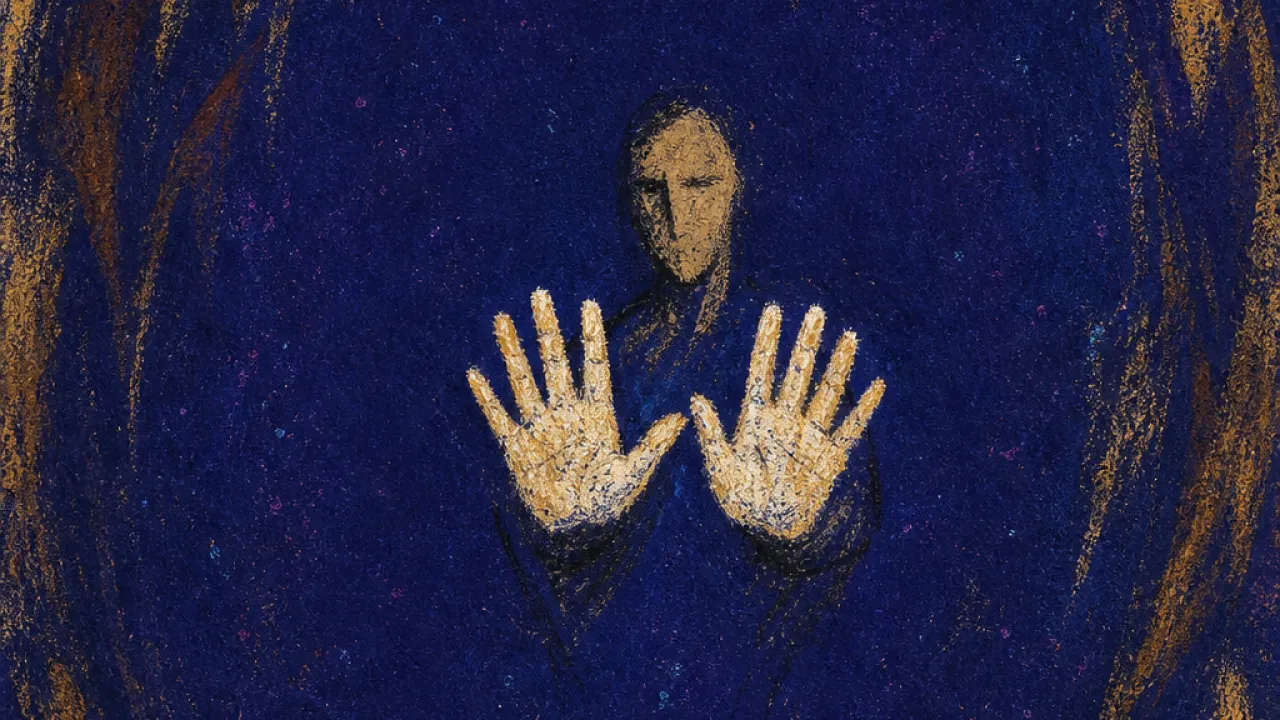
Family Boundary Negotiation often begins in ordinary contact: a call, a visit, a question about money, a request for details you were not planning to share. The tightness in your jaw when the conversation turns from care into access is part of the body's record of that pressure. This is an environmental, structural dynamic, not a private failure: the family system is still using old entry points while your adult life needs clearer edges. The Tarot Cards below reflect the visible shape of that negotiation: closeness held through limits, not disappearance.
Strength UprightThe woman's hands rest directly on the lion's mouth, close enough to be vulnerable but steady enough to shape the contact. There is no weapon, wall, or exit strategy in the scene; the boundary exists through precise contact with a force that could easily overwhelm the space. In a family system, that image maps the moment when staying connected requires a limit rather than a cutoff. You are not dealing with a clean separation from the family field; you are dealing with tone, access, visits, money, privacy, and emotional reach while the old force is still close. The Strength image makes this kind of negotiation visible because it shows restraint without domination. The real question is not whether the family remains present, but whether its access to you can be held at a distance that lets you stay intact.
The Hermit UprightThe gray cloak, raised lantern, and solitary ridge show a body that stays covered while still allowing a narrow signal to reach the outside. The Hermit is not cutting off the world; he is controlling the terms of access, keeping the light visible without making the whole self available. In a family system, that visual structure maps onto the adult work of deciding what parents or relatives can reach. You may still answer, visit, update, or care, but the boundary begins where access stops being automatic. The card gives this negotiation a concrete shape: distance is not the same as disappearance, and privacy is not the same as rejection. The lantern marks the part of contact that remains intentional, while the cloak marks the part of the self that no longer has to be handed over on demand.
Wheel of Fortune UprightThe wheel is not an open field; it is made of rings, edges, and stations. Each figure has a place around the structure, and the corner creatures remain near the perimeter with books open rather than dissolving into the center. That arrangement fits a family boundary negotiation because the issue is not total separation. It is the question of access: who gets to enter your adult decisions, how often contact happens, what private information stays private, and whether a limit is treated as a real edge or merely a temporary request. The card gives the negotiation a concrete map. You can see that belonging and distance can coexist, but only if the family stops treating every boundary as a challenge to the whole wheel.
Justice UprightThe two pillars make a clean threshold around the seated figure, while the curtain holds a protected interior behind the exchange of sword and scale. Justice is not standing in open conflict; the card frames a room where access, limits, and consequences can be defined. In family life, that becomes boundary negotiation rather than emotional withdrawal. You are working out who gets entry into your time, space, information, and decisions, and the card shows why the boundary needs terms that can be seen instead of private guilt that keeps moving.
The Hanged Man UprightSuspended from a single ankle on a living T-shaped tree, the figure is not walking away and not standing inside the old order. The rope creates one visible point of attachment, while the centered trunk gives the body enough distance to see the structure holding it. In a family field, that image maps onto boundary negotiation: you remain connected, but the old rules of access, availability, and automatic compliance can no longer run invisibly. You are not being asked to erase the tie; the card shows the moment when the tie has to be named, limited, and restructured so your adult position can exist inside it.
Temperance UprightOne foot on land and one foot in water gives Temperance its most concrete boundary image. The figure does not reject either element, but the body also does not dissolve into the pool; it holds a measured threshold. In family life, that threshold becomes the work of deciding how much contact, disclosure, availability, and emotional access can actually be sustained. You may still want connection, but connection no longer has to mean unlimited access. The road behind the figure matters because the boundary is not a wall for its own sake. It is a route toward adult positioning, where you can stay in relation to family without letting the old system define every edge of your life.
The Star UprightThe woman kneels with one knee on the earth and one foot touching the water, placing her body exactly between two different kinds of territory. In a family system, that split position mirrors the work of staying connected while no longer letting every emotional current pull you back into an old role. The two pitchers matter because the flow is divided rather than dumped into one place. This card makes boundary work look less like rejection and more like careful distribution: what belongs in shared family space, what belongs in private emotional space, and what must be kept from flooding both. For you, the pressure is not simply whether to be close or distant. The structure points to a more precise stage where contact, disclosure, help, and availability are being renegotiated so your adult self can remain visible without becoming fully accessible on demand.
The Sun UprightThe stone garden wall runs across the lower scene while the child rides in open sunlight, arms spread, with no bridle on the horse. The image holds protection and freedom in the same frame: a boundary firm enough to shelter growth, but not so sealed that movement stops. In a family setting, that wall becomes the line between staying connected and being absorbed. You may be dealing with contact that only works when privacy, time, emotional access, and adult decision rights are clearly named, because the relationship needs structure before warmth can remain warm. The Sun keeps the scene visible rather than secretive. It points to a boundary conversation where the goal is not disappearance from the family system, but a workable social shape where your adult self can be seen without being managed.
Judgement UprightThe figures rise from their own coffins but do not fully leave them. Their bodies open toward the trumpet while their feet and lower bodies remain inside the containers that held them. That half-emerged posture gives Family Boundary Negotiation its exact shape. You are not outside the family system, and you are not fully absorbed by it either; the realistic task is to define contact, privacy, obligation, and access while still standing in relation to people who knew the old version of you. The mountains and cold water keep the scene contained, which matters for this context. The card does not show a dramatic escape; it shows a threshold where an adult boundary can be made visible without pretending the inherited structure has disappeared.
The World UprightInside the laurel wreath, the dancer is exposed but still held by a clean oval perimeter. The open body does not erase the boundary; it makes the boundary visible. In family systems, that visual tension maps to adult contact that can stay warm only when there is a named edge around time, access, privacy, and emotional labor. The four corner figures witness the scene without entering the wreath, which matters for this context. You are not removing the whole family from view; the card frames negotiation as the work of letting family remain present while no longer owning the center of your life.
Ace of Cups UprightThe hand supports the chalice by its base while the rim remains open, and the water moves outward without destroying the cup's edge. The image holds two facts at once: contact is possible, and the vessel still needs a boundary. In a family system, that becomes the work of deciding what can flow between you and relatives without giving them total access to your time, privacy, money, or emotional interior. You are not being asked to cut off the pool; you are being shown where the rim has to exist for care to stay usable.
Two of Cups UprightTwo cups held at the same height create a small but exact architecture of consent. The figures face one another without collapsing the distance between them, and the central staff keeps the exchange organized rather than swallowed by one side. In a family system, that geometry points to a boundary conversation where adult contact has to be renegotiated as mutual recognition. You are not looking at rejection or obedience; you are looking at whether privacy, timing, and access can be held at the same level by both sides.
Three of Cups UprightThree women stand close enough to complete a circle, yet their robes, wreaths, hair, and gestures remain individually readable. The raised cups create contact without flattening difference, so the scene holds closeness and separateness in the same frame. Inside a family system, that visual structure maps onto the pressure of staying connected while protecting adult space. You may be dealing with visits, calls, shared rituals, or holiday expectations where closeness is treated as proof of loyalty, and the card makes the boundary visible: connection only stays workable when each person’s edge remains intact.
Four of Cups UprightFolded arms and legs beneath the tree make the body look like a gate that has been pulled shut, not a person rushing toward every cup placed nearby. The three cups in front and the fourth cup held out from the cloud show that family contact, offers, and expectations are present, but access is being filtered. In a family system, that posture maps to the friction of deciding what gets to cross your boundary: a visit, an apology, a favor, or a demand for closeness. You are not outside the family field; you are sitting inside it with a visible perimeter, trying to separate real care from automatic availability.
Nine of Cups UprightArms crossed in front of the chest, the seated man keeps his full cups behind him rather than placing them in everyone’s hands. The posture does not erase connection; it creates a controlled edge between what is available and what remains protected. Inside a family system, that edge becomes the adult task of deciding how much access relatives get to your time, feelings, plans, and achievements. The card’s full cups show that there is something valuable to protect, while the table shows that access can be structured instead of automatic. You are not looking at cold withdrawal here. You are looking at the moment when care has to be given a boundary before it can remain usable.
Page of Cups UprightOne hand rests on the hip while the other presents the cup, creating a controlled distance around something emotionally delicate. The Page is engaged with the fish, but he is not submerged in the sea behind him; he stands on a platform with an edge. This is the visual grammar of family boundary work. Contact remains possible, but access is no longer unlimited, and the emotional object has to be held with a shape rather than spilled into every conversation. You may be trying to keep the relationship functional without giving relatives full entry into your private life. The card supports the need to define the container before the family feeling becomes the whole environment.
Knight of Cups UprightThe riverbank cuts the landscape into two distinct zones, and the knight approaches it without charging. His armor protects the body, the cup keeps the exchange emotionally open, and the reins prevent the horse from rushing the crossing. That arrangement mirrors a family boundary negotiation because the issue is not whether care exists. The issue is how close the family gets, how fast contact happens, and what has to remain protected while You stay available for basic communication. The card’s quiet movement gives the boundary a practical shape. It is a paced threshold, not a wall, and it asks the family system to meet contact through terms instead of assuming automatic access.
King of Cups UprightThe King sits in the middle of the sea without being swallowed by it, holding the cup of feeling in one hand and the scepter of authority in the other. That split matters: care is present, but it is not allowed to dissolve every line between access, duty, and self-possession. In a family system, this image maps onto the moment when You are trying to stay emotionally reachable without becoming emotionally available on demand. The shell throne is not a wall; it is a working boundary, a place from which contact can happen without surrendering the whole nervous system to the room. Family Boundary Negotiation fits because the card shows care with structure, not distance for its own sake. The practical issue is not whether You care about the family; it is whether the family can learn that adult contact requires terms, pacing, privacy, and consent.
Ace of Pentacles UprightThe hand reaches for the pentacle without the whole body entering the garden, and the fence below is low enough to see across but clear enough to mark a border. The archway gives access a shape; entry exists, but it is not the same as total exposure. That visual structure mirrors the family work of staying connected without becoming fully available to every demand. You are not outside the system, but the card gives the boundary a visible line, making the negotiation about terms of access rather than guilt, loyalty, or automatic permission.
Two of Pentacles UprightThe young figure keeps two pentacles moving through a loop while standing in a dance-like posture that never fully settles. One foot is lifted, both hands are occupied, and the whole arrangement depends on constant adjustment rather than a stable resting place. In a family setting, that image maps cleanly onto the work of renegotiating contact, access, and obligation without dropping the relationship altogether. You may still be in the family system, but the old assumption that everyone gets unlimited emotional access is no longer holding cleanly. The rough sea behind the figure adds the social pressure: family life keeps moving while you are trying to define what belongs in your hands and what does not. The card points to a boundary process that is active, awkward, and still exposed to pushback, rather than a finished declaration of independence.
Three of Pentacles UprightThe three figures gather at the church doorway rather than inside the finished building, so the card begins with a threshold instead of a sealed home. Each person has a visible place in the exchange: one works, one observes closely, and one holds the plan. In a family context, that threshold becomes the line between access and autonomy. You are not outside the family system, but you are also no longer fully absorbed by it; the scene shows contact that requires structure, role clarity, and negotiated entry. The upright Three of Pentacles supports this context because the collaboration is still workable. Boundaries are not treated as rejection here; they are the architecture that lets communication, care, and responsibility become specific enough to function.
Four of Pentacles UprightThe square seat, front-facing posture, and four counted coins create a clean perimeter around one body. The figure is closed, but the closure has edges: chest, feet, crown, and seat all mark where access begins and ends. For family questions, that perimeter becomes the work of deciding what relatives can enter: your time, money, home, phone, plans, and private choices. You are not cutting off connection by naming the edge; you are making contact less dependent on intrusion.
Seven of Pentacles UprightThe cultivator stands close enough to the vine to remain responsible for it, but not so close that the plant consumes the whole body. The side position matters: he is near the family-like system of growth, labor, and return, while still creating enough distance to assess it. Family Boundary Negotiation appears when closeness itself becomes the site of friction. You may still want contact, care, and basic functionality, but the card shows the practical task of finding a position beside the system rather than underneath it, where love does not automatically grant unlimited access to your time, privacy, or choices.
Eight of Pentacles UprightThe craftsman works in an open place beside a structure, close to the town but still gathered around his own bench. The scene creates a practical boundary: connected to the surrounding world, but not fully absorbed by it. In family life, that kind of boundary is rarely abstract. It shows up in who gets access to your schedule, money, home, updates, decisions, and emotional availability. You may still want contact, but the workbench marks the need for a defined station where your adult life can be built without constant interruption. The card treats boundaries as craft rather than a one-time declaration. The path remains visible, the town remains present, and the work continues; the task is to shape a contact pattern that supports connection without handing over the tools.
Nine of Pentacles UprightStanding alone in a cultivated vineyard, the woman touches the pentacles lightly while the house remains visible in the distance. The scene is not crowded by other people; it is organized around a private field, a protected glove, and a body that occupies space without apology. That visual structure maps cleanly onto family boundary negotiation because the issue is access management. You are trying to keep a relationship functional while deciding what parts of your time, home, money, and emotional bandwidth remain inside your own garden.
Ten of Pentacles UprightThe archway in Ten of Pentacles creates a clear household boundary, but the scene inside it is crowded with relatives, animals, inherited symbols, and property markers. The couple speaks to each other while the wider family system remains physically present around them. That layout turns love into a boundary question. The relationship may have support, history, and stability available, but those supports come with access points that have to be managed: who gets a say, who is allowed into private decisions, and where the couple's own space begins. You are being shown a relationship container that can protect intimacy only if its edges are consciously defined. Without that definition, family closeness can quietly become background governance over choices that should belong to the partnership.
Ace of Swords UprightAn upraised sword held behind a round guard creates a clean line in open air, and the blade’s exact penetration of the crown turns clarity into an enforceable boundary rather than a vague wish. In a family system, that visual structure translates into the moment when access, visits, money, information, or emotional availability can no longer be governed by implied rules. The olive and palm branches show that peace is present only when it is attached to a defined standard. You are not being asked to disappear from the family field; the pressure is to make the boundary visible enough that the old system can no longer treat your adulthood as negotiable.
Two of Swords UprightThe blindfolded woman holds two swords crossed over her chest, turning her own body into a temporary boundary at the edge of the tide. The posture is controlled, but it is also costly: every demand has to be held in place before any movement can happen. Family boundary negotiation often has that exact shape. You are not simply deciding whether to answer a call, visit, share information, or comply with a request; you are holding competing claims over access to your time, privacy, money, and emotional availability. The card frames the boundary as a structure that needs clear terms, not as a personal flaw. The crossed swords show where the line is being held, while the dark water behind her shows the pressure that rises when that line has never been named cleanly.
Four of Swords UprightThe body on the tomb occupies a narrow, clearly marked space, while the stained-glass family image remains visible but not physically reachable. The card does not erase connection; it places connection behind a boundary, with the figure protected by architecture, distance, and ritual stillness. That structure fits family boundary negotiation because the issue is not whether family exists, but how much access the system gets to your time, attention, privacy, and emotional labor. The swords show that contact without limits can keep pressure hanging over the body. You are not being shown a clean break. You are being shown a controlled chamber where contact has to be redesigned before it can become sustainable.
Six of Swords UprightThe six swords stand in two clean rows along the boat, turning sharp objects into a temporary guardrail rather than a weapon. The adult and child are not exposed on open water; they are carried inside a narrow, ordered container where contact with the outside is filtered. That is the structure of Family Boundary Negotiation: You are still inside the family crossing, but access has to be arranged before the trip can continue. The card links family conflict to the practical work of deciding who gets a call, a visit, an update, or a say, so autonomy is protected without pretending the connection has disappeared.
Page of Swords UprightThe Page stands exposed on the ridge with a raised sword, not attacking but holding a clear line while the weather moves around him. The image turns boundary-setting into a visible act of positioning: the body has to stay alert, the tool has to stay steady, and the surrounding field is too open to provide automatic protection. Inside a family system, that same structure appears when You are trying to define what can be asked of You, what information is available, and where contact stops being access. The card does not frame the boundary as rejection; it shows a young figure learning to keep a perimeter intact while still remaining present enough to speak.
Knight of Swords UprightThe raised sword extends beyond the frame while the armor keeps the rider intact inside open terrain. The image has no wall or house around it; protection comes from the rider's declared line, posture, and ability to keep moving. That visual field maps cleanly onto family boundary work, where adult space is not automatically granted and often has to be stated in language. The sword becomes a line of definition: what can be asked, what can be refused, what no longer belongs to the family system to decide. You encounter this context when boundaries are still being negotiated rather than fully respected. The card shows the tension of holding a clear position while remaining inside a family network that is used to older access rights.
Queen of Swords UprightThe Queen sits upright with the sword held high and one hand extended, creating a visible line between access and judgment. Her body does not collapse into the family field around her; it holds a formal position from which speech, contact, and permission can be measured. That posture maps cleanly onto a family system where boundaries have to be stated rather than assumed. The sword is not aggression here; it is the tool that separates what belongs to you from what has been absorbed through habit, guilt, or inherited expectation. For You, this context points to the practical difficulty of staying connected without becoming available for everything. The card frames boundary work as a social negotiation inside a real hierarchy, where clarity has to be held long enough for the old access rules to become visible.
King of Swords UprightThe King's body sits open to the front but contained by the throne, while the raised sword marks a visible line between thought and action. Nothing in the scene is sprawling; authority is held in a defined shape, not poured into every corner of the landscape. That visual restraint mirrors a family boundary negotiation where contact is still possible, but the terms can no longer stay vague. You are not dealing with a simple preference clash; the structure asks which conversations, obligations, visits, and disclosures actually belong inside the relationship, and which have been treated as family property without consent.
Ace of Wands UprightThe wand is gripped firmly but not used to strike, and the river below divides the terrain without sealing it off. The picture gives you a boundary that can be held, not a wall that has to cut everyone out. Inside family dynamics, this maps to the work of keeping contact functional while naming adult limits. You are not only asking for space; you are trying to make your position visible enough that the relationship has to reorganize around it.
Four of Wands UprightThe four wands create a boundary without building a wall. People can gather under the garland, the sky remains open, and the bridge still marks a separate route toward the family home. That visual structure fits family boundary negotiation because the card does not require total closeness or total cutoff. It shows a middle architecture: You can stay connected while deciding what crosses the threshold, what stays private, and what kind of access your family actually gets.
Five of Wands UprightThe five figures share one open field, but none of them holds space in the same way. Their arms extend outward through the wands, making each person's claim visible before any stable agreement has formed. This is the active texture of family boundary negotiation. The conflict is not only about one rule; it is about where adult autonomy, parental concern, sibling expectation, household habit, and inherited loyalty are allowed to begin and end. The card's value is that it shows boundary work as a live social process, not a private declaration. You may be trying to move from automatic family access into negotiated contact, and the noise reveals exactly which lines still need names.
Page of Wands UprightThe upright wand held before the Page acts like a portable boundary marker in an open desert. There is no wall, door, or inherited room to hide inside; the line has to be made visible through posture, speech, and steady contact with the staff. That is the exact texture of negotiating family boundaries before the family has learned to respect them. You may still be in contact, still speaking, still trying to keep the relationship functional, but the structure asks you to name where access stops. The card frames the issue as territory becoming visible, not as coldness or rejection.
Knight of Wands UprightThe armor, reins, and upright wand create a portable boundary around a rider who is still exposed to the open desert. Nothing in the scene offers a fixed wall, so the boundary has to be carried through posture, grip, and visible self-command. Family Boundary Negotiation has the same structure. You may still be available for contact, visits, or basic care, but the terms of access can no longer be assumed by default. The family system has to meet an adult perimeter instead of moving straight through old emotional openings. The card's relevance comes from the tension between heat and containment. It shows a boundary that is not passive withdrawal; it is an active line held while the relationship field remains in motion.
Queen of Wands UprightThe Queen sits fully visible, with arms and knees open, yet every part of that openness is framed by the throne, cloak, steps, and black cat at her feet. The image is not loose exposure; it is presence with a defined perimeter. That visual structure mirrors the family work of staying reachable without becoming automatically available. The wand and sunflower sit in separate hands, so warmth and authority are not collapsed into one obligation. You can care, respond, and remain part of the family field while still naming what is yours to decide. In family dynamics, this card points to the moment when boundaries need practical architecture: visit length, topics that are off-limits, money that is not up for debate, and access that is earned through respectful contact. The throne does not remove you from the family system; it gives your adult position a visible edge.
King of Wands UprightThe cloak spreads over the chair and reaches the ground while the wand marks a vertical line beside the king. His body occupies a defined zone; the throne gives him a seat, but the desert around it remains open. That boundary geometry fits the family moment where you are trying to hold a real perimeter around visits, calls, money, or privacy. The card does not romanticize distance; it shows that an adult boundary has to be visible enough for others to read and steady enough not to become a permanent war posture.
No cards available for this filter.