Adult, But Still Negotiating

See how delayed autonomy plays out at home, with related tarot cards and tarot reading insights from sessions.

Delayed Autonomy Negotiation
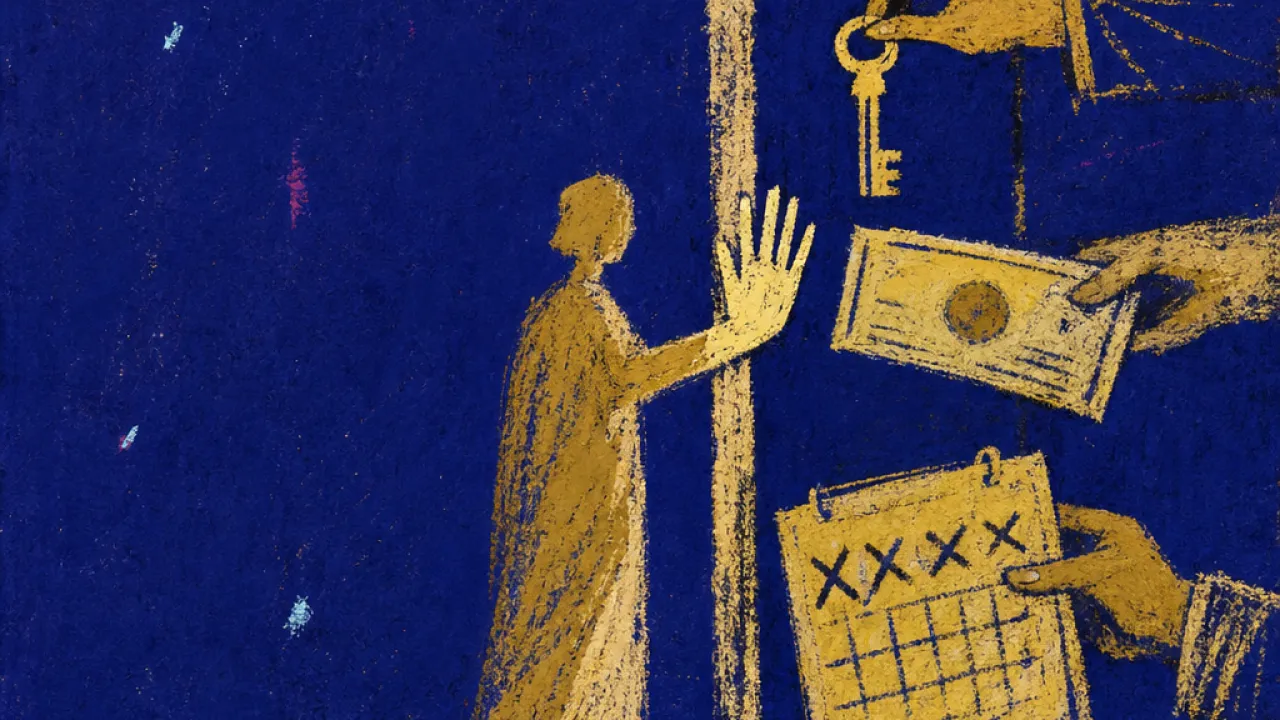
What is this situation?

Delayed Autonomy Negotiation - you are old enough to be building an adult life, but every attempt to move as one still has to pass through the household that raised you. It starts in ordinary rooms: the kitchen table where rent is discussed, the hallway where someone asks where you are going, the family group chat where a simple plan turns into a debate about timing, cost, safety, or whether you are being "too distant." You may have the savings target, the apartment tabs, the job offer, the school plan, the partner, the trip, or the private routine already mapped out, but each step gets slowed by questions that treat your choices as shared business. Privacy becomes something you have to justify; leaving for the weekend needs a full explanation; a move-out timeline becomes a negotiation over money, guilt, logistics, and who gets to be informed first. The people around you may offer support with one hand while keeping the old access rules with the other, so you learn to edit your plans before saying them out loud. Your body catches the pattern at the doorway: one hand on the frame, bag half-packed, shoulders held tight while another conversation asks you to wait, prove, reassure, or make the change easier for everyone else. By the time the day ends, independence has not disappeared; it has been staged, paused, and reviewed at the gate, much like the Two of Wands, where a figure holds the world in his hand while still standing inside the castle wall.

Why it's not you?

The delay is not proof that you are childish, ungrateful, or incapable. When housing, money, schedules, privacy, and contact still have to move through family sign-off, the slowdown is built into the setup. It has a nameable shape: independence routed through other people's timing.

Delayed Autonomy Negotiation in Tarot Cards

In Delayed Autonomy Negotiation, the body remembers the doorway: one hand on the frame, bag half-packed, shoulders held tight while another conversation asks you to wait. This is an environmental and structural dynamic, not a private failure; readiness exists, but the surrounding system still controls the route, the resources, and the permission signals. The cards below do not decide whether you leave, stay, or confront anyone; they show the outline of the pause. Here are the Tarot Cards that tend to mirror this kind of delayed adult movement.

Knight of Pentacles Upright
The black horse is built for the road, but its hooves stay planted in the field while the rider studies the distance ahead. The scene is not collapse or refusal; it is readiness held in a long pause. In a family context, that pause becomes the slow negotiation of adulthood. You may have the plan, the savings target, the apartment idea, the move-out timeline, or the emotional clarity, yet every step still has to move through practical timing and family expectations. The card makes the delay visible without turning it into failure. It shows autonomy as something being staged through material preparation, boundary testing, and careful timing rather than achieved in one dramatic break.
King of Pentacles Upright
The king occupies his throne with ease, but the armor visible beneath the robe keeps the scene from becoming pure leisure. The body is housed, supported, and recognized, while still prepared for boundary conflict inside the same domain. That tension fits the family stage where adulthood has technically arrived but the household has not fully updated its permissions. You may be negotiating privacy, money, decision rights, or contact frequency with people who still read closeness as access.
Two of Swords Upright
The seated figure is positioned on the shoreline, not fully turned toward the sea and not walking toward the far shore. The swords are balanced, the body is still, and the whole scene holds a decision at the threshold rather than inside motion. Delayed autonomy in a family system often happens in this suspended zone. You may be technically old enough to choose, move, refuse, date, travel, or build a separate routine, while the family system still treats every step toward independence as something requiring negotiation. The card gives shape to the delay without reducing it to indecision. It shows a real threshold where autonomy has to be separated from loyalty, and where movement becomes possible only after the competing claims are seen clearly.
Six of Swords Upright
The long oar is the only working tool that turns the current into movement, and the boat depends on that tool to cross. The passengers are moving toward another shore, but the crossing still requires an outside mechanism of support. Delayed Autonomy Negotiation appears when independence is real but still routed through family resources, timing, permissions, or logistics. You may be trying to become your own adult while the boat still contains old roles and borrowed tools. The card shows autonomy as a passage that needs structure, not a switch that flips all at once.
Eight of Swords Upright
One foot touches muddy ground while the other meets pooled water, placing the figure between practical terrain and unstable feeling. The swords form a corridor rather than a sealed prison, so the image holds a tense threshold instead of a finished escape. For family autonomy, this is the stage where adulthood has begun but is not yet structurally secure. You can see the route toward separation, yet housing, money, approval, or emotional fallout may still make each step feel negotiated through the old household map.
Ace of Wands Upright
The hand has the strength to hold the wand now, while the castle still waits across the river. Capability is already present, but the route from capacity to recognized independence has distance, terrain, and timing built into it. In family life, that turns into the long negotiation between being able to choose and being treated as allowed to choose. You may have the practical readiness to move, date, study, work, or live differently, while the family system keeps trying to slow the handoff of authority.
Two of Wands Upright
The figure on the battlement holds the globe while still standing inside the castle’s architecture. His body is not in open travel yet; it is positioned at the threshold, surveying the world from a place that has already given him status, shelter, and a defined role. In a family context, that image maps onto the stage where adulthood has arrived before full autonomy has been socially granted. You may have enough perspective to see your own life route, but the family system still treats the old wall as the default point of reference. The Two of Wands does not frame this as simple rebellion. It shows the slow audit of leverage, timing, and distance: how much of the inherited structure can remain useful, and where its protection starts becoming a limit on your adult movement.
Three of Wands Reversed
The figure is ready enough to stand at the edge, yet the card holds him in a waiting posture. The route is visible, the ships are moving, and the wand is grounded, but the crossing has not begun. That suspended readiness is the core of delayed autonomy negotiation in a family system. You may have the desire, the argument, and even part of the practical plan, while housing, money, guilt pressure, paperwork, or family timing keeps the adult move in a holding pattern. The card does not reduce this to indecision. It shows a real threshold where agency has to negotiate with external dependencies, making the next step less about proving independence and more about identifying which dependency is still controlling the launch.
Six of Wands Upright
The horse moves forward through a ceremonial lane, and the rider's promotion is made visible through laurel, regalia, and public order. The image shows a person entering a new rank while still moving through a route arranged by others. That is the family logic behind delayed autonomy negotiation. You may have reached an adult milestone, but the surrounding system has not fully updated its treatment of you; recognition arrives slowly, through rituals, permissions, and public proof. The card gives the situation its exact shape: forward movement exists, but it is not yet fully self-directed. The work is not to prove adulthood endlessly, but to notice where the family's corridor still decides which version of your adulthood is allowed to pass.
Seven of Wands Upright
The figure already stands on higher ground, yet his feet are split across uneven terrain and a small stream. The position has been reached, but it still has to be stabilized through the body, the wand, and the constant management of incoming pressure. Delayed autonomy inside a family can look exactly like that. You may have built an adult life, made your own choices, or moved into a more independent position, while the family system still treats that position as temporary, debatable, or available for review.
Ten of Wands Reversed
The road is open and the house is visible, but the man's bowed head and occupied arms narrow the horizon to the next pressured step. Movement exists, yet every part of the body is already committed to the load. Delayed Autonomy Negotiation belongs to this image because independence is not absent; it is postponed by obligations that keep demanding one more delivery. The card maps the stuck point as structural rather than personal weakness: You can see a life beyond the family assignment, but the current system keeps all your leverage tied up in carrying it.

Delayed Autonomy Negotiation in Tarot Card Reading Insights

When Delayed Autonomy Negotiation is the situation, people often bring questions about moving out, privacy, money, dating, travel, or contact frequency into readings. The shift from cards to readings shows how this household threshold appears when someone sits with it in a session. Tarot Reading Insights from related sessions are collected below.

Psychological contexts related to Delayed Autonomy Negotiation