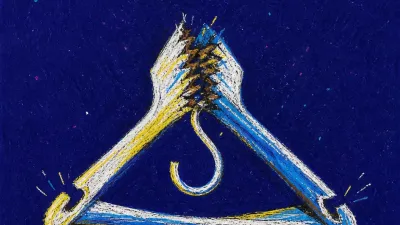
Relational Boundary Drift lives in the soft crossings: the rushed yes, the late-night reply, the private morning opened by someone else's message. You can feel it in the tight throat, raised shoulders, or chest squeeze that shows up before your mind has chosen words. From an existential perspective, the structural framework is about what happens when closeness keeps expanding faster than your inner edge can become visible. The Tarot Cards below make that drifting edge easier to see without turning it into a simple rule.
The Fool UprightThe Fool's front foot hovers at the cliff edge while the face stays lifted toward open air, and the staff rests unused across the shoulder. The body is already moving through a boundary before the eye has checked where that boundary is. In friendship, that same structure appears when warmth, access, and casual availability keep expanding without a named stop line. You may still be smiling, replying, showing up, and keeping the connection light, but the ground under the friendship has narrowed. The small white dog at the heel gives the scene a grounded signal that does not yet reorganize the stride. The struggle is not a lack of care; it is a relationship edge that keeps moving because no one has made it visible enough to stand on.
ReversedThe dog signals from below, the staff remains unused, and the body continues along the cliff edge as if no boundary needs to be checked. The scene contains feedback, tools, and danger, but none of them interrupt the movement pattern. In family systems, boundaries often drift in exactly that way. A short call becomes emotional management, a visit becomes role regression, and a harmless comment becomes a familiar loss of self before the crossing is fully registered. The reversed Fool structure names the slide, not as weakness, but as a feedback failure inside a long-practiced relational path. The boundary is present like the cliff edge, yet the old family motion keeps treating it as ordinary ground.
The Magician ReversedThe flowers, clothing, and gestures all organize contrast inside one scene: red and white, upward and downward, open growth and a bounded table. When the structure hardens, those contrasts no longer create balance; they blur into a field where access, care, loyalty, and availability start to occupy the same space. In friendship, this is how closeness can quietly become entitlement. You may notice that private time, emotional bandwidth, late-night replies, crisis support, and shared history have been fused into one expectation: if you care, you stay open. The card's reversed tension makes the drift visible because nothing has to explode for the boundary to disappear. The loss happens through repeated small permissions until the friendship can no longer tell the difference between intimacy and unlimited entry.
The High Priestess ReversedThe seated figure fills the entrance between the pillars, while the veil behind her turns the visible passage into a layered blockage. In the reversed current, the threshold stops behaving like a chosen boundary and starts behaving like the only livable room. In friendship, that structure shows up when access to you has become assumed: every vent, crisis, secret, and late-night message arrives as if the gate were already open. You may still look composed from the outside, but the private and shared zones have started sliding across each other until neither has a clean edge. The card locates the drift in the architecture, not in your generosity. The work begins when the friendship's invisible doorway becomes visible again, with a frame around what can enter, what must wait, and what was never yours to hold.
The Empress UprightThe Venus shield leans beside the throne rather than being held in the body, placing the symbol of love at the edge of the Empress's space. Soft cushions, flowing robe, wheat, and open garden blur where comfort ends and access begins. That boundary arrangement fits family closeness that keeps changing shape whenever a limit is named. You may know where the line should be, but the old field of affection pulls it outward until protecting yourself starts to feel like damaging the relationship.
ReversedThe heart-shaped shield sits beside the throne instead of covering the body. Its protective function is visible, but its placement turns boundary into symbol more than barrier. When this structure turns inward, friendship can start treating softness as permanent access. You may know you need space, but the bond has been arranged so that any edge feels like a disruption of warmth, history, and belonging.
The Hierophant ReversedThe acolytes are separate bodies, yet their backs, kneeling posture, and direction of attention make them function like matched parts of one ritual mechanism. The crossed keys link the space between them while the central figure organizes the field. That structure mirrors the social drift that happens when a circle starts deciding your pace, language, emotional tone, and availability. You may not feel forced; the drift is quieter than force, because it happens through repeated alignment. Relational Boundary Drift is the loss of clear edges inside connection. The card shows it as a room where personal difference remains visible on the surface, while the deeper movement of the body has already been absorbed by the group pattern.
The Lovers UprightThe man and woman stand naked in the garden with open hands, close enough for total visibility yet still separated by untouched space. The card does not show rejection or distance in a simple way; it shows exposure without a negotiated point of contact. In friendship, that visual structure carries the strain of access becoming confused with consent. You may be emotionally available, responsive, and known, while the actual boundary of what the friendship can ask from you keeps moving because no one has drawn it in the open. The angel above and the serpent behind the figures intensify the drift: guidance, desire, loyalty, and pressure all enter the field before the two people have clarified their own terms. The struggle is not that closeness exists; it is that closeness has become the container for undefined access.
ReversedThe figures stand uncovered in a beautiful open field, with no visible wall, garment, or shared boundary marking where one body ends socially and another begins. In reversal, the paradise-like openness becomes a condition the body adapts to rather than a space it actively chooses. Relational Boundary Drift appears in social ecosystems where access keeps expanding by small increments. You answer one more message, stay at one more event, absorb one more group's mood, and gradually lose the felt edge between connection and overexposure. The Lovers holds this as a boundary problem born inside the desire to belong. It does not condemn openness; it shows where openness loses its shape when there is no reciprocal structure to protect it.
The Chariot ReversedThe sphinxes remain yoked to the same front line even though their bodies do not offer one simple direction. Without reins, the charioteer's rigid posture becomes the stabilizing mechanism, as if holding still is the only way to keep the whole vehicle from splitting its course. In friendship, that image points to boundaries that have drifted gradually rather than broken suddenly. You may keep responding, listening, mediating, or absorbing more than you meant to, because the relationship has trained itself to treat your availability as part of its normal operating system. The reversed Chariot makes the drift visible as a structural problem, not a private failure of firmness. The route has become familiar because it has been traveled many times, but the card marks the exact place where familiarity has started to replace consent.
Strength ReversedThe woman's hands, the lion's mouth, and the shared gaze create a single fused contact zone. In the reversed state, that fusion stops feeling like a deliberate act and starts behaving like the default shape of the relationship. Friendship boundaries rarely disappear all at once. They move through repeated exceptions, late-night calls, unspoken guilt, and the slow conversion of care into access. Relational Boundary Drift gives that slow movement a form. Strength shows the moment when closeness has become so continuous that stepping back feels less like adjusting distance and more like breaking the whole bond.
Wheel of Fortune ReversedThe card offers no ordinary ground line; the wheel itself becomes the reference point for direction, timing, and position. Around it, the figures remain visually placed even while the central mechanism implies continuous movement. That is the shape of a friendship whose rules keep shifting without being spoken. You may notice the closeness changing, the access changing, or the emotional expectations changing, but the relationship still uses an old map as if nothing has moved. In the reversed state, the drift becomes internalized. The friendship's old baseline feels like the only baseline, which is why naming a new boundary can feel strangely disruptive even when the bond has already changed.
The Hanged Man ReversedThe card has an open white background, yet every usable boundary is narrowed to the tree, crossbar, rope, and inverted body. With no horizon and no floor, the body and the frame create competing reference points for what counts as upright. In a close friendship, that spatial confusion mirrors the way emotional intimacy can slide past its original edges. You may not be able to tell whether you are a friend, caretaker, backup partner, or permanent support system, because the relationship has normalized a geometry where no boundary line stays in one place.
Death ReversedThe rider's horse occupies the shared ground, and the people below have almost no protected margin between their bodies and the advancing force. Kneeling, praying, turning away, and watching all happen inside the same path rather than from a separate safe edge. In a relationship, that crowded field becomes the slow loss of where your emotional boundary begins. You keep adjusting your position to keep the bond intact, until closeness and exposure start using the same space.
Temperance ReversedThe cups, the pool, and the submerged foot all belong to one continuous water system, while the vessels are the only things giving the fluid an edge. When the flow becomes more important than the containers, the image starts to show blending without a reliable stopping point. In love, that is the shape of losing track of where shared feeling ends and personal limits begin. You may call it harmony because nothing spills, but the cost is that your own edges become harder to sense inside the relationship.
The Star UprightThe boundary between water and land is not a backdrop; it is where the body is stationed. One knee belongs to the ground, one foot touches the pool, and the pouring posture keeps the figure stretched across two different kinds of surface. Friendship can create the same slow blur when emotional contact, private recovery, and group obligation all meet at one shoreline. You may not notice a single dramatic crossing; The Star shows the quieter drift where the edge keeps moving until your own limits are hard to locate.
ReversedThe shoreline in The Star is not a clean border: one knee anchors to earth, one foot touches water, and the hands pour into both realms at the same time. In the reversed state, that threshold can harden into a normal way of existing, where mixed signals from land and water are treated as balance. In love, the same geometry names the slow loss of self-boundary inside another person's emotional weather. You may keep adjusting to the relationship's currents until your own footing becomes difficult to separate from theirs.
The Moon ReversedThe Moon gathers several borders into one scene: water and land, tame and wild, near shore and far towers, visible path and hidden terrain. None of these borders disappears, but none of them stays clean enough to guide movement without hesitation. Relational Boundary Drift appears in friendship when the line between care and obligation moves a little at a time. One extra venting session, one unspoken expectation, one group norm you never agreed to, and suddenly your private capacity is being organized around someone else's emotional weather. The reversed Moon shows how this drift becomes internal. You do not have to choose the blur all at once; you only have to keep navigating by unclear light long enough for the unclear light to feel like the friendship's natural climate.
The Sun ReversedThe horse has moved beyond the wall, and the child's hand is occupied by the flag rather than the reins that are absent from the scene. The open sky makes forward motion look natural, while the old boundary recedes into the background. In a long friendship, access can expand in exactly that way: not through one dramatic crossing, but through repeated small permissions that become the expected route. You may notice that the friendship still carries warmth, yet the protective structure that once made it safe no longer matches how much people take, assume, or expect. Relational Boundary Drift names the slow loss of boundary function inside a bond that still looks positive from the outside. The card's brightness matters here because the drift is hard to confront when the friendship is wrapped in loyalty, history, and shared joy.
The World UprightThe dancer moves inside an oval wreath that is visually open to blue sky and clouds, yet the laurel still marks a complete perimeter. The body appears free, but every movement occurs within a boundary that is easy to admire and easy to overlook. That is why this card can name Relational Boundary Drift in friendship. You may not be facing a dramatic breach; the harder issue is that closeness has made access feel natural, so private time, emotional bandwidth, and personal updates keep sliding into shared territory without anyone naming the crossing. The image does not frame the boundary as cold or punitive. It shows a living circle that has to stay visible if the dance inside it is going to remain your own.
Two of Cups ReversedTurned inward, the same exchange can become a posture of compensation: one body leans, offers, adjusts, and keeps the ritual of mutuality from visibly falling apart. The cups still face each other, but the separate vessels reveal that no amount of offering can force a blocked receiving channel to become available. Relational Boundary Drift begins where love starts using overextension as maintenance. You may keep making small adjustments to preserve the connection, but the card shows how easily reciprocity can turn into self-erasure when one person becomes responsible for keeping the emotional circuit open. The reversed Two of Cups locates the problem at the edge between care and collapse. The bond may still matter, but the structure asks whether your boundaries are still participating in the relationship or quietly being dissolved to protect its image.
Three of Cups ReversedThe circle gives each figure balance through proximity, rhythm, and shared direction. When that structure tightens, personal footing can become hard to distinguish from the momentum of the group. In love, the same drift appears when the relationship's private edge dissolves into friends, routines, social expectations, or one partner's orbit. You may still be moving together, but the question of where the couple ends and the surrounding field begins becomes increasingly difficult to answer. Relational Boundary Drift names a slow spatial problem, not a single betrayal. The Three of Cups shows the appeal of the blur because the shared rhythm feels warm and alive, while the cost is the gradual loss of a protected two-person boundary.
Four of Cups ReversedThe outdoor space remains open, yet the seated body treats stillness as the only navigable position. The fourth cup can approach the perimeter, but the figure does not reorganize posture, gaze, or reach to meet it. In friendship, Relational Boundary Drift is the slow movement away from access without a clear exit point. You may still reply, still care, and still share history, while the actual boundary has already shifted inward; the card shows that quiet relocation before it becomes a spoken change.
Eight of Cups ReversedThe swampy water, dusk light, and orderly cups create a field where stagnation can look stable. In the reversed pressure of the image, the gap in the cup structure is easy to normalize because the rest of the arrangement still stands. Inside friendship, this is how boundaries stop being clear events and become small quiet shifts: one more late-night call, one more private demand, one more access point treated as automatic. The card locates the drift before it becomes a dramatic rupture, showing how a bond can slowly train you to accept less space as normal.
Queen of Cups ReversedThe throne sits on a small sandbar where stone, shore, and water meet without a clean border. One foot touches the land lightly, while the surrounding sea keeps defining and redefining the edge of the Queen's position. In a relationship, that shoreline becomes the shape of a boundary that keeps drifting. You can stay connected so closely that your partner's needs, moods, and expectations begin to feel like part of your own ground, making selfhood harder to locate without stepping out of the emotional tide.
King of Cups UprightThe King remains centered while the sea, dolphin, and distant boat keep moving around him. The scene is open, but it is not grounded; there is no shore, doorway, or ordinary path that gives the relationship between stillness and movement a stable boundary. Friendship can take this shape when closeness keeps changing without anyone naming the change. You may still care, still respond, and still occupy the old position, but the actual emotional map has drifted under your feet. This card gives that drift a visible form. The bond is not broken in a dramatic way; it is floating, shifting, and asking you to locate where care ends, where obligation begins, and whether the old shape still holds.
ReversedThe king's blue clothing echoes the sea around him, and the shell throne sits directly on the water rather than on a separate shore. The border between body, seat, and ocean is visually softened until stability depends on holding a center inside constant motion. In love, that softened border becomes the struggle of knowing where your feeling ends and the relationship begins. You may absorb the mood of the bond so completely that your own internal weather starts to use the relationship as its reference point.
Queen of Pentacles UprightThe rose arch shelters the throne without sealing it, and the hare enters from the side while the Queen's attention stays fixed on the pentacle. The space looks open and gentle, but there is no clean threshold marking where the Queen's private field begins. Relational Boundary Drift in friendship has that same soft geometry. You are not necessarily being forced; the boundary keeps moving because warmth, history, access, and obligation blend until the friendship can enter places you never consciously offered.
Six of Swords UprightThe swords form a clean barrier around the passengers, but the same barrier also reduces the living space inside the boat. Protection and confinement occupy the same line. That is the exact shape of a friendship boundary that has shifted without a clear conversation. You are not necessarily cutting someone off; you are watching the old access rules become too narrow for the present version of the bond, while the relationship still drifts forward on old assumptions.
Four of Wands ReversedThe four wands frame a space that is ceremonial but porous, open to the viewer, the distant group, and the sky. Nothing in the structure fully separates the couple's inner space from the public field around it. In love, that porousness names the drift between private agreement and external visibility. You may be trying to protect something intimate while family, friends, social media, or shared narratives keep entering the frame and changing where the relationship's boundary feels like it is.
No cards available for this filter.