When Family Needs Keep Expanding

Explore the pressure of changing family support roles, with related tarot cards and tarot reading insights for this situation.

Family Support Renegotiation
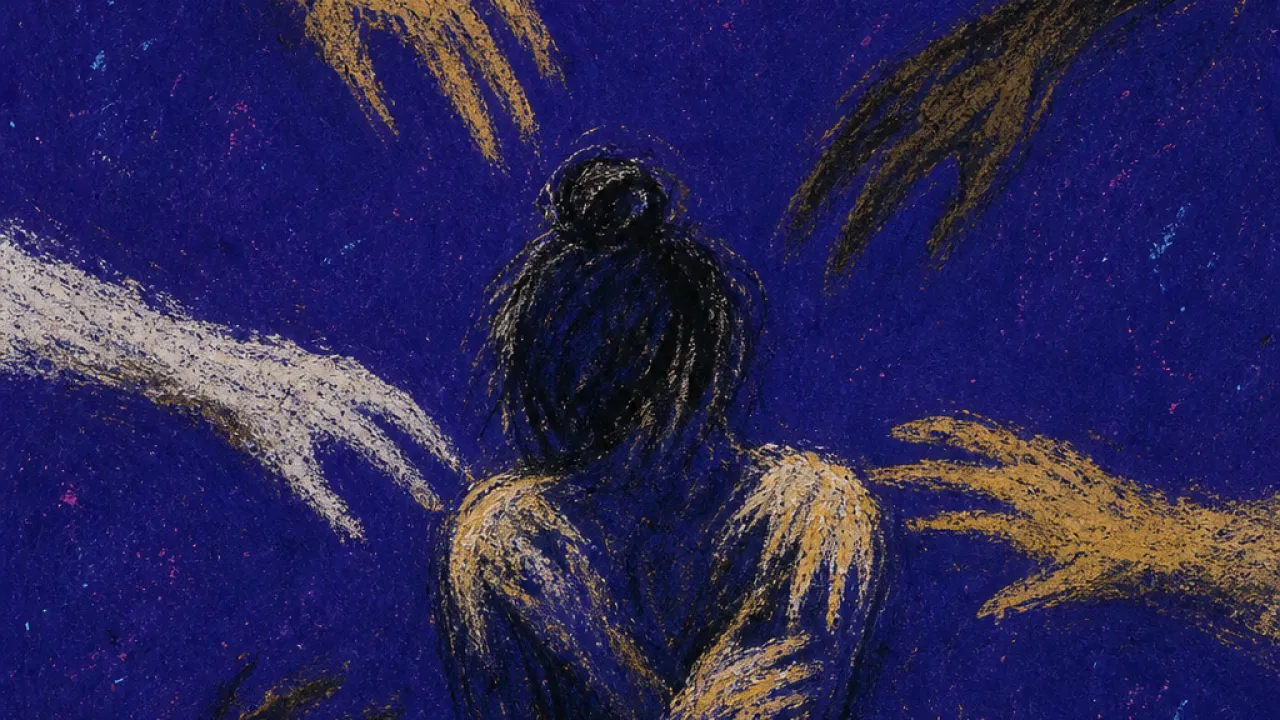
A solitary figure with shoulders drawn inward as reaching hands and glowing messages press in from every side

What is this situation?

Family Support Renegotiation — you enter this situation the moment your family starts treating your time, money, attention, or availability as something that can be re-discussed whenever someone else needs more. It may start casually: a parent asks for help with a bill, a sibling needs a ride again, a relative wants you to handle the paperwork because you're “better at that stuff,” or a group chat fills with little requests that all seem reasonable on their own. At first, you say yes because you care, because it is familiar, because refusing one small thing feels heavier than just doing it. Then the pattern begins to settle around you: your work schedule becomes negotiable, your weekends become backup plans, your phone becomes the emergency line, and your own plans are treated like soft commitments that can be moved if the family need sounds more urgent. The power dynamic is rarely loud; it lives in comments like “we just thought you could help,” “you know how hard things are,” or “you've changed,” phrases that make the request feel less like a request and more like a test of whether you are still the person they expect you to be. You may be sitting in your apartment after a long day, staring at a message you have not opened yet, already feeling your shoulders tighten because you know the conversation will not only be about the task, but about what your answer says about you. Over time, the renegotiation becomes less about one favor and more about who gets to define your limits: you, or the family system that keeps reaching for you when something needs to be carried. The hardest part is that the support may be tied to people you genuinely care about, which makes every boundary feel like it has to pass through a room full of history before it can stand on its own, much like the Six of Pentacles, where one figure holds the scales and measures out coins while others wait with open hands below.

Why it's not you?

The issue is not that you care too little, or that you are failing at being there for people. The issue is that the support system around you has started treating your resources as adjustable, while your limits are treated as optional. That imbalance belongs to the situation itself, not to a flaw in you.

Family Support Renegotiation in Tarot Cards

Family Support Renegotiation often shows up in the small requests that stop being small: the call after work, the group chat ping, the shoulders tightening before you even read the message. That physical brace is not random; it points to an environmental, structural dynamic where care, money, time, and access are being negotiated inside an old family role. The Tarot Cards below do not decide what you owe anyone. They reflect the shape of this situation: uneven giving, unclear limits, and the pressure of being treated as the person who can absorb more.

The Hierophant
Reversed
The seated authority, crossed keys, formal pillars, and receiving followers depict a rule system that has been transmitted as legitimate before it is personally examined. Reversed, the structure opens to review, allowing family duty to be separated from goodness, obedience from care, and inherited practice from present consent. The developmental resource is authorship over the principles governing support. You can retain generosity as a chosen value while replacing the older cognition that love must be proven through unrestricted time, money, or availability.
The Chariot
Upright
Black and white sphinxes sit before a chariot whose driver holds no visible reins, while the established city stands behind him. The scene locates direction inside the coordination of competing pulls: family obligation can matter without being allowed to steer every long-range decision. Upright, the vehicle and road remain available once those forces are brought under a coherent mandate. You can separate care that travels with your chosen future from recurring demands that keep redirecting the vehicle back toward a role you did not consciously choose.
Justice
Upright
Scales are held level in one hand while an upright sword occupies the other, framed by two pillars and a direct forward gaze. The scene joins fair measurement with clear consequence, making family support an accountable agreement rather than a vague moral demand. Upright, the terms can be named and applied consistently. You can examine what was actually promised, what resources are available, how responsibilities are distributed, and whether the same standard is being used for your limits as for another relative's needs.
The Hanged Man
Reversed
A figure hangs by one foot from a living wooden frame, hands held behind the body while a halo marks sustained attention inside the suspension. Reversed, the pause no longer produces useful perspective; personal plans remain on hold because sacrifice itself has become the expected family position. The blocked pathway is movement without relational punishment. You can identify where waiting, postponing, or giving up your own plans was once situational but has hardened into proof that you remain available whenever the family asks.
Temperance
Upright
A measured stream passes between two cups while the figure maintains contact with both land and water, and a path stays open behind the exchange. The family metaphor is not endless giving but regulated flow between separate containers, each of which must retain enough capacity to function. Upright, connection and circulation remain possible because neither side has to erase its boundary. You can frame the renegotiation around proportion, frequency, and sustainability, preserving care without preserving the assumption of unrestricted access.
The Devil
Upright
Loose chains encircle two figures beneath an elevated authority, while their altered tails suggest that the arrangement has become familiar enough to feel natural. The image maps a family support pattern maintained through guilt, indebtedness, fear of being labelled selfish, or the belief that belonging depends on continued access. Upright, the mechanism is visible and the chains are not welded shut. You can audit the specific leverage inside the request, separating genuine care from the loyalty tests and moral pressure that make an optional contribution feel compulsory.
Judgement
Reversed
A trumpet sounds above groups of adults and children rising together with exposed hands, turning one call into a collective summons. Reversed, that call does not create clear renewal; it lands as a moral demand whose answer seems to determine whether you are still a good and loyal family member. The blocked resource is the ability to evaluate a request without simultaneously putting your whole character on trial. You can separate the concrete task from the inherited verdict attached to it, making room for an answer based on capacity rather than self-condemnation.
Six of Cups
Reversed
The flower-filled cups, unequal child figures, and enclosed old setting preserve a scene of care inside an earlier developmental arrangement. Reversed, that memory stops being a simple source of warmth and becomes the template through which the family continues to assign your present role. The blocked transition is from the useful child identity into adult relational autonomy. You can integrate the caring qualities of your earlier role without allowing the family to use that history as permanent evidence that your current time, money, and attention remain available on the old terms.
Two of Pentacles
Upright
The two pentacles remain connected inside one continuous loop while the juggler compensates for unstable movement around him. The family pattern works similarly when money, transport, attention, and availability are treated as interchangeable resources that you will somehow keep circulating. Upright, the movement can be coordinated, but it cannot expand without consequence. You can expose which family requests are genuinely occasional and which ones depend on your permanent flexibility as the mechanism keeping everyone else's plans stable.
Three of Pentacles
Upright
A craftsperson stands with tools while two other figures consult within a shared structure, making plans and specialised roles visible in the same space. The scene offers a practical counterstructure to default-family helping: support becomes coordinated work with named contributors rather than a task quietly routed to whoever is most competent. Upright, collaboration and role clarity are available. You can see renegotiation as a family operating agreement in which money, transport, paperwork, check-ins, and emergency coverage are divided according to capacity instead of habit.
Four of Pentacles
Upright
Four pentacles are held against the figure's chest, placed beneath both feet, and balanced over the crown while the city remains at a distance. The arrangement depicts time, money, attention, and personal space as finite resources that require defined points of control. Upright, those resources remain in your possession and can be deliberately allocated, although the rigid posture shows why protection may feel tense after repeated access pressure. You can distinguish a workable resource boundary from indiscriminate withdrawal by naming what is available, what is protected, and who currently controls each decision.
Six of Pentacles
Upright
A standing figure holds scales in one hand and distributes coins with the other while two people wait below. The image places the central family question in plain view: who measures the available support, who receives it, and whether the distribution reflects capacity rather than pressure. Upright, the scales remain usable and the giver retains agency over what can be offered. You can make family care more sustainable by seeing the renegotiation as explicit resource governance, where need matters but does not automatically cancel the giver's limits or decision rights.
Reversed
The same scales, coins, standing distributor, and waiting recipients reveal an allocation system with unequal positions built into it. Reversed, the scales no longer guarantee that need and capacity are being weighed together; the person expected to give may be pressured to distribute resources while losing authority over the measure. The blocked resource is voluntary participation. You can identify where family support has shifted into assumed access, guilt-backed requests, or repeated transfers that preserve other people's stability by making your own limits negotiable.
Ten of Pentacles
Reversed
Several generations gather beneath an arch while ten pentacles overlay the household scene, linking family continuity to shared material structures. Reversed, that architecture does not provide stable mutual support; inherited expectations determine who must give, who may ask, and whose independence is treated as a threat to continuity. The blocked pathway is adult resource autonomy inside the family system. You can see how tradition, prior parental help, shared housing, inheritance expectations, or the identity of being the successful one may be used to keep old support claims active long after circumstances have changed.
Queen of Pentacles
Reversed
The queen sits inside a cultivated landscape with the pentacle held close, surrounded by the visible products of ongoing practical care. Reversed, the scene contracts around the person maintaining it, and competence becomes the reason every new family task is routed back to the same pair of hands. The blocked resource is care that also replenishes the caregiver's own material base. You can name how being organised, financially literate, emotionally steady, or good with paperwork has become a competence tax that conceals depletion behind continued functionality.
Two of Swords
Upright
Two swords cross over the seated figure's chest while a blindfold blocks the view and uneven rocks interrupt the water behind her. The arrangement mirrors the moment before opening or answering a family message, when yes and no both appear to carry relational costs. Upright, the pause protects a real decision point rather than proving that no decision exists. You can expose the hidden criteria behind the stalemate: whether the need is genuine, whether the request is yours to carry, what compliance would displace, and whether refusal is being confused with disloyalty.
Eight of Swords
Upright
A blindfolded, loosely bound figure stands inside a partial ring of swords while a distant structure remains visible beyond wet ground. The scene shows how inherited family rules can make refusal feel impossible even when the physical boundary is not fully closed. Upright, the constraint is real as an experience but specific enough to examine. You can trace which imagined consequences come from actual dependence or likely backlash and which come from an internalised rule that a caring relative must always remain accessible.
Nine of Swords
Upright
A figure sits upright in bed with face covered while nine swords occupy the dark wall above. The scene mirrors the private after-effect of an unopened family message: the practical request has not yet been answered, but anticipated guilt, conflict, and identity judgment are already consuming the quiet space around it. Upright, the pressure has become conscious and therefore distinguishable from the message itself. You can identify which part belongs to the actual family need and which part comes from the accumulated expectation that every answer must prove your care.
Two of Wands
Upright
A globe rests in the figure's hand between one wand anchored to the wall and another held toward the open horizon. The visual structure turns the decision into a contest between the established family position and plans that require access to your own time and mobility. Upright, both the base and the wider landscape can be seen clearly enough to compare. You can treat continued availability, limited support, and a more substantial role exit as distinct options rather than accepting the family's implied binary of total compliance or abandonment.
Seven of Wands
Upright
One figure holds higher ground against six wands rising from below, with mismatched footwear reinforcing the improvised nature of the defence. The scene captures what happens when a personal limit meets collective family pressure and suddenly has to answer several objections at once. Upright, the higher ground remains defensible even if the conversation is uncomfortable. You can recognise backlash as evidence that an established access pattern is being challenged, not automatic proof that the boundary itself is unfair.
Eight of Wands
Upright
Eight wands travel in one direction across an unobstructed sky, creating the visual force of several messages arriving before any receiver appears. The family group chat can reproduce that structure when requests, updates, reminders, and implied assignments gather momentum faster than individual consent can be established. Upright, the communication channel is active and can carry clear coordination as well as pressure. You can distinguish information from assignment and arrival from agreement, preventing message volume from silently deciding who owns the next family task.
Nine of Wands
Upright
A bandaged figure grips one wand while eight others form a barrier behind him, his body turned toward the possibility of another approach. The image carries the history of repeated family requests: the next message may be ordinary, but it arrives at a boundary already shaped by many previous incursions. Upright, experience has produced pattern recognition and a standing line that can still be maintained. You can distinguish present need from accumulated expectation while acknowledging that your guarded response comes from repetition, not from a sudden disappearance of care.
Ten of Wands
Upright
Ten separate wands have been gathered into one person's arms, bending the body and narrowing the view of the road. The family structure is visible in that concentration: tasks that could be distributed across several adults have accumulated around the relative known for saying yes. Upright, the total burden can be recognised as a shared-system problem rather than a private failure of stamina. You can use that visibility to separate what genuinely belongs to you from responsibilities that reached your arms through convenience, habit, or other people's non-participation.

Family Support Renegotiation in Tarot Card Reading Insights

When Family Support Renegotiation becomes part of someone's daily life, it often gets brought into readings through questions about limits, loyalty, money, time, and what still feels fair. The shift from cards to readings shows how others have sat with similar family pressure without reducing it to one simple answer. Tarot Reading Insights from sessions involving this kind of support renegotiation.
Why Moving Home Reloads Your Childhood Role: Negotiating New Terms

Why Moving Home Reloads Your Childhood Role: Negotiating New Terms

Topic:Family Tarot Reading

Struggle:Inherited Role Lock

Context:Boomerang Kid Negotiation

Moving Home, Feeling Seventeen: Finding an Adult Voice in One Sentence

Moving Home, Feeling Seventeen: Finding an Adult Voice in One Sentence

Topic:Family Tarot Reading

Struggle:Inherited Role Lock

Context:Boomerang Kid Negotiation

From Family Boundary Guilt to Chosen Care: A 24-Hour Response Pause

From Family Boundary Guilt to Chosen Care: A 24-Hour Response Pause

Topic:Choice Tarot Reading

Struggle:Inherited Role Lock

Context:Designated Organizer Burden

A Lease Became a Family Referendum, Then She Let Her Preference Stand

A Lease Became a Family Referendum, Then She Let Her Preference Stand

Topic:Family Tarot Reading

Struggle:Inherited Role Lock

Context:Family Enmeshment

Declining a Late-Night Family Call: Toward Support Without Compliance

Declining a Late-Night Family Call: Toward Support Without Compliance

Topic:Family Tarot Reading

Struggle:Inherited Role Lock

Context:Family Boundary Backlash

Family Support Comes With Conditions: Separating Choice From Approval

Family Support Comes With Conditions: Separating Choice From Approval

Topic:Choice Tarot Reading

Struggle:Autonomy Guilt Bind

Context:Conditional Family Support

Family Approval Reweighted the Sheet; One Email Paused the Loop

Family Approval Reweighted the Sheet; One Email Paused the Loop

Topic:Choice Tarot Reading

Struggle:Autonomy Guilt Bind

Context:Off-Script Career Path

Queen Streetcar Draft-Delete Loop—and the First Fair Handoff

Queen Streetcar Draft-Delete Loop—and the First Fair Handoff

Topic:Family Tarot Reading

Struggle:Inherited Role Lock

Context:Parentified Adult Child Role

Stuck as the Family Admin? Turning Parent Paperwork Into Fair Terms

Stuck as the Family Admin? Turning Parent Paperwork Into Fair Terms

Topic:Family Tarot Reading

Struggle:Inherited Role Lock

Context:Family Script Pressure

Parentified Adult Child Burnout—and the Shift to Boundary-First Care

Parentified Adult Child Burnout—and the Shift to Boundary-First Care

Topic:Family Tarot Reading

Struggle:Inherited Role Lock

Context:Parentified Adult Child Role

From On-Call Resentment to Calm Limits: Family Tech Support Hours

From On-Call Resentment to Calm Limits: Family Tech Support Hours

Topic:Family Tarot Reading

Struggle:Autonomy Guilt Bind

Context:Off-Script Family Path

From Boundary Guilt to Fair Limits: Rewriting the 'Good Daughter' Script

From Boundary Guilt to Fair Limits: Rewriting the 'Good Daughter' Script

Topic:Family Tarot Reading

Struggle:Autonomy Guilt Bind

Context:Family Script Pressure

Psychological Contexts Related to Family Support Renegotiation