One Box on the Rug, One Old Rule, and the Question That Changed

The 4:18 p.m. Sunday Box, Where Decluttering Feels Disloyal
If you are a late-20s renter in Toronto who can run work timelines all week but still lose a whole Sunday afternoon to one box your mom dropped off, this probably is not just clutter - it is sentimental clutter guilt.
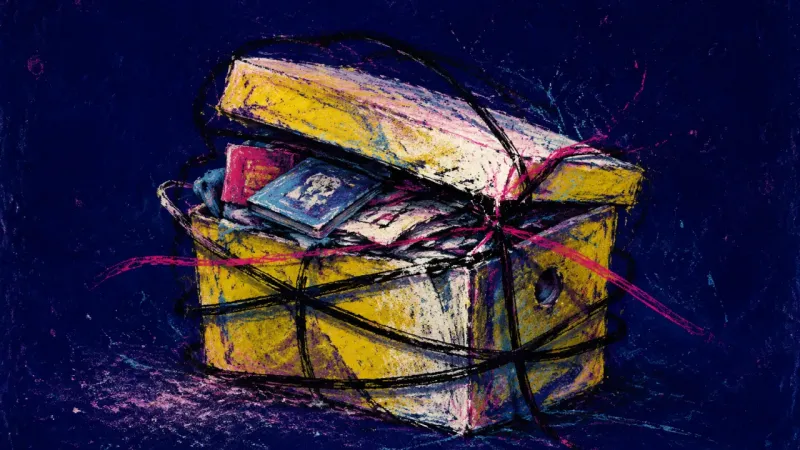
When Emma sat across from me, I could picture her apartment before she even finished the first sentence: 4:18 p.m., grey light at the window, one cardboard box open on the rug, a half-empty donation bag leaning beside it, the radiator hissing while dust mixed with clean-laundry detergent in the room. She told me she would start with old cards, and then twenty minutes vanished into handwriting, paper edges softened by years, the sleeve of an old hoodie under her thumb, and that tight, traitorous feeling in her throat when her hand moved toward the discard pile. She could move a campaign timeline with three emails at work and still go completely still over one birthday card at home.
'I know it is just stuff,' she said, looking down at her tea, 'but it does not feel like just stuff.'
I nodded. Some clutter is not messy. It is emotionally overqualified. What she wanted was a lighter, more intentional home. What kept stalling her was the fear that letting go of family keepsakes would mark her as disloyal to her mother, or worse, like she had gone cold on where she came from. The guilt sat in her body like a scarf pulled too tight at the neck and a hand pressing flat against her chest.
'So today,' I told her, 'we are not going to treat this like a storage problem. We are going to treat it like a clarity problem. Let me help you draw a map through the fog.'
Choosing the Compass: The Shadow Spread for Decluttering Guilt
I asked Emma to take one slow breath and hold the question in plain language: why does making space feel so disloyal? Then I shuffled slowly, not as theater, but as a way of letting the nervous system catch up to what the mind already knows is hard.
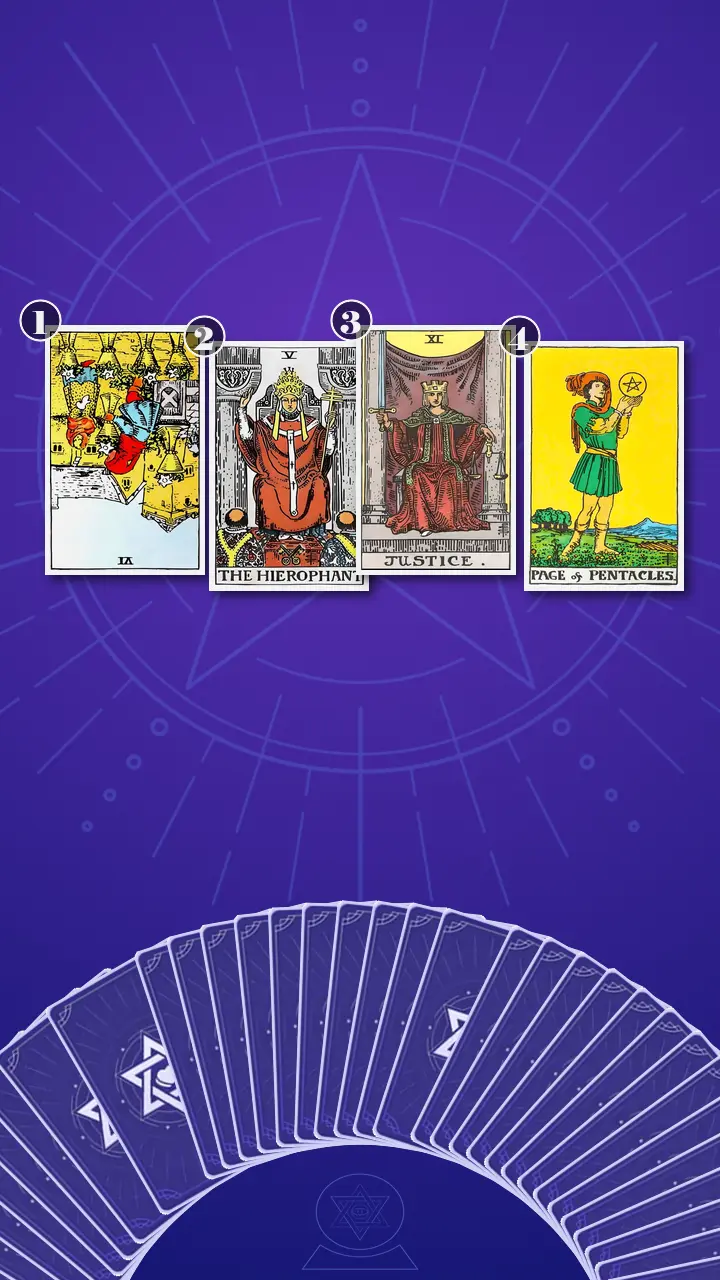
For this reading, I chose The Shadow Spread. When people ask how tarot works in a situation like this, this is the layout I trust most because the visible problem is only the front door. A bigger spread would give us extra hallways. This one gives us the exact chain we need: the current symptom, the inherited rule underneath it, the liberating truth, and the next embodied step.
I told her what I tell readers whenever card meanings in context matter more than mystique: the first card would show the repeatable loop between opening the box and closing the closet again. The second would reveal the hidden family script turning an apartment decision into a belonging test. The third - the hinge of the whole reading - would show the insight that could replace guilt with clear discernment. The fourth would translate that insight into something small enough to do in a real one-bedroom, not a fantasy life with endless storage and zero feelings.
Reading the Box That Keeps Changing Labels
Position 1: When Stuff Turns Into a Loyalty Scene
I turned over the first card. 'This position presents the current symptom cluster: the guilt-heavy decluttering stall, the part where you open the box and then put almost everything back.' The card was the Six of Cups, reversed.
Reversed, this is blocked water. Memory is still tender, but it is no longer flowing; it has gone sticky. In real life, this looks exactly like Emma opening one childhood box on a Sunday with a plan to just do cards, then losing forty minutes rereading notes, touching old fabrics, and sliding almost everything back because the donation bag starts to feel like a betrayal scene instead of a household task. The offered flowers in the card are important to me here. A keepsake once arrived as love, so now even paper feels too tender to evaluate.
I said, 'This is the moment the box changes labels on you. First it is stuff. Then it is memory. Then it is proof. And once it becomes proof, of course your hand freezes.'
Emma gave a short laugh that broke in the middle. 'Wow,' she said. 'That is painfully accurate.'
I watched her fingers tighten around the mug, then loosen. That small wince of recognition mattered. Calm home versus good daughter - that was the real split. Not keep or donate. Not tidy or messy.
Position 2: The Rulebook Nobody Handed You, But You Still Follow
I turned the second card. 'This position reveals the inherited loyalty rule and the fear that makes ordinary sorting feel like a test of belonging.' The Hierophant stood upright.
This is rigid earth: structure, tradition, inherited codes. In Emma's life, it looked like treating a box of school papers or baby clothes like a loyalty audit. The real question stopped being, 'Do I want this in my apartment?' and became, 'What kind of daughter would throw this away?' The crossed keys at the bottom of the card always make me think of a private rulebook - like an old operating system still running in the background, or terms and conditions for being a good daughter that nobody remembers accepting, but everybody feels. It had that quiet, domestic Lady Bird tension to it: the love is real, and so is the pressure braided into it.
'You are not just sorting stuff,' I told her gently. 'You are sorting old rules.'
Her whole posture changed in three small beats. First her breath stalled. Then her eyes unfocused for a second, as if something old had replayed behind them. Then she exhaled through her nose and stared back at the card. 'I always start mentally explaining the decision to my mom,' she admitted. 'Even when she is nowhere near me.'
That was the hinge between the first two cards, and I named it plainly. 'Exactly. The clutter is visible. The contract underneath it is not. The box is heavy, yes - but a lot of that weight is inherited meaning, not cardboard.'
When Justice Changed the Question
Position 3: The Antidote in the Middle of the Hallway
When I reached for the third card, the room got noticeably quieter. The radiator still hissed, but softer somehow, like the air itself had leaned in. 'This position identifies the liberating truth,' I said, 'the one that interrupts the pattern instead of negotiating with it.' I turned the card: Justice, upright.
This is clarifying air. Not coldness. Not denial. Just one fair standard instead of letting every item invent its own emergency. In Emma's world, Justice is the turning point where she stops letting each object cross-examine her character. She asks one steady question for the whole category - meaning, use, present fit - and lets that standard, not a guilt spike, decide what stays. Love is not measured in storage volume.
I felt an old professional reflex flicker through me then. Years ago, on a trading floor, I learned that when every desk uses different math, chaos starts dressing up as conviction. Justice never lets each row invent its own formula. It is one spreadsheet rule across the sheet. In my practice, I call the emotional version of that Guilt-Debt Neutralization: before you pay with shelf space, you audit whether the debt is even real. Gratitude is real. Love is real. But the claim that you owe permanent housing to every relic? That needs verification.
Emma nodded too quickly, the way people do when a truth lands before they are ready to admit it. So I slowed us down and gave the moment its due. I asked her to picture the familiar Sunday scene again: one box on the rug, the donation bag half-open, winter light thinning by the window, and her throat tightening over an old birthday card because the object in her hand suddenly feels heavier than her whole apartment.
You do not have to store every relic to prove your love; let the scales sort meaning from obligation, and choose what truly belongs in your life now.
She went completely still. First her jaw locked. Then her eyes widened, not with relief yet, but with resistance. 'But if that is true,' she said, sharper now, 'then what - I have been making this into a moral crisis for no reason?'
I shook my head. 'Not for no reason. For an old reason. There is a difference.'
Something in her face shifted. The anger thinned first. Then her gaze dropped to the scales in the card, and I watched the thought move through her body in layers: the frozen shoulders, the swallow, the long breath that came out a little shaky. Her fingers, which had been curled inward since the start of the reading, slowly opened on her knee. The room held for a second in that strange, clean silence that comes right after naming the real thing. She looked both lighter and a little disoriented, the way people do when they set down a bag they forgot they were carrying. 'So the guilt is not proof,' she said quietly. 'It is just the first reaction.'
'Exactly,' I said. 'This is the move from guilt-driven keeping to intentional remembrance. Not from loving to unloving. From inherited rules to self-trusting decisions.'
I leaned in a little. 'Now, with that new lens, think back to last week. Was there a moment when the question could have been different - not, Will this make me bad? but, Does this still belong in my life now?'
She gave a soft, almost embarrassed laugh. 'In the Value Village parking lot,' she said. 'I literally re-tried the same T-shirt in my head three different ways.'
'Right,' I said. 'That is Justice missing. Every item gets a fresh trial. Justice ends the retrials.'
The One-Shelf Future
Position 4: A Boundary Can Be a Box With a Lid
I turned the final card. 'This position translates the new perspective into a small embodied practice you can actually use at home this week.' The Page of Pentacles appeared upright.
This is healthy earth: grounded, teachable, specific. Not a season-finale life purge. A pilot project. In real life, it looks like Emma creating one clearly bounded memory system that fits actual Toronto square footage - one keepsake box, one photo album, one 10-minute category session. The Page studies the pentacle at eye level, and I love that image because it does not dramatize the task. It makes it workable.
'A boundary can be a box with a lid,' I said. 'Not because your memories are small, but because your home deserves edges.'
Her shoulders dropped a fraction. 'That feels weirdly doable,' she said.
'Good,' I replied. 'We are not trying to become a Marie Kondo highlight reel by Sunday night. We are beta-testing a new home ritual. Museum is the old model. Livable room is the new one.'
From Loyalty Test to Honest Choice
Once all four cards were down, the story was clean. The reversed Six of Cups showed the surface loop: memory flooding the task until every object feels emotionally overqualified. The Hierophant showed why the feeling escalates so fast: underneath the clutter sat an inherited family code about gratitude, belonging, and what a good daughter preserves. Justice cut through the moral fog by replacing item-by-item guilt trials with one fair keep standard. And the Page of Pentacles brought that truth back to earth, asking for a method, not a dramatic personality transplant.
I told Emma what I believed her blind spot had been. 'You have been treating guilt as if it were evidence. But guilt is not always a verdict. Sometimes it is just the alarm bell that rings when an old rule gets challenged.'
The deeper shift in the reading was simple, but not easy: keeping is not the same as caring. Loyalty can look like intentional remembrance plus honest boundaries around space. Keeping a few things on purpose is very different from keeping everything out of fear. That is how a home stops feeling like a storage unit for inherited guilt and starts becoming a place you can actually live in.
Then I gave her the next steps - small, specific, and built for a real apartment, not an idealized version of adulthood.
- Build your Justice filter Open a Notes app page called Keep Criteria and write three questions: Does this still hold living meaning for me now? Would I give it shelf space in this apartment today? Could a photo hold the memory just as well? Use those same three questions on one category only this week - birthday cards, not the whole closet - for ten minutes. If your throat tightens, stop after three items and count that as a full session. The urge to make an exception for everything is the pattern, not proof that every item belongs.
- Create a Memory Box Boundary Choose one real container that fits your apartment now - a shoebox, archival bin, or single shelf - and label it family keepsakes. For anything you want remembered but not stored, take a photo and place it in an album called Kept, then released. Resistance may tell you one box is too cold or too small. It is neither. It is simply a fair limit that lets care stay sustainable.
- Use a quiet script before family gets involved Write one neutral sentence for your mother in case the topic ever comes up: I kept the pieces that matter most to me and let the rest go. I told Emma this is a small branch of my Strategic Disengagement Plan - not cutting anyone off, just removing the leverage point where your private sorting session turns into a public character review. You do not owe live commentary on your process. Privacy is allowed. A clean boundary often works best before the guilt spiral gets a microphone.
I could see the logic landing because it did not ask her to love her mother less. It asked her to stop paying Toronto rent for an archive her nervous system never agreed to manage.

A Week Later: The Quiet Proof
A week later, Emma sent me a photo. On the top shelf of her closet sat one lidded box labeled family keepsakes, and beside it a Notes app screenshot with her three questions. Her text was short: 'Did ten minutes. Kept nine cards. Photographed twelve. Cried for like two minutes. Then made pasta.'
I smiled because that was the real win. Not a perfect apartment. Not a personality overhaul. Just the first concrete proof of a new inner ethic: memory honored, home respected, choice reclaimed. That is what finding clarity often looks like in real life - less like a cinematic breakthrough, more like one honest standard holding steady long enough for your body to believe it.
This Shadow Spread reading for decluttering guilt did not tell her what to love. It showed her where love had been quietly fused with obligation, and it gave her a way to separate them without becoming hard.
If tonight you also feel that tight throat with an old card in your hand, remember this: sometimes the fear is not really about the object at all. It is the fear that one wrong discard could make you seem less loving, less grateful, less securely held in the family story.
If loyalty did not have to look like keeping everything, what small way of remembering - one photo album, one line in Notes, one box with a lid - would let your home feel a little more like yours?