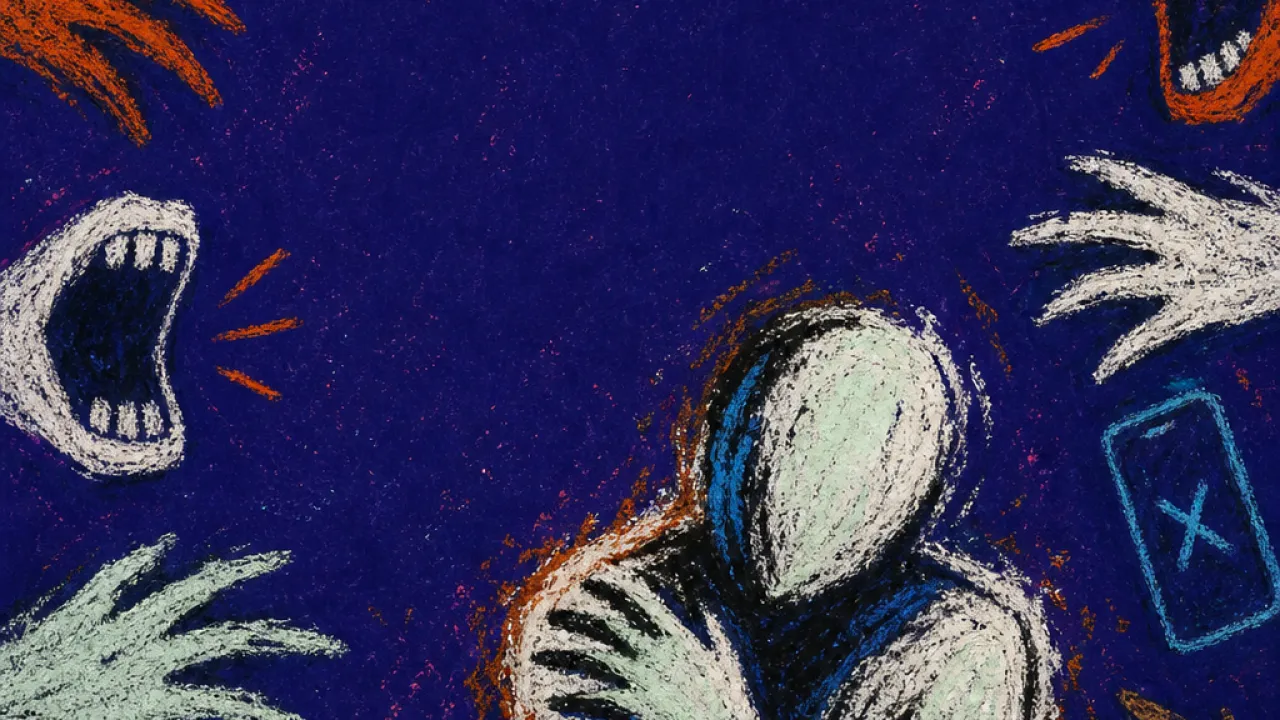
In an Inner Boundary Reset Trial, the problem is the constant crossing of your private line: messages, opinions, and expectations keep arriving before you have space to sort them. That tightening in your shoulders before you unlock the screen is a body-level record of how often access has been assumed. This is an environmental and structural dynamic around availability, not a flaw in how you relate to people. The Tarot Cards below mirror the shape of that pressure and the edges being rebuilt around it.
Wheel of Fortune UprightThe wheel is surrounded by four fixed figures, each holding a separate corner rather than collapsing into the center. The rings around the wheel create a visible boundary between the moving core and the outer field. For introspection, that image points to the external conditions required for inner clarity: distance from constant opinions, social performance, and overexposure. A private boundary is not treated as a wall; it is the structure that keeps the reflective center from being overwritten. This context becomes a trial because the boundary is still being rebuilt. The card shows that your inner world needs edges before it can produce honest information, especially when other people have been too close to the interpretive process.
Temperance UprightOne foot rests on land while the other enters the water, making the boundary between outer reality and inner depth visible in the body itself. The figure does not collapse into either side; the cups stay connected while each container remains distinct. That is the logic of an inner boundary reset: the outside world still exists, but it cannot have unlimited access to the material being processed. You are looking at the line where messages, roles, and other people's emotional weather need to stop crossing into the pool before the deeper signal can be read.
The Moon UprightWater, shore, path, animals, and towers divide the card into zones that cannot be crossed casually. The crayfish reaches the land, but the image still preserves thresholds, guardians, and distance. Emergence happens through boundaries, not through total exposure. That is the outer shape of an inner boundary reset trial. You may be learning which parts of your inner life need privacy, which can be spoken, and which people have earned access to vulnerable material. The Moon supports a slower kind of clarity here. It shows that becoming more honest with yourself does not require making every hidden thing public, and that the boundary around reflection is part of the path rather than an obstacle to it.
The Sun UprightThe child is completely uncovered, yet the scene is not borderless. A stone garden wall runs across the lower card, holding a firm line between the cultivated inner space and the open field of visibility. That combination makes the card especially precise for an inner boundary reset. You can become more honest without making your private process public property, and the wall shows that transparency only becomes sustainable when it has a perimeter. The reins are absent, so control is not the central mechanism here. The structure points toward trust in a healthier container, where your inner life can move forward without being managed through constant defensive grip.
Ace of Cups UprightThe hand in the card receives the chalice without crushing it, and the cup overflows without losing its form. The image is not only about openness; it is about a threshold that allows movement while still preserving a vessel. For introspection, that matters when you are deciding what to absorb, what to share, what to process alone, and what needs a stronger boundary. The pool below can receive the water, but the cup still defines where the flow begins. This card frames the reset as a live trial rather than a fixed personality trait. You are learning the difference between emotional availability and becoming an open container for everything that arrives.
Two of Cups UprightThe figures stand close enough to exchange cups, but not close enough to erase the space between them. The open gap is part of the symbol: connection is present, yet the bodies remain distinct, each holding a vessel that is offered rather than taken. For introspection, this becomes an external test of whether closeness can exist without inner boundary collapse. The card anchors a reset trial where you practice letting another person matter without letting their reaction become the whole map of your self-worth, choices, or emotional state. The distant town keeps the exchange connected to the wider life you still have to inhabit. A boundary reset is not withdrawal from intimacy; it is the restructuring of contact so your inner world can stay organized while still participating in real relationship, dialogue, and repair.
Four of Cups UprightThe crossed arms and folded legs draw a clear perimeter around the figure before any cup can be accepted. The cups remain outside that perimeter, visible but not fused with the body, which makes the scene less about rejection and more about controlled access. In introspection work, this visual boundary matters because emotional openness without structure can turn every request, memory, or trigger into an entry point. The tree shade gives the figure a contained space where contact can be reviewed instead of automatically granted. You are looking at a trial period for new inner limits. The card frames the boundary as something being recalibrated in real time, especially around what gets your attention, what gets your empathy, and what no longer gets automatic permission to enter.
Nine of Cups UprightCrossed arms sit at the center of the Nine of Cups, not as disappearance but as containment. The man remains visible, the cups remain visible, and yet nothing in the image is being handed over on demand. This is the social architecture of an inner boundary reset trial. The blue-draped table behind him separates access from ownership, showing that emotional abundance does not require unlimited availability. The cups can exist without becoming public property. In introspective work, this card gives form to the moment when You are learning to stay present without opening every private chamber for inspection. The trial is not whether you can shut everyone out; it is whether your inner resources can remain intact while you choose what is shared, when, and with whom.
Page of Cups UprightThe Page stands in public view while his attention stays on the cup, holding a private living symbol at shoulder height instead of letting it spill into the open water behind him. The image creates a clean separation between what is visible, what is protected, and what is still too delicate to release. That boundary matters in introspection because inner material often becomes distorted when it is exposed too early or hidden too tightly. You are not simply having feelings; you are negotiating the container that decides which feelings can enter language, which need privacy, and which are being shaped by the gaze of other people. The Page of Cups connects to Inner Boundary Reset Trial because the card shows emotional contact as a managed threshold. The fish is alive, the sea is close, and the cup is small, so the work is not to shut the inner world down but to give it a form that can be held without turning every private signal into public performance.
Queen of Cups UprightThe closed cup, crossed feet, and shell-fastened cloak make the Queen's inner world visible without making it available to everyone. Water surrounds the throne, while the distant wall keeps the scene private rather than exposed. For personal growth, the outer pressure is not only to change; it is to explain the change before it has structure. The image holds a boundary trial where you learn what can be shared, what must stay protected, and which audiences are still too noisy for early inner work.
Ace of Swords UprightThe sword stands as a clean vertical line in an otherwise open field of sky, with the guard marking where the hand ends and the blade begins. Its edges are not decorative; they define what can pass and what has to be cut away. The crown and hanging branches show that this separation is not about becoming cold or unreachable. Peace and victory remain present, but they are suspended around a sharper organizing principle: the system needs a boundary before it can stay balanced. In introspection, this points to the external trial of deciding what input is allowed to shape your inner world. You may be sorting advice, projections, group expectations, or old emotional obligations, and the card frames the reset as a precision task rather than a rejection of connection.
Two of Swords UprightThe swords are not pointed outward in attack; they are crossed across the body as a hard line of access. The blindfolded figure sits at the edge of moving water, holding a boundary while the tide remains present but not yet allowed to take over the scene. In introspection work, this becomes the trial of protecting private bandwidth while still staying connected to reality. You may be learning where emotional access, disclosure, response time, or availability needs a cleaner edge. The card’s structure shows that a boundary is not a wall built against the inner world. It is a temporary frame that lets you tell the difference between what deserves entry, what needs delay, and what has been crossing the line without being named.
Seven of Wands UprightThe raised wand cuts a clear diagonal across the incoming pressure, creating a threshold that the lower staffs cannot simply pass. The figure’s body is fully involved in holding that line, from the split feet to the locked grip. Inner Boundary Reset Trial fits the upright card because the conflict is not random aggression; it is a test of a newly organized limit. In introspective work, this is where a private decision about access, disclosure, attention, or emotional labor becomes a real-world boundary that has to be practiced. The elevated ground gives You perspective, but the uneven terrain keeps the trial honest. This card shows that a reset is not fully real until it meets pressure and still has enough structure to remain intact.
Nine of Wands UprightThe figure stands exactly where the wand fence breaks, using his own body and the staff in his hands to complete the perimeter. The image makes boundary work visible as labor: the line exists, but it still requires attention, pressure, and a clear decision about what gets access. In personal growth, this becomes the trial of deciding which inputs are allowed near your developing self. Advice, expectations, productivity systems, old labels, and other people's timelines can all press against the same opening if the boundary is not consciously held. The card does not turn the wall into isolation. It shows You learning the difference between a boundary that protects change and a barrier that blocks contact with reality.
No cards available for this filter.