When Privacy Becomes Disobedience

A grounded look at belief-based boundary pressure, related tarot cards, and tarot reading insights from similar readings.

Religious Boundary Pressure
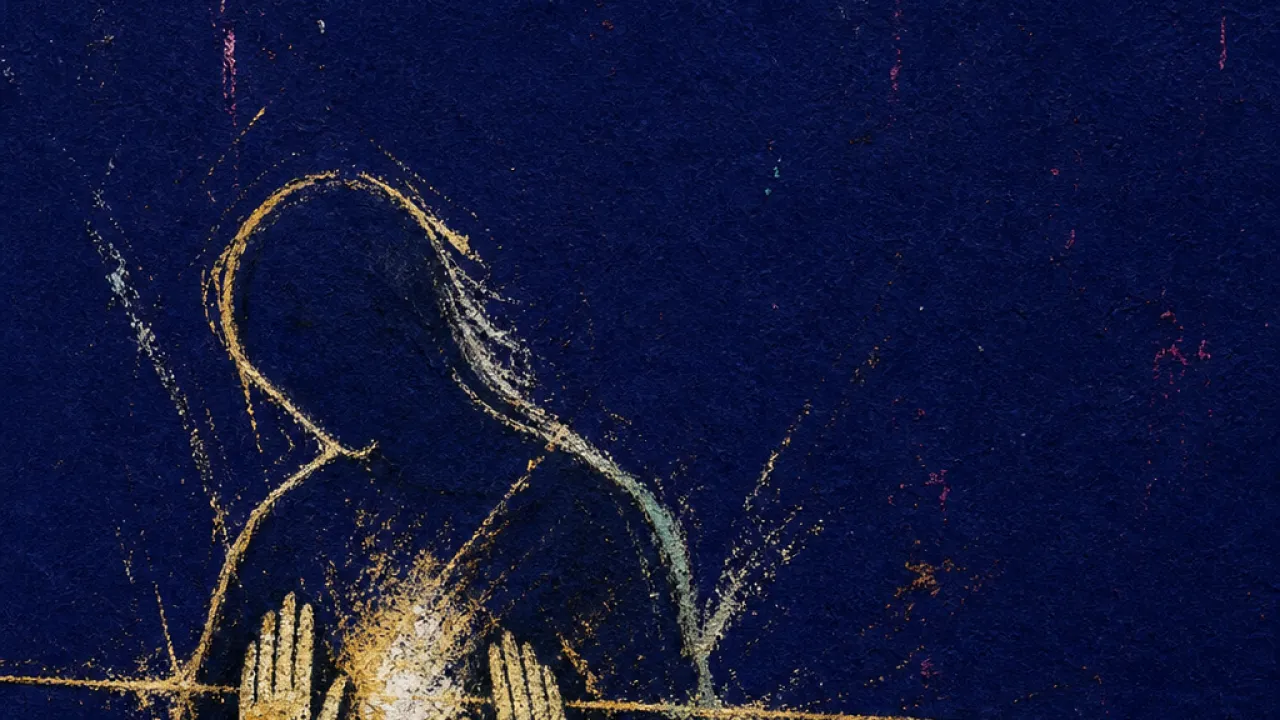
A solitary figure with shoulders drawn inward as raised hands pull a bright boundary line into a dark public chamber

What is this situation?

Religious Boundary Pressure — you notice it the moment a simple limit becomes a public discussion. Maybe you say you are not going to service this week, you do not want to pray out loud before dinner, you are not following a dress rule, you are dating in a way your community would question, or you need your beliefs to stay private for once. What should be a small sentence turns into a room changing temperature: someone asks if you are drifting, someone else says they are worried about your values, and suddenly your calendar, clothes, relationships, body, language, and weekends are treated like shared property. The pressure is rarely only one dramatic confrontation; it arrives through family group chats, comments at the table, invitations that feel like tests, leaders or relatives asking for explanations, and the quiet message that access to warmth depends on whether you perform the right kind of agreement. You start rehearsing answers before gatherings, checking what you post, editing what you wear, deciding which parts of your life can be mentioned and which need to stay offstage. The exhaustion comes from having to prove that a boundary is not an attack, that privacy is not rejection, that changing your level of participation does not make you careless or disrespectful. Over time, the outside world keeps pulling your private line into a public courtroom, much like The Hierophant, where two figures kneel beneath a robed authority between stone pillars, watched by an institution that expects their posture to match its rules.

Why it's not you?

The issue is not that your boundary is too sharp or that you are failing to explain yourself well enough. The pressure comes from an environment where belief, belonging, and approval have been tied to visible compliance. When ordinary choices are treated as moral evidence, the strain belongs to that setup, not to your need for personal space.

Religious Boundary Pressure in Tarot Cards

Religious Boundary Pressure often shows up in the body before it shows up as a decision: the tightened shoulders, the rehearsed explanations, the feeling of being watched at the doorway of your own life. This is an environmental, structural dynamic because the pressure is carried through repeated comments, rituals, expectations, and access to belonging, not through one isolated conversation. The cards below do not judge belief or disbelief; they reflect the shape of a boundary being tested by an outside system. Here are the Tarot Cards that tend to mirror this kind of pressure.

The Emperor
Upright
An armoured ruler sits on a hard stone throne decorated with ram heads, backed by severe mountains and holding symbols of command. The scene mirrors a parent or senior relative who converts religious tradition into household law and treats disagreement as a challenge to legitimate authority. The upright authority structure makes the source of control visible and its rules predictable, but the available route to peace remains obedience. You can separate the relative's role power from the content of your beliefs, clarifying that the pressure persists because family hierarchy is enforcing the rule, not because the rule has won mutual consent.
The Hierophant
Upright
The Hierophant's raised hand, crossed keys, and kneeling audience arrange belief as a vertical family-like hierarchy rather than a private domain. The scene mirrors relatives who speak as custodians of tradition and treat a younger member's attendance, clothing, dating, or disclosure choices as subject to collective review. The upright order makes the family script easy to identify and the route to approval readily available through compliance. You can use that visibility to name the power distribution: explanations keep being demanded because the system assumes jurisdiction, not because your boundary has failed to make sense.
Reversed
The crossed keys, fixed pillars, and two kneeling figures place recognised knowledge under the control of a single institutional authority. Reversed, that established channel no longer provides reliable validation for beliefs or values that fall outside its approved form. The blocked route to communal recognition creates a developmental task that cannot be solved by performing agreement more convincingly. Your cognitive growth takes place under the cost of disapproval, requiring a distinction between inherited rules, personally examined values, and the social penalties attached to separating them.
Justice
Reversed
The scales, vertical sword, and seated judge create a formal chamber for evaluating conduct. Reversed, that chamber resembles a dinner table or family group chat in which relatives act as both witnesses and judges while inherited religious standards determine what counts as reasonable. Fair hearing is obstructed because your request for privacy is entered into the family record as rejection, disrespect, or moral decline. The image helps locate the distortion in the adjudication system: the same people who benefit from compliance are deciding whether your boundary is legitimate.
Five of Pentacles
Upright
The stained-glass window glows above two figures exposed to snow, placing institutional and relational warmth within sight but across a hard threshold. In a family system, the scene mirrors affection, hospitality, or practical support becoming less available once religious compliance is questioned. The upright card makes the cost visible rather than hypothetical: your boundary may be followed by colder conversations, fewer invitations, or reduced access to family resources. The illuminated window also identifies the controlling mechanism clearly, so conditional support does not have to be mistaken for evidence that the boundary itself was wrong.
Ten of Pentacles
Reversed
An elder sits beneath a family arch while generations, household symbols, and inherited emblems fill the enclosed scene. Reversed, the multigenerational structure no longer provides stable belonging when one member departs from the family's religious script. The blocked resource is not only approval but access to the continuity, familiarity, and support attached to family membership. Your opt-out can therefore attract outsized pressure because the system interprets a private boundary as a break in inheritance, even when no rejection of the family itself was intended.
Two of Swords
Upright
A blindfolded figure holds two crossed swords before a rocky sea, creating a guarded pause between opposing directions. The posture mirrors a decision framed as comply or refuse, where either movement appears to threaten something important: personal jurisdiction on one side and family or community belonging on the other. Upright, the crossed blades preserve decision space even while complete information is unavailable. You can identify the false compression in the choice architecture, because the pressure system benefits when continued compliance and total rupture are presented as the only imaginable options.
Seven of Swords
Upright
A figure carries five swords away from an occupied encampment while looking back to check who may be watching, leaving two swords behind. The scene captures selective disclosure under social surveillance: some parts of life are carried into privacy while other details remain visible enough to preserve membership. Upright, strategy is available even though open expression is socially costly. You can recognise edited posts, private dating information, or carefully managed conversations as responses to an intrusive environment, while still auditing the practical and relational cost of having to keep ordinary life offstage.
Eight of Swords
Upright
The blindfold, loose bindings, and upright swords create an enclosure that limits perception before it completely prevents movement. The image mirrors an internal queue of anticipated objections in which church friends or relatives are mentally present before a post, disclosure, or conversation has even happened. The upright card keeps both parts of the structure visible: the external environment taught the restrictions, while the open gaps show that not every imagined audience has equal power. You can separate current consequences from inherited expectations without blaming yourself for learning to monitor danger in a setting where privacy was repeatedly challenged.
Five of Wands
Upright
Five figures raise crossing staffs in a crowded, directionless clash, with no private space left between their competing movements. The image resembles a simple religious limit becoming group content as peers, relatives, or community members contribute opinions, corrections, and concern. Upright, the disagreement is visible enough to name and the participants remain on common ground, but access to calm discussion depends on separating genuine difference from collective pile-on. You can see that the social escalation is being produced by too many people claiming standing in a decision that did not require group ownership.
Seven of Wands
Upright
A solitary defender stands above six rising wands, holding a clear line while pressure approaches from several directions. The scene closely resembles relatives joining a table discussion or group-chat pile-on after one family member declines a ritual, dress expectation, or disclosure request. The upright stance keeps the boundary physically intact and makes its position visible. You can recognise that the recurring conflict is not caused by an unclear limit; it is produced by a family system in which multiple people feel authorised to reopen a decision that was already communicated.
Nine of Wands
Upright
The bandage, tightly held staff, and row of eight wands show a person carrying the memory of earlier confrontations into the next encounter. The image anchors the inner experience of rehearsing explanations before church, dinner, or family prayer because the mind expects another attempt to cross the same line. The upright stance preserves pattern recognition as a usable resource, but it also exposes the attention being consumed by constant readiness. You can name the psychological cache accurately: it is storing unresolved social repetition, not demonstrating that your beliefs or boundary are inherently unstable.
Ten of Wands
Upright
A figure bends beneath ten bundled wands while carrying the entire load toward a visible town. The compressed posture mirrors a weekly system crowded with services, prayer duties, dress management, family appearances, and the extra labour of preventing each opt-out from becoming conflict. Upright, the destination and full bundle make the workload concrete enough to inventory rather than treating it as a vague personal failure. You can distinguish chosen practices from obligations carried to protect other people's comfort, revealing where religious participation has become an unsustainable logistics burden.

Religious Boundary Pressure in Tarot Card Reading Insights

Religious Boundary Pressure is something people bring into readings when a private limit keeps getting treated like a public problem. The readings below shift from the card list into moments where others sat with similar pressure around belief, belonging, and personal space. Tarot Reading Insights from sessions that touch this situation.


Psychological Contexts Related to Religious Boundary Pressure