Is Showing Up a Test?

Explore the pressure of holiday loyalty tests, related tarot cards, and reading insights shaped by seasonal expectations and competing plans.

Holiday Loyalty Test
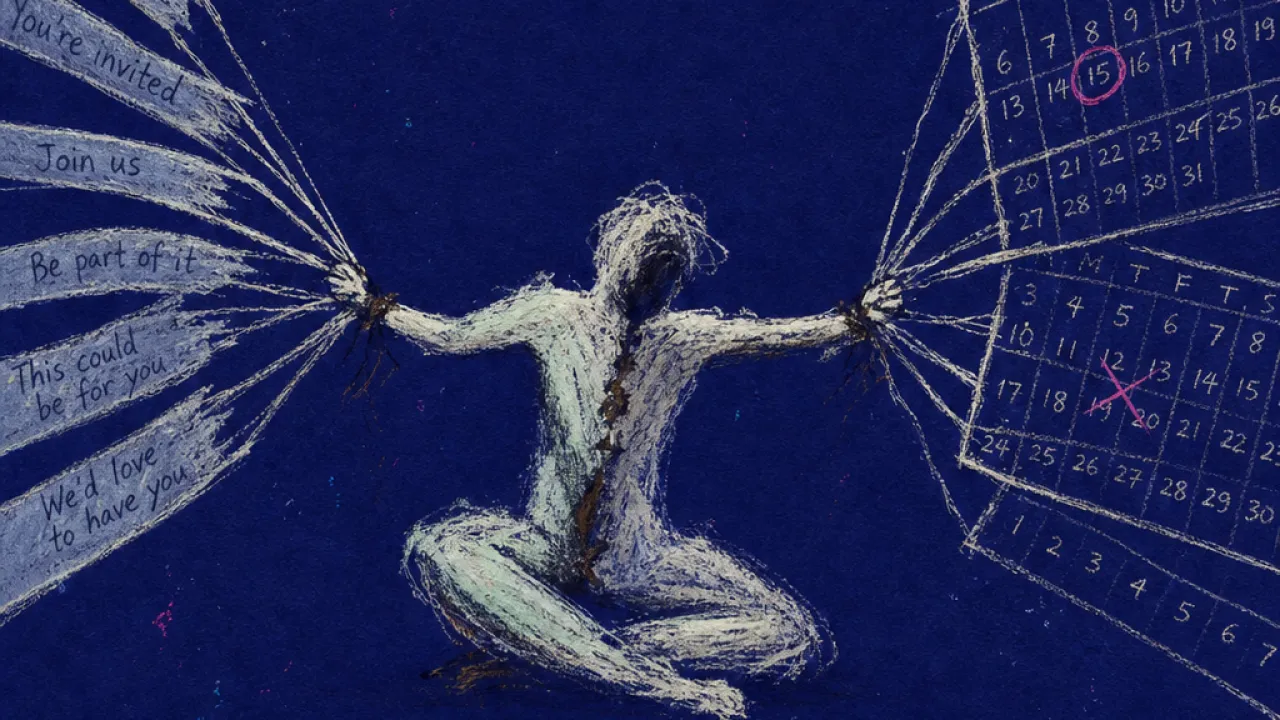
A solitary figure pulled sideways by glowing message threads and calendar blocks, with tense lines stretching into separate」

What is this situation?

Holiday Loyalty Test is the moment the season stops feeling like a break and starts feeling like a scoreboard. It usually begins with a text, a calendar invite, or a casual question that is not really casual: “So, are you coming this year?” Suddenly your time is being measured by who gets Christmas Eve, who gets Thanksgiving, who gets New Year’s, whose dinner you leave early, whose call you answer first, and whose feelings are supposed to outrank everyone else’s. A parent, partner, roommate, ex, friend group, or extended family chat may frame attendance as proof that you care, while every practical limit — travel cost, work schedule, shared custody plan, distance, burnout, wanting one quiet day — gets treated like a personal rejection. The pressure shows up in small, ordinary ways: the group chat goes quiet after you say you can only make one event, someone jokes that you “never prioritize us,” another person reminds you how much they did for you, and suddenly a holiday meal has become a loyalty exam with no clear passing grade. You start managing routes, budgets, gifts, replies, and exit times like you are trying to keep several rooms emotionally lit at once, knowing that any choice may be read as a betrayal by someone else. By the time the day arrives, the exhaustion is not only from travel or hosting; it comes from being asked to prove affection through logistics, much like the figure on the Two of Pentacles, juggling two coins while the waves behind him refuse to settle.

Why it's not you?

The problem is not that you do not care enough; the problem is that the holiday setup turns attendance, timing, spending, and availability into proof of loyalty. When people keep score, guilt-trip, or frame a practical limit as rejection, the pressure is coming from the rules around you, not from a personal failure. This is a social test disguised as celebration.

Holiday Loyalty Test in Tarot Cards

Holiday Loyalty Test turns the season into a scoreboard where every RSVP, visit, and missed call is treated as evidence. The tightness in your chest before checking the group chat is not random; it belongs to the way these expectations land on your body. This is an environmental, structural dynamic built around keeping score, where celebration becomes a pressure system instead of a shared pause. The Tarot Cards below reflect the shape of that pressure without telling you who to choose.

The Hierophant
Reversed
A formal authority sits between pillars before two kneeling followers, with crossed keys marking access to an inherited system. Reversed, the image exposes the moment when a received holiday script no longer fits adult relationships, mobility, budgets, blended families, or the need for rest. The growth edge is cognitive before it is logistical: the old rule equates compliance with goodness and deviation with betrayal. You can see that this rule was socially installed, which makes it available for examination rather than treating it as an unquestionable measure of character.
The Lovers
Reversed
Two exposed figures stand beneath an angel between different trees, but the reversed composition disrupts the vertical line that would otherwise hold their shared choice together. The scene mirrors a couple whose holiday decisions are being organised by competing family allegiances, inherited customs, or unequal expectations rather than a mutually owned agreement. The conflict is not merely about one dinner; it tests whether the partnership can define loyalty without forcing one person to demote another important relationship. You can see the misalignment as a governance problem inside the relationship, especially when compromise is treated as proof that the partnership matters less.
The Chariot
Reversed
Two sphinxes sit beneath a chariot without visible reins, and the reversed vehicle cannot convert their different orientations into timely movement. The image mirrors a holiday itinerary whose timing depends on multiple households, transport links, weather, and emotional expectations that do not share one operating plan. The blocked momentum makes lateness and missed windows structurally predictable. You can see that pressure to move faster does not solve a route built from incompatible arrival times and competing definitions of who should come first.
The Devil
Upright
Two figures remain chained beneath a dominant figure, and the collars are loose enough to show that control operates through more than physical force. The scene mirrors family invitations backed by guilt, threatened withdrawal, financial reminders, or claims that declining one event proves ingratitude. The chain represents an obligation system whose penalties are relational and socially enforced. You can name the pressure without reducing the family bond to it, separating genuine affection from the mechanism used to compel holiday attendance.
Three of Cups
Reversed
Three friends raise cups inside a tightly connected celebration, while the reversed scene makes the circle's warmth contingent on continued participation. The image mirrors a private friendship group that treats Friendsmas, New Year's plans, or an annual trip as proof that the friendship still ranks highly. A missed event can then be interpreted as withdrawal from the bond rather than a practical limit. You can see how a friendship ritual becomes coercive when access to ordinary closeness depends on passing each seasonal attendance test.
Ten of Cups
Reversed
A rainbow of ten cups hangs above a couple, two children, and a home, while the reversed scene unsettles the public image of effortless family harmony. The picture mirrors a holiday meal expected to prove that everyone is close, grateful, and aligned even when attendance has been secured through pressure. The happiness display becomes fragile because one absence exposes the gap between the family image and the actual negotiation underneath it. You can see that the demand for a complete picture may be driving the loyalty test more than the quality of connection at the gathering itself.
Two of Pentacles
Upright
A single juggler keeps two pentacles circulating while separate ships rise and fall behind him. The image mirrors one family member tasked with maintaining several households' schedules, travel plans, gifts, and emotional expectations even though the dates and resources cannot multiply. The performance looks flexible from the outside because the coins remain in motion. You can see the hidden family labour required to sustain that appearance, especially when every household interprets its share of time as a ranking of affection.
Six of Pentacles
Reversed
One figure holds the scales and decides how coins are distributed to two people positioned below him, while the reversed scene foregrounds unequal control over the exchange. The image mirrors relatives who cite prior financial help, childcare, hosting, gifts, or sacrifices as evidence that your holiday presence is now owed. The family ledger has no neutral accountant and no agreed point of completion. You can see how gratitude is converted into permanent access when the people who provided support also define every practical limit as failure to repay them.
Ten of Pentacles
Reversed
Ten coins overlay an archway containing an elder, a couple, a child, and household animals, while the reversed composition destabilises the promise of secure intergenerational belonging. The scene mirrors a family holiday where tradition, home access, financial history, and lineage are used to decide who is behaving like a proper member of the family. The gathering offers continuity, but that continuity becomes conditional when attendance is required to validate the whole family structure. You can recognise that changing one holiday plan may threaten an inherited system's self-image even when it does not threaten your actual care for individual relatives.
Two of Swords
Upright
A blindfolded figure holds two swords in a fixed cross while rocks interrupt the water behind her. The balanced weapons capture two competing invitations or households, while the blindfold reflects a decision environment in which the real consequences remain unclear because each side withholds its acceptable passing grade. The posture preserves a temporary balance but cannot make the demands compatible. You can recognise that indecision is being produced by a no-win social design: choosing either event resolves the calendar while exposing you to accusations from the other side.
Eight of Swords
Upright
A blindfolded and bound figure stands among eight swords, with a distant building suggesting a social world beyond the enclosure. The scene mirrors the internalised belief that every holiday option will produce rejection, making other people's possible reactions feel like fixed walls around your decision-making. Some constraints are concrete, including cost, work, custody, and distance; others are rules absorbed from repeated loyalty tests. You can make that distinction visible without denying that boundary backlash may be real.
Nine of Swords
Upright
A figure sits upright in bed with hands covering the face while nine swords occupy the dark wall above. The repeated blades mirror remembered texts, anticipated comments, route calculations, and imagined reactions that continue after the practical holiday planning has stopped. The night scene shows how an external loyalty test becomes internal monitoring. You can distinguish the real decisions still requiring attention from the accumulated social verdicts replaying in your mental buffer.
Five of Wands
Upright
Five figures push intersecting wands into the same crowded space without a visible shared plan. The scene mirrors parents, in-laws, separated households, siblings, or extended relatives advancing competing holiday claims while expecting you to reconcile them. Each demand may look manageable in isolation, but together they create a zero-sum family contest. You can recognise that being positioned in the middle does not make you responsible for producing harmony among relatives who have not negotiated with one another.
Seven of Wands
Upright
A lone figure occupies higher ground while six wands press upward, and his mismatched shoes show that the defence began before he had ideal preparation. The scene mirrors the developmental shift from treating every challenge as proof that a limit is wrong to recognising that visible limits often attract resistance from systems accustomed to unrestricted access. The higher ground is not social superiority; it is a clearer view of finite capacity and competing claims. You can understand repeated holiday pushback as information about the surrounding relationship structure rather than a final verdict on your loyalty.
Ten of Wands
Upright
Ten wands fill the figure's arms, obscure his forward view, and bend his body as he approaches the town. The bundle resembles the accumulated travel plans, hosting tasks, gifts, replies, and emotional accommodations that become one person's responsibility when every holiday relationship expects separate proof of care. The destination remains reachable, but the carrying arrangement is visibly unsustainable. You can recognise that the exhaustion comes from concentrated responsibility and multiplied expectations, not from a personal inability to enjoy the season correctly.

Holiday Loyalty Test in Tarot Card Reading Insights

When Holiday Loyalty Test makes every plan feel like a referendum on care, other people have brought that same seasonal pressure into readings. The shift from cards to readings shows how these tensions appear when someone sits down with the question already pressing on them. Tarot Reading Insights from sessions shaped by this kind of holiday pressure.

Psychological Contexts Related to Holiday Loyalty Test