Running A Home Alone?

A grounded look at solo household overload, related tarot cards, and reading insights for one-person domestic pressure.

Solo Living Overload

What is this situation?

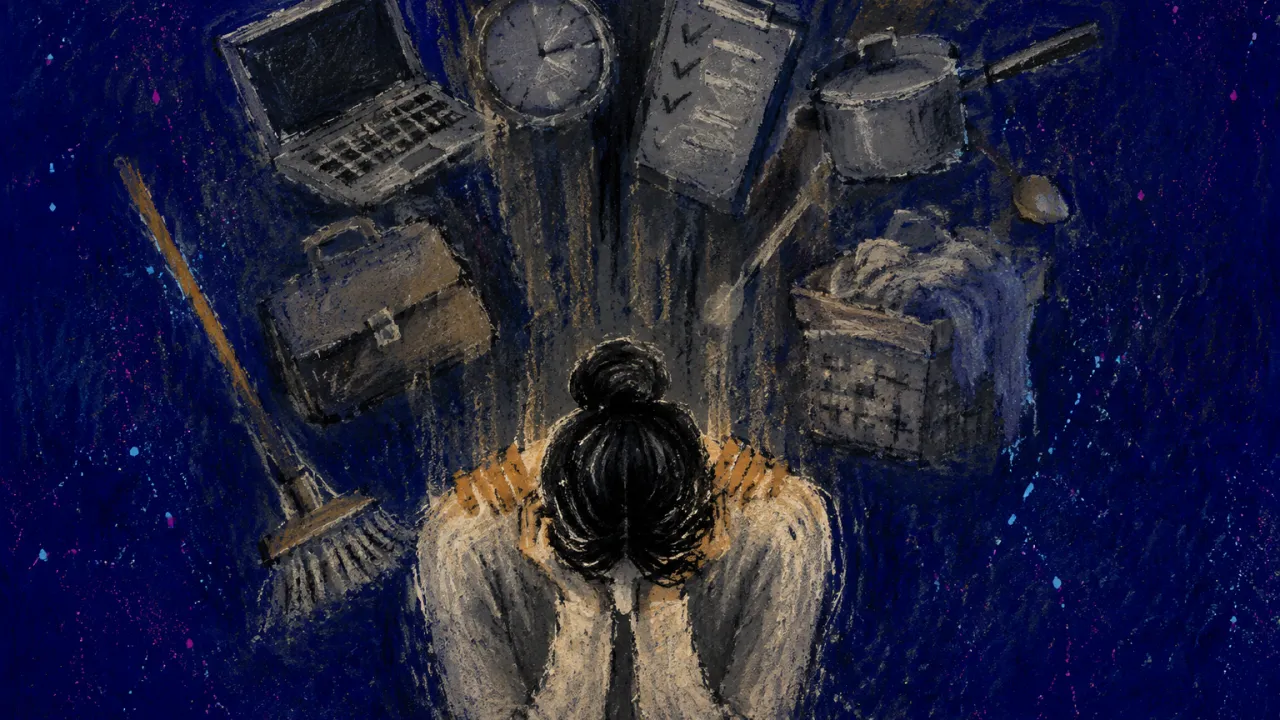
Solo Living Overload — you come home to a place that is technically yours, but the second the door closes, the whole household starts asking for you at once. There is mail on the floor, a rent reminder in your inbox, dishes from yesterday, laundry that has to be moved before someone else takes the machine, a grocery app open because there is nothing that counts as dinner, and a landlord text about a repair you now have to chase. No one is being openly cruel; the pressure comes from the fact that every ordinary function of the home has only one operator. You are the person who notices the toilet paper running low, books the appointment, resets the Wi-Fi, takes out the trash, checks the bank balance, replaces the lightbulb, plans food before work, cleans after work, answers family or friend messages, and still has to make the space feel livable enough to sleep in. If you work from home, the apartment becomes office, kitchen, storage unit, recovery room, and admin desk without ever changing shape; if you commute, you return already spent and find a second shift waiting in the sink, the hamper, the calendar, and the fridge. Weekend time gets eaten by errands that do not look dramatic from the outside: buying detergent, returning packages, chasing maintenance, folding sheets, sorting bills, trying to make the next week less messy than the last. Independence can still matter to you, and the privacy can still be real, but the setup has started to run like a one-person infrastructure project with no backup shift, much like The Magician standing alone at the table with every tool laid out in front of him and no second figure to share the work.

Why it's not you?

The problem is not that you are bad at living alone; the problem is that this setup gives one person the job of running an entire household system without built-in backup. Chores, bills, food, repairs, rest, social contact, and work recovery are not small when they all land on the same body every day. Solo Living Overload has a shape: it is independence without enough practical redundancy.

Solo Living Overload in Tarot Cards

Solo Living Overload is the daily setup where every domestic task, bill, repair, meal, reset, and work recovery loop routes back through one person. The tight jaw you notice while answering a landlord email, checking the laundry timer, and reheating dinner is part of the same load described above, not a separate issue. This is an environmental, structural dynamic: the home may look independent from the outside, but its operating system has no built-in handoff when capacity drops. The Tarot Cards below reflect the outline of that one-person infrastructure and the places where the load becomes visible.

The Fool Reversed
The figure carries a tiny kit at an unrailed edge while the only companion is too small to stop the movement. The scene contains support, but not enough structural support to absorb the risk of the environment. Solo living overload has that same shape. You may be managing chores, meals, rent logistics, repairs, sleep, work setup, and recovery as one continuous personal infrastructure project, with no household buffer to catch the overflow. The reversed Fool links this context to exposure without containment. It does not frame independence as failure; it shows where independence has become under-supported, and where the life system needs visible rails instead of more improvisation.
The Magician Reversed
The Magician stands alone at the center, with every elemental tool placed on his own table. There is no second figure sharing the labor, no background team, and no visible handoff point; the entire working system routes through one operator. That spatial setup mirrors the practical density of living alone. Rent, food, cleaning, work recovery, appointments, social contact, money decisions, and household repairs may all be manageable on paper, but they compete for the same personal bandwidth. The card links to Solo Living Overload because it makes independence look like a fully stocked workstation with no backup shift. You are not failing at adulthood; the structure shows how much infrastructure one person is being asked to run.
The Hermit Reversed
The cloaked figure stands alone on an exposed ridge with only a lantern and staff to keep the night navigable. The image gives the body no household, no shared table, no visible second pair of hands, and no soft infrastructure around the basic work of staying functional. That visual isolation maps cleanly onto a lifestyle system where every routine has to be self-held. Meals, laundry, appointments, sleep, cleaning, money tracking, and recovery all flow through one person’s attention, so the problem is not a lack of discipline but a daily architecture with no redundancy. Solo Living Overload becomes visible here as a practical stage, not a personality flaw. The Hermit’s tools are real and capable, but the scene shows what happens when the entire support system shrinks to what one body can carry through the cold.
The Moon Reversed
The landscape has no human figure, no village, and no visible helper; only the small creature at the edge, the two animals, the towers, and the long unlit road. The scale of the scene is larger than any one body, and the entry point into land is narrow and exposed. In lifestyle terms, that makes solo living overload tangible. A home can look independent from the outside while every meal, bill, cleaning cycle, repair, rest boundary, and reset decision lands on one person without a built-in backup. The Moon turns that invisible domestic load into a landscape: you can see the path, but the support architecture around it is thin.
The World Reversed
A single figure stands at the center holding both wands, with the entire wreath organized around one body. The image shows mastery, but it also concentrates coordination in one place: if the dancer stops, the visible rhythm has no substitute. For lifestyle readings, this fits the external load of running a household alone while also maintaining work, food, cleaning, errands, repairs, bills, and social contact. You are not simply lacking discipline; the structure places too many maintenance roles on one person without built-in redundancy.
Ace of Cups Reversed
Only one hand is visible, and that hand is responsible for keeping the overflowing vessel steady. There is no full body, no second hand, and no surrounding household structure to share the maintenance load. That visual pressure fits solo living when the entire domestic system sits on one person. You are holding meals, cleaning, bills, scheduling, recovery, and emotional decompression in the same hand, and the card makes the single-point-of-failure structure visible.
Queen of Cups Reversed
The throne is grand, but the land around it is narrow. The Queen sits surrounded by water with only a distant shore in view, holding the sealed cup herself; the image concentrates authority, care, privacy, and maintenance into one solitary figure. Reversed, that concentration becomes the lifestyle burden of running a whole private world alone. A home can look peaceful from the outside while every invisible function depends on one person: groceries, cleaning, repairs, calendar planning, sleep discipline, meals, emotional recovery, and the thousand small decisions that keep life from sliding. This card does not treat independence as the problem. It shows the structural cost of a life system with no redundancy, no handoff, and no built-in support when your capacity drops.
Ace of Pentacles Reversed
A single hand holds the pentacle while the entire garden and estate sit below. The scene looks stable, but the image concentrates control, responsibility, and material handling into one exposed point. Solo Living Overload comes from that concentration. The home may look like a personal achievement from the outside, while inside it requires constant upkeep: food, cleaning, laundry, appointments, repairs, supplies, bills, and recovery time. You are not simply struggling with independence. The card shows a one-person support system trying to maintain an entire material ecosystem, and it asks where the load can be redistributed before the grip gives out.
Four of Pentacles Reversed
One figure holds the entire resource map alone: crown, chest, hands, and feet are all assigned to keeping the pentacles in place. The town is visible behind him, but no one else enters the foreground system. Solo Living Overload translates that image into a daily architecture where every household function routes through one person. Cleaning, food, bills, repairs, rest, scheduling, storage, errands, and emotional decompression all compete for the same body and the same limited bandwidth. The card gives this context its sharp edge because the load is not dramatic from the outside; it looks controlled. You are dealing with a lifestyle stage where competence can hide the fact that the entire home system has become a single point of failure.
Nine of Pentacles Reversed
The lone woman is not merely enjoying the garden; she is the point of coordination for the pentacles, the falcon, the estate, and the cultivated abundance around her. Both hands are engaged, and the scene contains no visible partner, assistant, or shared management structure. For introspection, this image maps the hidden labor of being self-contained. You may have independence, privacy, and a life that technically functions, while every reset, routine, decision, emotional repair, and small act of maintenance still routes back through one person. The card makes the pressure visible without turning independence into a mistake. It shows where solitude has stopped being spacious and started becoming an operating load, giving the inner work a concrete external stage instead of treating the exhaustion as a vague personal flaw.
Queen of Pentacles Reversed
The Queen is surrounded by everything needed for a stable life, yet the scene concentrates responsibility in one seated body. The pentacle, garden, throne, and protected boundary all gather around a single center rather than showing a shared network of hands. Reversed, that contained abundance becomes the pressure of a one-person operating system. Food, cleaning, rent, laundry, appointments, exercise, sleep, repairs, and rest all compete for the same limited body and the same narrow calendar. Solo Living Overload gives shape to the way independence can become logistical saturation. The card does not question your competence; it shows how many material systems are being routed through one person and asks where support, simplification, or redistribution could return movement.

Solo Living Overload in Tarot Card Reading Insights

Solo Living Overload is the kind of situation people bring into readings when living alone has stopped feeling like privacy and started feeling like a full-time maintenance system. The shift from the cards to the readings shows how this setup appears when someone sits down with the pressure of bills, chores, repairs, meals, and recovery all landing in the same place. Tarot Reading Insights for this kind of solo household load are gathered below.

Psychological contexts related to Solo Living Overload