Why Won't This Feeling Settle?

Explore the feeling that stays half-processed, the tarot cards that mirror it, and readings where it appears.

Emotional Processing Strain
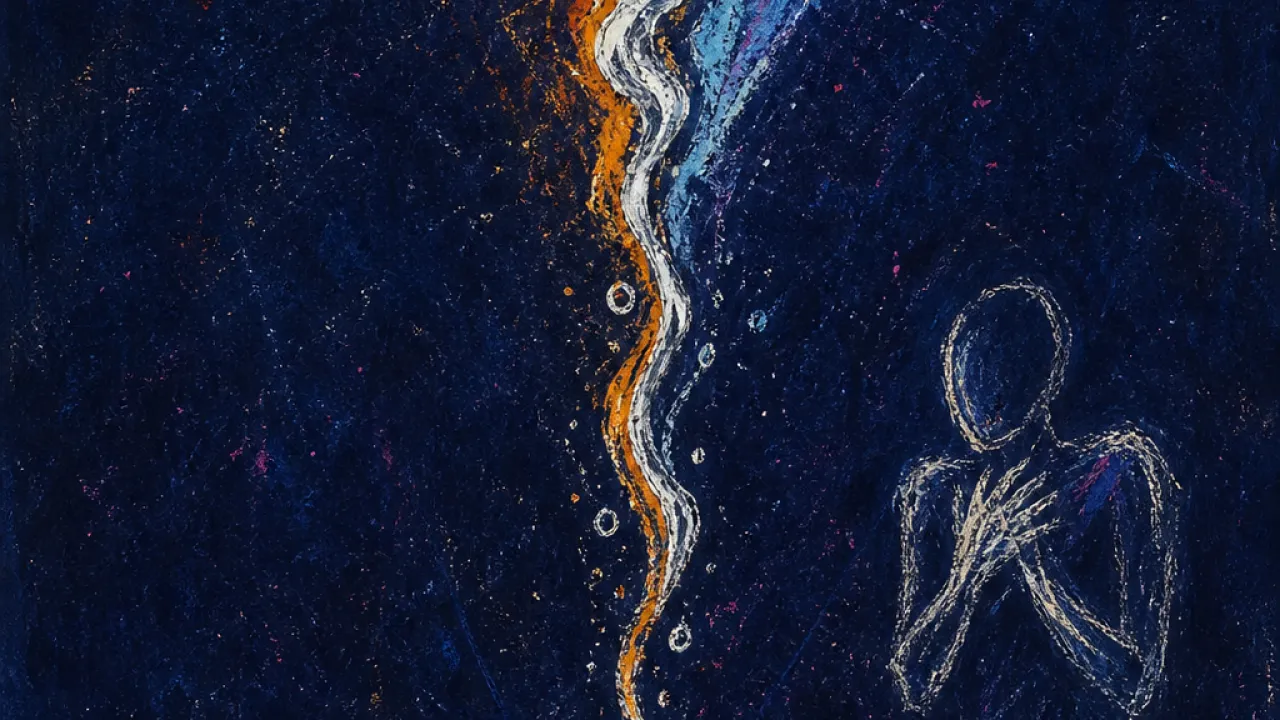
What does this feel like?

Emotional Processing Strain - you open the Notes app after midnight because something in your chest has been tapping all day, and you think that if you can get the sentence right, the feeling might finally loosen. You type three lines, delete two, stare at the cursor, and feel your throat tighten as soon as the words get close. The day keeps replaying in fragments: the message you answered too fast, the tone you pretended not to notice, the memory that arrived while you were making coffee and then stayed under your skin. You can name it. You can say, 'I was hurt,' or 'I felt left out,' or 'that hit something old,' and for a second the naming feels clean, almost relieving. Then nothing moves. The feeling sits there with a label on it, like a sealed cup on a table, and now you have to carry both the feeling and the awareness that naming it did not change it. You keep trying to stay functional while touching the submerged layer: answering emails, laughing in the group chat, washing a mug, putting on a playlist so the room does not get too quiet. Inside, you are measuring pressure by the second. If you look too closely, the whole day might flood. If you look away, the feeling might disappear before you understand what it was asking for. So you hover in the middle, calm from the outside and busy underneath, holding your breath around a process no one can see. The cost is not that you feel too much; it is that so much of your attention goes into keeping the transfer contained that there is little left for ease, play, or simple presence, much like the Temperance angel watching the unbroken stream between two cups, one foot in water and one on land, steady only because every drop is being carefully guided.

What's pulling at you?

You're caught between wanting to understand what you're feeling and needing enough distance from it to keep your day intact. The strain comes from holding both at once: if you open the container too far, it floods everything; if you seal it too tightly, nothing settles.

How It Shows Up?

  • You sit on your bed with your Notes app open, trying to write one clean sentence about what happened, but the words keep branching into five other feelings. Your throat tightens, your breathing gets shallow, and your thumb hovers over the keyboard while the screen glow makes the room feel smaller. It has the quiet precision of Temperance's stream: one wrong push and the feeling spills, one pause too long and it disappears. You can close the app without losing the whole thread; some material needs a slower container.
  • A friend asks, 'Are we okay?' and your body answers before your mouth does: shoulders up, stomach tucked in, jaw held still. You know the outline of the feeling, but when you try to say it, the words either sound too small or too sharp, so you offer a careful version and watch their face for impact. You do not have to deliver the finished sentence on demand; a paused answer can still be an honest one.
  • At work or in class, you keep switching tabs after a tense message, reading the same paragraph while a private replay runs behind your eyes. Your chest feels full, your neck gets stiff, and even simple choices start taking extra effort because part of you is still holding the cup upright. Finishing the task in smaller pieces is allowed; clarity does not have to arrive before the next email.
  • You're at drinks, dinner, or a crowded kitchen, and everyone is moving fast through jokes while you are still digesting a comment from twenty minutes ago. You smile at the right moments, but your ribs feel tight and your attention keeps dropping below the room, like one foot is in water while everyone else is on dry ground. It is okay to step outside, check in with your body, and come back without explaining the whole weather system inside you.
  • You wake up at 3 AM with no obvious reason, just a heavy pocket behind your sternum and a sentence looping: 'Why am I still stuck on this?' Your hands feel cold, your scalp prickles, and the pillow suddenly feels less like rest than a place where everything unprocessed gets parked above your head, sharp and silent. You can let the night be a holding space instead of a verdict; not every feeling can be sorted before morning.

Emotional Processing Strain in Tarot Cards

Emotional Processing Strain lives in the gap between naming a feeling and being able to let it settle into usable clarity. You may feel it as a tight throat, shallow breath, or a chest that seems to hold a cup too full to move. From an existential perspective, the structural framework is the effort to touch what is submerged while keeping enough shape to keep functioning. The Tarot Cards below mirror that contained transfer, that suspended pause, and the places where feeling keeps circulating without landing.

Temperance Upright
The angel's eyes are fixed on the liquid as it moves from one cup to another, and the stream stays intact without spilling into the surrounding space. The image is calm, but the calm depends on constant calibration: too much force would flood the receiving vessel, too little would break the transfer. That is the precise shape of emotional processing strain in introspection. You are not simply feeling something; you are trying to move hidden material through awareness without letting it overwhelm your day, distort your self-image, or vanish before it can be understood. The foot in water and the foot on land make the boundary visible. The card witnesses the effort of touching the submerged layer while keeping enough structure to stay oriented, turning vague inner heaviness into a contained process with edges, rhythm, and limits.
Ace of Cups Reversed
The five streams form a circuit of upward surge, falling water, scattered droplets, and the pool below. In a strained orientation, the flow no longer reads as simple abundance; it becomes a processing system with too many inputs and no quiet interval. That is why rest, journaling, or reflection can still leave you tired. The structure names a system where feeling keeps moving but does not settle, so the exhaustion comes from circulation without digestion.
Two of Cups Upright
The cups are lifted into exchange, but no liquid is poured and no transfer is visibly completed. The figures hold the exact moment before emotional movement becomes actual absorption, preserving recognition as a poised ritual rather than a finished process. That suspension speaks directly to inner work that can name a feeling without metabolizing it. You may identify the wound, understand the trigger, or describe the pattern, yet still feel the same material sitting untouched inside the vessel. Emotional Processing Strain appears where acknowledgment and integration separate. The Two of Cups gives this strain a clean shape: the psyche has brought the feeling into view, but the inner system has not yet completed the exchange that would let the feeling move, settle, and become usable clarity.
Four of Cups Upright
The three cups gather in front of the seated figure like emotional material waiting to be metabolized, while a fourth cup arrives before the existing set has been touched. His still torso and compressed arms show a system holding input without moving it through the body. In inner work, this is the strain of having too much feeling in storage and too little usable flow. You may keep returning to the same memories, triggers, or self-audits, not because they are meaningless, but because the inner container has not found a way to process them into relief.
Five of Cups Upright
Spilled liquid, river movement, and a motionless figure occupy the same frame. Everything that represents flow continues moving, while the body stays braced in a downward processing posture. In a personal growth context, this structure captures the strain of needing to metabolize an old result while also needing to act. Emotional Processing Strain names the point where reflection stops being clean insight and starts competing with the energy required to build new habits, trust your direction, and move.
Six of Cups Reversed
The cup looks complete, the flowers look alive, and the exchange looks tender, but the vessel does not carry what a cup is normally built to carry. The image keeps emotional material in circulation as fragrance, symbol, and gesture rather than letting it become something the body can fully take in. Emotional Processing Strain forms when the inner system keeps handling old material without metabolizing it. You may revisit the memory, soften it, explain it, or offer it to yourself again, yet the feeling remains suspended between recognition and release. The Six of Cups makes that suspension visible through its beautiful mismatch. The card shows memory being preserved with care, while also showing why care alone may not complete the deeper movement from emotional recall into emotional integration.
Eight of Cups Upright
The eight cups stand like containers for feeling, but the water that surrounds the scene is not flowing through them. The card separates emotional storage from emotional movement, leaving the figure to cross wet ground while the old containers remain intact behind him. That separation mirrors the strain of introspection when you can identify what you feel, name where it came from, and still not metabolize it. You are carrying a structure where emotional material has been organized, but not released; the missing space between the cups keeps the inner system from feeling complete enough to move cleanly.
Knight of Cups Reversed
The chalice stays lifted, the reins stay managed, and the horse keeps a controlled pace at the edge of the crossing. When this image turns inward, the careful handling of feeling can become a closed loop: protect the cup, slow the body, monitor the route, repeat. Emotional Processing Strain appears when inner work becomes more about managing the emotional object than metabolizing it. You keep the feeling in view, but the system spends its energy stabilizing around it instead of letting it move through. The winged ornaments make the strain sharper because the image carries symbols of lightness while the actual motion remains slow and guarded. The card locates the blockage in the gap between the promise of emotional flow and the body-level effort required to keep everything from spilling.
King of Cups Reversed
The King sits still while the water continues to move, and the throne behaves as if floating instability were a normal base. In a reversed state, the body does not process the motion; it holds itself steady long enough for the next wave to arrive. In friendship, this is what happens when you keep processing the group's moods, a friend's spirals, or the subtle shifts in closeness before you have time to understand your own reaction. Your composure becomes a processing station for everyone else's emotional material. The card identifies the strain as a timing problem inside the bond. Feelings keep arriving faster than they can be metabolized, so your clarity is delayed, your boundaries blur, and your own response becomes harder to hear.
Two of Pentacles Reversed
The Two of Pentacles keeps the same two weights traveling through the same figure-eight path while the sea behind the figure keeps rising and falling. The card's motion is continuous, but continuity is not the same as completion; the loop can keep something active without letting it be integrated. In the reversed structure, the dance becomes a private processing machine that never quite finishes its work. You may revisit the same feeling, memory, or self-judgment from different angles, but the material stays in circulation because the system is built to keep it moving rather than let it land. For introspection, this is Emotional Processing Strain. The card locates the struggle at the point where awareness becomes repetitive handling: enough contact to stay occupied, not enough containment to metabolize what has been touched.
Three of Swords Upright
The heart is shown at the point of impact, not after the impact has moved through the body. There is no hand removing a blade, no ground to brace against, and no visible route for the pressure to discharge, so the image holds the entire system at the moment where experience has entered but not yet been processed. For long-range direction, this matters because a future cannot be cleanly selected while the inner system is still pinned by what it has not metabolized. You may be asking for the next horizon, but the card shows that the navigation field is still occupied by the force of a central event, disappointment, realization, or severed expectation. The rain does not solve the wound; it gives the wound an atmosphere. This struggle points to the strain of trying to make a directional decision while the heart is still doing the heavier work of converting impact into meaning.
Four of Swords Upright
Three swords hang above the knight’s head, throat, and chest while the body remains perfectly still. The card does not erase the conflict; it suspends it in the air, close enough to shape breathing, speech, and thought. Family pressure often works through that kind of suspension. The argument may be over, the room may be quiet, and everyone may act as if the moment has passed, but the body is still holding the unfinished material where thought, voice, and feeling meet. Emotional Processing Strain names the cost of needing enough quiet to understand what happened while the family field keeps the pressure near. You are not failing to move on; the material has not been given a safe enough structure to move through you.
Nine of Swords Upright
Nine swords cross the figure’s night space, with the lowest blades aligned through the head, throat, and heart. The body is awake, upright, and folded inward, but the bed offers no visible path for movement, speech, or release. In love, that arrangement maps the moment when relationship pain exceeds the body’s normal processing channel. A conflict cannot simply be talked through, a silence cannot simply be ignored, and a memory cannot simply be filed away because all three centers are loaded at once. You are carrying more relational meaning than the current container can metabolize. The card does not reduce that to sensitivity; it shows a real structural overload where feeling, language, and interpretation are all trying to process the same wound at the same time.

Emotional Processing Strain in Tarot Card Reading Insights

When you can name the feeling but it still will not settle, that same strain often enters a reading as a question about what is still sitting inside the vessel. The readings below move from the cards into how people bring this half-processed material to the table. Tarot Reading Insights for Emotional Processing Strain.

Psychological struggles related to Emotional Processing Strain