Too Full to Choose?

Understand Abundance Overload through grounded struggle description, relevant tarot cards, and reading insights from similar questions.

Abundance Overload

What does this feel like?

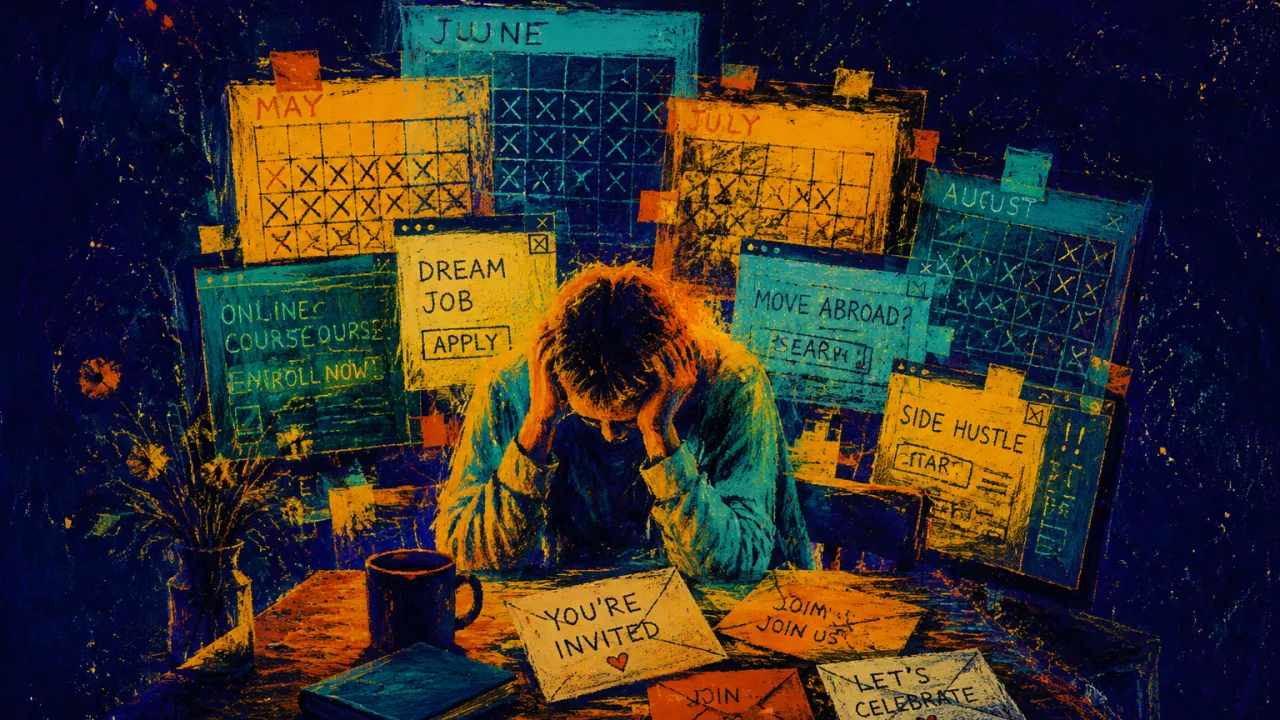
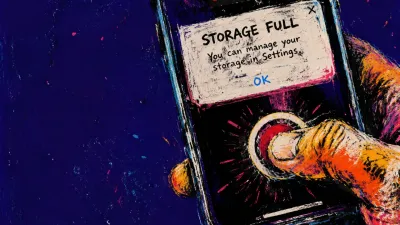
Abundance Overload: you open your phone on a Sunday morning with the plan to make your life feel better, and within ten minutes you have twelve tabs open: a meal prep video, a sleep reset thread, a calendar template, apartment storage ideas, a workout plan, a budgeting app, a friend's invite, and someone's simple routine that somehow has nineteen steps. Nothing on the screen is bad for you, which is exactly why your body does not know how to push any of it away. Your thumb keeps moving while your chest gets tight, your shoulders creep up, and a small pressure builds behind your eyes, not from lack, but from too many good things arriving without an order. You tell yourself you should be grateful to have choices, to have access, to have options, and then you feel that quiet snap of irritation because gratitude does not sort the tabs, answer the messages, pick the future, or tell your body what to do first. The more support you collect, the less supported you feel; every routine becomes another thing to maintain, every opportunity becomes another open loop, every possible version of your life stands there waving like it deserves your attention. You start craving a plain yes or no, a clean shelf, one meal, one plan, one hour that is not trying to become a whole self-improvement system. The cost is subtle: your life may look full from the outside, but inside you are losing the ability to feel what you want without first ranking everything that could help you become someone better, much like The Empress sitting still among wheat, water, forest, cushions, stars, and pomegranates, surrounded by nourishment so dense that even beauty begins to press inward.

What's pulling at you?

You're not stuck because your life is empty; you're stuck because too many things can honestly be called good for you. One part of you wants to receive every option, invitation, routine, and possible future, while another part needs a smaller field where one choice can become livable. The pull is between expansion and sorting: wanting more life, and needing enough space to know which life is yours.

How It Shows Up?

  • You sit alone at the kitchen table on a Saturday morning with coffee going cold while your laptop shows a row of tabs: workout classes, rent-friendly decor, recipes, a savings tracker, a cheap flight, three unread newsletters. Each tab looks useful, so closing one feels like throwing away a possible upgrade; your neck gets stiff, your breath shortens, and your eyes skim without landing. The screen starts to feel like the Seven of Cups suspended in one bright cloud, every cup holding a different version of a better day. You are allowed to close the laptop before you have turned possibility into a plan.
  • A friend sends 'want to come out tonight?' and you stare at it while another group chat is already planning brunch, your partner is asking about dinner, and someone from work has liked your post. None of it feels hostile; it is all warmth, access, and open doors, which makes the pressure harder to name. Your stomach dips, your throat narrows, and your thumb hovers because saying yes to one thing means leaving several cups overflowing somewhere else. It is fine to answer from the size of the evening you have, not from the size of every opening in front of you.
  • At your desk, the task itself is simple until the helpful inputs start piling up: feedback comments, bookmarked examples, Slack threads, saved templates, AI suggestions, and five ways to make the final version sharper. Your shoulders rise toward your ears, your jaw locks, and you keep rewriting the same first line because every reference seems worth including. The whole workspace feels overlit, like The Sun repeating itself in sunflowers, flag, horse, and sky until brightness stops helping you see. You can choose one source for the next hour and let the rest wait without turning it into a verdict on your potential.
  • At night, you climb into bed after setting out vitamins, charging your watch, queuing a meditation, filling a water bottle, and promising yourself tomorrow will be cleaner. The room is arranged for care, but your body is buzzing; your calves twitch under the sheet, your forehead feels tight, and your mind keeps checking whether you missed one more step. The cup is already full, yet another stream keeps pouring in. You can let sleep be one simple thing tonight, without making it prove the whole routine is working.
  • You are in the grocery aisle holding two versions of the same better choice: oat milk with extra protein, oat milk with fewer ingredients, the snack your body wants, the snack the fitness account recommended. The shelf is crowded with small promises, and your hand stays half-raised while a dull heat climbs into your face and your chest feels boxed in. It has the stillness of the Nine of Cups, a neat row of options above a body that cannot drink all of them. You can pick the ordinary option and leave the aisle without solving your whole relationship to care.

Abundance Overload in Tarot Cards

Abundance Overload lives in the moment when support, options, routines, and possible futures all arrive without a usable order. You can feel it in the tight chest, raised shoulders, and hovering thumb that show up when another tab, text, or task asks to be sorted. From an existential perspective, the structural framework here is about plenty becoming difficult to inhabit when nothing has been ranked into a livable shape. The Tarot Cards below make that crowded field visible without reducing it to a single answer.

The Empress Upright
The wheat, waterfall, pomegranate robe, star crown, and layered cushions crowd The Empress with living supply. Nothing in the image is barren; the pressure comes from too many sources of fertility converging around one seated body. In personal growth, this becomes Abundance Overload when every book, framework, mentor, course, and possible future feels like another field demanding cultivation. You are not stuck because nothing is available; you are stuck because the psyche cannot metabolize every form of nourishment at once without losing the power to choose. The card gives the overload a boundary: surplus is a structure, not a moral failure. The struggle becomes visible as the difference between a fertile environment and a chosen practice that can actually take root.
Reversed
Water pours behind The Empress, wheat fills the foreground, forest closes around the throne, and fruit-like patterns repeat across her robe. The image has almost no empty psychic weather: everything is fertile, flowing, decorated, or ready to ripen. In introspection, that density becomes the shape of an inner world with too much material arriving at once. You may have feelings, memories, ideas, and self-observations available, but the card’s structure shows why availability is not the same as integration; without a clear container, abundance turns into pressure.
The Sun Upright
The whole card is saturated by one source of light. The sun, the sunflower heads, the wreath, the red feather, the red flag, and the white horse all echo the same life-giving charge until the scene becomes a concentrated field of brightness. In personal growth, that abundance can become its own pressure. You may have too many insights, too many possible selves, too many methods, and too many signs of potential, while the actual body of your life can only integrate a limited amount at once. The Sun anchors this struggle in over-illumination rather than darkness. The issue is not that you cannot see; it is that the field is so lit, fertile, and promising that your inner system has to decide what can truly be absorbed, practiced, and made real.
Ace of Cups Upright
The cup is already full enough to overflow, yet more symbolic input descends toward it from above. Five streams do not trickle; they surge into the pool, turning reception into immediate discharge. For inner work, the pressure comes when insight arrives faster than your mind can metabolize it. You may be receiving something real, but the structure shows why real feeling can still become too much when the vessel is built to transmit before it has learned to integrate.
Reversed
The hand in the card has to hold a jeweled vessel steady while the water keeps arriving, rising, and spilling in several streams. The cup remains beautiful, but the flow passing through it is larger than any ordinary grip could manage. Reversed, that structure becomes Abundance Overload: the gift itself turns into pressure because the receiving system never gets a pause. More insight, more inspiration, more emotional access, and more possibility keep entering before the previous wave has settled. For personal growth, this is the trap of being surrounded by growth material while losing the ability to digest it. You may keep opening new doors inside yourself, but the constant intake makes the self feel less integrated, not more clear.
Three of Cups Upright
Grapes, gourds, and pumpkins crowd the lower field while the figures hold only small cups in their raised hands. The scene is visibly full: reward, social warmth, and symbolic completion are present in greater volume than any one vessel can contain. That fullness can become a pressure point in introspection. You may not be failing to appreciate what is good; the struggle is that the inner container is smaller than the amount of emotional input, insight, praise, or change arriving at once. Abundance Overload appears here as a digestion problem rather than a gratitude problem. The harvest has arrived, but the psyche still needs time, space, and order to metabolize what the scene is asking it to celebrate.
Seven of Cups Upright
Seven cups hang in a clouded field, each carrying a complete promise: shelter, wealth, recognition, charged desire, reputation, hidden identity, and creative force. The visual problem is that all of them arrive with the same brightness and the same height, so no single cup naturally becomes the ground on which the rest can be arranged. In lifestyle terms, this is the pressure of too many valid upgrades asking to become the center of your life at once. You may not be lacking ideas, resources, or ambition; the strain comes from abundance arriving without sequence, container, or proportion. The card gives that overload a visible boundary. It shows a daily system where every module looks important, but the structure holding them is mist, so your attention keeps spreading before your life can consolidate into a rhythm you can actually inhabit.
Nine of Cups Upright
Nine full cups stand behind the seated figure like a complete menu of desirable outcomes, yet none of them is in his hand. The visual abundance is real, but it is arranged above and behind the body, turning possibility into a display that cannot be directly inhabited all at once. You meet this card at a decision point when the problem is not scarcity but saturation. Every option can look emotionally valid, successful, or defensible, so the act of choosing starts to feel like losing the other eight cups rather than selecting the one you can actually live through. The crossed arms give the struggle its boundary: the body protects itself from being flooded by too many acceptable futures. Abundance Overload names the moment when more possibility stops creating freedom and starts overloading the inner receiving system that has to carry the decision.
Reversed
The nine cups form a complete, elevated inventory behind the seated body, arranged higher than the person who supposedly benefits from them. In the reversed current, that display becomes less like available nourishment and more like a shelf of proof pressing down from behind. You can have evidence that things are fine and still feel unable to metabolize it. Abundance Overload names the structural pressure of having too much visible enoughness and too little inner transfer, so the psyche stays crowded rather than settled. The card links this struggle to the gap between accumulation and assimilation. The cups are there, but the body does not drink; the inner audit begins exactly at that blocked channel.
Ten of Cups Upright
The card is filled with sources of nourishment: ten cups, a river, fertile land, children in motion, a secure house, and the embrace of the adults. Nothing in the image is empty, yet the abundance is spread across several systems that all ask to be received at once. Abundance Overload appears when the growth field becomes rich but unintegrated. You may have books, frameworks, goals, insights, supportive people, and possible selves around you, but the sheer fullness of the field can make it difficult to choose one channel and let it become real. The rainbow gathers the cups into a beautiful order, but that order stays overhead. The card reflects a personal growth stage where the issue is not scarcity of potential; it is the pressure of integrating too much meaning without losing your center.
Ace of Pentacles Upright
The pentacle fills the upper field while the estate below is lush with flowers, pathway, archway, and distant mountain. The card does not show scarcity; it shows a single hand meeting a field of possibility larger than its immediate grip. You can feel this when possibility itself becomes too much to organize. Inner growth may be available from multiple directions, but the psyche still needs a container small enough to hold one next step without turning the whole future into weight.
Nine of Pentacles Upright
The card places one still figure inside a field of many living and material signals: grapes, pentacles, vines, a falcon, a snail, a distant home, and cultivated land. Everything has value, but each thing also asks to be tended, held, read, or managed. In social life, the same structure appears when connection options multiply faster than your embodied capacity can metabolize them. More invitations, circles, contacts, and possible communities do not automatically create belonging; they can turn the social field into a garden that keeps producing more than one person can carry. Abundance Overload names the strain of having enough access to feel responsible for everything, while still lacking the simple relief of being placed. The card shows that the issue is not scarcity of connection, but the pressure of too many possible points of attachment without a clear inner order.
Reversed
The vine does not only carry grapes; it also carries pentacles, turning natural growth into layered proof of accumulation. In the reversed texture of the card, the garden's richness becomes dense, self-contained, and difficult to convert into simple movement. That is why this card can speak so directly to academic overload. Notes, saved readings, lecture recordings, flashcard decks, marked PDFs, and productivity systems can all look like support, yet together they can create an environment where synthesis becomes harder. The abundance is real, but it begins to crowd the path from input to understanding. You are not looking at a lack of resources. The card names a resource field that has become too full to move through, where the next step is blocked by the very material meant to make studying easier.
Ten of Pentacles Upright
The ten pentacles do not appear as coins anyone can pick up or spend; they hover as a complete structure above an already full household. Beneath that grid, people, dogs, property markers, a crest, an archway, and a distant wall all claim space inside the same domestic system. That visual fullness carries the exact shape of abundance becoming hard to metabolize. You may have the routines, tools, subscriptions, plans, spaces, and support structures that are supposed to make life better, yet the system asks for so much coordination that fullness starts behaving like pressure. In lifestyle terms, the card names the point where having more options, more stability, and more things to maintain stops feeling like freedom. The struggle is not scarcity; it is the loss of livable simplicity inside a life that has become materially and structurally overpopulated.
Queen of Pentacles Upright
The Queen holds one pentacle inside a scene already thick with roses, vines, water, carved figures, and fertile ground. The visual field is not lacking; it is full, layered, and dense with signs of support. For inner work, that fullness can become its own pressure. You may have self-care rituals, language for your emotions, a safe private space, and enough insight to name what is happening, yet the system still feels crowded because every resource becomes another thing to process. Abundance Overload is the strain of having access without integration. The card's lushness shows why rest can feel strangely heavy: the inner garden is alive, but the amount of life inside it exceeds the bandwidth available to receive it cleanly.
Reversed
The scene is crowded with fertility: roses, vines, a stream, carved reliefs, a rich robe, and the pentacle all compete as signs of value. The Queen’s focus narrows to one coin, as if the only manageable response to plenty is to hold one thing very still. For personal growth, the overload is not a lack of options but the pressure of too many promising inputs asking to become identity, routine, and direction. You are held at the point where abundance stops feeling like support and starts becoming a demand to choose the correct self.
King of Pentacles Upright
The King sits inside a visible surplus: pentacle, scepter, crown, grape robe, vines, castle, and land all converge on one seated body. The abundance is real, but it has weight; every good thing becomes another factor that must be preserved before movement can begin. In a choice reading, this structure mirrors the moment when multiple decent options stop feeling like freedom. You are not frozen because nothing is available; the card locates the friction in having too much value on the table and no clean way to rank what matters most.

Abundance Overload in Tarot Card Reading Insights

Abundance Overload often enters readings through the same small scenes: too many supportive inputs, too many open doors, and no clean place for attention to land. Other people have brought this pressure into card sessions when plenty started feeling harder to carry than lack. Tarot Reading Insights for this theme are gathered below.

Psychological struggles related to Abundance Overload