Seen, But Nowhere to Land?

Explore Recognition-Containment Split through lived tension, related tarot cards, and tarot reading insights on praise that cannot fully land.

Recognition-containment Split
What does this feel like?

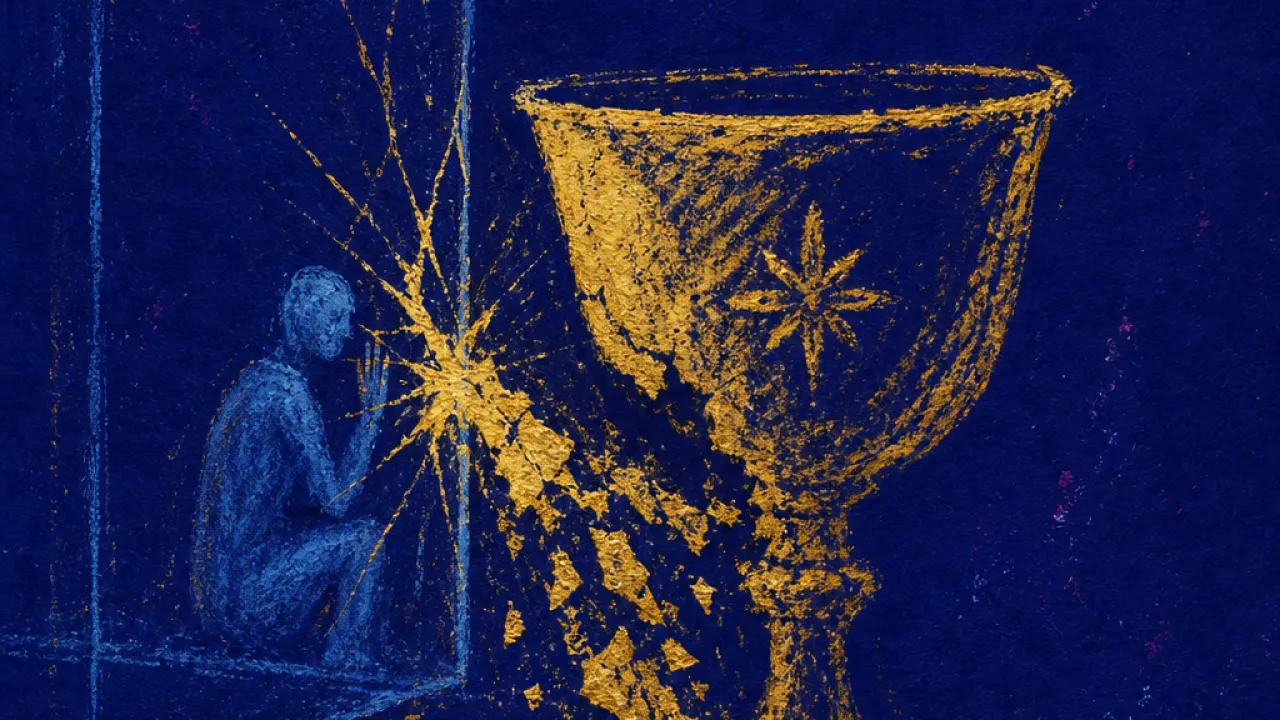
Recognition-Containment Split — you get the email, the shoutout, the invite, the compliment, the public little signal that says people see what you did, and for a second your body lights up before it immediately locks down. Your thumb hovers over the reply button, your face warms, your chest pulls tight, and some part of you starts calculating what this now demands from you: stay impressive, stay available, do not look too pleased, do not ask for too much, do not let this become evidence someone can use to raise the bar. You wanted to be seen, but being seen suddenly feels like standing in a glass room with no shelf inside it, nowhere to place what has been handed to you. At work, praise can land like a substitute for scope; in friendship, admiration can leave you feeling less held; in love, being desired can still miss the quiet place where you need steadiness; in your own private head, progress can become pressure before it becomes trust. You keep trying to receive recognition without letting it spill into entitlement, exposure, comparison, obligation, or the fear that one visible win will become the version of you everyone expects forever. So you smile, minimize, deflect, overdeliver, or move straight to the next task, because pausing long enough to let the moment matter feels almost unsafe. The cost is subtle but heavy: your life can start filling with proof that never becomes belonging, achievement that never becomes ground, compliments that never become nourishment, much like the Ace of Cups reversed, the ornate chalice held in the center while the water keeps spilling past the rim.

What's pulling at you?

You're not struggling because recognition is missing; you're stuck because recognition arrives without enough room to hold what it changes. One part of you wants the credit, title, love, or confirmation to count, while another part keeps bracing for the exposure, expectation, or loss of privacy that may come with being seen.

How It Shows Up?

  • You get praised in a team Slack thread, and your face does the right thing before the rest of you catches up — a small smile, a quick thanks, maybe a reaction emoji. Then you sit there with your hand still on the keyboard, chest tight and stomach oddly flat, because the praise is visible but nothing about your role has become easier to hold. Let the message be a message for now; you do not have to turn it into a verdict on your whole future before lunch.
  • You finish a presentation and people say it went well, but on the train home you replay the one sentence that landed awkwardly. Your shoulders are still lifted, your throat feels dry, and the applause has the strange texture of the Six of Wands: noise around you, posture required from you. It is allowed to take time for your body to catch up with what other people have already named.
  • A friend says, 'You're doing so well,' and you immediately feel further away from them than you did before. You nod, laugh lightly, and steer the conversation back to them, while something behind your ribs pulls inward as if the compliment has made the room too bright. You can accept a kind sentence without offering the polished version of yourself in return.
  • You open a performance review, acceptance email, grade, invite, or public mention, and instead of relief you feel a pulse of pressure under your sternum. Your jaw tightens, your eyes skim the words too fast, and the recognition starts turning into a new standard before it has even had a place to land. You are allowed to read it once and close the tab without deciding what it means yet.
  • At night, you lie in bed with your phone face-down beside you, thinking about how many people think you are fine, impressive, capable, sorted. Your hands rest on your stomach, your breathing sits high in your chest, and the row of cups behind the seated figure feels close: proof on display, body guarded in front of it. You do not have to make your private interior match the public image tonight.

Recognition-containment Split in Tarot Cards

Recognition-Containment Split lives in the gap between being visibly valued and having a place where that value can settle into role, trust, or inner permission. You can feel it as a tight chest after praise, a dry throat after applause, or a guarded body in front of visible proof. From an existential perspective, the structural framework of this struggle is about what happens when recognition arrives faster than containment can form. The Tarot Cards below make that split visible through cups, crowns, raised wands, guarded bodies, and offerings that never quite land.

Ace of Cups Reversed
The chalice is ornate, central, and visibly honored, yet its water cannot stay held; the more it receives, the more it spills beyond its rim. Reversed in a career reading, that structure separates visibility from containment. You may be praised, included, or symbolically valued while still lacking the protected role, decision rights, or promotion pathway that would turn recognition into real career architecture.
Two of Cups Upright
The wreaths and cups make respect visible, but the reward remains held inside a ceremonial exchange. Nothing in the image shows the cup becoming a title, budget, mandate, or new terrain; value is acknowledged at arm's length and kept within the frame of mutual politeness. In a career setting, that is the shape of being praised while still contained. You can be seen as valuable, trusted, and pleasant to partner with, yet the recognition may stay symbolic when what you need is scope, authority, or promotion.
Three of Cups Upright
Three women lift their cups above a visible harvest, turning completed effort into a shared moment of recognition. The fruit is already at their feet, but the card does not stop at outcome; it shows the body having to hold applause, contact, movement, and emotional reception all at once. That structure maps directly onto the split between achieving something and being able to contain what the achievement now reflects back. In personal growth, the hard part is often not producing evidence of progress, but letting that evidence become real without immediately converting it into pressure to stay impressive. You are not looking at a private victory here. The raised cups make achievement visible in a circle, which means the reward arrives with witnesses, comparison, and a new level of self-recognition. Recognition-Containment Split names the exact point where success has landed externally, but the inner container is still learning how to hold it without shrinking, performing, or rushing into the next self-upgrade.
Four of Cups Reversed
The cloud hand holds the cup close, but there is no open palm, no eye line, and no bodily surface prepared to receive it. The offering is structurally present, yet the figure's folded shape turns the transfer point into a sealed boundary. Recognition-Containment Split names the career tension where praise, promotion, visibility, or being chosen arrives from outside but cannot become internal evidence. You may be recognized by the workplace and still feel unregistered inside your own system because the card's exchange never completes at the point of containment.
Five of Cups Upright
Three cups have failed as containers, while two cups still stand behind the cloaked figure without being received by the visible gaze. The card separates value from recognition: what remains is present, but it is not yet inside the figure's active system of orientation. In career terms, this is the ache of having evidence of competence that never seems to settle into a stable professional identity. A single mistake, rejection, or undervalued project can drain the container faster than praise, metrics, or loyal effort can refill it. Recognition-Containment Split names the fracture between doing valuable work and having that value held in a way you can stand on. The card does not flatten the loss; it shows why the remaining cups cannot help until they become part of the body's forward map.
Nine of Cups Upright
The crossed arms sit directly in front of the figure's chest while the cups behind him function like a public inventory of success. The body faces outward, but the receiving channel stays closed. In personal growth, that arrangement maps the gap between being seen and being able to let the evidence land. You can have proof, praise, or visible progress behind you while the inner system still treats recognition as something that must be contained at arm's length. Recognition-Containment Split names the friction between achievement as display and achievement as self-trust. The card gives shape to the moment when your wins are real, but their meaning has not been allowed into the body that earned them.
Ten of Cups Upright
The ten cups hover as a single rainbow above the family, while no cup rests in any one person's hands. The achievement is visible, beautiful, and shared, but the scene gives no clear mechanism for assigning which body carried which part of the emotional load. In career terms, that visual split mirrors the moment when your work becomes part of a team's glow while your individual value stays contained inside the collective story. You are not asking for the rainbow to disappear; you are trying to see where your contribution begins, where the group narrative ends, and why recognition becomes harder precisely when everyone is celebrating.
Page of Cups Upright
The Page presents himself to the viewer, but his attention stays inside the cup, where the fish meets his gaze in a private exchange. The chalice is visible, yet the living content inside it remains delicate, strange, and not fully ready for the public field. That is the career shape of wanting credit without wanting the tender part of the work mishandled. You may need your idea, emotional intelligence, creative contribution, or relational labor to be recognized, while also knowing that exposure can flatten it into something others judge, copy, or dismiss too quickly. The card does not reduce this to shyness or ambition. It shows a structural split between visibility and containment, where professional recognition requires bringing the cup forward, but the most alive part of the contribution still needs protection.
Queen of Cups Upright
The chalice in the Queen’s hands is the largest and most elaborate cup in the suit, but its contents are sealed from view. Her gaze confirms its importance, while the lid, the throne, and the protected shore keep that importance enclosed rather than externally demonstrable. That visual structure maps sharply onto career environments where the most valuable contribution is not always the most measurable one. You may carry emotional intelligence, stakeholder sensing, risk awareness, or team stabilization, yet those contributions can remain hidden from promotion logic because they arrive as atmosphere, not metrics. The split forms when what you actually hold for the workplace cannot be translated into what the workplace knows how to reward. The card does not flatten this into being overlooked; it shows the exact mechanism by which value becomes contained before it becomes recognized.
King of Cups Upright
The gold crown, cloak, cup, and scepter announce status, while the blue robe, fish pendant, and sea hold the quieter emotional field close to the body. The most important work in the image is containment, yet the most visible parts are the symbols of polished authority. At work, this structure names the split between the value you create by stabilizing people and the value the system knows how to recognize. You may keep the team functional, soften conflict, or read risk early, but the card shows how that labor can vanish behind the clean surface of competence.
Two of Pentacles Reversed
The coins in the Two of Pentacles become visible as value because they are in motion. The moment the loop stops, the display changes, and the figure no longer has a performance through which the material tokens can be read. Reversed, this structure speaks to a career system where recognition attaches to visible movement while containment labor disappears into the background. The work of preventing collapse, smoothing handoffs, absorbing ambiguity, and keeping projects breathable may be essential, but it is often noticed only when the coin drops. This struggle carries a specific wound: you may be valued for responsiveness while the stabilizing intelligence behind that responsiveness remains unnamed. The card does not reduce this to wanting praise; it shows how a workplace can depend on your containment while offering recognition only for the parts of the loop that can be watched.
Three of Pentacles Upright
The work happens at a threshold, with the craftsman raised and visible while the two robed figures stand close enough to witness but not close enough to hold the tool. The scene offers recognition and exposure at the same time. That is the precise shape of Recognition-Containment Split. You want the repair to be seen because unseen work can feel unreal, yet the moment it is seen, the unfinished parts may feel too raw, too measurable, or too easy to misread. For inner-world work, the card shows why validation can feel strangely unsafe. The gaze that confirms your effort can also turn your private renovation into a public surface, leaving you seen without feeling contained.
Four of Pentacles Upright
The figure faces outward, crowned with visible value, yet his arms and feet keep the other pentacles sealed against his body. The image holds display and withdrawal in the same posture: the body wants to be seen, but every resource is also being guarded. Recognition-Containment Split appears at work when being noticed feels necessary and exposing your value feels risky. You may want credit, promotion, or authority, while another part of the system keeps ideas, proof, and ambition held close in case visibility turns into loss. The card gives that contradiction a precise shape. Recognition is not absent; it is contained so tightly that the very evidence meant to support you cannot fully enter the room.
Six of Pentacles Upright
The card places visible giving inside an unchanged hierarchy. Coins move, the recipient's hands open, and the sky remains clear, but no body changes level and no path opens beyond the compressed exchange zone. In a career context, this is the shape of being praised, tipped, thanked, spotlighted, or given a small win while the larger structure of authority stays closed. You receive proof that your value is seen, yet that proof can also contain you by substituting symbolic recognition for scope, title, budget, or decision rights. The Six of Pentacles makes the containment precise. It asks you to separate recognition that nourishes movement from recognition that keeps you grateful inside the same professional position.
Seven of Pentacles Upright
The six pentacles hang openly on the vine while only one has reached the ground, leaving value visible but still contained by the structure that produced it. The harvest is present, yet most of it has not crossed into the figure's hands, status, or usable store. In a career reading, that split mirrors work that can be pointed to but not owned: outcomes sit inside a project, a team, or a manager's narrative while your individual value stays hard to convert. The struggle is not whether the results exist; it is whether the workplace can recognize them without keeping them attached to someone else's vine.
Nine of Pentacles Upright
The falcon rests on the woman's gloved hand with its hood still on, a living force displayed as proof of control while its sight and release are restricted. The pentacles and garden confirm achievement, but the sharpest symbol of agency is held in a managed, ornamental state. In career terms, this is the tension of being recognized without being fully authorized. You may receive praise, compensation, or visible status, yet the decision-making channel remains hooded, and the role keeps your capability present without letting it move at full range. The struggle sits in that split between external validation and internal containment. The card gives shape to the moment when workplace recognition stops feeling like expansion and starts feeling like a controlled display of what you have already proven.
Three of Swords Upright
The heart is fully visible, suspended without ribs, hands, ground, or cover. Its exposure is total, but that exposure does not create safety; it gives the blades a clear path to the center. Workplace recognition can carry the same contradiction. You need visibility to be credited, promoted, and trusted, yet visibility can also make your work easier to dissect, compare, politicize, or attack. The rain around the heart suggests movement and release, but the wound channels are already occupied by steel. The card marks the strain of being seen without being held: attention reaches you, but containment does not arrive with it.
Eight of Swords Upright
The red robe is the most alive surface in the image, yet white bands cut across it and turn the visible body into something contained. The castle echoes the red at a distance, as if the system can recognize the signal while keeping the person who carries it outside the center of power. At work, Recognition-Containment Split shows up when strong performance is visible enough to be used but not allowed to translate into title, scope, or leverage. The card does not flatten that into ordinary underappreciation; it marks the structure where your value is seen precisely enough to be contained.
Four of Wands Upright
The raised garlands turn the foreground into a public signal of celebration, but the bodies holding them remain partially contained behind the four posts. Recognition is visible in the air; containment is in the frame that has to hold the display without collapsing. In personal growth, that pressure appears when progress gets noticed before your inner system has caught up with the evidence. You are not simply resisting praise; the card positions praise as a load placed onto a structure that is still learning how to receive achievement without losing its own center.
Six of Wands Upright
The rider sits high on a white horse with laurel on his head and a second laurel tied to the wand in his raised hand. Recognition is doubled: one crown on the body, one crown on the symbol he must keep upright, while the horse still carries him forward through the crowd. That arrangement turns success into a load-bearing posture. You are not simply receiving confirmation; you are holding the visible proof of progress while your body has to stay balanced, composed, and mobile. For personal growth, this is the split between an achievement that is visible and an inner system that has not yet made room for it. The struggle is not a lack of progress; it is the pressure of being publicly marked as successful before the self has fully integrated the new level.
Reversed
The raised wand stays upright even as the horse continues forward, requiring the rider to keep the ceremonial shape intact. The laurel crown and public procession keep feeding recognition toward the image, while the body has to contain whatever that attention produces. Recognition-Containment Split appears when being seen outpaces the private space needed to metabolize what being seen costs. The card's reversed structure turns applause into pressure held inside the posture, not a clean exchange of support. In friendships, this can surface when you become the impressive one, the strong one, the one everyone celebrates or depends on to be fine. The bond may look affirming from the outside, but internally the friendship has stopped making enough room for the unpolished, uncertain, or uncelebrated parts of you.

Recognition-containment Split in Tarot Card Reading Insights

When Recognition-Containment Split shows up, the question is often not whether people see you, but whether being seen gives you anywhere to rest. Other people bring that same gap into readings when praise, promotion, attraction, or visible progress feels harder to hold than expected. Tarot Reading Insights from sessions where recognition arrived before containment was ready.

Psychological struggles related to Recognition-containment Split