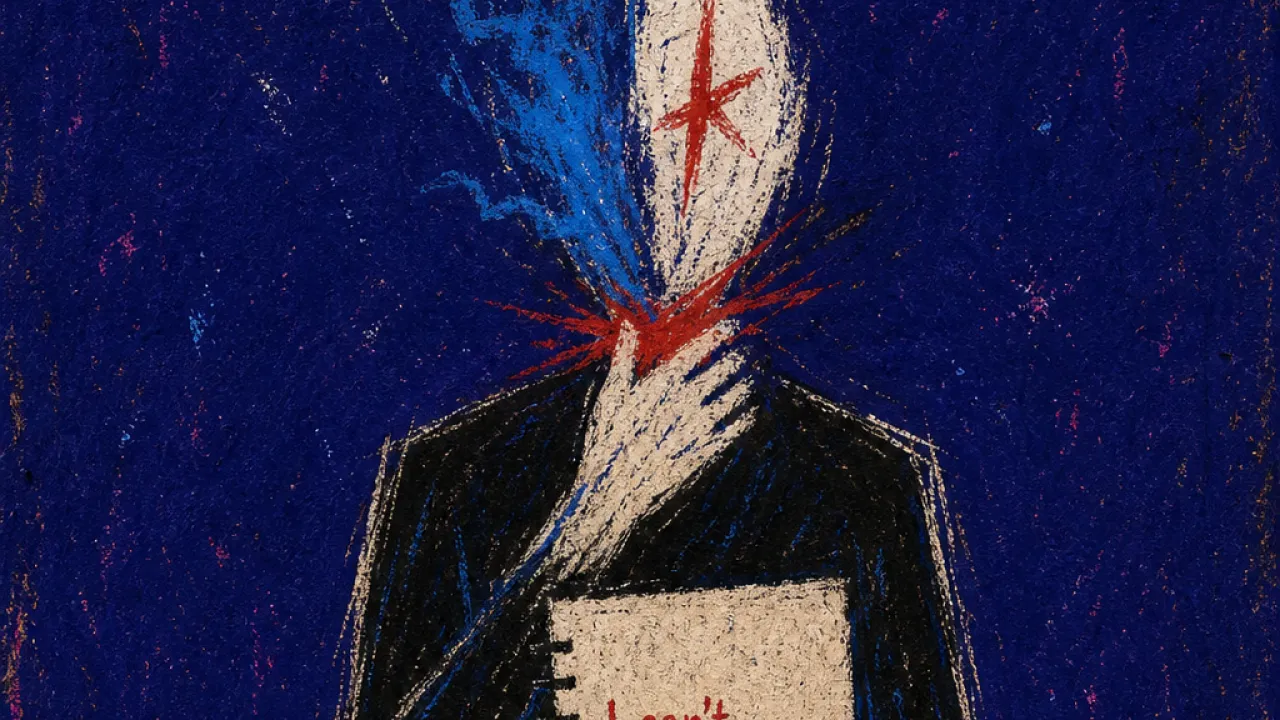
The reflex to soften a no into maybe is where Self-Silencing becomes visible. When your cursor hovers over unmute and your pulse gathers at the side of your neck, the body is already carrying the sentence. Grounded in Jungian archetypal theory, this pattern can be understood as the composed role standing in front of the hidden signal. The Tarot Cards below mirror those unconscious dynamics in image form.
The High Priestess UprightThe truth is present in the image, but it is not fully offered. One hand remains hidden, the scroll is only partly shown, and the veil keeps direct entry suspended, which creates a visual grammar of saying less than you actually know or need. That makes the card a strong fit for a friendship pattern where clarity is withheld in order to preserve calm. You may hint, soften, or wait for old friends to infer what has changed rather than naming a new boundary outright. This can feel more graceful than direct confrontation, especially when guilt, history, or fear of hurting the bond is already in the room. The card fits Self-Silencing because it shows truth carried close to the body while expression stays partial, indirect, and easy for others to miss.
ReversedThe scroll is present, but not fully shown. One hand reveals only the edge while the other stays hidden inside the robe, and the veil keeps the deeper chamber out of view. The whole card stages knowledge as something felt and known, yet still filtered before it is allowed into the open. That is why this image maps so cleanly onto Self-Silencing in introspection. You may already know the sentence that would change the reading, the journal entry, or the self-conversation, but the truth gets softened before it reaches language. The card’s restraint is not empty mystery here; it is the mechanics of keeping your own knowing half-spoken so you do not have to fully confront it.
The Empress ReversedThe face remains composed, the pearls circle the throat, and the scene is so beautifully arranged that discomfort has no obvious visual outlet. In reversal, the softness of the presentation becomes a filter that removes sharp feeling before it can reach the surface. That is the structure of Self-Silencing around family. Anger, refusal, and even simple contradiction are edited out in real time to preserve connection or avoid retaliation, so the room stays smooth while your internal signal disappears. What looks like grace from the outside often feels like shutdown or delayed resentment once the interaction is over.
The Emperor UprightThe Emperor's mouth is pressed shut, the beard thickens the area of the throat, and the river behind him is not allowed to run through the center of the image. Feeling exists, but it is rerouted to the margins while structure occupies the middle. The visual message is not emotional absence; it is emotional containment under authority. In family dynamics, that containment often becomes Self-Silencing. You edit your reactions before they become words, keep your tone flat, and say only what will not trigger correction, ridicule, or escalation. The card reveals a pattern where order is rewarded more than honesty, so your voice learns to disappear in the name of keeping the system calm.
ReversedHis beard obscures the throat, his lips are tight and colorless, and the body remains almost ceremonially still. The visual message is not that nothing is felt; it is that feeling is being disciplined out of direct speech so order and dignity can stay intact. In relationships, this becomes a habit of swallowing hurt, desire, or anger before it can disrupt the bond or expose vulnerability. You may keep the surface polished and readable while the real charge goes underground. The Emperor fits this pattern because the same structure that creates authority can also make expression feel dangerous unless it can be perfectly controlled.
The Hierophant UprightThe Hierophant's face stays controlled while every other symbol amplifies regulated delivery: the fixed gaze, the raised hand, the triple staff, and the centered ribbons. Speech here moves through sanctioned form, not raw feeling, and the listeners are positioned to absorb rather than answer. In family dynamics, that often becomes Self-Silencing. Words are filtered until they sound respectful enough, calm enough, or harmless enough to pass through the system without backlash. What disappears is not your ability to speak, but your right to speak before the inner censor has approved the script.
ReversedOnly the backs of the acolytes are visible, and their kneeling bodies are arranged for listening rather than exchange. The Y-shaped bands on their garments read almost like harnesses, turning posture itself into obedience. That bodily arrangement mirrors Self-Silencing inside the psyche. You may let one inner voice preach while other parts that feel angry, doubtful, needy, or inconvenient stay on their knees and out of sight. The card shows why this can feel moral or mature in the moment, but it also reveals the price: the muted parts do not disappear, they simply go underground and return as tension, shame, or psychic drag.
The Lovers ReversedThe man's body is open, but his face is not easy; the worry is visible before any contact happens. The couple stand exposed yet strangely still, with no gesture that closes the space between them, as if the scene values holding the formation more than releasing what is actually felt.\n\nIn friendship, that tension becomes Self-Silencing. You may keep the bond calm by editing out the part of your experience that would complicate the relationship, especially when the friend group feels like core emotional infrastructure. The pattern protects connection in the short term, but it does so by pushing your boundary needs below the surface.
Strength UprightHer eyes are closed and her face stays serene even while her hands control a mouth built for roar and bite. The white robe against the lion's red body creates a visible split between what can appear gentle and what must be kept out of sight. That image maps onto Self-Silencing in close friendship. You preserve the bond by editing your anger, jealousy, fatigue, or disappointment out of the exchange, which lets you look composed while your actual limits become harder and harder for the other person to recognize.
ReversedStrength places a striking amount of attention on controlled speech and controlled release. The hands stay at the lion's mouth, the gesture is precise rather than expansive, and the closed eyes suggest inward monitoring instead of open exchange. The body is not expressing; it is managing expression. That is the exact texture of Self-Silencing in a family system. You do not lose your voice because you have nothing to say, but because saying it feels too costly once older patterns of guilt, retaliation, or emotional withdrawal are activated. The defense protects connection in the short term by muting dissent, yet it slowly teaches you to disappear from your own sentences.
The Hermit UprightThe beard falls over the Hermit's chest, the mouth stays hidden under the hood, and communication is displaced into the lantern rather than direct speech. The whole figure is composed, but the composition is sealed; truth is carried, not openly voiced. That is why Self-Silencing fits this card. You may hold a great deal of inner knowledge, yet the route from feeling to language gets interrupted by caution, shame, or the wish to avoid being misunderstood. In introspection, the result is often a private clarity that never fully becomes a sentence you can say without shrinking.
ReversedThe bowed head, closed mouth, and heavy cloak pull expression back into the body, while the lifted lantern suggests something is known but not fully spoken. On a cold, empty peak, silence stops looking peaceful and starts looking like the price of staying safe. That is where Self-Silencing shows up in family conflict. You may know exactly what hurts, but the body withholds the sentence because previous honesty carried too much blowback, dismissal, or emotional chaos. The reversed texture of this card points to containment that has tightened into shutdown, where politeness and disappearance begin to replace voice.
Justice UprightThe face is composed almost to the point of masking, the robe conceals most of the body, and the emphasis falls on seeing, holding, and containing rather than declaring. Even the sword is present as capacity, not release, so the scene feels carefully controlled and emotionally edited. That containment becomes Self-Silencing when you are trying to name a future. A direction can feel alive in your body and still get toned down the moment it sounds impractical, disruptive, or too self-honoring. Justice shows how objective language can be given more authority than private truth, leaving the path articulate on paper and muted at the core.
ReversedThe sword stands upright but nearly disappears into the stone pillar, and the figure's face remains composed enough to pass for unreadable. That image captures a truth impulse that exists, but is held back until it can be delivered without emotional mess or visible loss of control. In friendship, You may wait until Your hurt is fully provable before speaking it, editing out softer needs so You can sound fair rather than vulnerable. The cost is that Your boundary arrives late, after the injury has already been converted into restraint, distance, or quiet resentment.
The Hanged Man UprightThe figure’s hands are hidden behind his back, leaving the body visibly present but unable to gesture, reach, or interrupt the scene. His face remains composed, while the most expressive parts of the body are removed from view. That restraint gives Self-Silencing a strong visual anchor. The pattern does not always look like fear; it often looks like control, maturity, or calm containment. In the introspective field, this can become the habit of keeping your own feelings out of language because naming them would disturb the inner image of being composed. The Hanged Man makes that silence visible without condemning it. The body shows that withholding can protect psychological order for a while, but it also keeps the emotional truth tied behind the back, unable to participate in the reconstruction of the self.
ReversedThe hands are hidden behind the back and the body hangs without any outward gesture that could alter the scene. Presence is visible, but impact is withheld, which creates an image of participation stripped of expression. You can feel that mechanism in social rooms where stronger personalities or unclear group norms make it seem safer to mute yourself than to risk disruption. The silence buys temporary stability, yet over time it makes you disappear inside the very circles you are trying to keep smooth.
Temperance ReversedThe angel's face remains composed while the emotional substance is kept inside a controlled exchange. No spill, splash, or disruption is allowed to disturb the purity of the scene. That visual restraint becomes Self-Silencing when reversed. The psyche learns to keep difficult material contained so the inner image of calm, maturity, or being okay does not break. In introspection, You may notice the feeling but stop it before it becomes language, need, anger, or choice. The silence looks peaceful from the outside, but internally it can become a quiet refusal to let the real signal change the system.
The Devil ReversedThe chained figures stand exposed under the Devil's authority, but their mouths, hands, and bodies show no active protest. The image carries the tension of a response that has been stopped before it becomes visible. Self-Silencing grows from that stopped response. In family systems, the unsaid sentence can become a survival tool: do not challenge the parent, do not name the resentment, do not disturb the arrangement that keeps the room from turning dangerous or cold. The reversed charge of the card is the cost of that containment. What looks like peace on the surface can become an internal chain, where every swallowed boundary teaches the psyche that your truth is less safe than your compliance.
The Star ReversedThe figure lowers her head toward the streams instead of facing outward. Her hands remain occupied with the pitchers, and the whole scene stays smooth, quiet, and undisturbed. Self-Silencing appears when the voice is redirected into service. In friendship, You may swallow irritation, soften your needs, or keep acting supportive because naming the issue would disturb the calm field. The Star's reversed posture makes the mechanism visible: the feeling still leaves the body, but it exits as care instead of language.
The Moon ReversedThe moon's face is solemn, eyes closed and lips pressed, while the path below keeps moving toward a place no one has clearly named. The image holds pressure without a human voice, as if the truth of the scene is present but not spoken aloud. That visual restraint mirrors Self-Silencing in friendship. You may know that a boundary has changed, that a friend's demands are too much, or that an old dynamic no longer fits, but the pattern keeps the words inside to avoid disrupting the bond. The reversed Moon shows how silence stops being protective when it becomes the only way to stay connected. What is not said does not disappear; it sinks into resentment, fatigue, and unclear signals that make the friendship harder to read for everyone involved.
The World ReversedThe figure's body is visible and graceful, yet the card gives her no speaking mouth as the central symbol; the scene is carried by posture, rhythm, and composure. Around her, the four corner figures watch in silence, making the social field feel observant rather than conversational. Self-Silencing appears when harmony becomes more important than accurate expression. The body keeps the dance smooth while disagreement, need, irritation, or difference is edited out before it can disturb the group image. In social networks, this pattern can look like being easy to include but hard to truly know. You may keep the circle peaceful, but the parts of you that would clarify your needs never enter the room.
Two of Cups ReversedThe figures maintain the polite offering posture, and the scene depends on the relationship looking harmonious. In the reversed texture, that ceremonial stillness can trap the body in agreeable availability, where discomfort has to stay hidden so the exchange can remain smooth. In friendship, this pattern appears when you keep saying everything is fine because naming the drain might disturb the bond. The cup is still extended, but the honest signal has gone underground, turning harmony into a performance your nervous system has to fund.
Seven of Cups ReversedOne cup holds a face, while the actual figure remains turned away and visually undefined. The image suggests a self that has learned to place its expression somewhere outside the body, where it can be managed, edited, or withheld. In reversal, that distance becomes silencing. The psyche does not simply choose privacy; it interrupts expression before it reaches the relational field, because speaking directly has been linked with consequences the body still anticipates. Around family, this can feel like losing access to your own voice in real time. The card shows the mechanics of that loss: the authentic response is present, but it has been displaced into an image instead of allowed to become speech, boundary, or visible emotion.
Page of Cups ReversedThe Page does not look out toward the viewer or the open sky; his attention stays enclosed between his face, the cup, and the small fish. The emotional message is vivid, but it remains inside a private circuit. Self-Silencing forms when expression feels too costly in the family field. You may keep the surface sweet, agreeable, or neutral while studying your real feeling alone, hoping it will become easier to manage if it never leaves the cup. The pattern protects contact in the short term, but it makes your inner life carry the whole conversation.
Queen of Cups ReversedThe Queen's face is calm, and the cup remains sealed. Nothing spills, nothing confronts the viewer, and the emotional content is held behind a composed surface. In reversal, that composure can become Self-Silencing. The body performs ease while the inner container fills with unspoken hurt, unmet needs, and careful edits. The wall in the distance becomes more than protection; it becomes the place where difficult truth is kept out of the friendship's shared air. In friendship, this pattern often appears as being low-maintenance on the outside and internally saturated on the inside. You may avoid saying what hurt because you fear disrupting the bond, but the unspoken material does not disappear; it becomes the hidden cup that slowly defines the relationship from beneath the surface.
King of Cups ReversedThe king's expression is melancholy, but his posture stays formal, composed, and contained. His hands hold the emotional symbols carefully, as though feeling must be handled through objects and ritual rather than released directly through the body. This is the visual pathway into Self-Silencing in friendship. You may know exactly what hurt, annoyed, or disappointed you, but the controlled posture takes over before the truth reaches the conversation. The pattern often presents as maturity because it avoids visible conflict. The deeper audit is that silence can become a defense against relational disruption, and the friendship stays peaceful only because your inner experience has been edited out of the room.
Three of Pentacles ReversedThe craftsperson is visible through the work, not through private feeling. In the reversed texture, the tool, blueprint, and watching figures can narrow the whole scene into role performance: do the part correctly, keep the structure intact, do not interrupt the plan. Self-Silencing forms when expression feels risky because it might disrupt the shared architecture. The person keeps contributing in the expected way while the real boundary signal stays hidden behind competence, politeness, or emotional restraint. In friendship, this can look like saying you are fine, laughing off a hurt comment, or staying useful when you actually need the terms to change. The silence protects the bond from immediate conflict, but it also prevents the relationship from being built on accurate information.
Four of Pentacles ReversedThe man's mouth is tightly pursed while his hands are too busy holding the central pentacle to gesture, reach, or negotiate. The body keeps the whole system intact by refusing the movement that speech would introduce. In friendship, this becomes the pattern of swallowing boundary needs so the relationship does not wobble. You may stay quiet to preserve peace, but the card shows how silence can become a stabilizer for a structure that is already asking too much of your inner space.
Two of Swords UprightThe crossed swords do not only protect the woman; they also prevent anything from leaving the center of the chest. Her face is covered, her body is still, and the whole image compresses expression into a silent defensive shape. Self-Silencing takes that posture into the family field. You may swallow the correction, soften the truth, or let a comment pass because speaking plainly would disturb the fragile functionality of the relationship. The Two of Swords shows how silence can feel like control while quietly teaching the family system that your inner reality is negotiable.
ReversedThe woman's body is arranged to reveal almost nothing: eyes covered, chest guarded, movement suspended, emotional water kept behind her. The image looks composed, but the composition depends on suppressing what would disturb the balance. Self-Silencing is that same quieting process inside a friendship. You may edit your needs, soften your discomfort, or decide not to mention a boundary shift because the relationship has trained You to protect harmony before self-contact. The reversed Two of Swords connects to this pattern through its guarded stillness. The problem is not simply that nothing is being said; it is that silence has become the price of staying included, safe, or easy to be around.
Three of Swords UprightThe card contains a heart but no mouth, no hands, and no body capable of protest. The wound is unmistakably visible, yet there is no figure who can name what happened, negotiate the boundary, or push the blade away. That absence maps closely onto Self-Silencing in career dynamics. You may keep your reaction contained after being undermined, corrected in public, or excluded from a decision because speaking up feels like it could invite another strike. The pattern protects the exposed center in the short term, but it also lets your needs, credit, and boundaries disappear from the room.
ReversedThe heart is visibly hurt, but the image gives it no mouth, hands, or body through which to respond. It remains centered and exposed, holding the wound in silence while the weather continues around it. Self-Silencing in friendship forms when keeping the peace becomes more important than telling the truth about the hurt. You may say it is fine, stay available, or minimize the impact because naming the wound feels like it might endanger the bond. The Three of Swords shows the cost of that containment. The pain does not disappear because it is unspoken; it stays embedded, shaping the atmosphere of the friendship from the inside.
Four of Swords ReversedThe hands are sealed together at the chest, the armored body does not gesture, and the downward swords compress the space around throat and heart. Nothing in the figure reaches outward to protest, ask, or clarify. In a family system, that stillness becomes the habit of keeping needs private so the room can stay calm. The pattern buys temporary peace, but the cost is that your real limits, anger, and preferences remain stored inside the body instead of becoming usable information.
Six of Swords ReversedThe woman and child sit compactly inside the boat, wrapped and visually muted, while the swords rise in front of them like contained thought that has not been spoken. The space is protected, but it is also crowded. In the reversed texture, containment starts to consume the room that expression would need. Self-Silencing is the defense that keeps the crossing quiet at the cost of internal pressure. The mind decides that saying the boundary out loud may create conflict, guilt, or disappointment, so the body carries the message instead: lowered head, hidden face, reduced presence. The unspoken material does not disappear; it becomes part of the boat's weight. In friendship, this pattern appears when you keep saying it is fine, keep absorbing another person's emotional overflow, or avoid telling an old friend that your availability has changed. The card makes the tradeoff visible. Silence may preserve the surface of the bond, but it also forces your private truth to travel without recognition.
Eight of Swords UprightThe red robe gives the figure visible intensity, but the white bindings interrupt the body’s ability to express that force. Her hands are hidden behind her back, and her eyes are covered, so the card shows a self that is present but withheld. That visual structure points to Self-Silencing. The inner signal has not disappeared; it has been wrapped, edited, and made harder to access before it can become action, speech, or even private honesty. In introspective work, this pattern often appears when the public self has become too clean, too composed, or too reasonable to carry the truth of the inner life. The card exposes the cost of control: the more the psyche restrains its own signal, the harder it becomes to know what is actually being felt.
Nine of Swords UprightThe hands seal the face, and the blade line crosses the throat area as the woman folds into the bed. The image gives speech no open channel: seeing, crying, and speaking collapse into a private containment ritual inside the dark room. Self-silencing can become a family survival strategy when expression has historically created escalation, mockery, or guilt. You may go quiet not because there is nothing to say, but because the body predicts that speech will cost too much. The card turns that throat-level pressure visible, showing silence as a defense that protects the moment while storing the conflict inside you.
Ten of Swords UprightThe figure's face is turned away, leaving no mouth, eyes, or expression available for contact. One of the highest swords enters near the ear, making the channel of hearing and response part of the wound rather than a path for dialogue. In a family system, Self-Silencing forms when speech has repeatedly made things worse, been twisted, or been treated as disloyal. You learn to remove your face from the room before anyone can read it, and to let only the safest gesture remain visible. The cost is subtle but severe: the family may receive a calmer version of You, while the true version loses practice being spoken.
Ten of Wands UprightThe bundle covers the man's face and presses into the space where expression, breath, and voice would normally open outward. He is present in the scene, but the visible self is replaced by what he is carrying. Self-Silencing shows up when the inner system decides that expression would endanger function. You may not be silent because nothing is felt; the silence may be the method that keeps the load from scattering. In introspection, this pattern asks whether the burden has become easier to show than the need underneath it.
ReversedThe man's face is hidden behind the wands, and his forward motion continues without any visible expression. The body is present, but the voice, eyes, and personal signal are blocked by the very thing he is carrying. In a family system, that blocked face becomes a map of how silence can keep the room stable. Speaking would require shifting the bundle, and shifting the bundle could expose conflict, disappointment, or the fact that the current arrangement depends on your restraint. Self-Silencing is the pattern of trading expression for temporary peace. You may appear cooperative, but the card shows the internal mechanics: the role keeps moving because the self has learned to disappear behind responsibility.
No cards available for this filter.