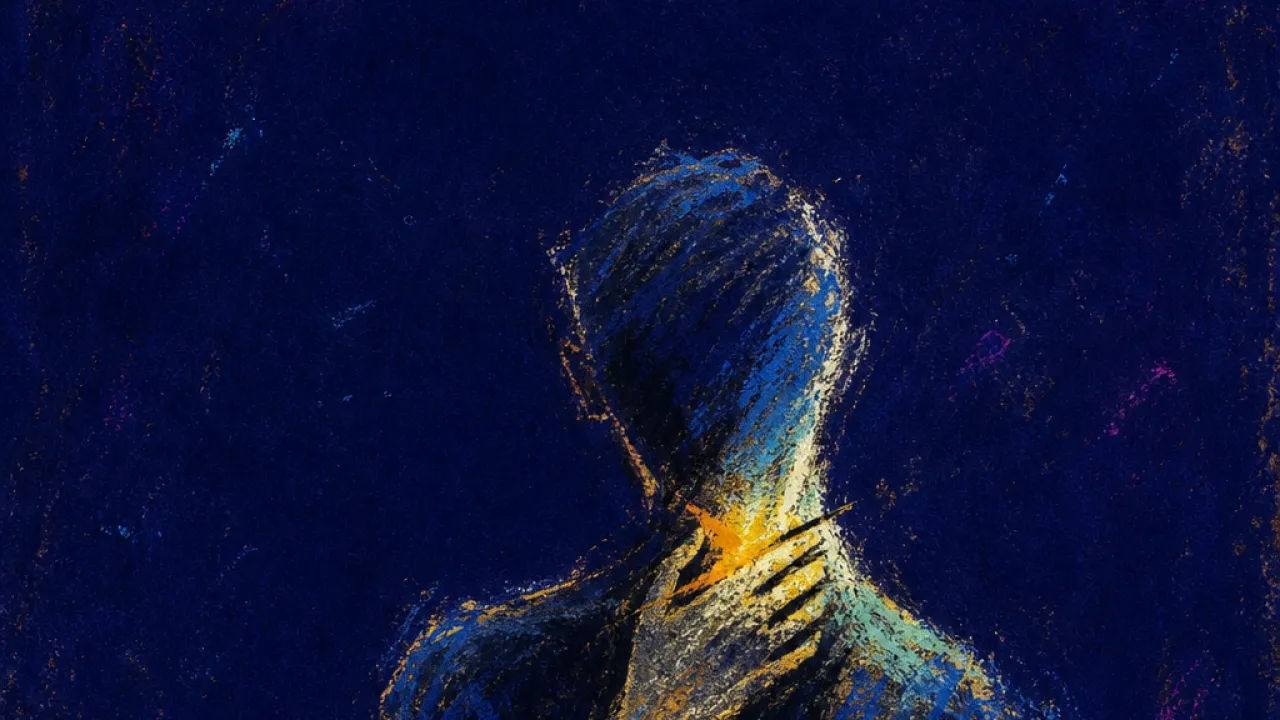
The reflex to keep your work just below the line of being noticed has a body signature: your throat tightens and your shoulders pull inward before the moment can become yours. From a Jungian archetypal theory lens, that recoil can be understood as a visible self negotiating with the part that still wants private cover. The cards do not label the reaction; they reflect the unconscious dynamics underneath the pause. Here are the Tarot Cards that mirror this pattern.
The Sun ReversedThe child has crossed the wall and is now unmistakably visible under direct sunlight. There is no clothing, no shadow, and no reins to hide behind, so the image places the self in a field where capacity, joy, and direction can be seen. Visibility Avoidance arises when that field feels too exposing to tolerate. The wall behind the child becomes psychologically magnetic, not because it is hostile, but because staying near the known container prevents the self from being tested in open light. In personal growth, this pattern often appears right before a larger claim: publishing the work, applying for the role, showing the talent, or letting a new identity be witnessed. The card names the defensive pull to remain almost ready, where potential stays protected because it never has to meet evidence.
Judgement ReversedThe bodies in Judgement are uncovered and upright in a wide open field, called out of enclosed coffins by a sound that fills the sky. Emerging is not private; the act of becoming visible is built into the scene. Visibility Avoidance is tied to the fear that growth will expose more than it protects. You may keep talent, progress, or ambition inside a familiar container because being seen at the threshold feels more threatening than staying hidden with potential intact.
The World ReversedThe nude dancer occupies the exact center of the wreath, visible from every corner of the card. The four surrounding figures do not attack or intrude, but their presence makes the center unmistakably witnessed. Visibility Avoidance forms when being seen activates more pressure than pride. For you, growth may feel desirable in private but threatening once talent, confidence, beauty, intelligence, or creative output starts to register in the outside world, so the system pulls back right when embodiment becomes visible.
Four of Cups ReversedThe offered cup enters the frame from the cloud, but accepting it would require the seated figure to open his closed perimeter. His folded body protects him from contact, and that contact is precisely where the opportunity lives. Visibility Avoidance in academic life often appears around drafts, office hours, presentations, supervisor emails, and unfinished work. The resource is not only a resource; it is also a gaze. To receive the cup, the work has to be seen before it is polished, and that exposure can feel more threatening than staying immobilized. The Four of Cups shows the cost of protecting the ideal student image. You keep the imperfect draft out of view, but the feedback that could strengthen it remains outside the body's reach. The pattern preserves psychological cover while quietly starving the work of contact.
Five of Cups ReversedThe figure's back is turned to the two upright cups, and the cloak blocks the body's edges from the rest of the scene. Even though the bridge remains available, the posture creates the feeling of being cut off from the place where repair could happen. Visibility Avoidance takes that spatial withdrawal into academic life. After a disappointing grade or critical comment, being seen by a professor, seminar group, or supervisor can feel like standing in front of the spilled cups with no protection. You may delay submission, skip discussion, or avoid office hours because visibility feels like exposure rather than support. The card shows how the defense works: the body reduces contact with the field, but it also reduces access to the very feedback that could restore clarity.
Six of Cups ReversedThe manor courtyard is protected, bright, and visually separated from the wider world. The guarded boundary makes the inner space feel safe, but in reversal that same safety can become a perimeter that keeps complexity, scrutiny, and adult stakes outside. This is where Visibility Avoidance enters the card. The psyche may prefer the protected courtyard of familiar contribution over the exposed field of leadership, negotiation, and evaluation. Avoiding visibility can feel like choosing peace, but the deeper mechanism is often a defense against being measured. In your career, this may look like staying behind the scenes, declining stretch work, or remaining indispensable in a small circle while avoiding the rooms where decisions are made. The card shows that the protected space is not wrong; it simply cannot become the whole career map without shrinking your reach.
Nine of Cups ReversedThe crossed arms can harden into a lock, and the row of cups can become a screen that protects the figure from being seen too closely. The display is visible, but the living process behind it stays guarded. In academic settings, this maps onto avoiding visibility at the exact point where learning would benefit from contact. Office hours, draft feedback, study groups, seminars, and public problem-solving all require the self to be seen before the outcome is polished. The pattern protects dignity by keeping the unfinished mind offstage. Its cost is that the same shield that preserves the image also blocks the feedback that would help the work mature.
Page of Cups ReversedThe Page faces the viewer, but his eyes are not available to the viewer; they are held inside the private circuit between cup and fish. The vulnerable content is raised high enough to matter, yet still kept in a small container at the edge of the open sea. Visibility Avoidance in study works through that same split between being present and being seen. You may attend class, collect notes, and think deeply while keeping drafts, questions, and half-formed arguments hidden, because public exposure feels like releasing the fish into water you cannot control.
Ace of Pentacles ReversedThe Ace of Pentacles shows a hand holding the coin above the garden rather than placing it on the path. The opportunity is visible, the threshold is visible, and the field below is prepared, yet the resource remains suspended between presentation and entry. Nothing in the image is chaotic, but there is a precise hesitation built into the scene. Visibility Avoidance grows from that suspended position. You may want access to the circle, the collaboration, the event, or the wider network, but being visibly present would make the self feel too available for evaluation. The defense keeps the pentacle in the air, where it can still be imagined as potential without being tested in the social field. In social life, this can look like staying near the edge of a community, avoiding introductions, not posting your work, declining invitations that would make you known, or hoping to be included without having to be seen. The card anchors the pattern because manifestation requires placement, and the reversed mechanism keeps placement delayed to protect the image from exposure.
Four of Pentacles ReversedThe town stands behind the figure, but he sits apart in the foreground, sealed by coins, posture, and stillness. There is a social world in the card, yet no active bridge between the figure and that world. In the reversed texture, the boundary becomes more than privacy; it becomes a way to prevent exposure. The body protects value by keeping it close, but the same protection prevents exchange, response, and recognition. In personal growth, talent or insight can stay hidden because being seen would mean losing control over how it is received. Visibility Avoidance is the pattern of preparing in private while avoiding the arena where growth becomes real. You may keep refining the work, the plan, or the identity, but the card shows the defense underneath: if nothing is released into the world, nothing can be judged, challenged, or allowed to evolve.
Five of Pentacles UprightThe two bodies are visibly injured and under-dressed, but they move past the illuminated public window instead of stepping into view. The woman is folded under a red covering, and the man leans into the crutch, creating a posture that protects the exposed self from being witnessed in need. Visibility Avoidance forms when being seen by a group feels less like connection and more like inspection. You may skip events, stop posting, mute chats, or drift out of a network at the exact moment support would require you to be visible. The card links this pattern to the body-level fear that social warmth might come with scrutiny.
Eight of Pentacles ReversedThe work is being done in the open, but the craftsman's body is turned inward toward the coin. The town remains in the distance, and the finished pentacles are visible, yet his gaze does not meet the public meaning of what he has made. In the reversed texture, visibility becomes something managed indirectly through more work. The person can produce, document, and refine, while still avoiding the moment of direct exposure where value must be named, negotiated, or claimed. Visibility Avoidance in a career field often hides inside preparation. You may keep building evidence, but the pattern delays the conversation where that evidence has to become a raise, a promotion, a portfolio, or a clear claim of professional authority.
Nine of Pentacles ReversedThe falcon is the sharpest symbol in the scene, but its sight is covered and its claws are mediated through a glove. Its power is not absent; it is managed so carefully that it cannot fully enter the open field. That visual restraint gives Visibility Avoidance its psychological shape. The defense does not destroy talent, ambition, voice, or creative force; it keeps those capacities contained enough that they cannot attract evaluation, envy, rejection, or pressure. In personal growth, this often feels like being almost ready while quietly refusing the moment where your capability becomes visible. You may be protecting the part of you that could actually change your life. The card shows that hidden strength can become another form of self-limitation when control is valued more than expression.
Page of Pentacles ReversedThe Page is physically present in the field, but his body is absorbed by the object in his hands. His gaze does not travel toward the trees, mountains, or any imagined audience beyond the frame; it stays contained inside the small ritual of looking ready. That containment can become a social defense. The person remains near the edge of connection, using preparation, observation, or a carefully maintained identity as a perimeter that prevents direct encounter. You may be close enough to social life to watch it, but not exposed enough to be known by it. This pattern reveals how staying unseen can feel like control, while quietly turning belonging into something you study from a distance.
Ace of Swords ReversedThe sword is fully visible in the open sky, but the person behind it is missing; only the hand and the tool are exposed. Under pressure, that separation can make visibility feel partial and unsafe, as if the work may be seen before the self feels ready to be evaluated. In a career field, Visibility Avoidance keeps strong ideas, achievements, or leadership instincts under-displayed because exposure carries social risk. You may wait for perfect timing, stronger proof, or permission from the room, while the promotion system reads the absence of visible evidence as absence of readiness.
Three of Swords ReversedThe heart is completely exposed, with no body, hand, or shelter between its center and the surrounding weather. The swords show what visibility can cost when the vulnerable part of the self is placed directly into the field. Visibility Avoidance in personal growth is not just hiding. It is the protective decision to keep potential private because being seen trying, improving, applying, posting, or asking for feedback feels like offering the heart to another blade. The reversed image makes the defensive logic understandable without making it final. The exposure is real, but the fixed swords also show the cost of organizing a life around avoiding impact: the heart remains central, vivid, and unintegrated, while the next version of the self never gets tested in the open.
Six of Swords ReversedThe figures turn their backs to the picture plane, their faces covered or obscured, while the swords rise between them and the direction of travel. Even the destination is muted and distant, so the whole scene moves through concealment rather than display. Visibility Avoidance is not simply modesty; it is a protective strategy that keeps scrutiny, envy, rejection, or expectation at a distance. At work, the same strategy can make you excellent but unseen, especially around promotions, salary conversations, leadership bids, or public credit. The Six of Swords ties this pattern to a quiet crossing where safety is gained through invisibility, but leverage can be lost the same way.
Seven of Swords ReversedThe deep yellow sky, the tents, the tiptoe posture, and the backward glance all concentrate the image around one question: has the movement been seen. The figure is not simply leaving; he is leaving under the pressure of witness. Reversed, that pressure turns secrecy into a life-navigation system. You may keep your real ambitions, doubts, or desired direction unnamed because the moment they become visible, they become available for judgment. Visibility Avoidance protects the part of you that still wants something specific, but it also keeps the path underpowered. The card shows how a direction can remain hidden for so long that stealth becomes a substitute for alignment.
Eight of Swords UprightThe blindfold does more than block sight; it removes the figure from reciprocal visibility with the field around her. Her body stands upright but takes up very little active space, as if the safest position is to be present without fully registering. Visibility Avoidance in career life often looks competent from the outside. You may deliver work, keep the system running, and avoid obvious failure, while quietly withholding the signals that make impact legible to decision-makers. The card shows the cost of that protective invisibility. When the eyes are covered and the body stays narrow, the workplace cannot accurately read your value, and you cannot accurately read which forms of visibility are actually unsafe.
Ace of Wands ReversedThe hand reaches out from the cloud, but the body never enters the scene. The wand is visible enough to signal vitality, yet it remains suspended above the ground where contact, response, and social consequence would actually happen. That is the defensive logic of visibility avoidance. The pattern does not erase desire for connection; it keeps the signal half-present so the social field cannot fully evaluate, reject, claim, or respond to it. In group life, this can feel like hovering at the edge of belonging while protecting yourself from the exposure that belonging requires. The card shows potential held in the air, safe from contact but also unable to become rooted connection.
Two of Wands ReversedThe figure surveys the horizon with a globe in hand, but the image contains no step downward into the landscape he studies. The battlement lets him see without being touched, giving the body a way to remain prepared while avoiding exposure. Visibility Avoidance takes shape when observation substitutes for participation. In group spaces, the pattern keeps You reading chats, watching events, or tracking social openings from a distance while the actual moment of being seen keeps getting delayed.
Three of Wands ReversedThe card withholds the face of a person dressed for status and standing in a visible place. From the outside, there is authority; from the image itself, the self remains turned away. That split is the engine of the pattern. Career visibility is desired for advancement, but the body avoids direct exposure to evaluation, authorship, and feedback. You may stand near opportunity while keeping your voice, ambition, or leadership signal just out of view. The card makes that defense concrete: the status position is occupied, but the face that would receive recognition or scrutiny is withheld.
Four of Wands ReversedThe garlanded wands form a literal threshold for being seen, while the figures stand behind the front structure rather than stepping through it. In the reversed texture, the open frame can feel like exposure: the achievement is ready to be witnessed, but the body hesitates at the edge of the stage. Visibility Avoidance names the career pattern where your work is strong enough to be noticed, yet recognition triggers scrutiny, comparison, or pressure to keep performing. The card makes the mechanism visible by turning celebration into a threshold: you do not reject success itself, you tense up around what visibility might demand next.
Six of Wands ReversedThe rider is lifted above the crowd, framed by wands, and carried through a corridor of attention. There is honor in the image, but there is also exposure: the celebrated body has very little private space inside the ceremony. Visibility Avoidance grows when the psyche learns to associate being seen with pressure, projection, or the obligation to keep performing. You may delay launching, understate progress, hide completed work, or vanish after a win because public recognition feels like a trap rather than a mirror. In personal growth, this pattern blocks the moment when inner progress needs to become embodied in the outer world.
Queen of Wands ReversedThe Queen is placed in direct view, with her throne raised and her symbols arranged around her like a public stage. Under strain, that same exposure can feel less like radiance and more like being pinned in place by the expectation to be impressive. This is where visibility becomes something to dodge. The pattern does not simply hide your work; it treats being seen while still becoming as a threat, so launches, posts, conversations and creative risks get delayed until the self-image feels untouchable.
No cards available for this filter.