Explaining Until You Disappear

A clear definition of defensive overexplaining, with tarot cards that mirror it and reading insights that show the pattern in motion.

Defensive Overexplaining
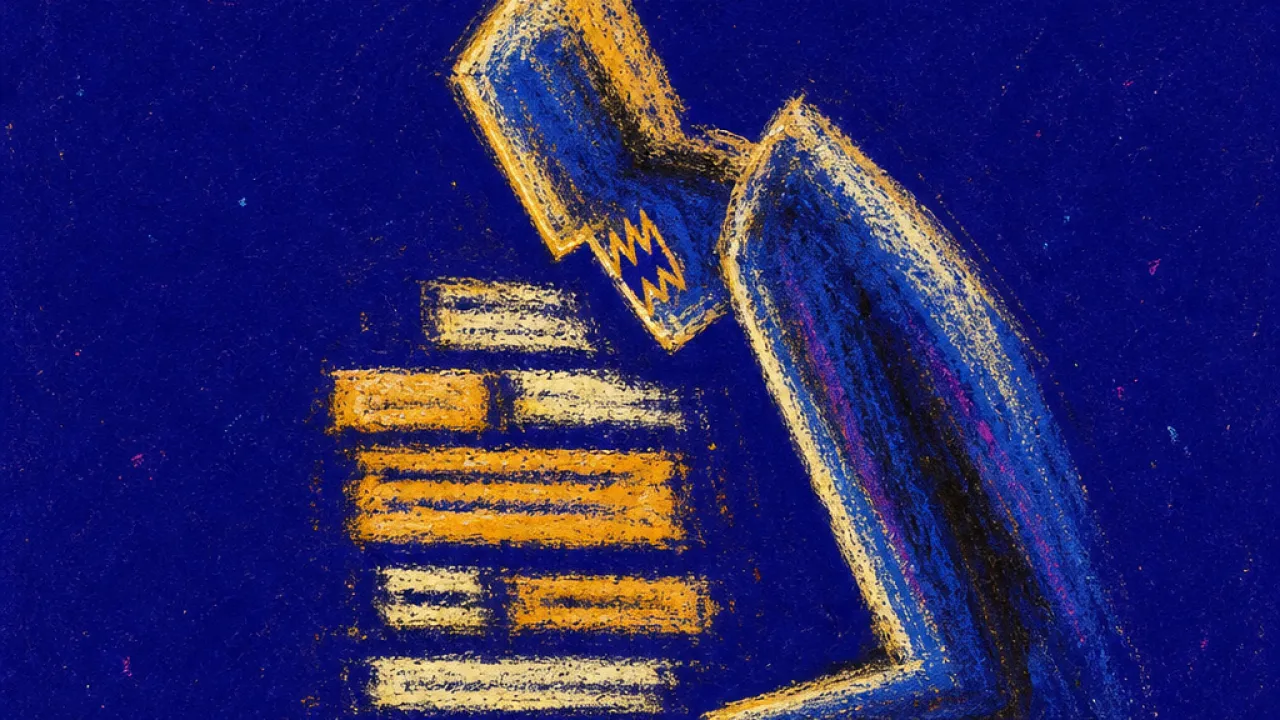
A bracing figure with raised shoulders and a thumb hovering over send, amber text stacking against cold blue space.

What is this really?

When Defensive Overexplaining takes over, you answer a simple question with a full transcript: timelines, disclaimers, screenshots, tone softeners, and 'just to be clear' clauses appear before anyone has even pushed back. Underneath, this boundary-blurring defense habit is trying to reduce the chance of being misread; if every angle is covered, maybe no one can fill in the blanks with blame, disappointment, or a version of you that feels unfair. Yet the more proof you stack up, the more your original point disappears beneath it, leaving you trapped inside the argument you built for safety, much like the Eight of Swords, bound and blindfolded among blades that turn the space around her into a cage.

Why did it happen?

At some point, a short answer may have left too much room for people to doubt you, misread you, or decide what you meant before you could correct it. So your mind learned to build a full hallway of context before anyone could open the wrong door. Now that same inner pattern can keep running even with people who were only asking a simple question, leaving your chest tight, your attention scattered, and your words feeling like a fence you can't stop adding to.

How does it feel?

  • When a friend texts, 'Can you make it tonight?' you type 'I can't,' stare at it, delete it, then rebuild the reply with a work detail, a weather detail, and a soft 'I hope that's okay.' As your thumb hovers over send, your jaw may tighten and your stomach may drop a few inches, as if the message is still unfinished. It is okay to let one small sentence exist before adding the next one.
  • In a meeting, when someone asks why a task shifted, you lean toward the laptop, open two tabs, and talk through the whole timeline before the question has fully landed. Halfway through, your breathing might get shallow, heat moving up your neck while your words run ahead of you. That reaction can be noticed without turning it into a verdict.
  • After saying 'no worries' to a small favor, you add a second sentence, then a third, explaining why you're not annoyed and how much you understand. Your shoulders may stay lifted long after the chat ends, with a fizzy pressure sitting behind your ribs. The extra sentence can simply be seen as something that showed up.
  • When you pick a restaurant, you half-laugh, touch the side of your cup, and list three reasons so it doesn't sound random or selfish. In that pause after you speak, your throat may feel dry and your attention may scan everyone else's face before it returns to your own plate. Not knowing how it landed is allowed to be temporary.
  • Alone after a conversation, you replay one line, unlock your phone, and draft a 'just to clarify' follow-up with two careful paragraphs. The room might feel strangely loud, your chest tight and your fingers restless even though nothing new has happened. The urge to add context can sit beside you for a moment without needing to run the whole scene.

Defensive Overexplaining in Tarot Cards

That reflex to build a full hallway of context before anyone can misunderstand you is where Defensive Overexplaining shows up. You might recognize it in the thumb hovering over send, the jaw tightening, and the urge to add one more sentence. In Jungian archetypal theory, this pattern can be read through image rather than argument. The cards below mirror the unconscious dynamics under that reflex: here are the Tarot Cards that tend to speak to it.

Justice
Reversed
Justice holds scales and sword between two pillars, creating a formal frame for weighing conduct and assigning responsibility. In reversal, this ordered scene carries the expectation that family evidence will be weighted unevenly, so every interaction invites a longer account designed to correct a verdict that feels decided in advance. You may recite who did what, when it happened, and why your response was reasonable because a family narrative has repeatedly cast you in an unfair role. The detailed record protects reality from distortion, yet it can also keep you inside an endless ledger where being understood depends on winning agreement from the same system that shaped the dispute.
Eight of Swords
Upright
The blindfold, loose bindings, and incomplete circle of swords create a precise image of a constraint maintained partly by what the figure cannot yet test. The swords resemble the belief that enough explanation can control every interpretation, while the visible gaps show that other people's meaning-making was never fully containable. You may equate clarity with total context and safety with leaving no blank space, even when the effort makes your communication less clear. Recognizing the structure separates accurate explanation from anticipatory defense: the key pattern is not having reasons, but feeling unable to let a proportionate answer exist without building a cage around it.
Nine of Swords
Upright
The figure sits awake with her face in her hands while nine swords repeat across the darkness above the bed. Their parallel arrangement resembles a conversation replayed line by line, with each remembered phrase becoming another sharp possibility that demands explanation before rest can return. You may revisit your tone, search for what could have sounded wrong, and compose a follow-up that answers reactions no one has expressed. The clarification urge functions as attempted self-soothing through cognitive control, yet every new draft can teach the mind that ambiguity requires emergency processing rather than temporary uncertainty.
Page of Swords
Reversed
The Page grips his sword on an exposed ridge while wind bends the trees and drives clouds across the sky, his head alert to movement beyond the frame. In reversal, that alert intelligence becomes poorly calibrated to the immediate task, so the urge to display awareness can produce a rushed stream of context rather than a focused answer. You may ramble during a seminar, viva, or supervision meeting because part of your attention is answering while another part is tracking whether you sound prepared. The overexplaining tries to prevent an evaluator from finding a knowledge gap, yet divided attention can weaken structure and obscure what you genuinely understand.
Seven of Wands
Upright
The elevated figure braces against six approaching wands, defending his position while standing in mismatched footwear. The unstable stance mirrors the return to an old family role: before your adult footing is secure, familiar questions can activate the expectation that your choices, feelings, or boundaries will be challenged. You may answer relatives with an argument prepared for objections they have not yet made, stacking examples until the conversation becomes a defense of your entire identity. The verbal effort protects hard-won autonomy, but it can also keep family contact structured around opposition and make every exchange reenact the same contested position.
Nine of Wands
Upright
The wounded figure watches from behind a row of wands, holding one more staff as if the boundary must remain actively guarded. The bandage and backward glance evoke a friendship history in which being misunderstood left a trace, making new questions feel connected to old disputes even when the present friend has not repeated them. You may offer a full defense of your intent because a previous short answer led to tension, gossip, or withdrawal. The readiness is understandable as learned protection, but it can keep trusted friends positioned outside a verbal barrier and prevent current relationships from being evaluated on their own evidence.
Ten of Wands
Upright
The laboring figure carries all ten wands at once, with the bundle obscuring both his face and the route into town. The image resembles a workplace proof packet in which every dependency, message, and mitigating circumstance is carried into a conversation because leaving one item behind feels professionally unsafe. You may bring screenshots, timestamps, and a complete process history to answer a narrow question about a delay or decision. The evidence can be accurate, yet carrying all of it transfers cognitive load into the exchange and may hide the concise point that would make your work easier to understand.

Defensive Overexplaining in Tarot Card Reading Insights

For anyone who keeps adding context after the point has already landed, others have brought this same reflex into readings. The cards move from image to reading space here, showing how this pattern can sound when someone sits with it. Below are Tarot Reading Insights where Defensive Overexplaining is part of the reading.

Changing

Changing "I Have Decided" to "I Hope You Understand": Owning Limits

Topic:Family Tarot Reading

Struggle:Belonging-Authenticity Split

Context:Family Estrangement Threshold

From Polished Post to Plain Sentence: Leaving the Phone in the Kitchen

From Polished Post to Plain Sentence: Leaving the Phone in the Kitchen

Topic:Social Tarot Reading

Struggle:Internal Authority Collapse

Context:Risky Social Overexposure

When Your Adult Voice Shrinks at Home: Let One Clear Sentence Stand

When Your Adult Voice Shrinks at Home: Let One Clear Sentence Stand

Topic:Family Tarot Reading

Struggle:Intergenerational Control Loop

Context:Family Boundary Negotiation

One Family Question, Four Details, Then a Ride Home Without an Essay

One Family Question, Four Details, Then a Ride Home Without an Essay

Topic:Family Tarot Reading

Struggle:Inherited Role Lock

Context:Family Script Pressure

Moving Home, Feeling Seventeen: Finding an Adult Voice in One Sentence

Moving Home, Feeling Seventeen: Finding an Adult Voice in One Sentence

Topic:Family Tarot Reading

Struggle:Inherited Role Lock

Context:Boomerang Kid Negotiation

Adult Role Regression: From a Tight Throat to a Three-Line Reply

Adult Role Regression: From a Tight Throat to a Three-Line Reply

Topic:Family Tarot Reading

Struggle:Inherited Role Lock

Context:Boomerang Kid Negotiation

A Family Boundary Became a Defense Brief—Then the Phone Went Face Down

A Family Boundary Became a Defense Brief—Then the Phone Went Face Down

Topic:Family Tarot Reading

Struggle:Autonomy Guilt Bind

Context:Family Boundary Backlash

Chasing Closure After an Argument: Letting Repair Have a Pace

Chasing Closure After an Argument: Letting Repair Have a Pace

Topic:Timing Tarot Reading

Struggle:Relational Pacing Collapse

Context:Readiness Mismatch Cycle

Code-Review Micromanagement: Asking for the Rule Before Rewriting

Code-Review Micromanagement: Asking for the Rule Before Rewriting

Topic:Career Tarot Reading

Struggle:Feedback Disconnection

Context:Upward Management Trial

After Work, One Reopened Thread, and the No That Stayed Clean

After Work, One Reopened Thread, and the No That Stayed Clean

Topic:Friendship Tarot Reading

Struggle:Autonomy Guilt Bind

Context:Emotional Blackmail Cycle

Work Friends, Old Friends, and Learning Not to Manage the Room

Work Friends, Old Friends, and Learning Not to Manage the Room

Topic:Social Tarot Reading

Struggle:Belonging-Authenticity Split

Context:Designated Organizer Burden

When the

When the "I'm Nearby" Text Hit, Hello Came Before Sorry

Topic:Friendship Tarot Reading

Struggle:Aesthetic Self-Management Trap

Context:Safe Harbor Friend

Psychological Patterns Related to Defensive Overexplaining