Is your mind on trial?

A clear audit of the Inner Critic pattern, the tarot cards that mirror it, and Reading Insights from related spreads.

Inner Critic
What is this really?

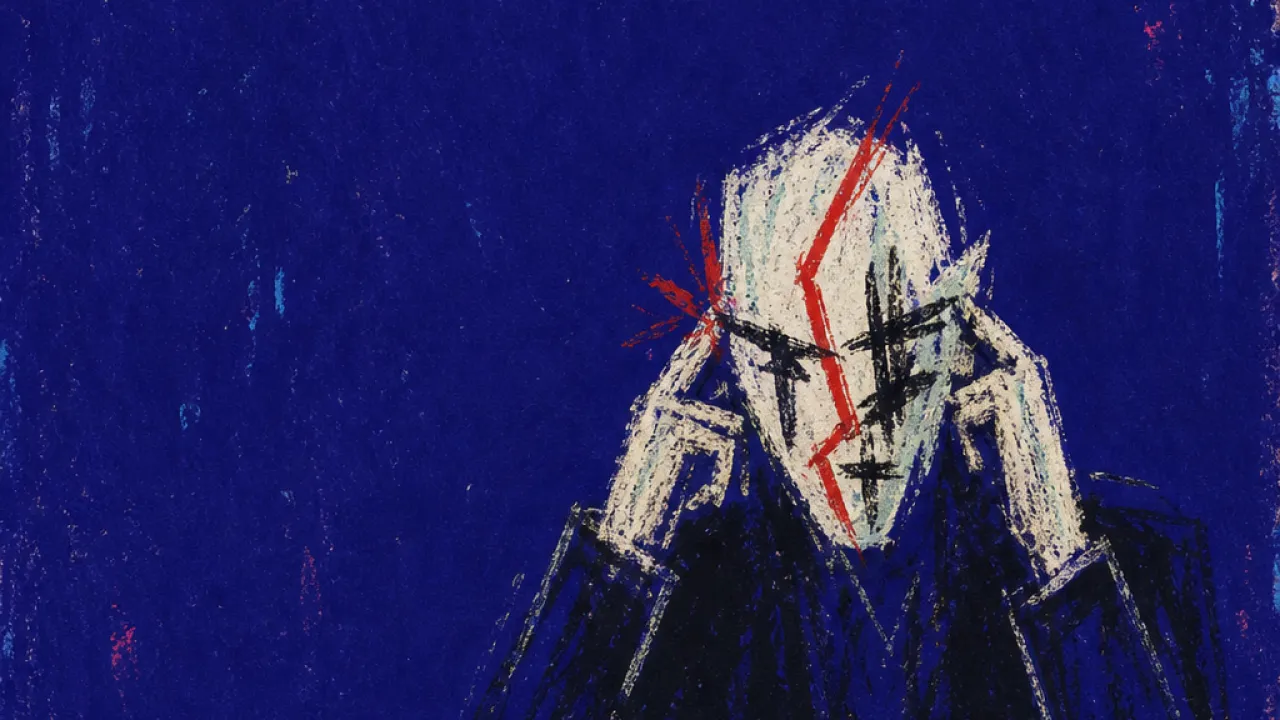
You catch a typo, miss a routine, replay one awkward sentence, and your mind immediately starts building a verdict around what it says about you. The Inner Critic is the part of you trying to stay prepared, accountable, and hard to dismiss by finding the flaw before anyone else can. Yet the audit meant to guide you can trap you in the same private trial, where every unfinished draft, tired morning, or messy feeling becomes evidence against your right to rest—much like Justice seated on a stone throne with scales raised and an upright sword, weighing you before you are allowed to belong.

Why did it happen?

At some point, being hard on yourself may have helped you catch mistakes early, stay out of trouble, or read the room before anyone else could call you out. Your body learned that if you judged yourself first, the outside hit might feel less sharp. Now that subconscious loop can keep running even when no one is judging you, leaving your chest tight, your mind tired, and rest feeling like something you have to earn.

How does it feel?

  • You reopen the email after sending it, hover over one sentence, and reread the same line with your cursor frozen in place... a few seconds later, your jaw locks and the back of your neck feels hot, as if the room got smaller around your chair. You can let that signal be present without treating it as a final verdict.
  • You sit down to start a draft, type three words, delete them, then tap the edge of the laptop while staring at the blank space... in that pause, your temples may feel pinched and your breath may stay high in your chest, like the work is being graded before it exists. It is okay for the first version to remain unfinished for now.
  • After a workout is skipped or a room stays messy, you stand still for a moment with your hand on the doorframe, scanning the evidence of what did not get done... your stomach may drop before any clear thought arrives, and your shoulders may rise without you asking them to. This can be noticed without turning it into a sentence against yourself.
  • In a conversation, you replay one awkward phrase while the other person has already moved on, pressing your lips together and nodding a beat too late... afterward, your throat may feel dry and your face may feel exposed, as if one small moment is still hanging in the air. You do not have to solve that feeling immediately.
  • When you are alone at night, you pull the blanket higher, cover part of your face, and review the day in clipped little scenes... your chest may feel heavy while your mind keeps returning to what you should have known, said, or fixed. Letting the review pause is allowed, even if it feels unfamiliar.

Inner Critic in Tarot Cards

The reflex to build a verdict around a typo, delay, or tired morning is the same pattern your body recognizes when your jaw locks and the back of your neck feels hot. Jungian archetypal theory gives that inner court a symbolic language without turning it into a diagnosis. These Tarot Cards reflect the unconscious dynamics of self-review becoming self-prosecution; below are the cards that tend to mirror it.

Justice Reversed
The figure's face is composed almost to the point of unreadability, and the stone throne, crown, and pillars turn the whole scene into a formal chamber of judgment. Even the sword reads less like attack than like authority held in reserve. That visual severity mirrors an inner voice that does not simply observe you; it evaluates you. In personal growth, the Inner Critic treats each messy draft, inconsistency, or relapse as evidence in a case against your worthiness to evolve. You may find yourself learning under surveillance rather than under support. Justice reversed exposes the cost of turning discernment into prosecution: the standard meant to guide you starts shrinking your courage to experiment.
Judgement Reversed
The angel in Judgement is distant, elevated, and surrounded by cloud, while the exposed figures below stand before a signal they cannot ignore. The flag beneath the trumpet gives the scene a clear standard, making the whole image feel like a moment of being measured. Reversed, that standard can be internalized as a harsh voice that confuses awakening with indictment. The Inner Critic takes the call to consciousness and turns it into commentary about what you should have known, should have fixed, or should have become by now. In introspection, this matters because the desire to clean the inner system can be hijacked by the same punitive mechanism that created the shame. Judgement links the pattern to the visual experience of standing exposed before a vast evaluative signal, where self-knowledge risks becoming self-attack.
Three of Pentacles Reversed
The artisan stands on a raised bench with a tool in hand while two robed figures watch closely from the threshold. The scene is not private labor; it is work performed under observation, with the body exposed at the exact moment when a mistake could become visible. In the reversed psychological texture of this card, the observers stop functioning as collaborators and become an internal reviewing panel. The blueprint, the Gothic geometry, and the watching faces all compress into a single evaluative field, where every small movement has to justify itself before it is allowed to exist. That is the mechanism of Inner Critic: self-reflection becomes self-prosecution. In introspection, You may think You are being honest with yourself, but the card reveals a sharper structure underneath, where the psyche keeps inspecting its own unfinished work as if imperfection were evidence against the self.
Eight of Pentacles Reversed
The craftsman’s sharp chisel is pressed against the coin while his face stays serious and closed, as if the surface must be corrected through pressure. The tool is precise, but it is also cutting; the visual logic is not softness first, it is incision first. That is the body of the Inner Critic in an introspective field. You may call it honesty, discipline, or self-awareness, but the mechanism is carving the self into acceptable and unacceptable fragments, turning reflection into a private tribunal instead of a mirror.
Ace of Swords Reversed
The sword pierces the crown directly through its center, as if even the symbol of mastery must be tested by the blade. The hand holds the instrument with unwavering pressure, and the surrounding light makes the edge feel exposed, exacting, and impossible to ignore. Reversed, this visual precision can turn inward as scrutiny. The same blade that could clarify hidden material begins to inspect every motive, shame every inconsistency, and demand a pure explanation for feelings that are not meant to be pure. In introspection, the result is self-awareness with teeth. You may call it honesty, but the mechanism is often correction: every shadow, flaw, or contradiction gets cut open before it can be understood with any warmth.
Three of Swords Reversed
The swords are instruments of thought and language, yet in the image they have become lodged inside the heart. They are no longer passing through as information; they stay embedded, repeating the impact from within. That is the reversed mechanism of the Inner Critic in a career reading. A manager's comment, a client's rejection, or a missed promotion becomes internal speech that keeps pressing on the same point long after the meeting is over. The card shows how external critique can be converted into an inner blade, making self-correction feel like self-attack.
Four of Swords Reversed
The three swords point down toward the head, throat, and heart while the figure remains unable to answer them. The body is still, but the arrangement above it suggests a vertical pressure of judgment aimed at thought, voice, and feeling. The Inner Critic uses quiet moments as a courtroom, turning rest into an internal review of what you should have known, said, or become. You are not simply overthinking; the pattern converts introspection into self-surveillance, so even solitude feels like being watched by your own standards.
Nine of Swords Upright
The figure bends forward with her face hidden, while the swords remain perfectly aligned above her like a rigid row of accusations. The bed holds the body, but it does not shield the head, throat, or heart from the mental pressure suspended over them. This is the body language of the Inner Critic. The hands do not reach outward for comfort; they close the face off from contact, leaving the judging structure inside the room unchallenged. The swords become a mental tribunal, turning pain into a case file against the self. For introspection, the card points to the difference between honest self-review and internal prosecution. You may believe you are trying to become clearer, but the pattern reveals a voice that uses clarity as a weapon, keeping you ashamed enough to keep auditing yourself.
Reversed
The swords touch the head, throat, and heart line, while the figure's face disappears behind her hands. In the reversed state, the image reads like thought has turned into an internal weapon and the self has withdrawn under its force. Inner Critic is the voice of evaluation after it has lost proportion. In personal growth, it can present itself as discipline, honesty, or high standards, but its real effect is to make every attempt feel contaminated by inadequacy before it begins. The room offers no witness, no mirror, and no outside correction. The card connects to this pattern because it shows a private system of attack where the mind becomes both the blade and the judge, leaving the body to absorb the sentence.
Ten of Swords Reversed
The highest sword enters near the head and ear, placing the first impact where thought and inner speech are symbolically received. The remaining blades repeat the same verdict down the body, turning correction into an invasive sequence rather than a single useful signal. The Inner Critic often disguises itself as academic discipline. It claims that harshness will keep you focused, but its actual effect is to make the mind less able to absorb, revise, experiment, or recover. The reversed Ten of Swords shows critique after it has stopped being guidance. You may be using internal attack to force performance, but the pattern is consuming the cognitive safety required for real learning.
Knight of Swords Reversed
The knight's face is fierce, his mouth open, and the sword is lifted like a verdict aimed at whatever stands ahead. In reversed motion, the missing enemy matters; the attack posture can turn inward when the psyche cannot find a safe external target. That is the mechanism of the Inner Critic in self-reflection: insight becomes prosecution. You are not simply seeing a flaw; a sharpened internal voice is using clarity to strike, so the audit of the self starts to feel like a courtroom with no defense.
Queen of Swords Reversed
The Queen's solemn face and upright sword create the impression of an inner court in session. The throne elevates judgment above ordinary ground, while the blade turns mental clarity into something sharp enough to divide acceptable from unacceptable. In the reversed field, that inner court can become relentless. You may use discipline, maturity, and self-improvement standards to prosecute every delay, inconsistency, or unfinished desire as proof that you are failing your potential. In personal growth, the Inner Critic often disguises itself as accountability. The card reveals where self-command has lost contact with self-respect, and where the next stage of growth requires a cleaner distinction between honest evaluation and internal punishment.
King of Swords Upright
The king's expression is severe, frontal, and almost judicial, while the upright sword turns his presence into a verdict before it becomes a conversation. The crown, throne, and blade create a visual chain of authority: thought sits high, judgment is centralized, and softness has very little room to move. That is why the card anchors the Inner Critic so strongly in an introspective context. The psyche is not merely reflecting on itself; it is putting itself on trial. You may call it accountability, clarity, or high standards, but the body of the card shows an inner authority that can become more invested in correction than understanding. The pattern becomes costly when self-knowledge is used mainly as evidence against the self. The sword can name what is true, but when it is held too rigidly, every vulnerable reaction starts to look like a defect that must be judged instead of a signal that can be decoded.
Reversed
The King's stern face, elevated throne, and upright sword create the atmosphere of an internal court. The body is composed, but the scene leaves little room for softness, error, or unfinished process. Reversed, that court can move inside you as a constant evaluator. The sword no longer clarifies the next truth; it measures every delay, inconsistency, and imperfect attempt as evidence against the self. In personal growth, this pattern turns evolution into prosecution. You may keep demanding discipline from yourself, but the harshness of the verdict becomes the very pressure that makes sustainable change harder to inhabit.
Seven of Wands Reversed
The lower wands aim upward like accusation lines, but no speaker is visible behind them. The pressure is real in the composition, yet its source is diffuse, which makes the scene feel like being judged by a crowd inside the frame. That is how the Inner Critic often operates during introspection. You may not hear one clear argument; You may feel surrounded by verdicts, corrections, and implied failure before any feeling has been fully understood. The single diagonal wand shows why the pattern can become self-reinforcing. When the mind expects attack, it prepares a defense, and that defensive preparation can make every unfinished emotion look like more evidence against the self.
King of Wands Reversed
The king's fist stays closed while the wand stands like an instrument of command, and the lions behind him intensify the atmosphere of judgment and force. The scene has no soft water, no sheltering vegetation, and very little permission to be unfinished. Inside you, that can become a voice that manages emotion through orders, standards, and verdicts. The pattern does not simply notice a flaw; it tries to restore control by treating softness, uncertainty, or fatigue as evidence that the inner ruler has failed.

Inner Critic in Tarot Card Reading Insights

For anyone who turns a typo, delay, or tired morning into a private verdict, others have brought the same pattern into readings. Here is how these cards showed up when they sat with that inner court. Tarot Reading Insights that speak to this pattern.
Psychological patterns related to Inner Critic